Introduction
Growing a successful e‑commerce business demands more than sourcing the right products. You need to research market trends, optimize listings for search engines and buyers, and adapt quickly when conditions change. These tasks can be time‑consuming, especially if you manage multiple marketplaces or a large catalog. Catalister positions itself as an AI‑powered ally that reduces this workload. It uses machine learning to identify trending products, generate SEO‑ready titles and descriptions, and offer insights that help you make data‑driven decisions. This comprehensive review explores what Catalister does, how it works, and whether it’s the right tool for your business.
Overview
How Catalister Works
Catalister combines product research, listing creation and optimization, advertising analytics, and automation into a single platform. The workflow is designed to take you from research to revenue without writing a line of code:
Product Finder and AI Research
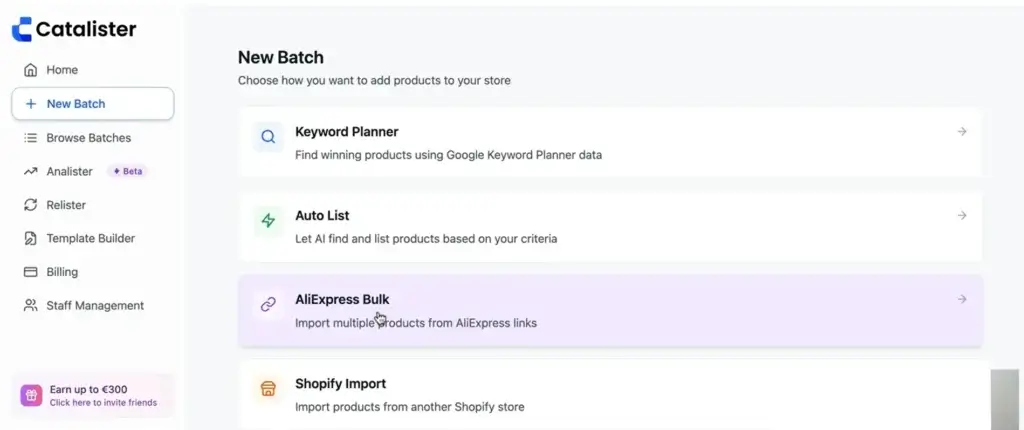
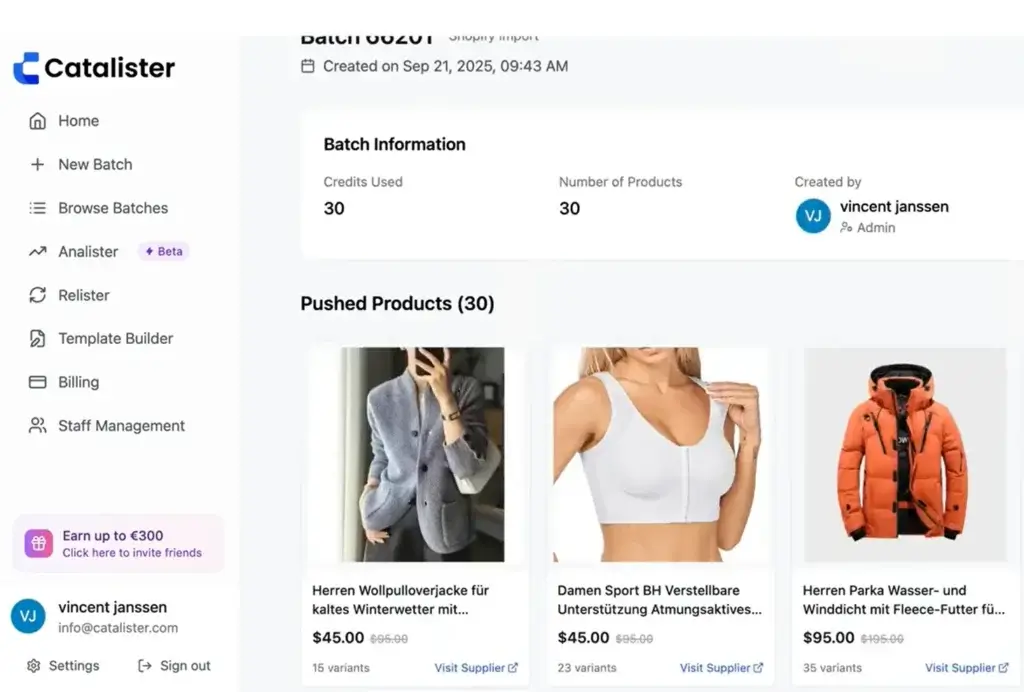
You begin by importing products from sources like AliExpress or competitor stores. Catalister’s Product Finder module uses AI to analyze product performance, keyword trends, pricing, and competition. It then surfaces items with high potential profitability. Instead of manually copying product details into your store, you paste the product URL, and Catalister handles the rest. Its AI writes product titles, descriptions, bullet points, and even alt text. Currency conversion is automatic, so you don’t need to worry about exchange rates when sourcing from international suppliers.
Store Refresher and Listing Optimization
For existing catalogues, the Store Refresher feature improves outdated listings in bulk. It can update prices, collections, descriptions, and SEO metadata at scale. The AI rewrites product copy with search intent in mind, helping you rank higher and convert better. Templates allow you to fine‑tune the tone, brand voice, or target keywords. Because the updates are applied in bulk, you can refresh hundreds of listings in minutes.
Ad Manager and Analytics
Advertising is often the highest ongoing cost for e‑commerce sellers, and Catalister integrates directly with Google Ads through its Ad Manager. This module connects your product catalog with your ad account, providing recommendations on which products to promote and how to structure campaigns. It highlights best‑selling items, suggests keywords with high search volume, and allows you to manage campaigns in bulk. When combined with the Analister analytics tool, you gain insights into ad performance, ROAS (Return on Ad Spend), and profitability at the product level.
Four‑Step Workflow
Catalister’s website breaks down the journey into four simple steps. First, you create your store on Shopify or another platform. Next, you find and add winning products using Catalister’s AI. Then you advertise via integrated Google Ads campaigns. Finally, you analyze and scale using analytics to optimize and grow revenue. This roadmap is helpful if you’re just starting with dropshipping and want a repeatable process.
Software Specification
Key Features of Catalister
AI‑Powered Product Research
Catalister’s research tools monitor market trends and analyze competitor catalogs. They surface profitable niches and trending products by evaluating sales velocity, pricing, and demand signals. If you’re unsure what to sell, the AI can highlight categories that are gaining traction across multiple marketplaces. It also provides keyword suggestions, helping you tailor titles and descriptions to real search queries.
Automated Listing Creation
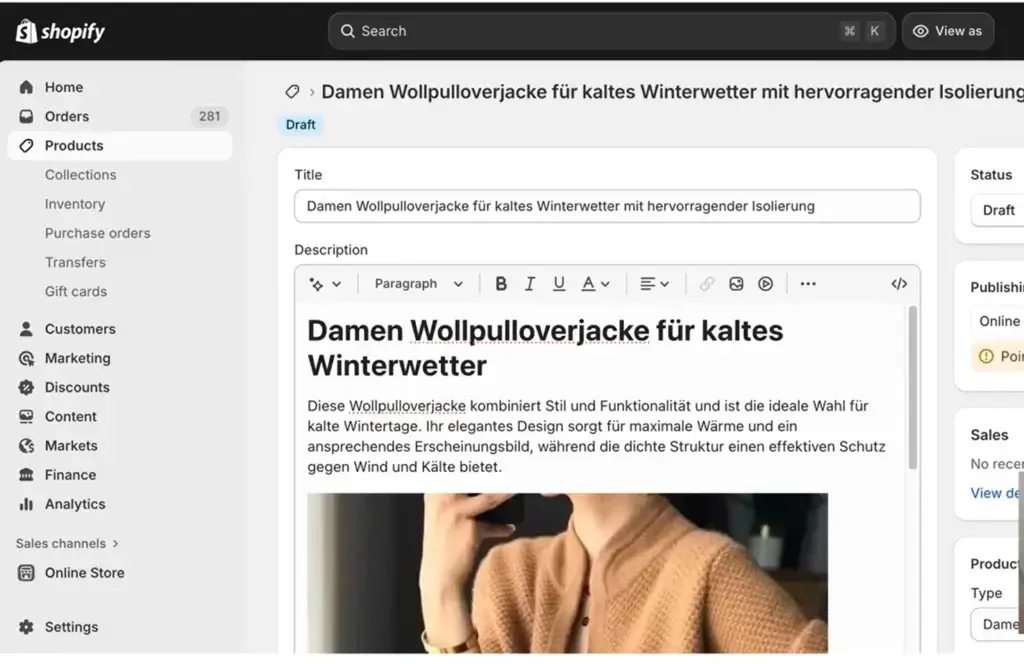
Writing compelling product copy is a major pain point for many sellers. Catalister automates this task by generating titles, bullet points, and SEO‑friendly descriptions. It uses large language models to craft copy that appeals to search engines and shoppers. Each listing includes optimized alt text for images, meta titles and descriptions, and category assignments. You can customize the tone, formal, conversational, or brand‑specific, by editing the AI template before publishing.
Marketplace Insights
Beyond research and listing, Catalister offers real‑time marketplace insights. It tracks pricing, inventory levels, and keyword movement for your products and competitors. These insights alert you when rivals drop their prices, when a product is trending, or when inventory is low. In fast‑moving markets, such data helps you react quickly, adjust pricing, or restock before competitors do.
Multi‑Channel Support
Catalister started with Shopify but has expanded to other platforms over time. As of 2025, you can manage listings for Shopify, Amazon, WooCommerce, BigCommerce, and Walmart from a single dashboard. Future updates plan support for Etsy, eBay, and Facebook Marketplace. This multi‑channel approach saves you from jumping between different tools or copying listings manually.
Bulk Operations & Automation
The platform is built for efficiency. You can import, edit, or syndicate hundreds of products at once using batch tools or spreadsheets. The “copy and paste” import method allows unlimited product imports without consuming credits, so you aren’t charged for simply moving product data from a supplier to your store. Bulk operations also extend to editing prices, collections, and tags via the Relister module, which lets you refresh existing products without starting from scratch.
Collaboration & Team Management
Catalister supports team workspaces and role‑based permissions. Agencies can create separate workspaces for different clients, while larger stores can define user roles for product research, listing management, or advertising. The platform logs user activity so you can track who edited what and when. This is particularly helpful for consultants working with multiple brands.
Compliance and Quality Tools
Different marketplaces have strict policies on product images, titles, and keywords. Catalister includes built‑in compliance checks to ensure your listings meet marketplace standards. It automatically adjusts image sizes, flags prohibited keywords, and generates alt text that adheres to SEO best practices. These features reduce the risk of having listings removed or suppressed.
Integrations & API
Direct integrations exist for Shopify, Amazon Seller Central, WooCommerce, BigCommerce, and Walmart Marketplace. An API and Zapier connectors allow custom automations with tools like Google Sheets, Airtable, and CRM software. Payment and accounting services such as Stripe and QuickBooks are supported or on the roadmap, ensuring you can reconcile transactions without leaving the platform.
Pros and Cons
Advantages and Disadvantages
Positive
✅ Time and Cost Savings
✅ Improved SEO and Conversion Rates
✅ Competitive Advantage
✅ Scalability and Collaboration
Negative
❌ Limited Marketplace Connections
❌ Advanced Features Require Higher Tiers
❌ Credits and Additional Costs
❌ Learning Curve and Setup
✅ Benefits of Using Catalister
Time and Cost Savings
By automating product research and content generation, Catalister can reduce the time you spend manually copying product data and writing descriptions. Users report that it is 10× faster than manual copying and pasting and that importing more than 2,500 products daily is feasible. This efficiency translates into lower costs, reducing the need for virtual assistants and giving you more time to focus on marketing and customer service.
Improved SEO and Conversion Rates
AI‑generated titles, descriptions, and alt text follow best practices for search engine optimization. The content is built around real keywords, and features like Google Keyword Integration provide unique access to live search data. Optimized listings help you rank higher in organic search results and attract more qualified traffic. In addition, AI‑crafted descriptions are designed to convert visitors into buyers by emphasizing benefits and addressing potential objections.
Competitive Advantage
Catalister’s competitor monitoring keeps you informed about pricing changes, new product launches, and shifts in keyword ranking. Unique features such as AI background removal for product images and advanced localization with market‑specific templates are not widely available in alternative tools. These extras allow you to tailor listings for different regions and create cleaner, more professional images, which can set your store apart.
Scalability and Collaboration
From solopreneurs to large agencies, Catalister scales with your business. The platform supports multiple stores, bulk operations, and team collaboration. You can assign roles, monitor activity, and manage high volumes of products without sacrificing quality. The Relister module simplifies updating prices and descriptions across your catalog, while the Analister module helps you optimize advertising spend and identify profitable products.
Strong Support and Community
Despite being relatively new, Catalister has garnered a strong following. A Trustpilot rating of 3.9/5 shows that most users rate it highly. The company responds to feedback quickly and is transparent about feature updates and roadmaps. Support channels include chat and email for all plans, with onboarding assistance and dedicated account managers for higher tiers.
❌ Limitations and Considerations
Limited Marketplace Connections
While Catalister supports major platforms like Shopify, Amazon, and WooCommerce, some connectors, such as eBay and Etsy, are still in beta or on the roadmap. If you rely heavily on these marketplaces, you may need to supplement Catalister with additional tools until full support arrives.
Advanced Features Require Higher Tiers
Key capabilities such as white‑label portals, advanced localization, and meta tag generation are available only in the Scaler or Enterprise plans. Budget‑constrained businesses may find these features appealing, but have to upgrade to access them. Likewise, the most flexible API and Zapier integrations are reserved for Growth/Scale plans.
Credits and Additional Costs
Although 50 monthly credits cover many listings, high‑volume sellers may need more. Additional credits incur extra costs, which can add up if you regularly generate hundreds of new listings. It’s important to monitor your credit usage and adjust your workflow accordingly. Some Trustpilot reviewers mention that unused credits may expire if subscriptions lapse.
Learning Curve and Setup
As with any robust SaaS platform, there is a learning curve. New users must connect stores, import products, configure templates, and learn to interpret analytics. While Catalister is designed to be user‑friendly, reviewers note that setup can be challenging without guidance. However, customer support is available to help you through this phase.
Lack of Dedicated Mobile App
As of 2025, Catalister does not offer a standalone mobile app. You can access the dashboard via mobile browsers, but some users prefer native apps for notifications and on‑the‑go editing. A mobile app is reportedly on the roadmap but not yet available.
Pricing
Catalister Pricing and Plans
Catalister operates on a subscription model with several plan tiers. Each plan includes 50 credits per month for AI‑optimized listings. Importing products via the copy‑and‑paste method costs no credits, while each AI‑generated listing uses one credit. Additional credits can be purchased for around €0.14 each.
Starter Plan (€14.99/month)
This entry‑level plan is best for solopreneurs or micro brands testing the waters. You get one store connection, access to the Relister and Analister modules, AI listing creation, a prompt builder, and unlimited copy‑and‑paste imports. Some advanced features, such as custom templates, image naming and alt text, meta titles and descriptions, and category tagging, are not included in this plan.
Stacker Plan (€24.99/month)
Designed for growing stores, the Stacker plan allows up to three stores and includes custom templates. You still get 50 credits per month, but can manage more products and markets. Image naming, alt text optimization, meta titles and descriptions, and advanced categorization remain locked.
Scaler Plan (€34.99/month)
The most popular plan is ideal for serious dropshippers. It offers unlimited store connections, custom templates, automated image naming and alt text, meta titles and descriptions, category and metafield management, and custom tags and product types. All core modules (Relister, Analister, AI listing creation, prompt builder) are included, and you retain 50 monthly credits. The Scaler plan also unlocks full customization and advanced localization features.
Enterprise Plan (Custom Pricing)
For sellers managing 5,000+ products per month or needing bespoke features, Catalister provides a custom pricing tier. Credits start from around €0.09 each, and the plan includes dedicated account management, priority support, and integrations tailored to your workflow. You can request white‑label portals, custom API endpoints, and unique features that aren’t available in standard plans.
Understanding Credits
Credits control how many AI‑optimized listings you can create. Every plan has unlimited product imports via copy‑paste, so you won’t be charged for simply moving product data into your store. AI‑optimized listings cost one credit per product, covering the generation of titles, descriptions, and SEO content. If you need additional credits beyond the monthly allowance, you can purchase them as needed.
| Plan | Key Features | Price |
| Starter | 1 store, 50 credits, basic AI listing creation, prompt builder | €14.99/mo |
| Stacker | Up to 3 stores, custom templates, 50 credits | €24.99/mo |
| Scaler | Unlimited stores, custom templates, image & alt text, meta tags, categories, 50 credits | €34.99/mo |
| Enterprise | 5000+ products, dedicated support, custom integrations, credits from €0.09 | Custom |
Common Use Cases
Who Should Use Catalister?
Catalister is built for a range of users:
- Small business owners and solopreneurs who need to list products quickly and compete against larger sellers.
- Marketing teams seeking data‑driven insights to optimize campaigns and track product performance.
- Data analysts who want to monitor market trends, pricing strategies, and competitor movements.
- Developers looking for API access to integrate Catalister with custom systems or workflows.
- Consultants and agencies managing multiple clients or brands, thanks to workspaces, role‑based permissions, and collaboration tools.
If you’re focused on a single marketplace like Amazon, you might find more specialized tools (e.g., Jungle Scout) sufficient. However, if you operate across several platforms or plan to expand, Catalister offers a centralized, scalable solution.
Compare with Others
Catalister vs. Alternatives
Several other platforms compete in the product research and listing space. Below is a high‑level comparison of Catalister with three popular alternatives mentioned in independent reviews.
| Platform | Strengths | Limitations | Best For |
| Catalister | Fast AI research, auto‑listing, modern UX, strong SMB focus, rapid onboarding | Advanced features still developing, limited enterprise controls, some marketplaces in beta | Entrepreneurs, direct‑to‑consumer brands, boutique agencies |
| Jungle Scout | Deep Amazon data and mature analytics | Amazon‑only focus, slower roadmap outside Amazon | Amazon‑centric sellers |
| Sellbrite | Multi‑channel listing management and inventory tools | Manual‑heavy processes, less intuitive UI | Sellers scaling across several marketplaces |
| Elumynt | Brand analytics with consulting services included | Premium pricing, requires service engagement | Brands seeking hands‑off reporting |
Setup
Getting Started with Catalister: Tips for Success
Updates and Future Plans
Roadmap and Recent Updates
Catalister’s development has accelerated over the past few years. The following timeline highlights major milestones:
- 2022: Launch of core AI product research capabilities for Shopify sellers.
- 2023: Expansion to Amazon, WooCommerce, and BigCommerce; introduction of language model–based listing generation.
- 2024: Rollout of multi‑channel support, price tracking, API integrations, and adoption by agencies.
- 2025: Release of competitor monitoring, team workspaces, white‑label portals, and enhanced automation. Planned additions include more marketplace connectors and deeper analytics.
This rapid iteration indicates that Catalister is committed to evolving alongside e‑commerce trends. Checking their changelog or blog keeps you informed about new capabilities.
Conclusion
Final Thoughts
Catalister aims to be more than a listing tool; it’s a full‑stack platform for product research, AI‑generated content, advertising analytics, and market intelligence. For sellers looking to save time, improve SEO, and scale across multiple marketplaces, Catalister offers a compelling package. Its modular workflow, robust feature set, and steady development roadmap make it a strong contender in the crowded e‑commerce software market. While some connectors remain in beta and advanced features require higher tiers, the overall value proposition is clear: Catalister helps you work smarter, not harder. If you’re ready to automate mundane tasks and focus on growing your business, Catalister is worth considering.
Have more questions?
Frequently Asked Questions
1. Is Catalister compliant with GDPR and HIPAA?
Yes. The platform meets GDPR standards, and HIPAA compliance is available via a Business Associate Agreement for eligible plans.
2. Can I use my own domain when using Catalister?
You can brand the platform with your own domain, favicon, and visuals if you are on a Scale or Enterprise plan.
3. Who benefits most from Catalister?
Consultants, service firms, and small to midsize businesses enjoy the most benefit, especially those managing multiple clients or product lines.
4. Does Catalister replace accounting tools like QuickBooks?
No. Catalister integrates with accounting platforms such as QuickBooks and payment gateways like Stripe to streamline workflows but doesn’t replace them.
5. What types of support are available?
All plans include chat and email support. Higher tiers add onboarding assistance, one‑to‑one setup help, and dedicated account managers.
6. How many products can I import without using credits?
Unlimited. Copy‑and‑paste imports are free and do not consume credits.
7. Can I cancel unused credits if my subscription expires?
Credits typically expire when a subscription lapses, so it’s important to stay subscribed or use your credits before the end of each billing cycle.
8. Does Catalister offer white‑label portals?
Yes, but only on the Scale and Enterprise plans. These portals allow agencies to present Catalister’s functionality under their own brand.
9. Is there a mobile app?
Currently Catalister does not have a dedicated mobile app, but you can access the dashboard via a mobile browser.
10. How does Catalister handle product localization?
Catalister’s advanced localization uses market‑specific AI templates and smart pricing to tailor listings for different countries. This feature is available on higher‑tier plans.
![Catalister Review [yea]](https://work-management.org/wp-content/uploads/thumbs_dir/Catalister-Logo-05-rfmb1lpi4k28qif4khjl8rqk5ku2veiikdjdd1wwok.png)