Introduction
Quick answer: CDD vs EDD comes down to risk level and depth of review. Customer due diligence, or CDD, is the standard process used to identify a customer or entity, verify key information, understand the purpose of the relationship, and monitor activity. Enhanced due diligence, or EDD, is the deeper process used when the customer, investor, partner, transaction, or third party presents higher risk.
In simple terms, CDD asks: Who are you, what is the relationship, and does the risk look acceptable?
EDD goes further and asks: What deeper evidence do we need before we can trust this relationship, approve this transaction, or continue working with this entity?
For compliance teams, this distinction matters because not every customer needs the same level of investigation. A low-risk domestic customer may only need standard customer due diligence. A higher-risk investor, acquisition target, intermediary, or entity with complex ownership may require enhanced due diligence, deeper screening, source-of-funds review, adverse media checks, sanctions checks, litigation review, and closer ongoing monitoring.
This guide explains the difference between CDD and EDD, when each process applies, and how a risk-based approach can help you choose the right level of AML due diligence.
CDD vs EDD: Quick Comparison
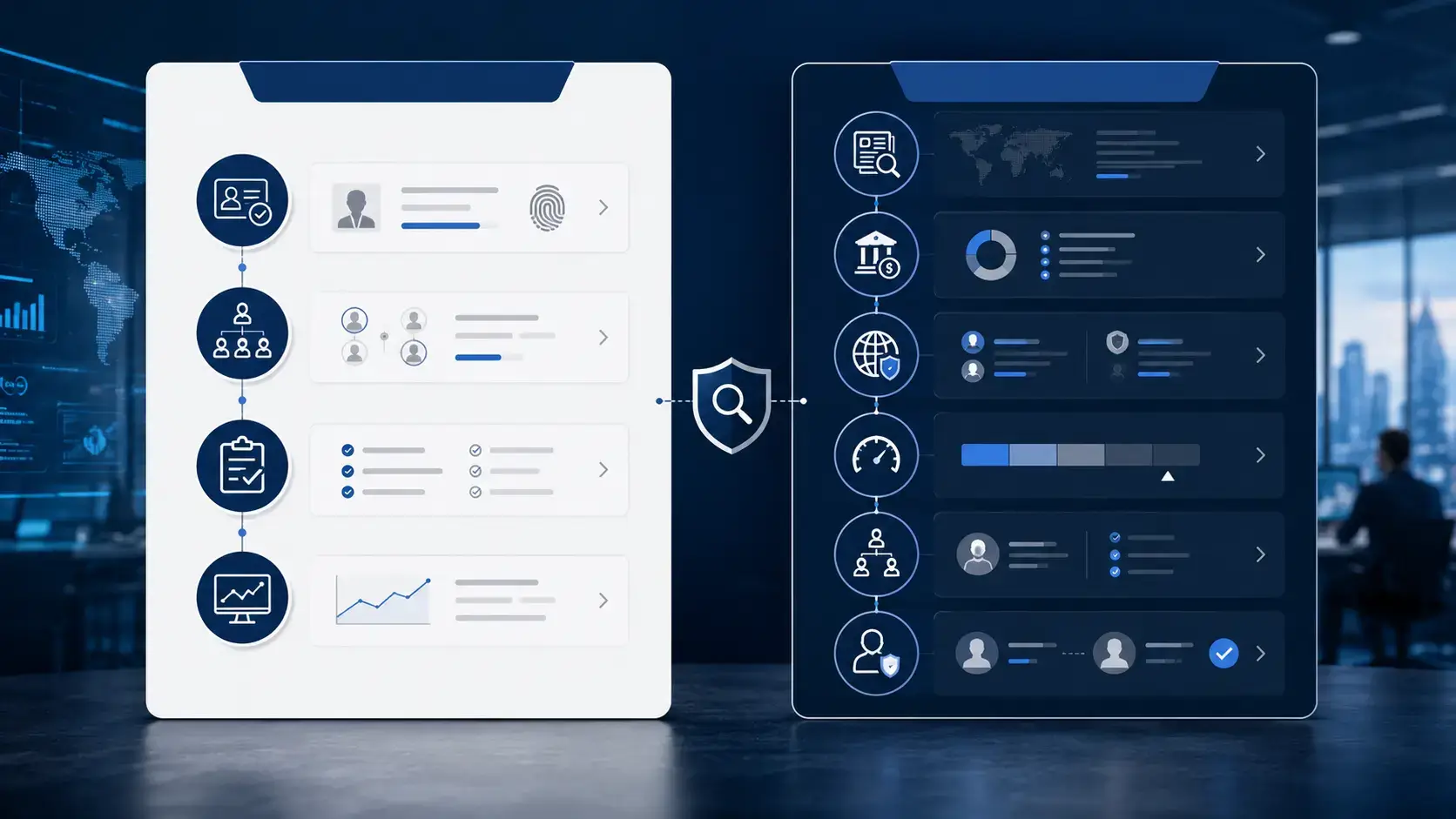
The easiest way to understand CDD vs EDD is to view them as two levels of the same compliance framework. CDD is the baseline. EDD is the escalation.
| Comparison Point | CDD | EDD |
| Full name | Customer Due Diligence | Enhanced Due Diligence |
| Main purpose | Verify identity, understand the relationship, and assess baseline risk | Investigate higher-risk relationships with deeper evidence and scrutiny |
| Typical risk level | Low to standard-risk customers or entities | High-risk customers, transactions, investors, partners, or third parties |
| Information depth | Basic identity, beneficial ownership, purpose of relationship, and risk profile | Source of funds, source of wealth, adverse media, litigation, complex ownership, and expanded background checks |
| Monitoring intensity | Standard ongoing monitoring based on risk | More frequent reviews, deeper monitoring, and event-based reassessment |
| Typical triggers | New onboarding, account opening, vendor intake, or routine compliance review | PEP exposure, sanctions proximity, high-risk jurisdiction, complex ownership, unusual activity, or reputational risk |
| Decision outcome | Approve, reject, request more information, or assign a risk rating | Approve with controls, escalate to compliance leadership, reject, or continue with enhanced monitoring |
What Is Customer Due Diligence?
Customer due diligence is the process of identifying who you are doing business with and understanding the risk that relationship may create.
Although the term often appears in banking and AML compliance, the concept is broader. CDD is relevant whenever an organization needs to verify customers, corporate entities, vendors, investors, acquisition targets, intermediaries, or other business relationships.
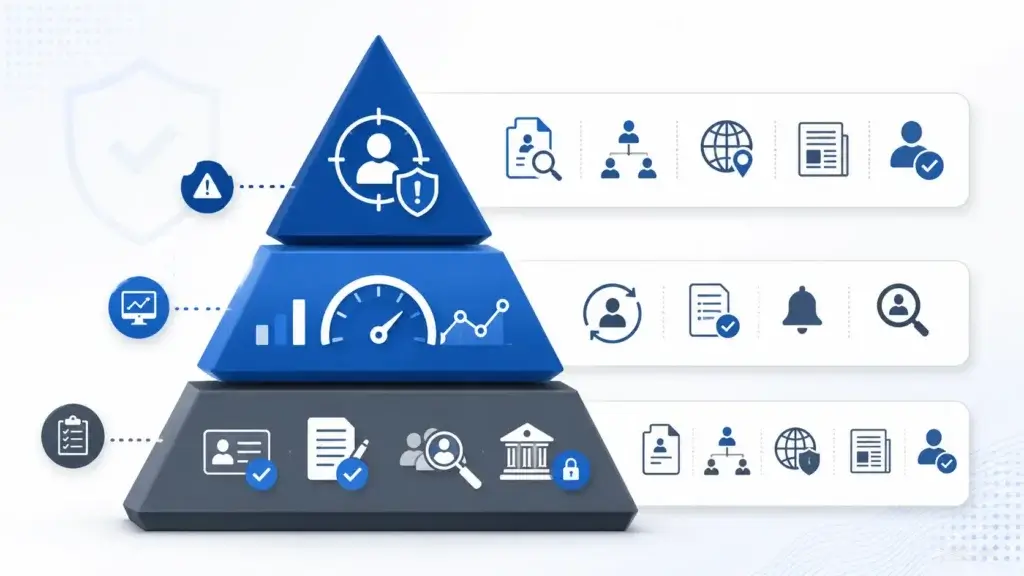
In AML due diligence, CDD usually supports four practical goals:
- Identify and verify the customer or entity
- Identify and verify beneficial owners where relevant
- Understand the purpose and expected nature of the relationship
- Monitor activity and update information based on risk
In the United States, the FinCEN CDD Rule sets out core customer due diligence requirements for covered financial institutions, including customer identification, beneficial ownership verification, customer risk profiling, and ongoing monitoring.
For legal and professional services firms, customer due diligence also helps identify the client, understand why they are instructing the firm, and assess the money laundering or terrorism financing risk connected to the matter. The same logic applies to compliance teams evaluating whether a relationship is legitimate, transparent, and aligned with internal risk appetite.
CDD is not only identity verification
A common mistake is treating CDD as a simple ID check. Identity verification is important, but customer due diligence is broader.
CDD should also help you understand the relationship. For example, a compliance team may need to know who owns the company, where the company operates, what type of business it conducts, whether the transaction makes commercial sense, and whether the expected activity matches the customer profile.
For a business customer, that may include:
- Legal name and registration details
- Registered address and operating address
- Directors, officers, and authorized representatives
- Ultimate beneficial owners, also called UBOs
- Business activity and expected transaction behavior
- Sanctions, watchlist, and PEP screening
- Adverse media review at a reasonable baseline level
The goal is not to collect information for its own sake. The goal is to form a reasonable view of risk.
What Is Enhanced Due Diligence?
Enhanced due diligence is a deeper level of investigation used when standard customer due diligence does not provide enough comfort.
EDD is usually triggered by higher-risk indicators. These may relate to the customer, the entity structure, the jurisdiction, the transaction, the product, the role of the third party, or the quality of information available during onboarding.
For example, EDD may be appropriate when you are reviewing a politically exposed person, a company with opaque ownership, an investor from a higher-risk jurisdiction, a third-party intermediary in a sensitive market, or an acquisition target with adverse media exposure.
Enhanced due diligence can include:
- Deeper beneficial ownership review
- Source-of-funds and source-of-wealth checks
- Adverse media and litigation research
- Sanctions and PEP screening across multiple sources
- Review of offshore links or complex corporate structures
- Senior compliance or management approval
- More frequent ongoing monitoring
EDD is not a separate compliance universe. It is an escalation of CDD. You still need to identify the subject, understand the relationship, and assess risk. The difference is that you collect more evidence, apply more scrutiny, and document the decision more carefully.
EDD should be proportionate to the risk
A good enhanced due diligence process is not automatically the same for every high-risk case.
For one customer, EDD may focus on source of funds. For another, it may focus on adverse media. For a corporate entity, it may focus on UBO verification and network mapping. For a broker, agent, distributor, or intermediary, it may focus on anti-bribery and corruption red flags.
This is where the risk-based approach matters. The deeper review should match the specific risk, not follow a generic checklist blindly.
CDD vs EDD: The Key Differences
CDD and EDD both exist to help you understand risk. The difference is how much scrutiny you need before making a decision.
1. Risk level
CDD is used for standard-risk relationships. EDD is used when the risk is higher, unclear, or unusually sensitive.
For example, a local business with transparent ownership and ordinary transaction behavior may fit a standard CDD workflow. A cross-border investment vehicle with layered ownership, offshore links, and adverse media references may require EDD.
2. Depth of information
CDD usually collects enough information to identify the customer, understand the relationship, and build a baseline risk profile.
EDD goes deeper. It may require source-of-wealth evidence, source-of-funds review, litigation checks, adverse media analysis, ownership mapping, transaction rationale, and stronger documentation of the final decision.
3. Review frequency
CDD includes ongoing monitoring, but the review frequency is usually based on the customer’s risk rating.
EDD relationships normally require closer monitoring. That may mean more frequent periodic reviews, event-based refreshes, and faster reassessment when new information appears.
4. Decision ownership
CDD may be handled by onboarding, compliance operations, legal operations, or a standard risk team.
EDD often requires escalation. A senior compliance officer, MLRO, legal counsel, risk committee, or business owner may need to approve the relationship before it continues.
5. Documentation standard
CDD documentation should show what was checked and why the customer was accepted, rejected, or assigned a particular risk rating.
EDD documentation must usually be more defensible. It should explain what triggered the escalation, which additional sources were reviewed, what evidence was found, which risks remain, and what controls should apply after approval.
When Should You Use CDD?
You should use customer due diligence when you need to establish a business relationship, onboard a customer, verify a company, open an account, assess a vendor, or evaluate a routine third-party relationship.
CDD is generally appropriate when the risk is low to standard and the information available is consistent, transparent, and easy to verify.
Common CDD use cases include:
- Onboarding a standard-risk customer
- Checking a corporate entity before account creation
- Verifying beneficial ownership for a routine business relationship
- Screening a vendor before procurement approval
- Refreshing customer information during periodic review
- Assessing whether a relationship should be escalated to EDD
CDD should not be treated as a one-time task. Even standard-risk customers can change over time. Ownership can change, transaction behavior can shift, sanctions exposure can emerge, and new adverse media can appear.
That is why good CDD programs include ongoing monitoring and event-driven review.
When Should You Escalate From CDD to EDD?
You should escalate from CDD to EDD when the standard process does not give you enough confidence to approve or continue the relationship.
In practice, escalation is usually triggered by one or more risk indicators.
Common EDD triggers
- The customer is a politically exposed person or linked to one
- The entity has complex or opaque beneficial ownership
- The customer is connected to a higher-risk jurisdiction
- Adverse media suggests fraud, corruption, sanctions, or litigation exposure
- The transaction size or structure does not match the expected profile
- The customer uses intermediaries, nominees, agents, or offshore vehicles
- Source of funds or source of wealth is unclear
- The relationship creates reputational or regulatory sensitivity
One important point: a trigger does not automatically mean the customer is unacceptable. It means the customer requires more work before a decision is made.
For example, a high-net-worth investor from a sensitive jurisdiction may still be a legitimate business relationship. However, the compliance team may need stronger evidence about source of wealth, investment rationale, ownership structure, sanctions exposure, and reputational risk before approval.
EDD is especially important for third-party risk
Enhanced due diligence is not limited to customers in the traditional banking sense.
It is also important when reviewing brokers, agents, distributors, resellers, referral partners, acquisition targets, investors, and other third parties that may create regulatory, corruption, sanctions, or reputational exposure.
This matters because many compliance failures do not come directly from the company’s own employees. They come through third parties acting on the company’s behalf or creating exposure through the business relationship.
CDD vs EDD in a Risk-Based Approach
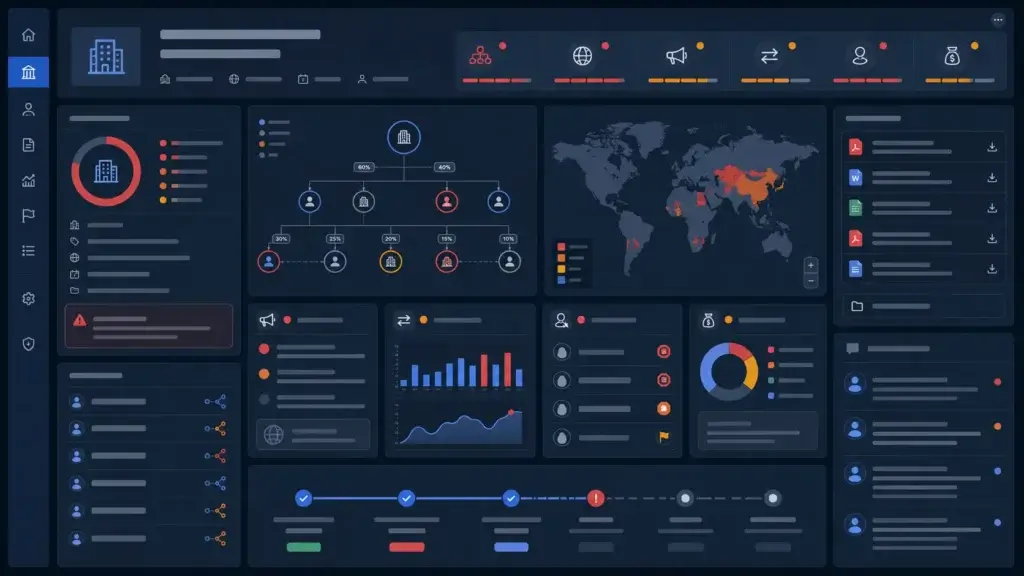
A risk-based approach means your due diligence process should match the level of risk.
Low-risk relationships may need lighter checks. Standard-risk relationships need normal customer due diligence. Higher-risk relationships need enhanced due diligence.
This approach helps compliance teams avoid two common problems.
The first problem is under-reviewing high-risk relationships. This creates regulatory, financial crime, and reputational exposure.
The second problem is over-reviewing low-risk relationships. This creates unnecessary friction, longer onboarding times, higher costs, and a poor customer experience.
A practical risk-based workflow often looks like this:
- Start with basic identity and entity verification
- Screen against sanctions, PEP, watchlist, and adverse media sources
- Assess risk based on geography, ownership, activity, industry, transaction size, and relationship type
- Apply CDD for standard-risk cases
- Escalate to EDD when red flags or higher-risk indicators appear
- Document the decision and apply ongoing monitoring based on risk
This is why CDD vs EDD should not be viewed as a choice between two disconnected processes. It is better to view them as connected stages in one AML due diligence framework.
How DueVestor Fits CDD and EDD Workflows
Due diligence software can help compliance teams move faster by standardizing checks, organizing evidence, and creating more consistent reports.
DueVestor is a practical example because its report types map clearly to different levels of compliance review. Instead of treating every case the same way, a team can choose a lighter or deeper report based on the risk profile and business need.
For a quick customer or entity check, a shorter compliance summary may be enough. For a higher-risk investor, partner, acquisition target, or intermediary, a deeper evidence-cited dossier may be more appropriate.
| Need | DueVestor Report Fit | Best Use Case |
| Quick customer or entity check | Type A Compliance Summary | Early-stage screening, KYC quick checks, sanctions review, and adverse media surfacing |
| Higher-risk investor, partner, or acquisition target | Type B Enhanced Due Diligence | Investor vetting, M&A diligence, partner onboarding, risk matrix review, and evidence-cited investigation |
| Shareable company compliance file | Type C Self-Attested Compliance | Companies that need a structured compliance dossier, questionnaire, named-person screening, and retrospective adverse media review |
| Broker, agent, distributor, or intermediary vetting | Type D Third-Party Vetting | FCPA-grade intermediary review, UBO verification, anti-bribery red flags, offshore data, and international litigation deep-scan |
The main value is alignment. A compliance team does not need to run a full enhanced investigation for every low-risk check. At the same time, it should not rely on a light compliance summary when the relationship involves an investor, acquisition target, politically exposed person, complex ownership structure, or sensitive intermediary.
That is exactly where CDD vs EDD becomes operational. You are not only defining terms. You are deciding how much evidence is required before the business can move forward.

CDD vs EDD Examples by Scenario
The best way to apply CDD vs EDD is to look at the relationship type and the risk signal together.
| Scenario | Likely Due Diligence Level | Why |
| Domestic customer with clear identity and ordinary activity | CDD | The risk appears standard and the relationship can usually be assessed through baseline checks |
| Company with transparent registration and low-risk ownership | CDD | Standard entity verification and beneficial ownership checks may be sufficient |
| Investor with complex offshore ownership | EDD | Ownership opacity and cross-border structures require deeper investigation |
| Partner with adverse media references | EDD | Negative media can create regulatory and reputational risk that standard checks may not explain |
| Broker or distributor operating in a high-risk region | EDD | Intermediary relationships can raise bribery, corruption, sanctions, and control risks |
| Existing customer with unusual transaction behavior | EDD or event-driven review | Behavior that differs from the expected profile may require deeper investigation |
This type of table can also help internal teams create consistent escalation rules. The clearer your triggers are, the easier it becomes to defend why a case stayed in CDD or moved to EDD.
CDD vs EDD and AML Due Diligence
AML due diligence is the broader compliance objective. CDD and EDD are two of the methods used to support it.
CDD helps you identify who the customer is and understand the expected relationship. EDD helps you manage higher-risk situations where financial crime, sanctions, corruption, fraud, or reputational exposure may be harder to detect through standard checks.
Strong AML due diligence usually depends on three layers:
- Initial screening during onboarding
- Risk scoring based on customer and relationship factors
- Ongoing monitoring after approval
CDD supports all three. EDD strengthens them when the risk level requires more evidence.
For example, a sanctions screen might clear a customer at onboarding. But if the customer later changes ownership, begins transacting with higher-risk jurisdictions, or appears in adverse media, the risk profile may need to be updated. That can trigger EDD even after the original onboarding was completed.
This is why due diligence should be viewed as a lifecycle process, not just an onboarding form.
Common CDD and EDD Mistakes
Even mature compliance teams can struggle with CDD and EDD if the process is not clearly documented.
Mistake 1: Treating CDD as a checkbox
CDD should create a useful risk profile. If the process only collects documents without interpreting them, it may not help the team identify suspicious or inconsistent activity later.
Mistake 2: Escalating too late
EDD should begin when risk indicators appear, not after the business has already committed to the relationship.
Late escalation creates pressure on compliance teams and may lead to rushed decisions.
Mistake 3: Using the same checklist for every high-risk case
EDD should be targeted. A PEP risk, sanctions risk, corruption risk, and complex ownership risk may require different evidence.
A generic checklist can miss the issue that actually matters.
Mistake 4: Failing to document why EDD was or was not required
The decision not to escalate can be just as important as the decision to escalate.
If a regulator, auditor, or internal risk committee reviews the case later, the file should explain why standard CDD was enough or why EDD was applied.
Mistake 5: Ignoring ongoing monitoring
Customer risk changes over time. Ownership changes, sanctions lists change, public records change, and business activity changes.
Without ongoing monitoring, both CDD and EDD become outdated quickly.
How to Document a CDD or EDD Decision
Good documentation makes your due diligence process easier to review, audit, and defend.
For CDD, the file should usually explain:
- Who was reviewed
- What information was collected
- Which sources were checked
- What risk rating was assigned
- Why the relationship was approved, rejected, or escalated
For EDD, the documentation should go further. It should explain the trigger, the additional research performed, the evidence found, the risk that remains, and the controls required after approval.
Those controls might include transaction limits, periodic refreshes, senior approval, restricted activities, enhanced monitoring, or a requirement to provide updated ownership information.
This is especially important for higher-risk third parties. If your company works with brokers, agents, distributors, or intermediaries, the due diligence file should show that the business understood the risk before approving the relationship.
How to Choose Between CDD and EDD
The decision should be based on risk, not convenience.
Use CDD when the relationship is standard, the identity and ownership are clear, the expected activity makes sense, and no meaningful red flags appear.
Use EDD when the relationship is higher-risk, the information is incomplete, the ownership is complex, the geography is sensitive, the transaction is unusual, or the relationship could create regulatory or reputational exposure.
A simple decision framework looks like this:
- If the risk is low or standard, complete CDD and monitor normally
- If the risk is unclear, request more information before approval
- If the risk is high, complete EDD before approval
- If the risk cannot be mitigated, reject or exit the relationship
This framework helps compliance teams move faster without weakening controls. It also helps the business understand that EDD is not a delay tactic. It is a risk control used when the facts demand more scrutiny.
Final Thoughts
CDD Is the Baseline, EDD Is the Escalation
The difference between CDD and EDD is simple, but the operational impact is significant.
CDD is the standard customer due diligence process. It helps you identify the customer, verify key information, understand the relationship, assign a risk profile, and monitor activity.
EDD is the enhanced review used when risk is higher. It adds deeper investigation, stronger evidence, expanded screening, source-of-funds or source-of-wealth review, adverse media analysis, litigation checks, ownership mapping, and closer monitoring.
For compliance teams, the goal is not to run the deepest review on every relationship. The goal is to apply the right level of due diligence to the right level of risk.
That is where software can help. A practical tool like DueVestor can support different review depths, from a quick Type A Compliance Summary to a Type B Enhanced Due Diligence report, Type C Self-Attested Compliance file, or Type D Third-Party Vetting report for intermediaries and higher-risk third-party relationships.
If you are building or improving a compliance workflow in 2026, treat CDD vs EDD as more than a terminology question. It is a decision framework for protecting your organization, improving onboarding consistency, and documenting risk-based compliance decisions with more confidence.
FAQs
What is the main difference between CDD and EDD?
The main difference between CDD and EDD is the level of risk and scrutiny. CDD is the standard customer due diligence process for most relationships, while EDD is used when a customer, entity, investor, transaction, or third party presents higher risk and requires deeper investigation.
What does CDD stand for?
CDD stands for Customer Due Diligence. It is the process of identifying and verifying a customer or entity, understanding the purpose of the relationship, assessing risk, and monitoring activity over time.
What does EDD stand for?
EDD stands for Enhanced Due Diligence. It is a deeper due diligence process used for higher-risk relationships, often including source-of-funds checks, source-of-wealth review, adverse media research, litigation checks, beneficial ownership analysis, and closer monitoring.
Is EDD part of CDD?
Yes. EDD can be viewed as an enhanced layer of the broader customer due diligence framework. CDD is the baseline process, while EDD is applied when the risk profile requires more evidence and scrutiny.
When should a company use EDD instead of CDD?
A company should use EDD instead of standard CDD when risk indicators appear, such as PEP exposure, high-risk jurisdictions, complex ownership structures, adverse media, unclear source of funds, unusual transaction behavior, or sensitive intermediary relationships.
Does every customer need enhanced due diligence?
No. Enhanced due diligence is not required for every customer. Under a risk-based approach, standard-risk customers usually go through CDD, while higher-risk customers or entities are escalated to EDD.
What information is collected during CDD?
CDD usually collects identity information, business registration details, beneficial ownership information, address data, purpose of the relationship, expected activity, and baseline screening results such as sanctions, PEP, and adverse media checks.
What information is collected during EDD?
EDD may collect deeper information such as source of funds, source of wealth, expanded adverse media, litigation history, offshore links, ownership networks, business relationships, transaction rationale, and senior approval documentation.
How does a risk-based approach affect CDD vs EDD?
A risk-based approach determines how much due diligence is required. Low or standard-risk relationships may only need CDD, while higher-risk relationships require EDD, stronger documentation, and more frequent monitoring.
How can software help with CDD and EDD?
Software can help by standardizing checks, screening customers and entities, organizing evidence, creating risk reports, monitoring changes, and matching the depth of review to the risk level. For example, DueVestor offers different report types for quick compliance summaries, enhanced due diligence, self-attested compliance files, and third-party vetting.