Introduction
Enhanced due diligence is the deeper level of investigation compliance teams use when a customer, investor, supplier, acquisition target, intermediary, or business partner presents a higher risk than usual.
Standard due diligence may be enough for low-risk relationships. It can confirm basic identity, business registration, ownership information, and initial screening results. But when the relationship includes red flags, complex ownership, offshore structures, sanctions exposure, political connections, adverse media, unusual transaction behavior, or high-risk jurisdictions, routine checks are usually not enough.
That is where enhanced due diligence becomes important.
For compliance teams, the purpose of enhanced due diligence is not only to collect more information. The real goal is to understand the risk clearly enough to make a defensible decision. You need to know who you are dealing with, who controls the entity, where the money or influence comes from, whether red flags are explainable, and what monitoring should happen after onboarding.
This guide explains what enhanced due diligence means, when it is needed, how the enhanced due diligence process works, and what an effective EDD checklist should include.
It also explains how compliance due diligence software can help teams reduce manual research, organize evidence, and create a clearer audit trail when vetting high-risk third parties.
What Is Enhanced Due Diligence?
Enhanced due diligence, often shortened to EDD, is a deeper investigation process used when a person, company, transaction, investment, vendor, or partner presents elevated legal, financial, regulatory, reputational, or operational risk.
In simple terms, enhanced due diligence means going beyond basic identity and screening checks.
Instead of asking only “Does this entity exist?” or “Is this person on a sanctions list?”, EDD asks more detailed questions:
- Who truly owns or controls the entity?
- Is the business activity legitimate and explainable?
- Are there sanctions, PEP, litigation, or adverse media concerns?
- Does the source of funds or source of wealth make sense?
- Are there hidden relationships with government officials?
- Does the third party match your company’s risk appetite?
- What controls are needed if the relationship moves forward?
Ethixbase360 describes a robust enhanced due diligence checklist as covering risk assessment, verification, risk monitoring, and compliance. That is a useful way to think about EDD because it shows that the process is not just a one-time background check. It is a structured method for identifying, validating, documenting, and monitoring risk.
For compliance teams, enhanced due diligence is especially relevant in areas such as anti-money laundering, anti-bribery and corruption, sanctions compliance, third-party risk management, investor vetting, M&A diligence, vendor onboarding, and partner screening.
The key principle is proportionality. The higher the risk, the deeper the review should be.
Enhanced Due Diligence vs Standard Due Diligence
Standard due diligence and enhanced due diligence serve the same broad purpose: helping your organization understand who it is dealing with before entering or continuing a relationship.
The difference is the depth of review.
Standard due diligence usually focuses on baseline verification. You confirm the identity of the person or company, collect registration details, screen against sanctions and watchlists, check ownership information where available, and classify the relationship by risk level.
Enhanced due diligence goes further. It investigates the context behind the risk. It may include deeper beneficial ownership analysis, source of funds checks, political exposure review, litigation research, adverse media analysis, regulatory history, jurisdiction risk, business rationale, and ongoing monitoring.
| Area | Standard Due Diligence | Enhanced Due Diligence |
| Risk level | Low to moderate-risk relationships | Higher-risk customers, investors, vendors, partners, or deals |
| Identity checks | Basic identity or company verification | Deeper identity, ownership, control, and relationship validation |
| Screening | Sanctions and basic watchlist checks | Sanctions, PEPs, adverse media, litigation, regulatory issues, and related parties |
| Ownership | Basic beneficial ownership collection | Cross-checking UBOs, directors, shareholders, shell entities, and nominee structures |
| Business rationale | General explanation of relationship purpose | Detailed review of why the relationship exists and whether it makes commercial sense |
| Documentation | Basic file record | Evidence-cited report, risk rationale, escalation history, and approval trail |
| Monitoring | Periodic or event-based refresh | More frequent monitoring based on risk triggers and ongoing exposure |
Standard due diligence helps you decide whether a relationship appears normal. Enhanced due diligence helps you decide whether an elevated-risk relationship is acceptable, explainable, controllable, and properly documented.
When Standard Due Diligence Is Not Enough
Standard checks are not enough when the risk profile of the relationship is higher than your normal onboarding threshold.
This can happen because of who the third party is, where they operate, how they are structured, what they do, or how the relationship is expected to work.
High-risk jurisdictions
Enhanced due diligence is commonly triggered when a customer, investor, vendor, or partner is connected to a country with elevated money laundering, terrorist financing, sanctions, corruption, or regulatory risk.
Jurisdiction risk can come from several factors. These include weak AML controls, high corruption exposure, sanctions programs, restricted trade, limited company registry transparency, or links to high-risk sectors.
For compliance teams, the important point is that geography should not be treated as a simple checkbox. You need to understand whether the entity is registered in the jurisdiction, operates there, holds assets there, uses banks there, or has owners and directors connected to that location.
Politically exposed persons
A politically exposed person, or PEP, is someone who holds or has held a prominent public function. The risk can also extend to family members and close associates.
A PEP connection does not automatically mean you must reject the relationship. It does mean you should perform deeper checks. Political exposure can create higher bribery, corruption, influence, procurement, sanctions, or reputational risk.
Enhanced due diligence should review the nature of the political exposure, the person’s role, the jurisdiction involved, the source of wealth, the relationship to your counterparty, and whether the business rationale is legitimate.
Complex ownership structures
Complex ownership is one of the clearest signs that standard due diligence may not be enough.
For example, a company may be owned through several layers of holding companies across multiple jurisdictions. It may use nominee shareholders, trusts, offshore entities, or private investment vehicles. In some cases, the structure is legitimate. In others, it can hide control, beneficial ownership, conflicts of interest, sanctions exposure, or illicit funds.
Enhanced due diligence should map the ownership chain, identify ultimate beneficial owners, cross-check records, and explain any uncertainty.
Adverse media or litigation
Adverse media does not always mean the third party is unsuitable. News coverage can be outdated, inaccurate, duplicated, or unrelated to the current entity.
Still, unresolved negative media is a major EDD trigger. Compliance teams should review allegations carefully, verify sources, separate credible reporting from noise, and decide whether the issue creates a real risk.
Litigation, insolvency records, regulatory actions, fraud allegations, employment disputes, procurement issues, environmental violations, or corruption claims may all require a deeper review.
Unusual business rationale
Enhanced due diligence is also important when the relationship does not make obvious commercial sense.
For example, a consultant may request unusually high commissions. A distributor may have no clear capability in the target market. A vendor may insist on payment through an unrelated entity. An investor may use a complicated structure without a clear reason.
These situations do not always mean misconduct is happening. But they do require a deeper explanation before approval.
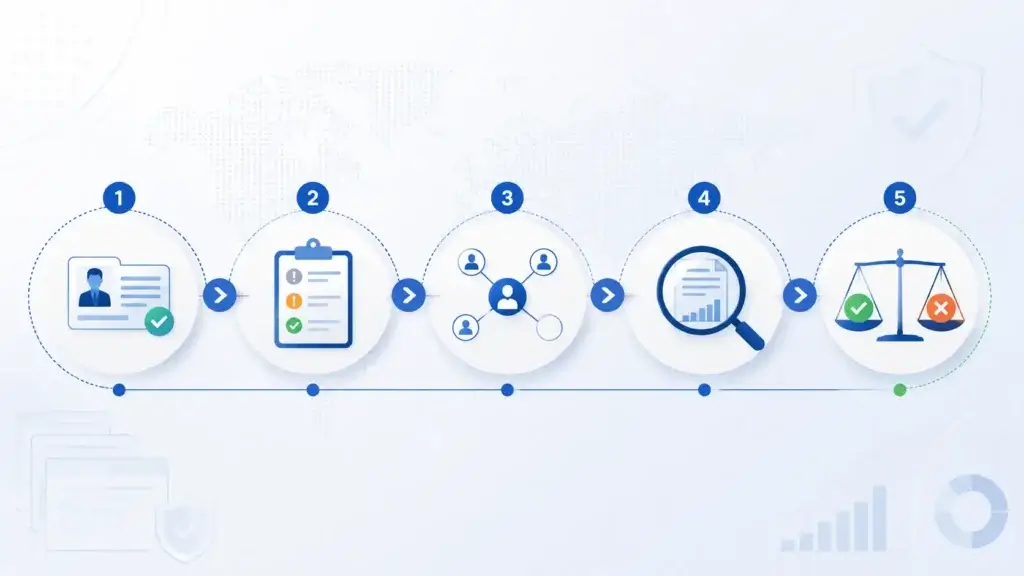
The Enhanced Due Diligence Process
A strong enhanced due diligence process should be structured enough to support consistency, but flexible enough to match the actual risk.
The goal is not to run the same deep investigation on every third party. That would waste time and budget. The better approach is to apply deeper checks only when the risk level justifies them.
Step 1: Identify the EDD trigger
The process starts with a trigger.
A trigger is the reason standard due diligence is not enough. It may come from sanctions screening, a risk questionnaire, adverse media, geography, ownership complexity, transaction size, payment structure, sector risk, PEP exposure, or a compliance team review.
You should document the trigger clearly. This helps explain why the case was escalated and what additional checks were required.
Step 2: Define the scope of review
Not every EDD case needs the same scope.
A high-risk vendor may require sanctions, adverse media, ownership, and litigation checks. A potential investor may require source of funds, source of wealth, beneficial ownership, and reputational review. An M&A target may require broader corporate, financial, legal, regulatory, and management diligence.
Before starting, define what you need to investigate and why.
Step 3: Collect and verify information
EDD should combine information provided by the third party with independent verification.
Self-reported data is useful, but it should not be the only source of truth in a high-risk case. You should compare questionnaire responses, ownership statements, documents, public registries, sanctions databases, corporate filings, court records, media sources, and internal business explanations.
Where information cannot be verified, document the limitation instead of pretending the issue is resolved.
Step 4: Analyze the risk
After collecting the evidence, your team should analyze what it means.
This is where enhanced due diligence becomes more than research. You need to decide whether the findings are low, medium, or high concern. You also need to determine whether the risk can be mitigated.
For example, a past lawsuit may be low risk if it was minor, old, and resolved. A sanctions match may be high risk if it is confirmed and connected to the entity or its beneficial owner. A PEP connection may be manageable if the relationship is transparent, well documented, and supported by senior approval.
Step 5: Escalate and approve
Higher-risk relationships should not be approved casually.
Your process should define who can approve an EDD case, what information they need, and when legal, compliance, finance, procurement, or senior management should be involved.
Approval should be based on the full risk picture, not only a simple pass or fail result.
Step 6: Monitor the relationship
Enhanced due diligence does not end at onboarding.
Risk can change after approval. A company may be added to a sanctions list. A beneficial owner may become politically exposed. Litigation may emerge. A distributor may change payment behavior. A vendor may expand into higher-risk jurisdictions.
High-risk third parties should be monitored more closely than low-risk relationships. The frequency should match the risk level and the importance of the relationship.
EDD Checklist for Compliance Teams
An EDD checklist helps your team avoid inconsistent reviews. It also makes the process easier to defend if regulators, auditors, counsel, or senior leadership ask how the decision was made.
The checklist below can be adapted for customers, investors, vendors, intermediaries, acquisition targets, and strategic partners.
| EDD Checklist Area | What to Review | Why It Matters |
| Identity and registration | Legal name, registration number, address, directors, entity status | Confirms the third party exists and matches the provided information |
| Beneficial ownership | UBOs, shareholders, control rights, holding companies, nominee structures | Shows who ultimately owns or controls the entity |
| Sanctions screening | Entity, directors, owners, affiliates, related companies, vessels, addresses | Identifies prohibited or restricted relationships |
| PEP screening | Political exposure of owners, directors, executives, family members, associates | Helps assess bribery, corruption, influence, and public procurement risk |
| Adverse media | Fraud, corruption, sanctions, labor, environmental, insolvency, criminal allegations | Reveals reputational and compliance concerns not found in structured databases |
| Litigation and enforcement | Court records, regulatory actions, fines, investigations, insolvency records | Identifies legal exposure and repeated misconduct patterns |
| Business rationale | Purpose of relationship, services provided, pricing, commission structure, market need | Tests whether the relationship makes commercial sense |
| Source of funds or wealth | Funding origin, investor capital, ownership wealth, payment sources | Important for investor vetting, AML, and high-value transactions |
| Jurisdiction exposure | Countries of registration, operation, banking, ownership, customers, supply chain | Assesses country risk and sanctions exposure |
| Risk decision | Risk rating, mitigations, approvals, monitoring schedule, file notes | Creates a defensible audit trail for the final decision |
This checklist should not be treated as a static template. You should adjust it based on your industry, jurisdiction, risk appetite, regulatory obligations, and the type of third party being reviewed.

How to Evaluate High-Risk Third Parties
High-risk third parties require more judgment than low-risk vendors or customers. A simple screening result rarely gives you the full answer.
For compliance teams, the key is to separate manageable risk from unacceptable risk.
Start with risk tiering
You need a clear risk-tiering model before you can evaluate high-risk third parties consistently.
Your model should consider factors such as country risk, sector risk, transaction value, government touchpoints, payment structure, ownership complexity, sanctions exposure, PEP links, adverse media, and the strategic importance of the relationship.
A risk score does not replace human judgment, but it helps your team prioritize cases and apply consistent review standards.
Look beyond the direct counterparty
High-risk third-party reviews should not stop at the company name.
You may need to review directors, beneficial owners, subsidiaries, parent companies, intermediaries, affiliates, key executives, and related entities. In some cases, risk sits outside the direct contracting party.
For example, a vendor may appear clean, but its beneficial owner may be politically exposed. A distributor may pass sanctions screening, but its parent company may have serious regulatory issues. An acquisition target may look attractive, but its offshore ownership chain may create unresolved control questions.
Assess whether red flags are explainable
Not all red flags lead to rejection.
A compliance team should ask whether the red flag is verified, current, material, and connected to the relationship. You should also ask whether the third party has a credible explanation and whether the risk can be controlled through contract terms, monitoring, payment controls, audit rights, training, or restricted activity.
The strongest EDD files do not simply list red flags. They explain what the red flags mean.
Document the decision clearly
A high-risk approval should show the reasoning behind the decision.
Your file should explain the risk factors, evidence reviewed, open questions, mitigating controls, approval authority, and monitoring requirements. This protects the organization if the relationship is later questioned.
How Software Can Speed Up Enhanced Due Diligence
Enhanced due diligence can become slow when compliance teams rely on manual searches, scattered spreadsheets, email threads, screenshots, and disconnected research notes.
That creates several problems.
First, analysts spend too much time collecting information instead of interpreting risk. Second, evidence becomes difficult to audit. Third, different team members may apply different standards. Fourth, ongoing monitoring can be missed after the initial review.
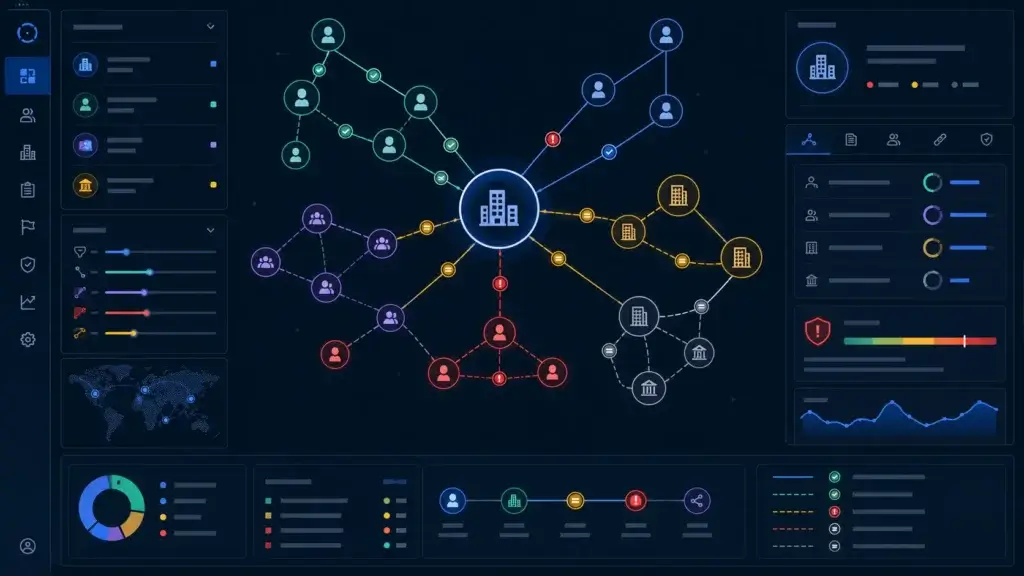
Compliance due diligence software can help by centralizing screening, risk scoring, document collection, adverse media review, ownership mapping, monitoring, and reporting.
The best software does not replace compliance judgment. It makes the evidence easier to collect, compare, and explain.
Where DueVestor fits in the EDD workflow
DueVestor is a practical example of software built to speed up deeper due diligence work.
DueVestor’s Enhanced Due Diligence report is designed for investor vetting, M&A diligence, and partner onboarding. It includes an 11-dimension risk matrix, a scored network map, litigation and offshore leak checks, adverse media sweeps, cross-verified findings, confidence levels, and a 20-30 page evidence-cited dossier.
That makes it useful when your team needs more than a quick sanctions screen, but does not want to wait weeks for a fully manual investigative report.
For compliance teams, the strongest use cases include:
- Vetting investors before accepting capital
- Screening acquisition targets before deeper M&A review
- Checking strategic partners before onboarding
- Reviewing high-risk suppliers or intermediaries
- Creating evidence-cited reports for internal approval
- Prioritizing which cases need legal or senior compliance review
DueVestor is especially relevant when speed and documentation both matter. A scored risk matrix can help you compare cases consistently, while an evidence-cited dossier can support internal discussions with compliance, legal, procurement, investment, and leadership teams.
Still, software should support the EDD process rather than replace it. Your team should review the findings, validate the risk logic, decide whether additional checks are needed, and document the final decision.
What to Include in an Enhanced Due Diligence Report
An enhanced due diligence report should be clear enough for decision-makers and detailed enough for reviewers.
The report should not read like a random collection of search results. It should tell the risk story in a structured way.
A strong EDD report usually includes:
- Executive summary
- Subject profile
- Scope of review
- EDD trigger
- Ownership and control findings
- Sanctions and watchlist results
- PEP and political exposure analysis
- Adverse media and litigation review
- Source of funds or source of wealth notes
- Jurisdiction risk factors
- Risk rating and rationale
- Recommended mitigation actions
- Approval history
- Evidence and source references
- Monitoring recommendation
The most important part is the risk rationale. A decision-maker should be able to understand why the case is low, medium, high, or unacceptable risk.
If the report contains unresolved issues, say so clearly. An honest limitation is better than a weak conclusion.
Enhanced Due Diligence for Investor Vetting
Investor vetting is one of the clearest use cases for enhanced due diligence.
When your company accepts capital, you may be accepting more than money. You may also be accepting reputational risk, regulatory exposure, sanctions concerns, governance issues, or future conflict risk.
Standard checks may confirm the investor’s name and legal entity. Enhanced due diligence goes deeper into beneficial ownership, source of funds, source of wealth, litigation, sanctions exposure, political connections, adverse media, and the investor’s track record.
This matters for startups, funds, private companies, acquisition targets, and regulated businesses. A problematic investor can create issues with future fundraising, banking relationships, licensing, strategic buyers, public reputation, and board governance.
Before accepting investment from a higher-risk party, your team should understand who controls the capital and whether the funds are explainable.
Enhanced Due Diligence for M&A
In M&A, enhanced due diligence helps buyers understand whether a target company carries hidden compliance risk.
Financial statements and commercial performance are only part of the picture. A target may also have sanctions exposure, bribery risk, unresolved litigation, weak controls, undisclosed beneficial owners, problematic agents, government contracts, or high-risk third-party relationships.
EDD is especially important when a target operates in regulated industries, emerging markets, government-facing sectors, defense, financial services, crypto, extractives, logistics, healthcare, or cross-border supply chains.
The goal is not only to decide whether to close the deal. The goal is also to price risk correctly, negotiate protections, plan integration, and decide what remediation is needed after closing.
Enhanced Due Diligence for Partner Onboarding
Partner onboarding is another area where standard due diligence can be too shallow.
This is especially true for agents, brokers, distributors, resellers, consultants, lobbyists, referral partners, suppliers, and intermediaries that interact with customers, government bodies, or regulated markets on your behalf.
A partner may create risk even when your company is not directly involved in the misconduct. If the partner pays bribes, violates sanctions, misrepresents your product, uses forced labor, falsifies documents, or works through hidden intermediaries, your company may still face legal, regulatory, financial, and reputational consequences.
Enhanced due diligence should review the partner’s ownership, capabilities, reputation, regulatory history, government connections, payment structure, and commercial rationale.
You should also define post-approval controls. These may include contract clauses, audit rights, training, invoice review, restricted activities, payment approvals, certification renewals, and ongoing monitoring.
How Often Should Enhanced Due Diligence Be Updated?
EDD should be refreshed when risk changes.
For high-risk relationships, relying only on a one-time onboarding review is usually not enough. A third party that looked acceptable at onboarding may become riskier later because of ownership changes, sanctions updates, new litigation, management changes, adverse media, geographic expansion, or unusual transaction behavior.
Your refresh schedule should depend on the risk level.
| Risk Level | Suggested Review Approach | Common Trigger Events |
| Low risk | Periodic refresh based on policy | Ownership change, address change, new sanctions hit |
| Medium risk | More frequent review and event-based monitoring | New adverse media, litigation, market expansion, payment changes |
| High risk | Enhanced monitoring and scheduled reassessment | PEP exposure, sanctions proximity, government touchpoints, high-risk jurisdictions |
| Critical risk | Senior escalation, legal review, or relationship hold | Confirmed sanctions, fraud, corruption allegations, hidden ownership, unexplained funds |
The important point is to connect monitoring to real risk. A high-risk relationship should not receive the same attention as a routine low-risk supplier.
Common Enhanced Due Diligence Mistakes
Enhanced due diligence can fail even when teams work hard. The most common problems are usually process problems, not effort problems.
Relying only on database matches
Screening databases are useful, but they are not the full EDD process.
A database may identify sanctions, PEPs, watchlists, or adverse media. But your team still needs to validate matches, assess context, review ownership, document findings, and decide what the risk means.
Ignoring beneficial ownership complexity
Ownership complexity is often where risk hides.
If your team stops at the first shareholder level, you may miss the real controller. Enhanced due diligence should trace ownership and control as far as reasonably possible, especially when offshore entities, trusts, nominees, or layered structures appear.
Treating adverse media as automatic rejection
Adverse media should be investigated, not blindly accepted.
Some articles are duplicated, outdated, politically motivated, or unrelated to the subject. Others are serious and well supported. Your job is to assess credibility, relevance, timing, and connection to the proposed relationship.
Failing to document the decision
An EDD file without a clear decision rationale is weak.
Even if your team performed the right checks, you need to explain what was found, why it matters, how it was resolved, and who approved the final decision.
Forgetting ongoing monitoring
Risk is not fixed.
High-risk third parties should be monitored after onboarding. Otherwise, your organization may miss new sanctions exposure, ownership changes, litigation, adverse media, or behavior that changes the risk profile.
Final Thoughts
Enhanced Due Diligence Helps You Make Better Risk Decisions
Enhanced due diligence is not just a compliance formality. It is a practical decision-making process for higher-risk relationships.
Standard due diligence tells you whether the basics appear acceptable. Enhanced due diligence helps you understand what sits behind the risk: ownership, control, political exposure, sanctions proximity, litigation, adverse media, source of funds, business rationale, and ongoing monitoring needs.
For compliance teams, the best EDD process is risk-based, evidence-driven, and well documented. It should be deep enough to answer the real questions, but not so broad that every case becomes slow and expensive.
Software can help make this process faster and more consistent. Platforms like DueVestor are useful when you need structured risk scoring, ownership context, adverse media review, litigation checks, and an evidence-cited dossier for investor vetting, M&A diligence, and partner onboarding.
The final decision, however, should still belong to your compliance process.
Enhanced due diligence works best when technology, policy, analyst judgment, and senior approval come together. That combination helps your team move faster without losing control of risk.
FAQs
What is enhanced due diligence?
Enhanced due diligence is a deeper investigation process used when a customer, investor, vendor, partner, transaction, or acquisition target presents higher-than-normal risk. It usually includes deeper identity checks, beneficial ownership review, sanctions screening, PEP screening, adverse media analysis, litigation research, source of funds checks, and ongoing monitoring.
When is enhanced due diligence required?
Enhanced due diligence is usually required when standard due diligence identifies elevated risk. Common triggers include high-risk jurisdictions, politically exposed persons, complex ownership structures, sanctions exposure, adverse media, unusual payment patterns, government touchpoints, or unclear business rationale.
What is the difference between due diligence and enhanced due diligence?
Standard due diligence confirms basic identity, registration, ownership, and screening information. Enhanced due diligence goes deeper by investigating higher-risk factors such as beneficial ownership complexity, source of funds, PEP links, litigation, adverse media, sanctions proximity, and ongoing monitoring needs.
What should an EDD checklist include?
An EDD checklist should include identity verification, company registration, beneficial ownership, sanctions screening, PEP screening, adverse media review, litigation checks, regulatory history, jurisdiction exposure, business rationale, source of funds or wealth, risk rating, approval history, and monitoring requirements.
Who performs enhanced due diligence?
Enhanced due diligence is usually performed by compliance teams, AML teams, legal teams, procurement risk teams, investment teams, third-party risk teams, or external due diligence providers. In higher-risk cases, senior management or legal counsel may need to review and approve the final decision.
What are high-risk third parties?
High-risk third parties are customers, vendors, suppliers, agents, distributors, investors, consultants, or partners that present elevated compliance, sanctions, bribery, fraud, reputational, or operational risk. Risk may come from geography, ownership, political exposure, adverse media, transaction value, or the nature of the relationship.
Is enhanced due diligence only for financial institutions?
No. Enhanced due diligence is important for financial institutions, but it is also used by companies managing third-party risk, investor vetting, M&A diligence, supply chain compliance, anti-bribery programs, sanctions compliance, procurement risk, and partner onboarding.
How often should enhanced due diligence be updated?
Enhanced due diligence should be updated based on risk level and trigger events. High-risk relationships may require more frequent reviews and ongoing monitoring, especially after ownership changes, new adverse media, sanctions updates, management changes, unusual transactions, or expansion into higher-risk jurisdictions.
Can software automate enhanced due diligence?
Software can automate parts of enhanced due diligence, including screening, ownership mapping, adverse media searches, risk scoring, monitoring, and report generation. However, compliance teams should still review findings, validate context, resolve red flags, and document the final decision.
How does DueVestor support enhanced due diligence?
DueVestor supports enhanced due diligence with reports designed for investor vetting, M&A diligence, and partner onboarding. Its Enhanced Due Diligence report includes a scored risk matrix, network map, litigation and adverse media checks, cross-verified findings, confidence levels, and an evidence-cited dossier.