
Introduction
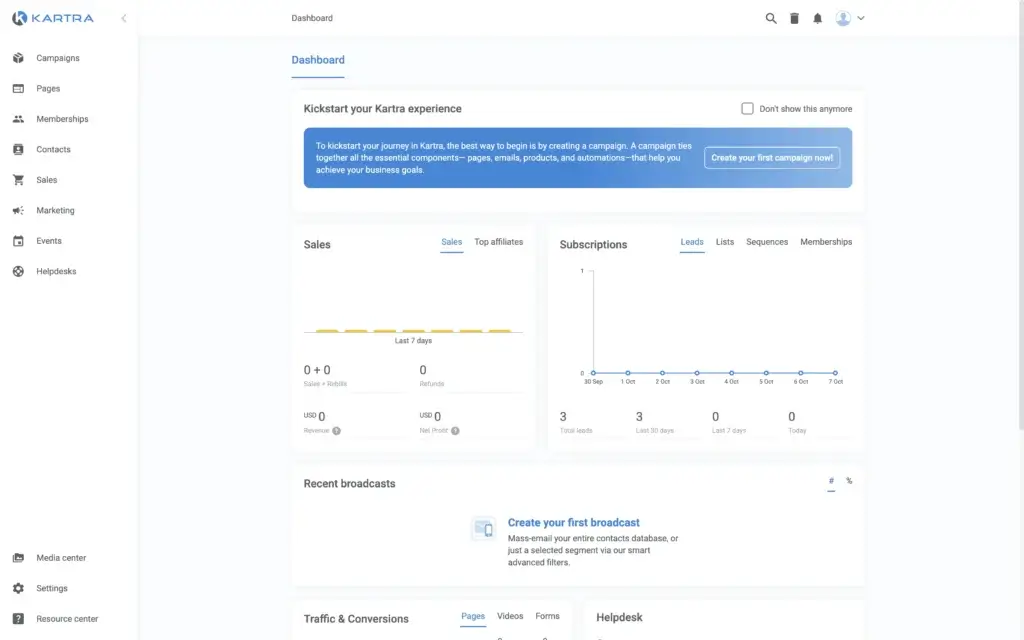
Running your marketing stack across separate tools can become expensive and messy very quickly. Kartra is designed to solve that problem by combining landing pages, funnels, email marketing, automation, checkouts, memberships, calendars, analytics, and customer management in one platform. In this review, you’ll get a clear look at Kartra’s core features, pricing, strengths, limitations, and best use cases, so you can decide whether it is the right marketing platform for your business in 2026.
What Is Kartra?
Kartra is an all-in-one marketing and sales platform built for businesses that want to capture leads, nurture them, sell products or services, and manage customer relationships from one dashboard. Instead of stitching together a page builder, email tool, checkout software, membership platform, calendar app, and helpdesk, Kartra aims to bring those functions into a single connected system.
Background and Evolution
Kartra has long been known as a platform for digital entrepreneurs, coaches, consultants, and online course businesses. Over time, it has expanded far beyond funnel building. The current product now includes email and SMS marketing, lead management, memberships, checkouts, webinars, surveys, helpdesk functionality, built-in calendars, and AI writing tools. More recent product messaging also puts greater emphasis on faster checkout experiences and broader business management capabilities.
Target Users and Use Cases
Kartra is best suited for businesses that want to centralize marketing and sales operations. Common use cases include:
- Coaches and consultants – Build landing pages, collect leads, book appointments, and automate follow-up.
- Course creators – Sell online programs, manage memberships, and deliver gated content.
- Digital marketers – Launch funnels, segment audiences, and optimize conversions.
- Service businesses – Combine lead capture, checkout, calendar booking, and email automation in one platform.
- Small online businesses – Reduce the need for multiple subscriptions across disconnected tools.
If your business depends on lead generation, follow-up sequences, digital sales, or recurring customer journeys, Kartra is built to cover most of that workflow inside one ecosystem.
How Does It Work?
Key Features of Kartra
Kartra’s appeal comes from how many important marketing functions it combines in one place. Here are the features that matter most when evaluating the platform.
Landing Pages and Funnel Builder
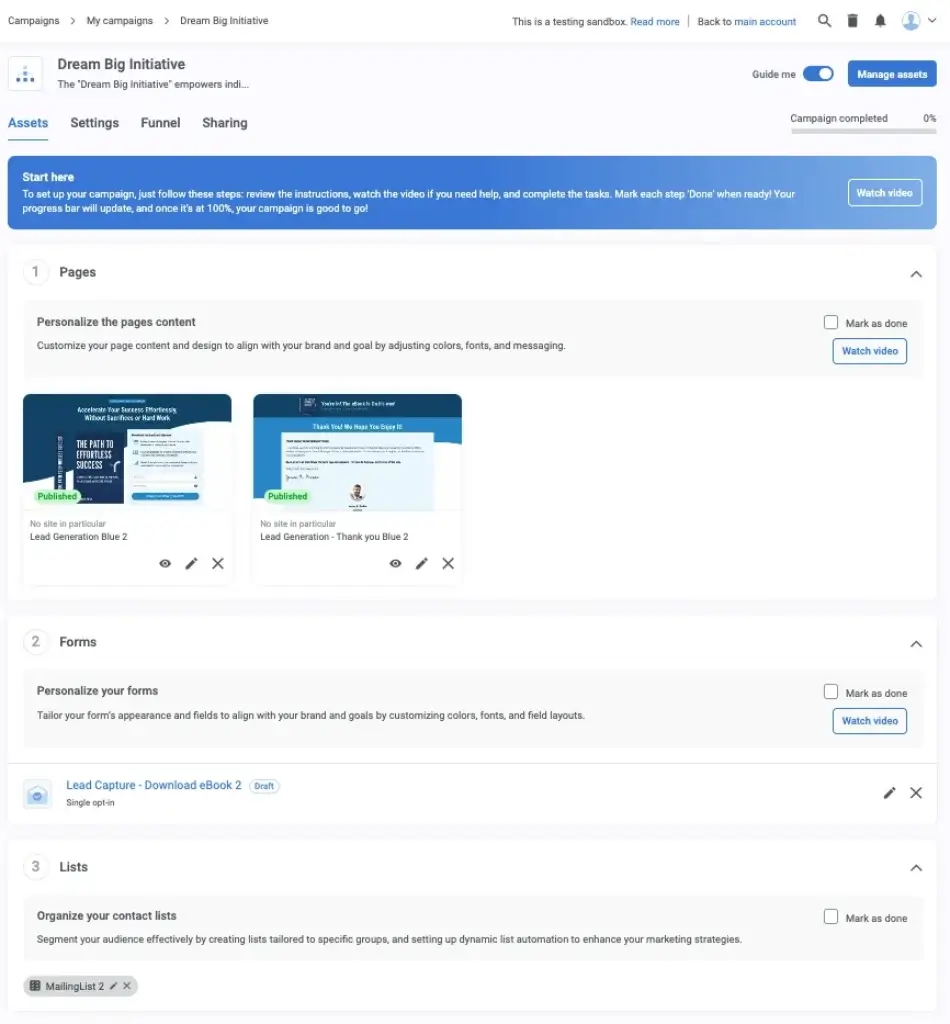
Kartra includes a drag-and-drop page builder for landing pages, sales pages, opt-in pages, thank-you pages, and full websites. You can use templates or build from scratch, then connect those pages into multi-step funnels. This is one of Kartra’s strongest areas because it is designed around complete customer journeys rather than isolated pages.
The funnel builder is especially useful if you sell digital products, coaching offers, services, or webinars. Instead of using separate tools for pages, forms, checkout, and follow-up, you can manage the entire path from first click to purchase inside the same platform.
Email Marketing and Marketing Automation
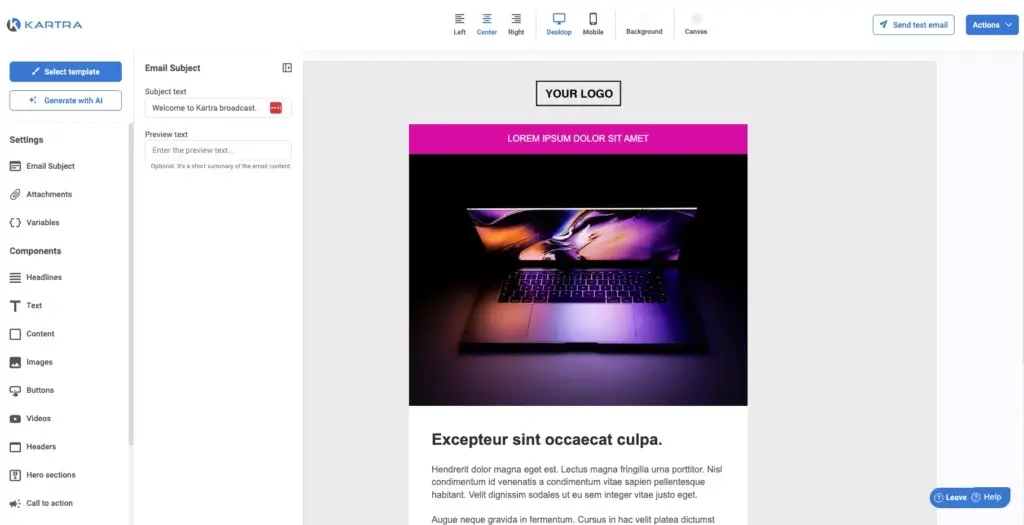
Email remains one of Kartra’s core capabilities. You can send broadcasts, build automated sequences, tag leads based on behavior, and create follow-up logic around actions such as clicks, purchases, or form submissions. This makes Kartra more than a page builder – it is also a marketing automation platform.
For businesses that rely on nurture campaigns, lead scoring, upsell flows, or abandoned-cart reminders, Kartra’s automation tools are a major advantage. The platform also supports SMS in its messaging stack, which gives you another channel for follow-up and engagement.
Checkouts, Products, and Sales Tools
Kartra’s built-in sales infrastructure is one of the main reasons marketers choose it over simpler funnel tools. You can create products, customize checkout pages, offer order bumps, manage upsells, and sell digital offers without relying on an external cart platform.
Its newer checkout experience is especially relevant for conversion-focused reviews because it adds mobile-friendly payment options such as Apple Pay, Google Pay, and Klarna. If your business depends on reducing friction at checkout, that is a meaningful update.
Memberships and Course Delivery
Kartra is also a strong fit for creators who sell access-based products. You can build membership portals, organize lessons, protect content, and grant or revoke access automatically based on customer actions. This makes the platform appealing for course creators, coaches, and subscription businesses.
Because memberships are connected to your checkout, email, and automation tools, you can create more advanced customer journeys, such as onboarding sequences after purchase or re-engagement campaigns for inactive members.
Calendars, Appointments, and Webinars
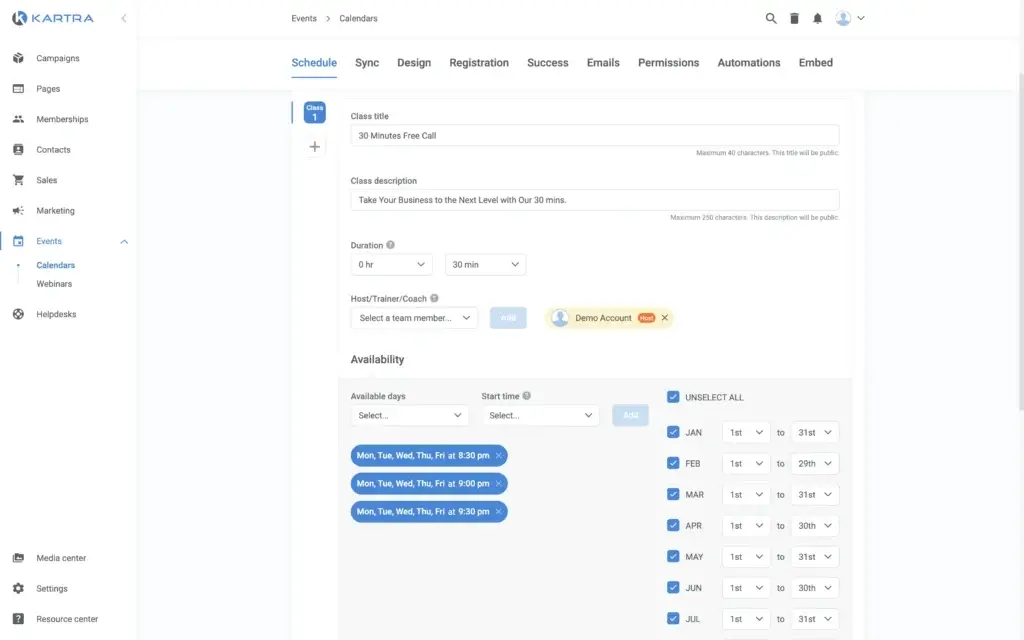
Kartra now includes calendar scheduling for consultations, appointments, group sessions, recurring classes, and live events. That broadens its value for consultants, agencies, coaches, and service providers who want to book calls directly inside the same platform they use for lead capture and email automation.
On higher tiers, Kartra also expands into webinars, which helps it compete more directly with other all-in-one marketing tools that target online educators and digital sellers.
CRM, Lead Management, and Helpdesk
Kartra gives you lead and customer management tools built into the platform, so you can track contacts, tag behavior, and monitor how users move through your funnels. This centralization is one of its biggest practical benefits because pages, checkouts, messages, and customer records all connect natively.
Another standout feature is its built-in helpdesk functionality. Many competing tools stop at lead generation and selling, but Kartra also tries to cover post-purchase support, which is useful if you want fewer external systems in your stack.
Analytics and Funnel Tracking
Kartra includes analytics across marketing and sales activity, with stronger funnel reporting available on higher plans. This matters because you are not only tracking email opens or page views. You are also looking at how leads move through your funnel and where revenue opportunities or drop-offs occur.
If your goal is to optimize conversion paths rather than just publish pages, Kartra’s analytics make the platform more strategically valuable than a basic landing page builder.
AI Tools and Integrations
Kartra’s AI features currently focus on content creation inside the page builder and email or SMS composer. These tools can help speed up page drafts, messaging ideas, and campaign setup, although they do not replace hands-on editing or strategic input.
The platform also supports integrations, but its main value proposition is that you should need fewer of them because so many functions are already native.
Pros and Cons
Benefits and Limitations of Using Kartra
Positive
✅ True all-in-one platform
✅ Strong funnel execution
✅ Powerful automation options
✅ Checkout and monetization tools
Negative
❌ Learning curve for beginners
❌ Interface can feel dense
❌ Higher cost at scale
❌ Some businesses may not need all features
Strengths and Benefits
Kartra’s biggest strength is consolidation. If you currently pay for separate tools for pages, email automation, checkout, memberships, scheduling, and customer support, Kartra can potentially replace a large part of that stack. That can simplify operations and reduce technical friction.
- True all-in-one platform – Pages, email, checkout, memberships, helpdesk, calendars, and analytics work together natively.
- Strong funnel execution – Kartra is built for lead capture, nurturing, and conversion, not just static page publishing.
- Powerful automation options – You can build advanced follow-up journeys based on what leads do across your assets.
- Checkout and monetization tools – Upsells, product flows, and newer payment methods make selling easier inside the platform.
Limitations and Drawbacks
Kartra is not the easiest platform in its category. The same depth that makes it attractive for serious marketers can also make it feel heavy if your needs are simple.
- Learning curve for beginners – New users may need time to understand how assets, automations, funnels, and analytics connect.
- Interface can feel dense – The interface can feel more complex than lighter tools built around just one use case.
- Higher cost at scale – Pricing becomes more demanding as your contacts, advanced needs, or team requirements grow.
- Some businesses may not need all features – If you only need email marketing or a landing page builder, Kartra may be too much platform.
Use Cases
Who Should Use Kartra?
Kartra works best when you actually plan to use several of its connected features together. That is where its value becomes much easier to justify.
Coaches, Consultants, and Service Businesses
If you sell consultations, packages, or high-ticket services, Kartra gives you a useful mix of lead capture, email follow-up, appointment scheduling, and checkout tools. That makes it easier to run your front-end marketing and sales operations from one place.
Course Creators and Membership Businesses
Kartra is a strong fit if you want to sell educational content, subscriptions, or gated resources. Its memberships, automation, and checkout system work well together for onboarding, upselling, and retention workflows.
Digital Marketers and Funnel Builders
If your growth model depends on opt-in funnels, segmented follow-ups, webinars, and conversion optimization, Kartra is more compelling than a simpler page builder. It is built around the logic of funnels and customer journeys.
When Kartra Might Not Be the Right Fit
Kartra may not be ideal if you want the simplest possible interface, only need one specialized function, or are working with a very limited budget. In those cases, a focused platform like GetResponse, ClickFunnels, Kajabi, or a lighter email tool may be easier to justify depending on your exact use case.
Pricing
Kartra Pricing and Plans
Kartra currently offers four main plans, which makes the platform more flexible than older reviews may suggest. Pricing can change based on billing terms and promotional offers, so it is worth checking the live pricing page before publishing final numbers.
Essentials
Essentials is the lowest entry tier and is aimed at smaller businesses that want access to the core Kartra ecosystem without jumping into the heavier plans. It includes basic creation and marketing tools, but it is more limited in scale and advanced functionality.
Starter
Starter is where Kartra begins to feel much more usable for serious marketing work. It is a better fit for small businesses that want stronger day-to-day functionality across pages, funnels, email, lead capture, and core selling workflows.
Growth
Growth is the most compelling tier for many businesses because it adds features that push Kartra further into true all-in-one territory. That includes webinars, advanced automations, affiliate management, surveys, and helpdesk support, making it attractive for businesses building more complex customer journeys.
Professional
Professional is designed for businesses that need more scale, more contacts, stronger analytics, live chat capabilities, and broader operational depth. This tier makes more sense for established businesses rather than early-stage users.
Pricing Table
| Plan | Essentials | Starter | Growth | Professional |
| Annual price shown | $52/mo | $83/mo | $125/mo | $429/mo |
| Contacts | 500 | 2,500 | 12,500 | 25,000 |
| Custom domains | 1 | 1 | 3 | 5 |
| Calendars | Yes | Yes | Yes | Yes |
| Webinars | No | No | Yes | Yes |
| Affiliate management | No | No | Yes | Yes |
| Helpdesk support | No | No | Yes | Yes |
| Live chat helpdesk | No | No | No | Yes |
| Real-time funnel analytics | No | No | No | Yes |
For most growing online businesses, Growth looks like the strongest value tier because it unlocks the richer automation and monetization features that make Kartra stand out. Starter can still work well if you mainly need a connected setup for pages, email, leads, and basic sales flows.
Competitors
Kartra Alternatives
Kartra competes with several major marketing platforms, but each alternative has a different center of gravity.
| Feature Type | Kartra | ClickFunnels | Kajabi | GetResponse |
| Core focus | All-in-one marketing | Sales funnels | Courses and memberships | Email and automation |
| Best for | Digital businesses | Funnel-first marketers | Creators and educators | Lead nurturing |
| Built-in checkout | Yes | Yes | Yes | Limited by use case |
| Membership delivery | Yes | Limited | Strong | Not core focus |
| Calendars | Yes | No | Limited | No |
| Helpdesk | Yes | No | No | No |
| Automation depth | Strong | Moderate | Moderate | Strong |
| Ideal buyer | Businesses wanting fewer tools | Teams focused on conversion funnels | Knowledge businesses | Email-led marketers |
Choose Kartra if you want the broadest mix of marketing, sales, delivery, and support tools in one system. Choose ClickFunnels if funnel building is your top priority. Choose Kajabi if your business revolves around courses and creator products. Choose GetResponse if email marketing and automation are more important than having a full business operating system.
Best Practices
Getting Started With Kartra
To get the most out of Kartra, focus on implementation quality rather than turning on every feature at once.
Start With One Core Funnel
Begin with a single business goal, such as lead generation, a consultation booking flow, or a core product funnel. Build that end-to-end before layering in more advanced automations or membership logic.
Keep Your Automation Simple at First
Kartra gives you a lot of automation power, but that does not mean you should overbuild from day one. Start with essential triggers like form submissions, purchases, and email clicks, then expand only when the basic funnel is working.
Use Native Connections to Reduce Tool Sprawl
One of the biggest advantages of Kartra is that pages, messages, products, and customer records talk to each other. Lean into that strength. The more you use the platform as a connected system, the more value you usually get from it.
Review Funnel and Revenue Data Regularly
Kartra is not just for publishing assets. It is built for optimization. Review conversion rates, sales flow performance, follow-up effectiveness, and checkout behavior regularly so you can improve the results of your campaigns over time.
Conclusion
Final Thoughts
Kartra is one of the more complete all-in-one marketing platforms for businesses that sell online. Its strongest advantage is not a single feature, but the way its pages, funnels, checkouts, memberships, email automation, calendars, and support tools work together inside one system.
That said, Kartra is not the best fit for everyone. If you only need one focused function, such as basic email campaigns or simple landing pages, a lighter tool may be easier to manage and more affordable. But if you want to centralize lead generation, sales, delivery, and customer management in one platform, Kartra remains a serious option worth considering in 2026.
Have more questions?
Frequently Asked Questions
What is Kartra used for?
Kartra is used to build landing pages, sales funnels, email campaigns, automations, memberships, checkouts, and customer journeys inside one marketing platform.
Is Kartra a CRM?
Kartra includes lead and customer management tools, but it is better described as an all-in-one marketing and sales platform than a dedicated CRM in the traditional enterprise sense.
Does Kartra include email marketing?
Yes. Kartra includes email broadcasts, automated sequences, tagging, segmentation, and behavior-based automation.
Can you sell courses with Kartra?
Yes. Kartra supports memberships and course delivery, which makes it a good fit for online educators, coaches, and subscription businesses.
Does Kartra offer built-in checkout pages?
Yes. Kartra includes native checkout functionality, product setup, upsells, and additional payment convenience features.
Is Kartra good for beginners?
It can work for beginners, but there is a learning curve. The platform is more suitable if you are willing to invest time into setup and optimization.
How much does Kartra cost?
Kartra offers multiple pricing tiers, starting with a lower-cost Essentials plan and moving up through Starter, Growth, and Professional plans.
What are the best Kartra alternatives?
Popular Kartra alternatives include ClickFunnels, Kajabi, GetResponse, HubSpot Marketing Hub, and ActiveCampaign, depending on your priorities.
Does Kartra support appointments and scheduling?
Yes. Kartra includes built-in calendars for consultations, events, recurring sessions, and other appointment workflows.
Who should use Kartra?
Kartra is best for online businesses that want to manage lead generation, follow-up, selling, delivery, and customer support in one connected platform.