Introduction
Search visibility is no longer only about ranking on Google. Your buyers now ask AI tools for recommendations, shortlist comparisons, product explanations, and buying advice before they ever visit a website.
That shift creates a new challenge for marketers. You may have strong keyword rankings, but if answer engines do not mention your brand, cite your content, or position you correctly, you can still lose influence during the research stage.
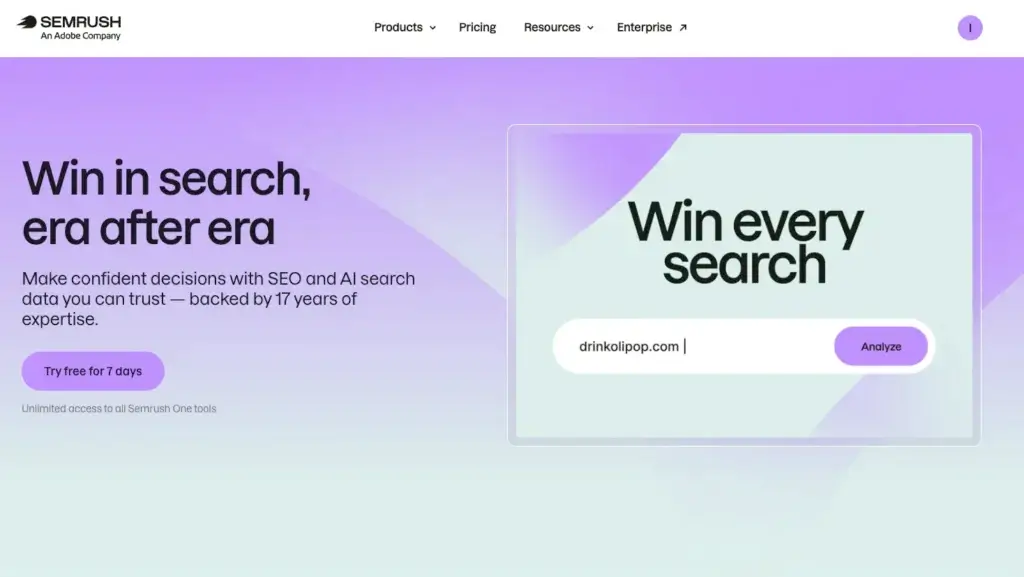
Semrush One is designed to help solve that problem by combining traditional SEO data with AI visibility insights. Instead of separating search engine optimization from answer engine optimization, it puts both workflows inside one platform.
In this Semrush One review, you’ll get a practical look at its main features, pricing, strengths, limitations, user experience, and alternatives. The goal is to help you decide whether Semrush One is the right AEO tool for your business in 2026.
What Is Semrush One?
Semrush One is a search visibility platform that combines Semrush’s SEO Toolkit with its AI Visibility Toolkit. It helps you track how your brand performs across traditional search results, Google AI Overviews, AI Mode, ChatGPT, Gemini, Perplexity, and other AI-driven discovery surfaces.
In simple terms, Semrush One helps answer two important questions at the same time: are you visible in Google, and are you visible in AI-generated answers?
This makes it different from many standalone AEO tools. Semrush One does not only monitor AI mentions. It also gives you access to keyword research, backlink data, site audits, competitor analysis, rank tracking, and SEO reporting.
Background and Evolution
Semrush has long been one of the most recognized SEO platforms for keyword research, technical audits, competitor analysis, backlinks, content planning, and rank tracking.
Semrush One extends that foundation into AI discovery. The platform reflects a clear market shift: marketers now need to understand both search engine results and answer engine responses.
This matters because AI systems often summarize the market before users click anything. If your product is missing from AI answers, or if the answer engine cites your competitors instead, you may lose visibility before the buyer enters a traditional funnel.
For partner and affiliate context, you can also review the Semrush One Hub.
Target Users and Use Cases
Semrush One is best for teams that already care about SEO and now need to add AI visibility tracking to the same workflow. It is especially relevant for content-led companies, B2B SaaS brands, agencies, affiliate publishers, ecommerce teams, and marketing departments that rely on organic discovery.
- SEO teams – Track traditional rankings and AI mentions in one platform.
- Content teams – Find topics, prompts, and citation gaps worth targeting.
- B2B marketers – Monitor how AI engines describe your brand and competitors.
- Agencies – Report on SEO performance and AI visibility for clients.
- Affiliate publishers – Understand which content gets cited in AI answers.
If your team already uses Semrush for SEO, Semrush One is one of the most natural ways to add AEO tracking. If you only need lightweight AI mention monitoring, a smaller standalone platform may be enough.
How Does It Work?
Semrush One Key Features
Semrush One is built around one main idea: modern search visibility includes both SEO and AI discovery. The platform gives you tools to monitor rankings, track AI mentions, benchmark competitors, research prompts, audit your site, and identify content opportunities.
Unlike a pure AEO platform, Semrush One is not limited to answer engine monitoring. Its main advantage is that you can connect AI visibility insights with traditional search data, including keywords, backlinks, technical SEO, and competitor performance.
AI Visibility Overview
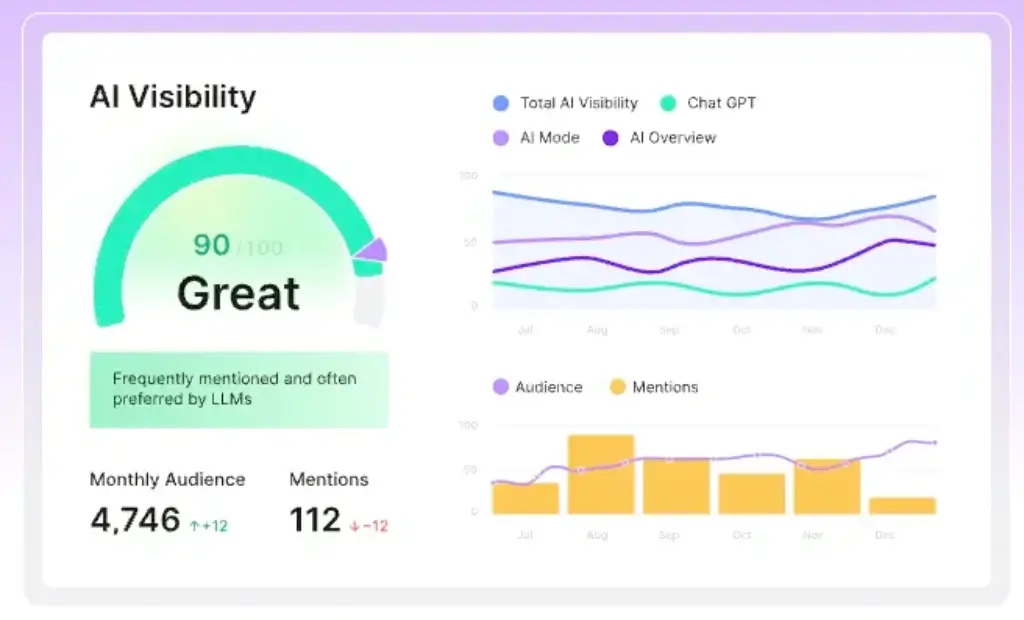
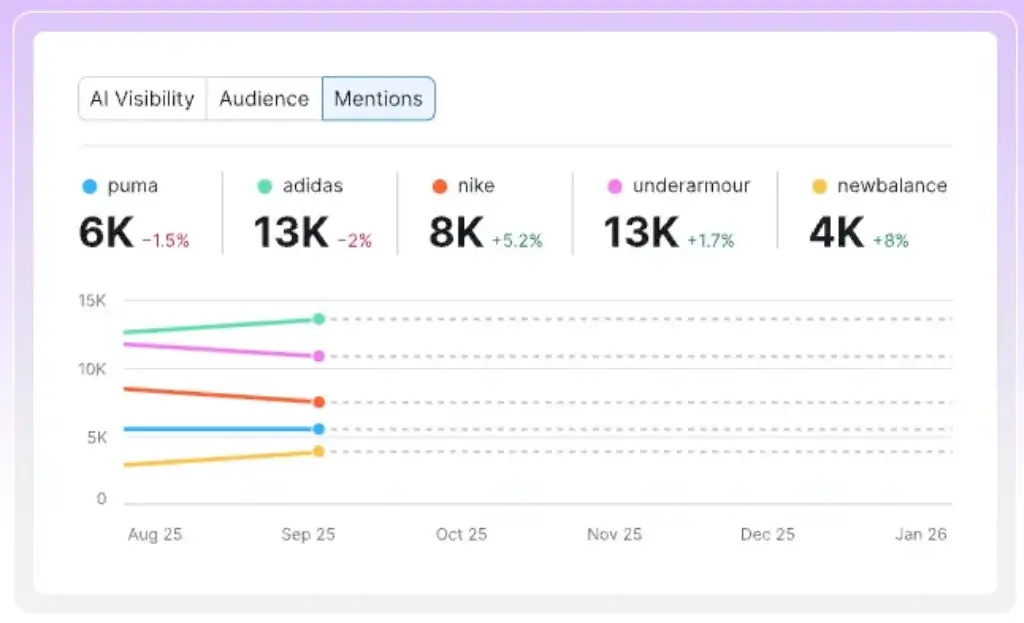
The AI Visibility Overview gives you a high-level view of how your brand appears across AI platforms. It helps you understand whether your brand is being mentioned, which pages are cited, and how your visibility compares with competitors.
This is useful because manual AI testing is unreliable. You can ask ChatGPT, Gemini, or Perplexity a few questions yourself, but that does not give you a structured benchmark, historical data, or competitive context.
Semrush One turns that process into a repeatable workflow. You can track mentions, citations, share of voice, and visibility trends rather than relying on one-off AI responses.
Brand Performance Reports
Brand Performance reports help you understand how AI platforms describe your company. This is important because AEO is not only about being mentioned. It is also about being represented accurately and positively.
For example, an AI engine might mention your brand but position it as outdated, limited, too expensive, or less relevant than competitors. That can influence perception even when the user never clicks a source.
With Semrush One, you can monitor brand sentiment, share of voice, narrative drivers, and the questions that trigger mentions. This gives marketers a clearer view of how AI systems understand their market position.
Prompt Research
Prompt Research is one of the most valuable Semrush One features for AEO strategy. It helps you discover the topics and prompts users ask across AI platforms.
This is different from traditional keyword research. Keywords are often short and search-focused. Prompts are longer, more conversational, and usually include context, intent, and a desired answer.
For example, a keyword might be “best CRM software.” A prompt might be “What is the best CRM software for a growing B2B SaaS company that needs sales automation and marketing reporting?”
Semrush One helps you connect prompt-level discovery with SEO data. That is a major advantage for content teams because you can prioritize topics that matter in both search engines and AI answers.
Prompt Tracking
Prompt Tracking lets you monitor selected prompts over time. This helps you see whether your brand appears in AI-generated responses, whether competitors are being recommended instead, and whether your content updates improve visibility.
Daily tracking is especially useful for high-intent prompts. These are the questions buyers ask when they are comparing vendors, evaluating categories, or looking for a shortlist.
For a SaaS company, useful prompts might include “best project management software for agencies,” “top CRM platforms for small teams,” or “best AEO tools for SEO teams.”
Competitor Research
Semrush One helps you compare AI visibility against competitors. You can see where competitors are mentioned more often, which topics they dominate, and which sources AI systems cite when forming answers.
This is where the platform becomes especially useful for SEO and content strategy. If competitors appear in prompts where your brand is missing, that gap can guide your content roadmap.
You can use competitor insights to decide whether you need a comparison page, a stronger use-case article, better product positioning, more third-party mentions, or improved technical accessibility.
AI Citations and Cited Pages
AI citations show which pages and sources are influencing AI-generated answers. This matters because answer engines often rely on a small group of trusted sources when summarizing a topic.
Semrush One can help you identify your own cited pages, competitor cited pages, and third-party sources that influence your category. For SEO teams, this creates a bridge between content optimization, digital PR, and AEO.
If AI engines cite competitors but not your site, you can investigate whether your content lacks depth, clear structure, entity signals, internal links, schema, authority, or external validation.
AI Search Site Audit
Semrush One also connects AEO with technical SEO through site auditing. The platform can help identify issues that may prevent AI systems from accessing, understanding, or citing your content.
Examples include blocked AI crawlers, weak internal linking, incomplete structured data, and content formats that are harder for AI systems to parse.
This is a practical advantage over many lightweight AEO tools. Visibility is not only a reporting problem. It is also a content, crawlability, and technical SEO problem.
SEO Toolkit Integration
The biggest reason to choose Semrush One is the SEO Toolkit integration. You get keyword research, competitor research, backlink analysis, rank tracking, site audits, and reporting alongside AI visibility tools.
This is valuable because AEO does not replace SEO. AI engines still depend on crawlable content, strong entities, authoritative mentions, structured information, and trusted sources.
When SEO and AEO data live together, it is easier to build a unified search strategy instead of managing two disconnected workflows.
Free Snapshot vs Paid Workflow
Semrush AI Visibility Checker vs Semrush One
One point that may confuse buyers is the difference between the free Semrush AI Search Visibility Checker, the AI Visibility Toolkit, and Semrush One.
The free checker gives you a quick snapshot of AI visibility. The AI Visibility Toolkit provides dedicated AEO tracking. Semrush One combines the AI Visibility Toolkit with Semrush’s broader SEO Toolkit.
| Category | Free AI Search Visibility Checker | AI Visibility Toolkit | Semrush One |
| Main Purpose | Quick AI visibility snapshot | Dedicated AI visibility tracking | Unified SEO and AEO workflow |
| Best For | Initial brand assessment | Monitoring AI mentions and competitors | SEO teams that also need AI visibility |
| Cost | Free | Paid add-on or subscription | Paid bundled plan |
| SEO Tools | Limited | Limited compared with full Semrush SEO | Included through the SEO Toolkit |
| AEO Tools | Basic report | AI visibility, prompts, citations, competitors | AI visibility plus full SEO context |
| Best User | Marketers testing AI visibility | Brands focused mainly on AEO | Teams that want one platform for SEO and AEO |
When to Use the Free Checker
Use the free AI Search Visibility Checker if you want a quick baseline. It is useful for showing stakeholders whether your brand appears in AI-generated answers and how competitors may be positioned.
It is a good first step, but it is not a complete AEO workflow. You will still need ongoing tracking, prompt monitoring, competitor analysis, and content optimization if AI visibility is strategically important.
When to Use Semrush One
Use Semrush One when you want AI visibility data connected to your SEO strategy. This is the stronger option if your team already manages keyword rankings, technical audits, content updates, and competitor research inside Semrush.
Semrush One is also better when you want to measure patterns over time. AI answers change, and one report is not enough to guide a full strategy.
Pros and Cons
Benefits and Limitations of Semrush One
Positive
✅ SEO platform context
✅ AI visibility tracking
✅ Competitor intelligence
✅ Content recommendations
Negative
❌ Semrush dependency
❌ AEO feature depth
❌ Pricing transparency
❌ AI data variability
Strengths and Benefits
SEO platform context
Semrush One’s biggest strength is that it connects AEO with the SEO work your team already does. You can evaluate AI visibility while also reviewing keywords, backlinks, rankings, technical health, and competitors.
This is important because AI visibility is rarely solved by prompt tracking alone. You still need strong pages, clear entities, fresh content, crawlable structure, and authority across the web.
AI visibility tracking
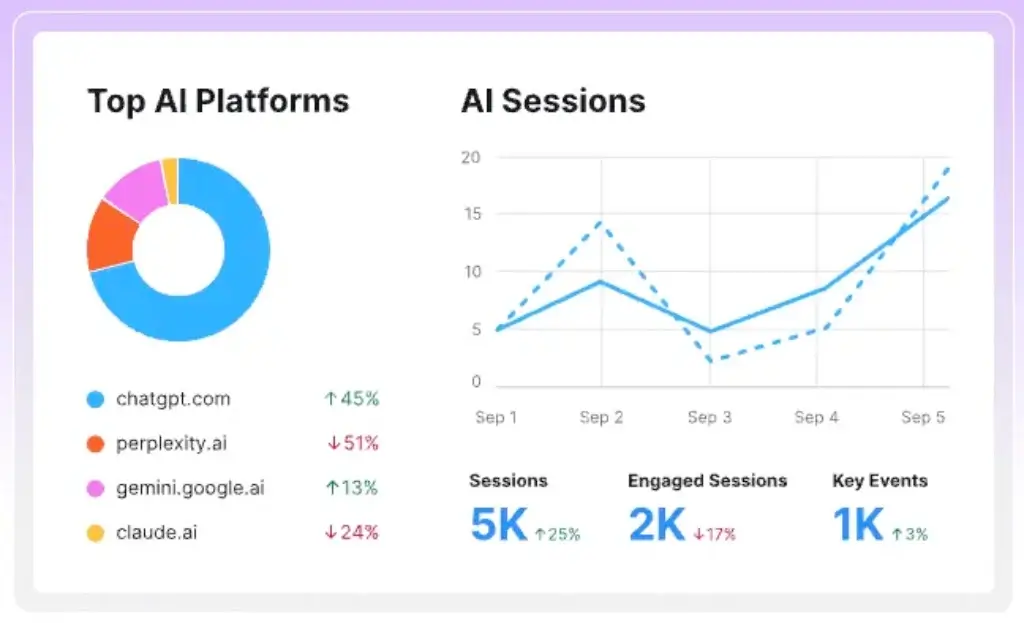
Semrush One helps you track brand mentions, AI visibility scores, cited pages, and prompt performance across major AI discovery surfaces. This gives you a structured view of how answer engines represent your brand.
Instead of manually testing random prompts, you can monitor performance over time and compare patterns across platforms.
Competitor intelligence
Semrush One is strong for competitive analysis because it combines traditional SEO competitor research with AI visibility benchmarks.
You can see where competitors rank, where they get cited, which prompts they appear in, and which topics they dominate. This helps you prioritize content and outreach more intelligently.
Content recommendations
The platform helps turn visibility gaps into action. You can use prompt research, topic opportunities, citation data, and site audit findings to decide what to create, update, or improve.
For content teams, this is more useful than a dashboard that only shows whether your brand appeared or did not appear in an AI answer.
Limitations and Drawbacks
Semrush dependency
Semrush One makes the most sense if you want to work inside the Semrush ecosystem. If your team already uses another SEO platform and only needs AEO monitoring, the bundle may feel heavier than necessary.
This is not a flaw for Semrush users. It is a fit question. The platform is strongest when SEO and AEO should live together.
AEO feature depth
Semrush One is powerful, but some enterprise AEO teams may still prefer a specialist platform like Profound. Specialist tools may offer deeper workflows for large-scale prompt management, multi-region reporting, agent workflows, or custom enterprise analysis.
Semrush One is excellent for combining SEO and AI visibility. It may not be the deepest choice for every enterprise AEO use case.
Pricing transparency
Semrush One pricing is publicly listed, but the total cost can still depend on your plan, add-ons, domains, prompt limits, and whether you need extra toolkits.
Before buying, review the exact limits for prompts, projects, users, keywords, domains, and reporting. This is especially important for agencies and teams managing multiple brands.
AI data variability
AI visibility data should always be interpreted carefully. AI responses can vary by prompt wording, model updates, location, personalization, citation availability, and platform behavior.
Semrush One helps create a more consistent tracking process, but no AEO tool can make AI answers perfectly stable. You should focus on trends, patterns, and repeated gaps rather than treating one response as final.
Ease of Use and Workflow
Semrush One User Experience
Semrush One is built for marketers who already understand SEO, but need a practical way to add AI visibility into their workflow. If you have used Semrush before, the learning curve should feel manageable.
Setup and Onboarding
Setup starts with your domain, competitors, keywords, prompts, and tracking preferences. The quality of your setup matters because AI visibility depends heavily on which prompts and topics you choose to monitor.
For best results, you should define prompts that reflect real buying behavior. Do not only track broad category terms. Track questions that buyers ask when they are close to comparing solutions.
Interface and Daily Workflow
The daily workflow is built around dashboards and reports. You can review SEO visibility, AI visibility, prompt performance, competitor gaps, citations, and technical audit issues from one environment.
This is the platform’s biggest usability advantage. You do not need one tool for keyword rankings, another for AI mentions, another for technical audits, and another for reporting.
Learning Curve
The learning curve is moderate. Semrush is a deep platform, and new users may need time to understand all the reports.
However, teams with SEO experience will adapt faster. The AEO features make more sense when you already understand search intent, content gaps, competitor analysis, and technical SEO.
Best Practice for Better Results
The best way to use Semrush One is to connect every AI visibility gap to a practical SEO or content action.
If competitors appear in prompts where your brand is missing, review the cited sources, analyze the ranking pages, check your technical accessibility, and update content to answer the prompt more directly.
AEO works best when it is not treated as a separate channel. It should become part of your broader search visibility strategy.
Pricing
Plans, Trial, and Cost Considerations
Semrush One is a paid bundled plan that includes the SEO Toolkit and AI Visibility Toolkit. It is generally more expensive than lightweight AEO tools, but it provides broader value if your team also needs SEO data.
Semrush currently offers Semrush One plans at Starter, Pro+, and Advanced levels. Pricing and limits may change, so always confirm the current details on the official Semrush pricing page before purchasing.
Semrush One Pricing Table
| Plan | Monthly Price | Annual Price | Best For |
| Starter | $199/month | $165.17/month billed annually | Small teams that want SEO plus entry-level AI visibility |
| Pro+ | $299/month | $248.17/month billed annually | Growing teams that need more tracked prompts and SEO capacity |
| Advanced | $549/month | $455.67/month billed annually | Agencies and larger teams with more sites, keywords, and prompts |
Plan Limits to Check
Before choosing a plan, review how many domains, projects, keywords, prompts, users, and reports you need. Prompt limits matter because AEO tracking can become expensive if you manage many products, categories, regions, or clients.
| Cost Area | Why It Matters | What to Check |
| Prompt Limits | Controls how many AI prompts you can monitor | Check included prompts and add-on pricing |
| Domain Tracking | Important for agencies and multi-brand companies | Check additional domain costs |
| SEO Limits | Affects keyword tracking and projects | Review keyword, project, and crawl limits |
| AI Platforms | Determines coverage across answer engines | Confirm which platforms are tracked in each report |
| Reporting | Important for agencies and executives | Check exports, dashboards, and report automation |
| Add-On Toolkits | Some workflows may need extra products | Review Content, Traffic, Local, Social, and AI PR toolkits |
My recommendation is simple: choose Semrush One if you need both SEO and AEO in one platform. If you only want basic AI mention tracking, Otterly AI or HubSpot AEO may be more budget-friendly.
Best Use Cases
Who Should Use Semrush One?
Semrush One is not for every company. It works best when organic search and AI discovery are both strategically important.
Best for SEO Teams Expanding Into AEO
Semrush One is ideal for SEO teams that already track rankings, keywords, backlinks, and technical SEO. It lets those teams add AI visibility without adopting a completely separate platform.
This is especially valuable because SEO and AEO overlap. Strong topical authority, clear page structure, useful content, and trusted citations can support both traditional rankings and AI mentions.
Best for B2B SaaS and Content-Led Brands
B2B SaaS companies should pay close attention to Semrush One because buyers often use AI tools to compare categories, shortlist products, and ask use-case questions.
If your buyers ask AI tools questions like “best CRM for startups” or “best AEO tools for SEO teams,” you need to know whether your brand appears.
Best for Agencies Managing SEO and AEO Together
Agencies can use Semrush One to combine traditional SEO reporting with AI visibility reporting. This is useful when clients are asking how ChatGPT, Perplexity, Gemini, and Google AI Overviews affect their search strategy.
However, agencies with many clients should calculate prompt and domain limits carefully. Add-ons can matter quickly when you manage multiple industries and regions.
Best for Affiliate and Review Publishers
Affiliate publishers can use Semrush One to understand which review pages, comparison guides, and category pages are getting cited in AI answers.
This matters because AI systems often pull from trusted third-party sources. If your content is cited, it can influence AI-generated recommendations even when users do not click traditional search results.
When Semrush One Might Not Be the Right Fit
Semrush One may not be the best choice if you do not need SEO tools, if your budget is small, or if you only want a simple AI mention tracker.
It may also be less suitable if you need enterprise-level AEO workflows across many markets, languages, brands, and custom models. In that case, Profound may be a stronger fit.
Competitors and Comparisons
Semrush One Alternatives
Semrush One competes with both traditional SEO platforms and newer AEO tools. For this review, the most relevant comparisons are HubSpot AEO, Profound, and Otterly AI.
The right choice depends on whether you want an SEO-first platform with AEO features, a low-cost AEO tracker, a HubSpot-friendly workflow, or an enterprise AI visibility platform.
| Tool | Best For | Main Advantage | When to Choose It |
| Semrush One | SEO teams that need AEO tracking | Combines SEO Toolkit and AI Visibility Toolkit | Choose it if you want SEO and AI visibility in one workflow |
| HubSpot AEO | Marketers that want simple AEO monitoring | Affordable AI visibility tracking and plain-language recommendations | Choose it if you want a low-friction AEO tool without a full SEO platform |
| Profound | Enterprise AI visibility teams | Deep answer engine monitoring across many platforms and regions | Choose it if AI visibility is a major enterprise initiative |
| Otterly AI | Small teams and agencies testing AI monitoring | Lower entry price and simple AI search monitoring | Choose it if you need affordable prompt tracking and brand monitoring |
Semrush One vs HubSpot AEO
HubSpot AEO is a more lightweight and affordable AEO tool. It is useful for marketers who want to track brand visibility across AI engines, compare competitors, and get simple recommendations without buying a full SEO platform.
Semrush One is stronger if SEO is still central to your strategy. It gives you keyword data, technical audits, backlinks, traditional rankings, competitor SEO research, and AI visibility in one place.
Choose HubSpot AEO if you want a focused AEO workflow at a lower price. Choose Semrush One if you want to connect AI visibility with your broader SEO operations.
Semrush One vs Profound
Profound is one of the strongest specialist platforms for enterprise AI visibility. It is built for teams that need deeper answer engine insights, broad platform coverage, daily visibility runs, multi-region monitoring, and advanced workflows.
Semrush One is broader in SEO. Profound is deeper in enterprise AEO.
Choose Profound if AI visibility is a board-level initiative and you need advanced monitoring across many answer engines, markets, and audience segments. Choose Semrush One if your team wants a balanced SEO and AEO platform with strong search data.
Semrush One vs Otterly AI
Otterly AI is a more affordable AI search monitoring tool. It is attractive for solo marketers, small teams, and agencies that want to begin tracking AI mentions without committing to a larger SEO platform.
Otterly AI is easier to justify if you only need AI search monitoring. Semrush One is easier to justify if you already need SEO research, rank tracking, audits, backlinks, and reporting.
Choose Otterly AI for a lean AEO starting point. Choose Semrush One when AI visibility should be part of a wider SEO growth system.
Semrush One vs Traditional SEO Tools
What It Replaces and What It Does Not
Semrush One can replace several separate workflows, but it should not be misunderstood as a replacement for the discipline of SEO itself.
It replaces the need to use one platform for SEO data and another lightweight tool for AI visibility in many cases. It does not replace content strategy, technical SEO work, digital PR, or brand positioning.
What Semrush One Can Replace
Semrush One can replace a traditional Semrush SEO plan plus a separate AI visibility add-on for many teams. It can also reduce tool-switching between keyword research, rank tracking, technical audits, and AI visibility reports.
For teams already paying for SEO software, this is one of the biggest advantages. You can manage search visibility from one platform rather than creating a fragmented stack.
What Semrush One Does Not Replace
Semrush One does not automatically make your brand visible in AI answers. It gives you data, gaps, and recommendations, but you still need to act.
You will need to publish better content, strengthen third-party mentions, improve technical accessibility, update old pages, build topical authority, and clarify product positioning.
Best Approach: Use Semrush One as a Search Visibility System
The best way to use Semrush One is as a complete search visibility system. Use SEO tools to build authority and technical strength. Use AEO tools to understand how that foundation appears inside AI answers.
For more context, you can also read our guides to best AEO tools, Semrush, and AI marketing tools.
Best Practices
Getting Started With Semrush One
To get real value from Semrush One, treat it as a workflow, not only a dashboard. The tool can reveal visibility gaps, but your results depend on how quickly you turn those insights into action.
Start With Strategic Prompts
Begin with prompts tied to buying intent. These include recommendation prompts, comparison prompts, use-case prompts, and problem-solving prompts.
For example, do not only track “marketing software.” Track “best marketing software for small B2B teams” or “which marketing platform is best for companies that need SEO and content planning?”
Map Prompts to Existing Content
Once you identify important prompts, map them to existing content. Check whether you already have a page that answers the query clearly.
If the answer is no, create a new page or update an existing one. AI engines need clear, specific, and credible content to understand what your brand should be associated with.
Review Competitor Citations
Do not only look at which competitors appear. Look at which sources are helping them appear.
If AI engines cite comparison sites, review platforms, partner pages, documentation, Reddit threads, or industry guides, those sources can shape your AEO strategy.
Improve Technical Accessibility
Run site audits to check whether AI crawlers can access and interpret your content. Fix crawl blocks, weak internal links, missing structured data, and thin pages.
Technical SEO has become even more important because AI visibility depends on whether systems can retrieve, understand, and trust your content.
Measure Patterns Over Time
Do not overreact to one AI answer. AI responses can change. Measure patterns across prompts, platforms, topics, and competitors.
Look for repeated gaps. Those repeated gaps should guide your content updates, PR efforts, and internal linking improvements.
Conclusion
Final Thoughts
⭐ Overall Rating: 9.2/10
Semrush One is one of the strongest options for teams that want to connect SEO and answer engine optimization. Its main advantage is not that it tracks AI mentions alone. Its real value is that it places AI visibility inside a broader search marketing platform.
That makes it especially useful for SEO teams, content marketers, agencies, B2B SaaS companies, and affiliate publishers that already depend on organic discovery.
Compared with HubSpot AEO and Otterly AI, Semrush One is more comprehensive but also more expensive. Compared with Profound, it is broader for SEO but may be less specialized for enterprise AEO operations.
Overall, Semrush One is worth testing if your business needs both traditional search data and AI visibility insights. If your team already uses Semrush, it is one of the easiest ways to add AEO into your existing workflow.
Choose Semrush One If
Semrush One is a strong choice if you want one platform for SEO and AI visibility. It is especially valuable when your team already works with keywords, rankings, audits, backlinks, and competitor research.
- You already use Semrush – The workflow fit is natural.
- You care about AI visibility – Track mentions, prompts, citations, and competitors.
- You publish SEO content – Use AEO insights to improve topic selection.
- You manage competitors closely – Compare visibility across Google and AI platforms.
Consider Alternatives If
You may want to consider alternatives if you only need a low-cost AEO tracker, if your team does not need SEO tools, or if you require enterprise-level AI visibility workflows.
HubSpot AEO is better for simple and affordable AEO monitoring. Otterly AI is better for small teams that want a lightweight AI search tracker. Profound is better for enterprise teams that need deeper answer engine intelligence across more complex markets.
For most SEO-led teams, Semrush One is the better long-term choice because it connects AEO with the search data you already need to grow organic visibility.
Have more questions?
Frequently Asked Questions
What is Semrush One?
Semrush One is a search visibility platform that combines Semrush’s SEO Toolkit with its AI Visibility Toolkit. It helps marketers track rankings, keywords, backlinks, technical SEO, AI mentions, prompts, citations, and competitor visibility in one workflow.
Is Semrush One an AEO tool?
Yes. Semrush One includes AEO capabilities through the AI Visibility Toolkit. It helps you monitor how your brand appears across AI-driven discovery surfaces such as Google AI Overviews, AI Mode, ChatGPT, Gemini, and Perplexity.
How is Semrush One different from regular Semrush?
Regular Semrush SEO plans focus mainly on traditional SEO workflows such as keyword rankings, backlinks, audits, and competitor research. Semrush One adds AI visibility tracking, prompt research, AI mentions, citations, and brand performance insights.
How much does Semrush One cost?
Semrush One pricing starts at $199/month for the Starter plan, with higher tiers available for larger teams. Pricing can change, so you should confirm current plan details, prompt limits, and add-ons on the official Semrush pricing page.
Which AI platforms does Semrush One track?
Semrush One helps track AI visibility across platforms and surfaces such as Google AI Overviews, Google AI Mode, ChatGPT, Gemini, and Perplexity. Coverage can vary by report type, so confirm the exact platform support inside your plan.
Is Semrush One better than HubSpot AEO?
Semrush One is better if you want SEO and AEO data in one platform. HubSpot AEO may be better if you want a simpler and more affordable AEO monitoring tool without a full SEO suite.
Is Semrush One better than Profound?
Semrush One is stronger for teams that need SEO and AEO together. Profound is stronger for enterprise teams that need deeper AI visibility monitoring, broader answer engine coverage, and advanced multi-region AEO workflows.
Is Semrush One better than Otterly AI?
Semrush One is better for SEO-led teams that need keyword research, audits, backlinks, rankings, and AI visibility. Otterly AI is better for small teams that mainly need affordable AI search monitoring and prompt tracking.
Does Semrush One replace SEO?
No. Semrush One does not replace SEO. It helps you combine SEO and AEO insights, but you still need strong content, technical SEO, internal linking, structured data, backlinks, and third-party authority to improve visibility.
Who should use Semrush One?
Semrush One is best for SEO teams, content marketers, B2B SaaS companies, agencies, affiliate publishers, and brands that want to track visibility across both Google search and AI-generated answers.