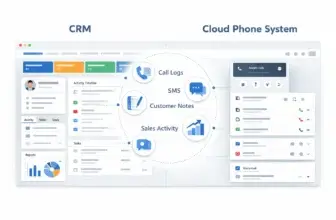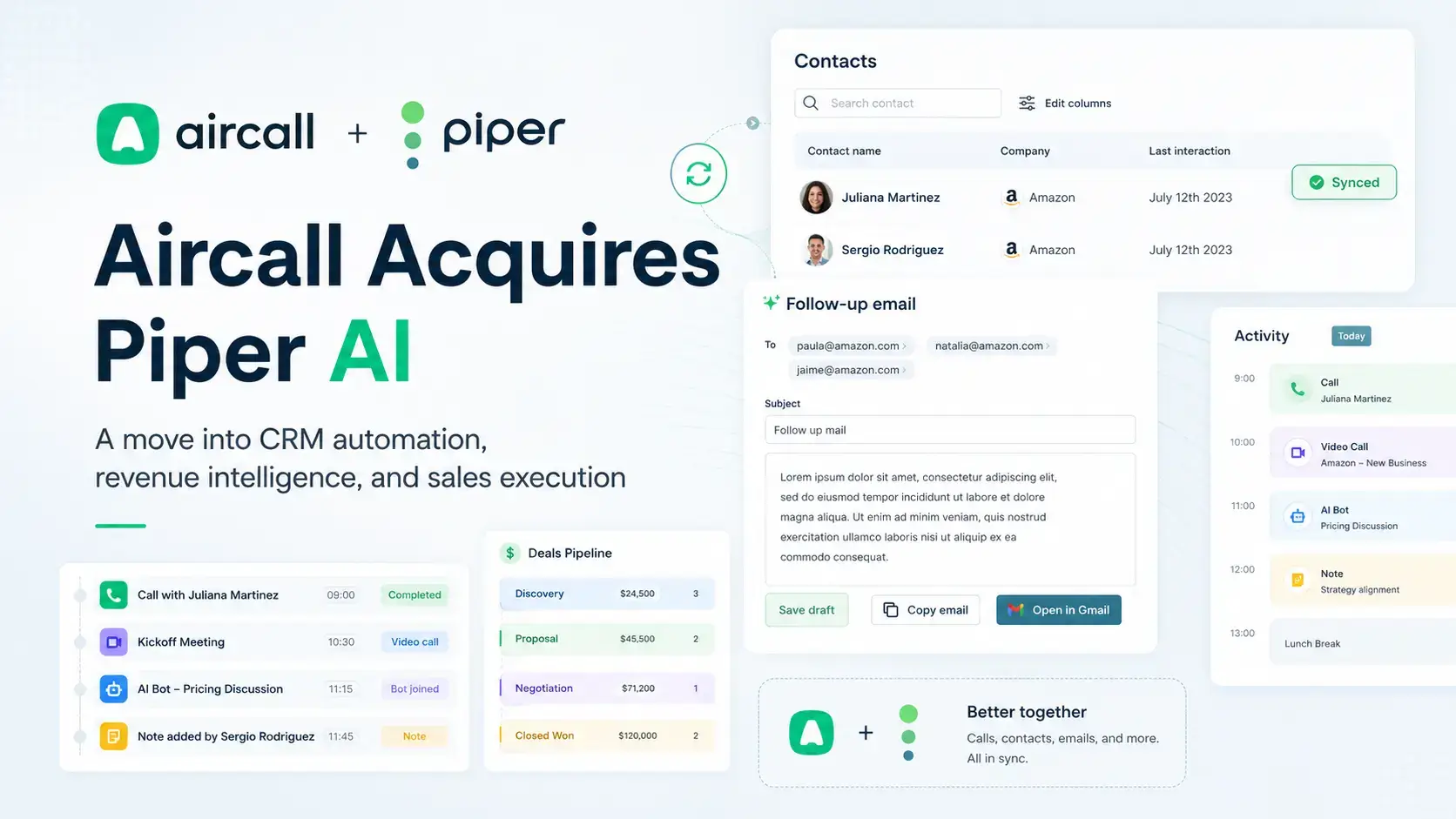
Aircall’s acquisition of Piper AI is more than a product expansion. It signals a broader shift in customer communication software: the market is moving from simple call handling and conversation summaries toward automated sales execution.
For sales teams, this matters because conversations are no longer limited to phone calls. Deals move through calls, video meetings, emails, WhatsApp messages, follow-up threads, CRM updates, and internal handoffs. When those signals stay disconnected, reps lose time on admin and managers make pipeline decisions with incomplete data.
With Piper AI, Aircall is positioning itself to close that gap. Instead of stopping at call recording, transcription, and post-call summaries, the combined platform is designed to turn customer conversations into CRM updates, follow-up tasks, deal scoring, pipeline intelligence, and workflow automation.
For B2B teams comparing customer communication tools, sales engagement software, CRM automation platforms, and revenue intelligence tools, this acquisition is worth paying attention to.
Aircall Acquires Piper AI: Why This Matters
Aircall is already known as a customer communication platform for sales and support teams. Its platform helps teams manage calls, SMS, WhatsApp conversations, routing, call workflows, and integrations with tools like CRMs and help desks.
The Piper AI acquisition expands that story. Aircall is no longer focusing only on the conversation itself. It is moving deeper into what happens after and around the conversation: CRM hygiene, sales follow-up, deal visibility, forecasting signals, and rep coaching.
That is an important move because one of the biggest productivity problems in sales is not a lack of conversations. It is the manual work that surrounds those conversations.
Sales reps often need to update CRM records, summarize meetings, create next-step tasks, send follow-ups, log outcomes, and keep managers informed. When that work is delayed or incomplete, the CRM becomes less reliable. Managers lose visibility. Forecasts become weaker. Follow-ups slip through the cracks.
Piper AI was built to solve that problem by capturing sales activity across multiple channels and converting it into structured revenue action.
What Is Piper AI?
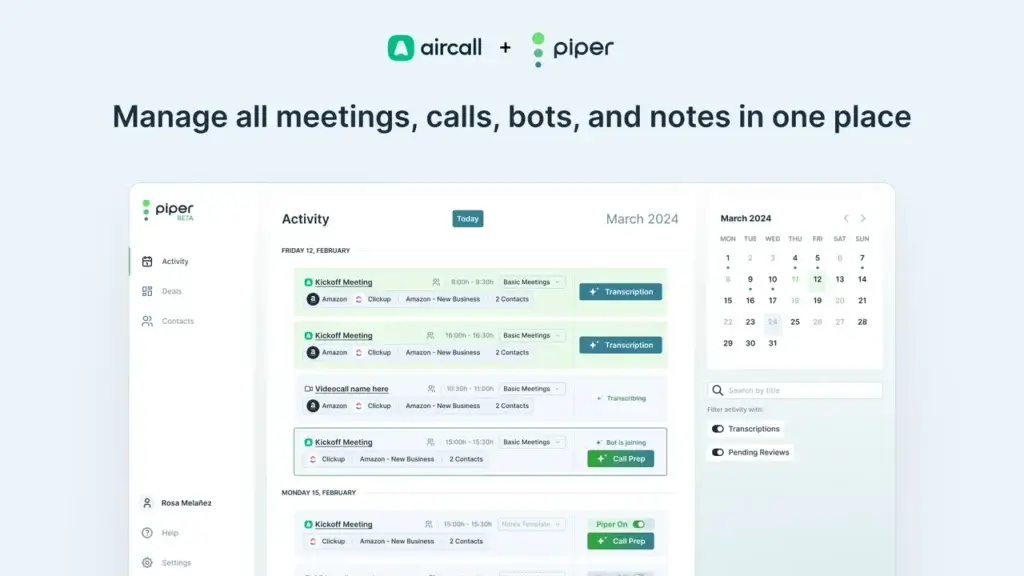
Piper AI is a revenue intelligence and workflow orchestration platform that captures customer interactions across channels such as calls, video meetings, email, messaging, WhatsApp, and field activity.
Its core value is not only recording or summarizing conversations. The stronger value is that it turns conversation data into CRM updates, deal scoring, pipeline risk signals, follow-up tasks, and automated workflows.
In simple terms, Piper helps sales teams reduce manual admin while giving sales leaders a clearer view of what is happening across the pipeline.
For reps, that means less time spent updating Salesforce or HubSpot manually. For managers, it means more consistent visibility into deal progress, rep performance, coaching opportunities, and forecast quality.
The platform is especially relevant for B2B sales teams that rely on meetings, demos, discovery calls, follow-up calls, email threads, and multi-touch sales cycles.
How Piper Extends Aircall Beyond Voice Communication
The simplest way to understand the acquisition is this: Aircall manages the communication layer, while Piper helps automate the revenue execution layer.
Aircall already supports customer-facing teams with business calling, SMS, WhatsApp, AI assistance, call workflows, and integrations. Piper adds a deeper layer of automation that connects sales conversations to CRM fields, deal stages, follow-up tasks, coaching insights, and pipeline signals.
From call summaries to revenue execution
Many AI sales tools can summarize a call. That is useful, but summaries alone do not solve the full workflow problem.
Sales teams need the next step after the summary. They need the CRM updated, the follow-up drafted, the task created, the deal risk flagged, and the manager alerted when something important changes.
That is where Piper gives Aircall a broader sales automation story. It helps turn conversation intelligence into action, not just documentation.
From fragmented sales activity to CRM automation
Modern sales activity is fragmented across channels. A deal might start with a phone call, continue through a Zoom demo, move into an email thread, and then depend on a WhatsApp follow-up or internal handoff.
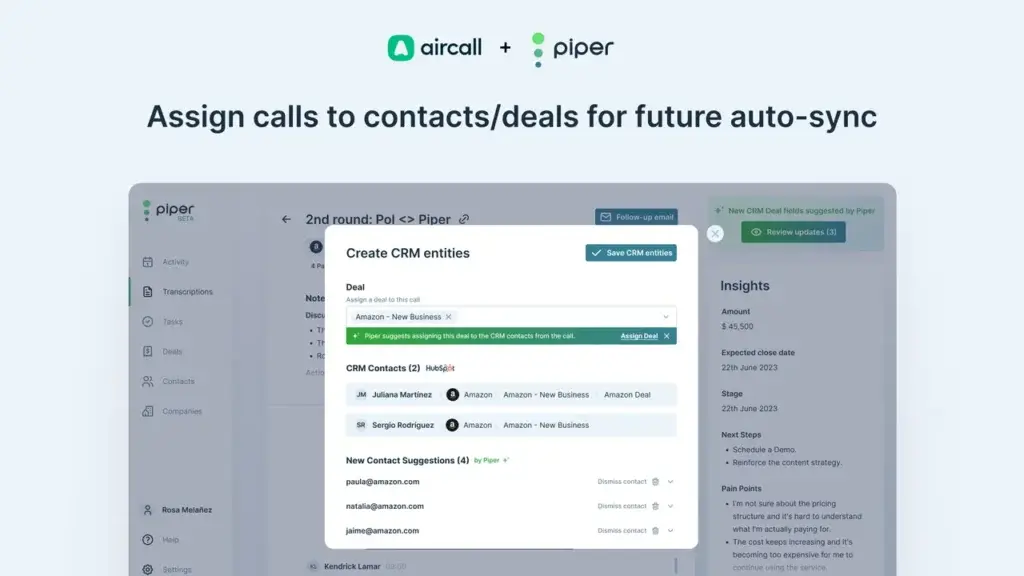
If only the phone call is tracked properly, the CRM still misses key buying signals. Piper is designed to capture a wider range of touchpoints, then convert those interactions into structured CRM updates.
This is especially useful for teams that struggle with CRM adoption. When reps see CRM work as admin instead of value, data quality suffers. Automated CRM updates can reduce that friction and make the CRM a more reliable operating system for the sales team.
From manager guesswork to deal intelligence
Sales managers often depend on rep updates, pipeline reviews, and CRM fields that may not be fully accurate. That creates a gap between what is actually happening in customer conversations and what appears in the forecast.
Piper helps close that gap by analyzing communication signals across the deal lifecycle. It can surface deal health, risk flags, coaching moments, and pipeline signals that managers can use to intervene earlier.
For revenue leaders, this is the difference between reviewing stale CRM data and seeing a more active picture of deal momentum.
Key Capabilities Added Through the Acquisition
The acquisition gives Aircall a stronger position across several capabilities that are increasingly important for sales teams.
Omnichannel conversation capture
Piper captures sales conversations across channels such as phone, video meetings, email, WhatsApp, and in-person interactions. This is important because sales conversations rarely happen in one place.
For sales teams, omnichannel capture helps create a more complete record of the deal. Instead of only analyzing calls, teams can connect the dots across different moments in the buying journey.
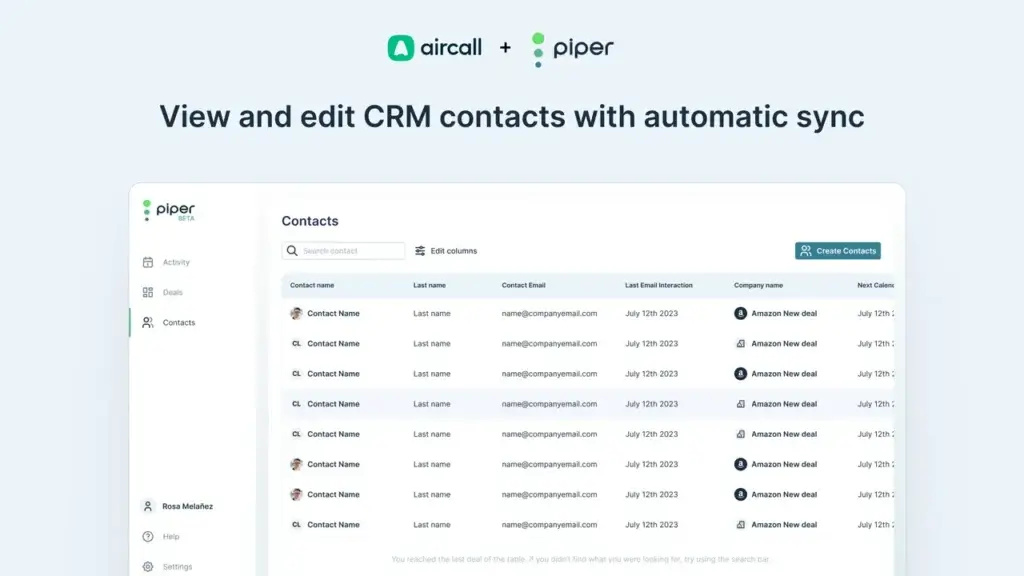
Automated CRM updates
CRM data quality is one of the most persistent issues in sales operations. Reps do not always update every field, and when they do, the update may happen after the conversation, when details are already lost.
Piper can automatically populate CRM fields from conversations, including deal stages, contact information, and custom fields. This helps reduce CRM fatigue and gives revenue teams cleaner pipeline data.
Follow-up and task automation
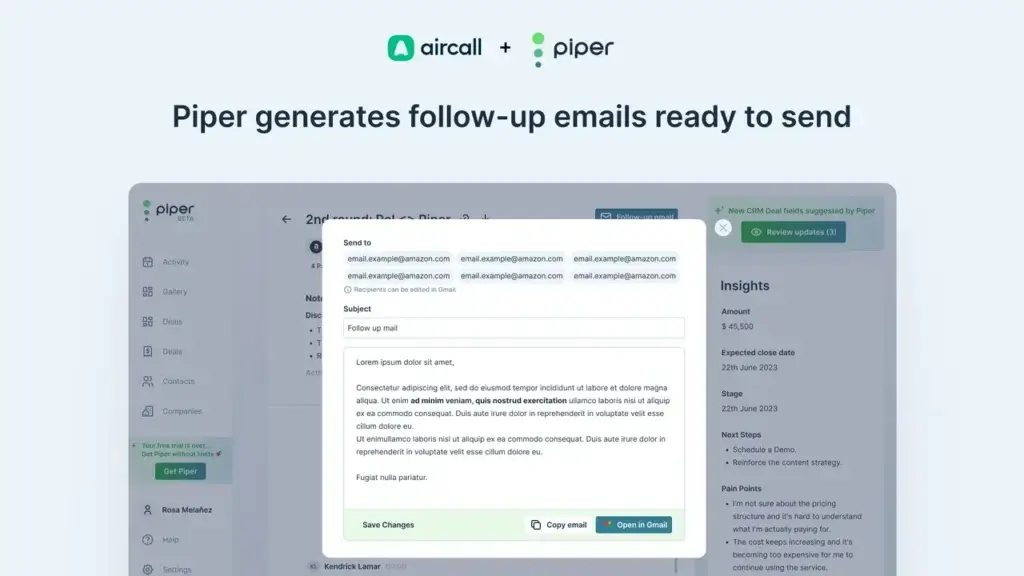
Follow-up speed and consistency can directly affect deal momentum. If a rep delays the next email or forgets to create a task, the deal can slow down.
Piper helps by drafting personalized follow-up emails and creating next-step tasks automatically. For teams that manage high volumes of meetings and opportunities, this can reduce manual work while improving follow-through.
Call scoring and coaching intelligence
Aircall already has AI capabilities around sales calls, but Piper adds a broader coaching layer across multiple touchpoints. It can score conversations against sales frameworks such as MEDDIC, BANT, or custom playbooks.
That matters because managers cannot realistically listen to every call or review every meeting manually. Automated scoring and key moment detection help managers coach based on actual behavior, not only anecdotal feedback.
Pipeline health and deal risk signals
One of Piper’s most strategic capabilities is deal intelligence. By analyzing engagement signals across channels, it can help identify where a deal is moving forward, slowing down, or becoming risky.
This gives revenue leaders a stronger foundation for forecasting and pipeline reviews. Instead of relying only on manually updated fields, teams can use signals from real customer interactions.
Aircall and Piper: Capability Comparison
| Capability | Aircall Before Piper | Aircall With Piper AI |
| Primary focus | Customer communications across voice, SMS, and WhatsApp | Customer communications plus revenue execution automation |
| Conversation channels | Strong focus on phone, SMS, and WhatsApp | Adds broader capture across video, email, messaging, WhatsApp, and field activity |
| CRM logging | Call activity, summaries, and workflow support | Structured CRM updates, deal stages, fields, and activity signals |
| Follow-ups | AI-assisted post-call workflows | Automated follow-up drafting and next-step task creation |
| Coaching | Call-focused AI guidance and scoring | Playbook-based scoring and coaching intelligence across more sales interactions |
| Pipeline visibility | Useful call and communication insights | Deal health, risk signals, forecast inputs, and revenue workflow automation |
Why This Acquisition Fits the Direction of Customer Communication Software
Customer communication software is no longer just about answering calls faster or managing messages in one inbox. The category is moving toward AI-powered workflows that connect every customer interaction to business outcomes.
For sales teams, that outcome is revenue. For support teams, it may be resolution speed, customer satisfaction, or retention. For operations teams, it may be process consistency and better data quality.
Aircall’s acquisition of Piper fits this trend because it connects communication activity to the systems teams use to manage work. The CRM becomes more accurate. Follow-ups become more consistent. Managers get better visibility. Reps spend less time documenting and more time selling.
This is also why the acquisition should interest buyers evaluating call center software, business phone systems, CRM tools, sales engagement platforms, and revenue intelligence software. The boundaries between these categories are becoming less fixed.
In the past, a company might buy one tool for calls, another for conversation intelligence, another for sales engagement, another for CRM automation, and another for forecasting. The direction now is toward more connected platforms that reduce handoffs between tools.
Who Benefits Most From Aircall and Piper Together?
The combined Aircall and Piper offering is not equally relevant for every company. It is strongest for B2B sales teams with recurring conversations, structured pipelines, and a clear need to reduce CRM admin.
It should be especially relevant for teams that sell through calls, demos, discovery meetings, follow-ups, and multi-stakeholder buying processes.
Based on the positioning of Piper, the best-fit users include:
- B2B sales teams using Salesforce or HubSpot
- Revenue teams with SDRs, AEs, account managers, and sales managers
- Companies selling through both phone and video meetings
- Teams that need stronger CRM hygiene and pipeline visibility
- Managers who want scalable coaching without reviewing every call manually
- RevOps teams trying to standardize sales processes across reps
For smaller teams with a simple sales process, the value may depend on how much time reps currently spend on CRM updates and follow-ups. If the sales cycle is short and the CRM process is lightweight, the impact may be less dramatic.
For mid-market revenue teams with many reps and frequent sales interactions, the value is easier to understand. The more conversations a team has, the more useful automation becomes.
Aircall vs. Traditional Revenue Intelligence Tools
The acquisition also puts Aircall closer to the revenue intelligence category. This is the space where tools help sales teams analyze calls, coach reps, inspect deals, and improve forecast accuracy.
However, Aircall’s angle is different from many traditional revenue intelligence platforms. Aircall already owns part of the communication layer through its business phone and customer communication platform. Piper gives Aircall a way to connect that communication layer directly to revenue workflows.
That difference matters because many revenue intelligence tools sit on top of conversations after they happen. They analyze recordings, summarize interactions, and surface insights. Piper’s positioning is more action-oriented. It is designed to update the CRM, create tasks, draft follow-ups, score calls, and monitor deal health.
For buyers, the question is not only which tool has the best analytics dashboard. The more practical question is: which tool reduces manual work while improving the quality of sales execution?
If your team mainly needs deep enterprise-level revenue intelligence, a dedicated platform may still be worth evaluating. But if your team wants communication, CRM automation, follow-up workflows, and AI sales assistance in a more connected environment, Aircall’s Piper acquisition makes the platform more compelling.
What to Consider Before Adopting Aircall With Piper
The acquisition is promising, but buyers should still evaluate it carefully. AI automation can improve sales productivity, but only when it fits the team’s process, CRM structure, compliance requirements, and sales motion.
CRM fit
Start by checking how well Piper fits your CRM. The strongest use case is for teams that already rely heavily on Salesforce or HubSpot and want cleaner, more consistent CRM data.
If your CRM setup is highly customized, you should review how fields, stages, tasks, and workflows will be mapped before rolling it out broadly.
Channel coverage
Piper is valuable because it captures more than phone calls. Still, teams should confirm which channels matter most to their sales process.
If your team relies heavily on Zoom, Teams, Google Meet, WhatsApp, email, and phone calls, the omnichannel angle is highly relevant. If most sales activity happens in only one channel, the value may be narrower.
Compliance and recording consent
AI conversation capture requires careful attention to recording consent, data retention, and regional compliance rules. This is especially important for teams selling across Europe or regulated industries.
Before adopting any AI conversation intelligence tool, confirm how recording notices, permissions, storage, deletion workflows, and user access controls work.
Change management
Automation only works when teams trust the outputs. Reps need to understand what Piper updates automatically, what they can edit, and how managers will use the data.
Managers also need a clear coaching process. Otherwise, dashboards and scoring can become another layer of noise instead of a practical performance improvement tool.
Final Thoughts
Aircall Is Moving Toward Revenue Automation
Aircall’s acquisition of Piper AI is a strong signal that customer communication platforms are becoming more operational and more revenue-focused.
The most important takeaway is simple: conversations are no longer enough. Sales teams need the actions that follow those conversations to happen faster, more consistently, and with better data.
Piper helps Aircall move in that direction. It adds automated CRM updates, follow-up drafting, task creation, deal scoring, coaching intelligence, and pipeline visibility across multiple communication channels.
For B2B sales teams, this can reduce admin work, improve CRM quality, and give managers a more accurate view of deal momentum. For Aircall, it expands the platform from customer communication into a broader revenue execution layer.
If you are evaluating customer communication software in 2026, this acquisition makes Aircall more relevant for teams that want more than a business phone system. It is becoming a stronger option for sales organizations that want communication, AI assistance, CRM automation, and revenue intelligence to work together.
FAQs
What did Aircall announce?
Aircall announced the acquisition of Piper AI, a revenue intelligence and workflow orchestration company that helps sales teams turn customer conversations into CRM updates, follow-ups, deal scoring, and pipeline signals.
What is Piper AI?
Piper AI is a sales execution and revenue intelligence platform that captures customer interactions across channels and converts them into structured CRM updates, deal insights, follow-up tasks, and automated workflows.
Why did Aircall acquire Piper AI?
Aircall acquired Piper AI to extend its customer communication platform beyond calls and messages into revenue execution, CRM automation, sales coaching, and pipeline intelligence.
How does Piper AI help sales teams?
Piper AI helps sales teams by reducing manual CRM work, drafting follow-ups, creating next-step tasks, scoring conversations, and surfacing deal risk signals from customer interactions.
Does Piper AI replace a CRM?
No. Piper AI does not replace a CRM. It works with CRM systems by updating records, syncing sales activity, and improving the quality of pipeline data.
Which teams are the best fit for Aircall and Piper AI?
Aircall and Piper AI are best suited for B2B sales teams that rely on calls, video meetings, follow-ups, CRM workflows, and structured pipeline management.
Does Piper AI only analyze phone calls?
No. Piper AI is designed to capture signals across multiple sales channels, including phone calls, video meetings, email, messaging, WhatsApp, and field activity.
How is Aircall different after acquiring Piper AI?
The acquisition gives Aircall a broader role in the sales workflow. It can support not only communication, but also CRM updates, follow-up automation, coaching intelligence, and pipeline visibility.
Is Aircall now a revenue intelligence platform?
Aircall remains a customer communication platform, but Piper AI expands its capabilities into revenue intelligence and sales execution automation.
What should buyers check before using Aircall with Piper AI?
Buyers should check CRM compatibility, channel coverage, data privacy requirements, recording consent workflows, integration depth, and how sales managers will use the coaching and pipeline insights.