
Introduction
Shipping can become one of the most expensive and operationally messy parts of running an e-commerce business. You need to compare carrier rates, print labels, send tracking updates, handle returns, validate addresses, and keep customers informed without slowing down fulfillment.
Shippo is a multi-carrier shipping software platform designed to simplify that workflow. It gives you access to discounted shipping rates, label printing, order imports, shipment tracking, returns, basic automation, and developer-friendly APIs from one central system.
In this Shippo review, you’ll learn how the platform works, what features stand out, how much it costs, where it fits best, and how it compares with other popular shipping tools like ShipStation, Easyship, Pirate Ship, and PitneyShip.
Shippo Overview
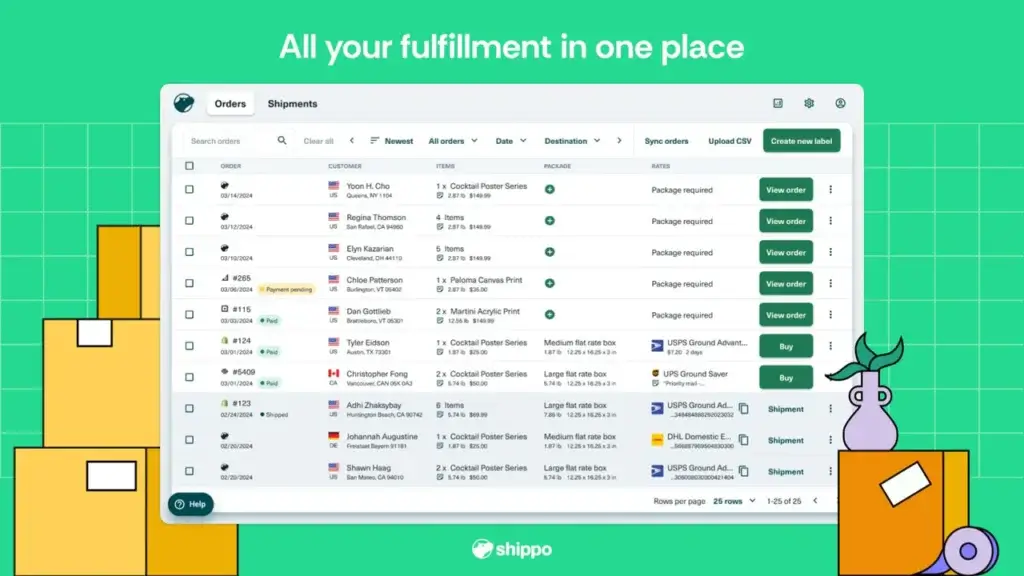
Shippo is best understood as a shipping management platform for online sellers and growing commerce teams. You can use it through the Shippo web app, connect it to your store, or build shipping workflows directly into your systems using Shippo’s API.
The platform focuses on four core jobs: comparing rates, buying labels, tracking shipments, and managing returns. That makes it useful for small merchants that want a simple shipping dashboard, but also relevant for high-volume brands, marketplaces, and software companies that need shipping infrastructure.
Shippo supports 40+ global carriers, including major providers such as USPS, UPS, FedEx, DHL Express, Canada Post, Australia Post, Royal Mail, DPD, Evri, and other regional or international carriers. This broad carrier network is one of its main advantages over more USPS-focused shipping tools.
With one Shippo account, you can:
- Compare discounted rates across major and regional carriers.
- Print shipping labels from connected e-commerce orders.
- Send tracking updates and branded notifications.
- Create return labels for a smoother post-purchase experience.
- Use APIs for rating, labels, tracking, address validation, and returns.
Overall, Shippo is a strong fit if you want shipping software that can start simple but scale into more advanced shipping operations as your business grows.
Software Specification
Key Features of Shippo
Multi-Carrier Rate Shopping
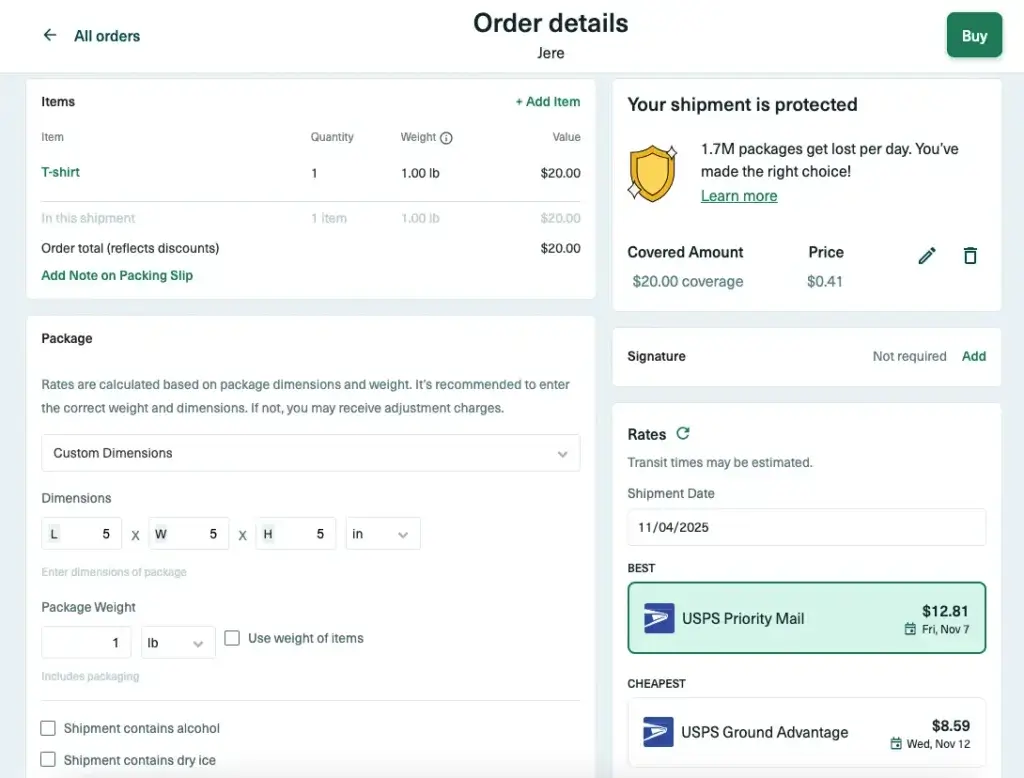
Shippo’s biggest strength is its multi-carrier rate comparison. Instead of logging into several carrier portals, you can enter shipment details and compare available services in one place.
The platform gives you access to discounted rates from carriers such as USPS, UPS, FedEx, and DHL Express. This is useful for smaller merchants that do not have enough volume to negotiate strong carrier discounts independently.
Rate shopping is especially valuable when your shipments vary by size, weight, destination, or delivery urgency. For example, a lightweight domestic order may be cheapest with USPS, while a heavier package or international shipment may make more sense through UPS, FedEx, DHL Express, or a regional carrier.
Label Printing and Order Management
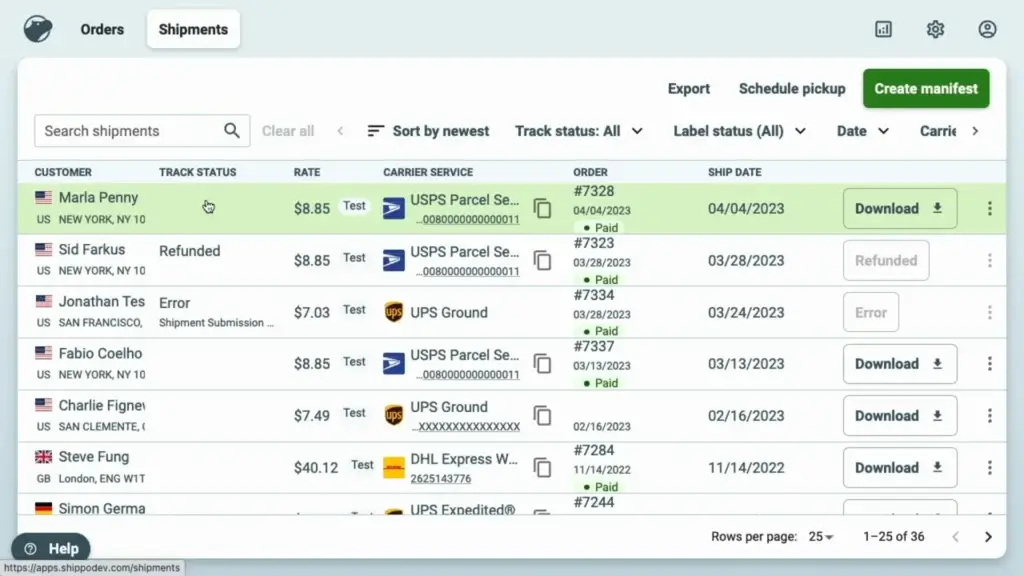
Shippo lets you buy and print labels directly from the dashboard. You can create labels manually, import orders from connected stores, or use CSV imports depending on your workflow.
This makes the platform useful for sellers that receive orders from multiple channels. Instead of copying customer details from your store into a carrier website, Shippo helps centralize shipping activity and reduce manual entry.
Important label and order management capabilities include:
- Single and bulk label creation for faster fulfillment.
- Order imports from supported stores and marketplaces.
- Packing slips for a cleaner fulfillment workflow.
- Manifests and customs forms for eligible shipments.
- Scheduled pickups where supported by the carrier.
For lean teams, this can remove a surprising amount of repetitive work. For larger sellers, it creates a more consistent process for warehouse staff, operations managers, and customer service teams.
Tracking, Notifications, and Customer Experience
Shipping does not end when the label is printed. Customers expect clear tracking updates, delivery visibility, and fast answers when packages are delayed.
Shippo includes shipment tracking and automated customer notifications. On paid plans, you can also use branded tracking pages, branded notification emails, and branded packing slips, which help create a more professional post-purchase experience.
This is an important point for e-commerce brands. Tracking emails and delivery updates are often some of the most opened customer messages you send. When those touchpoints look consistent with your brand, shipping becomes part of the customer experience rather than just a back-office task.
Returns Management
Shippo supports return label creation, helping you make returns easier for customers and more manageable for your team.
This matters because returns can quickly become chaotic when handled manually. Without a clear process, customers contact support for labels, warehouse teams lose visibility, and finance teams struggle to connect return costs with order data.
With Shippo, you can create return labels from the same shipping environment used for outbound shipments. For e-commerce brands with regular returns, this helps standardize the reverse logistics process.
Address Validation and Shipping Insurance
Shippo includes US address validation and paid non-US address validation. This helps reduce failed deliveries, incorrect labels, carrier adjustment fees, and customer support issues caused by address errors.
The platform also supports shipping insurance. This is helpful if you sell higher-value items or ship products that are difficult to replace. Instead of managing insurance separately through each carrier, you can handle protection as part of the shipping workflow.
Insurance is not a replacement for careful packaging or carrier selection, but it can reduce financial risk when shipments are lost, stolen, or damaged.
Automation and Workflow Rules
Shippo includes automation features that help you reduce repetitive decision-making. For example, you can use automation to standardize shipping choices, apply order tags, speed up label creation, and support more consistent fulfillment workflows.
This is especially helpful when your team ships similar products repeatedly. Instead of choosing settings from scratch for every order, you can build repeatable processes around package type, shipping service, destination, or order value.
Shippo is not the most advanced shipping automation platform on the market. ShipStation, for example, is typically stronger for complex rule-based workflows. However, Shippo’s automation features are more than enough for many small and mid-sized merchants.
Developer API and Shipping Infrastructure
Shippo is also a shipping API provider. Developers can use Shippo APIs for label creation, rating, tracking, address validation, returns, insurance, and other logistics workflows.
This makes Shippo relevant beyond standard e-commerce sellers. Marketplaces, SaaS platforms, 3PLs, and high-volume merchants can use Shippo to build shipping directly into their own products or internal systems.
The API Starter plan includes 30 labels per month for free, with additional labels priced per label after that. API Premier is custom-priced and adds volume discounts, a dedicated account manager, solutions engineering support, and priority support.
Workflow & User Experience
Ease of Use and User Experience
Setup and Onboarding
Shippo is relatively easy to set up if you run a standard e-commerce store. You create an account, connect your store or marketplace, set your origin address, configure package details, and start buying labels.
The platform is particularly friendly for users that do not want to manage separate carrier portals. You can start with Shippo’s discounted carrier rates, then connect your own carrier accounts later if your business already has negotiated rates.
That flexibility is useful. Early-stage sellers can start quickly, while more mature operations can bring their own carrier relationships into the workflow.
Daily Shipping Workflow
In daily use, Shippo is straightforward. Orders sync into the dashboard, you choose the order you want to fulfill, compare rates, buy the label, print it, and send tracking details to the customer.
This workflow works well for small teams because it does not require a complicated warehouse management system. You can manage shipping from one browser-based interface and avoid jumping between store admin pages and carrier websites.
For higher-volume sellers, bulk label printing, CSV imports, order tags, and automation rules become more important. These tools help reduce clicks, especially when the same shipping decisions are repeated across many orders.
Store Integrations
Shippo integrates with e-commerce stores, websites, and marketplaces. The integration library includes major platforms and carrier-specific integration categories, making it practical for merchants selling across different channels.
For most online sellers, integrations are one of the biggest reasons to use Shippo instead of carrier-native tools. A direct connection between your store and shipping software reduces manual entry, avoids copy-paste mistakes, and creates a cleaner tracking workflow.
Support Options
Support depends on the plan. Starter includes email support, while Pro adds chat and phone support. Premier adds more hands-on support through a dedicated account manager.
This plan structure is reasonable, but it is worth noting if shipping is business-critical for you. If you ship at high volume and downtime would hurt fulfillment, the Premier plan or API Premier support structure may be more appropriate than the free plan.
Where Shippo Feels Strongest
Shippo feels strongest when you want a clean, flexible, multi-carrier shipping platform without taking on unnecessary complexity. It is not trying to be a full ERP, WMS, inventory system, or customer service platform.
That focus is part of its appeal. Shippo does shipping well, connects to the tools you already use, and offers API flexibility when your logistics workflow becomes more advanced.
Expert Tips to Get More Value from Shippo
To get the most from Shippo, you should treat it as more than a label printer. The real value comes from standardizing decisions, reducing errors, and improving customer communication.
- Compare rates for every shipment: Do not assume one carrier is always cheapest across all destinations and package types.
- Save common package settings: Standard boxes and weights help speed up fulfillment and reduce label mistakes.
- Use branded tracking on paid plans: Branded tracking pages can improve trust after purchase.
- Validate addresses before shipping: Address validation helps prevent avoidable delivery failures.
- Connect all active stores: Centralizing orders gives you better visibility across sales channels.
- Review carrier performance monthly: Cost is important, but delays and failed deliveries also affect profit.
- Use the API when workflows outgrow the app: Developers can build more customized shipping automation around Shippo’s API.
Pros and Cons
Advantages and Disadvantages
Positive
✅ 40+ global carriers
✅ Free Starter plan
✅ Strong API options
✅ Store integrations
Negative
❌ Advanced branding is paid
❌ Free plan is limited
❌ Not a full WMS
❌ Automation is moderate
Before choosing Shippo, it is important to understand where the platform performs well and where it may not be enough for more complex fulfillment teams.
✅ Pros
- Wide carrier network: Shippo supports 40+ global carriers, including major and regional providers.
- Free plan available: Small sellers can start with up to 30 labels per month.
- Strong shipping API: Developers can build labels, rating, tracking, returns, and validation into custom systems.
- Good e-commerce fit: Store integrations help sellers sync orders and reduce manual data entry.
- Useful branding tools: Paid plans support branded tracking pages, emails, and packing slips.
- Scalable plan structure: You can move from Starter to Pro or Premier as shipping volume grows.
❌ Cons
- Starter is limited: The free plan allows only 30 labels per month and one user login.
- Branding requires Pro: Branded tracking, emails, and packing slips are not included in Starter.
- Not a full warehouse system: Shippo does not replace advanced WMS, inventory, or ERP tools.
- Automation is not the deepest: ShipStation may be stronger for complex shipping rules.
- Support varies by plan: Chat, phone, and dedicated account support require higher tiers.
Pricing
How Much Does Shippo Cost?
Shippo offers separate pricing for the shipping app and shipping API. The app pricing is aimed at e-commerce merchants, while API pricing is designed for teams building shipping directly into products, platforms, or internal systems.
Shippo’s app pricing includes three main tiers: Starter, Pro, and Premier. Starter is free, Pro starts at $17/month when billed annually, and Premier is custom-priced.
| Plan | Price | Best For | Key Features |
| Starter | Free | Low-volume sellers | Up to 30 labels per month, 1 user login, discounted USPS, UPS, FedEx, and DHL Express labels, unlimited store connections, international shipping, return labels, tracking, analytics, email support. |
| Pro | Starts at $17/month billed annually | Growing e-commerce businesses | Up to 10,000 labels per month, 5+ users, free own-carrier-account connection, branded tracking, notification emails, packing slips, AI-powered estimated delivery dates, chat and phone support. |
| Premier | Custom pricing | High-volume and larger teams | Unlimited shipments, 15+ users, dedicated account manager, advanced support, and more scalable shipping operations. |
The Starter plan is useful if you are just beginning or ship occasionally. However, the 30-label limit and one-user setup make it less practical once shipping becomes part of your daily operation.
The Pro plan is the most realistic option for many growing online sellers. It removes some Starter limitations, adds branding features, supports more users, and scales by monthly label volume.
Premier is best for higher-volume businesses that need more support, more users, and more operational flexibility. If shipping is a core part of your customer experience, a custom plan may be worth considering.
Shippo API Pricing
Shippo’s API pricing is separate from the app plans. API Starter is free to begin with and includes 30 labels per month. After the first 30 free labels, additional labels are priced at 7¢ per label.
Shippo also charges separate usage-based fees for certain standalone API services, such as tracking, rating, and address validation. API Premier is custom-priced and designed for high shipment volume, unique business models, and technical or enterprise-level support needs.
| API Plan | Price | Included | Best For |
| API Starter | Free to start, then 7¢ per label after 30 labels/month | 40+ shipping carriers, rating, labels, returns, insurance, reporting, analytics, email support, address validation and tracking fees apply. | Small teams and developers testing shipping workflows. |
| API Premier | Custom pricing | Everything in API Starter, plus volume discounts, Shippo Intelligence, dedicated account manager, solutions engineering support, and priority email support. | High-volume shippers, marketplaces, platforms, and enterprise-level shipping operations. |
Pricing Tips
- Start with Starter if you ship lightly: It is a practical way to test Shippo without a subscription.
- Upgrade to Pro when branding matters: Branded tracking and emails can improve the customer experience.
- Watch API fees carefully: Tracking, rating, and address validation can add up at scale.
- Compare total cost, not only subscription cost: Shipping volume, carrier rates, add-ons, and support needs all matter.
Common Use Cases
Who Should Use Shippo?
Shippo is a strong option for e-commerce teams that need flexible shipping software without committing to a large fulfillment platform. Its best use cases are online selling, multi-carrier label printing, returns, tracking, and shipping API workflows.
- Small e-commerce sellers: Use Shippo to compare rates, print labels, and avoid carrier-by-carrier workflows.
- Growing online stores: Connect stores, manage orders, create return labels, and improve tracking communication.
- Multi-channel merchants: Centralize shipping activity from several storefronts or marketplaces.
- High-volume brands: Use Premier or API Premier for more support, users, and volume-based needs.
- Developers and platforms: Build shipping functionality into internal tools, marketplaces, or SaaS products.
- International sellers: Access global carriers and create customs documentation for supported shipments.
Shippo is less ideal if you need a full warehouse management system, advanced inventory planning, labor management, pick-and-pack optimization, or deep ERP functionality. In that case, Shippo can still be part of your stack, but it should sit alongside WMS, inventory, or operations software.
Compare with Others
Shippo vs Competitors
Shippo competes with several shipping platforms, but the best alternative depends on your shipping volume, sales channels, developer needs, and international shipping requirements.
| Feature Type | Shippo | ShipStation | Easyship | Pirate Ship |
| Best For | E-commerce sellers and developers needing flexible multi-carrier shipping | Higher-volume multi-channel sellers needing advanced automation | International sellers needing courier choice and cross-border tools | Small sellers focused on simple discounted USPS and UPS labels |
| Starting Price | Free Starter plan | Paid plans, usually no long-term free app plan | Free or paid plans depending on volume and features | Free |
| Carrier Network | 40+ global carriers | Large carrier and marketplace network | Very broad global courier network | More limited, mainly USPS and UPS focused |
| Automation | Good for standard workflows | Stronger for complex rule-based workflows | Good for international shipping logic | Basic |
| API Capabilities | Strong API offering | Available, but app-first for many users | Available for shipping and international workflows | Limited compared with API-first platforms |
| Branding | Available on Pro and Premier | Available on paid plans | Available depending on plan | Limited |
| Ideal User | Growing sellers, platforms, and teams needing app plus API flexibility | Established e-commerce operations with complex workflows | Cross-border merchants | Low-volume domestic shippers |
Shippo vs ShipStation
ShipStation is often stronger for advanced automation, large integration ecosystems, and multi-channel order management. It is a strong fit for higher-volume sellers that want detailed workflow rules and fulfillment controls.
Shippo is better if you want a simpler starting point, a free plan, strong API access, and a clean multi-carrier shipping experience. It is especially appealing when you want to start small but keep technical flexibility for the future.
Shippo vs Easyship
Easyship is particularly strong for international shipping, duties and taxes, courier choice, and cross-border delivery options. If your business ships globally and needs more international checkout logic, Easyship may be a better fit.
Shippo is more balanced for merchants that need domestic and international shipping, store integrations, tracking, returns, and APIs without making international shipping the entire focus.
Shippo vs Pirate Ship
Pirate Ship is simple, free, and popular with small sellers that primarily need discounted USPS and UPS labels. It is easy to recommend for very small operations that do not need broad carrier access, branded tracking, or API-driven workflows.
Shippo is stronger when you need more carriers, store connections, branded customer communication, returns, and developer options.
Shippo vs PitneyShip
PitneyShip is a good option for small businesses that combine parcel shipping with office mailing needs, certified mail, and postage-focused workflows.
Shippo is usually the better fit for e-commerce-first teams, developer-led shipping projects, and brands that want broader shipping API flexibility.
Conclusion
Final Thoughts
Shippo is one of the more balanced shipping software options for e-commerce businesses in 2026. It combines multi-carrier rate shopping, discounted labels, order syncing, tracking, returns, branded customer communication, and developer APIs in a way that serves both small sellers and more technical teams.
The biggest reason to choose Shippo is flexibility. You can start with the free Starter plan, upgrade to Pro as your shipping volume grows, or use the API if you need to build shipping directly into your systems.
It is not the deepest warehouse management platform, and it may not match ShipStation for complex automation. However, for many e-commerce merchants, Shippo delivers the right balance of simplicity, carrier access, pricing flexibility, and technical scalability.
If your business is moving beyond manual labels and carrier-by-carrier shipping, Shippo is a strong platform to consider.
Frequently Asked Questions
Have more questions?
What is Shippo?
Shippo is a multi-carrier shipping software platform that helps businesses compare rates, print labels, track shipments, manage returns, and connect shipping workflows through e-commerce integrations or APIs.
Is Shippo good for small businesses?
Yes. Shippo is a good option for small businesses because it offers a free Starter plan, discounted carrier rates, store integrations, return labels, shipment tracking, and simple label printing tools.
How much does Shippo cost?
Shippo has a free Starter plan, a Pro plan that starts at $17 per month when billed annually, and a custom Premier plan. API pricing is separate and includes 30 free labels per month, then per-label pricing after that.
Which carriers does Shippo support?
Shippo supports 40+ global carriers, including USPS, UPS, FedEx, DHL Express, Canada Post, Australia Post, Royal Mail, DPD, Evri, and other regional and international carriers.
Does Shippo integrate with Shopify?
Yes. Shippo supports store and marketplace integrations, including popular e-commerce platforms. This allows you to import orders, create labels, and send tracking updates from one shipping dashboard.
Does Shippo offer branded tracking?
Yes. Shippo offers branded tracking pages, notification emails, and packing slips on paid plans. These features help create a more professional post-purchase experience for customers.
Can developers use Shippo as a shipping API?
Yes. Shippo provides APIs for labels, rating, tracking, returns, address validation, insurance, and other shipping workflows. This makes it suitable for marketplaces, platforms, and custom logistics systems.
Is Shippo better than ShipStation?
Shippo is often better if you want a free starting plan, strong API flexibility, and straightforward multi-carrier shipping. ShipStation may be better for larger sellers that need deeper automation and more complex workflow rules.
Does Shippo handle returns?
Yes. Shippo supports return label creation, helping businesses simplify reverse logistics and offer customers a clearer returns experience.
Who should not use Shippo?
Shippo may not be enough if you need a full warehouse management system, advanced inventory planning, labor management, or ERP-level fulfillment controls. In those cases, Shippo can still work as a shipping layer alongside other operations software.