Introduction
Shipping can quickly become one of the most expensive and operationally stressful parts of running an ecommerce business. You need to import orders from different stores, compare carrier rates, print accurate labels, update customers, manage returns, and protect your margins at the same time.
That is exactly the problem ShipAccel is designed to solve. Built by Pitney Bowes, ShipAccel is a cloud-based ecommerce fulfillment and shipping platform that helps online sellers manage orders, access discounted carrier rates, automate fulfillment workflows, and improve the customer experience after checkout.
In this ShipAccel review, you will learn how the platform works, which features matter most, how much it costs, who should use it, and how it compares with alternatives like ShipStation, Shippo, Easyship, and PitneyShip. By the end, you should have a clear understanding of whether ShipAccel is the right shipping software for your ecommerce operation in 2026.
ShipAccel Overview
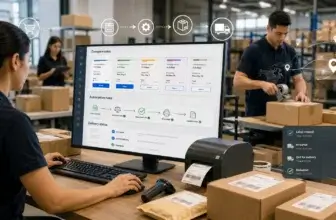
ShipAccel is best described as ecommerce shipping software with built-in order management, multi-carrier rate shopping, label printing, branded tracking, returns, automation, and analytics. Instead of switching between separate ecommerce platforms, carrier portals, spreadsheets, and customer emails, you can centralize shipping workflows in one dashboard.
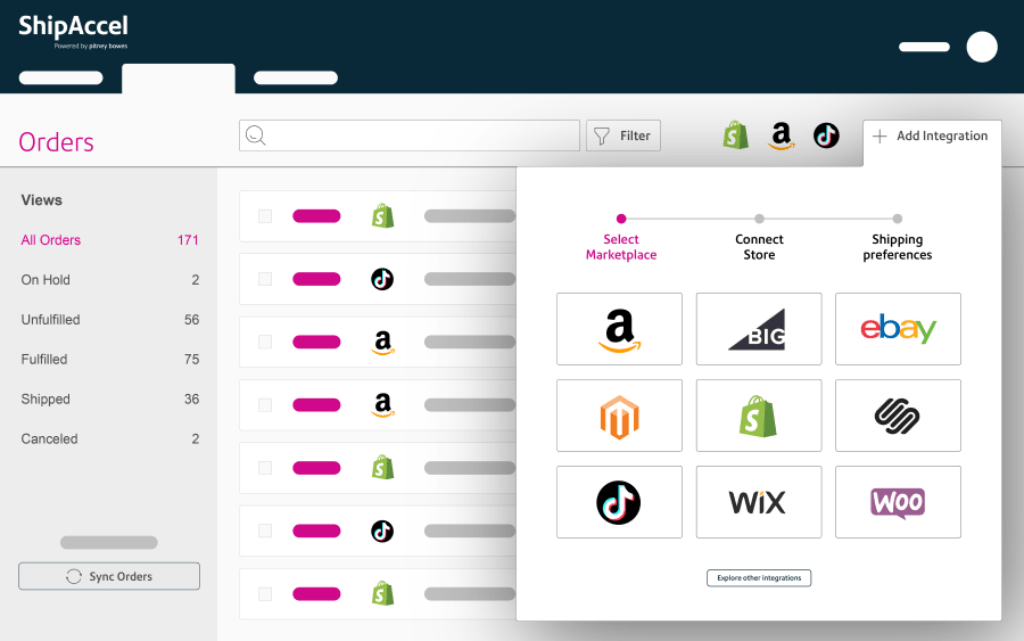
The platform is especially relevant if you sell through multiple channels, such as Shopify, Amazon, BigCommerce, eBay, or other ecommerce storefronts. ShipAccel pulls orders into one workspace, helps you choose the right carrier, creates labels, and gives customers better visibility once the order leaves your warehouse.
ShipAccel is not only a label-printing tool. Its stronger value is in connecting shipping execution with fulfillment control. You can use it to reduce repetitive work, manage higher order volumes, monitor shipping costs, and create a more professional post-purchase experience.
For small ecommerce sellers, the appeal is straightforward setup and discounted carrier access. For growing brands, the appeal is automation, branded tracking, returns management, ERP integrations, API access, multi-location control, and analytics.
Software Specification
Key Features of ShipAccel
Order Management for Ecommerce Sellers
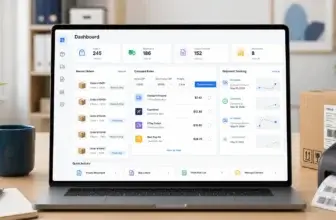
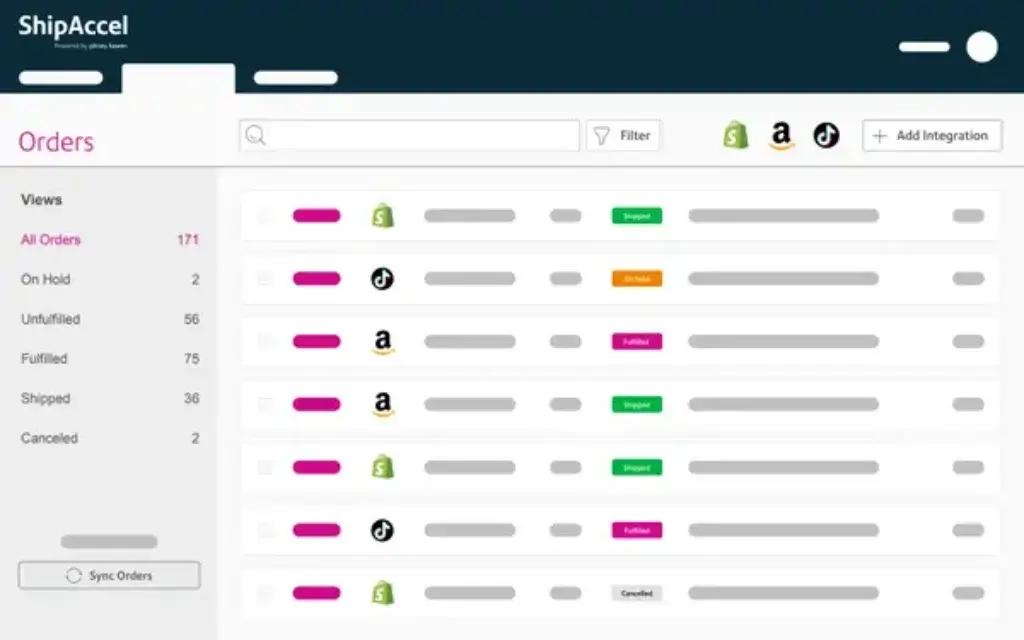
ShipAccel gives you a centralized order management workspace where you can view and process orders from connected ecommerce channels. This is useful when you sell through more than one storefront or marketplace and want to avoid managing each channel separately.
Instead of manually copying order information into carrier websites, ShipAccel helps you bring sales activity into one connected dashboard. From there, you can review order details, prepare shipments, create labels, and keep tracking information organized.
This is one of the main reasons ShipAccel fits ecommerce teams better than basic postage tools. It is built around order flow, not only around buying postage.
Multi-Carrier Rate Shopping
Rate shopping is one of ShipAccel’s most important features. The platform lets you compare available shipping services from major carriers and choose the option that best fits the order, delivery promise, package type, and cost target.
ShipAccel supports access to top carriers such as USPS, UPS, FedEx, and DHL, with discounted rates included in its published plans. This helps smaller sellers access better pricing without negotiating every carrier relationship on their own.
For ecommerce brands, this matters because shipping costs can change based on weight, zone, service level, surcharges, and delivery timing. A small difference per order can become a meaningful margin difference when monthly volume grows.
Shipping Labels and Fulfillment Execution
ShipAccel allows you to generate shipping labels directly from the platform. Once an order is ready, you can select the service, create the label, and move the shipment forward without leaving the dashboard.
The platform is also built for scaling repetitive workflows. As your order volume grows, label creation should not depend on manual decisions for every shipment. ShipAccel’s higher plans include automation rules that can help streamline workflows around carrier selection, shipping services, and fulfillment logic.
This is especially valuable for teams that handle repeatable order types, subscription boxes, multi-item orders, or products with consistent packaging requirements.
Branded Tracking and Returns
ShipAccel includes branded tracking and returns capabilities on higher plans. This gives your customers a more professional experience after they purchase, instead of sending them only to a generic carrier tracking page.
Branded tracking helps you keep your store visible after checkout. Customers can view delivery updates in an experience that feels connected to your brand, which can reduce “where is my order” requests and improve confidence.
Returns are also a major part of ecommerce operations. A smoother returns process can reduce support friction, help customers understand next steps, and make your store feel more trustworthy.
Automation Rules
Automation is where ShipAccel becomes more useful for growing sellers. With automation rules, you can reduce the number of manual decisions your team needs to make when processing orders.
For example, you may want specific carriers for certain zones, different services for expedited orders, or predefined package rules for certain product types. ShipAccel’s Premier plan includes automation rules to streamline workflows, while Enterprise adds more advanced capabilities for larger operations.
This feature is important if your team is spending too much time deciding how to ship each order. The goal is not only faster label printing, but more consistent fulfillment logic.
Shipping Analytics and Carrier Performance
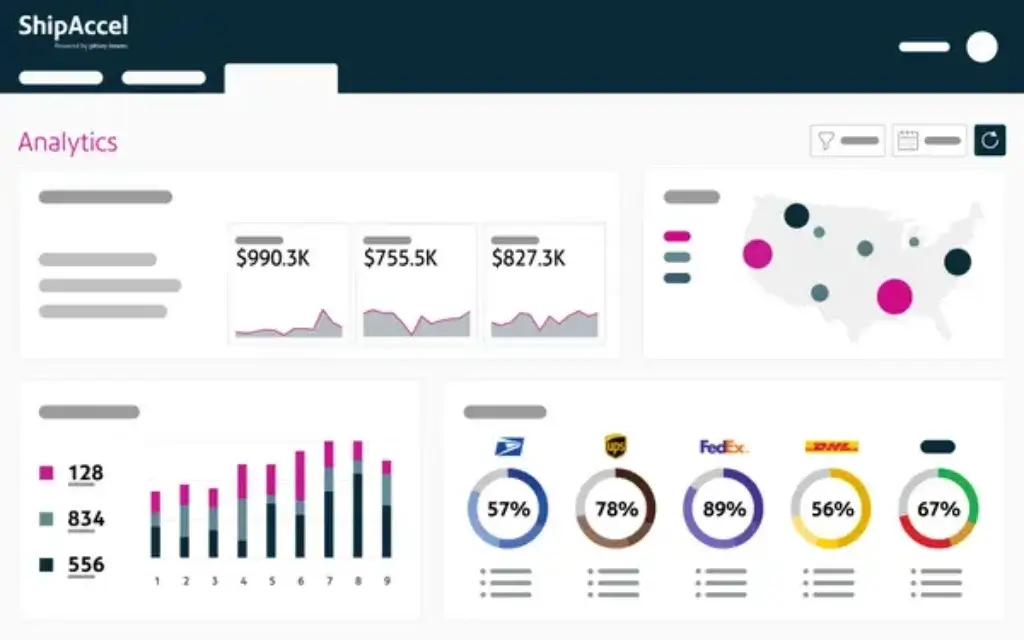
ShipAccel includes analytics that help you understand shipping spend, fulfillment speed, and carrier performance. Starter includes essential analytics, while Enterprise expands into advanced analytics with returns and carrier performance.
Analytics are useful because many ecommerce teams underestimate how much money is lost through poor shipping decisions. When you can review costs by carrier, service level, delivery performance, and returns activity, you can make better operational decisions.
For example, if a carrier is cheaper but creates more late deliveries or return issues, the lowest price may not be the best choice. ShipAccel’s analytics help you compare cost with reliability.
Integrations With Ecommerce and Business Systems
ShipAccel supports ecommerce integrations and can connect with online stores, marketplaces, carriers, 3PLs, warehouse management systems, and business tools. According to the official pricing details, QuickBooks ERP integration is included in the Premier plan, while Enterprise can include add-ons such as Microsoft Dynamics and NetSuite integrations.
This makes ShipAccel more relevant for brands that need shipping software to fit into a broader operational stack. For smaller sellers, ecommerce integrations may be enough. For larger teams, ERP, WMS, and API access become more important.
If you already use tools like Shopify, Amazon, BigCommerce, QuickBooks, NetSuite, or Microsoft Dynamics, ShipAccel may help you connect shipping activity with the systems your team already depends on.
Workflow & User Experience
Ease of Use and Support Options
Setup and Onboarding
ShipAccel is designed to be accessible for small teams without requiring a heavy IT project. The official small-business messaging emphasizes quick setup, discounted rates, no minimum shipping volume requirements, and simplified fulfillment for growing brands.
That said, setup complexity depends on your operation. A single Shopify store with one shipping location should be easier to configure than a multi-location ecommerce business with custom carrier accounts, ERP requirements, returns workflows, and warehouse processes.
For most small sellers, the Starter and Pro plans should be approachable. For larger teams, Enterprise onboarding will likely require more planning around carrier access, user permissions, API use, integrations, and operational rules.
Daily Shipping Workflow
In a typical workflow, you connect your store, import orders, compare available carrier rates, create labels, and send tracking updates. The more connected your ecommerce channels are, the less your team needs to rely on manual entry.
The biggest usability benefit is having order management, label creation, tracking, returns, and shipping analytics in one place. This reduces tool switching and gives managers better visibility into what is happening across fulfillment.
For high-volume sellers, the workflow becomes stronger when automation rules are in place. Instead of reviewing every order manually, your team can apply predefined shipping logic and focus on exceptions.
Customer Support
ShipAccel includes chat support on the Starter plan. The official product page also highlights email and chat-based assistance for onboarding and day-to-day support.
For small businesses, this should cover basic setup and operational questions. For larger companies, support expectations should be discussed before choosing Enterprise, especially if you need dedicated onboarding, technical help, API support, or integration guidance.
My recommendation is to test support responsiveness during the free trial. Ask a few real workflow questions before committing, because shipping software becomes operationally critical once your team depends on it every day.
User Experience Considerations
ShipAccel appears to be built for ecommerce operators who want a practical, guided workflow rather than a developer-first shipping API. The interface is focused on orders, rates, labels, tracking, returns, and analytics.
That makes it easier for ecommerce teams, office managers, warehouse coordinators, and fulfillment staff to adopt. However, if you need highly customized shipping logic, advanced developer controls, or complex global trade functionality, you may need to evaluate the Enterprise plan or compare ShipAccel with API-first tools.
Pros and Cons
Advantages and Disadvantages
Positive
✅ Ecommerce-focused workflows
✅ Discounted carrier rates
✅ Branded tracking and returns
✅ Strong scaling path
Negative
❌ No free plan
❌ Automation starts higher
❌ Enterprise needed for API
❌ Limited public reviews
Before choosing ShipAccel, it is important to understand both its operational strengths and its practical limitations.
✅ Pros
- Built for ecommerce fulfillment: ShipAccel combines orders, rates, labels, tracking, returns, and analytics.
- Discounted carrier access: Plans include discounted rates for major carriers such as USPS, UPS, and FedEx.
- Strong post-purchase features: Branded tracking and returns help improve the customer experience.
- Useful automation: Premier and Enterprise plans help reduce repetitive shipping decisions.
- Scalable plan structure: You can start small and move into higher-volume plans as you grow.
- Pitney Bowes backing: The platform benefits from an established shipping and mailing technology provider.
❌ Cons
- No permanent free plan: ShipAccel starts at $25/month after the trial.
- Automation is not included in Starter or Pro: You need Premier for workflow automation rules.
- API access requires Enterprise: Developer-heavy teams may need a quoted plan.
- Advanced integrations may cost more: NetSuite, Microsoft Dynamics, additional carriers, and international shipping are Enterprise features.
- Limited review volume: Public review profiles show fewer user reviews than older shipping platforms.
- Best for ecommerce, not general office mailing: PitneyShip may be more relevant for office postage and mailing workflows.
Pricing
How Much Does ShipAccel Cost?
ShipAccel uses a tiered pricing model based on monthly parcel volume, users, locations, and advanced features. The platform also offers a 30-day free trial for new clients.
The key thing to understand is that ShipAccel pricing is not only about the monthly subscription. You should also consider postage, carrier charges, supplies, taxes, integrations, and whether you need higher-tier features such as automation rules, API access, international shipping, or ERP integrations.
| Plan | Monthly Price | Best For | Key Features |
| Starter | $25/month | Small ecommerce sellers shipping up to 500 parcels/month | 1 user, 1 location, discounted UPS, USPS and FedEx rates, access to USPS, UPS, FedEx and DHL, ecommerce integrations, tracking emails, essential analytics, chat support. |
| Pro | $45/month | Growing sellers that need branded customer-facing shipping pages | Up to 1,000 parcels/month, up to 3 users, 1 location, everything in Starter, multi-piece rate shopping, branded tracking and returns pages. |
| Premier | $130/month | Scaling ecommerce teams that need workflow automation | Up to 3,000 parcels/month at the base Premier level, up to 5 users, 1 location, everything in Pro, automation rules, QuickBooks ERP integration. |
| Enterprise | Custom quote | High-volume, multi-location, or technically complex operations | More than 10,000 parcels/month, unlimited users and locations, advanced analytics, ShipAccel API, Microsoft Dynamics and NetSuite add-ons, additional carriers, international shipping, multiple shipping locations, bring your own carrier accounts. |
Which ShipAccel Plan Should You Choose?
The Starter plan is best if you are a smaller ecommerce business that wants discounted rates, ecommerce integrations, tracking emails, and basic analytics without paying for features you do not need yet.
The Pro plan is the better option if customer experience matters and you want branded tracking and returns pages. For many growing ecommerce brands, this is the more practical starting point because post-purchase communication directly affects support volume and customer satisfaction.
The Premier plan makes sense when manual shipping decisions are slowing your team down. If you process enough orders that repetitive rules, QuickBooks integration, and workflow automation can save hours each week, Premier becomes easier to justify.
Enterprise is for businesses that need API access, international shipping, additional carrier integrations, advanced analytics, multi-location shipping, ERP add-ons, or bring-your-own carrier accounts. If your fulfillment operation already involves multiple warehouses, 3PLs, or enterprise systems, you should speak with ShipAccel before choosing a lower plan.
Pricing Tips
- Use the free trial with real orders: Test ShipAccel with actual shipping workflows, not only sample data.
- Estimate savings per shipment: Compare discounted carrier rates against your current rates.
- Factor in returns: Branded returns may reduce support work and improve customer experience.
- Check your integration needs: ERP, API, and advanced carrier requirements may push you toward Enterprise.
- Review parcel limits: Choose a plan that matches your normal monthly volume and peak-season needs.
Common Use Cases
Who Should Use ShipAccel?
ShipAccel is best for ecommerce businesses that need more than basic postage. It is especially useful when order volume, sales channels, carrier decisions, and customer communication are becoming harder to manage manually.
- Small ecommerce brands: Sellers that want discounted carrier rates and simple order-to-label workflows.
- Multi-channel retailers: Stores selling through Shopify, Amazon, BigCommerce, eBay, or marketplaces.
- Growing DTC brands: Teams that need branded tracking, returns, and better post-purchase communication.
- Subscription box companies: Businesses with repeatable shipping patterns and recurring fulfillment needs.
- Warehouse teams: Operations that need faster label creation, carrier selection, and order visibility.
- High-volume shippers: Companies that need analytics, automation, integrations, and multi-location support.
ShipAccel may not be the best fit if you only mail occasional letters or documents. In that case, PitneyShip or another postage-focused tool may be more suitable. ShipAccel is strongest when ecommerce fulfillment, parcel shipping, rate comparison, returns, and branded customer communication all matter.
Best Fit Recommendation
ShipAccel is a strong fit for ecommerce sellers that have outgrown manual carrier websites but do not want to build a custom shipping stack from scratch. It gives you a practical middle ground between simple shipping apps and technical shipping APIs.
My opinion is that ShipAccel is most compelling for small to mid-sized ecommerce brands that want a shipping platform backed by a major logistics technology provider. The pricing is reasonable for teams that will actually use its order management, branded tracking, and automation capabilities.
Compare with Others
ShipAccel vs. Competitors
ShipAccel competes with several well-known shipping platforms. The right choice depends on whether you prioritize ecommerce automation, low-cost label creation, global shipping, API flexibility, or office mailing workflows.
| Feature Type | ShipAccel | ShipStation | Shippo | Easyship | PitneyShip |
| Best For | Ecommerce brands that need fulfillment, automation, tracking, returns, and analytics | High-volume ecommerce sellers needing broad integrations and mature automation | Small sellers and developers wanting flexible label and API pricing | International ecommerce sellers that need many courier options | Small businesses needing mailing, postage, and parcel shipping |
| Starting Price | $25/month | Paid plans vary by shipment volume | Free or low-cost entry options depending on app or API use | Free and paid plans available | Free or paid plans depending on shipping needs |
| Carrier Access | USPS, UPS, FedEx, DHL, and additional carriers on higher plans | Large carrier and marketplace network | 40+ carriers on API plans | 550+ courier services listed by the vendor | USPS, UPS, FedEx, and mailing services |
| Automation | Available on Premier and Enterprise | Strong automation and workflow rules | Available, but depends on plan and use case | Automation for shipping and international workflows | More focused on shipping and mailing tasks |
| Branded Tracking and Returns | Included from Pro | Available on higher plans | Available on selected plans | Strong post-purchase and international tools | Basic shipment tracking and mailing workflows |
| API Access | Enterprise | Available through ShipStation API and related products | Strong API offering | API available depending on plan | Less developer-focused |
| Main Limitation | Automation and API require higher plans | Can become more complex and expensive as needs grow | May require more configuration for advanced operations | International strength may be more than some domestic sellers need | Less ecommerce-fulfillment focused than ShipAccel |
ShipAccel vs. ShipStation
ShipStation is one of the most established ecommerce shipping platforms, with a broad integration ecosystem and strong automation tools. It may be a better choice for sellers that need a mature platform with extensive marketplace connections and more advanced operational customization.
ShipAccel is more attractive if you want a newer ecommerce-focused platform from Pitney Bowes with straightforward pricing, discounted carriers, branded tracking and returns, and a direct path from small business shipping to enterprise fulfillment.
ShipAccel vs. Shippo
Shippo is often a strong fit for smaller sellers, startups, and API-driven businesses that want flexible access to carrier rates, labels, tracking, and shipping infrastructure. Its entry-level pricing can be appealing for low-volume shippers.
ShipAccel is better if you want an ecommerce fulfillment dashboard that brings together order management, branded returns, analytics, and shipping execution in a more operationally guided platform.
ShipAccel vs. Easyship
Easyship is known for global shipping and broad courier access. If your business ships internationally and needs duties, taxes, cross-border options, and many courier choices, Easyship deserves consideration.
ShipAccel is more focused on ecommerce fulfillment operations, carrier rate shopping, branded tracking, returns, and scaling domestic or multi-carrier workflows. It may be better for brands that want shipping operations under one practical ecommerce dashboard.
ShipAccel vs. PitneyShip
ShipAccel and PitneyShip both come from Pitney Bowes, but they serve different needs. PitneyShip is more relevant for small businesses, offices, postage, mailing, certified mail, and general parcel shipping.
ShipAccel is the better fit for ecommerce sellers that need order management, online store integrations, branded tracking, returns, shipping analytics, automation, and scalable fulfillment workflows.
Conclusion
Final Thoughts
ShipAccel is a strong ecommerce shipping platform for businesses that need to move beyond manual label creation and disconnected carrier workflows. It gives you order management, discounted multi-carrier rates, label creation, branded tracking, returns, analytics, and automation options in one platform.
The biggest reason to choose ShipAccel is its ecommerce-first workflow. It is not just a postage tool and not only a developer API. It is designed for sellers that need to process orders faster, reduce shipping costs, improve customer updates, and scale fulfillment with fewer manual steps.
The main limitations are also clear. There is no permanent free plan, automation starts with Premier, API access requires Enterprise, and advanced ERP or international capabilities may require a custom plan. Public review volume is also smaller than older competitors, so the free trial is especially important.
Overall, ShipAccel is worth considering if you run a small to mid-sized ecommerce business and want a shipping platform that can grow with you. It is particularly compelling if you value branded tracking, returns, shipping analytics, and the credibility of Pitney Bowes behind the product.
If you only need occasional postage or simple parcel labels, ShipAccel may be more than you need. But if shipping has become a real operational bottleneck, ShipAccel can help you create a more controlled, cost-aware, and scalable fulfillment process.
Frequently Asked Questions
Have more questions?
What is ShipAccel?
ShipAccel is ecommerce shipping and fulfillment software from Pitney Bowes. It helps online sellers manage orders, compare carrier rates, print shipping labels, automate fulfillment workflows, track shipments, manage returns, and analyze shipping performance from one platform.
Is ShipAccel good for small businesses?
Yes. ShipAccel can work well for small ecommerce businesses that want discounted carrier rates, ecommerce integrations, tracking emails, and a simple way to manage shipping from one dashboard. The Starter plan is designed for sellers shipping up to 500 parcels per month.
How much does ShipAccel cost?
ShipAccel starts at $25 per month for the Starter plan. Pro costs $45 per month, Premier starts at $130 per month, and Enterprise is available by custom quote. Postage, carrier charges, supplies, and taxes are not included in the monthly subscription fee.
Does ShipAccel offer a free trial?
Yes. ShipAccel offers a 30-day free trial for new clients. The trial is useful for testing store connections, carrier rates, label creation, tracking, and daily fulfillment workflows before committing to a paid plan.
Which carriers does ShipAccel support?
ShipAccel provides access to major carriers such as USPS, UPS, FedEx, and DHL. Higher plans can include additional carrier integrations, bring-your-own carrier accounts, and international shipping capabilities depending on business requirements.
Does ShipAccel support branded tracking?
Yes. ShipAccel includes branded tracking and returns pages starting with the Pro plan. This helps ecommerce brands create a more consistent post-purchase experience and reduce customer confusion after an order ships.
Can ShipAccel automate shipping workflows?
Yes, but automation rules are included starting with the Premier plan. These rules can help streamline repetitive tasks such as carrier selection, service choices, and fulfillment workflows for growing ecommerce teams.
Does ShipAccel integrate with QuickBooks?
Yes. ShipAccel lists QuickBooks ERP integration with the Premier plan. Enterprise customers can also access additional add-ons, including Microsoft Dynamics and NetSuite integrations, depending on their setup.
Is ShipAccel better than ShipStation?
ShipAccel may be better if you want an ecommerce-focused shipping platform from Pitney Bowes with discounted rates, branded tracking, returns, analytics, and a straightforward growth path. ShipStation may be better if you need a more mature integration ecosystem and advanced ecommerce automation across many channels.
Who should not use ShipAccel?
ShipAccel may not be the best fit if you only need occasional postage, basic office mailing, or a free label-printing tool. It is better suited for ecommerce sellers that need order management, rate shopping, branded tracking, returns, analytics, and scalable fulfillment workflows.