Introduction
Learning how to write cold emails is not about sending more messages. It is about sending more relevant messages to the right people, at the right time, with a clear reason to reply.
A good cold email feels personal, useful, and easy to answer. It does not rely on pressure, tricks, or long sales pitches. It shows that you understand the recipient, their business context, and the problem you can help solve.
If you use a CRM, sales intelligence platform, or email outreach tool, the writing still matters. Your technology can help with prospecting, enrichment, segmentation, tracking, and follow-up management, but the message needs to sound human.
In this guide, you’ll learn:
- How to write cold emails that get replies
- How to build better prospect lists before sending
- How to use AI without sounding robotic
- Cold email templates you can personalize
- Best practices for deliverability, compliance, and CRM tracking
What Is a Cold Email?
A cold email is a message sent to someone who does not already know you, usually for sales, partnerships, recruiting, PR, or business development. The goal is not to close the deal in one message. The goal is to start a relevant conversation.
Cold email is different from spam because it should be targeted, transparent, and useful. A strong cold email is sent to a specific person for a specific reason. A spam email is usually generic, misleading, or irrelevant.
In B2B CRM workflows, cold email often supports lead generation and pipeline development. You may use tools like Apollo.io for prospecting, Hunter.io for email verification, and SmartReach.ai for lead list building, intent signals, AI-assisted research, and personalization.
👉 Pro Tip: If you use a CRM like monday CRM or HubSpot, connect your outreach workflow to your CRM. This helps you sync contacts, track replies, create follow-up tasks, and move qualified conversations into the sales pipeline.
Cold Email vs Spam:
What Makes Outreach Legitimate?
Cold email can be a legitimate sales channel when it is relevant, transparent, and compliant. The problem starts when outreach becomes careless. If you send the same message to everyone, hide who you are, or make it difficult to opt out, your email starts looking like spam.
A professional cold email should:
- Be relevant to the recipient’s role, company, or business need
- Clearly identify who you are and why you are reaching out
- Use a truthful subject line
- Offer a clear and respectful next step
- Include an opt-out option where required
Compliance matters because cold email is still commercial communication. In the U.S., the CAN-SPAM Act requires commercial messages to avoid deceptive headers and subject lines, include a valid physical postal address, and give recipients a way to opt out.
For teams sending at higher volumes, deliverability is also a technical issue. Google’s sender guidelines require proper authentication such as SPF, DKIM, and DMARC for many senders, especially bulk senders. That means your message quality and domain setup both affect whether your email reaches the inbox.
Before You Write: Build a Better Prospect List
The best cold email copy will not save a weak prospect list. If your targeting is poor, your reply rate will be poor. Before you write, define exactly who should receive the message and why they are likely to care.
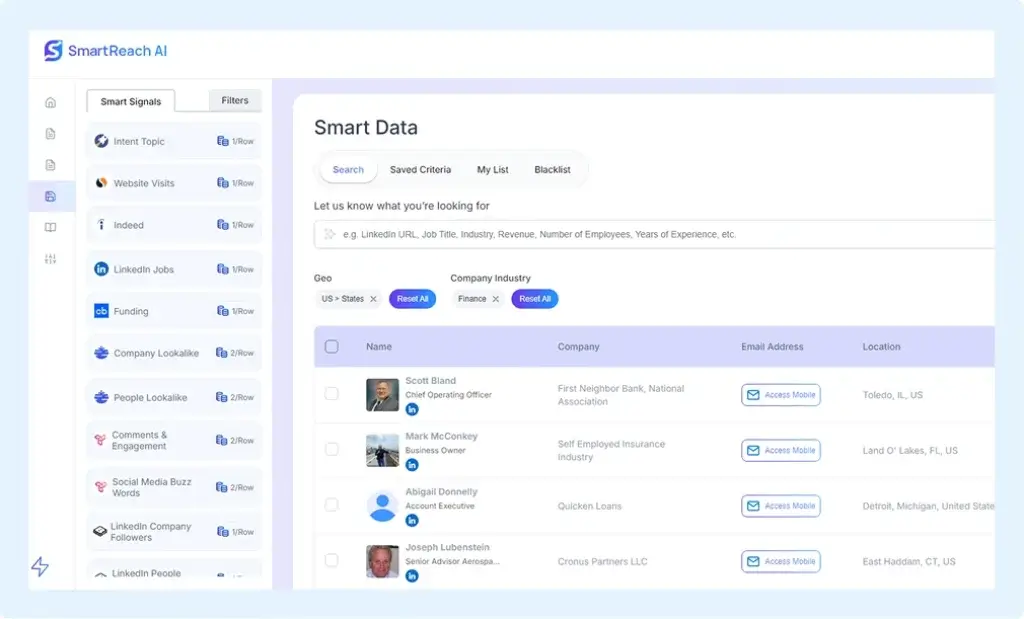
Start with your ideal customer profile. This includes company size, industry, location, job title, business model, technology stack, growth stage, and likely pain points. Then use research signals to prioritize the best-fit accounts.
Useful prospecting signals include:
- Hiring activity that suggests growth or operational change
- Funding announcements or expansion news
- Technology stack indicators, such as tools already installed
- Website traffic or company activity trends
- Industry-specific intent signals
- Role-specific pain points tied to your offer
This is where modern prospecting tools can help. For example, Apollo.io can support sales intelligence and contact discovery, Hunter.io can help with email verification, and SmartReach.ai can support list building, enrichment, buyer intent signals, and AI-assisted research. The goal is not to automate poor outreach. The goal is to build a sharper list before you write.
The Simple Cold Email Formula
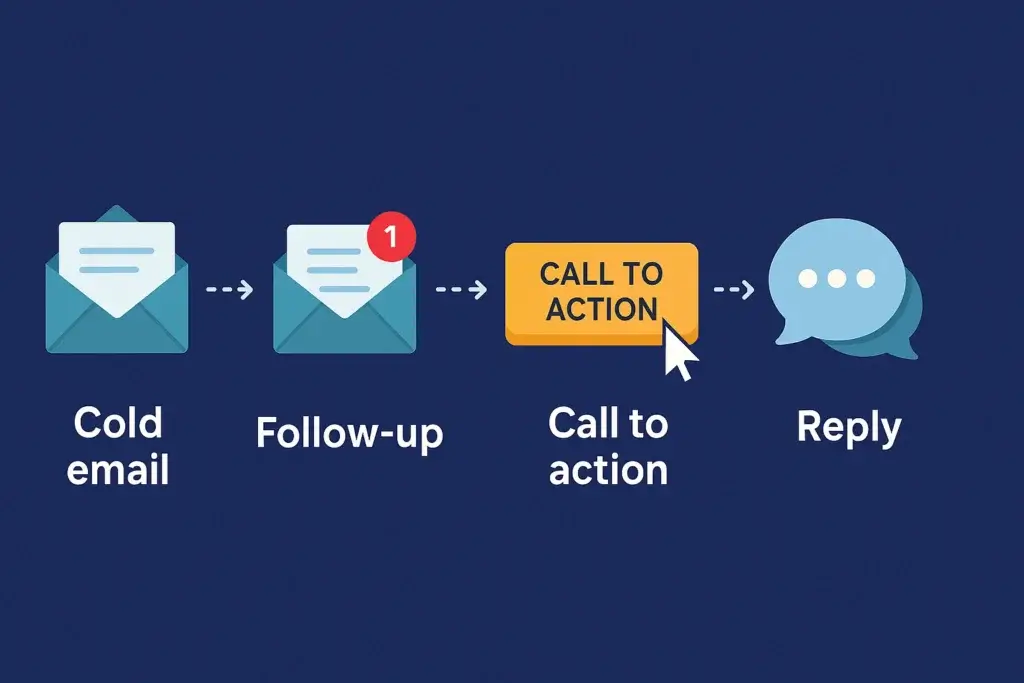
Most high-performing cold emails follow a simple structure. You do not need to reinvent the message every time. You need a reliable framework that makes the email easy to read and easy to answer.
| Email Part | Purpose | Example |
|---|---|---|
| Subject line | Earn the open | Question about your sales pipeline |
| Personal hook | Show relevance | Saw your team is hiring SDRs |
| Problem or opportunity | Connect to a business need | New reps often need faster ramp time |
| Value statement | Explain how you can help | We help teams shorten onboarding and book more qualified meetings |
| Proof | Build trust | One SaaS team increased qualified replies by 25% |
| CTA | Make replying easy | Open to a quick call next week? |
This formula works because it keeps the focus on the recipient. Instead of starting with your company, you start with their context. Instead of listing features, you explain the outcome. Instead of pushing for a large commitment, you ask for a small next step.
Why Most Cold Emails Go Unanswered
Most cold emails get ignored because they are too generic, too long, or too focused on the sender. Your prospect does not owe you attention. You need to earn it quickly.
1. Poor Targeting
If the recipient is not a fit, even a well-written email will fail. Poor targeting leads to low replies, more unsubscribes, and worse deliverability.
2. No Real Personalization
Using someone’s first name is not enough. Real personalization connects your message to the recipient’s role, company, timing, or likely priority.
3. Weak Subject Lines
A vague subject line like “Let’s connect” does not give the reader a reason to open. A better subject line creates curiosity or signals relevance.
Weak: Let’s connect
Better: Quick idea for your SDR team
4. Too Much Information
Your first cold email should not explain everything. It should create enough interest to start a conversation. If the message looks like work, busy people will skip it.
5. No Clear CTA
“Let me know if you’re interested” is too vague. Ask a specific, low-pressure question that is easy to answer.
6. No Follow-Up Strategy
The first email is rarely the only email you need. A thoughtful follow-up sequence can increase your chances of getting noticed, especially when each follow-up adds context or value. You can learn more in this guide on cold email best practices.

How to Write Cold Emails That Get Replies
Now let’s turn the framework into a practical writing process. The goal is to write a message that feels direct, relevant, and natural.
1. Research Before You Write
Before you write the email, answer one question: Why should this person care?
Use LinkedIn, company websites, job posts, funding news, technology data, CRM notes, and sales intelligence tools to understand the prospect’s context. Look for a reason that makes your timing relevant.
Instead of: “I help companies like yours improve efficiency.”
Try: “Saw your team is hiring 3 new SDRs. Teams at this stage often need a faster way to ramp new reps and keep outreach consistent.”
2. Write a Short, Relevant Subject Line
Your subject line should be simple. Avoid hype, tricks, and vague language. A good subject line makes the recipient think, “This might be relevant to me.”
Cold email subject line examples:
- Quick idea for [Company]
- Question about your sales pipeline
- Idea for your SDR onboarding
- Saw you’re hiring in sales
- Worth exploring for [Company]?
3. Open With a Personalized Hook
Your opening line should prove that the message was written for this person. It does not need to be long. It only needs to be specific.
Example:
“I noticed your team is expanding into the U.S. market. That usually creates new pressure around prospecting, lead routing, and outbound consistency.”
4. Lead With Value, Not Features
Cold email is not the place to list every feature. Focus on the outcome your recipient cares about.
Feature-led: “We offer AI enrichment, sequencing, integrations, and reporting.”
Value-led: “We help sales teams find better-fit prospects and send more relevant outreach without spending hours on manual research.”
5. Add Proof Without Overdoing It
Proof helps reduce risk. You can mention a customer result, a relevant use case, a recognizable customer type, or a simple credibility point.
Example:
“A similar B2B software team used this approach to increase qualified replies by 25% in the first month.”
6. Use a Soft, Specific CTA
Your CTA should be easy to answer. Avoid asking for too much too soon.
Strong CTA examples:
- “Open to a quick 15-minute call next week?”
- “Should I send over a few ideas?”
- “Would this be relevant for your team?”
- “Is this something you’re currently looking into?”
Cold Email Templates That Actually Work
Templates help you move faster, but they should never make your message sound generic. Use these cold email templates as starting points, then personalize them based on the prospect’s role, timing, and business context.
1. B2B Sales Cold Email Template
Use case: Selling a SaaS product or service to a qualified prospect
Subject: Quick idea for [Company]
Hi [First Name],
I noticed [specific trigger, such as hiring, expansion, funding, or new initiative]. Teams at this stage often start looking for better ways to [problem related to your solution].
We help [type of company] improve [specific outcome] by [short explanation]. For example, one team recently [brief proof point].
Would it be worth a quick 15-minute conversation next week?
Best,
[Your Name]
2. Trigger-Based Cold Email Template
Use case: Reaching out based on a timely business signal
Subject: Saw the update from [Company]
Hi [First Name],
Saw that [Company] recently [trigger event]. Congrats on the momentum.
When teams reach this stage, [specific challenge] often becomes harder to manage manually. We help teams solve this by [simple value statement].
Would it be useful if I sent over a few ideas specific to [Company]?
Best,
[Your Name]
3. Referral Request Cold Email Template
Use case: When you are not sure who owns the problem
Subject: Right person for this?
Hi [First Name],
I’m trying to find the person who handles [area, such as outbound sales, CRM operations, customer onboarding, or partnerships] at [Company].
We help teams improve [specific result], and I thought this might be relevant based on [reason].
Would you be the right person to ask, or is there someone better to contact?
Thanks,
[Your Name]
4. “Can I Send Ideas?” Cold Email Template
Use case: A low-friction CTA for busy decision-makers
Subject: Few ideas for [Company]?
Hi [First Name],
I noticed [relevant observation]. It made me think there may be an opportunity to improve [specific process or outcome].
I had a few ideas that could help [specific result] without adding more manual work for your team.
Would you be open to me sending them over?
Best,
[Your Name]
5. Networking or Partnership Outreach Template
Use case: Starting a professional relationship or collaboration
Subject: Possible collaboration?
Hi [First Name],
I enjoyed your [post, interview, webinar, report, or project] on [topic]. The point about [specific detail] stood out.
There may be some overlap between your audience and the work we do at [Your Company], especially around [shared topic or audience].
Would you be open to a short intro call next week?
Best,
[Your Name]
6. Recruiting Outreach Template
Use case: Contacting a potential candidate
Subject: Open to hearing about [Role]?
Hi [First Name],
I came across your background in [specific skill or industry], and your work at [Current Company] stood out.
We’re hiring for a [Job Title] role at [Company], and it looks closely aligned with your experience in [specific area].
Would you be open to a quick conversation to see if it’s relevant?
Best,
[Your Name]
7. PR or Media Outreach Template
Use case: Pitching a journalist, newsletter writer, or industry analyst
Subject: Story idea for [topic]
Hi [First Name],
I read your recent piece on [topic]. The section on [specific point] was especially relevant.
I wanted to share a story idea around [angle]. Our team recently [launched, researched, analyzed, or discovered] [specific insight], and I think it could be useful for your readers.
Would it be helpful if I sent a short summary?
Thanks,
[Your Name]
8. Follow-Up Cold Email Template
Use case: Following up after no response
Subject: Worth revisiting?
Hi [First Name],
Just following up in case my last note got buried.
The reason I reached out is that [briefly restate relevant problem or opportunity]. If this is not a priority right now, no problem.
Would it be worth reconnecting later, or should I close the loop?
Best,
[Your Name]
9. Breakup Cold Email Template
Use case: Closing the sequence respectfully
Subject: Should I close the loop?
Hi [First Name],
I do not want to keep filling your inbox if this is not relevant.
I reached out because [short reason], but it may not be the right time.
Should I close the loop for now?
Best,
[Your Name]
How to Personalize Cold Emails With AI Without Sounding Robotic
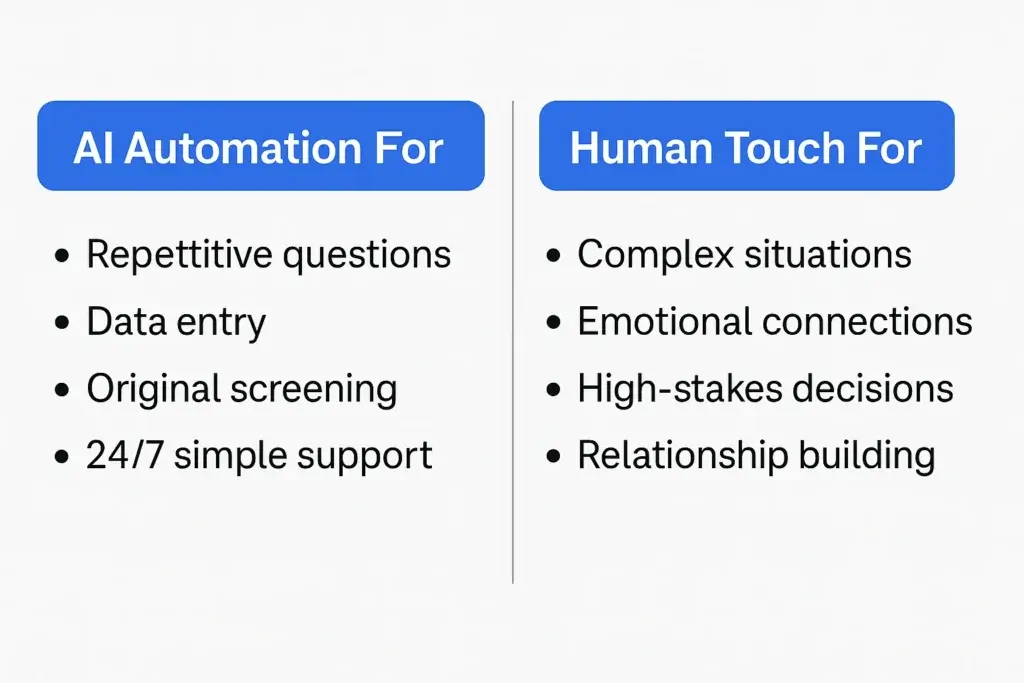
AI can help you write better cold emails, but only if you use it as a research and drafting assistant, not as a replacement for judgment.
AI is useful for summarizing account research, identifying personalization angles, drafting subject line variations, and adapting email copy for different personas. It can also help you move faster when working with a large list.
However, AI-generated outreach can become generic if you do not review it. The strongest cold emails still need human strategy, clear positioning, and accurate context.
| Use AI For | Use Human Review For |
|---|---|
| Summarizing company research | Checking accuracy and relevance |
| Generating first-draft email variations | Choosing the strongest angle |
| Adapting copy by persona | Refining tone and positioning |
| Finding possible personalization signals | Avoiding fake or shallow personalization |
| Writing follow-up options | Handling objections and sensitive replies |
SmartReach.ai, Clay, Apollo.io, and similar platforms can help with AI-assisted research and personalization. But the best results come when you combine automation with a clear sales strategy and a strong understanding of your ICP.
Best Practices to Improve Cold Email Success
Cold email success depends on more than copy. Your targeting, technical setup, timing, follow-up strategy, and CRM process all affect results.
1. Use a Verified Email Domain
Before sending cold emails, make sure your domain is set up correctly. At minimum, review SPF, DKIM, and DMARC. These authentication methods help mailbox providers verify that your email is legitimate.
Do not send high-volume outreach from a brand-new domain without preparation. Start gradually, monitor performance, and avoid sudden spikes in sending volume.
2. Keep Your List Clean
A high bounce rate can damage your sender reputation. Use email verification tools like Hunter.io, NeverBounce, or built-in validation features in your prospecting stack before launching a campaign.
3. Personalize the Reason, Not Just the Greeting
Personalization should explain why you are contacting this person now. Mentioning a name or company is basic. Connecting your message to a business trigger, role, or likely challenge is better.
4. Test Subject Lines and CTAs
Small changes can affect performance. Test subject lines, first lines, value propositions, and CTAs. Your CRM or outreach tool should help you compare performance across campaigns.
5. Follow Up With New Context
Do not send the same message again and again. Each follow-up should add something useful, such as a relevant idea, short example, helpful resource, or clearer CTA.
6. Include a Clear Opt-Out
Give people a simple way to stop receiving emails from you. This is good for compliance, but it is also good for trust. A simple line like “If this is not relevant, just let me know and I will not follow up” can make your outreach feel more respectful.
7. Track Performance in Your CRM
Do not measure cold email only by opens. Track replies, positive replies, meetings booked, opportunities created, and revenue influenced. This connects outreach activity to real pipeline outcomes.
For a broader view of how outreach is changing, read this guide on shifting trends in cold outreach.
Cold Email Deliverability Checklist
Deliverability determines whether your cold emails reach the inbox or get filtered. Strong copy cannot perform if your emails do not arrive.
| Deliverability Area | What to Check |
|---|---|
| Domain authentication | Set up SPF, DKIM, and DMARC before sending at scale |
| Email list quality | Verify emails and remove invalid contacts before each campaign |
| Sending volume | Increase volume gradually instead of sending large batches suddenly |
| Spam complaints | Keep outreach relevant and avoid misleading subject lines |
| Unsubscribe handling | Make opting out easy and honor requests quickly |
| Message quality | Avoid spammy language, excessive links, and irrelevant attachments |
If you send larger campaigns, review Google’s email sender guidelines. They explain how authentication, spam rates, and unsubscribe requirements affect senders.
How to Handle “Not Interested” Replies
A “not interested” reply is not always a dead end. Sometimes it means the timing is wrong, the message was not specific enough, or the person is not the right contact. Your response should be respectful and low-pressure.
Do not argue with the prospect. Do not send a defensive pitch. Instead, acknowledge the reply and ask one simple question if appropriate.
Example response:
“Thanks for letting me know, [First Name]. Just so I do not reach out again with the wrong context, is this not relevant because timing is off, or because this is not a priority for your team?”
If they confirm it is not relevant, respect the opt-out and update your CRM. If they provide more context, tag the response and adjust your follow-up accordingly.
You can also read this guide on handling “I’m not interested” replies in cold email outreach.
Cold Email Tools That Can Support Your Workflow
Cold email usually involves several jobs: finding prospects, verifying contact data, researching accounts, writing personalized messages, sending campaigns, tracking replies, and syncing everything with your CRM.
No single tool is perfect for every team. Choose tools based on where your current workflow is weakest.
| Tool | Best For | Where It Fits |
|---|---|---|
| SmartReach.ai | Lead list building, AI research, intent signals, and personalization | Before sending |
| Apollo.io | Sales intelligence and contact discovery | Prospecting |
| Hunter.io | Email finding and verification | Data quality |
| HubSpot | CRM tracking, lifecycle stages, and pipeline visibility | CRM management |
| Reply.io or Smartlead | Email sequencing and delivery workflows | Sending and follow-up |
The key is to avoid tool overload. Start with a clean workflow: build the right list, verify the data, personalize the message, send responsibly, and track every meaningful response in your CRM.
How to Manage Cold Email Replies in Your CRM
Your CRM should be the source of truth for cold email performance. If replies stay inside inboxes or disconnected tools, your team loses visibility into what is working.
Set up your CRM so every cold email campaign can be tracked from first contact to revenue. This helps you understand which segments, messages, and offers actually create pipeline.
Recommended CRM fields and workflows include:
- Lead source, such as cold email, LinkedIn outreach, or partner campaign
- Campaign name for attribution
- ICP segment, persona, and industry
- Reply type, such as positive, objection, referral, not interested, or unsubscribe
- Lifecycle stage, such as lead, MQL, SQL, opportunity, or customer
- Follow-up task for positive or unclear replies
- Suppression list for unsubscribed contacts
This is especially important for sales managers. You do not just want to know how many emails were sent. You want to know which outreach motions generated qualified opportunities.
How to Measure Cold Email Success
Tracking cold email performance helps you improve your targeting, messaging, and sales process. Open rate is useful, but it should not be your main success metric. Reply quality and pipeline impact matter more.
| Metric | What It Tells You | What to Improve |
|---|---|---|
| Reply Rate | Whether your message is relevant enough to answer | Improve targeting, personalization, and CTA |
| Positive Reply Rate | How many replies show real interest | Refine your ICP and value proposition |
| Bounce Rate | Whether your email list is clean | Verify emails before sending |
| Booked Meeting Rate | Whether replies turn into sales conversations | Improve CTA, follow-up handling, and scheduling |
| Opportunity Creation | Whether outreach creates pipeline | Align campaigns with CRM stages |
| Spam Complaint Rate | Whether recipients see your emails as unwanted | Improve relevance, opt-out clarity, and list quality |
Final Thoughts: Cold Emailing Is a Skill You Can Improve
Writing cold emails that actually get replies is not about luck. It is about relevance, timing, structure, and follow-through.
Start with a better list. Research before you write. Keep your message short. Personalize the reason for reaching out. Use a soft CTA. Then measure what happens inside your CRM.
The best cold email strategy combines human judgment with the right tools. AI and sales platforms can help you research, segment, and personalize faster, but your message still needs to feel thoughtful and useful.
If you focus on helping the right people solve real problems, cold email can become a reliable channel for conversations, meetings, and pipeline growth.
FAQ
What is the best structure for a cold email?
The best cold email structure includes a short subject line, personalized opening, clear problem or opportunity, value statement, proof point, and soft call-to-action. Keep the email focused on one clear reason to reply.
How long should a cold email be?
A cold email should usually be under 120 words. Short emails work better because they are easier to scan, especially for busy decision-makers. Aim for 3 to 5 short paragraphs with one clear CTA.
How do you write a cold email subject line?
Write a cold email subject line that is short, specific, and relevant. Avoid hype or misleading claims. Examples include “Quick idea for your sales team,” “Question about your pipeline,” or “Saw you’re hiring SDRs.”
How many follow-ups should you send after a cold email?
Most cold email sequences should include 2 to 4 follow-ups. Space them out over several business days and make each follow-up useful. Do not repeat the same message without adding new context.
What is a good cold email reply rate?
A good cold email reply rate depends on your industry, list quality, offer, and audience. Instead of focusing only on open rates, track reply rate, positive reply rate, booked meetings, bounce rate, and pipeline created.
Is cold emailing legal?
Cold emailing can be legal when done correctly. You need to follow relevant laws such as CAN-SPAM, GDPR, or PECR, depending on your market. Use truthful subject lines, identify yourself clearly, and provide a way to opt out.
What is the difference between cold email and spam?
Cold email is targeted, relevant, and transparent. Spam is usually generic, misleading, or sent without regard for fit. A proper cold email should be written for a specific person with a clear business reason for the outreach.
Should you use AI to write cold emails?
Yes, AI can help with research, first drafts, subject line ideas, and personalization. However, every message should still be reviewed by a human to make sure it is accurate, relevant, and natural.
What tools help with cold email prospecting?
Tools like Apollo.io, Hunter.io, SmartReach.ai, HubSpot, Reply.io, and Smartlead can support different parts of cold email prospecting. Some help with contact discovery, some with verification, some with research, and some with CRM or sending workflows.
What should you do when someone replies “not interested”?
Respond respectfully, avoid arguing, and ask one low-pressure clarification question if appropriate. If the person confirms they are not interested, update your CRM and do not continue following up.