
Introduction
Choosing the best affiliate platform in 2026 depends on what you are trying to build. A SaaS company looking for recurring partner revenue needs a different platform than an ecommerce brand working with creators, or a publisher looking for high-quality programs to promote.
The challenge is that many tools use similar language. Some are affiliate networks, some are affiliate management software, and others are full partnership platforms that also support influencers, referrals, creators, agencies, and business development partners.
In this guide, you’ll compare the best affiliate platforms across SaaS, ecommerce, publisher networks, and creator-led partnerships. You’ll see what each platform is best for, where it fits, what to watch out for, and how to choose the right option for your business model.
Quick answer: PartnerStack is the best choice for B2B SaaS affiliates and software-focused publishers. Impact.com is stronger for enterprise partnership management, CJ Affiliate is ideal for large publisher networks, FirstPromoter works well for SaaS startups, Post Affiliate Pro is best for white-label control, Reditus is a strong B2B SaaS marketplace option, Superfiliate is best for ecommerce brands using creator-led growth, and Rewardful is a simple choice for SaaS companies using Stripe.
What Is an Affiliate Platform?
An affiliate platform is a system that helps brands, publishers, creators, and partners track referrals, attribute conversions, manage commissions, and process payouts. Instead of relying on manual links and spreadsheets, you get a structured way to measure which partners are driving revenue.
For affiliates, the right platform gives you access to brands you can promote, tracking links you can trust, and clear visibility into your commissions. For brands, the right platform helps you recruit partners, approve applications, monitor performance, prevent fraud, and scale a repeatable revenue channel.
Affiliate marketing is performance-based. You promote another company’s product or service, and you earn a commission when your referral produces a qualified action, such as a sale, lead, subscription, or demo request.
Affiliate Platform vs Affiliate Network vs Affiliate Software
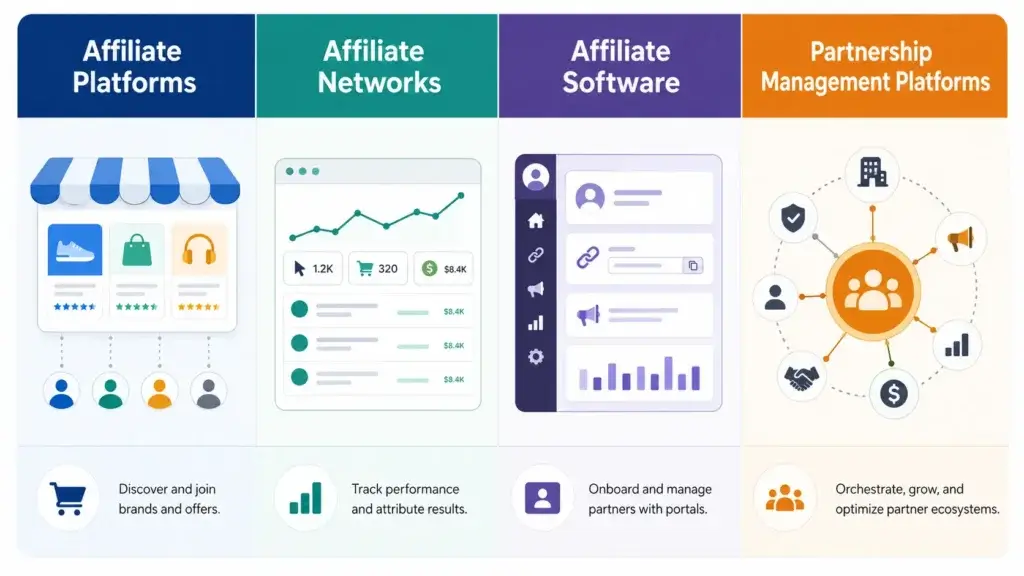
Before choosing a tool, it helps to understand the difference between the main categories. Many platforms overlap, but they are not always built for the same goal.
- Affiliate network: Connects affiliates with many brands in one marketplace.
- Affiliate software: Helps a brand run its own program and track partners.
- Partnership platform: Manages affiliates, creators, referrals, agencies, and other partners.
- Creator affiliate platform: Focuses on influencers, ambassadors, social commerce, and referral campaigns.
For example, CJ Affiliate is closer to a traditional affiliate network. FirstPromoter and Rewardful are affiliate software tools for SaaS businesses. Impact.com is a broader partnership management platform. Superfiliate is more relevant for ecommerce brands working with creators, influencers, and ambassadors.
How to Choose the Right Affiliate Platform for You
The best affiliate platform is not always the one with the largest brand list or the highest commission rate. The right choice depends on your niche, your traffic source, your business model, and how much control you need over tracking and payouts.
Business Model Fit
Start by asking what type of affiliate strategy you are building. If your audience is interested in SaaS tools, B2B software, CRM, productivity, or business systems, platforms like PartnerStack, Reditus, FirstPromoter, and Rewardful are more relevant.
If you work with retail, ecommerce, finance, travel, or broad consumer categories, CJ Affiliate and Impact.com may give you better advertiser variety. If you run a Shopify or DTC brand, Superfiliate is more aligned with creator-led affiliate marketing.
Commission and Payout Structure
Commission structure has a direct impact on your long-term earning potential. SaaS affiliate platforms often support recurring commissions, while ecommerce and retail programs usually pay a one-time percentage or flat fee.
- Recurring commissions work well for SaaS and subscription products.
- Flat-rate payouts can be attractive for lead generation or demos.
- Tiered commissions help reward high-performing partners.
- Custom contracts are useful for enterprise partnerships and agencies.
Cookie Duration and Attribution
Cookie duration determines how long you can receive credit after someone clicks your affiliate link. A 90-day cookie gives you more room to earn than a 24-hour cookie, especially in B2B software where buyers often need more time to compare tools.
Attribution also matters. Some platforms use last-click attribution, while others support more flexible attribution models for complex partner journeys.
Partner Discovery and Marketplace Access
If you are an affiliate, marketplace access helps you discover relevant brands. If you are a company, a marketplace can help your program get discovered by the right partners.
PartnerStack, CJ Affiliate, Impact.com, and Reditus are especially useful when discovery matters. FirstPromoter, Post Affiliate Pro, and Rewardful are better when you already have partners and want to manage the program yourself.
Tracking, Reporting, and Fraud Protection
Reliable tracking is one of the most important factors in affiliate marketing. You need to know which clicks, leads, trials, sales, upgrades, refunds, and recurring payments are actually connected to each partner.
Look for dashboards that show clicks, conversions, commissions, conversion rates, payout status, and partner-level performance. For advanced programs, fraud prevention and approval controls are just as important as reporting.
Integrations With Your Tech Stack
Your affiliate platform should connect with the systems you already use. SaaS teams often need Stripe, Paddle, Chargebee, Recurly, HubSpot, or CRM integrations. Ecommerce brands may need Shopify, TikTok Shop, Meta, Recharge, or promo code tracking.
If the platform does not fit your existing stack, your team may end up managing commissions manually, which can create payment delays and reporting issues.
Best Affiliate Platforms Compared
There are many affiliate platforms on the market, but only a few stand out when you compare partner quality, tracking, payouts, ease of use, and business model fit.
Below are the best affiliate platforms to consider in 2026, ranked by their strongest use case and overall fit for affiliates, SaaS companies, publishers, ecommerce brands, and growing partner teams.
| Platform | Best For | Main Strength | Best Fit |
| PartnerStack | B2B SaaS affiliates | SaaS partner marketplace and recurring commissions | Software publishers and B2B brands |
| Impact.com | Enterprise partnerships | Affiliate, creator, referral, and partnership management | Large brands and agencies |
| CJ Affiliate | Publishers and advertisers | Large affiliate network and brand access | Content publishers |
| FirstPromoter | SaaS startups | Subscription tracking and billing integrations | SaaS companies using Stripe or Paddle |
| Post Affiliate Pro | White-label programs | Custom commission logic and advanced tracking | Agencies and complex programs |
| Reditus | B2B SaaS marketplace exposure | SaaS affiliate discovery and recurring revenue focus | B2B SaaS companies |
| Superfiliate | Ecommerce creators | Creator-led affiliate and referral campaigns | Shopify and DTC brands |
| Rewardful | Stripe-based SaaS programs | Simple affiliate and referral tracking | Lean SaaS teams |
PartnerStack

Overview
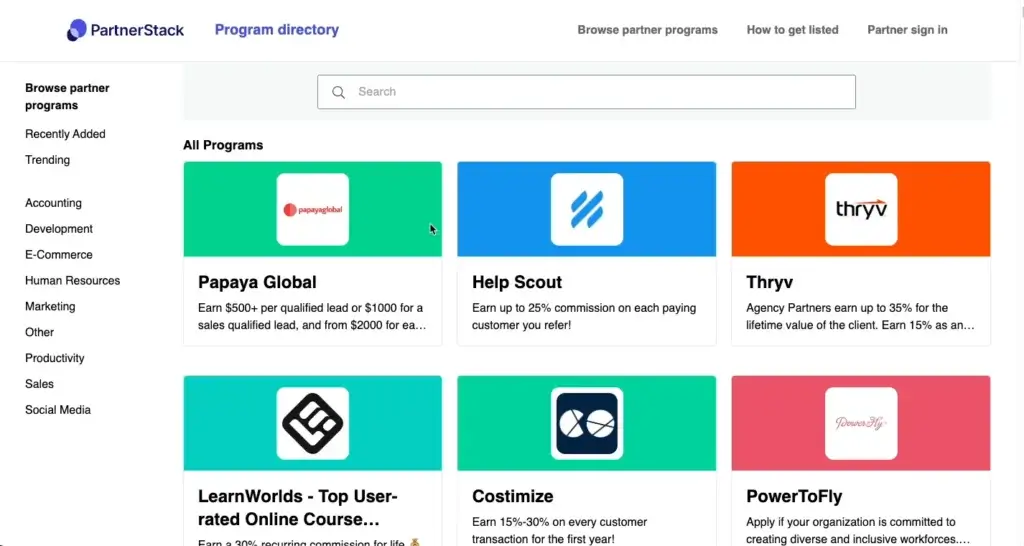
PartnerStack is one of the strongest affiliate platforms for B2B SaaS, software publishers, and partner-driven growth teams. It is built for companies that want to manage multiple partnership motions, including affiliate partners, referral partners, agencies, influencers, resellers, and co-sell partners.
For affiliates, PartnerStack is especially useful because it gives you access to a marketplace of software programs that often offer recurring commissions. If your audience is interested in tools like monday.com, productivity platforms, CRM systems, email tools, or B2B SaaS products, PartnerStack is one of the most relevant networks to join.
For brands, the platform helps centralize partner onboarding, tracking, partner communication, commission approval, and payouts. That makes it more scalable than trying to run a SaaS affiliate program with spreadsheets and manual payment workflows.
💡 Key Features
- SaaS partner marketplace: Discover or recruit B2B software partners.
- Recurring commissions: Support long-term SaaS affiliate earnings.
- Partner management: Manage affiliate, referral, reseller, and agency partners.
- Automated payouts: Centralize partner payment workflows.
- Partner enablement: Share links, assets, campaigns, and updates.
Pros and Cons
Positive
✅ Strong B2B SaaS program selection
✅ Recurring commission opportunities
✅ Clean partner experience
✅ Good fit for software publishers
Negative
❌ Less relevant for consumer products
❌ Program approval can vary by brand
❌ Smaller retail variety than CJ
❌ Not ideal for every ecommerce niche
👥 Who It’s Best For
PartnerStack is best for SaaS bloggers, B2B content creators, software comparison websites, consultants, and affiliate publishers who want to promote recurring-revenue software products. It is also a strong choice for SaaS companies that want to build a structured partner ecosystem instead of running a basic affiliate program.
Impact.com

Overview
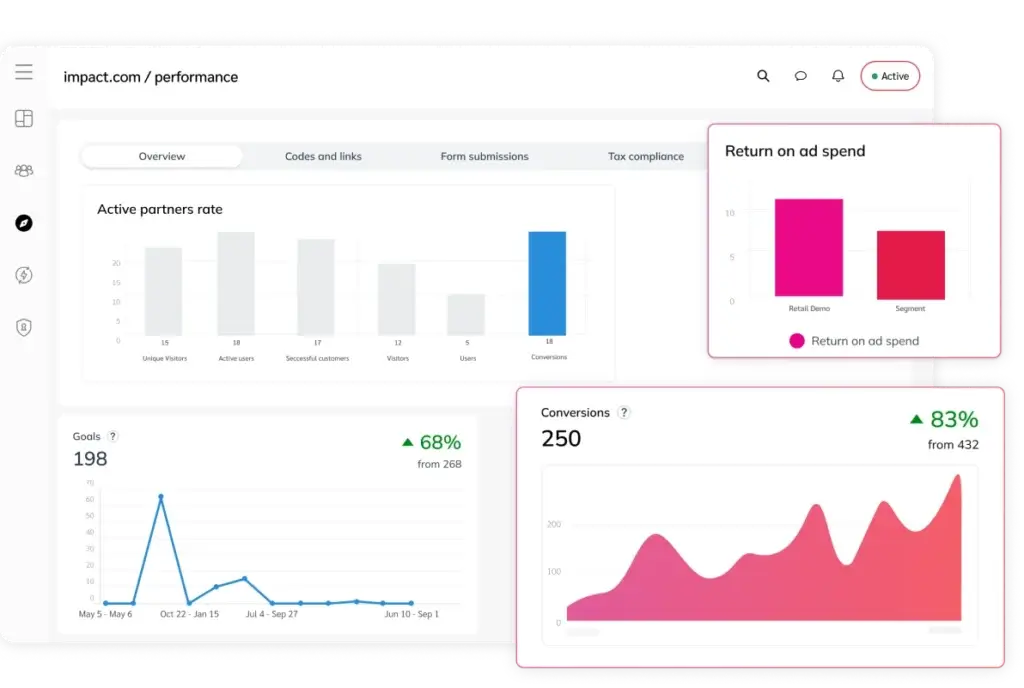
Impact.com is a powerful partnership management platform for brands, publishers, agencies, affiliates, influencers, creators, and referral programs. It is built for teams that need more than basic affiliate links, especially when partnerships span multiple channels and partner types.
Compared with simpler affiliate tools, Impact.com gives you deeper control over contracts, attribution, partner discovery, workflows, reporting, fraud protection, and payouts. This makes it particularly valuable for enterprise teams and agencies managing complex programs at scale.
Impact.com can also be a strong choice for affiliates and publishers who want access to established brands across multiple categories. However, the platform can feel more advanced than necessary if you are running a small blog or just starting with affiliate marketing.
💡 Key Features
- Partnership management: Manage affiliates, creators, referrals, and business partners.
- Advanced attribution: Track more complex conversion journeys.
- Custom contracts: Set flexible commission rules and partner terms.
- Partner discovery: Find and recruit publishers, creators, and affiliates.
- Automation: Streamline approvals, workflows, compliance, and payouts.
Pros and Cons
Positive
✅ Strong enterprise partnership tools
✅ Supports affiliates, creators, and referrals
✅ Advanced reporting and attribution
✅ Large partner marketplace
Negative
❌ Steeper learning curve
❌ Can feel too advanced for beginners
❌ Pricing is not ideal for small teams
❌ Setup may require more planning
👥 Who It’s Best For
Impact.com is best for enterprise brands, agencies, mature affiliate teams, publishers, and companies that want one system for affiliate, influencer, referral, creator, and business development partnerships. It is especially strong when you need advanced tracking, custom contracts, and scalable workflows.
CJ Affiliate

Overview
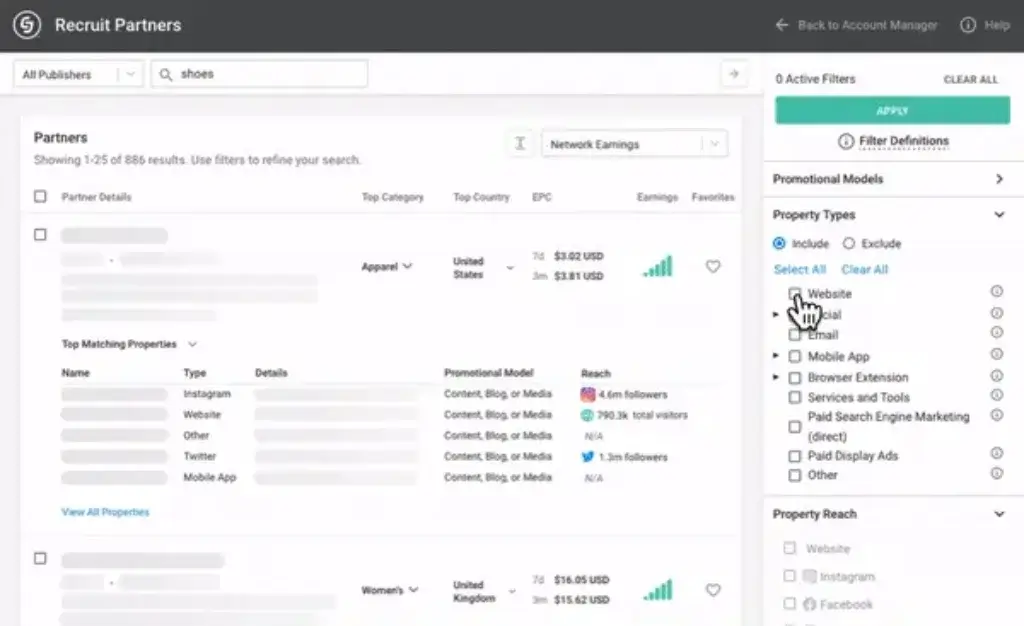
CJ Affiliate, formerly Commission Junction, is one of the most established affiliate networks for publishers and advertisers. It gives you access to a wide range of brands across categories such as finance, retail, travel, software, telecom, lifestyle, and consumer services.
CJ is particularly useful if your website covers multiple verticals and you want a broad advertiser pool rather than a SaaS-only marketplace. The platform includes deep linking, partner recruitment, reporting, advertiser discovery, and flexible commission structures that vary by program.
The main drawback is that CJ can feel less modern than newer affiliate platforms. Some advertisers also have strict approval requirements, so beginners may need to build traffic and credibility before getting accepted into the best programs.
💡 Key Features
- Large advertiser network: Access brands across many verticals.
- Deep linking tools: Create links to specific pages and products.
- Real-time reporting: Track clicks, conversions, and commissions.
- Publisher discovery: Brands can recruit affiliates through CJ tools.
- Flexible commissions: Support flat fees, percentage payouts, and incentives.
Pros and Cons
Positive
✅ Large brand and advertiser selection
✅ Strong for publishers and content sites
✅ Good category diversity
✅ Reliable network reputation
Negative
❌ Dashboard can feel dated
❌ Advertiser approvals vary
❌ Less SaaS-focused than PartnerStack
❌ Beginners may face rejection
👥 Who It’s Best For
CJ Affiliate is best for bloggers, publishers, comparison sites, media brands, and SEO-driven affiliates that cover several niches. It is a strong fit if you want one network with a wide range of advertisers rather than a narrow focus on SaaS or ecommerce.
FirstPromoter


Overview
FirstPromoter is an affiliate and referral platform built for SaaS companies, subscription businesses, and startup teams that want to launch a partner program without the complexity of an enterprise partnership suite.
The platform is especially useful if you use billing systems such as Stripe, Paddle, Recurly, Chargebee, or Braintree. It helps you track trial signups, paid subscriptions, upgrades, cancellations, refunds, and recurring commissions, which makes it a practical fit for SaaS revenue models.
FirstPromoter is not the best option if you mainly need a large affiliate marketplace. It is better when you already know who you want to recruit, or when you plan to promote your own program through your product, website, email list, or partner outreach.
💡 Key Features
- Recurring commission tracking: Track SaaS and subscription revenue.
- Referral and affiliate programs: Run both motions from one system.
- Billing integrations: Connect with common SaaS payment tools.
- Branded partner portal: Give partners a clean dashboard experience.
- One-click payouts: Simplify commission management and payments.
Pros and Cons
Positive
✅ Easy to set up
✅ Strong SaaS billing integrations
✅ Good for recurring commissions
✅ Clean affiliate portal
Negative
❌ Not a large affiliate marketplace
❌ Less useful for ecommerce programs
❌ Limited creator discovery tools
❌ Better for SaaS than broad retail
👥 Who It’s Best For
FirstPromoter is best for SaaS founders, product-led growth teams, B2B software companies, and subscription businesses that want affiliate and referral tracking without enterprise-level complexity. It is especially useful when recurring revenue is central to the commission model.
Post Affiliate Pro

Overview
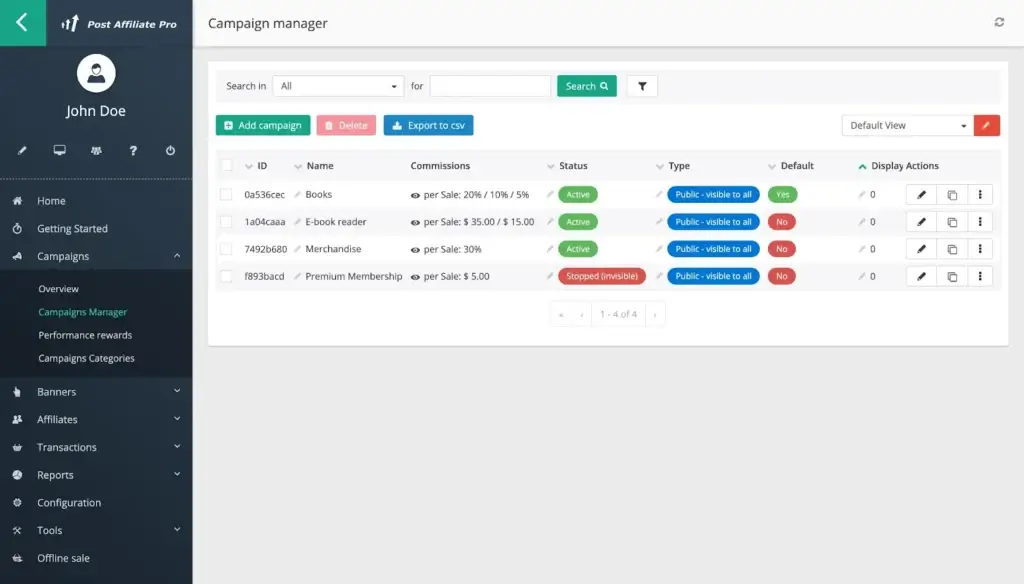
Post Affiliate Pro is a highly customizable affiliate management platform for businesses that want more control over tracking, commission rules, campaign structures, and partner portals. It is less of a marketplace and more of a flexible system for running your own affiliate program.
The platform is a strong fit for teams that need custom commission logic, multi-tier structures, coupon tracking, fraud protection, branded partner experiences, and multilingual support. It can support advanced affiliate operations, but it also requires more setup than simpler tools.
If you only need a lightweight SaaS referral program, Post Affiliate Pro may be more than you need. But if you manage complex campaigns, multiple partner types, or agency-led affiliate programs, it gives you a high level of control.
💡 Key Features
- Custom commission rules: Build flexible payout structures.
- Multi-tier commissions: Support more advanced partner models.
- Campaign manager: Organize offers, creatives, and partner campaigns.
- White-label options: Create a branded affiliate experience.
- Fraud protection: Reduce suspicious clicks and invalid conversions.
Pros and Cons
Positive
✅ Highly customizable program setup
✅ Good for complex commission rules
✅ Strong campaign management tools
✅ Useful for agencies and global teams
Negative
❌ More setup required
❌ Steeper learning curve
❌ Not a partner marketplace
❌ Too advanced for basic programs
👥 Who It’s Best For
Post Affiliate Pro is best for agencies, global companies, ecommerce brands, SaaS companies, and advanced affiliate managers who need custom logic, branded portals, multi-tier commissions, and more control than a simple plug-and-play tool can offer.
Reditus

Overview
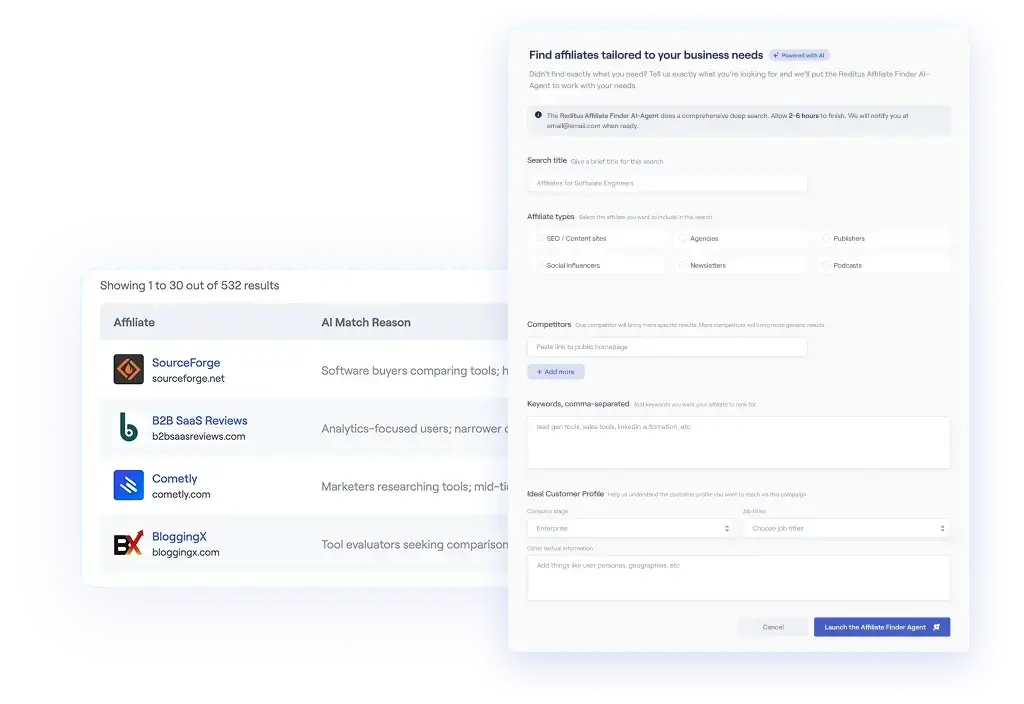
Reditus is an affiliate management platform built specifically for B2B SaaS companies. Unlike broader affiliate tools, Reditus focuses on software companies that want to recruit relevant B2B affiliates, track recurring revenue, and grow through a SaaS-focused marketplace.
This niche focus is the biggest reason Reditus deserves a place in this article. Many affiliate platforms try to serve ecommerce, retail, creators, publishers, and SaaS at the same time. Reditus is more focused on helping SaaS teams launch and scale affiliate programs with partners who understand software, subscriptions, and recurring revenue.
For SaaS companies, Reditus can help solve one of the hardest parts of affiliate marketing: finding relevant partners. For affiliates, it can be useful if your audience is interested in B2B software and you want more SaaS programs to promote.
💡 Key Features
- B2B SaaS focus: Built specifically for software affiliate programs.
- Affiliate marketplace: Helps SaaS companies get discovered by partners.
- Recurring revenue tracking: Supports SaaS commission models.
- Partner recruitment: Helps brands find relevant B2B affiliates.
- Program management: Manage approvals, links, partners, and performance.
Pros and Cons
Positive
✅ Built for B2B SaaS
✅ Useful marketplace exposure
✅ Recurring revenue orientation
✅ Good fit for early-stage SaaS teams
Negative
❌ Not built for ecommerce
❌ Smaller ecosystem than larger networks
❌ Less relevant for consumer publishers
❌ Best for SaaS-specific use cases
👥 Who It’s Best For
Reditus is best for B2B SaaS founders, growth marketers, partner managers, and software companies that want to launch or scale an affiliate program. It is also useful for SaaS-focused affiliates looking for relevant B2B programs rather than general consumer offers.
Superfiliate


Overview
Superfiliate is an affiliate, influencer, ambassador, and referral marketing platform built mainly for ecommerce brands. Instead of focusing only on traditional affiliate links, it helps brands create creator-led growth programs with personalized storefronts, promo codes, product seeding workflows, and campaign tracking.
This makes Superfiliate very different from tools like FirstPromoter or Reditus. It is not primarily built for B2B SaaS. It is better suited to Shopify and DTC brands that rely on creators, influencers, customers, ambassadors, TikTok Shop, Meta campaigns, and social proof.
If your affiliate strategy depends on creator relationships and branded shopping experiences, Superfiliate is one of the more relevant platforms to consider. If your main goal is SaaS recurring commission tracking, Reditus, FirstPromoter, Rewardful, or PartnerStack will usually be a better fit.
💡 Key Features
- Creator-led campaigns: Manage influencers, ambassadors, and affiliates.
- Shopify focus: Designed around ecommerce and DTC workflows.
- Co-branded experiences: Support personalized storefronts and landing pages.
- Referral workflows: Turn customers and creators into partners.
- Campaign tracking: Measure revenue from creators and affiliate campaigns.
Pros and Cons
Positive
✅ Strong fit for Shopify and DTC brands
✅ Useful for creators and ambassadors
✅ Supports affiliate and referral workflows
✅ Good for social commerce campaigns
Negative
❌ Less relevant for B2B SaaS
❌ Not a broad publisher marketplace
❌ Pricing may require sales contact
❌ Best for brands already using creators
👥 Who It’s Best For
Superfiliate is best for ecommerce, Shopify, and DTC brands that want to turn creators, influencers, ambassadors, and customers into revenue-driving partners. It is a strong option when affiliate marketing overlaps with social commerce, influencer marketing, and referral growth.
Rewardful

Overview
Rewardful is a simple affiliate and referral tracking platform built for SaaS businesses, especially companies using Stripe. It is designed to help you launch an affiliate program quickly, track referrals, create campaigns, and manage partner commissions without a heavy setup process.
Rewardful is not as broad as Impact.com, not as marketplace-driven as PartnerStack or Reditus, and not as advanced as Post Affiliate Pro. Its strength is simplicity. If you want to add affiliate tracking to a SaaS product quickly, Rewardful can be a practical option.
For affiliates, Rewardful is less of a discovery network and more of a system you may encounter when individual SaaS companies run their own programs. For brands, it works best when your priority is fast implementation and clean Stripe-based tracking.
💡 Key Features
- Stripe-friendly setup: Built for SaaS companies using Stripe.
- Affiliate tracking: Track referrals, conversions, and commissions.
- Campaign management: Create multiple campaigns and partner links.
- Partner portal: Give affiliates a place to access links and performance.
- Simple workflow: Launch without enterprise-level complexity.
Pros and Cons
Positive
✅ Simple SaaS affiliate setup
✅ Strong fit for Stripe users
✅ Clean partner portal
✅ Easier than enterprise platforms
Negative
❌ Not a large affiliate marketplace
❌ Less advanced than Impact.com
❌ Limited ecommerce focus
❌ Best for Stripe-based SaaS teams
👥 Who It’s Best For
Rewardful is best for SaaS companies, founders, and lean growth teams that use Stripe and want a straightforward affiliate or referral tracking system. It is a practical choice when you value fast setup more than broad marketplace discovery or enterprise partnership features.
Affiliate Platforms Comparison Side-by-Side
Choosing the right affiliate platform is not just about commissions. You also need to consider your niche, technical setup, partner recruitment needs, tracking accuracy, and payout workflow.
The table below compares the top affiliate platforms by use case, commission model, marketplace access, and ease of use.
| Platform | Best For | Commission Type | Marketplace Access | Best Business Model | Ease of Use |
| PartnerStack | SaaS and B2B affiliate marketers | Recurring, flat, or custom | Yes | B2B SaaS | Very Easy |
| Impact.com | Enterprise partnerships | Custom, tiered, flat, or CPA | Yes | Enterprise, ecommerce, publishers | Intermediate |
| CJ Affiliate | Publishers and content sites | Flat rate or percentage | Yes | Publishing, retail, finance, travel | Moderate |
| FirstPromoter | SaaS startups | Recurring, one-time, or custom | No | SaaS and subscriptions | Very Easy |
| Post Affiliate Pro | Agencies and custom programs | Multi-tier and custom | No | Complex affiliate programs | Advanced |
| Reditus | B2B SaaS companies | Recurring and SaaS-focused | Yes | B2B SaaS | Easy |
| Superfiliate | Ecommerce creator programs | Affiliate, referral, and creator-based | No traditional marketplace | Shopify and DTC ecommerce | Intermediate |
| Rewardful | Stripe-based SaaS teams | Recurring or one-time | No | SaaS and referrals | Very Easy |
💡 Pro Tip: If your audience is focused on B2B software, start with PartnerStack and Reditus. If you are a SaaS brand launching your own program, compare FirstPromoter, Rewardful, and Post Affiliate Pro. If your business is ecommerce and creator-led, Superfiliate is more relevant than most SaaS-first affiliate tools.
Which Affiliate Platform Should You Choose?
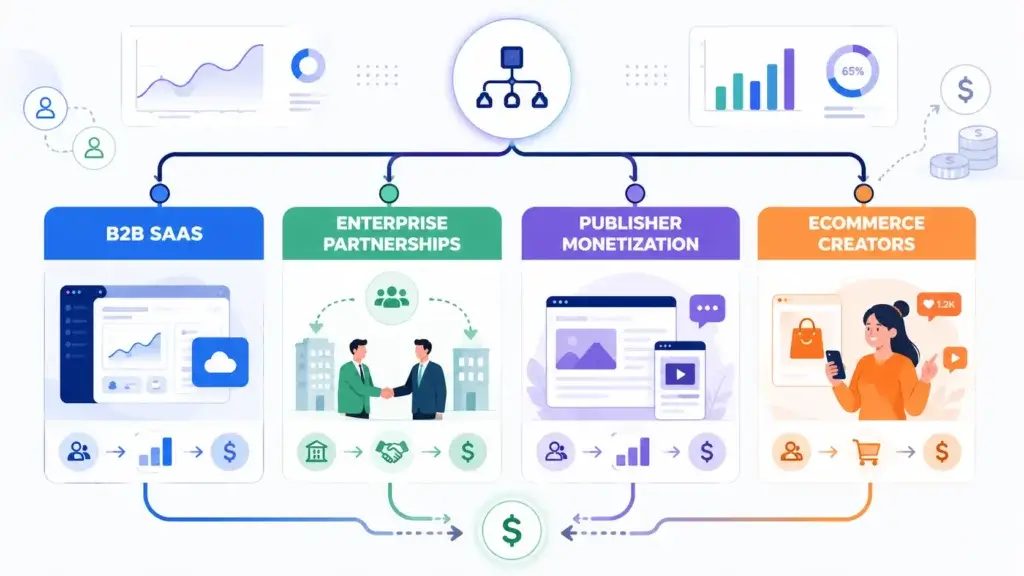
The best affiliate platform depends on whether you are an affiliate looking for programs, a SaaS company building a partner channel, an ecommerce brand working with creators, or an enterprise team managing multiple partner types.
Best Overall Affiliate Platform for B2B SaaS: PartnerStack
PartnerStack is the strongest overall option for SaaS-focused affiliates and B2B software companies. It combines marketplace discovery, recurring commissions, partner management, and payout workflows in one platform.
Best Enterprise Affiliate Platform: Impact.com
Impact.com is the better choice when you need advanced partner management across affiliates, influencers, referrals, publishers, creators, and agencies. It is more complex, but it gives mature teams more control.
Best Affiliate Network for Publishers: CJ Affiliate
CJ Affiliate is ideal if you run a content site across several verticals and want access to a broad range of advertisers. It is less SaaS-specific, but stronger for general publisher monetization.
Best Affiliate Software for SaaS Startups: FirstPromoter
FirstPromoter is a strong choice for SaaS startups that want recurring commission tracking, billing integrations, and a simple affiliate portal without enterprise overhead.
Best White-Label Affiliate Platform: Post Affiliate Pro
Post Affiliate Pro is best when you need custom program logic, branded partner experiences, advanced tracking, and more control over how your affiliate program is structured.
Best B2B SaaS Affiliate Marketplace: Reditus
Reditus is best for B2B SaaS companies that want to recruit software-focused affiliates and build a program around recurring revenue. Its niche focus makes it more relevant for SaaS than general affiliate tools.
Best Creator-Led Ecommerce Affiliate Platform: Superfiliate
Superfiliate is the best fit for Shopify and DTC brands that want to combine affiliate marketing with creator campaigns, influencer partnerships, ambassadors, referrals, and social commerce.
Best Simple Stripe Affiliate Tool: Rewardful
Rewardful is best for SaaS companies using Stripe that want a simple way to track referrals and affiliate commissions without building a complex partner program from scratch.
Common Mistakes to Avoid When Choosing an Affiliate Platform
Affiliate marketing can become a powerful revenue channel, but the wrong platform can slow down growth, create payout issues, and make tracking difficult.
Choosing Only Based on Commission Rates
High commissions look attractive, but they are not enough. You also need reliable tracking, realistic conversion rates, trusted brands, strong landing pages, and payout consistency.
Ignoring Business Model Fit
A SaaS affiliate platform is not always right for ecommerce. An ecommerce creator platform is not always right for B2B SaaS. Start with your audience and revenue model before comparing features.
Overbuying Enterprise Features Too Early
Advanced platforms are valuable when you have partner volume. If you are just starting, a simpler tool may help you launch faster and avoid unnecessary complexity.
Forgetting About Payout Workflows
Payout delays can damage partner relationships. Before choosing a platform, check how commissions are approved, when partners get paid, and which payment methods are available.
Not Checking Tracking and Attribution Rules
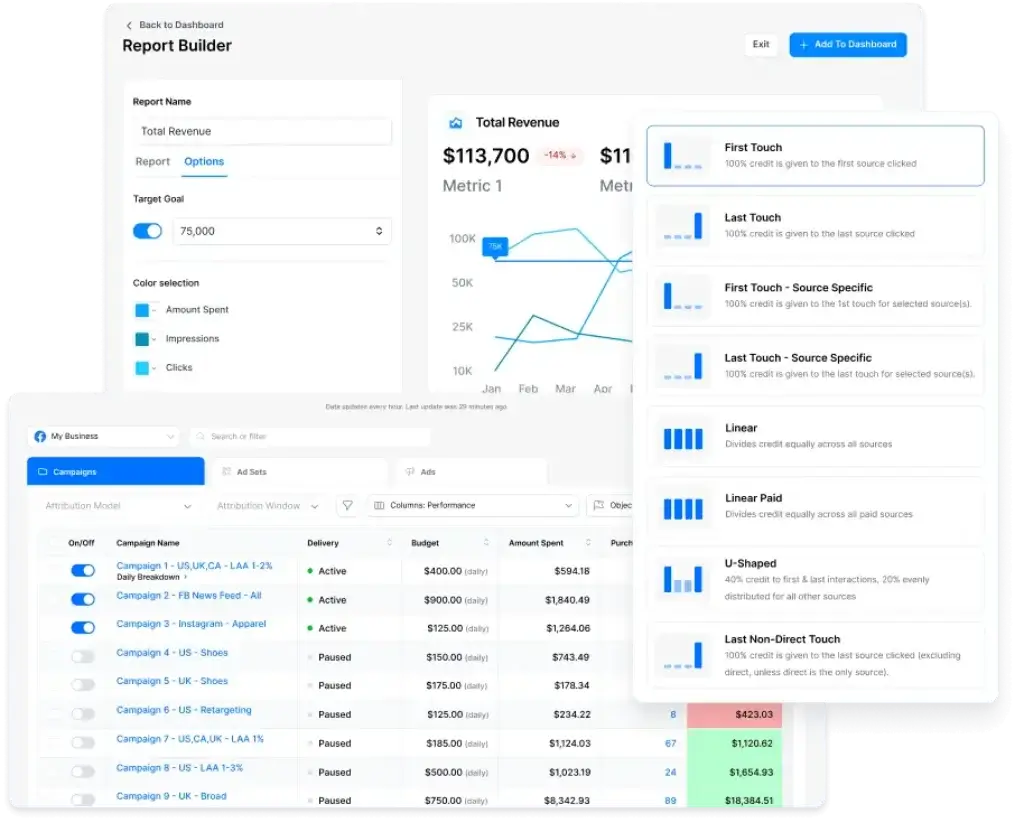
Attribution rules affect how commissions are credited. Review cookie duration, refund handling, recurring revenue logic, and multi-touch attribution before committing to a platform.
Conclusion
The best affiliate platform is the one that matches your audience, business model, partner strategy, and technical setup. A B2B SaaS publisher should not choose the same platform as a Shopify brand working with creators, and a startup launching its first referral program does not need the same system as an enterprise partnership team.
If you want the strongest overall fit for B2B SaaS affiliate marketing, PartnerStack is the best place to start. If you need enterprise partnership management, Impact.com is more powerful. If you are a publisher looking for a wide advertiser network, CJ Affiliate remains a strong option.
For SaaS brands managing their own programs, FirstPromoter, Reditus, and Rewardful are all worth comparing. For advanced white-label control, Post Affiliate Pro is the better fit. For ecommerce brands built around creators, influencers, ambassadors, and social commerce, Superfiliate stands out.
Focus on platform fit first, commission potential second, and ease of execution third. That combination will help you choose a platform that supports long-term affiliate growth instead of short-term experimentation.
Frequently Asked Questions
What is an affiliate platform?
An affiliate platform is software or a network that helps brands and partners manage affiliate links, tracking, commissions, reporting, approvals, and payouts. Some platforms also include partner discovery, creator management, referral programs, and advanced attribution.
What is the best affiliate platform overall?
PartnerStack is the best overall affiliate platform for B2B SaaS affiliates and software-focused publishers. It offers strong SaaS program discovery, recurring commission opportunities, partner management, and a cleaner experience than many traditional networks.
What is the best affiliate platform for SaaS?
PartnerStack is best for SaaS affiliates, while FirstPromoter, Reditus, and Rewardful are strong options for SaaS companies that want to launch and manage their own affiliate programs. The best choice depends on whether you need marketplace exposure, billing integrations, or simple tracking.
What is the best affiliate platform for ecommerce?
Superfiliate is a strong choice for ecommerce brands that rely on creators, ambassadors, influencers, and referral campaigns. Impact.com is also a good option for larger ecommerce brands that need broader partnership management and marketplace access.
What is the difference between an affiliate platform and an affiliate network?
An affiliate network usually connects affiliates with many advertisers in one marketplace. An affiliate platform may include software for tracking, commission management, partner portals, payouts, and program operations. Some tools combine both models.
Is PartnerStack better than Impact.com?
PartnerStack is usually better for B2B SaaS affiliates and software companies. Impact.com is better for enterprise brands that need to manage affiliates, creators, referrals, publishers, and business partners in one advanced platform.
Is Reditus good for SaaS affiliate programs?
Yes. Reditus is built specifically for B2B SaaS affiliate programs. It is a strong option for SaaS companies that want marketplace exposure, recurring revenue tracking, and access to software-focused affiliates.
What is Superfiliate best for?
Superfiliate is best for ecommerce, Shopify, and DTC brands that want to manage creator-led affiliate programs, influencer campaigns, ambassador relationships, referrals, promo codes, and co-branded shopping experiences.
Can you use more than one affiliate platform?
Yes. Many affiliates and brands use more than one affiliate platform. For example, a publisher may use PartnerStack for SaaS offers and CJ Affiliate for broader consumer categories. The key is to keep tracking and reporting organized.
Do affiliate platforms handle payouts?
Many affiliate platforms help manage payouts, but the exact process varies. Some platforms centralize partner payments, while others provide tracking and commission data that brands use to approve and process payouts manually or through integrations.