
Introduction
If your email marketing strategy is closely tied to ecommerce growth, Omnisend is one of the most relevant platforms to consider. It is built for online stores that want more than newsletters, giving you email, SMS, automation, forms, segmentation, and reporting in one focused system.
What makes Omnisend especially appealing is that it is designed around ecommerce use cases from the start. Instead of forcing you to adapt a general marketing platform to your store, it gives you ready-made workflows for welcome sequences, cart recovery, browse abandonment, post-purchase follow-up, and customer re-engagement.
In this review, you’ll discover:
- What Omnisend is and who it is built for
- Its most important email, SMS, and automation features
- Its main strengths and trade-offs
- How it compares to alternatives like Mailchimp, Klaviyo, and Brevo
- Whether it is the right fit for your ecommerce business
💡 If you want an ecommerce-first marketing platform that helps you automate campaigns and recover more revenue, this review will help you decide whether Omnisend deserves a place in your stack.
What is Omnisend?
Omnisend is an email and SMS marketing platform built primarily for ecommerce brands. It helps you connect store data, segment customers, automate campaigns, and manage multiple channels from one place, with a strong emphasis on driving sales rather than simply sending promotional emails.
Unlike broader marketing platforms that try to serve every type of business equally, Omnisend is clearly optimized for merchants. Its native ecommerce integrations, product-based personalization, and pre-built automations make it particularly useful if you sell through Shopify, WooCommerce, or BigCommerce.
Since launching in 2014, it has grown into a comprehensive ecommerce marketing platform that allows you to:
- 📩 Build and send branded email campaigns
- 📱 Combine email, SMS, and push notifications in one workflow
- 🔁 Launch automations based on shopping behavior and customer actions
- 📊 Track campaign and automation performance with unified reporting
- 🛒 Sync store, customer, and product data with ecommerce platforms
You do not need a development team to get value from Omnisend, especially if you use one of its native ecommerce integrations. At the same time, larger brands still get enough depth through APIs, advanced segmentation, and omnichannel automation.
If your priority is growing ecommerce revenue through lifecycle marketing, not just broadcasting newsletters, Omnisend is one of the more focused tools in this category.
Key Features
How Does Omnisend Work?
Omnisend focuses on the parts of email marketing that matter most for ecommerce brands: automation, segmentation, multichannel messaging, and revenue-oriented reporting. Here are the features that stand out most.
Email Campaign Creation
Omnisend makes campaign creation accessible without stripping away the tools marketers actually need.
- Drag-and-drop email builder: Build branded campaigns with blocks for text, images, products, discounts, and more.
- Responsive templates: Use pre-designed templates built for ecommerce promotions and lifecycle campaigns.
- Personalized messaging: Tailor content based on customer data, shopping behavior, and segmentation rules.
- Product-based content: Highlight relevant products and offers using synced store data and personalized recommendations.
This gives you enough flexibility for effective campaigns without making the builder feel overly complex.
Marketing Automation
Automation is where Omnisend is strongest. The platform is built around ecommerce lifecycle flows rather than generic autoresponders.
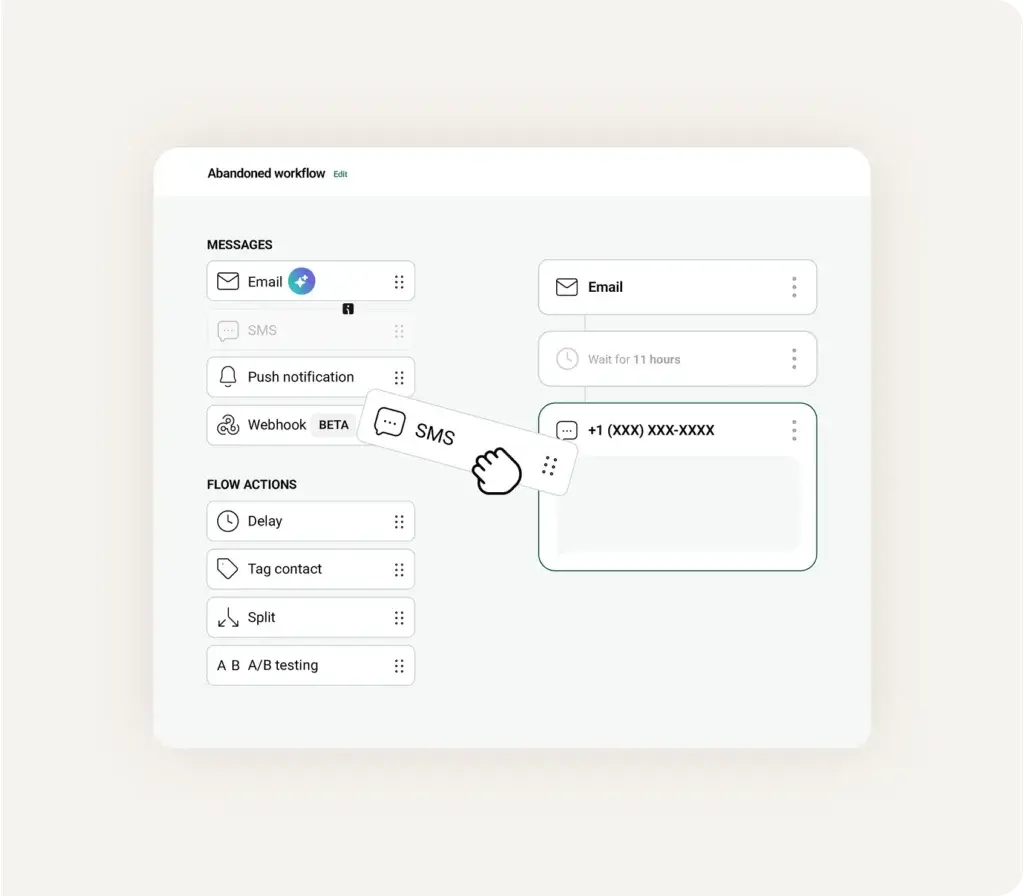
- Visual automation builder: Create automations with drag-and-drop steps, delays, and conditions.
- Pre-built templates: Start faster with ready-made workflows for welcome emails, abandoned carts, post-purchase follow-up, and more.
- Omnichannel workflows: Combine email, SMS, and push notifications in the same automation builder.
For ecommerce teams, this is a major advantage because it helps you automate revenue-generating journeys from one interface.
Audience Segmentation
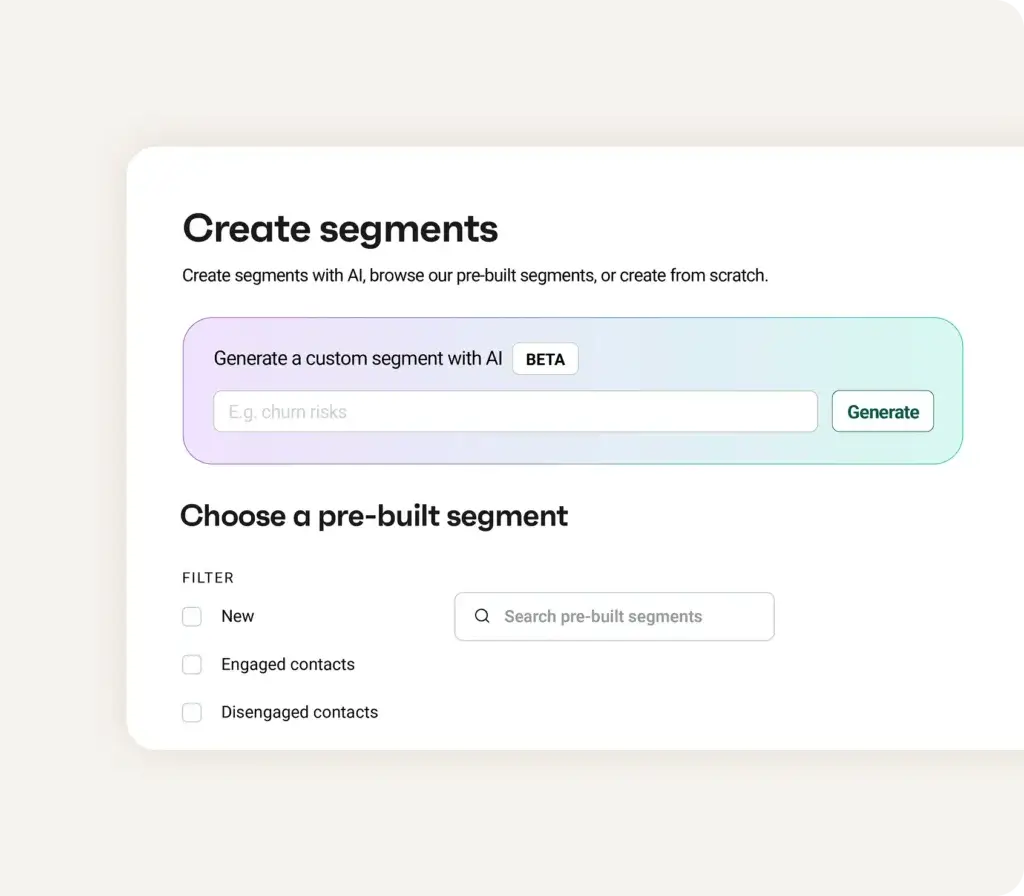
Strong segmentation is one of the reasons Omnisend competes well in the ecommerce email space.
- Behavior-based targeting: Segment contacts by browsing activity, purchases, and engagement.
- Customer property filters: Use tags, profile data, and custom attributes to refine messaging.
- High-value audience creation: Build segments for repeat buyers, category shoppers, and customers at risk of churn.
This level of targeting helps you make campaigns more relevant, which matters when every send should support revenue.
Analytics and Reporting
Omnisend puts reporting in a practical, ecommerce-oriented context.
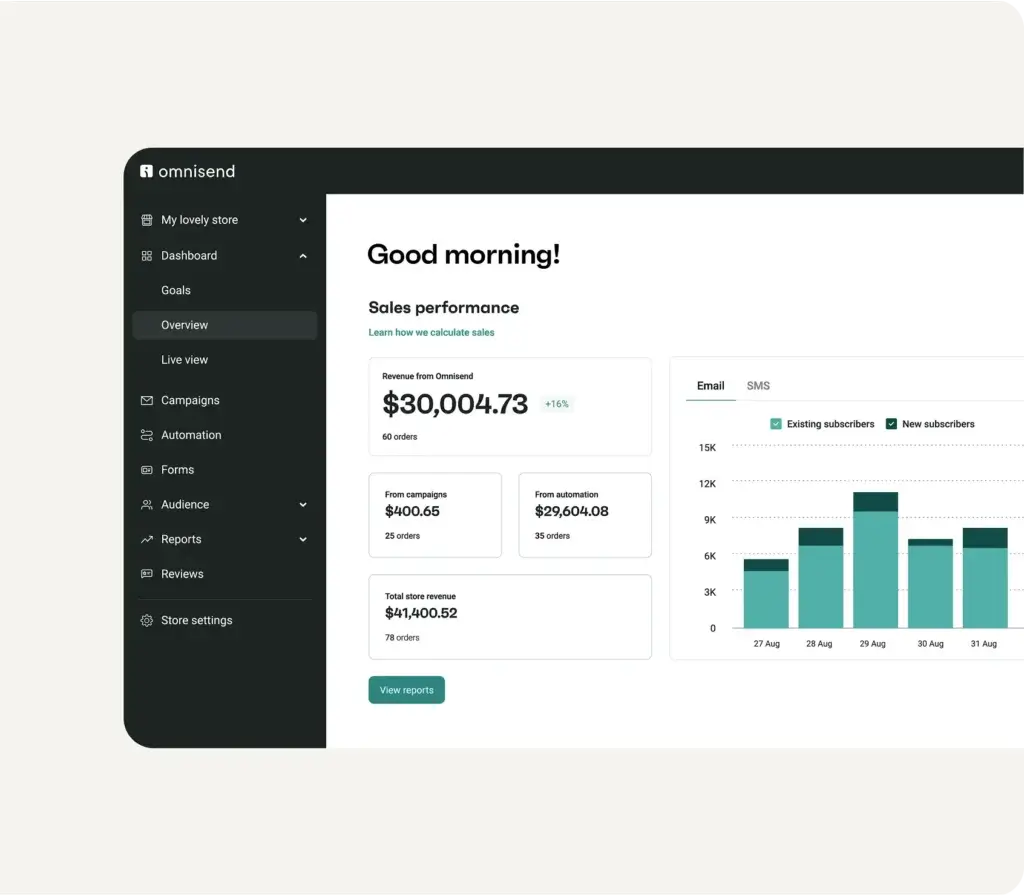
- Performance dashboards: Track campaign and workflow results from one reporting area.
- Email and SMS comparison: Compare results across channels in a single view.
- Revenue visibility: Identify which campaigns and workflows are driving the strongest returns.
If you care about business outcomes more than vanity metrics, this is one of Omnisend’s more valuable strengths.
Integrations
Omnisend integrates especially well with ecommerce platforms.
- Native ecommerce integrations: One-click setup is available for Shopify, BigCommerce, WooCommerce, and WordPress.
- 160+ pre-built integrations: Connect Omnisend with a broader app stack beyond your storefront.
- API and custom integrations: Extend the platform for custom ecommerce setups and headless implementations.
For store owners, that native ecommerce connectivity is a major reason to shortlist Omnisend.
AI, Forms, and Subscriber Growth
Omnisend has also expanded into AI-assisted creation and list growth tools.
- Forms AI: Generate high-converting forms, including design, copy, and visuals, from a prompt.
- Forms and popups: Capture subscribers directly on your site.
- Push notifications: Add another re-engagement channel without needing a separate tool.
These features help Omnisend move beyond campaign sending into full-funnel ecommerce lifecycle marketing.
Pros and Cons
Benefits and Disadvantages of Omnisend
Positive
✅ Ecommerce-first automation
✅ Email, SMS, and push in one place
✅ Strong free plan
✅ Native Shopify, WooCommerce, and BigCommerce integrations
✅ User-friendly interface
Negative
❌ Best suited mainly for ecommerce
❌ Advanced needs can push you to higher tiers
❌ Less ideal for complex B2B CRM workflows
❌ Some design users may want more template flexibility
❌ SMS costs still require close monitoring
✅ Pros
Built for ecommerce from the ground up
This is Omnisend’s clearest differentiator. The platform feels aligned with how ecommerce brands actually market, from product-focused emails to cart recovery and post-purchase automation. You do not need to force-fit store use cases into a general email platform.
Strong automation capabilities
Omnisend combines a visual workflow builder with pre-built ecommerce automations. That makes it fast to get started, while still giving you enough control to build more sophisticated customer journeys over time.
True omnichannel setup
Being able to combine email, SMS, and push notifications in the same automation builder is a real advantage. Many competing tools support multiple channels, but Omnisend makes them feel more naturally connected.
Accessible entry point
The Free plan is more generous than many ecommerce-focused alternatives because it includes access to all features, even with tighter volume limits. That makes Omnisend especially attractive for smaller stores that want to test a serious tool before committing.
Useful reporting for growth-focused teams
Omnisend’s reporting is practical and tied to campaign performance, channel comparison, and automation results. It is designed for marketers who need to see which activities are influencing sales, not just open rates.
❌ Cons
Not the best fit for every business model
If you run a service business, publisher brand, or complex B2B organization, Omnisend may feel narrower than tools built around CRM-heavy or broader marketing use cases. Its strength is ecommerce, and that focus can also be a limitation.
Scaling costs can rise
The entry pricing is attractive, but costs increase as your list and sending volume grow. That is normal for this category, but larger senders should still model pricing carefully, especially if SMS becomes a bigger part of the strategy.
Design flexibility is not its strongest edge
Omnisend’s builder is easy to use, but some users looking for deep visual customization may prefer tools with more advanced email design freedom. For most ecommerce teams this will not be a dealbreaker, but it is worth noting.
Support quality can depend on your plan level
Omnisend offers 24/7 support across plans, which is excellent. Still, businesses that want more hands-on strategic help will get more value as spend increases, especially once account expert support becomes available.
SMS economics still need attention
Omnisend supports SMS well, but texting costs vary by region and usage. That means SMS can be highly effective, though it should be managed with clear ROI tracking rather than treated as a low-cost add-on.
Use Cases
Is Omnisend for you?
Omnisend is not trying to be everything for everyone. It performs best when your marketing model revolves around ecommerce customer journeys.
Here’s where Omnisend is especially strong:
Shopify, WooCommerce, and BigCommerce stores
If your store runs on one of Omnisend’s native ecommerce integrations, setup is relatively simple and the platform becomes much more powerful. You can sync customer and product data quickly, then use it inside campaigns and automations without complicated workarounds.
Growing ecommerce brands that want automation
Omnisend is a strong option once you move beyond basic newsletters and want automated revenue flows. Welcome series, abandoned cart recovery, browse abandonment, and post-purchase follow-up are all central to the platform’s value.
Lean marketing teams that want one practical platform
Because Omnisend combines email, SMS, forms, and push notifications, smaller teams can do more without adding multiple point solutions. That can simplify execution and reduce the overhead of switching between tools.
Merchants who care about performance and ROI
If you want to understand which campaigns and workflows are actually generating revenue, Omnisend gives you more practical visibility than many entry-level email platforms.
💡 If you sell online and want lifecycle marketing that supports revenue growth, Omnisend is one of the better-balanced options between usability and power.
Competitors
Omnisend Alternatives
Omnisend is strong, but the best tool still depends on your exact priorities. Here is where some alternatives may win, and where Omnisend still has an edge.
Here’s a quick look at some of the most relevant alternatives:
Klaviyo
- Best for: Advanced ecommerce brands that want deeper data modeling and analysis
- Pros: Powerful segmentation, strong analytics, strong ecommerce reputation
- Cons: Can become expensive, less approachable for smaller teams
- Omnisend advantage: Easier onboarding, strong free plan, more accessible for growing brands
Mailchimp
- Best for: General small business email marketing and simple campaigns
- Pros: Familiar interface, broad awareness, flexible for non-ecommerce use cases
- Cons: Less ecommerce-native, weaker store-first automation focus
- Omnisend advantage: More purpose-built for online stores and lifecycle revenue flows
Brevo
- Best for: Budget-conscious teams that want email and SMS across broader business models
- Pros: Competitive pricing, useful multichannel tools, broad usability
- Cons: Less ecommerce-specialized than Omnisend
- Omnisend advantage: Better fit for merchants who want ecommerce automations out of the box
Pricing
How much does it cost?
Omnisend’s pricing is one of its more attractive qualities, especially for ecommerce brands that want access to meaningful functionality before moving into premium tiers. The platform offers a free plan, then scales into paid plans based on contact count and sending needs.
Its structure is also easier to understand than some competitors. For smaller brands, that helps reduce friction when you are deciding whether the platform can support growth beyond the basics.
Here’s a breakdown of the current pricing structure for 2026Plan Monthly Price Best For Key Features Free $0 New or very small ecommerce brands – Up to 250 contacts
– 500 emails/month
– All core features access
– 24/7 support
– $1 in free SMS to tryStandard From $16/month Growing brands focused mainly on email – Up to 500 contacts on entry tier
– 6,000 emails/month
– Unlimited web push notifications
– 24/7 support
– Forms AIPro From $59/month High-volume senders using email + SMS – Up to 2,500 contacts on entry tier
– Unlimited emails
– Monthly SMS credits equal to plan price
– Advanced reporting
– Personalized content includedCustom Custom pricing Businesses with larger or more specific requirements – Unlimited emails
– Custom contact volume
– Global SMS messaging
– Free migration
– Dedicated support options
Additional Notes:
- Free plan: Omnisend’s free plan includes access to all features, but with lower sending and contact limits.
- SMS pricing: Standard and Free plans can add SMS subscriptions, while Pro includes monthly SMS credits equal to the value of your plan.
- Account expert support becomes available for customers spending $400/month or more.
How it compares:
- More accessible than many premium ecommerce-focused platforms for smaller stores.
- More ecommerce-ready than general email tools that need extra setup to support store-based automation.
- Best value when you need ecommerce automation, email, SMS, and push in one platform without jumping immediately to enterprise pricing.
Conclusion
Should You Try Omnisend?
⭐ Overall Rating: 8.8/10
If you run an ecommerce brand and want a platform that combines email marketing, SMS campaigns, and automation workflows practically, Omnisend is one of the strongest options in its class.
It is especially appealing if you want to:
- Recover abandoned carts automatically
- Build lifecycle campaigns around real store behavior
- Use email, SMS, and push notifications together
- Start with a free plan and scale as your store grows
It is not the universal answer for every business type, and larger brands should still model long-term pricing carefully. But for ecommerce teams, Omnisend gets a lot right.
🏁 Our recommendation:
- Use Omnisend if you want an ecommerce-focused marketing platform that makes automation and multichannel messaging easier without sacrificing too much power.
- Skip it if your business is not ecommerce-driven and you need a more CRM-centered or more broadly generalized marketing platform.
🎯 Pro tip: If you are comparing Omnisend with alternatives, test its free plan first. It is one of the easiest ways to evaluate whether its ecommerce-first approach matches your workflow.
Have more questions?
Frequently Asked Questions
Can you use Omnisend for free?
Yes. Omnisend has a free plan that includes access to all features, but with lower contact and sending limits. That makes it a strong option if you want to test ecommerce automation before moving to a paid tier.
Is Omnisend good for Shopify?
Yes. Omnisend is particularly well-suited to Shopify stores because of its native integration, ecommerce automations, and product-based personalization tools.
Does Omnisend support SMS marketing?
Yes. Omnisend supports SMS campaigns and lets you combine SMS with email and push notifications in the same automation builder.
What is Omnisend best known for?
It is best known for ecommerce-focused email and SMS marketing, especially automated workflows like welcome sequences, abandoned cart recovery, browse abandonment, and post-purchase messaging.
Is Omnisend only for ecommerce businesses?
No, but that is clearly where it performs best. If your marketing is not tied closely to ecommerce customer journeys, another platform may be a better fit.
Does Omnisend include push notifications?
Yes. Web push notifications are part of Omnisend’s multichannel feature set, and they can also be used inside automation workflows.
How many integrations does Omnisend have?
Omnisend offers more than 160 pre-built integrations, with native one-click ecommerce integrations for Shopify, BigCommerce, WooCommerce, and WordPress.
Is Omnisend easy to use?
Yes. One of Omnisend’s advantages is that it stays approachable for smaller teams while still giving you strong automation and segmentation capabilities.
Does Omnisend offer advanced reporting?
Yes. Advanced reporting is available in higher tiers, and the platform is designed to help you compare email and SMS performance in one reporting view.
Is Omnisend worth it?
If you run an ecommerce business and want a focused platform for lifecycle marketing, Omnisend is absolutely worth considering. Its mix of usability, automation, and ecommerce-native functionality gives it a strong position in the market.