
Introduction
Choosing the right email marketing software can make or break your campaigns.
Whether you’re just building your list or managing a complex automation flow for thousands of subscribers, the right tool helps you drive engagement, increase conversions, and scale your marketing without breaking a sweat.
But with so many platforms out there, each with its own strengths, how do you decide?
In this guide, we’ve compared four top email marketing tools head-to-head: Klaviyo, Campaigner, Brevo, and Moosend. You’ll discover what makes each one stand out, who they’re best for, and where they may fall short, so you can choose the right tool for your business in 2026.
Criteria for Evaluation
Before diving into the individual reviews, it’s important to understand what we looked for when comparing each email marketing platform.
Whether you’re a small business owner or a seasoned marketer, the same core questions apply: Is the tool easy to use? Can it grow with my business? Does it offer real value for the cost?
Here are the five key criteria we used to evaluate each tool:
1. Ease of Use
We looked at how intuitive the platform is for both beginners and experienced users. A steep learning curve can slow you down, so we favored tools with clean interfaces, helpful onboarding, and drag-and-drop functionality.
2. Automation Capabilities
Effective automation saves you time and increases results. We analyzed how well each platform handles triggered emails, drip sequences, dynamic flows, and smart scheduling for both email and SMS.
3. Customization and Segmentation
Every audience is different. We assessed how deeply you can personalize content, how flexible the design tools are, and how advanced the segmentation options get, so you can target the right people with the right message.
4. Scalability and Integrations
Can the tool grow with your subscriber list? We looked at how each platform supports larger audiences, connects with CRMs, eCommerce platforms, and third-party tools, and adapts as your needs evolve.
5. Pricing and Value
Finally, we broke down the cost of each platform and what you actually get at each tier. From free plans to enterprise solutions, we considered which tools deliver the best bang for your buck, especially for teams with tight marketing budgets.
By using this evaluation framework, we ensured each tool is judged fairly, based on features that truly matter to your email marketing success.
Best Email Marketing Tools of 2026
monday campaigns

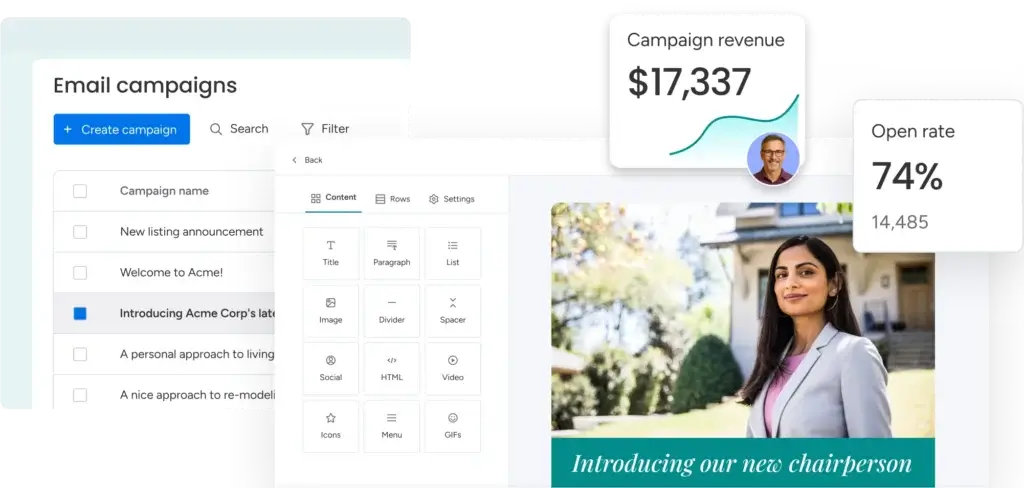
Unique Features
- Visual campaign builder with pre-built email templates
- Automation recipes tied directly to workflows in monday.com
- Integrated contact management and segmentation
- Multi-channel marketing across email, web forms, and CRM
- Performance tracking dashboards linked to project KPIs
Why Choose monday campaigns?
If you’re already managing projects, sales, or operations on monday.com, the monday campaigns add-on is a game-changer. It brings your marketing efforts into the same workspace, making it easier to align campaigns with deals, project timelines, and internal teams.
The visual builder is easy to use, and automation recipes make it simple to trigger emails based on pipeline stages or form submissions. Unlike traditional ESPs, monday campaigns doesn’t just send emails—it ties your campaigns directly to your CRM, lead capture forms, and sales dashboards.
It’s perfect for those looking to centralize marketing and operations, avoid platform switching, and build lean marketing systems inside monday.com.
Who It’s Best For
- Business size: Small to mid-sized businesses
- Industry: Agencies, marketing teams, B2B sales, service-based companies
- Use case: Teams already using monday.com for work management who want native email marketing
Pros and Cons
Positive
✅ Unified data
✅ AI assistance
✅ Flexible editing
✅ Scalable automation
Negative
❌ Limited access (Beta)
❌ Email‑only focus (for now)
❌ Restricted trial
❌ Workflow limitations on Pro
Pricing and Plans
Starts at: Included in monday CRM Pro plans
Free plan: No (14-day free trial available via monday.com)
Notable tiers:
- Pro plan ($24/user/month) – Includes email marketing features with CRM
- Enterprise plans – Custom limits and advanced security
Overall Assessment
monday campaigns is ideal for teams already using monday.com and looking to unify marketing with operations. It won’t replace Klaviyo or ActiveCampaign for ecommerce, but for B2B teams and agencies, it’s a focused and frictionless solution.
Klaviyo

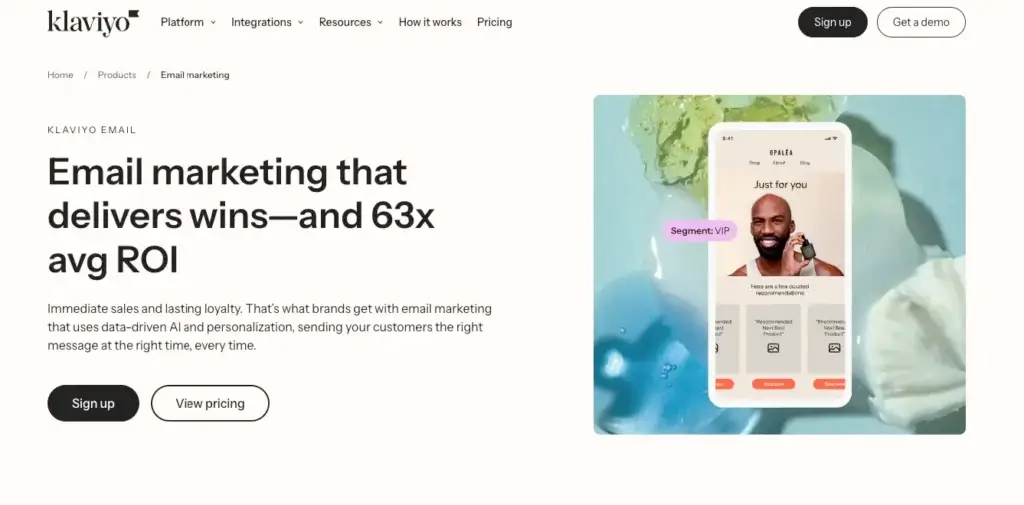
Unique Features
- Predictive analytics based on shopping behavior and purchase history
- Dynamic product recommendations powered by machine learning
- Drag-and-drop flows for abandoned carts, win-back campaigns, and post-purchase engagement
- Pre-built integrations with Shopify, BigCommerce, WooCommerce, Magento, and more
- SMS and email automation in one platform
Why Choose Klaviyo?
If you’re selling online and want to squeeze every dollar out of your customer data, Klaviyo is built for you. It transforms how you approach email and SMS by tracking every user action – from product views to past purchases – to trigger the right message at exactly the right time.
Klaviyo goes beyond standard automation. You get predictive analytics, customer lifetime value modeling, and advanced A/B testing baked right in. Whether you’re launching a flash sale or re-engaging cold leads, this tool gives you both the strategy and the muscle to do it automatically.
It’s a favorite among Shopify users and fast-growing DTC brands because it delivers measurable ROI with minimal manual effort.
Who It’s Best For
- Business size: Small to medium eCommerce businesses scaling fast
- Industry: Direct-to-Consumer (DTC), Retail, Subscription boxes
- Use case: Abandoned cart recovery, personalized product promotions, multichannel lifecycle marketing
Pros and Cons
Positive
✅ Seamless e-commerce integrations
✅ Advanced segmentation & Personalization
✅ Powerful automation flows
✅ Revenue-focused analytics
Negative
❌ Pricing can add up
❌ Steeper learning curve for beginners
❌ Limited built-in CRM features
❌ Support response times can vary
Pricing and Plans
Starts at: Free for up to 500 contacts
Free plan: Yes (limited features)
Notable tiers:
- $20/month – Up to 500 contacts, email only
- $35/month – Email + SMS, up to 500 contacts
- Scales with contacts – Custom pricing for 10k+, includes predictive tools, advanced reporting
Overall Assessment
Klaviyo is a powerhouse for eCommerce marketers who want to automate intelligently, not just reactively. With deep integrations, sharp analytics, and advanced automation, it’s a platform that helps you grow without guesswork.
Omnisend

Unique Features
- Omnichannel automations that combine email, SMS, and web push in a single flow
- Pre-built eCommerce workflows for welcome series, cart recovery, browse recovery, post-purchase follow-ups, and win-back
- Drag-and-drop email builder with product blocks, dynamic content, and discount code inserts
- Signup forms and popups designed for list growth on store pages
- Revenue attribution reports that connect campaigns and automations to sales
Why Choose Omnisend?
Omnisend is made for online stores, so the setup feels familiar from day one. It plugs into your product catalog and customer activity, which makes it easy to trigger messages based on what shoppers do.
Instead of building everything from scratch, you can start with ready-to-use automations for the moments that usually drive revenue, then tweak the timing, content, and channel mix as you go.
It is also a solid option if you want to move fast without paying extra for add-ons, since the Free plan includes access to the full toolkit, with monthly sending limits.
Who It’s Best For
- Business size: Small to mid-sized eCommerce brands and growing DTC teams
- Industry: Retail, online stores, subscription brands
- Use case: Automated lifecycle messaging like welcome flows, cart recovery, and repeat purchase follow-ups
Pros and Cons
Positive
✅ Built for eCommerce data and event triggers
✅ Email, SMS, and push support in one workflow builder
✅ Strong library of pre-built automations
✅ Free plan includes full feature access (with usage limits)
Negative
❌ Not a full CRM for sales pipelines
❌ SMS can add extra cost once included credits are used
❌ Contact-based pricing climbs as your list grows
❌ Push notifications depend on supported store platforms
Pricing and Plans
Starts at: Free for up to 250 contacts (500 emails/month)
Free plan: Yes (usage limits)
Notable tiers:
- Free: 250 contacts, 500 emails/month, full feature access
- Standard ($16/month): starts at 500 contacts, email credits based on list size
- Pro ($59/month): unlimited emails, bonus SMS credits, advanced reporting and priority support
- Custom: for higher-volume teams and tailored needs
Overall Assessment
Omnisend is a strong pick for eCommerce brands that want to launch revenue-focused automations quickly, then keep improving them as the list grows. It covers the core lifecycle flows well and keeps everything in one dashboard.
Neo Mail

Unique Features
- Built-in email campaigns with open tracking and engagement insights
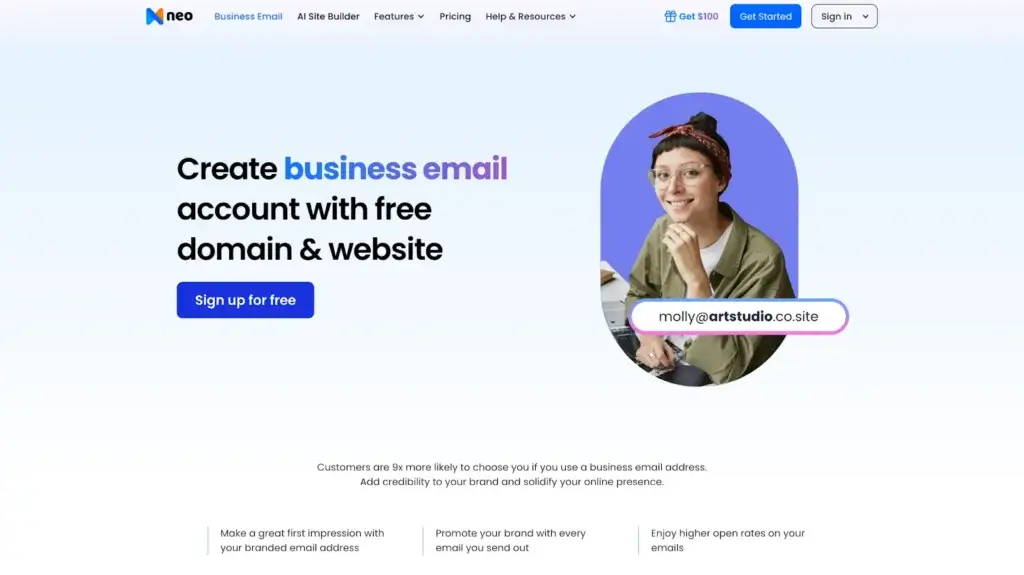
- Free domain + branded email setup for new businesses
- AI-powered Smart Write for faster email creation
- Read receipts and follow-up reminders for better communication
- Integrated tools like appointment booking and email templates
- Simple interface designed for non-technical users
Why Choose Neo Mail?
If you’re a freelancer or small business owner who wants to start email marketing without dealing with complex tools, Neo Mail is a practical choice. It removes the usual friction of setting up domains, email hosting, and campaign tools separately.
Neo Mail keeps things simple. You can send professional emails, launch basic campaigns, and track engagement—all from a single dashboard. It’s not trying to compete with heavy automation platforms. Instead, it focuses on helping you get started quickly and stay productive.
For early-stage businesses, this “all-in-one simplicity” is where Neo Mail really stands out. You spend less time configuring tools and more time actually communicating with your audience.
Who It’s Best For
- Business size: Freelancers, solopreneurs, and small businesses
- Industry: Services, consulting, creators, local businesses
- Use case: Client communication, basic email campaigns, branding with custom email
Pros and Cons
Positive
✅ Combines email hosting + marketing in one platform
✅ Very beginner-friendly interface
✅ Affordable pricing compared to competitors
✅ Includes useful productivity tools beyond email
✅ Quick setup with free domain option
Negative
❌ Limited automation compared to advanced tools
❌ Not built for large-scale campaigns
❌ Fewer integrations than established platforms
❌ Lacks deep analytics and segmentation
Pricing and Plans
Starts at: ~$1.99/month per mailbox
Free plan: No (trial available)
Notable tiers:
- Starter – Basic email + domain support
- Standard – Adds tracking, templates, and productivity tools
- Max – Includes advanced features and higher storage
Overall Assessment
Neo Mail is ideal for users who want to keep things simple. It’s not the most powerful email marketing platform, but it delivers exactly what small businesses need—professional email, basic campaigns, and essential tracking without complexity. For beginners and budget-conscious users, it’s a smart starting point before moving to more advanced tools.
Campaigner

Unique Features
- Multi-variable segmentation for advanced audience targeting
- Experiments (A/B/C/D testing) across subject lines, send times, content, and more
- Transactional email support via SMTP relay
- Drag-and-drop automation workflows with real-time behavior triggers
- Dynamic content blocks for hyper-personalized emails
Why Choose Campaigner?
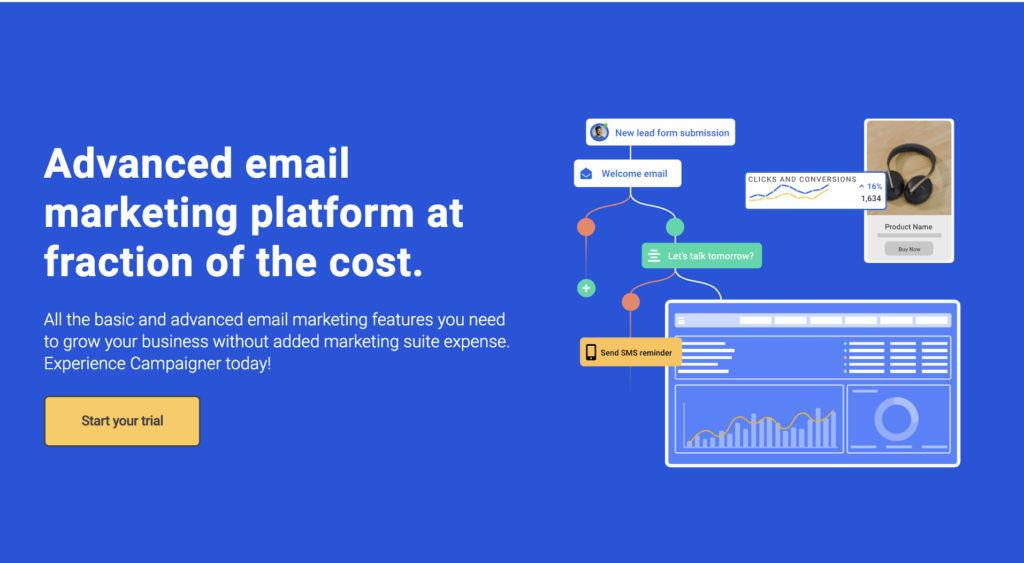
Campaigner is built for marketers who need a straightforward platform that gets the job done. It offers the core email marketing features most teams rely on, like drag-and-drop email builders, automation flows, and list segmentation – without overwhelming complexity.
Its user interface is clean and approachable, making it easy to build campaigns quickly. You’ll also find built-in landing pages, A/B testing tools, and basic CRM features for contact management.
If you’re just getting started with email marketing or want an affordable alternative to pricier platforms, Campaigner is a reliable choice that balances functionality with value.
Who It’s Best For
- Business size: Freelancers, startups, and small businesses
- Industry: B2B, nonprofit, SaaS, and retail
- Use case: Basic automation, newsletter delivery, and lead capture without breaking the bank
Pros and Cons
Positive
✅ Powerful automation engine
✅ SMS marketing built-in
✅ Advanced audience segmentation
✅ Analytics with revenue tracking
Negative
❌ Higher entry-level pricing
❌ Slight learning curve
❌ Limited native integrations
❌ No mobile app
Pricing and Plans
Starts at: $59/month for up to 5,000 contacts
Free plan: No
Notable tiers:
- $59/month – Up to 5,000 contacts with unlimited emails
- $179/month – Up to 50,000 contacts, advanced automation features
- Enterprise pricing – For high-volume sending and dedicated IP needs
Overall Assessment
Campaigner is a solid, budget-friendly platform for small teams or solo marketers. It covers the email marketing basics well and is particularly appealing if you don’t need heavy automation or deep analytics.
ActiveCampaign
Unique Features
- Industry-leading automation builder with advanced triggers and conditions
- Built-in CRM with lead scoring and pipeline stages
- Site tracking and event tracking to trigger behavioral flows
- Split automations and predictive sending
- Native integrations with 900+ tools including Shopify, WordPress, and Salesforce
Why Choose ActiveCampaign?
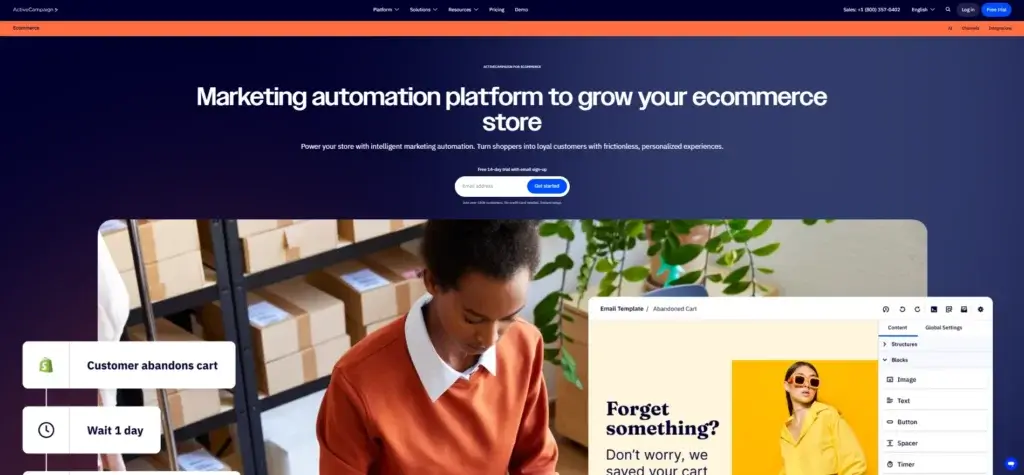
ActiveCampaign is one of the most flexible marketing automation platforms on the market. It goes far beyond basic email blasts—you can build custom journeys that respond to user behavior across your website, emails, sales pipeline, and CRM.
With powerful segmentation, lead scoring, and dynamic content, it’s ideal for companies with multi-step funnels and a need to qualify leads automatically. You can even run automations inside automations, split-test full workflows, and trigger messages across email, SMS, and chat.
It’s especially strong for B2B and SaaS teams that want a tight integration between marketing and sales without buying separate tools.
Who It’s Best For
- Business size: SMBs to mid-market companies
- Industry: B2B SaaS, agencies, consultancies, online courses
- Use case: Complex customer journeys, sales pipelines, and automated campaigns
Pros and Cons
Positive
✅ Best-in-class automation builder
✅ Smart personalisation & segmentation
✅ Built-in CRM & sales automation
✅ Advanced reporting & analytics
Negative
❌ Learning curve for beginners
❌ Can get expensive as you scale
❌ Limited design flexibility on forms and landing pages
❌ Mobile app is limited
Pricing and Plans
Starts at: $29/month (billed annually) for 1,000 contacts
Free plan: No (14-day trial available)
Notable tiers:
- Lite ($29/month) – Email marketing and automation only
- Plus ($49/month) – CRM, landing pages, lead scoring
- Professional ($149/month) – Split automations, predictive sending
- Enterprise (custom) – SLA, custom reporting, dedicated support
Overall Assessment
ActiveCampaign is a powerhouse for marketers who want control, scalability, and smart automation. While it’s not beginner-focused, it’s a top pick for serious growth teams looking to automate intelligently across the funnel.
Brevo

Unique Features
- All-in-one marketing suite with email, SMS, WhatsApp, chat, and CRM
- Transactional email and SMS API
- Unlimited contact storage even on free plans
- Drag-and-drop campaign editor with advanced personalization
- Heatmap and click-through tracking for each campaign
Why Choose Brevo?
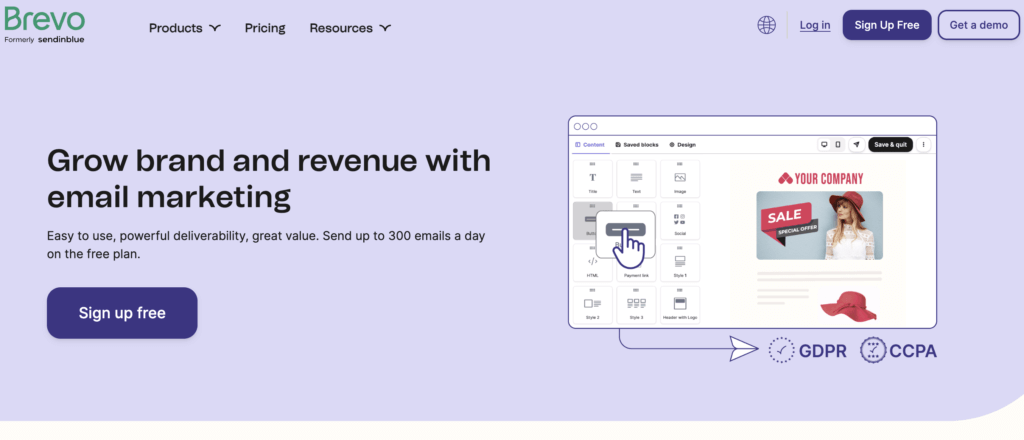
Brevo stands out by offering true multichannel marketing without requiring multiple tools or high spend. You can run campaigns via email, SMS, WhatsApp, live chat, and push notifications – all in one dashboard.
What really makes Brevo shine is its balance of accessibility and power. The automation builder is intuitive, and you can create custom workflows triggered by user behavior, email activity, or web visits. It even supports transactional emails and real-time messaging, making it ideal for eCommerce or SaaS apps that need reliability and speed.
You also get a built-in CRM and deal pipeline, which means you don’t need to pay extra for managing leads or tracking sales stages.
Who It’s Best For
- Business size: SMBs and mid-market teams
- Industry: SaaS, eCommerce, agencies, and service providers
- Use case: Multichannel campaigns, transactional messaging, and lead nurturing with built-in CRM
Pros and Cons
Positive
✅ Super intuitive interface
✅ Powerful automation made Eeasy
✅ Advanced segmentation tools
✅ Real-time reporting and A/B testing
Negative
❌ Limited built-In CRM capabilities
❌ Smaller library of email templates
❌ Support availability may vary
❌ Limited multichannel capabilities
Pricing and Plans
Starts at: Free for up to 300 emails/day
Free plan: Yes
Notable tiers:
- Free – 300 emails/day, unlimited contacts
- Starter ($25/month) – 20k emails/month, no daily cap, basic support
- Business ($65/month) – 20k+ emails/month, A/B testing, automation workflows
- Enterprise (custom) – Priority sending, dedicated IP, SLA, and support
Overall Assessment
Brevo is ideal if you’re scaling and need email plus SMS, WhatsApp, and chat without switching between platforms. With powerful automation, a built-in CRM, and one of the best free plans in the market, it offers unbeatable value for growing teams.
Moosend

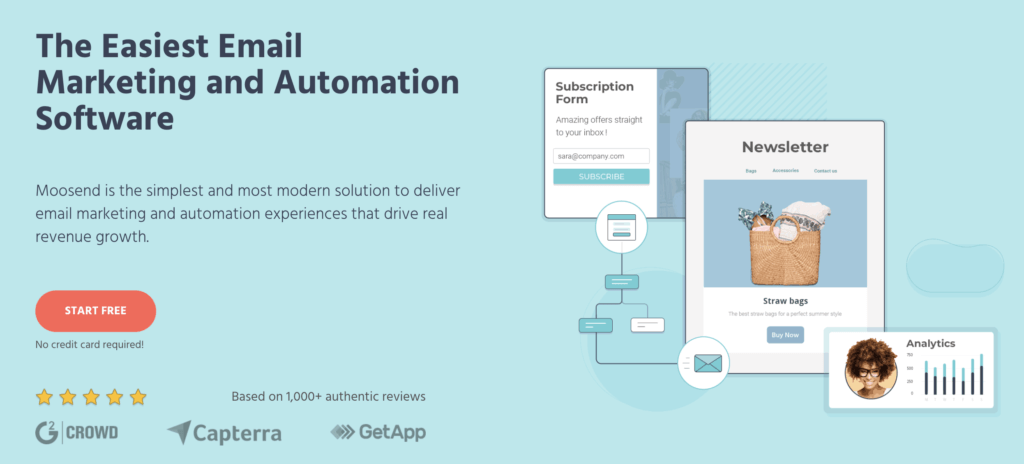
Unique Features
- Pre-built automation recipes for quick campaign setup
- AI-powered subject line generator
- Drag-and-drop email builder with responsive design
- Behavioral tracking and event-based triggers
- Landing page and form builder included in all plans
Why Choose Moosend?
Moosend offers an affordable path to automation without sacrificing functionality. Its interface is beginner-friendly but still powerful enough to handle multi-step customer journeys, product recommendations, and lead nurturing – all from a single dashboard.
It stands out in its value-to-price ratio, offering features like landing pages, A/B testing, and advanced segmentation at much lower costs than many competitors. Plus, its visual automation builder makes it easy to create workflows without needing a technical background.
If you’re launching your first automated campaigns or want to save on tools without sacrificing features, Moosend is a strong contender.
Who It’s Best For
- Business size: Freelancers, startups, and small businesses
- Industry: SaaS, eCommerce, bloggers, and agencies
- Use case: Building automated customer journeys without complex setups or high costs
Pros and Cons
Positive
✅ Extremely Affordable Pricing
✅ Powerful Automation Builder
✅ Unlimited Emails on All Plans
✅ Built-In Landing Page and Form Builder
Negative
❌ Limited CRM Features
❌ Smaller Integration Ecosystem
❌No Mobile App
❌ Basic Template Variety
Pricing and Plans
Starts at: $9/month for up to 500 subscribers
Free plan: No (30-day free trial available)
Notable tiers:
- $9/month – Up to 500 subscribers, unlimited emails
- $24/month – Up to 2,000 subscribers, advanced automation
- Custom pricing – For agencies or higher-volume senders with white-label needs
Overall Assessment
Moosend is a cost-effective email marketing tool with surprisingly advanced automation features for the price. It’s perfect for small teams that want to get serious about automation without overspending.
Breeze by HubSpot
Unique Features
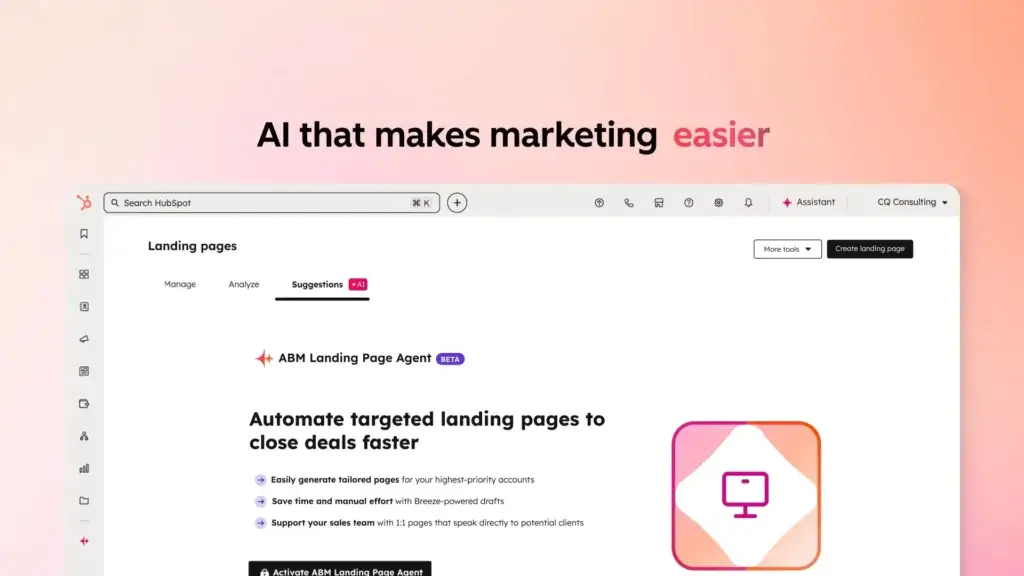
- AI-powered email creation for subject lines, copy, and campaign drafts
- CRM-connected personalization based on customer data and engagement
- Breeze Assistant for content creation, task support, and workflow help
- Breeze Agents for automating marketing, sales, and service tasks
- Campaign planning support for faster execution across marketing channels
Why Choose Breeze by HubSpot?
Breeze by HubSpot is not a traditional email marketing platform on its own. It is HubSpot’s AI layer, designed to help marketing, sales, and service teams create content faster, automate repetitive work, and use CRM data more effectively.
For email marketing, this makes Breeze especially useful for teams that already rely on HubSpot. You can use AI to help draft email content, generate subject lines, personalize messaging, summarize campaign performance, and support customer journeys connected to your CRM.
Its biggest strength is context. Because Breeze works inside the HubSpot ecosystem, it can support campaigns using customer data, engagement history, and workflow logic rather than treating email as a separate channel.
If your team wants AI assistance across the full customer journey, not just standalone newsletter sending, Breeze is a strong addition to your email marketing stack.
Who It’s Best For
- Business size: Growing businesses, SaaS companies, and mid-market teams
- Industry: B2B, SaaS, agencies, professional services, and CRM-driven teams
- Use case: Creating AI-assisted campaigns connected to CRM data and automation
Pros and Cons
Positive
✅ Strong AI Support for Email Content
✅ Works Natively With HubSpot CRM
✅ Useful for Campaign Planning and Automation
✅ Helps Personalize Customer Journeys
Negative
❌ Best Value Comes Inside HubSpot
❌ Not a Standalone Email Platform
❌ Advanced Usage May Require HubSpot Credits
❌ Less Ideal for Teams Outside the HubSpot Ecosystem
Pricing and Plans
Starts at: Included with HubSpot subscriptions for Breeze Assistant
Free plan: Available through HubSpot’s free tools and eligible HubSpot accounts, depending on feature access
Notable pricing notes:
- Breeze Assistant – Included with HubSpot subscriptions at no additional cost
- Breeze Agents – Some features may use HubSpot Credits depending on the tool and usage
- HubSpot plans – Pricing depends on your selected HubSpot products, tier, and AI usage needs
Overall Assessment
Breeze by HubSpot is a smart choice for teams that want to bring AI into email marketing without separating it from CRM, sales, and customer data. It is especially valuable when your email strategy depends on personalization, lead nurturing, campaign planning, and cross-team automation.
It may not be the best fit if you only need a low-cost standalone email newsletter tool. However, if your business already uses HubSpot or plans to build campaigns around CRM data, Breeze can help you create more relevant campaigns faster and with less manual effort.
Comparison Table
Looking for a side-by-side view of the tools we just covered? The table below highlights the best email marketing tools of 2026, including each tool’s ideal use case, standout features, pricing, and whether a free plan is available.
Use it as a quick reference to help decide which platform fits your workflow best.
| Tool | Best For | Free Plan | Starting Price | Key Strength |
| monday campaigns | Work management with native marketing | ❌ | $24/user/month* | Built-in CRM, project tracking & automation |
| Klaviyo | eCommerce automation | ✅ | $20/month | Predictive analytics & real-time triggers |
| Omnisend | SMS and push automations | ✅ | $16/month | Pre-built eCommerce workflows |
| Neo Mail | Freelancers, and small businesses | ❌ | $7.99/month | Combines email hosting with lightweight marketing features |
| Campaigner | Affordable email marketing | ❌ | $59/month | Straightforward automation + landing pages |
| Brevo | Multichannel on a budget | ✅ | Free (300 emails/day) | Email, SMS, WhatsApp in one platform |
| Moosend | Cost-effective automation | ❌ | $9/month | AI product recs + built-in landing pages |
| ActiveCampaign | Advanced automation & CRM | ❌ | $29/month | Powerful logic-based automations |
| Breeze | AI-assisted email marketing and CRM-connected campaigns | ✅ | Free access available through HubSpot tools; advanced AI features depend on plan and HubSpot Credits | AI content creation, CRM-based personalization, campaign planning & workflow automation |
Which Email Marketing Tool Should You Choose?
Choosing the best email marketing tool in 2026 depends on your business size, channel needs, and level of automation required. Here’s how to break it down:
- monday campaigns is ideal if you’re already using monday.com and want to centralize project and marketing workflows in one ecosystem.
- Klaviyo is your best bet for serious eCommerce automation, especially on Shopify or WooCommerce.
- Campaigner keeps it simple for budget-focused marketers who still want good segmentation and landing pages.
- ActiveCampaign remains a top choice for growth-stage businesses needing deep automation, CRM, and smart triggers in one system.
- Brevo shines with multichannel support and strong value for small teams that want SMS, WhatsApp, and email in one dashboard.
- Moosend offers excellent bang for your buck with AI-driven personalization and landing pages baked in.
💡 Our Recommendation
If you’re looking for the highest-rated tools based on our evaluation, here’s where to start:
- 📈 Best Overall for eCommerce: Klaviyo
Unmatched when it comes to predictive automation, revenue tracking, and real-time personalization. Perfect for data-driven eCommerce growth. - 📊 Best for monday.com Users: monday campaigns
A seamless choice if you’re already managing projects and sales in monday.com. It centralizes marketing workflows in one powerful workspace. - 💵 Best Value for Simplicity: Campaigner
Ideal for teams that want straightforward email marketing with solid segmentation and landing pages—without breaking the bank.
Conclusion
The right email marketing tool can transform your strategy—from generic newsletters to highly personalized journeys that drive engagement and conversions.
In this guide, we compared seven top platforms—each tailored to a specific type of business:
- monday campaigns: Marketing automation built into your work OS
- Klaviyo: Data-driven automation built for eCommerce
- Omnisend: eCommerce-focused email and SMS automation with ready-made workflows
- Neo Mail: Business email hosting with simple tools for branding and customer communication
- Campaigner: Affordable segmentation and email design
- ActiveCampaign: Advanced workflows with built-in CRM
- Brevo: Multichannel marketing without the complexity
- Moosend: Smart automation on a lean budget
Each excels in automation, segmentation, and scalability. Your ideal choice will depend on your use case, growth goals, and tool stack.
👉 Still unsure which one to choose?
Use our comparison table above to evaluate key features, or start a free trial to see which tool fits best. Most platforms offer onboarding support or live demos to help you get started quickly.
And remember: the key to email success is continuous testing, learning, and optimization—whichever tool you pick.
FAQ
What is the best email marketing tool for automation?
Klaviyo is often considered the best for automation, especially for eCommerce. It uses behavior-based triggers, dynamic product recommendations, and predictive analytics to build advanced workflows.
Is Klaviyo only good for eCommerce?
While Klaviyo is designed for online stores, non-eCommerce businesses can still use its features. However, its pricing and feature set are most valuable when used with platforms like Shopify or WooCommerce.
Does Campaigner work well for small businesses?
Campaigner can be used by small businesses, but it’s better suited for advanced users or teams managing large lists and complex segments. Beginners may find its learning curve steep.
What makes Brevo different from other email platforms?
Brevo (formerly Sendinblue) combines email, SMS, WhatsApp, chat, and CRM into one platform. Its pricing is based on email volume, not contacts, making it more flexible for growing businesses.
Is Moosend a good choice for beginners?
Yes, Moosend is ideal for beginners. It offers a simple UI, helpful automation templates, and affordable pricing. It’s great for startups, solo marketers, and small teams.
Which platform offers the best value for money?
Brevo stands out for value, offering multichannel marketing, automation, and a CRM, even on its free plan. Moosend also provides strong value for teams with basic needs and limited budgets.
Can I use these tools for transactional emails?
Yes. Klaviyo, Campaigner, and Brevo support transactional emails. Brevo and Campaigner provide APIs for order confirmations, password resets, and other event-driven messages.
Which email platform is best for multichannel campaigns?
Brevo is best for multichannel campaigns. It supports email, SMS, WhatsApp, and live chat – all under one dashboard – making it ideal for unified communications.
Do these platforms offer free plans or trials?
Yes. Klaviyo and Brevo offer free plans with limited usage. Moosend offers a 30-day free trial. Campaigner does not have a free plan but may offer demos upon request.
What’s the easiest platform to get started with?
Moosend is the easiest to get started with. It features a beginner-friendly UI, a visual automation builder, and guided onboarding. Brevo is another strong option for first-time users.