
Introduction
If you manage IT services, you already know how quickly support requests, asset tracking, approvals, and internal workflows can become difficult to control. A strong ITSM platform should help you centralize tickets, automate repetitive work, improve visibility, and give employees faster ways to get help.
SysAid is an IT service management platform built for teams that want more than a basic help desk. It combines ticketing, IT asset management, workflow automation, self-service, reporting, and AI-powered support tools in one system.
This makes it especially relevant if your team needs to reduce manual work, manage IT requests at scale, and connect service desk activity with your IT environment. However, it is not the simplest option on the market, and the lack of public pricing means you need to request a quote before comparing total cost.
If you are still comparing different platforms, you may also want to review our guide to the best ITSM software, where we compare leading IT management tools for service desks, automation, asset management, and enterprise IT operations.
What Is SysAid?
SysAid is an IT Service Management platform that helps you manage incidents, service requests, IT assets, workflows, knowledge articles, reporting, and end-user support from one system.
The platform is designed for IT teams that need more structure than a basic ticketing system. You can use it to organize incoming requests, automate routing, track SLAs, manage hardware and software assets, and give employees self-service options through a portal, chatbot, and knowledge base.
One of the main reasons SysAid stands out is its focus on AI-driven ITSM. The platform includes AI tools for ticket summaries, reply suggestions, data filtering, chatbot support, and AI agents that can help automate repetitive service desk tasks.
For teams that want service management, automation, and IT asset visibility in one platform, this can create a more connected IT operation. Instead of separating help desk activity from infrastructure data, your team can bring tickets, assets, users, and workflows closer together.
SysAid Review Summary
SysAid is best suited for IT teams that need a configurable ITSM platform with strong automation, asset management, and AI-assisted service desk capabilities. It is a good fit if you want to improve ticket handling, reduce repetitive work, and manage IT assets from the same environment.
It may be less suitable if you want simple public pricing, a very lightweight help desk, or a tool that requires minimal configuration from day one.
| Review Category | SysAid |
| Best For | Mid-sized and enterprise IT teams |
| Main Use Case | ITSM, service desk automation, and IT asset management |
| Pricing | Custom quote |
| Free Trial | Available |
| Deployment | Cloud and on-premise options |
| Strongest Feature | AI-powered automation and ITSM workflows |
| Main Limitation | No public pricing and setup complexity |
Software Specification
Core Features of SysAid
SysAid includes a broad set of ITSM features designed to help you manage service requests, automate repetitive tasks, track IT assets, and improve the employee support experience. The platform is especially useful if you want to connect ticketing with workflows, AI assistance, and asset data.
1. IT Service Desk and Ticketing
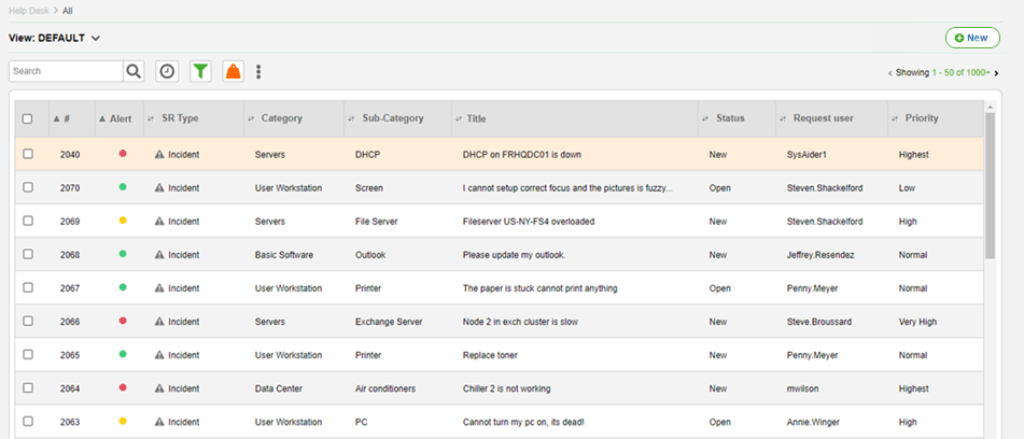
The service desk is the core of the platform. It helps you receive, organize, prioritize, assign, and resolve IT tickets from one central workspace.
You can use it to manage incidents, service requests, categories, priorities, requesters, SLAs, and technician workloads. This gives your IT team a clearer way to handle requests without relying on scattered emails or manual spreadsheets.
- Ticket routing – Assign requests based on category, urgency, or team rules.
- SLA management – Track response and resolution commitments.
- Request prioritization – Identify high-impact incidents faster.
- Email-based ticketing – Turn support emails into trackable requests.
- Centralized queue – Give agents one place to manage work.
This is helpful if your team struggles with ticket ownership, missed requests, or unclear escalation paths. With a structured service desk, you can create more consistent support processes and reduce response delays.
2. AI-Powered ITSM Automation
SysAid has shifted strongly toward AI-driven ITSM. Its AI capabilities are built to help both agents and end users complete support tasks faster.
For IT agents, AI can help summarize tickets, suggest replies, filter service desk data conversationally, and support faster troubleshooting. For end users, AI chatbot capabilities can help answer questions, suggest knowledge base content, and create tickets when human support is still needed.
- AI ticket summaries – Help agents understand issues faster.
- AI reply assistance – Draft responses inside ticket workflows.
- AI chatbot support – Help employees solve common issues.
- AI agents – Automate routine IT actions and workflows.
- AI agent builder – Customize automation for your service processes.
This is one of the platform’s strongest areas. If your IT team spends too much time on repetitive requests, AI automation can help reduce manual effort and improve service speed. However, the real value depends on how well you configure workflows, knowledge content, and service rules.
3. IT Asset Management
The IT asset management module helps you track hardware, software, licenses, and asset lifecycle data. This is important because service desk teams often need asset context before they can resolve an incident properly.
For example, if an employee reports a device issue, your team can view relevant asset details, ownership, software, lifecycle status, and related ticket history. That context helps agents troubleshoot faster and make better decisions.
- Asset discovery – Identify devices, users, software, and network assets.
- Lifecycle tracking – Manage assets from procurement to retirement.
- License visibility – Track software usage and renewals.
- Asset-ticket connection – Link incidents to affected devices.
- Advanced discovery – Expand visibility through Lansweeper-powered discovery.
SysAid’s Advanced Discovery solution, powered by Lansweeper, is particularly useful for teams that need deeper visibility across IT, OT, IoT, cloud systems, and endpoints. This makes the platform more valuable for organizations with complex environments and distributed assets.
4. Self-Service Portal and Knowledge Base
A self-service portal helps employees solve common problems without always contacting the IT team. This can reduce ticket volume and improve the support experience, especially for repeated requests such as password issues, access questions, software requests, or onboarding tasks.
- Knowledge base – Publish answers to common IT questions.
- Service catalog – Let users request approved services.
- Ticket submission – Allow employees to open and track requests.
- AI chatbot – Provide automated support through digital channels.
- Branded portal – Customize the experience for your organization.
This is valuable if your support team receives many recurring questions. Instead of answering the same requests manually, you can direct users to approved knowledge content and automated support paths.
5. Workflow Automation
Automation is one of the main reasons to consider this platform. You can create workflows for approvals, escalations, ticket routing, request fulfillment, and repetitive IT tasks.
For example, you can automate steps in employee onboarding, access requests, software approvals, password support, and SLA-based escalations. This helps your team create more predictable service processes.
- Automated routing – Send tickets to the right team.
- Approval workflows – Standardize request approvals.
- Escalation rules – Move urgent requests forward automatically.
- Service catalog workflows – Automate request fulfillment.
- No-code configuration – Build workflows with less technical effort.
The main advantage is consistency. Your IT team can reduce manual decision-making and make sure requests follow the right process every time.
6. Reporting and Analytics
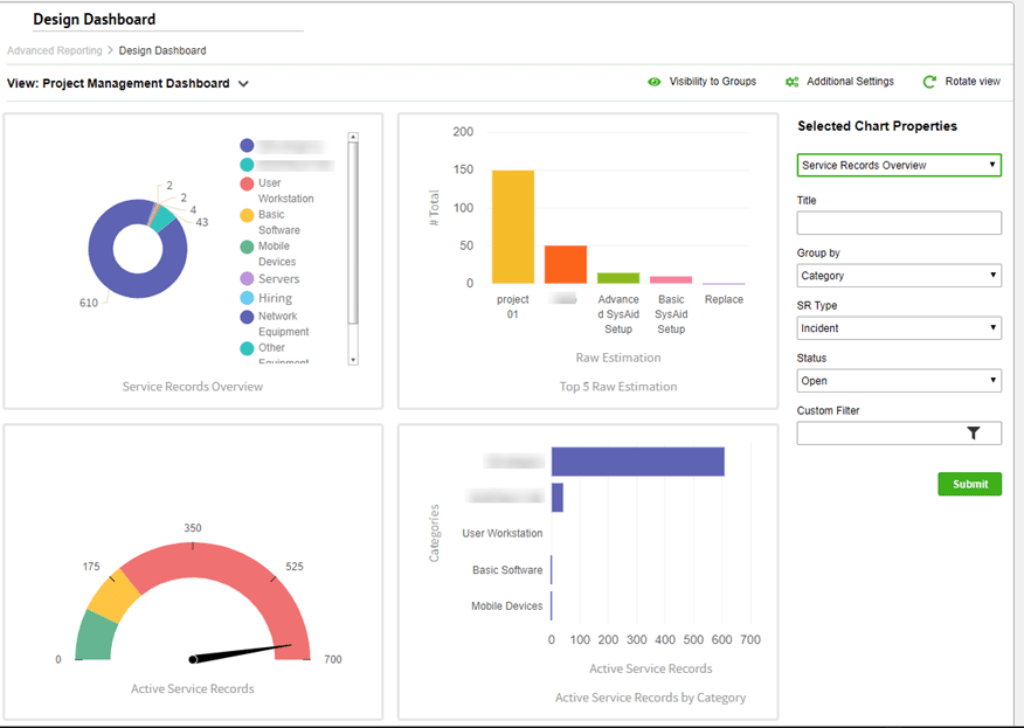
Reporting tools help you understand how your IT service desk is performing. You can track ticket volume, response times, resolution times, SLA performance, service categories, and workload distribution.
- Custom dashboards – Monitor IT activity in real time.
- SLA reports – Track whether your team meets service commitments.
- Ticket analytics – Identify recurring incidents and bottlenecks.
- Agent performance – Review workload and resolution trends.
- Exportable reports – Share data with managers and stakeholders.
This is useful for IT leaders who need to justify staffing, improve service delivery, and identify process gaps. It can also help business decision-makers understand how IT performance affects operations.
7. Integrations and Compatibility
SysAid integrates with a range of business, productivity, security, and IT tools. It also provides API options for custom integrations, which can help you connect service management with your existing systems.
- Microsoft 365 and Google Workspace – Connect productivity environments.
- Microsoft Teams – Support service interactions in team workflows.
- Security tools – Connect with SIEM, antivirus, and security systems.
- RMM tools – Complement endpoint and monitoring workflows.
- API access – Build custom integrations when needed.
If integrations are a high priority, you should confirm the exact connectors you need before buying. This is especially important if you rely on existing endpoint management, identity, security, or collaboration tools.
Pros and Cons
Benefits of Using SysAid
Positive
✅ Strong ITSM features
✅ Advanced AI automation
✅ Built-in asset management
✅ Cloud and on-premise
Negative
❌ No public pricing
❌ Setup takes planning
❌ Interface can feel busy
❌ Better for mature teams
Pros
✔ Strong ITSM Capabilities
The platform combines incident management, service requests, automation, IT asset management, reporting, and self-service in one environment. This reduces the need to manage multiple disconnected tools.
✔ Advanced AI Automation
AI features can help your team summarize tickets, draft replies, assist agents, support end users, and automate routine service actions. This is useful if your team wants to reduce repetitive manual work.
✔ Built-In IT Asset Management
You can connect service desk activity with asset data, making it easier to troubleshoot incidents, track hardware and software, manage licenses, and understand your IT environment.
✔ Flexible Deployment Options
The platform supports both cloud and on-premise deployment. This gives your organization more flexibility if you have data residency, compliance, or internal hosting requirements.
Cons
✖ No Public Pricing
Pricing is quote-based, so you need to speak with sales before you can compare costs accurately. This may slow down your software evaluation process.
✖ Setup Takes Planning
Because the system is highly configurable, implementation may require more planning than simpler help desk tools. You need to define workflows, categories, SLAs, automation rules, and asset processes carefully.
✖ Interface Can Feel Busy
Some teams may find the interface less modern or more complex than newer ITSM platforms. This is not necessarily a deal breaker, but it can affect onboarding and day-to-day adoption.
✖ Better for Mature IT Teams
Very small teams may not need the depth of features offered here. If you only need basic ticketing, a lighter help desk may be easier and more cost-effective.
Benefits of Using SysAid
The main benefit is that you can bring IT support, automation, asset visibility, and employee self-service into one platform. This can help your team work faster, improve control, and deliver a more reliable support experience.
Improved IT Efficiency
Automation helps your team reduce repetitive manual work. Instead of handling every request from scratch, you can route tickets, trigger workflows, escalate issues, and standardize approvals.
Better Employee Support
With a self-service portal, knowledge base, and AI chatbot, employees can find answers faster. This reduces avoidable tickets and gives your IT team more time to focus on higher-impact work.
Greater Asset Visibility
IT asset management helps you understand what devices, software, licenses, and systems you manage. This improves troubleshooting, budgeting, compliance, and lifecycle planning.
Stronger Service Control
SLA tracking, dashboards, reporting, and workflow rules give IT leaders better oversight. You can see where requests get delayed, which categories create the most volume, and where automation can help.
Pricing and Plans
How much does SysAid cost?
SysAid uses quote-based pricing, so you will not find a fixed public price list on its website. Instead, pricing depends on your selected package, number of users, managed assets, deployment needs, and implementation requirements.
The current plan structure includes Standard Help Desk, Pro ITSM, and Enterprise. Each tier is designed for a different level of IT maturity, from lean teams that need AI-assisted ticket handling to large organizations that want advanced AI automation at scale.
| Plan | Best For | Main Focus |
| Standard Help Desk | Lean IT teams | Smart ticket handling, auto-responses, and AI assistance |
| Pro ITSM | Mid-sized or mature IT teams | Advanced workflows, AI agents, and customizable automation |
| Enterprise | Large organizations | Advanced customization and organization-wide automation |
What Affects the Final Price?
- Number of users – Pricing changes based on team size.
- Managed assets – Asset volume can affect the final quote.
- Selected plan – Standard, Pro, and Enterprise include different capabilities.
- Deployment type – Cloud and on-premise needs may differ.
- Implementation support – Onboarding and professional services may add cost.
If transparent pricing is a top priority, this can be a drawback. However, quote-based pricing may also work in your favor if you need a tailored package for a larger or more complex IT environment.
User Experience
User Interface and Operational Simplicity
SysAid is powerful, but it is not the lightest ITSM platform to set up. You should expect to spend time configuring categories, workflows, service catalog items, SLAs, automation rules, permissions, and reporting views.
For mature IT teams, this flexibility is a major advantage. You can shape the platform around your internal processes instead of forcing your team into a rigid workflow.
For smaller teams, the same flexibility can feel like extra work. If your team only needs simple ticketing, a more lightweight help desk may be easier to launch.
Setup is easier if you already have:
- Defined ticket categories
- Documented IT workflows
- Clear SLA targets
- Asset management processes
- Internal knowledge base content
The platform becomes more valuable once it is properly configured. The key is to treat implementation as a service management project, not just a software installation.
Customer Support and Implementation
SysAid offers a range of support options, which may vary by plan. Depending on your package, support may include self-service resources, email support, live chat, priority support, response-time SLAs, and customer success resources.
This matters because implementation can be more involved than a basic help desk setup. If your team plans to use automation, AI agents, ITAM, and service catalog workflows, having the right onboarding support can make a major difference.
Support is especially important if you need help with:
- Workflow design
- AI automation setup
- Asset discovery configuration
- Service catalog planning
- Migration from another ITSM tool
For larger organizations, it is worth asking about onboarding services, response times, dedicated support options, and customer success involvement before signing a contract.
Cloud vs On-Premise Deployment
One of the platform’s advantages is deployment flexibility. You can choose cloud or on-premise deployment depending on your security, compliance, and operational needs.
The cloud version is generally better if you want easier maintenance, faster access to updates, and the latest AI-powered capabilities. This option is often more practical for teams that do not want to manage infrastructure internally.
The on-premise version is better suited for organizations with strict data residency, regulatory, or internal hosting requirements. However, you should confirm which advanced features and updates are available in your preferred deployment model before making a decision.
| Deployment Type | Best For | Key Consideration |
| Cloud | Teams wanting faster updates and less maintenance | Best access to modern features and AI updates |
| On-Premise | Organizations with strict hosting or compliance needs | May not include every advanced cloud feature |
| Hybrid Consideration | Complex environments | Confirm feature availability before buying |
Security and Compliance
Is Your Data Safe?
Security is an important part of any ITSM buying decision because your service desk may contain employee data, device details, access requests, incident history, and internal system information.
SysAid supports several enterprise security and compliance needs, including MFA, SSO, GDPR, CCPA, multi-region data residency, SOC 2 Type II, ISO/IEC 27001, ISO/IEC 27017, ISO/IEC 27018, and SSL configuration.
This makes it a stronger fit for organizations that need more than basic help desk security. It is especially relevant if your IT team supports regulated departments, distributed offices, or larger enterprise environments.
Security features to evaluate:
- MFA – Helps protect user access.
- SSO – Connects authentication with identity providers.
- Data residency – Supports regional data requirements.
- Compliance standards – Supports enterprise procurement needs.
- Encryption – Helps protect data in transit.
Before purchasing, you should confirm the specific security requirements your organization needs and verify that they are included in your selected plan and deployment model.
SysAid Alternatives
SysAid vs. Other Brands: How It Compares to Competitors
SysAid is a capable ITSM platform, but it is not the right choice for every team. The best alternative depends on whether you prioritize pricing transparency, ease of use, endpoint management, enterprise workflows, or ITIL depth.
1. Freshservice
Best for: Freshservice is often better for teams that want a modern interface, faster onboarding, and transparent pricing. SysAid is stronger if you need deeper AI-driven automation, flexible deployment, and more configurable ITSM workflows.
| Feature | SysAid | Freshservice |
| Ticketing | Advanced and configurable | Modern and user-friendly |
| Automation | Strong AI-driven workflows | Strong workflow automation |
| IT Asset Management | Built-in ITAM with advanced discovery options | Built-in IT asset management |
| Pricing | Custom quote | Public plan pricing |
| Best Fit | Mature IT teams | Teams wanting easier adoption |
2. NinjaOne
Best for: NinjaOne is better if your main priority is endpoint management, patching, monitoring, and RMM. SysAid is better if your primary need is structured ITSM, ticketing, self-service, and service desk automation.
| Feature | SysAid | NinjaOne |
| Primary Focus | ITSM and service desk | Endpoint management and RMM |
| Ticketing | Advanced ITSM ticketing | Available, but not the core strength |
| Asset Management | Service-connected ITAM | Strong endpoint inventory |
| Automation | ITSM workflow automation | Endpoint and device automation |
| Best Fit | Service desk teams | IT operations and MSP-style teams |
3. ManageEngine ServiceDesk Plus
Best for: ManageEngine ServiceDesk Plus is a strong alternative if you want ITIL-aligned service management, asset management, and broad deployment flexibility. SysAid may be more appealing if AI-driven service automation is a higher priority.
| Feature | SysAid | ManageEngine ServiceDesk Plus |
| ITSM Depth | Strong | Strong |
| ITIL Processes | Supported | Very strong |
| AI Automation | Major product focus | Available, but broader ITSM focus |
| Deployment | Cloud and on-premise | Cloud and on-premise |
| Best Fit | AI-focused ITSM teams | ITIL-focused IT departments |
4. SolarWinds Service Desk
Best for: SolarWinds Service Desk is a good alternative if you want cloud-based ITSM with service desk, asset management, and a familiar interface. SysAid is stronger if deployment flexibility and AI automation are more important.
| Feature | SysAid | SolarWinds Service Desk |
| Ticketing | Advanced and configurable | Clean and practical |
| Asset Management | Strong ITAM capabilities | Built-in asset management |
| AI Focus | Stronger AI positioning | More traditional ITSM approach |
| Deployment | Cloud and on-premise | Primarily cloud-based |
| Best Fit | Configurable ITSM environments | Teams wanting straightforward service desk software |
5. Atera
Best for: Atera is better if you need RMM, remote access, patching, and technician-focused IT operations. SysAid is better for organizations that need formal ITSM workflows, service catalog, self-service, and asset-connected ticketing.
| Feature | SysAid | Atera |
| Primary Focus | ITSM and service management | RMM and IT operations |
| Remote Monitoring | Limited compared with RMM tools | Strong |
| Service Catalog | Available | Not the main focus |
| Automation | ITSM workflow automation | Device and operations automation |
| Best Fit | Internal IT service teams | MSPs and IT operations teams |
Which ITSM Solution Is Best for You?
Choose SysAid if you need a configurable ITSM platform with strong automation, AI capabilities, asset management, and deployment flexibility. It is a good fit if your IT team wants to modernize service delivery and reduce repetitive work.
Consider another platform if your top priority is transparent pricing, very fast setup, or endpoint management instead of service management.
Choose SysAid if you:
- Need AI-powered ITSM automation
- Want help desk and ITAM in one platform
- Require cloud or on-premise deployment
- Manage complex service workflows
- Need stronger visibility into IT assets
Consider alternatives if you:
- Want public pricing before contacting sales
- Need a lightweight help desk for a small team
- Prefer a simpler interface with faster setup
- Need RMM and endpoint management as your main focus
- Already work deeply inside another ecosystem, such as Atlassian or Zoho
Conclusion
Final Thoughts
SysAid is a strong ITSM platform for teams that need more than basic ticketing. It brings together service desk management, IT asset visibility, AI-powered automation, self-service, reporting, and flexible deployment options.
Its biggest strength is the combination of ITSM depth and automation. If your team handles a growing number of requests, manages many assets, and wants to reduce manual work, the platform can deliver meaningful operational value.
The main drawbacks are pricing transparency and setup complexity. You need to request a quote, and you should expect a proper implementation process if you want to get the most from workflows, AI, and ITAM.
Best fit: Mid-sized and enterprise IT teams that need service management, automation, and asset control in one platform.
Consider alternatives: Freshservice for easier adoption and public pricing, NinjaOne or Atera for endpoint management, and ManageEngine ServiceDesk Plus for ITIL-focused service management.
Frequently Asked Questions
Have more questions?
What is SysAid used for?
SysAid is used for IT service management, help desk ticketing, workflow automation, self-service support, reporting, and IT asset management. It helps IT teams manage internal service requests and improve operational efficiency.
Is SysAid an ITSM tool or a help desk?
It is both. The platform includes help desk ticketing, but it also offers broader ITSM capabilities such as service catalog, automation, asset management, SLA tracking, reporting, and AI-powered support features.
How much does SysAid cost?
Pricing is quote-based. The final cost depends on your selected plan, number of users, managed assets, deployment type, and implementation needs. You need to contact sales for an accurate quote.
Does SysAid offer a free trial?
Yes, a free trial is available. This lets you test the platform before committing to a paid plan, although you should still confirm which features are included in the trial environment.
Is SysAid cloud-based or on-premise?
SysAid supports both cloud and on-premise deployment. Cloud is usually better for faster updates and AI capabilities, while on-premise may suit organizations with strict data residency or compliance requirements.
Does SysAid include IT asset management?
Yes. The platform includes IT asset management features for tracking hardware, software, licenses, lifecycle details, and asset-related service desk activity. Advanced discovery options can also improve asset visibility.
What AI features does SysAid provide?
SysAid includes AI features for ticket summaries, response assistance, conversational data filtering, chatbot support, and AI agents that can help automate repetitive IT service tasks and workflows.
Is SysAid suitable for small businesses?
It can work for small businesses, but it is often better suited for teams with more structured IT needs. Very small teams that only need simple ticketing may prefer a lighter and easier-to-launch help desk tool.
How does SysAid compare to Freshservice?
SysAid is stronger for configurable ITSM workflows, AI automation, and flexible deployment. Freshservice is often easier to adopt and offers public pricing, making it attractive for teams that prioritize usability and pricing transparency.
Who should use SysAid?
SysAid is best for mid-sized and enterprise IT teams that need service desk management, automation, IT asset visibility, self-service, reporting, and flexible deployment in one ITSM platform.