
Managing a sales team is not only about setting quotas and checking dashboards. You need to hire the right reps, coach different personalities, keep pipeline data accurate, prevent burnout, improve CRM adoption, and help every salesperson focus on the work that actually moves deals forward.
This sales team management Q&A guide answers the questions sales managers face every week. You’ll learn how to structure your team, run better pipeline reviews, track the right sales KPIs, motivate reps, handle underperformance, and use CRM tools to create a more predictable revenue process.
What Is Sales Team Management?
Sales team management is the process of leading, coaching, measuring, and enabling sales representatives so they can hit revenue goals consistently. It includes hiring, onboarding, pipeline management, CRM usage, performance tracking, sales coaching, forecasting, and cross-functional alignment with marketing and customer success.
Good sales management gives your team a repeatable way to sell. Great sales management also gives every rep clarity: what to prioritize, how success is measured, what good looks like, and where they can improve.
What does a sales manager actually manage?
A sales manager manages people, process, performance, and tools. That means you are responsible for both the human side of selling and the operational system behind it.
In practical terms, your job includes:
- Hiring and onboarding sales reps
- Setting quotas and sales goals
- Reviewing pipeline quality and deal risk
- Coaching reps through skill gaps
- Improving CRM adoption and data quality
- Reporting performance to leadership
- Aligning sales execution with business goals
The most effective sales managers do not simply inspect numbers. They help reps understand which behaviors create better numbers.
Who is this guide for?
This guide is for sales managers, sales team leaders, heads of sales, founders managing small sales teams, and CRM administrators who support sales operations.
It is especially useful if you manage SDRs, AEs, account managers, or a hybrid team responsible for lead generation, pipeline creation, deal closing, and customer expansion.
What Are the Biggest Challenges
Sales leadership becomes difficult when people, process, and data do not move in the same direction. Many teams do not struggle because they lack effort. They struggle because the system around the team is unclear.
Why do sales managers struggle with team performance?
Performance problems usually come from one of six areas: poor lead quality, weak sales process, inconsistent coaching, unclear expectations, low CRM adoption, or unrealistic targets.
If you treat every performance issue as a motivation problem, you risk missing the real cause. A rep may be working hard but pursuing the wrong leads. Another rep may have strong discovery skills but weak follow-up discipline. Another may have enough activity but not enough business context to qualify deals properly.
The best sales managers diagnose before they react.
What are the most common sales team management problems?
Most sales teams run into the same core challenges as they grow:
- New reps take too long to ramp
- Reps do not update the CRM consistently
- Forecasts are based on hope instead of deal evidence
- Pipeline reviews become status updates instead of coaching sessions
- High performers carry too much of the revenue target
- Underperformers receive vague feedback instead of specific coaching
- Sales and marketing disagree about lead quality
How can you fix sales team problems faster?
Start by separating symptoms from root causes. For example, “missed quota” is a symptom. The root cause may be low activity, poor qualification, weak discovery, delayed follow-up, lack of product knowledge, or a territory issue.
Use your CRM to identify patterns. Look at activity levels, stage conversion rates, win rates, deal age, lead source performance, and follow-up completion. Then coach the specific behavior that needs to change.
Common Sales Team Management Challenges and Solutions
| Challenge | What It Looks Like | How to Fix It |
| Poor CRM adoption | Reps update deals late or skip fields | Simplify required fields and connect CRM use to deal progress |
| Weak pipeline visibility | Managers cannot trust forecasts | Define exit criteria for every pipeline stage |
| Inconsistent follow-up | Good leads go cold after one or two touches | Create CRM-based follow-up sequences and reminders |
| Slow ramp time | New reps need months to become productive | Use a 30-60-90 day onboarding plan with call reviews and CRM training |
| Underperformance | Reps miss quota without clear diagnosis | Coach based on activity, conversion, skills, and deal quality |
| Sales and marketing misalignment | Sales rejects leads and marketing questions follow-up | Define MQL, SQL, and feedback rules in the CRM |
How Do You Hire and Onboard the Right Sales Reps?
Hiring well and onboarding effectively set the foundation for a high-performing sales team. A great sales process cannot compensate for poor hiring, and great hiring can still fail without structured onboarding.
What should you look for when hiring sales reps?
Experience matters, but it should not be the only factor. A rep who succeeded in one market may struggle in another if the sales motion, buyer, deal size, or product complexity is different.
Look for traits that predict long-term success:
- Coachability
- Resilience
- Curiosity
- Clear communication
- Follow-up discipline
- Comfort with CRM and sales tools
- Ability to qualify opportunities honestly
During interviews, ask candidates to explain a lost deal, a difficult buyer conversation, and a time they changed their approach after feedback. These answers reveal more than a simple quota achievement story.
How should you structure a 30-60-90 day sales onboarding plan?
A strong onboarding plan should give new reps a clear path from learning to execution. Do not expect new hires to absorb product knowledge, sales messaging, CRM workflows, buyer personas, and process rules all at once.
Use this structure:
- First 30 days: Product knowledge, buyer personas, CRM basics, call shadowing
- Days 31-60: Roleplay, supervised outreach, discovery practice, pipeline creation
- Days 61-90: Independent selling, deal reviews, quota ramp, coaching plan
The goal is not just to make reps “ready.” The goal is to make them consistent.
How should CRM training fit into onboarding?
CRM training should happen early because the CRM is where your sales process becomes visible. New reps should learn how to create contacts, update deal stages, log activities, add next steps, and use dashboards before they start managing real opportunities.
Make CRM training practical. Instead of showing every feature, walk through common workflows: adding a lead, qualifying an opportunity, logging a call, creating a follow-up task, moving a deal forward, and marking a deal lost with a reason.

How Can You Keep Your Sales Team Motivated Without Creating Toxic Competition?
Motivation is not only about bonuses. Sales reps need clear expectations, fair recognition, growth opportunities, and confidence that the process they follow can actually help them win.
How should you design incentives for a sales team?
Incentives should reward the outcomes you want, but they should also encourage the behaviors that produce those outcomes. If you only reward closed revenue, reps may ignore CRM hygiene, qualification, team collaboration, or long-term customer fit.
A better incentive structure can combine:
- Closed revenue
- Pipeline quality
- Follow-up consistency
- Qualified opportunity creation
- Customer retention or expansion
- Team-based goals
This approach helps reps focus on sustainable selling rather than short-term wins at any cost.
How do you recognize non-revenue contributions?
Not every valuable behavior shows up immediately in revenue. A rep who shares a strong objection-handling script, improves CRM notes, helps a new hire, or identifies a market insight can create value for the whole team.
Recognize these contributions in team meetings. This builds a healthier sales culture and shows that your team values process discipline, collaboration, and learning, not only leaderboard position.
How do you prevent sales rep burnout?
Burnout often comes from unclear priorities, unrealistic activity expectations, poor lead quality, too much admin work, or constant pressure without useful coaching.
To reduce burnout, use your CRM and sales tools to remove friction. Automate reminders, simplify required fields, create reusable templates, and focus reps on the accounts most likely to convert. Salespeople can handle pressure better when they believe their work is focused and meaningful.
How Do You Coach Sales Reps Effectively?
Sales coaching is where sales management becomes personal. Dashboards can show you what is happening, but coaching helps you understand why it is happening and what to improve next.
What should a sales coaching session include?
A useful coaching session should be specific, data-informed, and action-oriented. Avoid generic feedback like “be more confident” or “follow up more.” Instead, focus on one skill or behavior at a time.
Use this simple coaching flow:
- Review the data
- Ask the rep to self-assess
- Identify one improvement area
- Practice with a real scenario
- Agree on the next action
This keeps coaching practical and prevents one-on-one meetings from becoming loose conversations with no measurable follow-up.
Which coaching questions should sales managers ask?
Good coaching questions help reps think more clearly. They also make the conversation collaborative instead of top-down.
Examples include:
- Which deal feels most at risk this week?
- What is the strongest evidence that this buyer will move forward?
- Where are prospects getting stuck in your process?
- What objection are you hearing most often?
- What would you do differently on your last discovery call?
- Which CRM data point tells us what to do next?
How do you coach a rep with high activity but low conversion?
High activity with low conversion usually points to a quality issue. The rep may be contacting the wrong prospects, using weak messaging, rushing discovery, or failing to qualify early enough.
Review their calls, emails, lead sources, and stage conversion rates. Then coach the most visible gap. If many meetings do not become qualified opportunities, focus on discovery. If proposals do not close, focus on value alignment, objection handling, or stakeholder mapping.
How do you coach a rep with strong calls but weak follow-up?
This is often a process problem, not a talent problem. Set a clear follow-up standard inside the CRM. Every call should end with a logged summary, next step, owner, due date, and follow-up task.
You can also create email templates and automated reminders so the rep does not rely on memory. The goal is to turn good conversations into consistent deal movement.
Which Sales Metrics Should Managers Track?
You can’t manage what you don’t measure. But tracking too many numbers can create noise. The best sales managers focus on metrics that explain pipeline health, rep productivity, conversion quality, and forecast reliability.
What pipeline metrics should you track?
Pipeline metrics show whether your team has enough opportunity volume and whether deals are moving forward at a healthy pace.
- Pipeline value: Total value of open opportunities
- Pipeline coverage: Pipeline value compared with quota
- Deal age: How long deals stay open
- Stage conversion rate: Percentage of deals moving from one stage to the next
- Stalled deal rate: Percentage of opportunities with no recent progress
What activity metrics matter most?
Activity metrics are useful when they connect to outcomes. Calls, emails, meetings, demos, and proposals matter, but only if they lead to qualified pipeline and closed revenue.
Instead of pushing activity for its own sake, compare activity to conversion. A rep with fewer calls but stronger qualification may outperform a rep with high volume and weak targeting.
What forecasting metrics should you monitor?
Forecasting should be based on evidence, not optimism. Track forecast accuracy, commit deals, close dates, stage probability, and next-step quality.
A forecast is more trustworthy when every committed deal has a clear buyer need, active stakeholder engagement, agreed next step, and realistic close date.
Quick Metrics Summary
| Metric | What It Measures | Why It Matters |
| Average Deal Size | Average revenue per closed deal | Helps forecast total revenue potential |
| Sales Velocity | How quickly deals move through the pipeline | Shows whether the sales process is efficient |
| Pipeline Coverage | Pipeline value compared with quota | Helps managers identify future revenue risk |
| Stage Conversion Rate | Deal movement between pipeline stages | Reveals process bottlenecks and coaching needs |
| Forecast Accuracy | Predicted sales compared with actual sales | Improves planning and leadership reporting |
| Lead Response Time | How quickly reps respond to new leads | Improves speed-to-lead and buyer engagement |
| CRM Data Completeness | How consistently reps update required fields | Makes reporting and coaching more reliable |
How Do You Run a Better Weekly Sales Meeting?
A sales meeting should not be a long status update. Your CRM already shows basic status. The meeting should focus on priorities, learning, blockers, and decisions.
What should you cover in a weekly sales team meeting?
A good sales meeting gives reps clarity and momentum. It should help the team understand what matters this week, which deals need support, and what can be learned from recent wins or losses.
Use this simple agenda:
- 5 minutes: wins and lessons
- 10 minutes: pipeline movement and priorities
- 10 minutes: stuck deals and blockers
- 10 minutes: skill focus or objection handling
- 5 minutes: next actions and ownership
What should not be discussed in a team sales meeting?
Avoid using team meetings to criticize individual reps, debate compensation issues, or inspect every deal line by line. Sensitive performance conversations belong in one-on-one meetings.
Keep team meetings focused on shared learning, alignment, and action.
How Do You Balance Individual Targets With Team Goals?
Balancing personal and collective objectives prevents internal competition from hurting collaboration. Reps should know their own number, but they should also understand how their work contributes to the team’s total pipeline and revenue target.
How should you set fair sales goals?
Use SMART goals: specific, measurable, achievable, relevant, and time-bound. Then make sure each goal is connected to your sales motion.
For example, an SDR goal may focus on qualified meetings and accepted opportunities. An AE goal may focus on revenue, win rate, and forecast accuracy. A customer-facing account manager may focus on renewals, expansion, and customer health.
How do team-based incentives improve collaboration?
Team-based incentives reduce the “every rep for themselves” problem. You can still reward top performers, but adding a team goal encourages knowledge sharing, mentoring, and support across the group.
This is especially useful when sales cycles are complex and multiple people influence revenue outcomes.
How do you encourage knowledge sharing?
Build knowledge sharing into your regular cadence. Ask reps to present a successful discovery question, a useful objection response, or a deal lesson once a week.
Store the best examples in a shared sales playbook or CRM note template. Over time, your team builds a practical library of what works.
How Can You Maintain a Healthy Sales Pipeline?
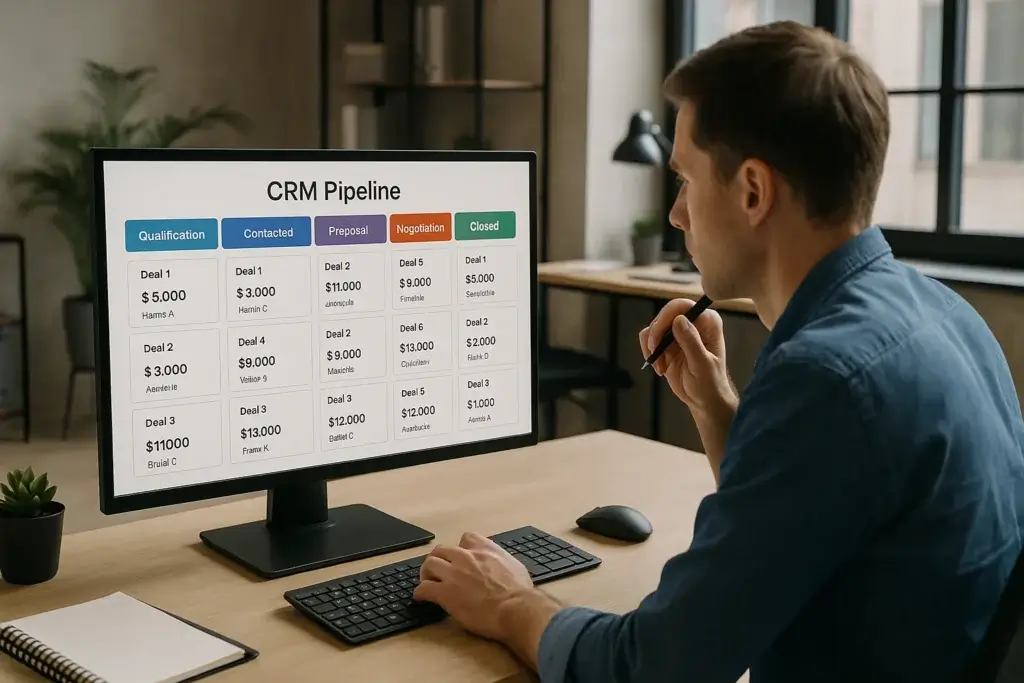
A healthy pipeline is the lifeblood of predictable revenue. If the pipeline is outdated, inflated, or unclear, your forecast becomes unreliable and your reps waste time on the wrong opportunities.
How do you define pipeline stages clearly?
Each pipeline stage should have entry and exit criteria. A deal should not move forward because a rep “feels good” about it. It should move forward because the buyer has completed a clear action.
For example, a deal may move from qualified to demo only after the rep confirms pain, fit, authority, and next step. It may move to proposal only after the buyer confirms requirements and evaluation criteria.
How do you prioritize high-intent leads?
Not all leads are equal. Define what a sales-ready lead looks like using company size, industry, role, budget, urgency, engagement, and fit.
Use your CRM to score and filter prospects so reps focus on opportunities most likely to close. This helps your team spend less time chasing poor-fit leads and more time developing high-quality opportunities.
How do you build a repeatable follow-up cadence?
Prospects rarely buy after the first interaction. Reps need a clear follow-up sequence that includes email, calls, LinkedIn touches, and value-based check-ins.
Your CRM should support this with reminders, tasks, templates, and activity tracking. When follow-up becomes part of the system, fewer opportunities slip through the cracks.
When should you remove stale deals from the pipeline?
Remove or reclassify deals when there is no clear buyer engagement, no confirmed business problem, no next step, or no realistic timeline. Keeping stale deals in the pipeline may make the number look better, but it damages forecast accuracy.
Create a simple rule: every open opportunity must have a recent activity, a next step, and a reason to believe the buyer is still active.
How Do You Improve CRM Adoption Across the Sales Team?
CRM adoption is one of the most common sales management problems. Reps often resist the CRM because they see it as a reporting tool for management rather than a selling tool for themselves.
Why do sales reps avoid the CRM?
Reps usually avoid the CRM for practical reasons. The system may be too complex, required fields may feel unnecessary, or reps may not see how updating data helps them sell.
If the CRM slows reps down, they will work around it. If it helps them prioritize deals, follow up faster, and close more opportunities, they will use it.
What CRM fields should be mandatory?
Only make fields mandatory if they improve sales execution or reporting quality. Too many required fields create friction and lower data quality.
Useful required fields often include:
- Deal stage
- Deal value
- Close date
- Lead source
- Next step
- Decision-maker status
- Lost reason
Which CRM automations help sales managers most?
The best automations reduce admin work and improve consistency. Start with simple workflows before building complex rules.
Useful CRM automations include:
- Assigning new leads by territory or source
- Creating follow-up tasks after calls
- Alerting managers when deals are stalled
- Moving won deals to onboarding
- Sending weekly pipeline summary reports
- Notifying reps when close dates are overdue
How do you keep CRM data clean?
CRM data hygiene should be continuous, not a once-a-quarter cleanup project. Schedule regular pipeline reviews, deduplicate contacts, standardize fields, and review missing data.
Most importantly, make ownership clear. Every deal should have one owner, every open opportunity should have a next step, and every closed-lost deal should have a reason.
Which CRM Tools Can Help Manage Your Sales Team Effectively?
Having the right software makes it easier to track performance, automate tasks, coach reps, and manage pipeline health. The best CRM for your sales team should match your sales process, team size, reporting needs, and workflow complexity.
monday CRM: Best for Flexible Sales Team Management
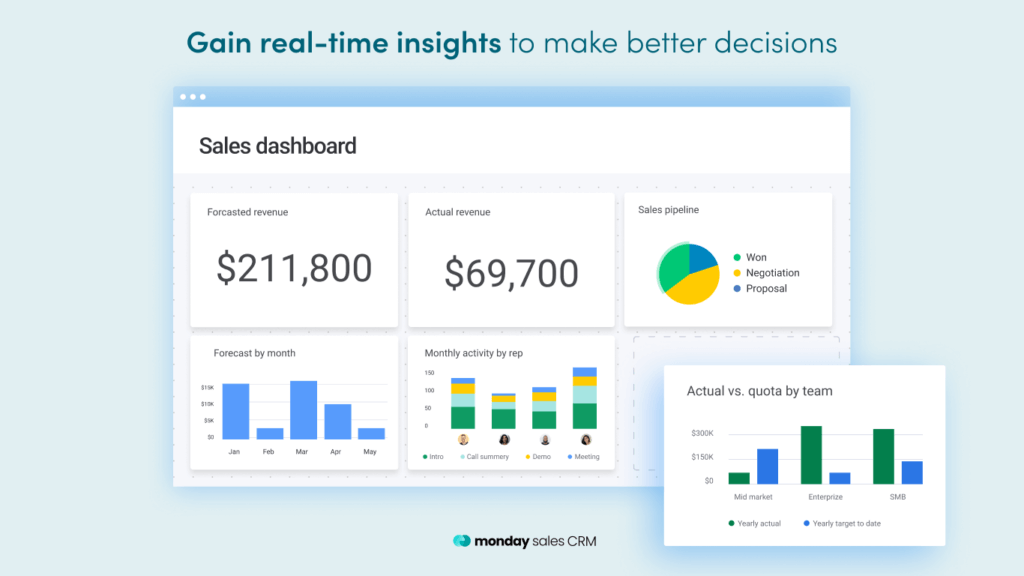
monday CRM stands out for its flexibility, user-friendly interface, and deep customization. Built on the monday Work OS, it lets you create custom boards for pipelines, leads, accounts, onboarding, and post-sale workflows.
For sales managers, the main advantage is visibility. You can build dashboards for pipeline value, deal progress, sales activities, team workload, and forecast status. Automation rules can also help move deals forward, assign follow-ups, notify stakeholders, and reduce repetitive admin work.
monday CRM is especially useful if your team wants a CRM that feels visual, flexible, and connected to broader work management processes.
HubSpot CRM: Best for Growing Teams That Want Sales and Marketing Together
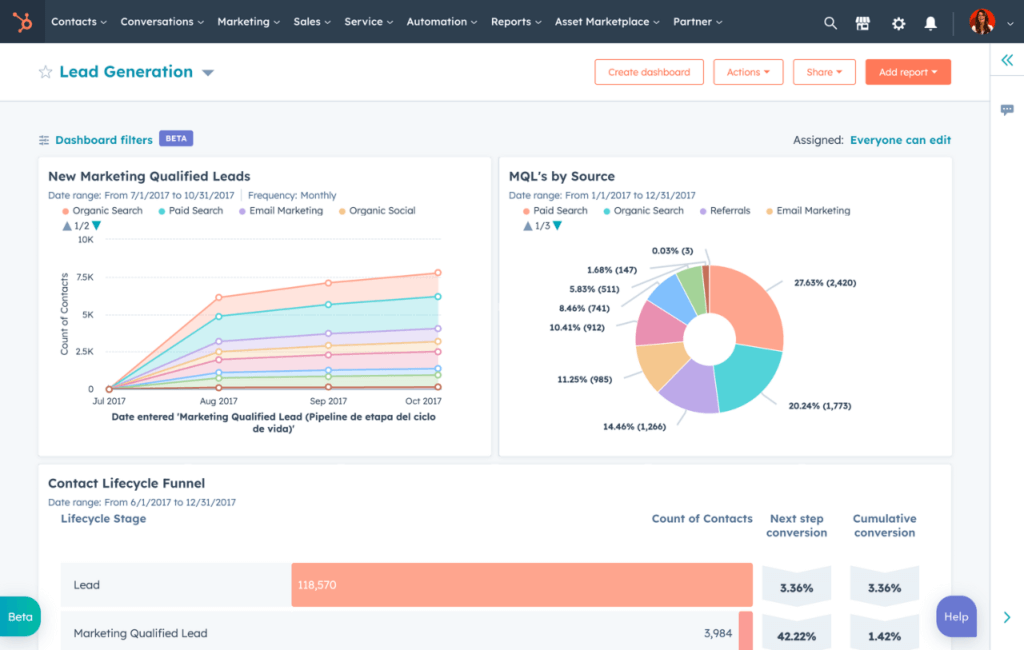
HubSpot CRM is a strong fit for teams that want sales, marketing, and customer communication in one ecosystem. It offers contact management, pipeline tracking, email integration, and reporting, with more advanced automation available in paid tiers.
For sales managers, HubSpot is useful when lead generation and sales follow-up need to work closely together. The platform can help connect website activity, forms, campaigns, and sales outreach, making it easier to see where leads come from and how they move through the funnel.
The main consideration is cost scaling. HubSpot can be easy to start with, but advanced automation, reporting, and larger team needs may require higher-tier plans.
Pipedrive: Best for Visual Pipeline Management
Pipedrive is a strong option for sales teams that want a clean, visual pipeline and a focused sales workflow. Its drag-and-drop pipeline makes it easy to see where every deal stands and what needs to happen next.
For managers, Pipedrive is useful when the main priority is deal movement, follow-up discipline, and sales activity visibility. It is especially practical for small and mid-sized sales teams that do not need a large all-in-one sales and marketing suite.
The main limitation is that it is more focused on sales pipeline management than broader revenue operations. Teams that need advanced marketing automation or customer service workflows may need additional tools.
Quick CRM Comparison for Sales Managers
| Feature Type | monday CRM | HubSpot CRM | Pipedrive |
| Best For | Flexible sales workflows and team visibility | Sales and marketing alignment | Visual pipeline management |
| Ease of Use | Very intuitive and visual | User-friendly with more setup depth | Simple and focused |
| Automation | Custom workflow automations | Powerful workflows in paid tiers | Activity reminders and deal automations |
| Reporting | Custom dashboards for pipeline and team performance | Strong reporting across marketing and sales | Clear sales pipeline and activity reports |
| CRM Adoption Fit | Strong for teams that prefer visual workflows | Strong for teams already using HubSpot tools | Strong for sales teams wanting minimal complexity |
How Should Sales Managers Use CRM Tools Every Week?
A CRM should not only store customer data. It should help managers coach reps, identify risk, prioritize deals, and make better decisions.
How should you run a weekly pipeline review in your CRM?
Start with deals closing this month and next month. Review deal stage, buyer engagement, next step, decision-maker involvement, deal age, and close date accuracy.
For each important deal, ask:
- What changed since the last review?
- What is the buyer’s next confirmed action?
- Who is involved in the decision?
- What risk could stop this deal?
- What support does the rep need?
How should you use CRM dashboards to coach reps?
Use dashboards to find coaching opportunities, not only to inspect performance. A low stage conversion rate may indicate weak qualification. Too many overdue tasks may show poor follow-up discipline. A high number of stale deals may mean the rep is avoiding disqualification.
When dashboard data is tied to coaching, reps see the CRM as a performance tool rather than a surveillance tool.
What CRM data should reps update after every call?
After each meaningful conversation, reps should update the deal summary, next step, close date, stakeholder status, objections, and any change in qualification. This makes pipeline reviews faster and more useful.
Clean notes also protect the business if a rep leaves, changes territories, or hands the account to another team member.
How Should Sales Managers Work With Marketing?
Sales managers cannot manage pipeline quality alone. Marketing influences lead volume, lead source, messaging, and buyer expectations before the sales team ever speaks with a prospect.
How do you define a sales-ready lead?
A sales-ready lead should match your ideal customer profile and show enough intent to justify rep time. That may include company fit, role fit, engagement level, budget potential, urgency, or a clear business problem.
The definition should be documented and shared between sales and marketing. If the definition is unclear, both teams will argue about lead quality instead of improving conversion.
What should sales report back to marketing?
Sales should report which leads convert, which messages resonate, which objections appear often, and which lead sources create real opportunities.
This feedback helps marketing improve targeting, content, and campaigns. It also helps sales trust the leads they receive.
How can CRM data improve campaign quality?
Your CRM can show which campaigns generate qualified pipeline, not just form fills. Use lead source, lifecycle stage, deal value, and closed-won data to help marketing understand what actually produces revenue.
How Do You Manage Remote or Hybrid Sales Reps?
Remote sales management requires visibility without micromanagement. You need clear expectations, shared dashboards, structured communication, and a reliable CRM process.
How do you maintain visibility without micromanaging?
Use dashboards to track outcomes, activities, pipeline movement, and next steps. Avoid asking reps for constant manual updates when the CRM already has the answer.
The rule should be simple: if it matters to the customer, the deal, or the forecast, it belongs in the CRM.
How do you coach remote reps?
Use call recordings, CRM notes, video one-on-ones, and shared deal reviews. Remote coaching should be more structured than office coaching because informal observation is limited.
Ask reps to submit one deal, one call, or one objection each week for review. This keeps coaching focused and practical.
How do you protect team culture in a hybrid sales team?
Create rituals that build connection. Examples include weekly wins, peer learning sessions, virtual deal rooms, and recognition moments. Culture does not happen by accident in remote teams. It needs a cadence.
How Does Technology Streamline Sales Team Management?
Digital tools help sales leaders make data-driven decisions, automate administrative work, and keep distributed teams aligned.
How does real-time performance monitoring help sales managers?
Modern CRMs provide dashboards and reports that update quickly. This helps managers see whether activity levels are healthy, which deals are at risk, and which reps need coaching.
Real-time analytics reduce guesswork. Instead of waiting until the end of the month, you can adjust priorities while there is still time to improve results.
Which tasks should sales managers automate?
Automation should remove repetitive admin work, not replace human selling. Start with tasks that happen often and follow a clear rule.
Good automation examples include lead assignment, follow-up reminders, stale deal alerts, internal notifications, report delivery, and post-sale handoffs.
How does centralized communication improve sales performance?
A CRM gives reps and managers one shared source of truth. Call notes, emails, meetings, deal history, and next steps are easier to find.
This improves collaboration and reduces the risk of lost context when deals move between reps, managers, onboarding teams, or customer success.
How should CRM tools integrate with your sales stack?
Your CRM should connect with the tools your team already uses, including email, calendar, calling, video meetings, marketing automation, proposal software, and accounting systems.
Integrations reduce duplicate data entry and give managers a more complete view of buyer activity.

What Sales Management Trends Matter in 2026?
Sales management is becoming more data-driven, more tool-assisted, and more focused on coaching quality. The managers who adapt will have a major advantage.
How is AI changing sales management?
AI can help summarize calls, identify deal risks, draft follow-up emails, suggest next steps, and surface pipeline patterns that managers may miss. This can save time and make coaching more specific.
However, AI should support human judgment, not replace it. The best use of AI is to reduce admin work and help managers spend more time coaching and strategizing.
Why is CRM data quality becoming more important?
AI, forecasting, automation, and reporting all depend on reliable data. If CRM data is incomplete or outdated, every dashboard and prediction becomes less trustworthy.
Sales managers should treat data quality as part of the sales process, not an administrative afterthought.
Why are coaching and rep development more important now?
Buyers are more informed, sales cycles can be more complex, and many teams are expected to do more with leaner resources. Reps need better coaching, not just higher activity targets.
Managers who build structured coaching habits can improve performance without creating constant pressure.
FAQs
What is sales team management?
Sales team management is the process of leading, coaching, tracking, and enabling sales reps so they can reach revenue goals consistently. It includes hiring, onboarding, pipeline management, CRM usage, sales coaching, forecasting, and performance improvement.
What does a sales manager do every day?
A sales manager reviews pipeline progress, coaches reps, monitors CRM activity, removes deal blockers, analyzes performance data, runs team meetings, reports forecasts, and helps reps focus on the highest-value opportunities.
How do you manage a sales team effectively?
To manage a sales team effectively, set clear goals, define a repeatable sales process, coach reps consistently, keep CRM data clean, review pipeline health weekly, and use sales tools to reduce admin work and improve visibility.
What are the most important sales manager KPIs?
Important sales manager KPIs include pipeline value, pipeline coverage, win rate, stage conversion rate, sales velocity, average deal size, forecast accuracy, lead response time, CRM data completeness, and quota attainment.
How do you improve CRM adoption in a sales team?
Improve CRM adoption by simplifying required fields, training reps on practical workflows, automating repetitive tasks, showing how CRM data helps them close deals, and making CRM updates part of your sales process.
How often should sales managers run pipeline reviews?
Most sales managers should run pipeline reviews weekly. Focus on deals closing soon, stalled opportunities, next steps, deal risk, close date accuracy, and whether each opportunity has clear buyer engagement.
How do you coach an underperforming sales rep?
Start by diagnosing the cause of underperformance. Review activity levels, conversion rates, call quality, follow-up habits, pipeline quality, and product knowledge. Then create a focused coaching plan with specific behaviors and review dates.
How do you motivate sales reps without creating toxic competition?
Motivate sales reps by balancing individual incentives with team goals, recognizing helpful behaviors, providing growth opportunities, celebrating wins, and creating a culture where reps share what works instead of protecting information.
What should a sales team meeting include?
A sales team meeting should include recent wins, pipeline movement, stuck deals, common objections, skill practice, and clear next actions. Avoid using team meetings for private performance criticism.
What is the best CRM for sales team management?
The best CRM depends on your team. monday CRM is strong for flexible workflows and dashboards, HubSpot CRM is strong for sales and marketing alignment, and Pipedrive is strong for visual pipeline management.
How do you manage remote sales reps?
Manage remote sales reps with clear expectations, shared CRM dashboards, structured one-on-ones, call reviews, async updates, and team rituals that support visibility and culture without micromanagement.
How can AI help sales managers?
AI can help sales managers summarize calls, identify deal risks, draft follow-ups, analyze pipeline trends, improve forecasting, and prepare more targeted coaching conversations. It works best when paired with clean CRM data and human judgment.
Internal Resources and Further Reading
- Guide to Choosing the Best CRM for Sales Teams – A detailed comparison of leading CRM platforms with focus on sales features.
- How to Build a High-Performing Sales Pipeline – Step-by-step instructions for designing and optimizing your pipeline.
- CRM Sales Forecasting Explained – Learn how to use CRM data to predict revenue accurately.
- CRM SaaS Tools Guide – Explore the advantages of cloud-based CRM and compare top providers.
Conclusion: Build a Sales Team System That Reps Can Actually Follow
Effective sales team management requires more than motivation and quota tracking. You need a clear process, consistent coaching, reliable CRM data, healthy pipeline habits, and tools that help reps spend more time selling.
The strongest sales managers create systems that make success repeatable. They define what a qualified opportunity looks like, coach reps based on evidence, run pipeline reviews with clear deal criteria, and use CRM dashboards to guide decisions before problems become missed targets.
A modern CRM, whether monday CRM, HubSpot CRM, Pipedrive, or another platform, should support that system. The best tool is the one your team will use consistently, your managers can trust, and your leadership can rely on for accurate forecasting.
If you want to improve sales team performance in 2026, start with the basics: clean pipeline data, focused coaching, clear goals, and a CRM process that helps your reps move the right deals forward.