
Introduction
SEO and competitor research can quickly become difficult to manage when you are working across keyword discovery, rank tracking, PPC analysis, backlink research, and ongoing market monitoring. SpyFu takes a more focused approach than many broader SEO suites. It is built primarily for competitive intelligence across both organic search and Google Ads. In this review, you will get a detailed look at SpyFu’s core capabilities, pricing, strengths, weaknesses, and the types of users who are most likely to benefit from it. By the end, you should have a clear understanding of whether SpyFu fits your workflow and budget.
What Is SpyFu?
SpyFu is an SEO and PPC competitor intelligence platform designed to help you uncover the keywords, ads, ranking history, and search strategies that other websites use. It is widely used by marketers, agencies, consultants, and businesses that want clearer visibility into competitor search performance without paying for a much broader enterprise-style marketing platform.
Background and Evolution
SpyFu has been in the search marketing space for years and has built a strong reputation around competitor keyword research and PPC intelligence. What once focused mainly on domain research and ad visibility has expanded to include keyword tracking, reporting, ranking history, AI-assisted workflows, and more polished competitive research tools. In 2026, SpyFu continues to position itself as a practical and value-oriented platform for marketers who want SEO and PPC intelligence, especially around competitor behavior and historical ad data.
Target Users and Use Cases
SpyFu is suitable for several types of users:
- SEO professionals and consultants – You can use it for competitor keyword discovery, rank tracking, keyword gap analysis, and domain research.
- PPC and growth marketers – SpyFu is especially useful when you want to review competitor ad history, paid keywords, and Google Ads strategy.
- Marketing teams and agencies – White-labeled reports, tracked keyword projects, and broader competitor visibility make it useful for client work.
- Small and mid-sized businesses – SpyFu can be a strong fit if you want affordable SEO and PPC intelligence without paying for a more expensive all-in-one suite.
If your main goal is to understand what competitors are doing in organic and paid search, SpyFu can be one of the more practical and cost-effective options in the market.
Key Features
How Does SpyFu Work?
SpyFu focuses on competitor intelligence across SEO and PPC workflows. Below are the main capabilities that define the platform.
Domain Overview and Competitive Research
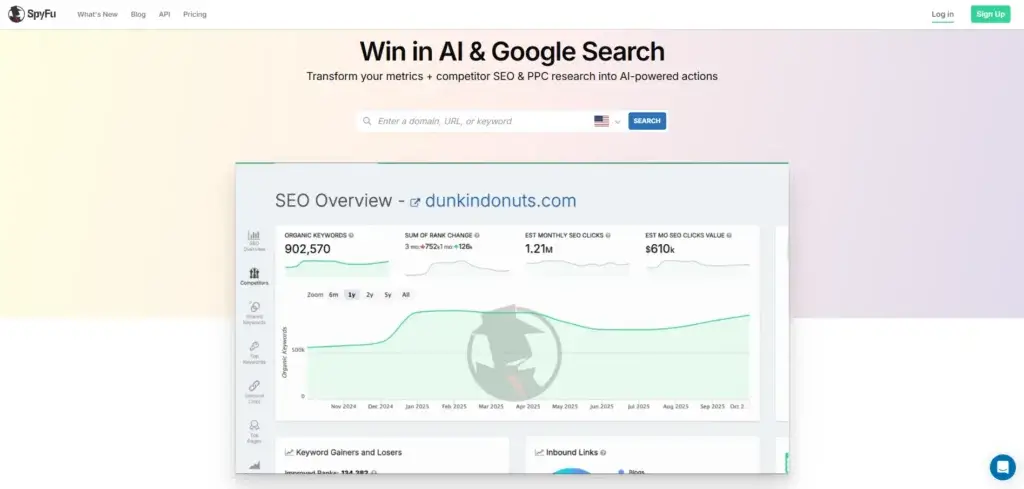
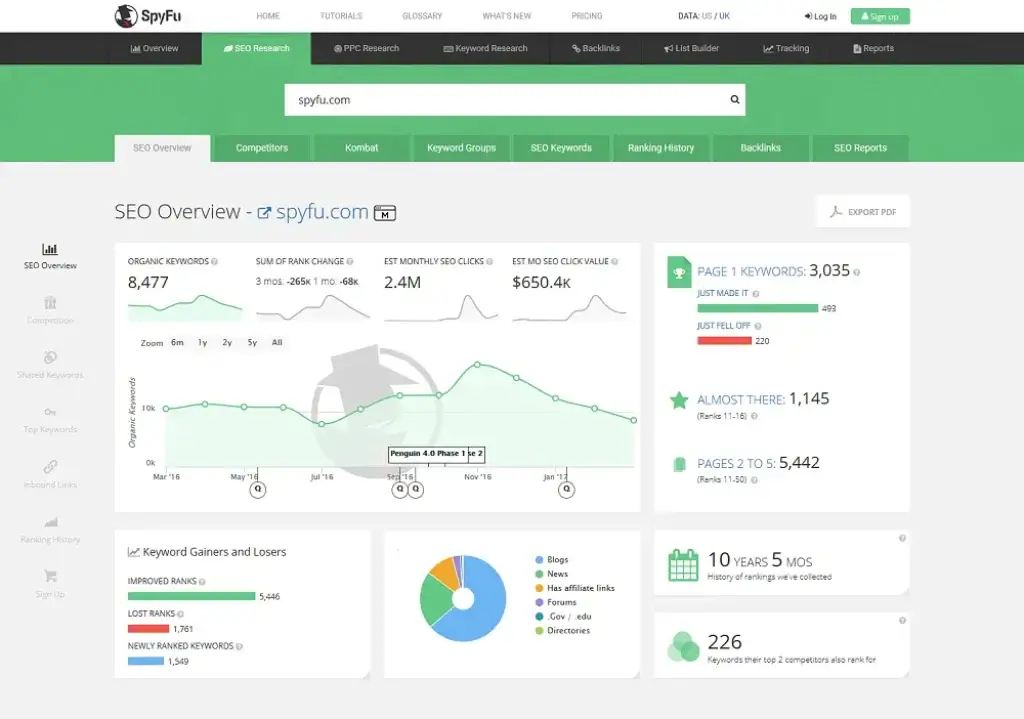
One of SpyFu’s strongest entry points is competitor domain research. You can enter your own website or a competitor’s domain and quickly review ranking keywords, paid keywords, estimated search performance, ranking history, and high-level visibility trends. This makes it useful for benchmarking your own site while also understanding which competitors are driving traffic through SEO or Google Ads.
SpyFu is particularly strong when you want a practical view of what competitors are actually targeting. Instead of only surfacing general metrics, it emphasizes actionable search intelligence such as keyword overlap, ad activity, and long-term ranking behavior. For SaaS businesses, publishers, affiliate sites, and growth teams, this makes the research more strategic and easier to apply.
Keyword Research and Keyword Gap Analysis
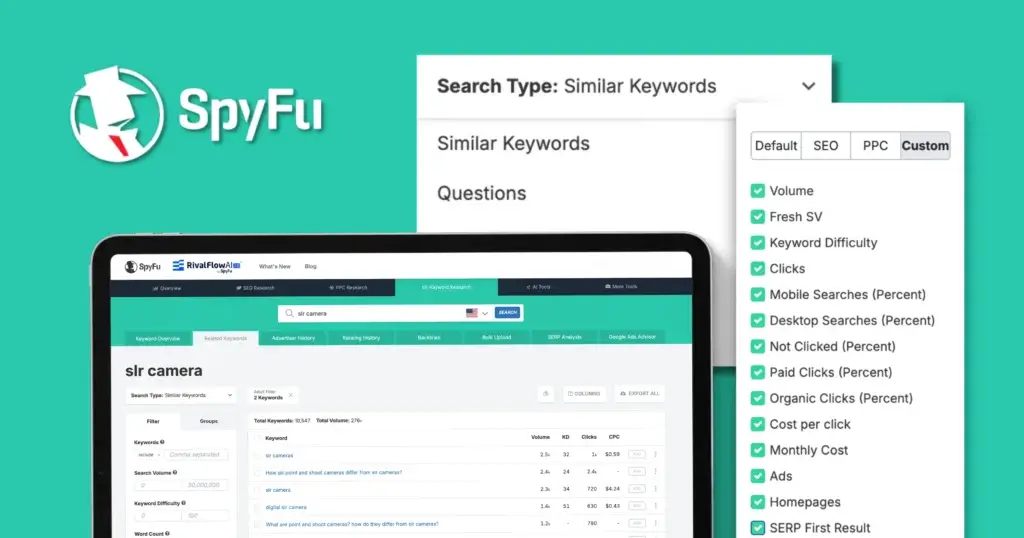
SpyFu includes keyword research tools for both SEO and PPC. You can discover keyword ideas, analyze search volume, review CPC, evaluate ranking difficulty, and study advertiser activity. The platform is especially useful if you want to understand not only which keywords matter in your niche, but also who is actively competing for them in organic or paid search.
A major advantage is its keyword comparison workflow, which helps you identify terms your competitors rank for or buy that you are not yet targeting. This is highly useful when planning content, expanding landing pages, or uncovering missed search opportunities. It is one of the reasons SpyFu can deliver strong value even if you are working with a smaller budget than you would need for larger SEO suites.
PPC Research and Ad History
PPC competitor analysis is one of SpyFu’s strongest differentiators. You can review the paid keywords a competitor targets, the ads they have run, and how their messaging has changed over time. This is valuable if you manage Google Ads campaigns and want to learn from competitor positioning, offer strategy, and landing page direction instead of relying only on your own testing.
Historical ad visibility is especially useful because it adds context that many lighter tools do not offer. When a competitor keeps running similar ads or targeting the same keyword groups over long periods, that can be a signal that those campaigns are working. For performance marketers and PPC teams, this makes SpyFu much more than a simple keyword research tool.
Rank Tracking and Ongoing Monitoring
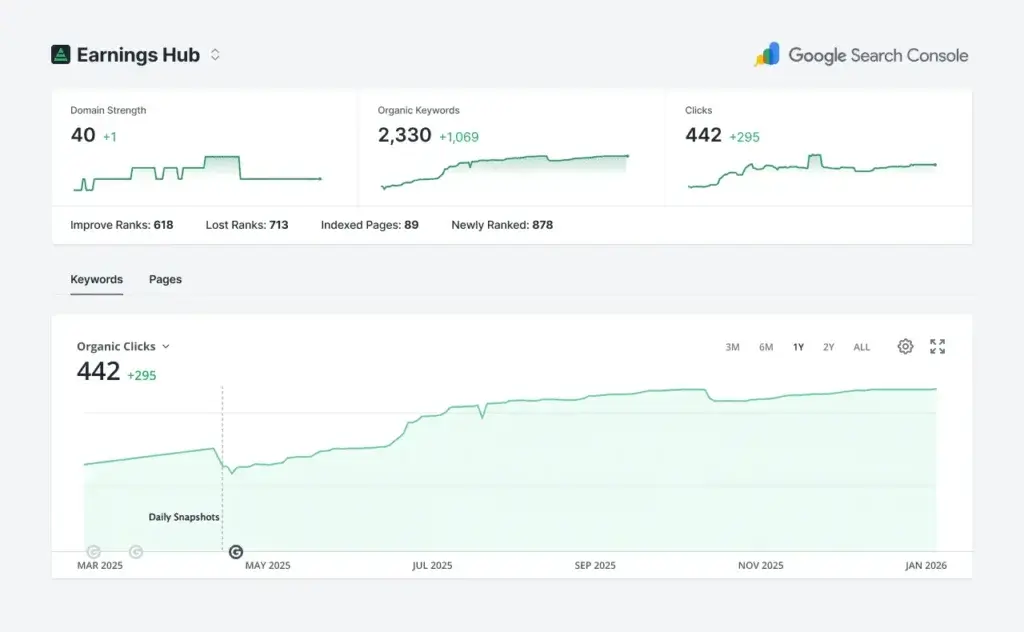
SpyFu also includes rank tracking so you can monitor your own search visibility over time. Tracked keyword limits vary by plan, but the core value remains the same, it helps you follow ranking changes, measure progress, and understand how your site performs against competitors. This makes the platform more useful for ongoing SEO workflows rather than one-time research only.
If you manage multiple campaigns or client websites, tracking projects help organize data more effectively. While the reporting is not as broad as some higher-end suites, it gives you enough visibility for practical monitoring and recurring performance checks.
Backlink Research and Ranking History
SpyFu includes backlink-oriented research and ranking history tools that help you understand how competitors build authority and where visibility changes may have occurred over time. This can be useful for identifying possible link opportunities, reviewing search momentum, and spotting sites that are gaining ground in your category.
That said, backlink analysis is not SpyFu’s strongest area compared with tools like Ahrefs. It is useful for context and directional insight, but it is usually not the main reason marketers choose the platform.
AI Features and Newer Tools
SpyFu has also expanded into AI-related workflows. This includes RivalFlow for content improvement, ChatGPT integration, and AI Brand Monitoring. These additions make the platform more forward-looking and help it stay relevant as search and content workflows increasingly intersect with AI-assisted research and optimization.
These features add value, but they should not be the only reason to buy the product. SpyFu remains strongest as a competitor intelligence platform first, with AI tools acting as useful extensions rather than the core of the platform.
Pros and Cons
Benefits and Limitations of Using SpyFu
Positive
✅ Strong PPC intelligence
✅ Good value for the price
✅ Useful historical ad data
✅ Actionable competitor workflows
Negative
❌ Narrower than larger SEO suites
❌ Limited technical SEO depth
❌ Backlink tools are not top-tier
❌ Lower plans are built for small teams
Strengths and Benefits
SpyFu’s biggest advantage is focus. It is built around competitor intelligence in SEO and PPC, and that makes it especially attractive if you care more about practical research than tool sprawl.
- Strong PPC intelligence – SpyFu is one of the more practical tools for reviewing paid keywords, competitor ads, and long-term ad history.
- Good value for the price – Its pricing is more accessible than many premium SEO suites, especially for smaller teams and consultants.
- Useful historical ad data – Ranking history and ad history give you helpful context instead of only showing current snapshots.
- Actionable competitor workflows – The platform is built to help you identify opportunities you can use in content strategy, PPC planning, and market analysis.
Limitations and Drawbacks
SpyFu is strong in its niche, but it is not the perfect fit for everyone. Here are the main issues to keep in mind:
- Narrower than larger SEO suites – SpyFu does not match Semrush in overall platform breadth or marketing workflow depth.
- Limited technical SEO depth – If you need deeper site audits or stronger technical diagnostics, you may still need another tool.
- Backlink tools are not top-tier – Backlink research is useful for context, but it is not the platform’s strongest competitive edge.
- Lower plans are built for small teams – The lower tiers are better suited to solo users or very small teams than larger organizations.
Competitors
Competitor Alternatives to SpyFu
SpyFu competes with several well-known SEO and competitive intelligence platforms. Semrush, Ahrefs, and Similarweb are among the most common alternatives, each with a different emphasis.
| Feature Type | SpyFu | Semrush | Ahrefs | Similarweb |
| Core focus | SEO and PPC competitor intelligence | SEO, PPC, content, competitor intelligence | SEO and backlink analysis | Traffic and market intelligence |
| Best for | Value-focused competitor research | Teams needing broader marketing insight | Users focused on SEO depth and backlinks | Businesses needing traffic source and market data |
| Keyword research | Strong for SEO and PPC | Strong and broader overall | Strong and SEO-focused | More limited for direct SEO workflows |
| Backlink tools | Good | Very good | Excellent | Not a core strength |
| PPC data | Excellent | Strong | More limited | Useful but different focus |
| Site audit | Limited | Robust | Strong | Not a major focus |
| Pricing feel | More accessible | Premium | Premium | Often enterprise-oriented |
Choose SpyFu if your priority is affordable competitor intelligence across SEO and PPC, especially if ad history matters to your workflow. Choose Semrush if you want a broader all-in-one marketing platform. Choose Ahrefs if backlink analysis and deeper SEO workflows matter most. Choose Similarweb if your main focus is traffic source analysis and larger market intelligence rather than direct SEO execution.
Pricing
SpyFu Pricing and Plans
SpyFu uses more accessible pricing than many premium SEO suites, and that is one of its biggest selling points. It typically offers a free version and several paid plans designed for freelancers, growing marketers, and agencies. As you move up the pricing tiers, you get more tracked rankings, more project capacity, more automation, and broader AI-related functionality.
Free Plan
SpyFu offers a free version that allows unlimited searches with limited results. This is useful if you want to explore the platform, validate the interface, and test whether the data is relevant to your workflow before committing to a paid plan.
Basic Plan
The Basic plan is designed for freelancers, consultants, and smaller businesses that need competitor keyword research, PPC analysis, and rank tracking without a large monthly expense. It includes one user, one live tracking project, historical data access, tracked keyword limits, reports, and exports. It can be enough if you are managing only a few sites and do not need deep collaboration features.
Pro + AI Plan
The Pro + AI plan is often the better fit for serious SEO and PPC work because it expands project limits, tracked rankings, reporting, and access to features like API access, RivalFlow, ChatGPT integration, and AI Brand Monitoring. If you create content at scale, manage multiple campaigns, or want stronger ongoing competitor monitoring, this tier is usually more practical than the entry-level plan.
Team / Agency Plan
The highest standard plan is geared toward agencies and larger in-house teams that need more users, broader capacity, higher tracked ranking limits, more automation, and more extensive reporting flexibility. This plan is better suited to teams that actively use SpyFu across multiple projects and client accounts rather than occasional solo research.
Pricing Table
Below is a simplified overview of how SpyFu pricing is generally positioned in the market.
| Plan | Best For | Main Value |
| Free | Testing the platform | Unlimited searches with limited results |
| Basic | Freelancers and small sites | Core competitor intelligence workflows |
| Pro + AI | Growing SEO and PPC teams | Better limits, reporting, and AI tools |
| Team / Agency | Agencies and larger teams | Higher capacity and broader collaboration |
SpyFu can offer strong value if you actively use it for competitor research, PPC analysis, ranking history, and keyword planning together. If you only need one narrow SEO workflow, however, you may not need even this lighter platform in full.
Use Cases
Who Should Use SpyFu?
SpyFu can be highly useful, but the best fit depends on your goals, budget, and search marketing priorities.
SEO Specialists and Content Teams
If your work depends on competitor keyword discovery, topic planning, ranking visibility, and uncovering search gaps, SpyFu is a strong option. It gives you enough depth to support content strategy while also helping you identify ranking opportunities competitors are already capturing.
Agencies and In-House Marketing Teams
SpyFu is especially useful for agencies and lean marketing teams that want strong competitor intelligence without paying premium suite pricing. Instead of relying on one tool for PPC insight and another for SEO competitor discovery, you can centralize a meaningful part of that research inside one platform.
PPC and Performance Teams
Because SpyFu includes strong ad history and paid keyword intelligence, it is more useful for Google Ads research than many SEO-first alternatives. If you care about how competitors advertise, test copy, and sustain paid visibility, SpyFu can be a real advantage.
When SpyFu Might Not Be the Right Fit
SpyFu may not be ideal if you need deeper technical SEO auditing, broader site health monitoring, or top-tier backlink analysis. In those cases, a larger and more comprehensive SEO suite may offer better long-term value. If your workflow is heavily technical or backlink-driven, Ahrefs or Semrush may be the better fit.
Best Practices
Getting Started with SpyFu
To get the most out of SpyFu, follow these best practices:
Start With Real Competitors
Begin by researching the competitors that are closest to you in products, content, or traffic model, not only the biggest brands in the category. This will usually produce more realistic keyword and PPC opportunities you can actually compete for.
Use Keyword Overlap Early
One of the fastest wins in SpyFu is comparing your domain against competitors to identify shared and missing keyword opportunities. This makes your SEO and content strategy more focused and helps you prioritize the terms most likely to matter commercially.
Review Ad History for Messaging Ideas
Do not use SpyFu only to collect keywords. Review how competitors have changed copy, offers, and paid positioning over time. This can give you a clearer idea of what messages they continue using because those ads likely performed well enough to keep running.
Track Focused Keyword Sets
Instead of importing every possible keyword, focus your tracked ranking projects on the terms that align most closely with revenue, category positioning, or content priorities. This keeps reporting cleaner and gives you more useful trend visibility.
Pair SpyFu With Other Tools if Needed
SpyFu works best when its strengths match your main needs. If technical audits, backlink depth, or broader SEO operations matter heavily to your workflow, use SpyFu alongside another platform rather than expecting it to cover every possible search marketing task.
Conclusion
Final Thoughts
⭐ Overall Rating: 8.5/10
SpyFu is one of the more practical and cost-effective SEO and competitive intelligence platforms available. It stands out because it combines useful competitor keyword research, strong PPC analysis, ranking history, and ad visibility tools in a more focused product than many broader SEO suites. This makes it especially valuable if your work depends on understanding how competitors win traffic in both organic and paid search.
At the same time, SpyFu is not the broadest or deepest SEO platform on the market. Its focus is a major strength, but it also means lighter technical SEO coverage and less depth in some areas like backlink analysis. If you need affordable competitor intelligence and strong PPC insight, SpyFu is a compelling choice. If your workflow is broader or more technical, you may get better value from a larger all-in-one suite.
Have more questions?
Frequently Asked Questions
1. What is SpyFu mainly used for?
SpyFu is mainly used for competitor keyword research, PPC analysis, ranking history, ad history, and search strategy discovery. It is designed for marketers who want to understand how competitors perform across organic and paid search.
2. Is SpyFu only for SEO?
No. While SpyFu supports SEO research, one of its strongest areas is PPC competitor intelligence. That makes it especially useful for marketers who want visibility into both organic and paid search strategies.
3. Is SpyFu good for competitor analysis?
Yes. Competitive research is one of SpyFu’s core strengths. You can review keyword overlap, paid keywords, historical ad activity, and broader domain-level search visibility to understand how rivals compete.
4. Is SpyFu worth it for small businesses?
It can be, especially if your business depends on search traffic and competitor monitoring. Compared with larger suites, SpyFu usually offers a more accessible entry point for useful SEO and PPC intelligence.
5. How does SpyFu compare to Semrush?
SpyFu is generally more focused and more affordable, especially for SEO and PPC competitor intelligence. Semrush is broader overall and stronger for technical SEO, content workflows, and wider digital marketing operations.
6. Does SpyFu help with content strategy?
Yes. SpyFu can support content planning through competitor keyword discovery, keyword gap research, ranking history, and topic opportunity analysis. It is particularly helpful when you want to base content decisions on what already works in your market.
7. Can agencies manage multiple clients in SpyFu?
Yes. Agencies can use SpyFu for multiple projects, tracked rankings, reports, and white-labeled deliverables. The real limitation depends more on the plan tier than on the overall workflow.
8. Is SpyFu difficult to learn?
SpyFu is generally easier to approach than some broader SEO suites because it is more focused. Once you understand its competitor research workflows, it is fairly straightforward to use.
9. Does SpyFu include technical SEO tools?
SpyFu is not primarily a technical SEO platform. It is more useful for competitor research, keyword planning, PPC intelligence, and rank monitoring than for deep technical auditing.
10. Who should not choose SpyFu?
You may want to skip SpyFu if you need deeper technical SEO coverage, stronger backlink analysis, or a broader all-in-one marketing platform. In those cases, a more comprehensive SEO suite may be a better match.