
Introduction
SEO and competitive research can quickly become overwhelming when you are working across keyword research, rank tracking, backlink monitoring, technical SEO, and competitor intelligence. Semrush positions itself as an all-in-one platform that helps you manage these tasks from one place. In this review, you will get a detailed look at Semrush’s core capabilities, pricing, strengths, limitations, and the types of users who will benefit most from it. By the end, you should have a clear understanding of whether Semrush fits your workflow and budget.
What Is Semrush?
Semrush is a digital marketing platform focused on SEO, PPC, content marketing, competitor research, and online visibility. It is widely used by marketers, agencies, publishers, and in-house teams that need reliable keyword data, competitive insights, site audit tools, backlink analysis, and performance tracking. Over time, the platform has expanded beyond traditional SEO and now includes features for AI visibility, market analysis, and broader digital marketing intelligence.
Background and Evolution
Semrush was founded in 2008 and has grown from a search analytics tool into a much broader marketing intelligence platform. What once centered mainly on keyword and domain research now includes position tracking, backlink auditing, traffic analysis, content optimization, advertising research, and AI-related visibility tools. In 2026, Semrush continues to position itself not only as an SEO platform, but also as a competitive intelligence solution for brands that want to understand both search performance and market dynamics.
Target Users and Use Cases
Semrush is suitable for several types of users:
- SEO professionals and consultants – You can use it for keyword research, technical audits, backlink analysis, and rank tracking across multiple projects.
- Marketing teams and agencies – The platform is especially useful when you need competitive analysis, reporting, collaboration, and multi-project visibility.
- Content teams and publishers – Semrush helps you find keyword opportunities, evaluate search intent, and optimize content planning.
- PPC and growth marketers – Advertising research, competitor ads, and paid keyword data make it useful beyond organic SEO.
If you need one platform that combines SEO research with competitor intelligence and visibility monitoring, Semrush is one of the strongest options in the market. If your needs are very basic, however, it may feel larger and more expensive than necessary.
Key Features
How Does Semrush Work?
Semrush covers a wide range of SEO and competitive intelligence workflows. Below are the main capabilities that define the platform.
Domain Overview and Competitive Research
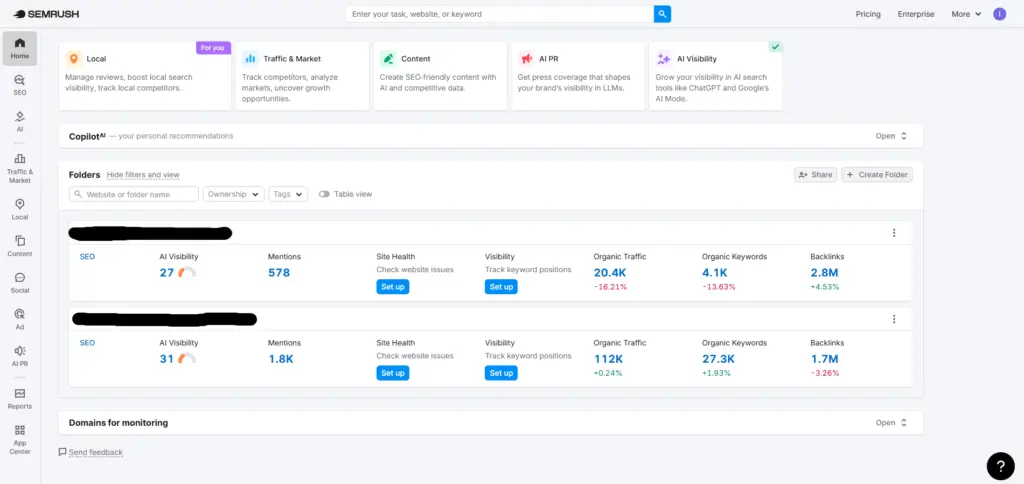
One of Semrush’s strongest entry points is its Domain Overview tool. You can enter your own site or a competitor’s domain and quickly see estimated organic traffic, paid traffic, backlinks, ranking keywords, top-performing pages, competitor sites, and authority-related metrics. This makes it useful for both benchmarking your own performance and understanding how other brands grow their search visibility.
Semrush also adds visual competitive mapping and traffic trend views, which help you identify whether a competitor is growing, losing momentum, or gaining visibility in specific markets. For marketers working in SaaS, affiliate, or content-heavy businesses, this can be especially valuable when analyzing who is winning in a category and where the opportunities are.
Keyword Research and Keyword Gap Analysis
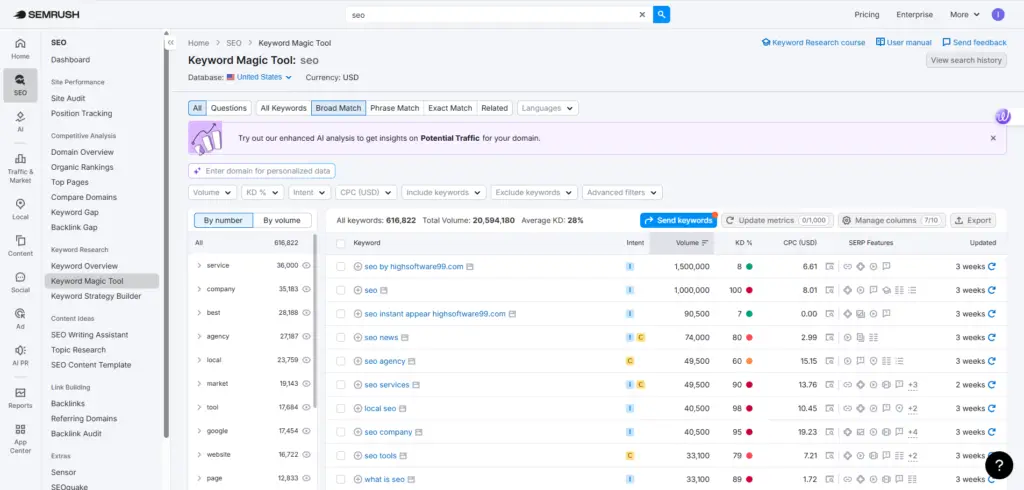
Semrush’s keyword research toolkit is one of the main reasons many marketers subscribe. You can discover keyword ideas, review search intent, estimate keyword difficulty, analyze SERP features, and uncover related terms through the Keyword Magic Tool. Filters help narrow results by volume, difficulty, intent, and other criteria, which makes large keyword sets easier to work with.
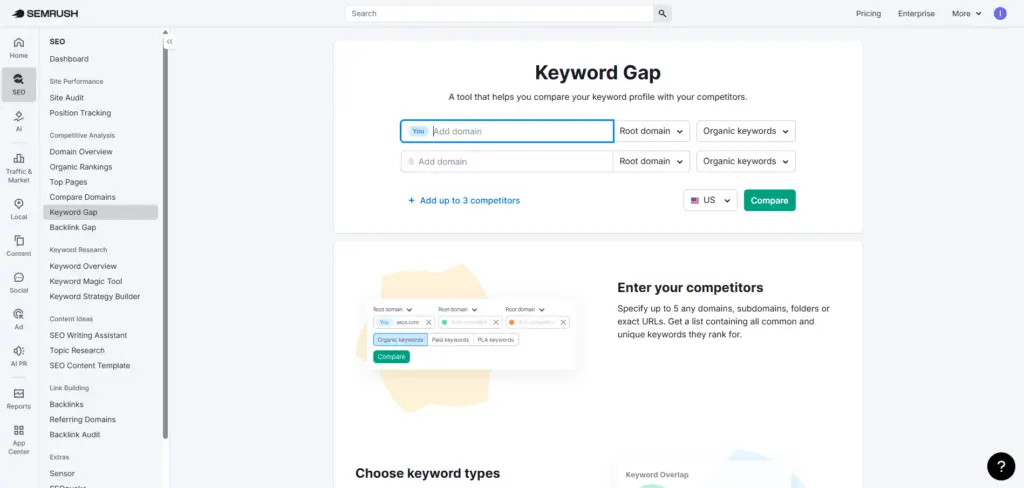
A standout advantage is its keyword gap functionality. You can compare your domain against competitors to find terms they rank for that you do not. This is extremely useful when building content calendars, improving category pages, or expanding into new topic clusters. Semrush also includes personalized keyword difficulty in some workflows, which gives you a more practical idea of whether your specific site can compete.
Position Tracking and SERP Monitoring
Semrush’s Position Tracking tool helps you monitor ranking changes over time for target keywords. You can track performance by location, device, and search engine, which is important if you manage campaigns in multiple countries or need local SEO visibility. The reporting is visual and easy to scan, which helps you spot gains, losses, and overall search trends without digging through raw exports.
The platform also helps you review SERP features such as featured snippets, AI overviews, and other visibility elements that affect click-through opportunity. If your strategy depends on staying visible in more complex search results, this feature adds practical value beyond simple rank tracking.
Backlink Analytics and Link Building
Backlink analysis is another core area where Semrush performs well. You can review referring domains, anchor text distribution, new and lost backlinks, toxic link signals, and link gap opportunities. This helps you understand how strong a site’s off-page profile is and where competitors may have authority advantages.
Semrush also includes outreach-oriented link-building workflows, which make it more than a passive backlink checker. Instead of only showing you data, it helps you move into action by identifying prospects and organizing outreach opportunities. That said, some users may still prefer Ahrefs when backlink analysis is their top priority.
Site Audit and Technical SEO Tools
For technical SEO, Semrush provides a strong site auditing tool that helps you uncover crawl issues, broken links, duplicate content, Core Web Vitals concerns, HTTPS problems, redirect issues, and more. The audit dashboard organizes findings clearly, making it easier to prioritize fixes by severity.
This is especially useful if you manage larger sites or publish content frequently. Instead of relying on separate tools for every technical check, you can centralize much of your ongoing site health monitoring inside Semrush. For teams that want one platform for both technical and editorial SEO, this is a major benefit.
AI Visibility and Emerging Search
Semrush has also invested in AI visibility features that help you understand how brands appear in AI-generated search experiences. This includes monitoring brand mentions and visibility patterns across selected AI-related environments. It adds a forward-looking layer that many older SEO tools did not originally include.
This area is still evolving, so it should not be the only reason you buy Semrush. Still, if you are actively thinking about how AI summaries and answer engines affect your traffic, it is a useful addition that aligns with where search is heading.
Traffic Analytics, PPC, and Market Intelligence
Semrush goes further than many traditional SEO platforms by providing broader traffic and advertising intelligence. Its Traffic Analytics and advertising research tools help you estimate where competitor traffic comes from, review channel distribution, explore paid keyword data, and analyze live ads. This makes the platform more suitable for growth marketers, performance teams, and businesses that combine organic and paid strategies.
If you only need pure SEO data, some of these features may feel secondary. But if you work in B2B SaaS, affiliate publishing, ecommerce, or lead generation, having both organic and paid competitive intelligence inside one platform can save time and reduce the need for multiple subscriptions.
Pros and Cons
Benefits and Limitations of Using Semrush
Positive
✅ Strong keyword research
✅ Broad competitor intelligence
✅ Robust site auditing
✅ Good reporting depth
Negative
❌ Expensive for small users
❌ Only one seat per core plan
❌ Steeper learning curve
❌ Add-ons can raise total cost
Strengths and Benefits
Semrush’s biggest advantage is breadth. It combines keyword research, competitor tracking, backlink monitoring, technical SEO, PPC intelligence, and reporting into one platform. This makes it particularly attractive if you want to reduce tool sprawl and work from a unified data source.
- Strong keyword research – The filtering options, keyword gap reports, intent data, and keyword discovery workflows are excellent for content planning and SEO strategy.
- Broad competitor intelligence – You can analyze traffic trends, paid search activity, keyword overlap, and domain-level visibility in one place.
- Robust site auditing – Technical SEO monitoring is detailed enough for ongoing optimization without needing a completely separate auditing workflow.
- Good reporting depth – Visual reports and ranking trend dashboards make it easier to present findings to stakeholders or clients.
Limitations and Drawbacks
Semrush is powerful, but it is not the perfect fit for everyone. Here are the main issues to keep in mind:
- Expensive for small users – For freelancers, small websites, or new businesses, the cost can be difficult to justify compared with lighter tools.
- Only one seat per core plan – This can become frustrating for teams because additional users increase the real cost quickly.
- Steeper learning curve – The platform includes a huge amount of data and functionality, which can feel overwhelming during onboarding.
- Add-ons can raise total cost – Depending on your needs, extra toolkits or expanded capabilities can make Semrush significantly more expensive over time.
Competitors
Competitor Alternatives to Semrush
Semrush competes with several well-known SEO and competitive intelligence tools. Ahrefs and Moz are two of the most common alternatives, each with a different emphasis.
| Feature Type | Semrush | Ahrefs | Moz |
| Core focus | SEO, PPC, content, competitor intelligence | SEO and backlink analysis | SEO and rank tracking |
| Best for | Teams needing broad marketing insight | Users focused on backlinks and SEO depth | Smaller teams wanting simpler SEO tools |
| Keyword research | Strong filters and gap analysis | Strong keyword database and content analysis | Solid but less advanced overall |
| Backlink tools | Very good | Excellent | Good |
| PPC data | Strong | Limited compared to Semrush | Not a major focus |
| Site audit | Robust | Strong | Useful for basic to mid-level needs |
| Pricing feel | Premium | Premium | More accessible |
Choose Semrush if you want a broader platform that goes beyond core SEO into competitive intelligence, traffic insight, and paid search research. Choose Ahrefs if backlink analysis and a more SEO-focused workflow matter most. Choose Moz if you prefer a more accessible platform for smaller-scale SEO needs.
Pricing
Semrush Pricing and Plans
Semrush uses premium pricing, and that is one of the biggest factors to consider before subscribing. The platform typically offers several core plans aimed at freelancers, growing marketing teams, and larger organizations. Each step up expands project limits, reporting capacity, tracked keywords, and access to more advanced data and workflows.
Entry-Level Plan
The lowest tier is designed for freelancers, consultants, and smaller businesses that need core SEO functionality such as keyword research, domain analysis, site audits, backlink tracking, and basic reporting. It can be enough if you are managing only a few websites and do not need broad collaboration.
Mid-Tier Plan
The middle plan is often the better value for serious SEO work because it expands project limits and unlocks more advanced capabilities such as historical data and broader content marketing workflows. If you create content at scale or manage multiple domains, this plan is often more practical than the entry level tier.
Advanced or Business Plan
Higher-end plans are geared toward agencies, larger in-house teams, and businesses that need broader limits, API access, more reporting flexibility, and more extensive project management capacity. These plans can be powerful, but the price point means they are best suited to teams that will actively use the platform’s broader intelligence features.
Pricing Table
Below is a simplified overview of how Semrush pricing is generally positioned in the market.
| Plan | Best For | Main Value |
| Entry-level | Freelancers and small sites | Core SEO workflows |
| Mid-tier | Content teams and growing businesses | Better limits and more strategic tools |
| Advanced / Business | Agencies and larger teams | Higher capacity and broader reporting |
Semrush can offer strong value if you actively use several of its tools. If you only need one or two SEO workflows, however, the platform may be more expensive than necessary. The real value improves when you use it for content strategy, technical SEO, competitor intelligence, and performance reporting together.
Use Cases
Who Should Use Semrush?
Semrush can be highly valuable, but the best fit depends on your goals, budget, and level of SEO maturity.
SEO Specialists and Content Teams
If your work depends on keyword discovery, topic planning, rank tracking, and competitor content analysis, Semrush is a very strong option. It gives you enough depth to support editorial strategy while also helping you identify ranking opportunities that competitors are already capturing.
Agencies and In-House Marketing Teams
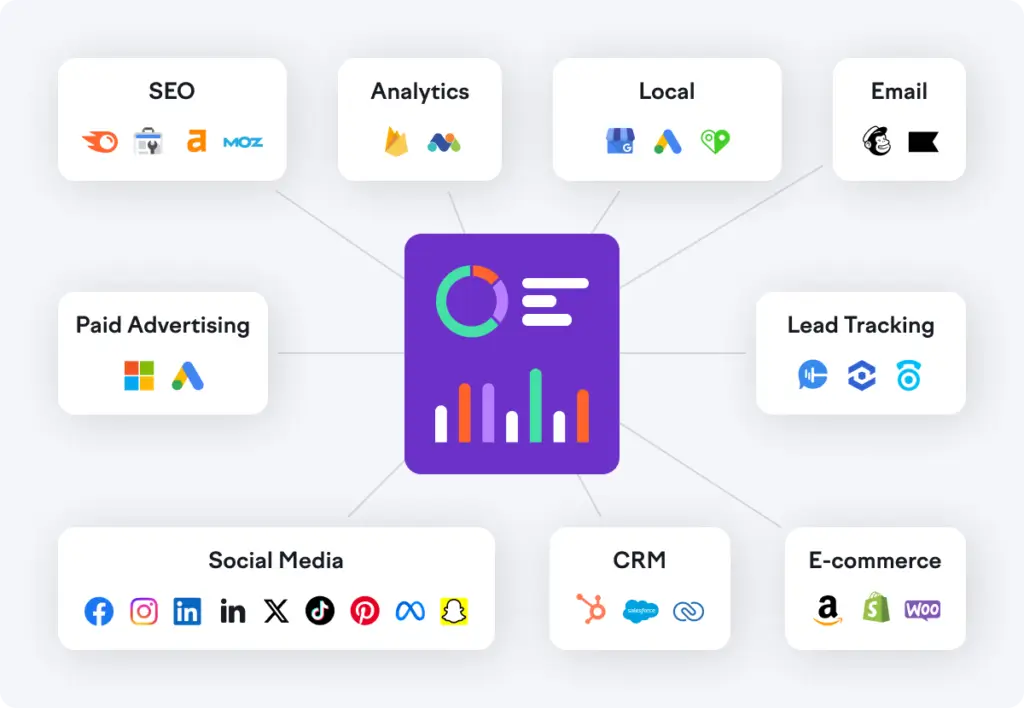
Semrush is especially well suited to agencies and established marketing teams because it supports multiple workflows in one place. Instead of relying on one tool for rankings, another for keyword research, and another for competitor traffic insight, you can centralize much of that work in a single platform.
Growth Marketers and PPC Teams
Because Semrush includes paid search and traffic intelligence data, it is more useful for broader demand generation strategies than many SEO-only alternatives. If you care about both organic and paid competitor behavior, this added context can be a real advantage.
When Semrush Might Not Be the Right Fit
Semrush may not be ideal if you only need simple blog SEO, have a very small budget, or want the most streamlined user experience possible. In those cases, lighter tools or more specialized SEO products may offer better value. If backlink analysis is your main priority above everything else, Ahrefs may still be the better fit for your workflow.
Best Practices
Getting Started with Semrush
To get the most out of Semrush, follow these best practices:
Set Up Projects Properly
Start by creating projects for your domain and key competitors. This helps you organize audits, keyword tracking, and ongoing performance monitoring more effectively. A clean initial setup saves time later and makes reporting much easier.
Build a Keyword Workflow
Use Semrush not only to find high-volume keywords, but also to identify practical opportunities through intent, gap analysis, and difficulty filters. Group keywords by topic clusters so your content strategy becomes more scalable and easier to prioritize.
Combine SEO and Competitor Intelligence
One of Semrush’s biggest advantages is that it does more than rank tracking. Review competitor traffic patterns, paid activity, top pages, and keyword overlap on a regular basis. This gives you stronger context for what is working in your market and where to compete next.
Use Site Audits Consistently
Run technical audits regularly instead of treating them as one-time checks. This is especially important if your site grows quickly, publishes frequently, or depends heavily on organic traffic. Ongoing monitoring helps you catch issues before they affect rankings at scale.
Avoid Data Overload
Semrush provides a lot of information, and it is easy to lose focus. Start with the tools that directly match your priorities, such as keyword research, rank tracking, and site audit. Then expand into advanced workflows like traffic analytics or AI visibility once your main process is stable.
Conclusion
Final Thoughts
⭐ Overall Rating: 9.7/10
Semrush is one of the most complete SEO and competitive intelligence platforms available. It stands out because it combines strong keyword research, competitive analysis, technical SEO tools, backlink monitoring, and PPC insight in one product. This makes it especially valuable if your work goes beyond basic on-page optimization and depends on broader search and market intelligence.
At the same time, Semrush is not the cheapest or simplest option. Its depth is a major strength, but it can also create a steeper learning curve and a higher total cost. If you need an all-in-one platform for serious SEO and competitor research, Semrush is a strong choice. If your needs are lighter or more specialized, you may get better value from a narrower tool.
Have more questions?
Frequently Asked Questions
1. What is Semrush mainly used for?
Semrush is mainly used for keyword research, competitor analysis, site audits, rank tracking, backlink analysis, and broader search marketing intelligence. It is designed for marketers who want to improve visibility and understand how competitors perform across search channels.
2. Is Semrush only for SEO?
No. While SEO is its core strength, Semrush also includes PPC research, traffic intelligence, content marketing tools, and selected AI visibility features. That makes it more useful for broader digital marketing workflows than many SEO-only tools.
3. Is Semrush good for competitor analysis?
Yes. Competitive research is one of Semrush’s strongest areas. You can review keyword overlap, traffic patterns, backlink gaps, paid search behavior, and overall domain visibility to understand where competitors are outperforming you.
4. Is Semrush worth it for small businesses?
It depends on your goals and budget. If your business depends heavily on search visibility and content-driven growth, Semrush can be worth the investment. If your needs are simpler, a lighter and cheaper SEO tool may be enough.
5. How does Semrush compare to Ahrefs?
Semrush is generally stronger as an all-in-one platform for SEO, PPC, and competitor intelligence, while Ahrefs is often preferred by users who prioritize backlink analysis and a more SEO-focused experience.
6. Does Semrush help with content strategy?
Yes. Semrush can support content planning through keyword research, search intent analysis, keyword gap reports, and content optimization tools. It is especially helpful when building topic clusters and editorial roadmaps.
7. Can agencies manage multiple clients in Semrush?
Yes. Agencies can use Semrush to manage multiple domains, track projects, create reports, and monitor competitors. The real limitation is usually plan capacity and seat count rather than capability.
8. Is Semrush difficult to learn?
Semrush has a learning curve because it includes many tools and large amounts of data. Once you build a clear workflow around the features you actually use, it becomes much easier to manage.
9. Does Semrush include technical SEO tools?
Yes. Its site audit tools help identify crawl issues, broken pages, duplicate content, performance problems, and other technical SEO concerns that can affect rankings and site health.
10. Who should not choose Semrush?
You may want to skip Semrush if you have a very small budget, only need basic on-page optimization, or want a simpler interface with fewer features. In those cases, a lighter and more focused tool may be a better match.