Introduction
Adverse media screening is one of the most practical ways to identify risk before it appears in a sanctions list, enforcement database, or formal court judgment.
For compliance teams, this matters because risk often becomes visible in fragments. A company may be mentioned in local negative news. A director may be connected to a corruption investigation. A supplier may appear in litigation reports. An investor may be tied to allegations that have not yet reached a regulator.
That is where adverse media screening becomes valuable. It helps you review public information, negative news, legal mentions, regulatory notices, and other open-source signals that may indicate financial crime, corruption, fraud, sanctions exposure, or reputational risk.
In simple terms, adverse media screening helps answer one important question:
Is there credible public information that should change how we assess this person, company, investor, vendor, or third party?
This guide explains what adverse media screening means, how negative news screening works, why it matters for AML and due diligence, and how compliance software can help you move beyond scattered article searches into structured, source-backed risk findings.
Note: This article is for educational purposes only and is not legal advice. Compliance requirements vary by jurisdiction, industry, and risk profile.
What Is Adverse Media Screening?
Adverse media screening is the process of searching, reviewing, and assessing negative public information about an individual, company, beneficial owner, investor, vendor, customer, or third party.
It is also called negative news screening, AML adverse media screening, or reputational risk screening.
The goal is not simply to find bad press. The goal is to understand whether public information points to a meaningful compliance or business risk.
For example, a compliance team may use adverse media screening to check whether a prospective partner has been linked to:
- Fraud, bribery, corruption, or embezzlement
- Money laundering or terrorist financing concerns
- Sanctions evasion or regulatory violations
- Criminal investigations or civil litigation
- Human rights, environmental, or ESG controversies
- Political exposure or links to high-risk networks
- Bankruptcy, insolvency, or operational instability
Adverse media screening is especially useful because public information often appears before official enforcement action. A subject may not be sanctioned, convicted, or formally charged yet, but credible news coverage may still reveal risk that should trigger deeper review.
This is why adverse media is often used alongside sanctions screening, PEP screening, customer due diligence, enhanced due diligence, and third-party risk management.
What Counts as Adverse Media?
Adverse media can come from many public and semi-public sources. The strongest findings usually come from credible, traceable, and date-stamped sources that can be reviewed later by compliance, legal, or audit teams.
Not every negative mention is equally important. A credible regulatory notice is usually more serious than a vague social media post. A court filing is usually stronger evidence than an anonymous blog comment. A local investigative article may be highly relevant if it includes specific names, dates, allegations, and source references.
Common sources used in negative news screening
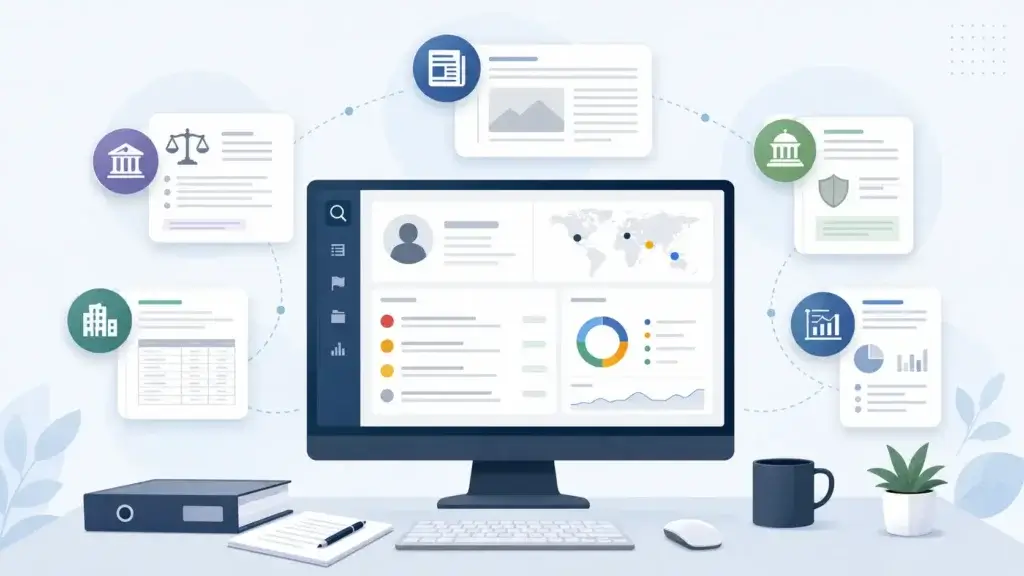
Compliance teams may review several types of sources during adverse media screening:
- News articles from global, national, and local publications
- Regulatory press releases and enforcement notices
- Court records, litigation databases, and public filings
- Company registry records and insolvency notices
- Government reports and public procurement databases
- NGO, watchdog, and investigative journalism reports
- Industry publications and trade media
- Public social media posts, when properly verified
The source matters because adverse media findings can affect onboarding decisions, investment decisions, vendor approvals, and escalation workflows.
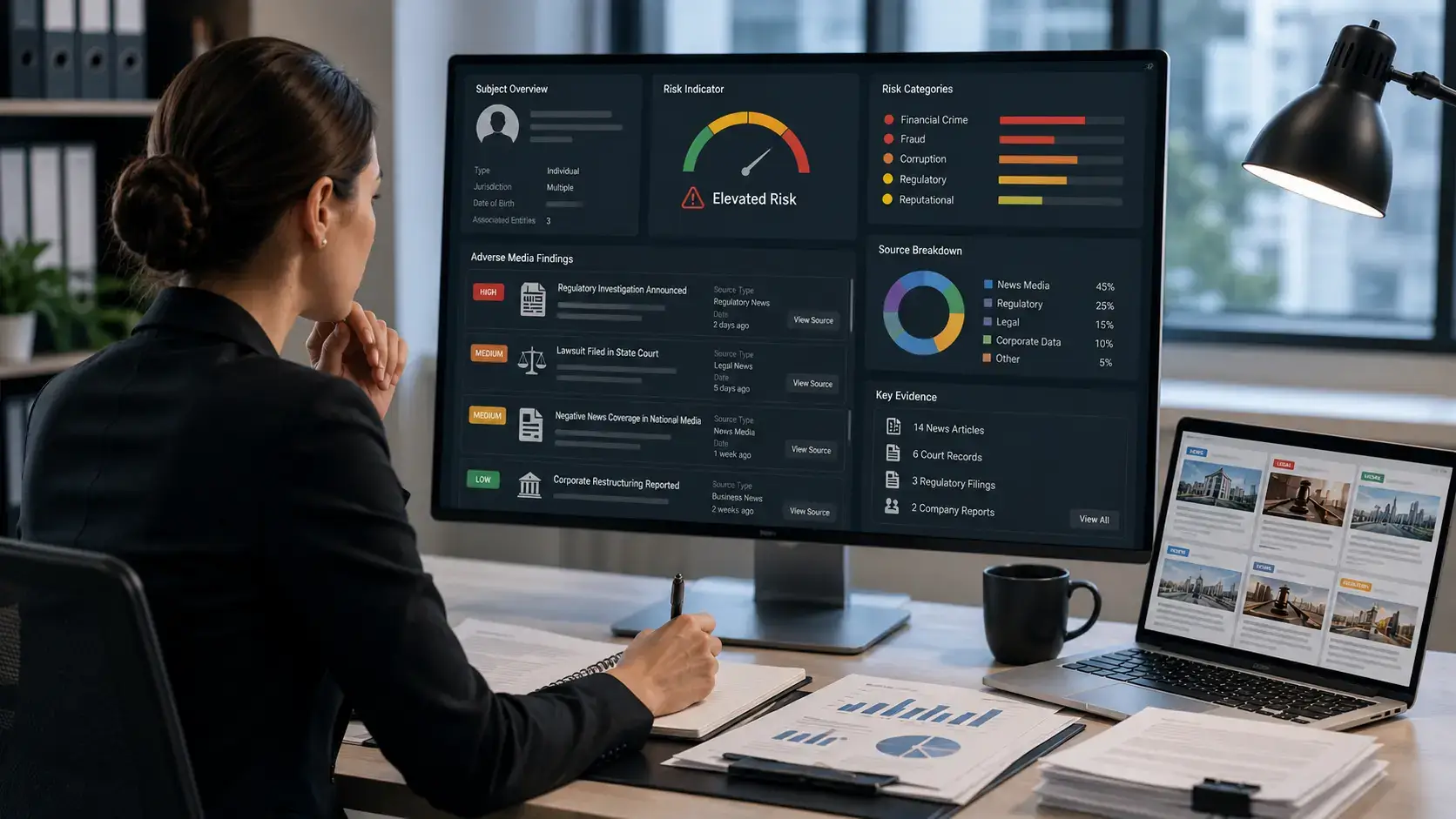
A strong adverse media finding should not only say that negative information exists. It should identify what happened, who was involved, when it occurred, where it was reported, how credible the source is, and whether the information is relevant to the relationship being reviewed.
Why Adverse Media Screening Matters
Adverse media screening matters because it helps you detect risk earlier, protect your organization from reputational damage, and support stronger compliance decisions.
Sanctions lists and PEP databases are important, but they do not capture every risk. A company may be involved in fraud allegations long before it is sanctioned. A politically connected owner may appear in investigative reporting before being named in a formal enforcement action. A vendor may face local corruption claims that do not appear in global watchlists.
Adverse media helps fill that gap.
It identifies early warning signs
One of the biggest advantages of adverse media screening is timing.
Negative news can appear before official databases are updated. This makes adverse media useful as an early warning layer during customer onboarding, investor vetting, vendor review, partner onboarding, M&A diligence, and periodic compliance reviews.
If a target company is repeatedly mentioned in local news for fraud allegations, unpaid wages, procurement irregularities, or regulatory investigations, that information may matter even if no final judgment has been issued.
It strengthens reputational risk screening
Reputational risk can move faster than legal risk. One negative relationship can create questions from customers, investors, regulators, auditors, and the media.
For example, a business may face reputational exposure if it works with a supplier accused of corruption, a broker linked to bribery, or an investor connected to sanctioned networks.
Adverse media screening helps you spot those associations before they become public problems for your own organization.
It supports better AML and due diligence decisions
AML adverse media screening is commonly used to support risk-based decision-making.
If a subject has relevant negative media, your team may decide to request more documentation, escalate to enhanced due diligence, apply ongoing monitoring, reject the relationship, or obtain senior approval before proceeding.
This is especially relevant when screening high-risk third parties, beneficial owners, investors, intermediaries, agents, distributors, professional service providers, and acquisition targets.
Where Adverse Media Fits Into AML, KYC, CDD, and EDD
Adverse media screening is not a standalone compliance program. It is usually one part of a broader risk-based compliance process.
In AML and KYC workflows, adverse media helps you understand whether a customer or related party creates financial crime, reputational, operational, or regulatory risk.
Adverse media and KYC
Know Your Customer, or KYC, focuses on identifying and verifying customers. Adverse media adds context to that identity check.
It helps answer questions such as:
- Has this customer been linked to suspicious activity?
- Are there negative reports about the customer’s business conduct?
- Do beneficial owners appear in credible negative news?
- Is there public information that conflicts with the customer’s profile?
Without adverse media, a company may pass identity checks but still present hidden risk.
Adverse media and customer due diligence
Customer due diligence, or CDD, is about understanding the customer relationship and assessing the level of risk.
Adverse media can help determine whether the customer is low risk, standard risk, or high risk. A clean sanctions result may not be enough if the same customer appears in credible reports involving fraud, corruption, or organized crime links.
For a broader comparison of standard and enhanced review levels, see our guide on CDD vs EDD.
Adverse media and enhanced due diligence
Enhanced due diligence, or EDD, is used when standard checks are not enough. Adverse media is often one of the triggers for EDD.
For example, an adverse media hit may lead your team to investigate ownership, litigation history, source of funds, business relationships, political exposure, sanctions proximity, and prior regulatory issues.
This is why adverse media is particularly important for enhanced due diligence, investor vetting, M&A diligence, and third-party onboarding.
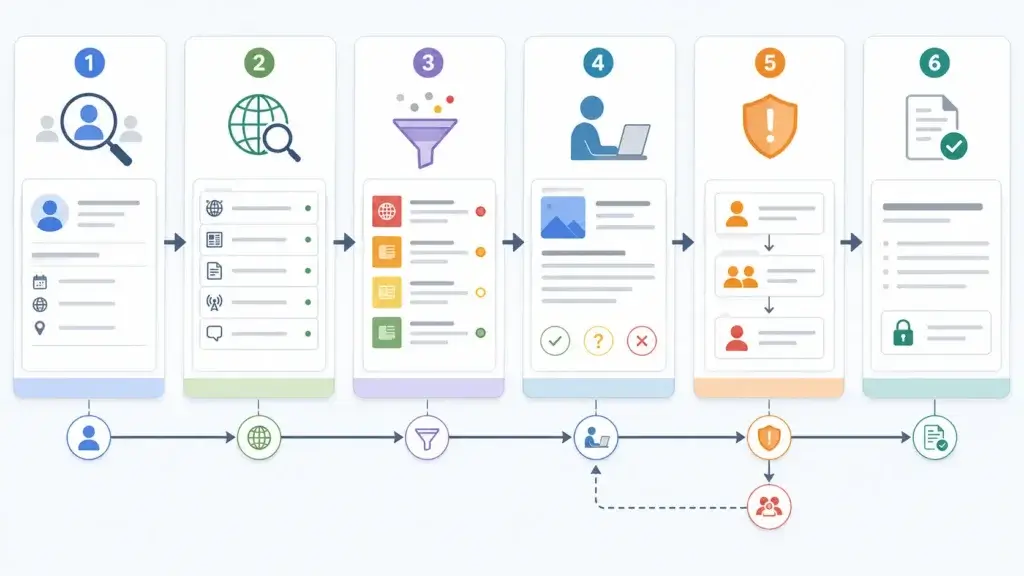
How the Process Works
A good adverse media screening process is structured. It should not depend on a random Google search or one analyst’s personal judgment.
The process should define who gets screened, what sources are checked, what risk terms are used, how findings are reviewed, and how decisions are documented.
Step 1: Define the screening subject
Start by identifying exactly who or what you are screening.
This may include a legal entity, individual, parent company, subsidiary, beneficial owner, director, investor, supplier, broker, agent, distributor, acquisition target, or joint venture partner.
For companies, you may need to screen both the entity and its key people. For high-risk entities, you may also need to screen affiliates, shareholders, and related companies.
Step 2: Set the risk scope
Next, define what types of adverse media matter for the relationship.
A bank may focus heavily on money laundering, sanctions evasion, fraud, and terrorism financing. A private equity firm may care about litigation, regulatory penalties, ownership concerns, and reputational issues. A procurement team may focus on bribery, labor violations, environmental issues, and supplier integrity.
The right scope depends on your industry, jurisdiction, risk appetite, and relationship type.
Step 3: Search across credible sources
The screening process should include reliable sources across relevant jurisdictions and languages.
This is important because risk is often local before it becomes global. A company may be covered in regional media long before it appears in international publications. A director may be named in court filings or local regulatory notices that do not appear in mainstream news.
Step 4: Review relevance and credibility
Not every result is relevant. Adverse media screening often produces false positives, duplicate articles, outdated mentions, unrelated names, and low-quality sources.
Your team should review whether the finding truly relates to the subject, whether the source is credible, whether the issue is recent, and whether the allegation is material to the relationship.
Step 5: Categorize the risk
Once findings are reviewed, classify them by risk category and severity.
Common categories include financial crime, fraud, corruption, regulatory action, litigation, sanctions proximity, ESG controversy, human rights issues, insolvency, political exposure, and reputational concern.
This helps your team decide whether to clear the subject, monitor the relationship, request more information, escalate the file, or reject the relationship.
Step 6: Document the decision
Documentation is critical.
Your compliance file should show what was checked, what was found, what was dismissed, what was escalated, and why the final decision was made.
A simple list of URLs is usually not enough for higher-risk decisions. Stronger documentation includes source names, dates, summaries, relevance notes, confidence levels, and evidence links.
Manual Google Searches vs Database Alerts vs Report-Based Screening
There are several ways to run adverse media screening. The right method depends on your volume, risk level, budget, and documentation needs.
For low-risk checks, a structured manual search may be enough. For ongoing compliance monitoring, database alerts can help. For higher-risk decisions, report-based screening is often stronger because it gives your team a documented risk narrative with evidence.
| Screening Method | Best For | Main Limitation | Typical Output |
| Manual Google searches | Low-volume checks, early research, quick background context | Inconsistent results, weak audit trail, missed local sources | Analyst notes and article links |
| Database alerts | Ongoing monitoring, high-volume screening, repeatable workflows | Can create false positives or shallow alert lists | Matched articles, alerts, and watchlist-style results |
| Report-based adverse media screening | Higher-risk investors, vendors, partners, M&A targets, and third parties | May require more review time than basic alerts | Source-backed findings, risk summary, confidence grading, and evidence file |
Manual searches are useful, but hard to standardize
Manual Google searches can be helpful for early research. They are accessible, flexible, and useful when your team needs a quick sense of public information.
However, manual searches are difficult to scale. Two analysts may search different keywords, use different source types, and reach different conclusions. Search results also change over time, which makes auditability harder.
Manual searches are best used as a starting point, not as the only control for high-risk relationships.
Database alerts are useful, but not always enough
Database-based adverse media screening tools can monitor large volumes of names and generate alerts when negative news appears.
This is useful for compliance monitoring because your team does not need to manually search every subject every week. Alerts can help identify new risk after onboarding.
The challenge is that alerts can be noisy. They may include duplicate articles, unrelated people with similar names, low-risk mentions, or headlines without enough context. Analysts still need to confirm whether the alert is relevant and material.
Report-based screening is stronger for decisions that need evidence
Report-based adverse media screening is most useful when the decision needs to be explained, reviewed, or defended later.
Instead of giving your team only a list of articles, a report should summarize what the findings mean. It should explain the source, the issue, the timeline, the confidence level, and the likely impact on the relationship.
This is where adverse media screening becomes more valuable for investor vetting, M&A diligence, partner onboarding, enhanced due diligence, and third-party risk management.
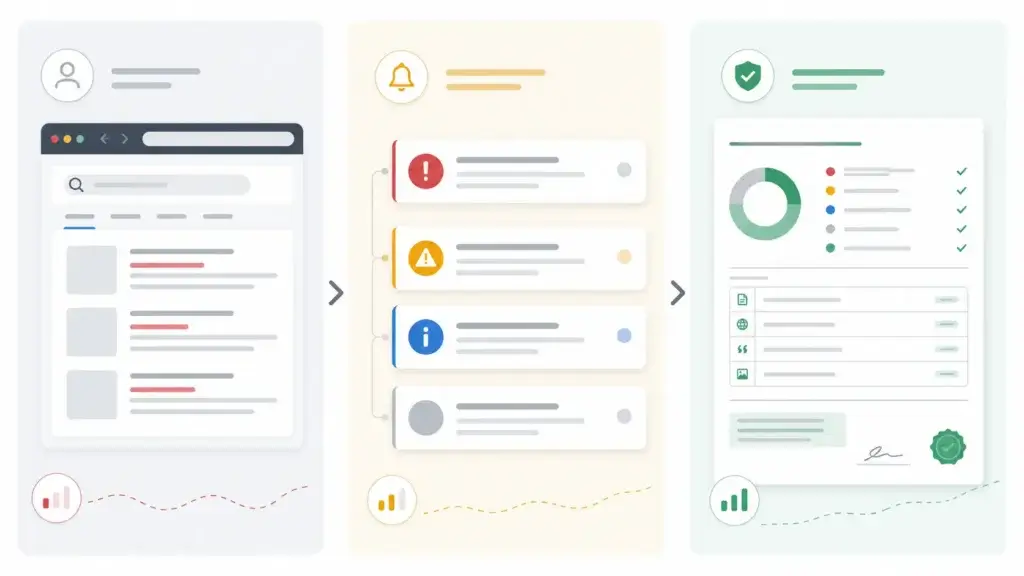
How Software Can Improve Source-Backed Adverse Media Screening
Software can make adverse media screening faster, more consistent, and easier to document.
The most important benefit is not simply automation. The stronger benefit is structured judgment. Compliance teams need to know which findings matter, which findings are weak, and which findings should trigger escalation.
Good adverse media screening software should help you:
- Search across relevant sources and jurisdictions
- Reduce duplicate and irrelevant results
- Connect findings to the correct individual or entity
- Categorize risk by severity and topic
- Preserve source links and timestamps
- Create a clear audit trail for compliance review
- Support ongoing compliance monitoring after onboarding
For teams that only need high-volume alerting, a database-driven screening platform may be enough. For teams that need to make higher-stakes decisions, a structured report can be more useful.
Where DueVestor fits
DueVestor is a practical fit when your team needs source-backed findings, not just a list of articles.
Its reports are designed for situations where adverse media screening needs to be part of a broader due diligence file. That includes investor vetting, M&A diligence, partner onboarding, and third-party review.
Instead of treating adverse media as an isolated alert, DueVestor can help connect negative news screening with sanctions, PEP exposure, ownership, litigation, reputational risk, and a scored risk matrix.
This makes it especially relevant when your team needs a shareable dossier for legal, compliance, leadership, board, or audit review.
For example, a quick compliance summary may be enough for early triage. But if a subject has adverse media, complex ownership, litigation signals, or cross-border risk, a deeper enhanced due diligence report can give your team a clearer view of the full risk picture.
Common Challenges
Adverse media screening is powerful, but it can also be difficult to manage. The main challenge is that public information is messy.
News articles, court records, blogs, and local reports are not structured like sanctions databases. Names may be misspelled. Translations may vary. Sources may repeat each other. Allegations may be unresolved. Multiple people may share the same name.
False positives
False positives happen when a search result appears risky but does not actually relate to the subject you are screening.
For example, an article may mention a person with the same name, a company with a similar name, or a past event that has no connection to the entity being reviewed.
False positives slow down compliance teams and can create unnecessary escalation work.
False negatives
False negatives are more dangerous. They happen when a meaningful risk exists but your process fails to find it.
This may happen when your search does not include local-language media, alternative spellings, subsidiaries, beneficial owners, or related parties.
For global screening, translation and jurisdiction coverage matter. Risk may appear first in a local publication or court notice, not in English-language media.
Weak source quality
Not every source should carry the same weight.
A regulator announcement, court filing, or established news outlet usually deserves more weight than an unverified social media post. That does not mean informal sources should always be ignored, but they should be verified before influencing a major decision.
Context gaps
An adverse media result may be technically relevant but commercially insignificant.
For example, an old article about a minor civil dispute may not matter for a low-risk vendor relationship. However, a recent bribery investigation involving a key beneficial owner may matter a great deal.
Good screening requires context, not just keyword matching.
Best Practices
The best adverse media screening programs are consistent, risk-based, and well documented.
You do not need to apply the same depth of screening to every relationship. Instead, you should match the level of review to the risk of the subject and the importance of the relationship.
Use a risk-based approach
A low-risk customer may only need standard screening. A high-risk investor, intermediary, acquisition target, or politically exposed beneficial owner may require deeper review.
Risk-based screening helps your team allocate more effort to the relationships that could create the greatest financial, legal, or reputational exposure.
Screen both entities and key individuals
Companies do not create risk in isolation. Directors, beneficial owners, executives, agents, brokers, and related entities may all influence the risk profile.
For higher-risk relationships, screen the company and the people behind it.
Use multilingual and jurisdiction-specific searches
Global risk is often reported locally first.
If your subject operates in multiple countries, your screening process should account for local-language media, regional publications, local court records, and jurisdiction-specific regulatory sources.
Document why findings matter
A strong adverse media file does not only list links. It explains relevance.
Your documentation should answer these questions:
- Does the finding match the correct subject?
- Is the source credible and current?
- What risk category does the finding belong to?
- Is the allegation proven, pending, disputed, or historical?
- Does the finding trigger EDD, monitoring, rejection, or approval?
Combine adverse media with other checks
Adverse media should not replace sanctions, PEP, ownership, litigation, or watchlist screening.
It should complement them.
A complete risk picture may include negative news screening, sanctions screening, PEP checks, beneficial ownership review, litigation searches, regulatory enforcement checks, and ongoing compliance monitoring.
Adverse Media Screening Checklist
You can use the following checklist to structure a basic adverse media review.
| Checklist Item | What to Review | Why It Matters |
| Subject identity | Legal name, aliases, spelling variations, registration details | Reduces false positives and missed matches |
| Related parties | Owners, directors, executives, parent entities, subsidiaries | Finds risk connected to control and influence |
| Risk keywords | Fraud, bribery, corruption, sanctions, lawsuit, investigation, penalty | Improves search relevance and coverage |
| Source quality | News outlets, court records, regulators, public filings, local sources | Helps separate credible findings from weak claims |
| Jurisdiction coverage | Countries where the subject operates or is registered | Finds local risk signals before they become global |
| Finding severity | Allegation type, recency, credibility, connection to subject | Supports consistent escalation decisions |
| Documentation | Source link, date, summary, analyst notes, decision outcome | Creates an audit trail for compliance review |
This checklist can be expanded for high-risk subjects. For example, an enhanced due diligence review may also include source of funds, source of wealth, litigation history, ownership mapping, sanctions proximity, and cross-border network analysis.
When Should You Run Adverse Media Screening?
Adverse media screening should be used at the points where risk decisions are made or refreshed.
For many organizations, that means screening at onboarding, during periodic reviews, when a risk event occurs, and before major transactions.
Common use cases
Adverse media is especially useful in the following workflows:
- Customer onboarding for regulated businesses
- Vendor and supplier due diligence
- Investor vetting and fundraising review
- M&A target screening and acquisition diligence
- Partner, broker, agent, and distributor onboarding
- High-risk third-party compliance reviews
- Periodic AML and KYC refreshes
- Ongoing compliance monitoring
The timing should match the risk. A high-risk relationship should not be screened only once and then forgotten. Ongoing monitoring helps identify new adverse media after the relationship begins.
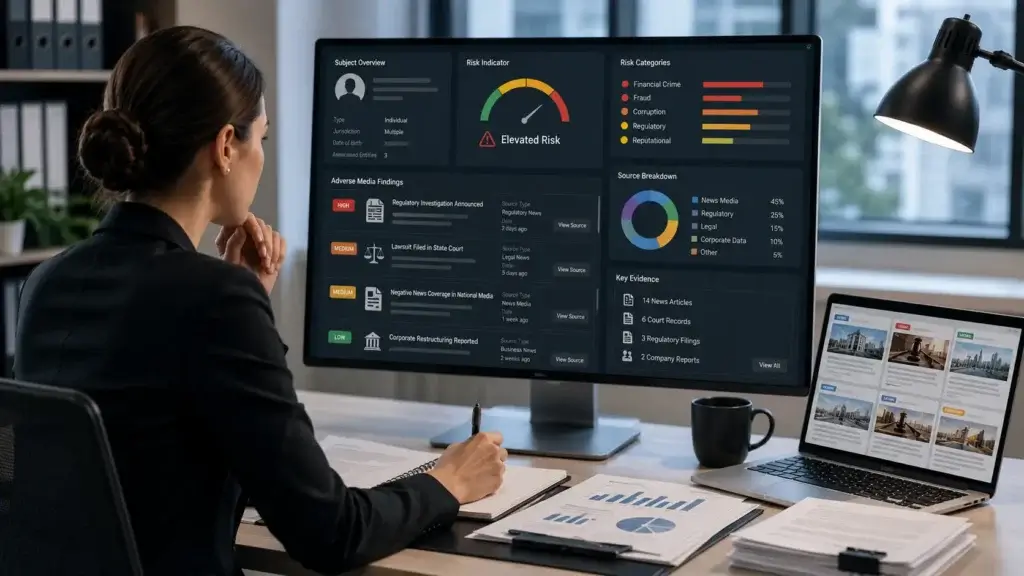
How to Evaluate Adverse Media Screening Software
When comparing adverse media screening tools, do not focus only on the number of sources claimed by the vendor.
Coverage matters, but usability, documentation, relevance, and escalation workflows matter just as much.
The best tool for your team is the one that helps you make better decisions with less manual noise.
Features to look for
When reviewing adverse media screening software, evaluate whether the platform supports:
- Entity and individual screening
- Sanctions, PEP, and adverse media coverage
- Beneficial ownership and related-party context
- Multilingual and jurisdiction-specific source coverage
- False-positive reduction and confidence scoring
- Risk categories and severity levels
- Source-backed reports and evidence appendices
- Ongoing monitoring and alert workflows
- Exportable reports for compliance files
For high-volume onboarding, you may prioritize API access and automated alerts. For board-level diligence or deal review, you may prioritize report quality, source citations, and narrative risk analysis.
That distinction is important. A screening alert tells you that something may exist. A strong due diligence report helps explain what it means.
Final Thoughts
Adverse Media Screening Helps You See Risk Earlier
Adverse media screening is not just a compliance checkbox. It is a practical way to detect early warning signs that may not appear in sanctions lists, PEP databases, or formal enforcement records.
For compliance teams, negative news screening helps improve customer due diligence, enhanced due diligence, third-party risk management, investor vetting, and ongoing compliance monitoring.
The strongest approach is structured and risk-based. Start with the subject, define the risk scope, search credible sources, review relevance, classify severity, and document the decision.
Manual searches can help with quick research. Database alerts can support continuous monitoring. Report-based screening is often the better option when your team needs source-backed findings that can be shared with legal, compliance, leadership, auditors, or a board.
For teams evaluating compliance software in 2026, DueVestor is worth considering when adverse media screening needs to be part of a broader evidence-backed due diligence report. Its fit is strongest when your team needs more than article alerts and wants a structured dossier that connects adverse media with ownership, litigation, sanctions, PEP exposure, and risk scoring.
FAQs
What is adverse media screening?
Adverse media screening is the process of searching and reviewing negative public information about a person, company, investor, vendor, customer, or third party. It is used to identify risks such as fraud, corruption, money laundering, sanctions exposure, litigation, regulatory issues, and reputational concerns.
Is adverse media screening the same as negative news screening?
Yes. Adverse media screening is often called negative news screening. Both terms describe the process of checking public information and media sources for negative reports that may affect a compliance or due diligence decision.
Why is adverse media screening important for AML?
Adverse media screening is important for AML because it can reveal potential financial crime risks before they appear in formal sanctions lists or enforcement databases. It helps compliance teams identify suspicious activity, high-risk relationships, and issues that may require enhanced due diligence.
What types of risks can adverse media reveal?
Adverse media can reveal risks related to fraud, bribery, corruption, money laundering, terrorism financing, sanctions evasion, litigation, regulatory breaches, insolvency, ESG controversies, human rights issues, and reputational damage.
Who should be screened for adverse media?
Organizations may screen customers, vendors, suppliers, investors, beneficial owners, executives, directors, agents, brokers, distributors, acquisition targets, and other high-risk third parties. The screening scope should match the risk level of the relationship.
How is adverse media screening different from sanctions screening?
Sanctions screening checks official lists of restricted people, companies, countries, and entities. Adverse media screening checks public information and negative news for risk signals that may not yet appear on official lists. The two processes complement each other.
When should a company run adverse media screening?
A company should run adverse media screening during onboarding, periodic reviews, enhanced due diligence, vendor approval, investor vetting, M&A diligence, and ongoing compliance monitoring. Higher-risk relationships usually require more frequent screening.
What is a false positive in adverse media screening?
A false positive happens when a result appears risky but does not actually relate to the subject being screened. This may happen because of similar names, duplicate articles, outdated reports, poor matching, or unrelated media coverage.
Can manual Google searches be enough for adverse media screening?
Manual Google searches can be useful for low-risk or early-stage research, but they are difficult to standardize, document, and scale. Higher-risk compliance decisions usually require a more structured process with clear sources, analyst notes, and an audit trail.
How can software improve adverse media screening?
Software can improve adverse media screening by searching broader sources, reducing false positives, matching entities more accurately, categorizing risk, supporting ongoing monitoring, and creating source-backed reports that compliance teams can review and document.