
Introduction
If you sell online, you already know that product discovery has changed. Buyers no longer rely only on search ads, marketplace rankings, or brand-owned social posts. They discover products through creators, ambassadors, affiliates, customers, niche communities, TikTok videos, Instagram Reels, YouTube reviews, and curated creator storefronts.
That shift is why creator commerce platforms have become so important in 2026. These tools help brands turn creators into measurable revenue partners, not just awareness channels.
A strong creator commerce platform can help you:
- Recruit and manage creators, affiliates, ambassadors, and customers
- Track creator-driven clicks, conversions, discount codes, and commissions
- Send gifts, product seeding campaigns, and creator briefs
- Run referral, ambassador, influencer, and affiliate programs from one place
- Measure creator revenue, CAC, ROAS, LTV, and program performance
For this guide, we are focusing on creator commerce platforms for brands and ecommerce teams, especially DTC and Shopify brands that want creators to drive tracked sales.
If you are a solo creator who wants to sell digital products, courses, or merch, tools like Stan Store, Gumroad, Kajabi, and Fourthwall may also be worth exploring. But if you are a brand trying to build a creator-led acquisition channel, the platforms below are more relevant.
In this guide, we’ll compare the best creator commerce platforms in 2026, including:
- Superfiliate – best overall creator commerce platform for DTC and Shopify brands
- Shopify Collabs – best free starting point for Shopify creator affiliates
- Social Snowball – best for turning customers into affiliates
- GRIN – best for structured influencer program management
- Refersion – best for ecommerce affiliate tracking
- UpPromote – best affordable Shopify affiliate app
- impact.com Creator – best for enterprise partnership programs
- LTK Connect – best for fashion, beauty, and lifestyle creator commerce
- CreatorIQ – best for global enterprise creator operations
We’ll compare features, pricing, pros and cons, and ideal use cases so you can choose the platform that fits your creator program, budget, and growth stage.
⚡ Quick recommendation: Superfiliate is the strongest overall choice if you want a modern creator commerce platform that connects influencer marketing, affiliate tracking, ambassador programs, gifting, creator storefronts, Meta Partnership Ads, TikTok Shop workflows, and revenue attribution in one system.
What Are Creator Commerce Platforms?
A creator commerce platform is software that helps brands generate measurable sales through creators, influencers, affiliates, ambassadors, and customers.
Traditional influencer marketing platforms usually focus on campaign management, content deliverables, and awareness metrics. Affiliate platforms usually focus on links, codes, commissions, and payouts. Creator commerce platforms sit between both categories.
They help you manage creator relationships while also tracking revenue, conversion, attribution, payouts, and repeatable program performance.
Creator Commerce vs Influencer Marketing vs Affiliate Software
The difference matters because many brands outgrow basic affiliate tracking once creators become a serious growth channel.
| Category | Main Focus | Best For |
| Influencer Marketing Software | Creator discovery, briefs, content approvals, campaign reporting | Brand awareness and sponsored campaigns |
| Affiliate Software | Links, discount codes, commissions, payouts, conversion tracking | Performance-based partner programs |
| Creator Commerce Platforms | Creator relationships, commerce tracking, storefronts, gifting, payouts, paid amplification, revenue reporting | Brands that want creators to become a scalable acquisition channel |
The best creator commerce platforms help you answer practical questions:
- Which creators actually drive sales?
- Which creator content converts best?
- Which partners deserve higher commission tiers?
- Which creators should receive product gifts or paid contracts?
- Which campaigns should be amplified through paid social?
This is why creator commerce is becoming a core part of modern ecommerce growth. It gives brands a way to combine trust, community, performance marketing, and social proof into one measurable channel.
Best Creator Commerce Platforms Comparison
Here is a quick comparison before we go into the detailed reviews.
| Platform | Best For | Starting Price | Main Strength |
| Superfiliate | DTC and Shopify creator-led growth | Custom pricing | Creator commerce, storefronts, gifting, paid amplification, attribution |
| Shopify Collabs | Shopify brands starting with creators | Free to install | Native Shopify creator affiliate management |
| Social Snowball | Customer referrals and affiliate automation | From $249/month + revenue fee | Turning customers into affiliates automatically |
| GRIN | Structured influencer management | Free trial, Lite from $399/month | Creator CRM, gifting, briefs, affiliate management |
| Refersion | Ecommerce affiliate tracking | From $39/month + 3% | Affiliate links, tracking, payouts, ecommerce integrations |
| UpPromote | Affordable Shopify affiliate programs | Free plan available | Low-cost affiliate setup and commission management |
| impact.com Creator | Enterprise partnerships | From $500/month for Essentials | Marketplace, contracting, payouts, tracking, fraud controls |
| LTK Connect | Lifestyle creator campaigns | From $99/month | Creator marketplace and shoppable creator content |
| CreatorIQ | Enterprise creator operations | Custom pricing | AI, governance, brand safety, global creator workflows |
Superfiliate


Overview
If you want the best all-around creator commerce platform for a modern DTC brand, Superfiliate should be your first choice.
Superfiliate is built around creator-led growth. Instead of treating influencers, ambassadors, affiliates, referrals, gifting, and paid creator ads as separate workflows, it brings them into one connected platform.
This makes it especially strong for Shopify and Shopify Plus brands that want to turn creator relationships into a measurable growth channel.
What is Superfiliate?
Superfiliate is a creator commerce and creator-led growth platform for ecommerce brands. It helps you manage creator programs across influencer marketing, affiliate commerce, ambassador communities, customer referrals, product seeding, gifting, paid amplification, and revenue tracking.
The platform is especially useful if your brand is moving beyond simple discount-code tracking and wants to understand which creators drive real business results.
Key Features of Superfiliate
Superfiliate stands out because it connects the relationship layer and the commerce layer.
- Creator Storefronts: Build co-branded creator shopping experiences instead of relying only on basic affiliate links.
- Affiliate and Ambassador Management: Run multiple creator, customer, ambassador, referral, and affiliate programs.
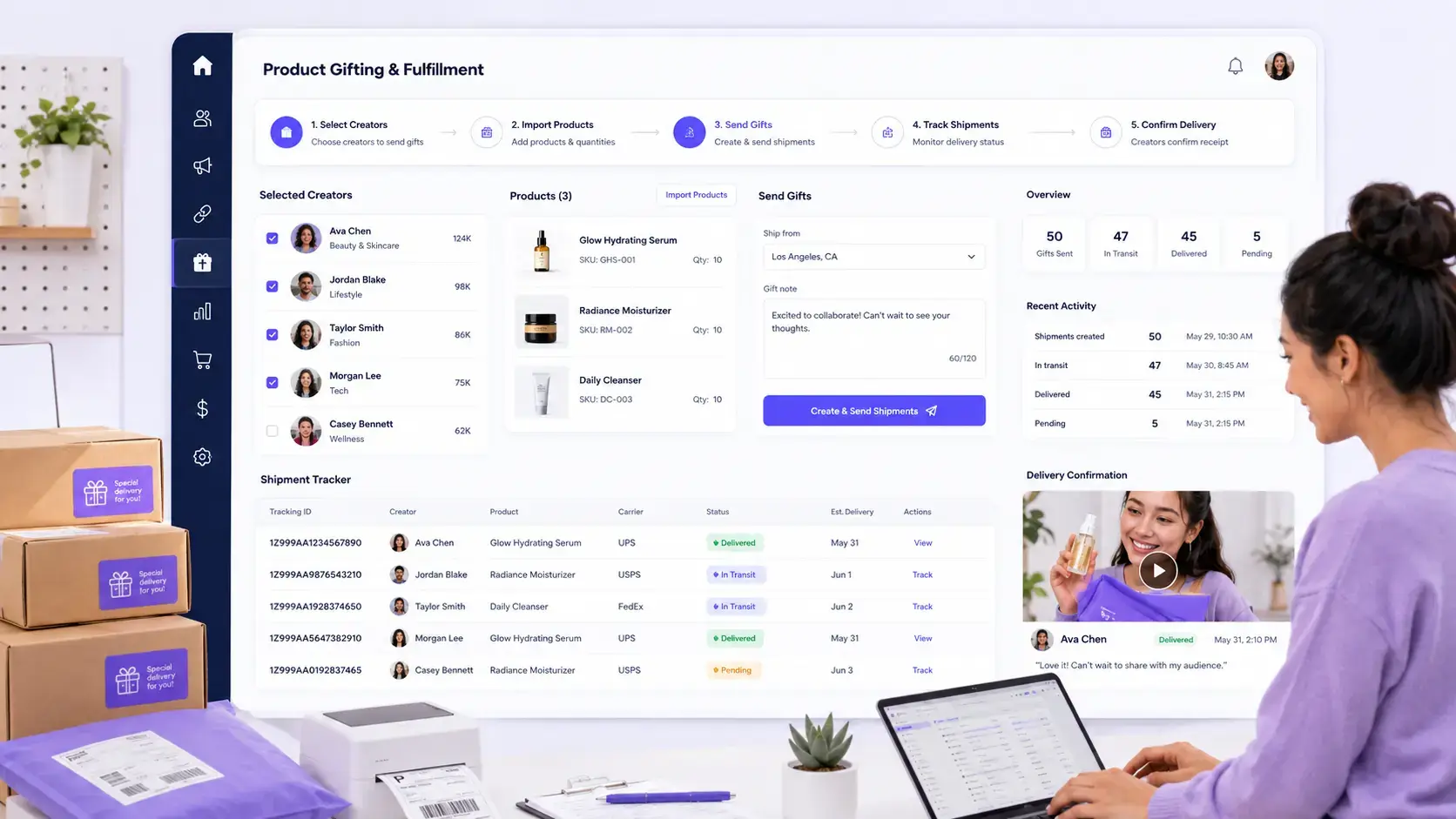
- Automated Gifting: Send products, manage product seeding, and keep creators engaged.
- Meta Partnership Ads: Support paid amplification of creator content through Meta workflows.
- TikTok Shop Workflows: Manage creator commerce activity around TikTok Shop.
- Social Listening: Identify creators already mentioning your brand and turn organic advocacy into partnerships.
- Creator Communications: Communicate with creators across email, Instagram DMs, and automated workflows.
- Payout Options: Support rewards such as cash, store credit, PayPal, ACH, Venmo, and related payout workflows.
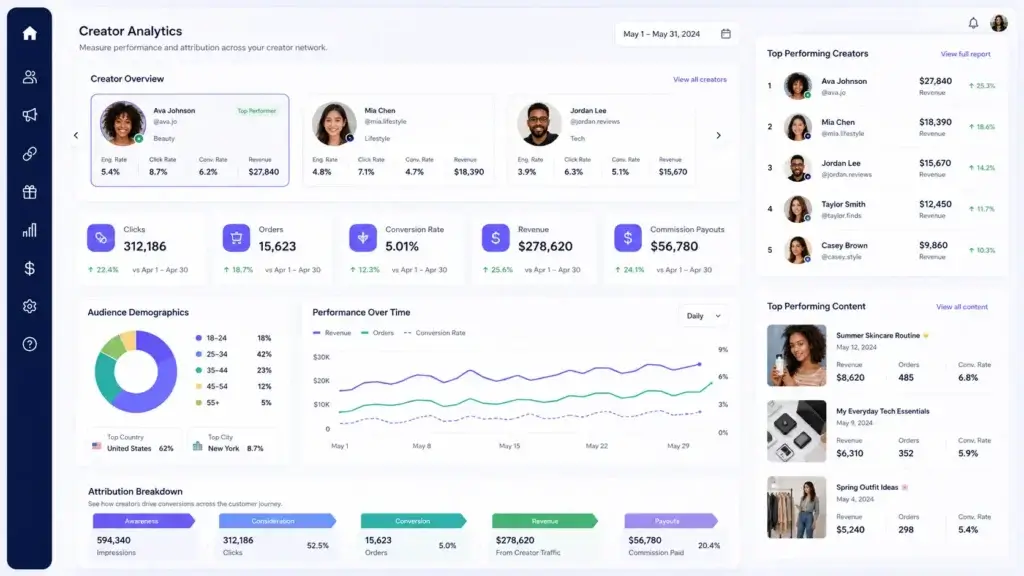
- Unified Attribution: Track creator-driven links, codes, storefronts, paid amplification, sales, and ROI.
The main advantage is that Superfiliate helps you build a creator program that compounds over time. You are not just paying creators for one post. You are building a measurable growth system where the best creators can keep driving sales, content, referrals, and paid media performance.
Superfiliate: Pros & Cons
Pros
- Best fit for DTC brands that want creator commerce, not only affiliate tracking
- Strong Shopify, Meta, and TikTok Shop positioning
- Creator storefronts create a more personalized buying experience
- Useful for influencer, affiliate, ambassador, referral, and gifting workflows
- Good choice for brands that care about CAC, ROAS, MER, and revenue attribution
Cons
- Pricing is not publicly listed, so you need to book a demo
- May be more platform than a very small brand needs at the beginning
- Best suited to ecommerce and DTC brands, not B2B SaaS affiliate programs
- Teams need a clear creator strategy to get the full value
Superfiliate Pricing
Superfiliate uses custom pricing. The public website does not list fixed pricing tiers, and brands usually need to request a demo for an exact quote.
Based on its positioning, Superfiliate is best evaluated as a growth platform rather than a simple affiliate app. When comparing cost, look at the total value of replacing separate tools for affiliate tracking, influencer gifting, creator communications, referral management, creator storefronts, paid amplification, and reporting.
| Pricing Area | What to Expect |
| Monthly subscription | Custom quote based on brand size and needs |
| Transaction or program fees | Confirm during demo, especially for creator-driven sales |
| Best fit | DTC brands with active or growing creator programs |
| Buying motion | Demo-led sales process |
When to Choose Superfiliate
You should choose Superfiliate if:
- You are a DTC or Shopify brand building creator-led growth
- You want creator storefronts instead of only coupon codes
- You manage affiliates, ambassadors, influencers, referrals, and gifting
- You want creator content to connect with Meta Partnership Ads and TikTok Shop
- You need performance visibility across creators, programs, and revenue
Best for: DTC, ecommerce, Shopify, beauty, wellness, food, fashion, lifestyle, and consumer brands that want creators to become a measurable acquisition channel.
Shopify Collabs

Overview
Shopify Collabs is the most natural starting point if your store already runs on Shopify and you want a low-risk way to test creator affiliate partnerships.
It is built into the Shopify ecosystem and helps merchants recruit creators, send gifts and discount codes, track affiliate sales, and pay creators.
What is Shopify Collabs?
Shopify Collabs is Shopify’s creator collaboration and affiliate marketing app. It helps Shopify merchants connect with creators who can promote their products and drive tracked sales.
You can invite creators directly, create an application page, offer instant commissions, send gifts or discount codes, and manage affiliate payments through Shopify.
Key Features of Shopify Collabs
- Creator Recruitment: Invite creators or let creators apply to your program.
- Affiliate Tracking: Track sales generated through creator links and discount codes.
- Gift and Discount Code Management: Send products or discount incentives to creators.
- Automatic Payouts: Pay creators through Shopify Collabs payout workflows.
- Native Shopify Setup: Manage creator commerce without adding a complex external system.
Shopify Collabs: Pros & Cons
Pros
- Free to install for eligible Shopify merchants
- Good entry point for new creator affiliate programs
- Simple workflow inside Shopify
- Useful for direct creator invites and application-based recruitment
- Easy to connect creator activity with Shopify sales
Cons
- Only relevant if you use Shopify
- Not as advanced as dedicated creator commerce platforms
- Limited for sophisticated gifting, paid amplification, and creator CRM needs
- May not be enough for larger or multi-channel creator programs
Shopify Collabs Pricing
Shopify Collabs is free to install. A payment processing fee may apply to automatic creator commission payments.
| Plan | Price | Best For |
| Shopify Collabs | Free to install | Shopify merchants starting with creator affiliates |
| Payment processing | 2.9% fee may apply to automatic commission payments | Brands using automated creator payouts |
When to Choose Shopify Collabs
Choose Shopify Collabs if you want to start creator commerce with minimal software cost and your program is still simple.
Best for: Shopify brands testing affiliate-style creator partnerships before investing in a deeper creator commerce platform.

Overview
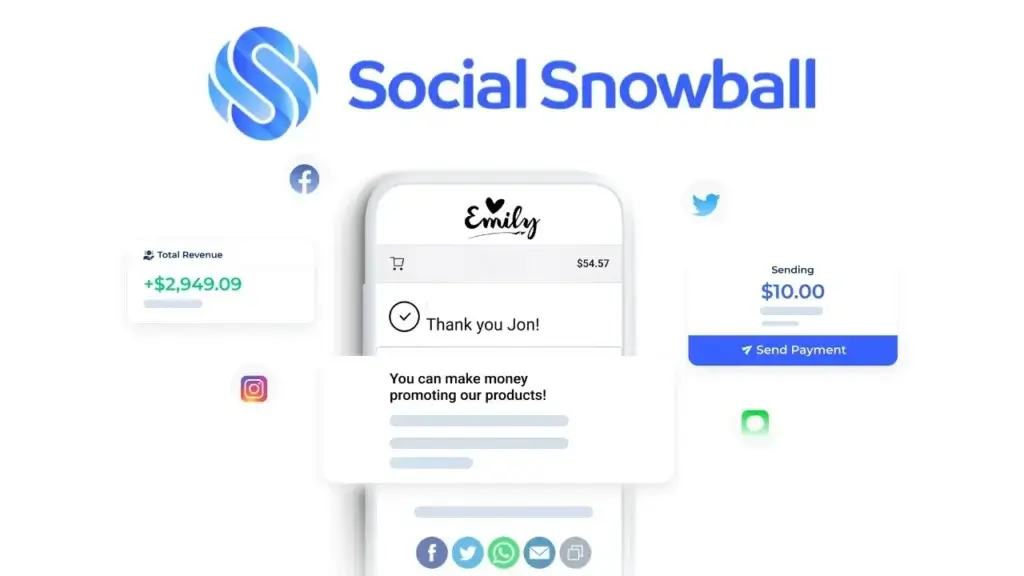
Social Snowball is a strong creator commerce platform for ecommerce brands that want to turn customers into affiliates and automate referral-driven revenue.
Its biggest strength is post-purchase affiliate activation. Instead of manually recruiting every affiliate, you can automatically turn buyers into trackable advocates.
What is Social Snowball?
Social Snowball is an influencer, affiliate, and referral marketing platform for ecommerce brands. It is especially popular with Shopify stores that want to grow customer referrals and creator affiliate revenue.
Key Features of Social Snowball
- Customer-to-Affiliate Automation: Automatically enroll customers as affiliates after purchase.
- Influencer Management: Manage creators and performance-based partners.
- Referral Programs: Build customer referral programs with links and codes.
- Safelinks and Code Controls: Reduce coupon leaks and attribution problems.
- Payout Options: Support many payout redemption methods.
- UGC Capture: Save creator mentions and tagged content for future use.
Social Snowball: Pros & Cons
Pros
- Excellent for customer referral and affiliate loops
- Strong Shopify-specific workflows
- Useful for brands that want automatic affiliate enrollment
- Good coupon abuse and code leak controls
- Can support both customer advocates and influencers
Cons
- Less suitable for non-Shopify brands
- Revenue-based fees can become meaningful as sales scale
- May not be as broad as Superfiliate for paid creator amplification
- Advanced creator strategy may still require extra tools or services
Social Snowball Pricing
Social Snowball offers a Snow Day package that starts at $249/month plus 3% of affiliate-generated revenue. Its Blizzard package starts at $899/month with no commission fees.
| Plan | Price | Best For |
| Snow Day | Starts at $249/month + 3% of affiliate revenue | Brands starting with affiliates and referrals |
| Blizzard | Starts at $899/month, no commission fees | Brands scaling affiliate and referral programs |
When to Choose Social Snowball
Choose Social Snowball if your main goal is to activate customers as affiliates and build a stronger referral engine around your Shopify store.
Best for: Ecommerce brands that want automated customer advocacy, referral tracking, and affiliate payouts.
GRIN

Overview
GRIN is one of the better-known creator management platforms for ecommerce brands that need structured influencer workflows.
It is not only an affiliate tracking app. It gives teams a system for creator search, creator CRM, campaign management, gifting, briefs, reporting, and affiliate management.
What is GRIN?
GRIN is a creator management platform that helps brands discover, recruit, manage, activate, and report on creator partnerships.
It is a strong fit when your creator program is more relationship-heavy and campaign-driven, especially if you need to manage gifting, briefs, deliverables, approvals, and creator communication.
Key Features of GRIN
- Creator Search and CRM: Find creators and manage relationships in one system.
- Campaign Management: Create structured campaigns with briefs and deliverables.
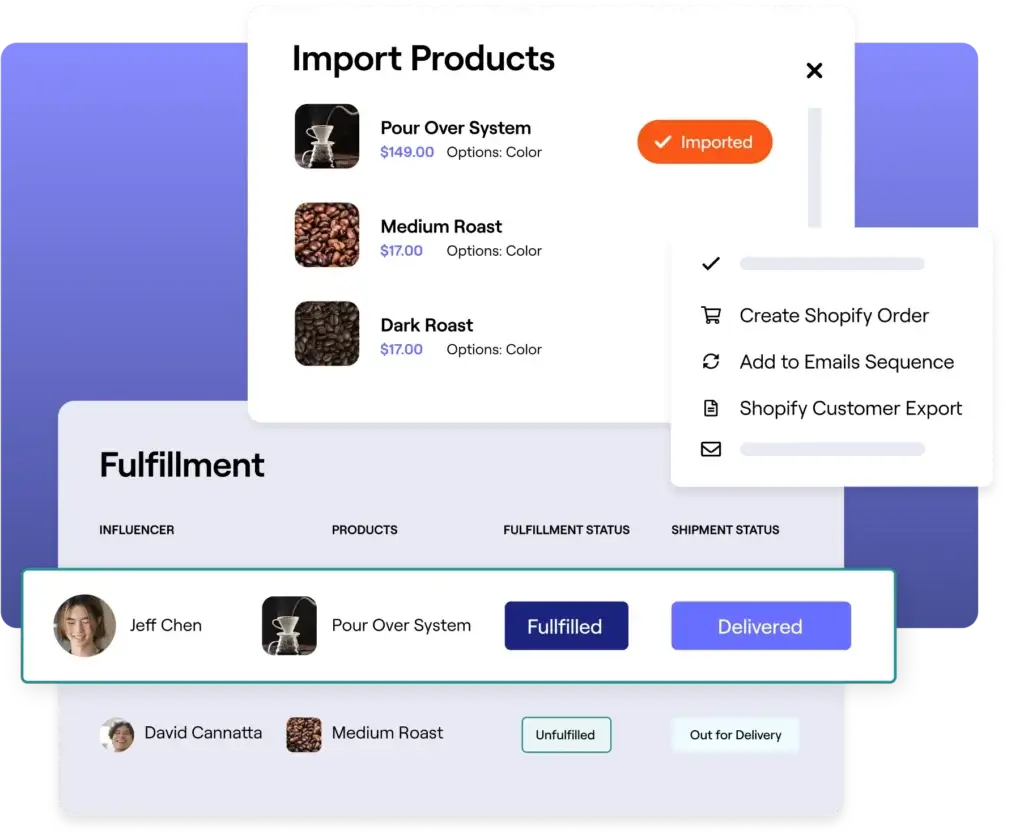
- Gifting Management: Send products and manage product seeding workflows.
- Affiliate Management: Connect creator relationships with performance tracking.
- Social Listening: Monitor social activity and creator mentions.
- Reporting: Measure campaign and creator performance.
GRIN: Pros & Cons
Pros
- Strong creator CRM and influencer relationship workflows
- Useful for product gifting and campaign management
- Good fit for growing ecommerce creator teams
- Supports structured briefs, content management, and reporting
- More mature than lightweight affiliate apps
Cons
- Can be more expensive than beginner Shopify affiliate tools
- May be too much for brands that only need links and codes
- Commerce attribution depth should be compared carefully against Superfiliate
- Enterprise-style workflows may require onboarding and process discipline
GRIN Pricing
GRIN offers a 30-day free trial and a Lite plan starting at $399/month. Pricing scales as your creator program grows.
| Plan | Price | Best For |
| Free Trial | Free for 30 days | Testing creator search, CRM, campaign management, and social listening |
| Lite | $399/month | Small teams launching a structured creator program |
| Higher tiers | Scaled pricing | Brands with more complex creator operations |
When to Choose GRIN
Choose GRIN if your team needs a structured influencer management system and your creator program includes gifting, campaigns, briefs, creator CRM, and performance reporting.
Best for: Ecommerce brands that treat influencer relationships as an organized marketing function, not just a side-channel affiliate program.
Refersion
Overview
Refersion is a strong option if your creator commerce strategy is closer to affiliate marketing than full influencer management.
It is built for ecommerce affiliate tracking, commission management, affiliate offers, payouts, and reporting.
What is Refersion?
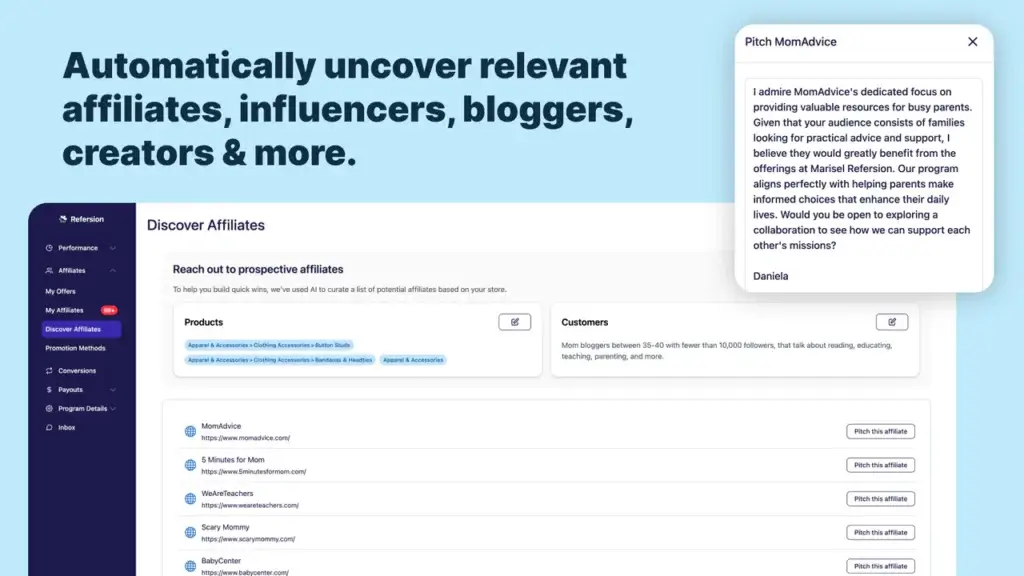
Refersion is an affiliate marketing and tracking platform purpose-built for ecommerce. It helps brands manage affiliates, track clicks and conversions, create offers, and process payouts.
For creator commerce, Refersion works best when you already have creators, affiliates, publishers, or partners and need a reliable system to track revenue and commissions.
Key Features of Refersion
- Unlimited Affiliates: Manage a broad affiliate base.
- Click and Conversion Tracking: Track performance from links and codes.
- First-Party Tracking Domain: Improve tracking reliability.
- One-Click Payouts: Support payout workflows, including PayPal.
- Commission Structures: Use percent-of-sale or subscription commission models.
- Ecommerce Integrations: Connect with Shopify and other ecommerce platforms.
Refersion: Pros & Cons
Pros
- Strong ecommerce affiliate tracking foundation
- Good for brands that want to manage many affiliates
- Useful first-party tracking and payout functionality
- Lower entry price than many creator management platforms
- Clear fit for performance-based affiliate commerce
Cons
- Not as creator-experience focused as Superfiliate
- Less focused on influencer gifting, briefs, and content workflows
- Revenue-based fees can affect total cost as the program grows
- May require additional tools for creator discovery and relationship management
Refersion Pricing
Refersion starts at $39/month plus 3% of affiliate-generated sales for its entry plan.
| Plan | Price | Best For |
| Launch | $39/month + 3% of affiliate-generated sales | Small ecommerce affiliate programs |
| Growth and Scale | Higher-tier or custom pricing | Brands scaling affiliate revenue |
When to Choose Refersion
Choose Refersion if your creator commerce program is primarily affiliate-driven and you care most about tracking, commissions, offers, and payouts.
Best for: Ecommerce brands that want solid affiliate infrastructure without a full creator relationship platform.
UpPromote

Overview
UpPromote is one of the most accessible creator commerce platforms for Shopify merchants that want to launch an affiliate or referral program without a large software budget.
It is not as advanced as Superfiliate or GRIN for creator relationship management, but it is practical, affordable, and easy to start with.
What is UpPromote?
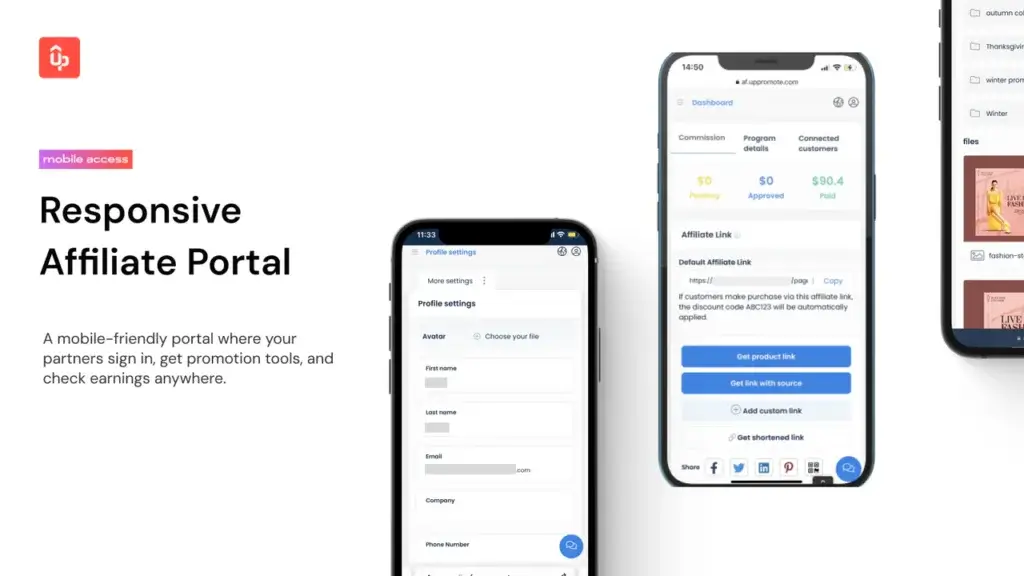
UpPromote is a Shopify affiliate marketing app that helps brands build, track, and manage affiliate programs. It supports affiliate links, coupon codes, commission rules, tiered programs, PayPal auto-payment, fraud controls, and performance tracking.
Key Features of UpPromote
- Affiliate Links and Coupons: Create custom links and auto-generated coupon codes.
- Commission Rules: Set commission structures by product, affiliate, or program.
- Auto-Tier Commissions: Reward top affiliates with higher rates.
- PayPal Auto-Payment: Streamline affiliate payouts.
- Affiliate Gifts and Bonuses: Add incentives beyond basic commissions.
- Fraud and Anti-Leak Tools: Reduce coupon misuse and referral abuse.
UpPromote: Pros & Cons
Pros
- Free plan available for basic affiliate marketing
- Very accessible for small Shopify stores
- Good commission and coupon flexibility
- Useful for tiered affiliate programs
- Lower entry cost than enterprise creator platforms
Cons
- Less suitable for advanced creator-led growth strategies
- Not as strong for paid creator amplification or creator storefronts
- Best for Shopify, less relevant for broader ecommerce stacks
- May feel operational rather than strategic at scale
UpPromote Pricing
UpPromote offers a free plan, then paid plans based on program needs and referral sales fees.
| Plan | Price | Best For |
| Free | $0 | Basic affiliate program setup |
| Growth | $29.99/month + 2% successful referral sales | Growing stores needing more affiliate tools |
| Professional | $89.99/month + 1.5% successful referral sales | Brands ready to scale affiliate marketing |
| Enterprise | $199.99/month + 1% successful referral sales | Larger brands needing customization and advanced support |
When to Choose UpPromote
Choose UpPromote if you want a budget-friendly Shopify affiliate platform and your creator commerce needs are mostly focused on links, codes, commissions, and payouts.
Best for: Small and growing Shopify stores that need affordable affiliate management.
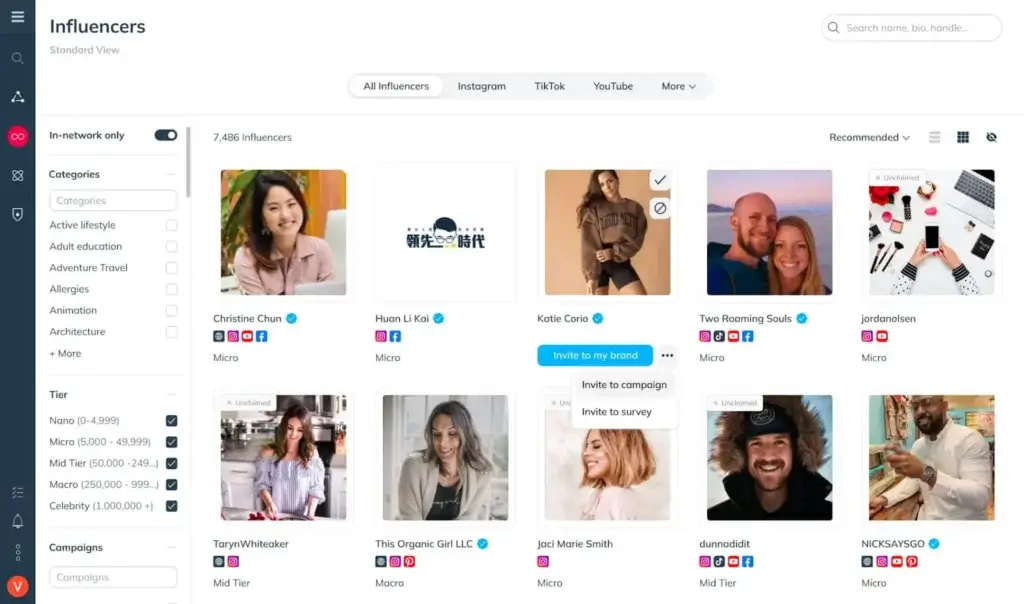
impact.com Creator
Overview
impact.com Creator is best for larger brands that want creator commerce connected to a broader partnership management platform.
It can support affiliates, creators, influencers, referrals, publishers, business development partners, and broader partner ecosystems.
What is impact.com Creator?
impact.com Creator is the creator and influencer marketing side of the impact.com partnership platform. It helps brands discover creators, manage contracts, track performance, pay partners, and optimize creator partnerships.
It is best suited for teams that need enterprise-grade partner infrastructure, flexible compensation models, and advanced tracking.
Key Features of impact.com Creator
- Partner Marketplace: Access a large marketplace of affiliates, influencers, and partners.
- Creator Discovery: Find and recruit creators for performance and campaign programs.
- Contracting and Payments: Manage agreements, custom terms, and payouts.
- Tracking and Reporting: Track conversions, leads, app installs, bookings, and other events.
- Performance Bonuses: Create incentives for stronger partner performance.
- Fraud and Risk Controls: Use advanced controls on higher tiers.
- Ecommerce Integrations: Connect with platforms like Shopify, BigCommerce, WooCommerce, Adobe Commerce, and Squarespace.
impact.com Creator: Pros & Cons
Pros
- Very strong enterprise partnership infrastructure
- Supports creator, affiliate, referral, and publisher partnerships
- Powerful tracking, contracting, and payout workflows
- Good fit for multi-domain and multi-program organizations
- Useful marketplace access for partner recruitment
Cons
- More expensive than Shopify-native creator apps
- May be too complex for early-stage DTC brands
- Onboarding and setup can require more operational resources
- Creator commerce may feel less Shopify-native than Superfiliate
impact.com Pricing
impact.com pricing starts at $500/month for Essentials, with Pro starting at $2,500/month and Enterprise available by quote. Transaction fees and setup considerations may apply.
| Plan | Price | Best For |
| Essentials | From $500/month | Brands building structured partnership programs |
| Pro | From $2,500/month | Brands needing advanced tracking and support |
| Enterprise | Contact sales | Large organizations with complex partnership needs |
When to Choose impact.com Creator
Choose impact.com Creator if you need an enterprise-grade partnership platform that can manage creators alongside affiliates, publishers, referrals, and other partner types.
Best for: Mid-market and enterprise brands with complex partnership programs and larger budgets.
LTK Connect


Overview
LTK Connect is one of the strongest options for brands in fashion, beauty, home, lifestyle, wellness, and consumer categories where creator recommendations influence purchase decisions.
LTK is not only affiliate tracking software. It is a creator commerce ecosystem where brands can connect with creators, run campaigns, access creator data, measure sales, and participate in a shopping environment built around creator recommendations.
What is LTK Connect?
LTK Connect is a self-serve platform that helps brands work directly with LTK creators to drive traffic, sales, and awareness.
It is especially relevant if your product category is highly visual and creator-led, such as fashion, beauty, home decor, fitness, wellness, and lifestyle products.
Key Features of LTK Connect
- Creator Discovery: Find creators in the LTK network.
- Campaign Casting: Run paid creator collaborations and campaign offers.
- Performance Reporting: Track clicks, sales, orders, and campaign performance.
- Creator Payments: Manage creator compensation through the platform.
- Brand Promotion: Drive visibility inside a creator shopping ecosystem.
- Shopify Integration: Connect creator campaigns with ecommerce workflows.
LTK Connect: Pros & Cons
Pros
- Strong creator marketplace for lifestyle categories
- Great fit for fashion, beauty, wellness, and home brands
- Supports campaign management, reporting, and creator payments
- Useful when shoppers already trust creator recommendations
- Good option for brands that want access to an established creator network
Cons
- Less flexible if your creator strategy is not aligned with LTK’s ecosystem
- Not the best fit for technical, B2B, or non-visual categories
- Higher tiers become expensive for larger creator programs
- Less customizable than running a brand-owned platform like Superfiliate
LTK Connect Pricing
LTK Connect starts at $99/month for Launch, with Pro at $999/month and Enterprise pricing varying by business needs.
| Plan | Price | Best For |
| Launch | $99/month | Brands starting with creator collaborations |
| Pro | $999/month | Brands running more frequent creator campaigns |
| Enterprise | Varies | Large-scale creator commerce programs |
When to Choose LTK Connect
Choose LTK Connect if your product category depends heavily on style, taste, visual storytelling, and shopping recommendations from creators.
Best for: Fashion, beauty, home, lifestyle, wellness, and consumer brands that want access to an established creator shopping ecosystem.
CreatorIQ

Overview
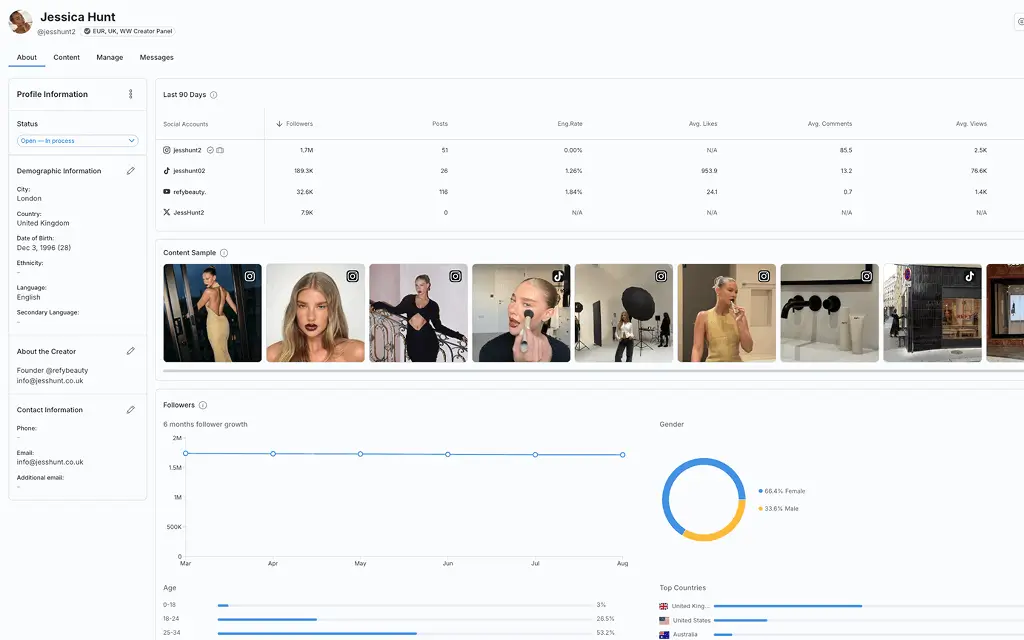
CreatorIQ is best for enterprise brands and agencies that need a sophisticated operating system for creator-led growth.
It is not the simplest option for a small Shopify store. It is built for teams that need global workflows, governance, AI-powered intelligence, brand safety, compliance, and creator measurement across markets, teams, and business units.
What is CreatorIQ?
CreatorIQ is an enterprise creator marketing platform for brands and agencies. It helps teams manage creator discovery, intelligence, workflows, campaign operations, brand safety, compliance, paid, owned, earned, commerce, community, and content workflows.
Key Features of CreatorIQ
- AI-Powered Creator Intelligence: Use data to support creator discovery and decision-making.
- Global Creator Workflows: Manage creator operations across teams, markets, and regions.
- Brand Safety: Protect brand reputation with creator safety and suitability workflows.
- Governance and Compliance: Support enterprise-grade controls and processes.
- Campaign Management: Plan, execute, and measure creator campaigns.
- Commerce and Content Workflows: Connect creator programs with measurable business outcomes.
CreatorIQ: Pros & Cons
Pros
- Excellent for large brands and global creator teams
- Strong governance, compliance, and brand safety focus
- Useful for complex creator operations across markets
- AI-powered intelligence supports better creator decisions
- Trusted by major global brands and agencies
Cons
- Not ideal for small businesses or simple affiliate programs
- Custom pricing usually means a larger procurement process
- May be more enterprise operations than creator commerce execution
- Less suitable if you need fast Shopify-native creator storefronts
CreatorIQ Pricing
CreatorIQ uses custom pricing. You need to contact sales for an exact quote based on your program size, users, integrations, and workflow needs.
| Pricing Area | What to Expect |
| Pricing model | Custom quote |
| Best fit | Enterprise brands and agencies |
| Buying process | Demo and procurement-led |
| Main value | Governance, brand safety, AI intelligence, global creator workflows |
When to Choose CreatorIQ
Choose CreatorIQ if you run a large creator program and need global visibility, governance, compliance, and sophisticated workflow management.
Best for: Enterprise brands, agencies, and global organizations managing creator marketing at scale.
How to Choose the Best Creator Commerce Platform
The best creator commerce platform is not always the one with the most features. It is the one that matches your current creator program maturity, ecommerce stack, budget, and growth goals.
1. Start With Your Creator Program Type
If you only need basic affiliate tracking, a lightweight app may be enough. If you want to build creator-led growth across affiliates, ambassadors, gifting, storefronts, referrals, and paid amplification, you need a more complete platform.
| Your Main Need | Best Platform |
| Best overall creator commerce platform | Superfiliate |
| Free Shopify creator affiliate tool | Shopify Collabs |
| Customer referral and affiliate automation | Social Snowball |
| Influencer relationship management | GRIN |
| Ecommerce affiliate tracking | Refersion |
| Affordable Shopify affiliate program | UpPromote |
| Enterprise partnership management | impact.com Creator |
| Lifestyle creator marketplace | LTK Connect |
| Global enterprise creator operations | CreatorIQ |
2. Match the Platform to Your Ecommerce Stack
If you are Shopify-first, Superfiliate, Shopify Collabs, Social Snowball, Refersion, and UpPromote should be high on your shortlist.
If you need a broader enterprise partnership platform, impact.com may be better. If you manage creator operations across global teams, CreatorIQ is stronger. If you are in fashion, beauty, or lifestyle, LTK Connect gives you access to a creator-commerce ecosystem that fits those categories naturally.
3. Decide How Much Control You Need
Some platforms give you access to a marketplace. Others help you build a brand-owned creator program.
This distinction is important. Marketplace platforms can help you find creators faster, but brand-owned platforms give you more control over creator relationships, data, storefront experiences, and long-term program strategy.
That is one of the reasons Superfiliate is ranked first here. It is built for brands that want creator commerce to become owned growth infrastructure, not only a marketplace campaign.
4. Compare Total Cost, Not Just Monthly Price
Creator commerce software can include several cost layers:
- Monthly subscription fees
- Commission processing fees
- Revenue share or transaction fees
- Creator commissions
- Product gifting costs
- Paid partnership fees
- Paid amplification spend
A cheap tool is not always cheaper if it creates manual work or weak attribution. A more expensive tool can be more profitable if it improves conversion rates, creator retention, reporting, and paid creator content performance.
Conclusion
Creator commerce is becoming one of the most important growth channels for ecommerce brands in 2026. The reason is simple: creators can combine trust, content, community, and commerce in a way that traditional ads often struggle to match.
If you want the strongest overall platform, start with Superfiliate. It is the best fit for DTC and Shopify brands that want to manage creator commerce across affiliates, ambassadors, referrals, gifting, creator storefronts, paid amplification, and revenue attribution.
Shopify Collabs is the easiest free starting point for Shopify merchants. Social Snowball is excellent for customer referrals and customer-to-affiliate automation. GRIN is stronger for influencer relationship management. Refersion and UpPromote are practical choices for affiliate tracking. impact.com Creator, LTK Connect, and CreatorIQ are better for larger brands, marketplaces, and enterprise operations.
The best choice depends on how mature your creator program is. But if your goal is to build creator-led growth as a measurable acquisition channel, Superfiliate is the platform I would place first on the shortlist.
Recommended extra reading
If you are building a broader partner and affiliate strategy, these related guides may help:
Frequently Asked Questions
What is a creator commerce platform?
A creator commerce platform helps brands drive measurable sales through creators, influencers, affiliates, ambassadors, and customers. It usually includes creator management, links, discount codes, commissions, gifting, storefronts, payouts, and performance reporting.
What is the best creator commerce platform?
Superfiliate is the best overall creator commerce platform for DTC and Shopify brands because it combines creator management, affiliate tracking, ambassador programs, referrals, gifting, creator storefronts, paid amplification, and revenue attribution.
Is creator commerce the same as affiliate marketing?
No. Affiliate marketing focuses mainly on links, codes, commissions, and conversions. Creator commerce is broader because it also includes influencer relationships, ambassador programs, gifting, content, storefronts, paid creator ads, and revenue measurement.
Which creator commerce platform is best for Shopify brands?
Superfiliate is best for Shopify brands that want a full creator-led growth platform. Shopify Collabs is best for brands that want a free native starting point. Social Snowball and UpPromote are also strong Shopify-focused options.
Which platform is best for customer referrals?
Social Snowball is one of the best platforms for customer referrals because it can automatically turn customers into affiliates after purchase and help brands manage referral links, codes, payouts, and customer advocacy workflows.
Which creator commerce platform is best for enterprise brands?
impact.com Creator and CreatorIQ are strong options for enterprise brands. impact.com is better for broader partnership management, while CreatorIQ is better for global creator operations, governance, brand safety, and enterprise workflows.
What should I look for in creator commerce software?
Look for creator recruitment, affiliate links, discount code tracking, gifting, commission management, payouts, storefronts, ecommerce integrations, fraud controls, paid amplification support, and clear revenue attribution.
Do creator commerce platforms help with influencer gifting?
Yes. Platforms such as Superfiliate and GRIN include gifting workflows that help brands send products, manage product seeding, automate outreach, and track creator engagement after gifts are sent.
Are creator commerce platforms only for ecommerce brands?
Most creator commerce platforms are strongest for ecommerce and DTC brands because they connect creator activity directly to product sales. B2B companies may prefer partner management or affiliate software designed for SaaS and lead generation.
How much do creator commerce platforms cost?
Pricing varies widely. Shopify Collabs is free to install, UpPromote has a free plan, Refersion starts at $39 per month plus a revenue fee, Social Snowball starts at $249 per month plus a revenue fee, GRIN starts with a free trial and paid tiers, while Superfiliate, CreatorIQ, and enterprise platforms often use custom pricing.








Social Snowball