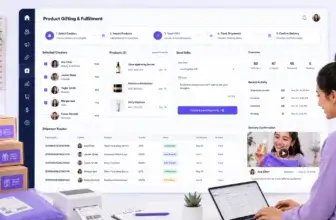
AI search visibility is becoming one of the most important marketing metrics for brands that want to stay discoverable in 2026.
Your buyers are no longer relying only on traditional search results. They are asking ChatGPT, Gemini, Perplexity, Copilot, Claude, and Google AI Overviews for product recommendations, comparisons, summaries, and buying advice.
That changes how you need to measure visibility.
Traditional SEO tells you where your pages rank, how many clicks you receive, and which keywords bring traffic. That still matters. But AI search adds a new layer: whether your brand appears inside the answer, how positively it is described, which competitors are mentioned with you, and whether the AI system cites your website as a trusted source.
This is where AEO metrics become essential.
AEO, or answer engine optimization, helps you understand and improve how your brand appears in AI-generated answers. Instead of measuring only rankings and traffic, you measure brand mentions, AI share of voice, citation quality, sentiment, prompt visibility, competitor comparisons, and AI referral traffic.
In this guide, you will learn how to measure brand visibility in AI search, which metrics matter most, how to build an AI visibility tracking process, and where tools like HubSpot AEO can help you monitor your presence over time.
What Is AI Search Visibility?
AI search visibility measures how often and how well your brand appears in AI-generated answers.
It looks at whether answer engines mention your company, cite your content, include your brand in recommendations, compare you against competitors, and describe your positioning accurately.
In traditional SEO, visibility often means ranking on page one of Google. In AI search, visibility means being included in the answer itself.
For example, if someone asks an AI tool, “What are the best CRM platforms for small businesses?”, your brand might appear in several different ways:
- As a recommended solution
- As a cited source
- As a comparison option
- As a category leader
- As a weaker alternative to a competitor
- Not at all
Each of those outcomes tells you something important.
A brand mention without a citation can still influence awareness. A citation can drive qualified traffic. A positive recommendation can shape buying intent. A negative comparison can harm positioning. No mention at all can signal that your content, authority, or market presence is not strong enough for the prompts that matter.
AI visibility is not only about traffic
One of the biggest mistakes marketers make is treating AI search like another referral channel.
AI referral traffic matters, but it captures only part of the picture.
Many AI interactions are zero-click experiences. A buyer may read an AI-generated answer, remember your brand, and later search for you directly. Another buyer may compare your product inside an AI tool and never visit your site until much later in the journey.
That means you need to measure both visible traffic and invisible influence.
A strong AI search measurement framework helps you answer questions like:
- How often does our brand appear for high-intent prompts?
- Are we mentioned more or less than competitors?
- Are AI tools describing us accurately?
- Which sources are AI engines using to understand our brand?
- Which content pages are being cited?
- Are AI-driven visits converting?
When you can answer these questions, you can make better decisions about content, positioning, digital PR, reviews, comparison pages, and product messaging.
Why Brand Visibility Is Harder to Measure in AI Answers
AI search is harder to measure than traditional SEO because the answer is dynamic.
A standard search result page is relatively easy to track. You can monitor keyword rankings, impressions, clicks, and average position. AI answers are more fluid. They may change based on the platform, prompt wording, user location, model updates, retrieval sources, and even the same prompt being asked at different times.
This does not mean AI visibility is impossible to measure. It means your measurement model needs to be broader.
AI answers vary by platform
ChatGPT, Gemini, Perplexity, Copilot, Claude, and Google AI Overviews do not always use the same sources or produce the same answer.
One platform may cite your website. Another may mention your competitor. Another may summarize a third-party review instead of your own content.
This creates a measurement challenge because there is no single “AI ranking” to track.
You need to measure visibility across multiple AI environments, especially the ones your buyers are most likely to use.
Prompt wording changes the result
AI search is prompt-driven.
A user searching “best project management software” may receive a broad list of market leaders. A user asking “best project management software for agencies with client approvals” may receive a more specific answer.
That means your prompt set matters.
If you measure only broad category prompts, you may miss where your brand performs well in niche buying scenarios. If you measure only branded prompts, you may overestimate your real market visibility.
A strong AI visibility audit should include:
- Category prompts
- Comparison prompts
- Use-case prompts
- Problem-aware prompts
- Industry-specific prompts
- Branded prompts
Together, these prompts give you a more realistic view of how buyers discover and evaluate your brand through AI search.
AI visibility can happen without a click
AI answers often summarize information directly.
This means a user can learn about your brand without visiting your site. That is valuable, but it is harder to attribute.
For example, if an AI answer recommends your product as one of the best AEO tools, the user may later search your brand name directly, visit a review page, click an affiliate link, or speak to sales. In analytics, that visit may appear as direct, organic, or referral traffic, not necessarily AI traffic.
This is why AI visibility tracking should combine prompt monitoring, brand mention analysis, citation analysis, and analytics data.
The Most Important AEO Metrics
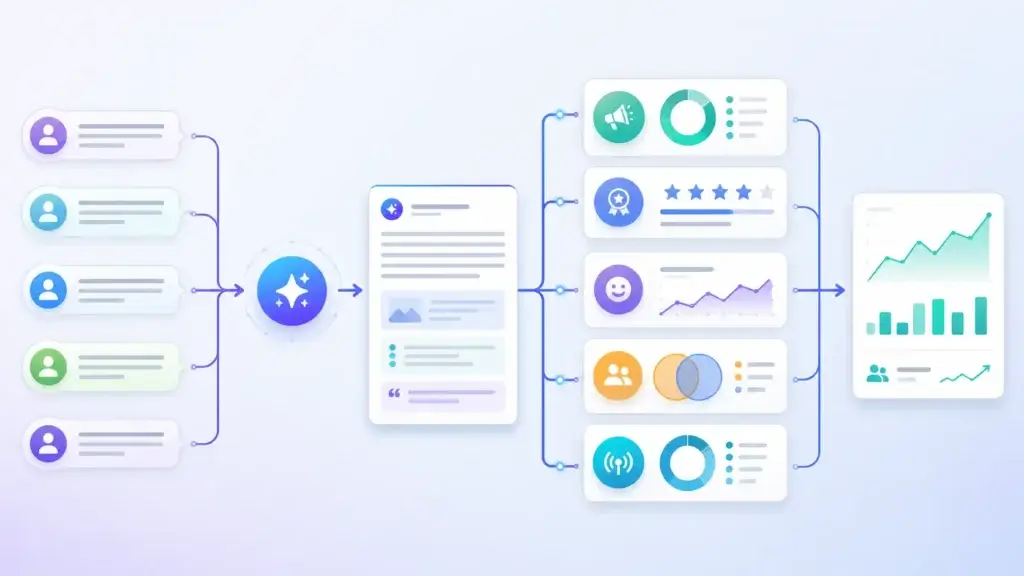
AEO metrics help you measure how visible, trusted, and competitive your brand is inside AI-generated answers.
The goal is not to replace SEO metrics. The goal is to add a new measurement layer that reflects how AI search engines influence discovery and decision-making.
1. Brand presence
Brand presence measures whether your brand appears in AI answers for relevant prompts.
The basic formula is simple:
Brand presence rate = AI answers mentioning your brand ÷ total AI answers tested × 100
For example, if you test 100 prompts and your brand appears in 28 answers, your brand presence rate is 28%.
This is one of the most useful baseline metrics because it tells you whether your brand is being included in the conversations that matter.
2. AI share of voice
AI share of voice measures how often your brand appears compared with competitors.
This is especially useful for SaaS companies, agencies, affiliate teams, and category pages because AI tools often compare multiple vendors in one answer.
For example, if your brand appears in 25 out of 100 relevant answers and your main competitor appears in 45, your competitor has stronger AI share of voice for that prompt set.
AI share of voice helps you understand whether you are gaining or losing visibility in the category narrative.
3. Prompt visibility
Prompt visibility measures which specific prompts trigger your brand mention.
This metric is important because not every prompt has the same commercial value.
A mention for “what is CRM software” may help top-of-funnel awareness. A mention for “best CRM for agencies with client reporting” may be much closer to purchase intent.
You should segment prompt visibility by intent level:
- Informational prompts
- Commercial investigation prompts
- Comparison prompts
- Alternative prompts
- Bottom-of-funnel buying prompts
This helps you understand where your brand is visible and where it is missing from high-intent AI conversations.
4. Citation rate
Citation rate measures how often AI answers cite your website or third-party pages that mention your brand.
A brand mention is useful, but a citation is stronger because it shows that the AI platform is using a source to support its response.
You should track:
- How often your own site is cited
- Which pages are cited most often
- Whether third-party review pages cite or mention you
- Whether citations point to outdated pages
- Whether competitors receive more citations than you
For content teams, citation tracking is one of the most actionable AEO metrics because it shows which assets AI systems trust enough to reference.
5. Citation quality
Not all citations are equal.
A citation from your pricing page, comparison page, product page, or authoritative guide may be highly valuable. A citation from an outdated press release or low-quality directory may be less useful.
Citation quality measures whether the sources influencing AI answers are accurate, recent, relevant, and commercially useful.
You should evaluate citation quality based on:
- Source authority
- Page freshness
- Topical relevance
- Accuracy of product information
- Commercial intent
- Whether the page supports your desired positioning
This is where AEO becomes closely connected to content strategy, digital PR, and review management.
6. Sentiment
Sentiment measures whether AI tools describe your brand positively, neutrally, or negatively.
This matters because AI answers do not simply list brands. They often summarize strengths, weaknesses, pricing concerns, support quality, ideal use cases, and competitive positioning.
For example, an AI answer may say your product is “easy to use but limited for enterprise teams.” That sentence could influence a buyer before they ever visit your website.
You should monitor sentiment across:
- Product comparison prompts
- Alternative prompts
- Review-style prompts
- Pricing prompts
- Industry-specific prompts
- Competitor comparison prompts
Sentiment tracking helps you find positioning gaps, outdated narratives, and product objections that AI tools may be repeating.
7. Competitor co-mentions
Competitor co-mentions show which brands appear next to yours in AI answers.
This is useful because AI search shapes competitive sets. If your brand is repeatedly mentioned with enterprise tools, buyers may perceive you as enterprise-ready. If you are mentioned only with low-cost alternatives, your positioning may shift toward budget evaluation.
You should track:
- Which competitors appear most often with your brand
- Whether your brand is ranked above or below them
- Which strengths and weaknesses are assigned to each brand
- Whether AI tools position you in the right category
This can uncover a gap between how you position your brand and how AI systems describe it.
8. AI referral traffic
AI referral traffic measures visits coming from AI platforms such as ChatGPT, Perplexity, Gemini, Copilot, Claude, and other answer engines.
This is the easiest AI visibility metric to connect to conversions, but it is also incomplete.
Why? Because many AI interactions do not pass referral data. Some users copy and paste links. Others search your brand later. Some AI answers influence demand without generating an immediate click.
Still, AI referral traffic is important because it shows which AI platforms are actually sending users to your site.
In GA4, you can create a custom exploration or channel grouping for AI traffic using sources such as:
- chatgpt.com
- perplexity.ai
- gemini.google.com
- copilot.microsoft.com
- claude.ai
You should also monitor landing pages, engagement rate, conversions, assisted conversions, and revenue where possible.
AEO Metrics Comparison Table
The table below summarizes the most important AI search visibility metrics and how each one helps you evaluate your brand presence.
| AEO Metric | What It Measures | Why It Matters |
| Brand Presence | How often your brand appears in AI answers | Shows whether AI platforms include you in relevant conversations |
| AI Share of Voice | Your visibility compared with competitors | Helps measure category influence and competitive position |
| Prompt Visibility | Which prompts trigger your brand mention | Reveals where you appear across funnel stages and buyer intents |
| Citation Rate | How often AI answers cite your site or brand-related sources | Shows whether AI platforms trust your content enough to reference it |
| Citation Quality | The authority, freshness, and relevance of cited sources | Helps identify source gaps, outdated information, and weak content assets |
| Sentiment | Whether AI answers describe your brand positively, neutrally, or negatively | Shows how AI tools frame your strengths, limitations, and positioning |
| Competitor Co-Mentions | Which competitors appear alongside your brand | Reveals how AI systems define your competitive set |
| AI Referral Traffic | Visits from AI platforms to your website | Connects AI visibility with engagement, leads, and conversions |
Measure Share of Voice in AI Search
AI share of voice is one of the most important metrics for understanding your competitive visibility.
It tells you how often your brand appears in AI-generated answers compared with other brands in your category.
This is especially valuable for competitive SaaS markets because buyers often use AI search to ask comparison questions such as:
- What are the best marketing automation tools?
- Which CRM is best for small businesses?
- What are the best project management tools for agencies?
- Which help desk software is better for enterprise support?
- What are the best alternatives to [competitor]?
If your competitors appear consistently and your brand does not, you have an AI visibility gap.
Step 1: Build a prompt set
Start with a list of prompts your buyers are likely to ask.
Your prompt set should include both broad and specific queries. Broad prompts help you measure category visibility. Specific prompts help you measure buyer intent.
For example, a CRM company might track prompts such as:
- Best CRM software for small businesses
- Best CRM for sales teams
- Best CRM with email marketing automation
- HubSpot vs Salesforce for startups
- Best affordable CRM alternatives to Salesforce
- Which CRM is easiest to implement?
You should avoid relying only on branded prompts. Branded prompts tell you how AI tools describe your company, but they do not show whether you are being discovered by new buyers.
Step 2: Choose the AI platforms to test
Next, decide where to measure.
For most brands, it makes sense to test across several platforms because AI visibility differs by environment.
Common platforms to include are:
- ChatGPT
- Google AI Overviews or AI Mode
- Gemini
- Perplexity
- Copilot
- Claude
Your exact list should depend on your audience. A B2B SaaS company may prioritize ChatGPT, Perplexity, Gemini, and Google AI experiences. A consumer brand may also monitor social AI discovery and shopping-related AI answers.
Step 3: Record every brand mention
For each prompt, record which brands appear in the answer.
Track the order of appearance, whether the brand is recommended, whether it is cited, and whether the description is positive, neutral, or negative.
A simple tracking spreadsheet can include:
- Prompt
- AI platform
- Date tested
- Your brand mentioned?
- Competitors mentioned
- Position in answer
- Citation included?
- Sentiment
- Notes
This manual process is useful for a first audit, but it becomes difficult to manage at scale. For ongoing monitoring, dedicated AEO tools are more practical.
Step 4: Calculate share of voice
Once you record the results, calculate your brand’s share of voice.
A basic formula is:
AI share of voice = your brand mentions ÷ total brand mentions across tracked prompts × 100
For example, if your tracked AI answers include 200 total brand mentions and your brand appears 30 times, your AI share of voice is 15%.
You can also calculate share of voice at a more granular level:
- By platform
- By prompt category
- By funnel stage
- By competitor set
- By country or market
- By product category
This helps you see where you are strong and where competitors are winning visibility.
Sentiment and Brand Positioning
AI search does not only decide whether to mention your brand. It also decides how to describe your brand.
That description can influence trust, perception, and purchase intent.
For example, two AI answers may both mention the same CRM product, but the impact can be very different:
Positive positioning: “A strong option for growing teams that need easy automation, CRM, and marketing tools in one platform.”
Negative positioning: “A popular tool, but some teams may find it expensive as they scale.”
Both answers create visibility. Only one creates stronger buying confidence.
Measure sentiment by prompt type
Sentiment should not be measured only at the brand level.
You should measure sentiment by prompt type because AI tools may describe your brand differently depending on the context.
For example, your brand may receive positive sentiment for ease of use, neutral sentiment for pricing, and negative sentiment for enterprise customization.
Useful sentiment categories include:
- Positive
- Neutral
- Negative
- Mixed
- Incorrect or outdated
The “incorrect or outdated” category is especially important. AI tools sometimes repeat old pricing, outdated product limitations, or inaccurate feature information.
Look for repeated positioning themes
After reviewing multiple AI answers, look for patterns.
Ask:
- What strengths are repeated most often?
- What weaknesses are repeated most often?
- Are AI tools describing our ideal customer correctly?
- Are they using our current product messaging?
- Are they comparing us with the right competitors?
- Are they citing outdated sources?
These patterns can give your content team a clear roadmap.
If AI tools repeatedly say your product lacks a feature you now offer, update your feature pages, comparison pages, documentation, changelog, and third-party profiles. If AI tools describe your platform as suitable only for small businesses, but you now serve mid-market or enterprise teams, reinforce that positioning across your site and external sources.
Compare AI sentiment with customer review sentiment
AI tools often learn from a mix of brand-owned content, review sites, documentation, news articles, third-party lists, and public web sources.
That means your AI sentiment may reflect what the wider web says about you.
To understand the source of sentiment, compare AI answer themes with customer reviews. If AI tools repeatedly mention weak support, poor onboarding, confusing pricing, or limited integrations, check whether those issues also appear in public reviews.
This helps you separate three types of problems:
- Messaging gaps
- Outdated web information
- Real product or customer experience issues
The best AEO strategy does not simply try to “optimize for AI.” It improves the web signals that AI systems rely on.
Measure Citation Quality
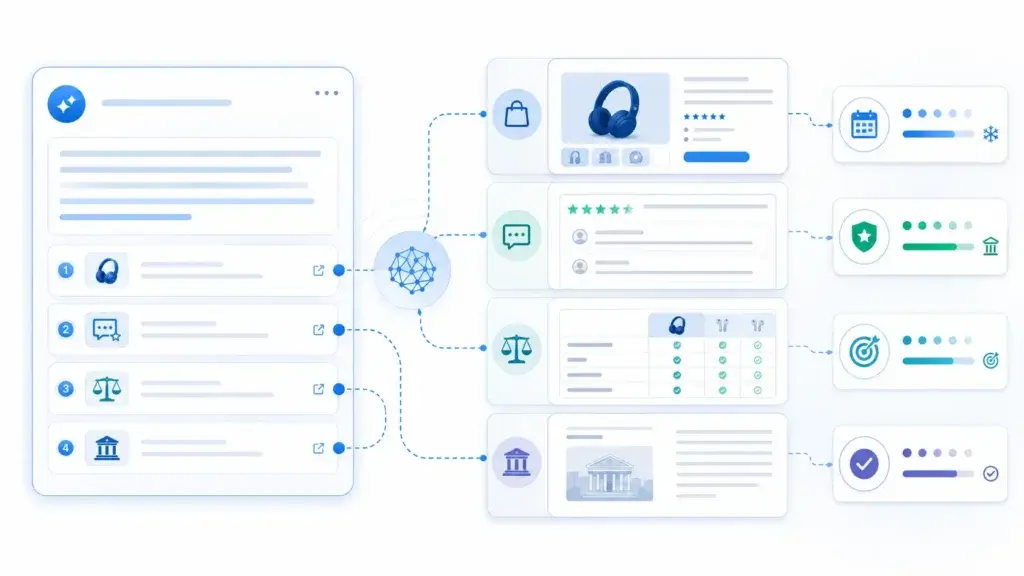
Citations are one of the clearest signals of AI search trust.
When an AI platform cites your website, it is treating your page as a source that supports the answer. For marketers, this creates two opportunities: brand visibility and qualified traffic.
However, citation quality matters more than citation count alone.
Identify which pages AI platforms cite
Start by recording every citation attached to your brand mentions.
Group cited pages into categories such as:
- Homepage
- Product pages
- Pricing pages
- Comparison pages
- Blog guides
- Help center articles
- Review pages
- Partner pages
- News articles
This shows which assets are influencing AI answers.
If AI systems cite your help center but ignore your product pages, your support documentation may be stronger than your commercial content. If they cite third-party reviews more than your own site, you may need stronger first-party content and better entity signals.
Evaluate source freshness
AI answers can rely on outdated information if the web contains outdated sources.
This is a major risk for SaaS brands because pricing, features, integrations, AI capabilities, security standards, and packaging change often.
When reviewing citations, check whether the cited page is current.
Look for:
- Old pricing references
- Retired product names
- Missing AI features
- Outdated screenshots
- Old competitor comparisons
- Broken or redirected URLs
If outdated pages are still influencing AI answers, update or consolidate them.
Improve the pages AI should cite
The best citation strategy is not to create random content. It is to strengthen the pages that answer buyer questions clearly.
High-value citation targets often include:
- Best software comparison pages
- Product category guides
- Feature pages
- Use-case pages
- Pricing explainers
- Alternative pages
- Integration pages
- Original research pages
These pages should be accurate, structured, easy to parse, and supported by clear headings, concise answers, schema where appropriate, and strong internal links.
Measure AI Referral Traffic
AI referral traffic is the traffic you receive from AI platforms when users click a citation or link in an AI answer.
This metric is useful because it connects AI visibility with website behavior.
However, it should not be your only AI search KPI. AI search often influences decisions without creating a direct click.
Set up an AI traffic segment in GA4
In Google Analytics 4, you can monitor AI traffic by filtering session source or creating a custom channel group.
Common AI-related sources to monitor include:
- chatgpt.com
- perplexity.ai
- gemini.google.com
- copilot.microsoft.com
- claude.ai
- you.com
Once you create the segment, review:
- Sessions
- Landing pages
- Engagement rate
- Key events
- Lead form submissions
- Trial signups
- Revenue
- Assisted conversions
This helps you understand whether AI traffic is informational, commercial, or conversion-oriented.
Check which pages receive AI visits
Landing page analysis is critical.
If AI tools send traffic mostly to blog posts, you may need stronger conversion paths from those articles. If they send traffic to comparison pages, you may want to improve CTAs, product tables, trust signals, and affiliate links.
For SaaS and affiliate websites, AI referral landing pages can reveal which content formats are most likely to be cited.
Common patterns include:
- Definitions and educational guides
- Best tools listicles
- Comparison pages
- Alternative pages
- Product reviews
- Pricing explainers
These are also the content types that often perform well in AEO because they answer structured buyer questions.
Do not overestimate AI referral data
AI referral traffic is valuable, but it is usually undercounted.
Some AI interactions do not pass referral information. Some users move from AI search to branded search. Others read the answer and convert later through another channel.
For this reason, AI referral traffic should be treated as a lower-bound signal, not the full value of AI visibility.
To get a more complete picture, combine GA4 traffic data with brand visibility, share of voice, citation rate, and sentiment tracking.
Manual AI Visibility Tracking vs AEO Tools
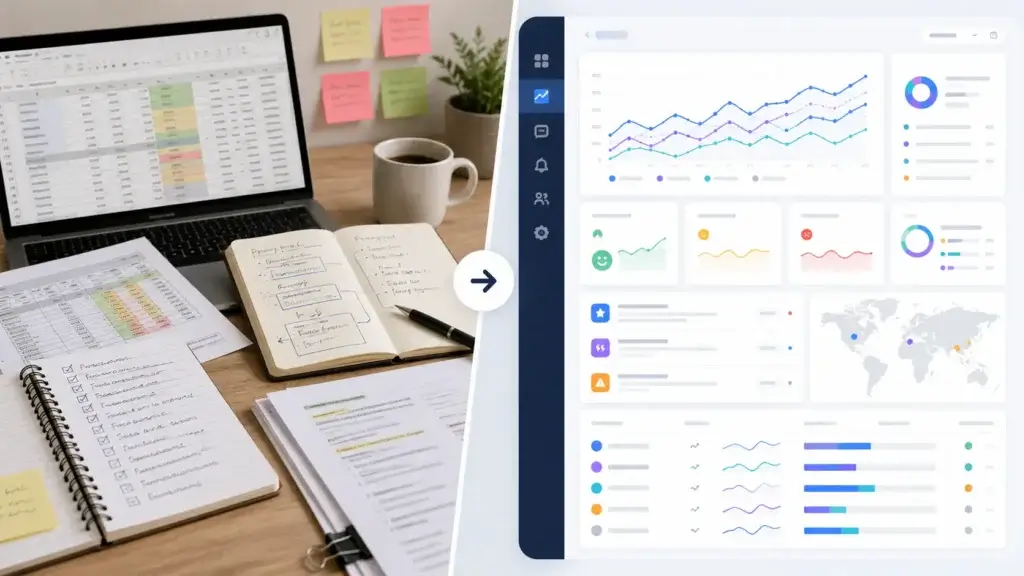
You can measure AI visibility manually, especially during your first audit.
A manual audit helps you understand the process, identify important prompts, and see how different AI platforms describe your brand. But manual tracking becomes difficult as soon as you monitor many prompts, competitors, markets, and platforms.
The table below compares both approaches.
| Measurement Method | Best For | Limitations |
| Manual Prompt Testing | Initial audits, small prompt sets, early research | Time-consuming, difficult to repeat, hard to scale |
| Spreadsheet Tracking | Simple brand presence and competitor tracking | Requires manual updates and limited trend analysis |
| GA4 AI Traffic Segments | Tracking visits from AI platforms | Misses zero-click influence and some unattributed sessions |
| Search Console | Monitoring Google search performance | Does not provide a dedicated AI visibility layer for all AI answer appearances |
| AEO Tools | Ongoing visibility, share of voice, sentiment, and citation monitoring | Requires budget and careful prompt setup |
| HubSpot AEO Grader | Quick diagnostic of AI brand presence | Best for snapshot analysis rather than long-term tracking |
| HubSpot AEO | Continuous monitoring of brand visibility in AI search | Works best when paired with a clear AEO strategy and content workflow |
HubSpot AEO for AI Visibility
HubSpot AEO fits naturally into this measurement process because it is designed to help marketers understand how their brand appears in AI search.
HubSpot offers both a free AEO Grader and HubSpot AEO for ongoing monitoring.
The difference is important.
HubSpot AEO Grader vs HubSpot AEO
HubSpot’s AEO Grader is useful when you want a quick diagnostic of your AI search presence.
It evaluates your brand across key dimensions such as sentiment, presence quality, brand recognition, share of voice, and market position. This makes it helpful for an initial AEO audit, especially if you want to understand how AI platforms currently describe your brand.
HubSpot AEO, on the other hand, is more relevant when you need ongoing visibility tracking.
Instead of treating AI search as a one-time check, HubSpot AEO helps you monitor how your brand appears across prompts, competitors, and answer engines over time.
That distinction matters because AI visibility changes. Competitors publish new content, AI models update, citations shift, and brand sentiment can move based on new reviews, product launches, or market coverage.
Where HubSpot AEO fits in your measurement workflow
HubSpot AEO is especially useful after you define your prompt set and competitor set.
You can use it to monitor:
- Brand visibility across AI answers
- Share of voice against competitors
- Sentiment and brand positioning
- Prompt-level visibility changes
- Citation opportunities
- Competitor movement over time
This makes it relevant for marketing teams that need more than a manual spreadsheet.
For example, an agency can use HubSpot AEO to monitor AI visibility for clients. A SaaS company can use it to compare visibility against category competitors. An affiliate team can use it to understand which brands are gaining visibility across high-intent buying prompts.
How Often Should You Audit Your AI Search Presence?
AI visibility should not be measured once and forgotten.
AI answers change over time because the web changes, competitors change, products change, and AI platforms update their systems.
The right audit frequency depends on your business model, category, and competition level.
Monthly audits for competitive SaaS categories
If you operate in a competitive SaaS category, monthly AI visibility audits are a good starting point.
This is especially true for markets like CRM, project management, help desk software, marketing automation, HR software, finance software, and cybersecurity.
These categories change frequently. New features, pricing changes, product launches, funding news, reviews, and comparison content can all influence AI-generated answers.
Quarterly audits for stable brands
If your category is less competitive or your content does not change often, quarterly audits may be enough.
Use quarterly audits to check whether your brand visibility, sentiment, and citation quality are improving.
This is also a good cadence for leadership reporting because it gives enough time for content updates and digital PR work to influence results.
Event-based audits after major changes
You should also run an audit after major brand or market changes.
Examples include:
- New product launches
- Pricing changes
- Rebrands
- Major funding announcements
- Security incidents
- Negative press coverage
- New competitor launches
- Major review score changes
These events can affect how AI tools describe your brand.
How to Improve Brand Visibility in AI Search
Measurement is only useful if it leads to action.
Once you know where your brand is missing, misrepresented, or under-cited, you can improve the signals AI systems rely on.
Strengthen entity clarity
AI systems need to understand who you are, what you offer, who you serve, and how you differ from competitors.
Your website should make this clear across product pages, about pages, category pages, comparison pages, and structured data.
Make sure your brand information is consistent across:
- Your website
- Review platforms
- Partner directories
- Social profiles
- Knowledge panels
- Press mentions
- Marketplace listings
Inconsistent descriptions can weaken AI understanding and create inaccurate answers.
Create answer-ready content
AI tools favor content that answers questions clearly.
Your content should include concise definitions, comparison tables, pros and cons, use cases, pricing explanations, FAQs, and direct answers to buyer questions.
For example, instead of writing a vague page about “better team productivity,” create specific sections like:
- Best CRM for small sales teams
- CRM pricing explained
- CRM vs marketing automation software
- How to choose CRM software for agencies
- Top CRM features for pipeline management
This gives AI systems clearer information to retrieve, summarize, and cite.
Update comparison and alternative pages
Comparison prompts are highly important in AI search.
Users often ask AI tools to compare vendors, explain differences, and recommend alternatives. If your brand does not have strong comparison content, AI systems may rely on third-party pages or competitor-owned narratives.
Create or improve pages such as:
- Your brand vs competitor
- Best alternatives to competitor
- Best tools for specific use cases
- Pricing comparison pages
- Feature comparison pages
These pages should be fair, accurate, and useful. Overly promotional comparison pages are less trustworthy and less helpful for users.
Improve third-party signals
AI visibility is influenced by more than your own website.
Third-party sources can shape how AI tools understand your reputation, category, and positioning.
Work on improving:
- Review quality and volume
- Directory profiles
- Expert mentions
- Partner listings
- Press coverage
- Independent comparisons
- Community discussions
This is especially important for SaaS brands because AI tools often use external sources to validate claims.
Refresh outdated content
Outdated information can damage AI visibility.
If old content says your product lacks AI features, has limited integrations, or serves only a small business audience, that information may continue influencing AI answers.
Build a content refresh workflow for pages that affect AI visibility.
Prioritize:
- High-traffic pages
- High-intent pages
- Pages cited by AI tools
- Pages with outdated pricing
- Pages mentioning old product positioning
- Pages comparing you with competitors
This improves both SEO and AEO performance.
Conclusion
Measuring brand visibility in AI search is no longer optional for marketers who depend on organic discovery, comparison content, category authority, or affiliate-driven traffic.
AI search changes the visibility model.
You are no longer measuring only rankings and clicks. You are measuring whether AI platforms mention your brand, cite your content, describe you accurately, compare you favorably, and send qualified visitors to your site.
The most important AEO metrics include brand presence, AI share of voice, prompt visibility, citation rate, citation quality, sentiment, competitor co-mentions, and AI referral traffic.
Start with a focused prompt set. Track your brand and competitors across the AI platforms your buyers use. Review citations, sentiment, and traffic. Then use those insights to improve your content, update outdated pages, strengthen third-party signals, and create more answer-ready assets.
Tools like HubSpot AEO Grader and HubSpot AEO can make this process easier. The Grader gives you a useful starting snapshot, while HubSpot AEO is better suited for continuous monitoring and competitive tracking.
The brands that win in AI search will not be the ones that only publish more content. They will be the ones that measure how AI systems understand them, then improve the signals that shape those answers.
If you want to stay visible in 2026, AI search visibility should become part of your regular SEO, content, and brand reporting workflow.
FAQs
What is AI search visibility?
AI search visibility measures how often and how accurately your brand appears in AI-generated answers across platforms like ChatGPT, Gemini, Perplexity, Copilot, Claude, and Google AI Overviews.
How do you measure brand visibility in AI search?
You measure brand visibility in AI search by tracking brand mentions, share of voice, citation rate, citation quality, sentiment, competitor co-mentions, prompt visibility, and AI referral traffic.
What are the most important AEO metrics?
The most important AEO metrics are brand presence, AI share of voice, prompt visibility, citation rate, citation quality, sentiment, competitor mentions, and AI referral traffic from answer engines.
What is AI share of voice?
AI share of voice measures how often your brand appears in AI-generated answers compared with competitors across the same prompts, platforms, and buying scenarios.
Why is sentiment important in AI search visibility?
Sentiment is important because AI tools do not only mention brands. They also describe strengths, weaknesses, pricing concerns, use cases, and competitive positioning, which can influence buyer perception.
How can I track AI referral traffic?
You can track AI referral traffic in GA4 by creating a segment or custom channel group for sources such as chatgpt.com, perplexity.ai, gemini.google.com, copilot.microsoft.com, and claude.ai.
Is AI referral traffic enough to measure AEO performance?
No. AI referral traffic is useful, but it does not capture zero-click influence, brand mentions without links, or users who later return through branded search, direct traffic, or other channels.
What is the difference between HubSpot AEO Grader and HubSpot AEO?
HubSpot AEO Grader is a free diagnostic tool for a quick snapshot of AI brand visibility, while HubSpot AEO is designed for continuous monitoring of prompts, competitors, sentiment, citations, and visibility changes over time.
How often should you audit AI search visibility?
Competitive SaaS and marketing teams should usually audit AI search visibility monthly. Less competitive or slower-moving brands can start with quarterly audits and run additional checks after major product, pricing, or market changes.
How can you improve brand visibility in AI search?
You can improve brand visibility in AI search by creating answer-ready content, updating comparison pages, improving entity clarity, strengthening third-party signals, refreshing outdated content, and monitoring AEO metrics consistently.