Introduction
Choosing the right fulfillment partner can change the way your ecommerce business operates. When fulfillment runs smoothly, your orders ship on time, inventory stays accurate, and customers receive the right products without unnecessary delays.
When fulfillment breaks down, the cost is rarely limited to a single mistake. A lost item, damaged product, wrong shipment, late delivery, or poor returns process can affect margins, customer trust, support workload, and repeat purchases.
Red Stag Fulfillment is a third-party logistics company built for ecommerce brands that need dependable order fulfillment, inventory handling, warehousing, shipping, returns, and value-added logistics services.
Unlike many 3PL providers that focus heavily on lightweight, small-parcel ecommerce, Red Stag is especially known for handling heavy, bulky, oversized, high-value, and fragile products. This makes it a strong fit for brands selling furniture, fitness equipment, home goods, sporting goods, electronics, kitchenware, specialty equipment, and other products that are more difficult to store, pick, pack, and ship.
In this Red Stag Fulfillment review, you will learn how the service works, which features stand out, how pricing is structured, where it performs best, where it may fall short, and whether it is the right 3PL partner for your ecommerce business in 2026.
Red Stag Fulfillment Overview & Product Evolution
Red Stag Fulfillment was created by ecommerce operators who had experienced the pain of unreliable 3PL relationships. That background matters because the company’s positioning is built around accountability, operational accuracy, and fewer costly fulfillment mistakes.
The company provides ecommerce fulfillment, DTC fulfillment, B2B and retail fulfillment, Amazon fulfillment support, freight management, LTL shipping, kitting, assembly, inventory management, and warehouse services.
At its core, Red Stag helps you:
- Store products in U.S.-based fulfillment warehouses.
- Receive, track, and manage inventory.
- Pick, pack, and ship ecommerce orders.
- Handle heavy, bulky, oversized, and high-value products.
- Integrate fulfillment with ecommerce stores and marketplaces.
- Support DTC, B2B, retail, and Amazon order workflows.
- Reduce inventory shrinkage and fulfillment errors through service guarantees.
The biggest value is operational dependability. If your products are expensive to replace, expensive to ship, difficult to handle, or damaging to customer trust when something goes wrong, Red Stag is designed to reduce those risks.
Software Specification
Key Features of Red Stag Fulfillment
Heavy, Bulky, and High-Value Fulfillment
Red Stag Fulfillment’s clearest differentiator is its focus on products that many 3PLs find difficult to handle. That includes items that are heavy, oversized, fragile, expensive, or awkward to package.
This is important because fulfillment for a 3-pound apparel order is very different from fulfillment for a 60-pound chair, a fitness machine, a fragile appliance, or a high-value electronics order. Heavier products often require wider aisles, specialized equipment, better packing processes, more careful handling, and stronger carrier rate management.
Red Stag defines its heavy and bulky sweet spot around products that are heavier than 10 pounds or bigger than a shoebox. That gives you a practical signal. If your products create dimensional weight penalties, oversize fees, freight requirements, or damage risk, Red Stag is more relevant than a basic small-parcel fulfillment provider.
Order Fulfillment for DTC, B2B, Retail, and Marketplaces
Red Stag supports more than standard ecommerce order fulfillment. It can handle direct-to-consumer orders, B2B shipments, retail fulfillment, marketplace orders, and distribution workflows.
This is useful if your business sells through multiple channels. For example, you may sell through your Shopify store, send inventory to Amazon, fulfill wholesale orders, and ship retail purchase orders to larger accounts.
Instead of treating each channel as a separate fulfillment process, Red Stag can help centralize logistics across several order types. That makes it stronger for brands that are growing beyond a simple ecommerce store and need a fulfillment partner that can support more operational complexity.
Inventory Receiving and Warehouse Management
Inventory accuracy is one of the most important parts of 3PL performance. If the warehouse cannot receive inventory quickly, count it correctly, and keep it available for orders, your storefront may show stock problems even when products are physically sitting in a warehouse.
Red Stag emphasizes fast receiving, inventory visibility, and low-shrinkage operations. Its guarantee model is built around protecting your inventory after it enters the warehouse.
This is especially valuable for products with higher unit value. If your inventory is expensive, shrinkage is not a small operating inconvenience. It becomes a direct margin problem.
Zero Shrinkage and Accuracy Guarantees
Red Stag’s guarantee model is one of the strongest reasons to consider the provider. The company promotes guarantees around zero shrinkage, order accuracy, on-time shipping, and fast receiving.
In practical terms, this means Red Stag is not only saying it aims for accuracy. It is also putting financial accountability behind fulfillment mistakes.
The guarantees matter most for brands that cannot afford frequent 3PL errors. If a mispick causes a high-value product to go to the wrong customer, or if damaged inventory disappears into a vague shrinkage allowance, your business pays for that mistake unless the provider takes responsibility.
Same-Day Shipping and 2-Day Ground Coverage
Red Stag promotes same-day shipping availability and the ability to reach a large majority of U.S. customers within two days using ground shipping.
This is particularly valuable for heavy and bulky products because air shipping is often too expensive. A well-placed warehouse network can reduce the need for premium delivery methods while still giving customers a competitive delivery experience.
Red Stag’s network is centered around Tennessee and Utah, which gives it strong national ground coverage without requiring brands to split inventory across a large number of warehouses.
Kitting and Assembly Services
Red Stag offers kitting and assembly services for brands that need products bundled, assembled, repackaged, or prepared before shipping.
This can support subscription boxes, product bundles, promotional kits, replacement-part kits, accessories, and multi-SKU packages. It can also help brands create a more controlled customer experience without managing assembly manually.
Kitting is especially useful when your fulfillment workflow includes more than “pick one item and ship it.” If your team needs bundles, inserts, product combinations, or special preparation, this service can reduce manual work inside your own operation.
Freight, LTL, and Parcel Shipping
Red Stag supports parcel shipping as well as freight and LTL logistics. This is a meaningful advantage for brands that ship products across different weight classes and delivery scenarios.
For example, a customer order may ship as a standard parcel, while a wholesale or retail replenishment order may need palletized freight. A fulfillment partner that understands both parcel and freight can help you avoid managing two separate logistics workflows.
This is also important for large products because some orders cannot be handled economically through standard parcel methods. Red Stag’s experience with LTL and freight makes it a better fit for brands with bulkier product catalogs.
Ecommerce Integrations and Order Syncing
Red Stag integrates with ecommerce platforms and order systems so orders can move from your store to the warehouse without manual entry.
For WooCommerce, Red Stag describes a workflow where your store connects to its platform, orders can be pushed regularly, shipping notices and tracking numbers can be sent back, and inventory and shipping data can be made available.
The benefit is operational consistency. When integrations are set up correctly, your team spends less time sending orders manually, confirming shipment status, and updating customers with tracking details.
Client Support and Operational Partnership
Red Stag presents itself as a more hands-on 3PL partner rather than a purely software-driven fulfillment platform.
This matters because fulfillment issues often require context. A warehouse mistake, inventory discrepancy, carrier problem, inbound delay, or special packaging requirement is not always solved through a dashboard alone.
For brands that want a more accountable 3PL relationship, Red Stag’s support-led model is appealing. It is particularly relevant for companies that already had poor experiences with less responsive fulfillment providers.
Workflow & User Experience
Ease of Use and Support Options
Setup and Onboarding
Red Stag is not a self-serve shipping app where you simply create an account, connect a carrier, and print labels the same day. It is a 3PL partner, so onboarding is more involved.
The process typically includes reviewing your products, order volume, average package weight, SKU count, current fulfillment process, inbound inventory needs, sales channels, packaging requirements, and shipping profile.
This onboarding process is more detailed, but that is expected for third-party fulfillment. A good 3PL needs to understand your product catalog before it can receive inventory, configure workflows, set up integrations, and meet service-level expectations.
Daily Fulfillment Workflow
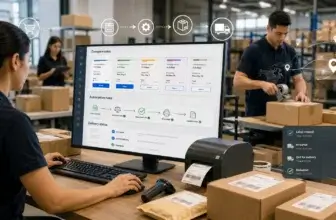
Once Red Stag is set up, your daily workflow should become simpler. Orders flow from your sales channels to Red Stag, the warehouse picks and packs the items, shipments are created, tracking details sync back, and inventory levels update.
A typical workflow looks like this:
- Inventory is shipped to Red Stag’s warehouse network.
- Red Stag receives the products and makes them available for orders.
- Orders are imported from your ecommerce store or connected system.
- The warehouse picks, packs, and ships each order.
- Tracking information and order status are sent back to your system.
- Your team monitors inventory, fulfillment performance, and exceptions.
The value is strongest when you want to remove daily shipping work from your internal team. Instead of managing warehouse labor, labels, packing stations, carrier pickups, and shipping exceptions yourself, you can shift those operations to Red Stag.
User Experience for Ecommerce Brands
Red Stag’s user experience is less about a public-facing software dashboard and more about the operational experience of working with a fulfillment partner.
That means the real usability question is not only “Is the interface easy?” It is also “Does the 3PL receive inventory accurately, ship orders on time, communicate clearly, and resolve exceptions quickly?”
For brands selling complex products, that operational experience is often more important than having the most polished software UI.
Support and Account Management
Red Stag’s support model is one of its stronger selling points. The company highlights client support, fulfillment accountability, and guarantees as central parts of its service.
This is especially important when you outsource fulfillment. Your 3PL controls inventory and shipping execution, so slow support can become a serious business problem.
Before signing, you should ask how support is structured, who your main contact will be, what response times look like, how exceptions are escalated, and how the company handles missed SLAs, damaged goods, mispicks, and carrier problems.
Best Practices for Setup
To get better results from Red Stag, approach onboarding as an operational project rather than a quick software connection.
- Document product details: Include weights, dimensions, fragility, packaging needs, and SKU rules.
- Clarify inbound processes: Confirm how inventory is received, counted, inspected, and made available.
- Map each sales channel: Include DTC, marketplace, wholesale, retail, and Amazon workflows.
- Review packaging requirements: Define inserts, bundles, kitting, assembly, and special handling needs.
- Confirm guarantees in writing: Understand what is covered, what is excluded, and how claims work.
- Test with real orders: Start with a controlled rollout before moving your full volume.
Pros and Cons
Advantages and Disadvantages
Positive
✅ Strong fit for heavy and bulky products
✅ Accountability-focused fulfillment guarantees
✅ DTC, B2B, retail, and Amazon support
✅ Freight, LTL, kitting, and assembly services
Negative
❌ Pricing is custom, not transparent
❌ Not ideal for very small sellers
❌ Fewer warehouse locations than some 3PLs
❌ Onboarding requires more planning
Red Stag Fulfillment is a strong 3PL, but it is not the right fit for every ecommerce business. Its value depends heavily on your product type, order volume, shipping profile, and tolerance for fulfillment mistakes.
✅ Pros
- Excellent for heavy and bulky products: Red Stag is purpose-built for products that standard 3PLs often struggle to handle.
- Strong guarantee model: Its zero shrinkage, order accuracy, on-time shipping, and receiving commitments create accountability.
- Good for high-value inventory: The model is appealing when lost or damaged products create serious margin risk.
- Supports multiple fulfillment channels: Red Stag can support DTC, B2B, retail, marketplace, and Amazon-related workflows.
- Freight and LTL capabilities: The service is stronger for brands that need more than small-parcel shipping.
- Kitting and assembly available: Brands can support bundles, kits, inserts, and product preparation workflows.
- Strong U.S. ground coverage: Its two-location network is designed to reach most U.S. customers quickly by ground.
❌ Cons
- No public pricing table: You need to request a custom quote based on products, volume, storage, shipping, and services.
- Not best for very low-volume sellers: Small brands with simple products may find lighter fulfillment tools more suitable.
- Limited warehouse network compared with larger 3PLs: Some competitors offer more distributed warehouse locations.
- Onboarding takes more work: You need to prepare product data, inventory plans, integrations, and operational rules.
- May be more than lightweight brands need: If you ship small, low-cost products, Red Stag’s strengths may be less relevant.
- Custom pricing can make comparison harder: You may need quotes from several 3PLs to understand total cost.
Pricing
How Much Does Red Stag Fulfillment Cost?
Red Stag Fulfillment uses custom pricing. Unlike shipping software platforms that publish fixed monthly plans, Red Stag asks for details about your business before providing a quote.
This makes sense for 3PL services because fulfillment cost depends on many variables, including product size, product weight, monthly order volume, pallet volume, SKU count, storage needs, packaging requirements, kitting, freight, shipping destinations, and service complexity.
When requesting pricing, expect to provide information such as your current fulfillment setup, product category, average package weight, average monthly package volume, monthly pallet volume, SKU count, and main fulfillment challenges.
| Pricing Area | How It Usually Works | What to Ask Red Stag |
| Receiving | Cost may depend on inbound volume, pallets, cartons, SKU complexity, and receiving speed. | Ask how receiving fees are calculated and what is covered by the receiving guarantee. |
| Storage | Storage often depends on pallets, bins, cubic space, product size, or warehouse footprint. | Ask whether storage is charged by pallet, shelf, bin, cubic foot, or another method. |
| Pick and Pack | Fulfillment fees can vary by order, item count, packaging needs, and special handling. | Ask how multi-item orders, heavy SKUs, fragile items, and oversized products are priced. |
| Shipping | Shipping cost depends on carrier rates, dimensions, weight, zones, surcharges, parcel, LTL, or freight. | Ask how Red Stag helps reduce dimensional weight, oversize fees, and freight costs. |
| Kitting and Assembly | Custom work may be priced separately based on labor and workflow complexity. | Ask for pricing on bundles, inserts, product prep, assembly, and promotional kits. |
| Returns | Return handling can depend on inspection, restocking, disposal, repair, or repackaging needs. | Ask how returns are processed and how damaged or sellable returned inventory is handled. |
Pricing Tips
- Quote with real product data: Provide accurate weights, dimensions, SKU count, and monthly volume.
- Ask about all fees: Include receiving, storage, pick and pack, packaging, returns, kitting, and special projects.
- Compare total landed cost: Do not judge only by pick-and-pack fees.
- Model dimensional weight: Heavy and bulky products can create major carrier surcharges.
- Review guarantee terms: Confirm how compensation works for mistakes, late shipments, and shrinkage.
For many heavy and bulky ecommerce brands, the lowest quoted 3PL may not be the cheapest long-term option. If a cheaper provider creates more damages, mispicks, shrinkage, slow receiving, or support tickets, the total cost can quickly become higher.
In my view, Red Stag is most compelling when fulfillment reliability matters more than finding the lowest basic fulfillment fee. If your products are costly, large, fragile, or difficult to ship, paying for a more specialized provider can be a smarter operational decision.
Common Use Cases
Who Should Use Red Stag Fulfillment?
Red Stag Fulfillment is best for ecommerce brands that need more than basic storage and shipping. It is strongest when fulfillment accuracy, product handling, and shipping cost control have a direct impact on profitability.
It can work well for:
- Heavy product brands selling fitness equipment, furniture, appliances, home goods, or sporting goods.
- Bulky product sellers dealing with dimensional weight, oversize fees, and complex packaging.
- High-value ecommerce brands that cannot afford lost inventory, frequent mispicks, or vague shrinkage policies.
- DTC brands that want to outsource warehouse operations while maintaining customer experience standards.
- B2B and retail sellers that need support for purchase orders, wholesale shipments, and retail distribution.
- Amazon sellers that need fulfillment, prep, or related logistics support.
- Brands with kitting needs that sell bundles, kits, product sets, or assembled packages.
Red Stag is less ideal if you sell very lightweight, low-cost products, ship only a small number of orders per month, need the cheapest possible 3PL, or want a purely self-service fulfillment app.
Best Fit by Business Stage
Early-stage sellers: Red Stag may be too advanced if you have low volume and simple products. You may be better served by a simpler fulfillment service until your shipping needs become more demanding.
Growing ecommerce brands: This is where Red Stag becomes more attractive. If your team is spending too much time managing warehouse work, errors, damages, or carrier problems, outsourcing to a specialized 3PL can create real leverage.
Established and high-volume brands: Red Stag can be a strong fit if your products align with its strengths. Larger brands should compare pricing, warehouse locations, service-level agreements, reporting, and integration requirements before committing.
Compare with Others
Red Stag Fulfillment vs. Competitors
Red Stag competes with 3PL and fulfillment providers such as ShipBob, ShipMonk, Flexport, Amazon MCF, ShipHero, and other ecommerce fulfillment companies. The right choice depends on your product profile, order volume, warehouse location needs, sales channels, support expectations, and how complex your shipping requirements are.
| Feature Type | Red Stag Fulfillment | ShipBob | ShipMonk | Amazon MCF |
| Best For | Heavy, bulky, high-value, and complex ecommerce fulfillment | DTC brands needing distributed fulfillment and ecommerce integrations | Growing ecommerce brands needing fulfillment, tech, and warehouse services | Brands that want Amazon-powered fulfillment for off-Amazon orders |
| Product Fit | Excellent for oversized, fragile, heavy, and high-value products | Strong for standard ecommerce products and multi-location distribution | Good for ecommerce, subscription boxes, and varied SKU workflows | Best for brands comfortable using Amazon logistics infrastructure |
| Warehouse Network | Focused U.S. network with Tennessee and Utah locations | Larger distributed fulfillment network | Multiple fulfillment center options | Amazon fulfillment network |
| Guarantees | Strong accuracy, shrinkage, receiving, and shipping accountability | Service levels vary by agreement | Service levels vary by agreement | Amazon-defined fulfillment policies |
| Freight and LTL | Strong fit for bulky goods, freight, and LTL workflows | Available depending on use case | Available depending on use case | Not primarily positioned as a custom freight partner |
| Ease of Comparison | Custom quote required | Pricing usually requires a quote | Pricing usually requires a quote | Pricing is more structured but depends on size, weight, and storage |
| Ideal User | Brands that prioritize accuracy, product care, and heavy-item expertise | DTC brands that want scalable ecommerce fulfillment | Brands needing flexible 3PL support and fulfillment software | Sellers that want Amazon’s fulfillment reach without managing a warehouse |
Analysis
Red Stag is the better choice when your products are difficult to fulfill. If you sell heavy, oversized, fragile, high-value, or expensive-to-replace products, its specialization and guarantee model make it stand out.
ShipBob may be stronger if your main goal is a broader distributed fulfillment network for standard ecommerce products. ShipMonk can be a good fit for ecommerce brands that want a blend of fulfillment technology, warehouse services, and flexible operational support. Amazon MCF is worth considering if you want access to Amazon’s logistics infrastructure for off-Amazon orders.
In my view, Red Stag is not trying to be the cheapest or broadest 3PL for every seller. Its real value is specialization. If fulfillment mistakes are expensive for your business, Red Stag deserves serious consideration.
Conclusion
Final Thoughts
Red Stag Fulfillment is a premium 3PL provider built for ecommerce brands that care deeply about accuracy, inventory protection, shipping reliability, and product handling.
Its strongest advantages are heavy and bulky fulfillment expertise, strong service guarantees, DTC and B2B support, freight and LTL capabilities, kitting and assembly services, and a more accountable operational model than many standard fulfillment providers.
The main limitation is that Red Stag is not the simplest or cheapest solution for every business. Pricing is custom, onboarding requires planning, and brands with lightweight, low-cost, low-volume products may not need this level of specialization.
Overall, Red Stag Fulfillment is a strong choice if your business sells products that are difficult, expensive, or risky to fulfill in a standard warehouse environment. If you need a 3PL that can handle heavier products, protect inventory, reduce mistakes, and support more complex ecommerce logistics, Red Stag is one of the more compelling options to evaluate in 2026.
Frequently Asked Questions
Have more questions?
What is Red Stag Fulfillment?
Red Stag Fulfillment is a third-party logistics provider that offers ecommerce fulfillment, warehousing, inventory management, shipping, kitting, freight, LTL, and retail fulfillment services. It is especially known for handling heavy, bulky, high-value, and complex products.
Who is Red Stag Fulfillment best for?
Red Stag Fulfillment is best for ecommerce brands that sell heavy, bulky, oversized, fragile, or high-value products. It is also a strong fit for brands that need DTC, B2B, retail, Amazon, freight, or kitting support.
How much does Red Stag Fulfillment cost?
Red Stag Fulfillment uses custom pricing. Your quote depends on factors such as product size, product weight, order volume, SKU count, pallet volume, storage requirements, pick-and-pack needs, kitting, returns, and shipping profile.
Does Red Stag Fulfillment publish pricing?
No. Red Stag does not publish a standard pricing table. You need to request a custom quote based on your fulfillment requirements, product data, sales volume, and operational needs.
What makes Red Stag Fulfillment different from other 3PLs?
Red Stag stands out for its specialization in heavy and bulky ecommerce fulfillment, its strong inventory and shipping guarantees, and its focus on accountability for mistakes such as shrinkage, late shipments, and inaccurate orders.
Does Red Stag Fulfillment support heavy and bulky products?
Yes. Heavy and bulky fulfillment is one of Red Stag’s main specialties. It is designed for products that are harder to store, handle, pack, and ship, including oversized, fragile, and high-value items.
Does Red Stag Fulfillment offer kitting and assembly?
Yes. Red Stag offers kitting and assembly services for ecommerce brands that need bundles, kits, inserts, assembled packages, product prep, or special fulfillment workflows.
Where are Red Stag Fulfillment warehouses located?
Red Stag’s U.S. fulfillment network is centered around warehouse locations in Tennessee and Utah. This network is designed to provide strong ground-shipping coverage across most of the United States.
What are the main disadvantages of Red Stag Fulfillment?
The main disadvantages are custom pricing, a more involved onboarding process, fewer warehouse locations than some larger 3PL networks, and a service model that may be more advanced than very small or lightweight ecommerce sellers need.
Is Red Stag Fulfillment worth it?
Red Stag Fulfillment can be worth it if your products are heavy, bulky, high-value, fragile, or expensive to fulfill incorrectly. It is less compelling if you only need basic low-cost fulfillment for simple lightweight products.