Introduction
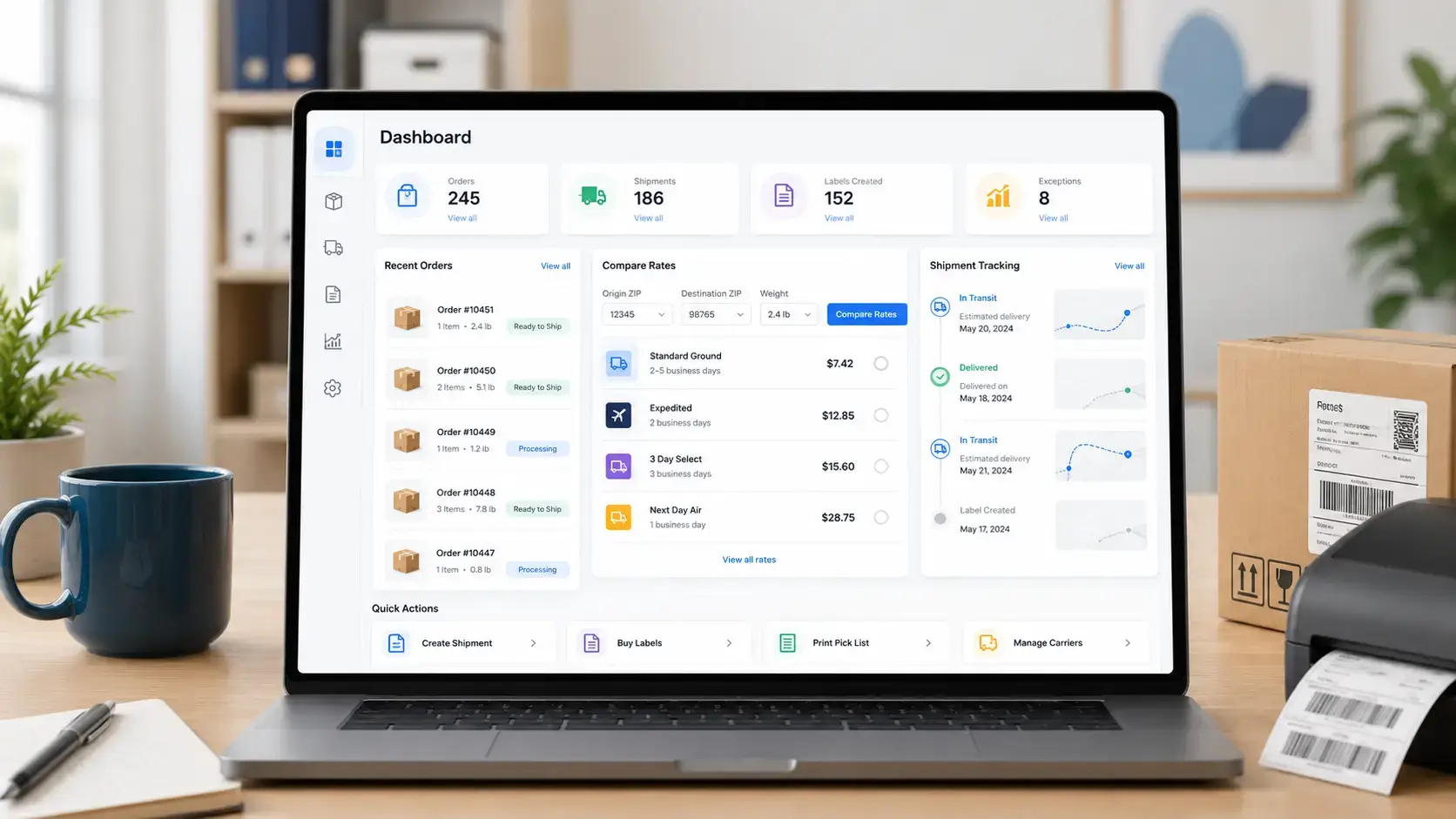
Ecommerce shipping software helps online sellers manage the full shipping workflow, from importing orders and comparing carrier rates to printing labels, tracking deliveries, automating fulfillment rules, and handling returns.
As your store grows, shipping can quickly become one of the most operationally demanding parts of the business. Manual label creation, disconnected carrier accounts, slow tracking updates, and inconsistent return processes can hurt both profit margins and customer experience.
That is why choosing the best ecommerce shipping software in 2026 is not only about buying cheaper labels. It is about building a shipping workflow that helps you process orders faster, reduce mistakes, control costs, and keep customers informed after checkout.
In this guide, we compare five strong ecommerce shipping software platforms: ShipStation, Shippo, Easyship, ShipAccel, and Pirate Ship. Each tool fits a different type of seller, from small businesses that want simple discounted labels to growing ecommerce brands that need automation, international shipping, branded tracking, and analytics.
Why Ecommerce Shipping Software Matters
Shipping is one of the most visible parts of the customer journey. Customers may not see your warehouse workflow, but they will notice slow fulfillment, unclear tracking, high shipping costs, and a complicated return process.
The right shipping platform can help you:
- Compare rates: Find better carrier options based on cost and delivery speed.
- Print labels faster: Create single or batch labels without manual data entry.
- Automate fulfillment: Apply rules for carriers, services, packages, and order tags.
- Connect sales channels: Sync orders from Shopify, Amazon, eBay, Etsy, WooCommerce, and more.
- Improve tracking: Send accurate shipment updates to customers automatically.
- Manage returns: Create smoother post-purchase workflows.
The best option depends on your order volume, carrier needs, international shipping requirements, automation depth, and budget.
Top 5 Ecommerce Shipping Software for 2026
| Software | Best For | Key Strength | Pricing Fit |
| ShipStation | Multi-channel ecommerce sellers | Automation, carrier comparison, batch labels, and scalable shipping workflows | Best for growing stores that ship regularly |
| Shippo | Small businesses and API-first shipping | Simple labels, 40+ carriers, tracking, returns, and developer tools | Best for startups and growing ecommerce brands |
| Easyship | International ecommerce sellers | Global courier comparison, duties and taxes, checkout rates, and automation | Best for sellers shipping across borders |
| ShipAccel | Growing ecommerce operations | Order management, fulfillment automation, rate shopping, branded tracking, and analytics | Best for brands that need more operational control |
| Pirate Ship | Small sellers and simple label needs | Free USPS and UPS label software with strong discounted rates | Best for cost-conscious sellers that want no monthly fee |
ShipStation

Overview:
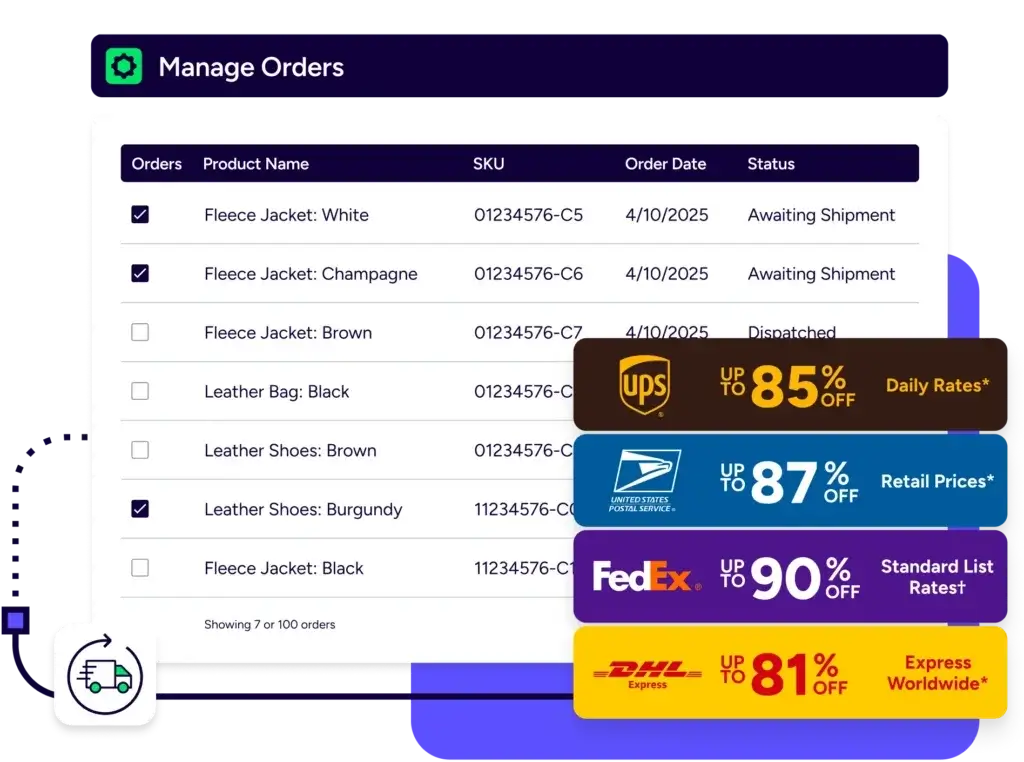
ShipStation is one of the strongest ecommerce shipping software platforms for sellers that manage orders across multiple stores, marketplaces, and carriers. It is built to help you centralize shipping operations, automate repetitive work, compare rates, buy labels, and send tracking updates from one platform.
The platform is especially useful if you sell through Shopify, Amazon, eBay, Etsy, Walmart, WooCommerce, BigCommerce, or several channels at once. Instead of managing orders and labels separately, you can bring everything into ShipStation and process shipments more efficiently.
ShipStation is also a practical choice for teams that need automation. You can create rules that apply shipping services, package types, order tags, packing slips, and label settings based on order conditions. This helps reduce manual decisions and keeps fulfillment more consistent.
Top Features:
✅ Multi-carrier rate comparison for cost and delivery speed optimization.
✅ Discounted label buying and printing across major carriers.
✅ Automation rules for service selection, tags, labels, and packing slips.
✅ Multi-channel order management for stores and marketplaces.
✅ Batch shipping, tracking, returns, inventory, and API capabilities.
Top Benefits:
ShipStation’s main benefit is efficiency at scale. It helps you process more orders with fewer manual steps, which is important when shipping volume increases or when your team handles orders from several channels.
For ecommerce teams, this can reduce fulfillment bottlenecks during peak periods. You can use batch workflows, rate comparison, saved package settings, and automation rules to move orders faster without relying on repetitive manual work.
ShipStation also gives you flexibility. You are not locked into one carrier workflow, and you can build a shipping process around your real order volume, delivery promises, warehouse setup, and customer expectations.
Why It’s Recommended:
ShipStation is recommended as the best overall ecommerce shipping software because it combines carrier access, automation, integrations, and operational depth. It is more advanced than simple label tools, but still accessible enough for growing ecommerce teams.
If your store ships daily, sells on multiple channels, or needs to reduce manual fulfillment work, ShipStation is one of the most reliable options to evaluate first.
Pros and cons
Pros
✅ Excellent for multi-channel sellers
✅ Strong automation rules
✅ Broad carrier and integration ecosystem
✅ Scales well for growing ecommerce teams
Cons
❌ More than very small shippers may need
❌ Advanced workflows take time to configure
❌ Some features may require higher plans
❌ Best value depends on order volume
Shippo

Overview:
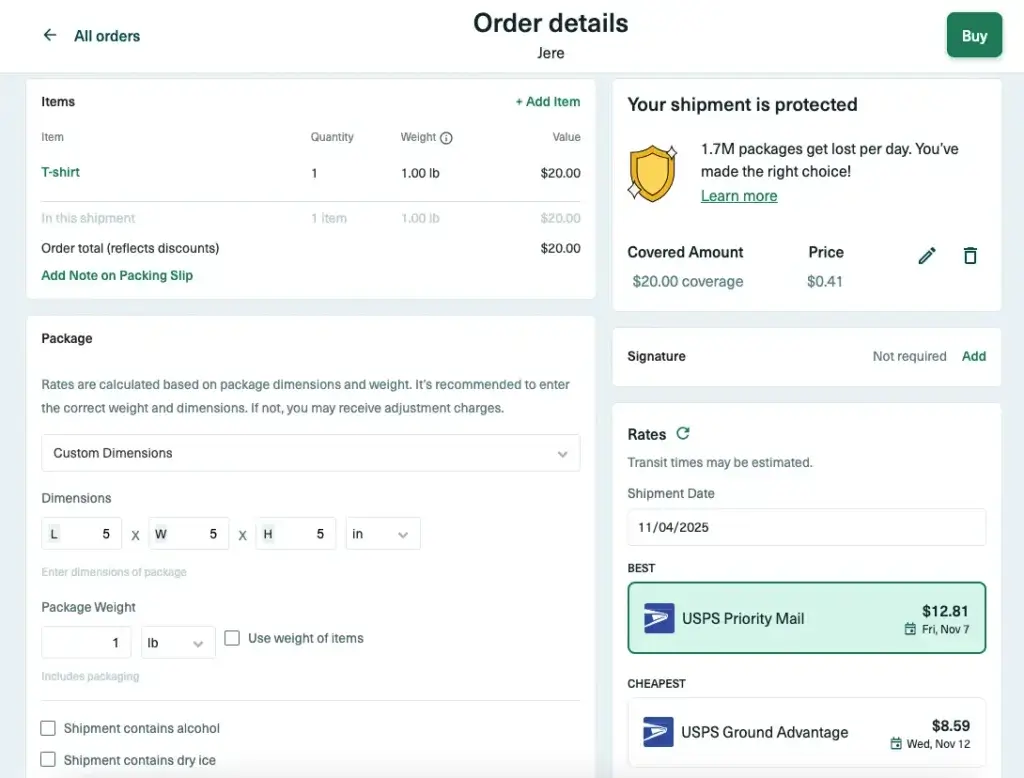
Shippo is a multi-carrier shipping platform designed for ecommerce businesses that want a simpler way to connect stores, access carrier rates, print labels, manage tracking, and support returns. It is especially appealing for small businesses, startups, and teams that want strong shipping functionality without heavy operational complexity.
One of Shippo’s biggest advantages is its balance between usability and flexibility. You can use it as a shipping app connected to your ecommerce store, or use its API to build shipping into your own platform, marketplace, or internal system.
Shippo is a good fit if you need core shipping features such as label creation, tracking, returns, address validation, and carrier access, but do not want the heavier warehouse-style configuration that some larger platforms require.
Top Features:
✅ Access to discounted rates from 40+ global carriers.
✅ Label buying and printing from connected ecommerce stores.
✅ Shipment tracking and customer notifications.
✅ Return label generation and return workflow support.
✅ Developer-friendly API for custom shipping workflows.
Top Benefits:
Shippo helps you simplify shipping without losing flexibility. It reduces the need to switch between carrier websites, copy tracking numbers manually, or handle return labels through disconnected processes.
The API is a major advantage for technical teams. If your business needs embedded shipping, custom checkout logic, marketplace shipping, or automated backend fulfillment flows, Shippo gives you a more developer-friendly path.
For many ecommerce sellers, Shippo is easier to adopt than more complex tools while still offering enough functionality to support growth.
Why It’s Recommended:
Shippo is recommended for small businesses and growing ecommerce brands that want straightforward multi-carrier shipping with room to scale. It is also one of the best choices on this list for API-first shipping workflows.
Compared with ShipStation, Shippo generally feels lighter and more flexible for simple operations. ShipStation is stronger when you need deeper automation and multi-channel operational controls.
Pros and cons
Pros
✅ Easy to use
✅ Strong API flexibility
✅ Good for small businesses
✅ Solid tracking and returns tools
Cons
❌ Less advanced warehouse functionality
❌ Automation depth may not fit complex teams
❌ High-volume sellers may need more controls
❌ Some carrier needs may require extra setup
Easyship

Overview:
Easyship is ecommerce shipping software built for sellers that need strong domestic and international shipping capabilities. It helps you compare courier rates, print discounted labels, automate shipping workflows, show calculated rates at checkout, and manage taxes and duties for cross-border orders.
The platform is especially relevant if your store sells internationally. Cross-border shipping is more complex than domestic shipping because you need to consider courier availability, delivery speed, customs, duties, taxes, landed costs, and customer expectations at checkout.
Easyship gives you more visibility into those decisions. You can compare courier options, automate shipping rules, manage tracking, and give customers more transparent delivery options before they buy.
Top Features:
✅ Courier comparison for domestic and international shipping.
✅ Discounted label buying and printing.
✅ Checkout rate options with delivery estimates.
✅ Shipping automation rules for order workflows.
✅ Tax, duty, customs, tracking, and delivery experience tools.
Top Benefits:
Easyship’s biggest benefit is international shipping confidence. It helps you make better courier decisions, show more accurate delivery options, and reduce confusion around duties and taxes.
This matters because unexpected shipping costs are one of the main reasons customers abandon checkout. When you can show clearer delivery choices and landed-cost information, you create a smoother buying experience.
Easyship also helps operations teams reduce repetitive work through automation. You can create rules for courier selection, package preferences, customs handling, and other shipping decisions.
Why It’s Recommended:
Easyship is recommended for ecommerce businesses that sell internationally or plan to expand into global markets. It is also a strong option if checkout transparency, courier comparison, and customs-related workflows are priorities.
If your business ships mostly domestic orders and needs deep multi-channel fulfillment automation, ShipStation may be a stronger fit. If global shipping is central to your growth strategy, Easyship deserves serious consideration.
Pros and cons
Pros
✅ Strong international shipping tools
✅ Useful checkout rate features
✅ Courier comparison is easy to use
✅ Good tax and duty visibility
Cons
❌ May be more than domestic-only sellers need
❌ Advanced settings require setup time
❌ Pricing can vary by usage and plan
❌ Best value depends on global shipping volume
ShipAccel

Overview:
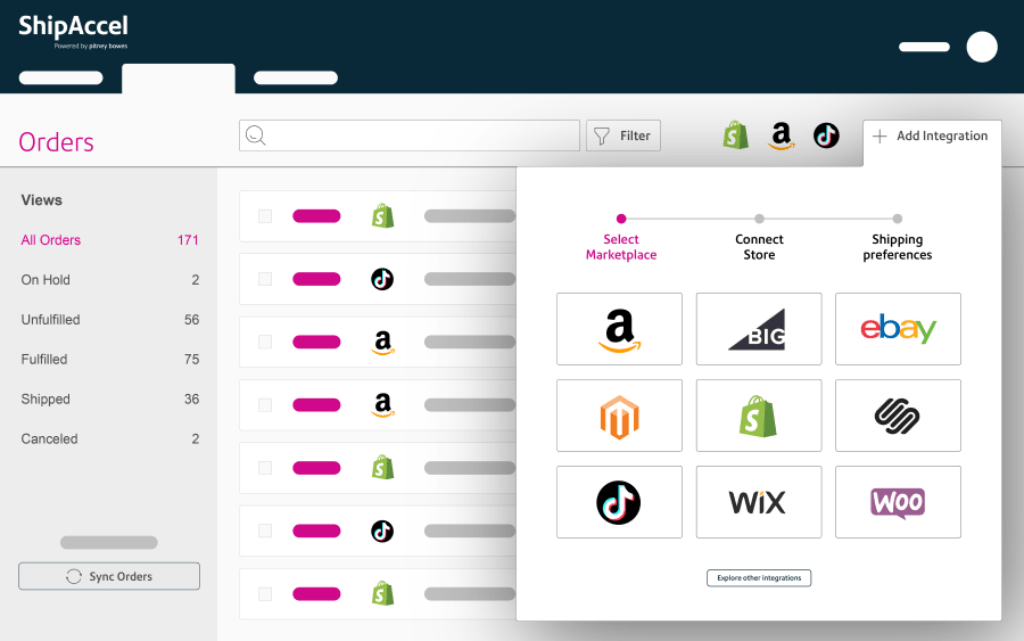
ShipAccel is ecommerce fulfillment software from Pitney Bowes. It is designed for online sellers that need more than basic label printing, with tools for order management, fulfillment automation, live rate shopping, branded tracking, returns, customer support, and shipping analytics.
The platform is a strong fit for growing ecommerce businesses that want more control over the shipping process. You can manage orders from connected channels, compare carrier rates, automate repetitive fulfillment work, and monitor shipping performance from a more operational dashboard.
ShipAccel sits between simple label software and broader logistics systems. It is useful when your team wants better automation and visibility but still wants to manage shipping internally.
Top Features:
✅ Multi-channel order management for ecommerce sellers.
✅ Fulfillment automation rules for repetitive shipping tasks.
✅ Multi-carrier rate shopping across major carriers.
✅ Branded tracking and returns for customer experience.
✅ Shipping and order analytics for operational visibility.
Top Benefits:
ShipAccel’s main benefit is operational control. It helps ecommerce teams improve how they select carriers, process orders, communicate tracking, manage returns, and analyze shipping performance.
For growing stores, this visibility is valuable. Shipping cost, delivery performance, and fulfillment speed can all affect profitability. ShipAccel gives you tools to monitor those areas and make better operational decisions.
Its branded tracking and returns features are also important because shipping does not end when the label is printed. A better post-purchase experience can reduce support tickets and improve customer trust.
Why It’s Recommended:
ShipAccel is recommended for ecommerce brands that are growing beyond basic label tools and need stronger automation, analytics, and branded customer-facing shipping workflows.
If you want a more operations-focused shipping platform, but you are not ready to outsource fulfillment to a 3PL, ShipAccel is a strong option to compare with ShipStation and Easyship.
Pros and cons
Pros
✅ Strong ecommerce automation
✅ Branded tracking and returns
✅ Useful shipping analytics
✅ Good for scaling operations
Cons
❌ May be too advanced for beginners
❌ Smaller brand awareness than ShipStation
❌ Setup requires workflow planning
❌ Best fit depends on shipping volume
Pirate Ship

Overview:
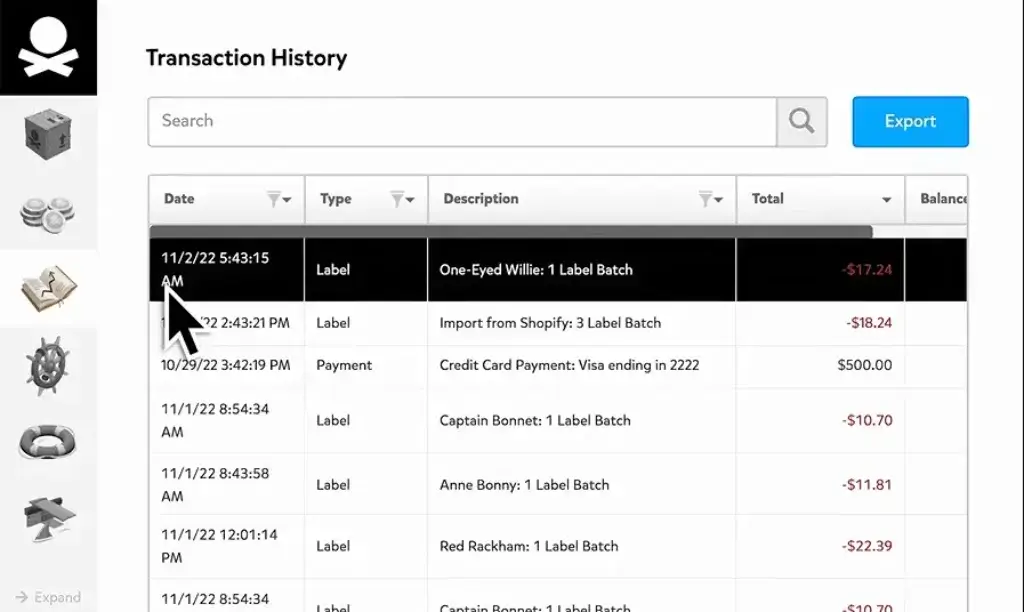
Pirate Ship is free shipping software focused on USPS and UPS labels. It is popular with small ecommerce sellers, marketplace sellers, creators, and businesses that want discounted shipping rates without paying a monthly subscription.
The platform is intentionally simple. You can compare USPS and UPS services, buy labels, print labels, track shipments, upload spreadsheets, and connect ecommerce stores. This makes it attractive for sellers that need shipping efficiency but do not need complex warehouse automation.
Pirate Ship is not trying to be the most advanced shipping operations platform. Its strength is affordability and ease of use. For many small sellers, that is exactly what makes it valuable.
Top Features:
✅ Free USPS and UPS-certified shipping software.
✅ Discounted USPS and UPS shipping rates.
✅ Rate comparison by cost and delivery speed.
✅ Single labels, spreadsheet uploads, and ecommerce store connections.
✅ Shipment tracking and simple reporting tools.
Top Benefits:
Pirate Ship’s main benefit is cost control. You do not pay a monthly platform fee, which makes it easier for low-volume sellers to access discounted shipping without increasing fixed software expenses.
The platform is also easy to use. If your main need is comparing USPS and UPS rates, printing labels, and tracking shipments, Pirate Ship can help you get shipping under control quickly.
For small sellers, this simplicity can be better than a larger platform with more features than the business currently needs.
Why It’s Recommended:
Pirate Ship is recommended for small ecommerce sellers that want a free, straightforward way to buy discounted USPS and UPS labels. It is especially useful when budget, simplicity, and fast adoption matter more than advanced automation.
If you need broad carrier coverage, international checkout tools, or deep automation, ShipStation, Easyship, or ShipAccel may be stronger options. If you want simple and affordable USPS and UPS shipping, Pirate Ship is one of the easiest tools to recommend.
Pros and cons
Pros
✅ No monthly software fee
✅ Very easy to use
✅ Strong USPS and UPS discounts
✅ Great for small sellers
Cons
❌ Limited mainly to USPS and UPS
❌ Less advanced automation than larger tools
❌ Not ideal for complex warehouses
❌ Fewer enterprise-level controls
How to Choose the Best Ecommerce Shipping Software
The best ecommerce shipping software depends on your shipping volume, product type, sales channels, carrier mix, and customer expectations. A small Etsy seller does not need the same workflow as a high-volume Shopify brand shipping internationally.
Before choosing a platform, map your current process from order import to delivery confirmation. Then identify where your team loses the most time, money, or accuracy.
1. Start With Your Shipping Volume
If you ship a few orders per week, Pirate Ship or Shippo may be enough. Both can help you buy labels, access discounted rates, and manage tracking without building a complex shipping operation.
If you ship daily across several sales channels, ShipStation becomes more attractive because it gives you stronger automation, batch shipping, and multi-channel controls.
If your order volume is increasing and shipping performance is becoming harder to monitor, ShipAccel may be a better operational fit.
2. Review Your Carrier Needs
Carrier support matters because not every shipping platform fits every delivery strategy. If your business mainly uses USPS and UPS, Pirate Ship can be very cost-effective.
If you need broader carrier access, ShipStation, Shippo, Easyship, or ShipAccel may be better options. If international shipping is a major part of your business, Easyship is especially relevant because it focuses heavily on courier comparison, taxes, duties, and checkout delivery options.
3. Decide How Much Automation You Need
Automation is one of the strongest reasons to use ecommerce shipping software. It helps reduce manual decisions, improve consistency, and speed up fulfillment.
For example, you may want to automatically choose the cheapest service for lightweight domestic orders, use a faster carrier for premium orders, add insurance to high-value shipments, or assign shipping rules by marketplace.
ShipStation and ShipAccel are especially strong when automation becomes important. Easyship is also useful for sellers that need rules for courier selection and international shipping workflows.
4. Consider the Customer Experience
Shipping software affects more than internal fulfillment. It also shapes what customers see after they place an order.
Tracking emails, branded tracking pages, delivery estimates, checkout shipping options, and return labels all influence trust. ShipAccel is strong for branded tracking and returns, while Easyship is strong for checkout transparency and international delivery choices.
5. Compare Total Cost, Not Only the Monthly Fee
A free or low-cost plan may look attractive, but the real cost includes postage, carrier rates, labor time, error reduction, automation, support, integrations, and reporting.
For a small seller, Pirate Ship’s no-monthly-fee model may be the best financial choice. For a growing ecommerce team, a paid platform may save more money by reducing labor, improving rate selection, and avoiding fulfillment mistakes.
Key Features to Look For in Ecommerce Shipping Software
Most ecommerce sellers should compare platforms based on a core set of capabilities. The priority depends on your business model, but these features are usually the most important.
Carrier Rate Comparison
Rate comparison helps you choose between carriers and services based on cost, delivery speed, and order requirements. This is essential when shipping costs directly affect margins.
Label Printing
Label printing is the core function of any ecommerce shipping platform. The best tools support single labels, batch labels, connected store orders, and saved package settings.
Sales Channel Integrations
Your shipping software should connect with the stores and marketplaces you already use. This reduces manual order entry and helps tracking updates flow back to customers.
Automation Rules
Automation rules help you apply repeatable decisions to orders. This can include carrier selection, package type, insurance, tags, delivery speed, or warehouse routing.
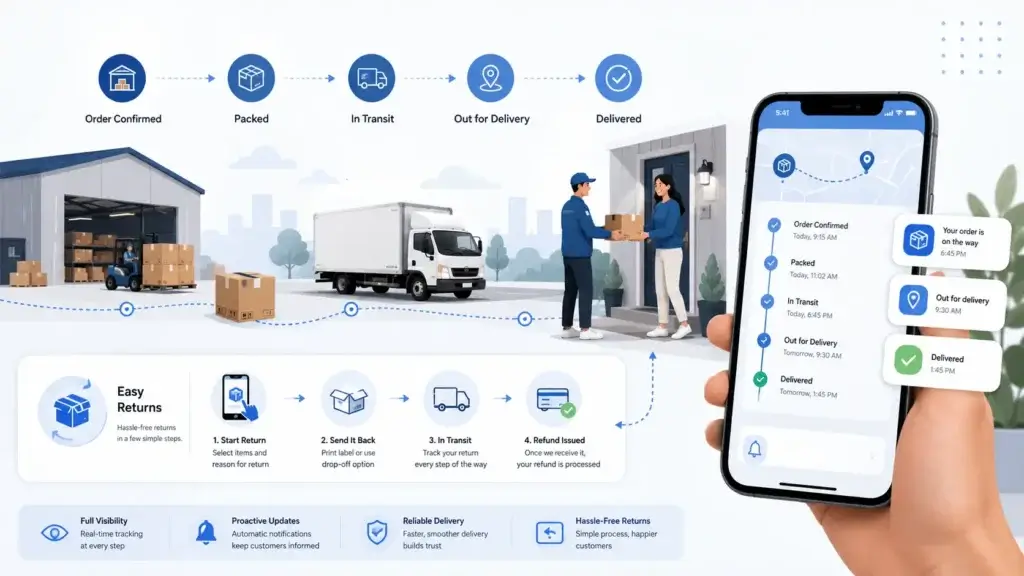
Tracking Notifications
Tracking tools keep customers informed after purchase. Better tracking communication can reduce support tickets and improve the post-purchase experience.
Returns Management
Returns are part of ecommerce. A platform that supports return labels and customer-friendly return workflows can save time for both your operations and support teams.
International Shipping Support
If you sell globally, look for customs forms, duties and taxes, international carrier options, checkout delivery estimates, and landed-cost visibility.
Analytics and Reporting
Shipping analytics help you understand fulfillment speed, carrier performance, shipping costs, and order trends. This becomes more important as volume grows.
Which Ecommerce Shipping Software Should You Choose?
If you want the strongest overall ecommerce shipping platform for multi-channel selling, choose ShipStation. It offers the best mix of automation, integrations, carrier comparison, batch shipping, and scalable workflows.
If you want simple multi-carrier shipping with strong API flexibility, choose Shippo. It is a strong fit for small businesses, startups, and teams that want developer-friendly shipping infrastructure.
If your store sells internationally or needs better checkout transparency, choose Easyship. It is especially useful for global courier comparison, taxes, duties, automation, and international delivery options.
If your ecommerce operation needs more workflow control, branded tracking, returns, and analytics, choose ShipAccel. It is built for growing sellers that want to manage shipping more strategically.
If you want free USPS and UPS label software, choose Pirate Ship. It is one of the best options for small sellers that care most about simplicity and discounted rates without a monthly platform fee.
Conclusion
The best ecommerce shipping software in 2026 depends on how your business ships, where your customers are located, and how much automation your team needs.
ShipStation is the best overall choice for growing multi-channel ecommerce sellers. Shippo is ideal for small businesses and API-first shipping. Easyship is the strongest option for international ecommerce shipping. ShipAccel is best for growing brands that need automation, branded tracking, returns, and analytics. Pirate Ship is the best free option for simple USPS and UPS shipping.
Before choosing, review your order volume, carrier mix, sales channels, international needs, automation requirements, and return process. The right platform should help you print labels faster, reduce manual work, control shipping costs, and deliver a better customer experience after checkout.
FAQ
What is ecommerce shipping software?
Ecommerce shipping software is a platform that helps online sellers manage shipping tasks such as importing orders, comparing carrier rates, printing labels, sending tracking updates, automating fulfillment rules, and handling returns.
What is the best ecommerce shipping software?
ShipStation is one of the best overall ecommerce shipping software options because it offers multi-channel order management, carrier rate comparison, batch labels, automation rules, tracking, returns, and scalable fulfillment workflows.
Is Shippo better than ShipStation?
Shippo is often better for small businesses, startups, and API-first shipping workflows. ShipStation is usually better for sellers that need deeper automation, batch processing, multi-channel order management, and more advanced fulfillment controls.
What is Easyship best for?
Easyship is best for ecommerce businesses that ship internationally. It helps sellers compare couriers, print discounted labels, automate shipping rules, show checkout rates, and manage taxes, duties, customs, and tracking workflows.
What is ShipAccel used for?
ShipAccel is used by ecommerce businesses to manage orders, automate fulfillment, compare multi-carrier rates, create branded tracking and returns experiences, support customers, and analyze shipping performance.
Is Pirate Ship really free?
Pirate Ship is free shipping software for USPS and UPS labels. Users do not pay a monthly software fee, and the main cost is the postage purchased through the platform.
Which ecommerce shipping software is best for small businesses?
Pirate Ship and Shippo are strong options for small businesses. Pirate Ship is best for simple USPS and UPS labels with no monthly fee, while Shippo is better for sellers that want broader carrier access, tracking, returns, and API flexibility.
Which ecommerce shipping software is best for international shipping?
Easyship is one of the best ecommerce shipping software options for international shipping because it focuses on courier comparison, global delivery options, checkout rates, taxes, duties, customs, and cross-border tracking workflows.
Can ecommerce shipping software reduce shipping costs?
Yes. Ecommerce shipping software can reduce costs by helping sellers access discounted carrier rates, compare delivery options, automate fulfillment decisions, reduce manual errors, and improve visibility into shipping performance.
How do I choose ecommerce shipping software?
Choose ecommerce shipping software based on your order volume, sales channels, carrier needs, international shipping requirements, automation depth, tracking expectations, return process, reporting needs, and total cost of ownership.