Introduction
Understanding ITSM vs DevOps is essential if your organization wants to improve IT service delivery without slowing down software innovation.
At first, IT Service Management and DevOps can seem like two opposing approaches. ITSM focuses on stability, governance, service quality, compliance, and structured processes. DevOps focuses on speed, collaboration, automation, continuous delivery, and rapid improvement.
However, the strongest IT teams do not treat ITSM and DevOps as competitors. They use them together.
ITSM gives your IT organization the structure needed to manage incidents, requests, changes, assets, and service expectations. DevOps gives your development and operations teams the automation, feedback loops, and delivery speed needed to release better software faster.
This guide explains the key differences between ITSM and DevOps, how they work together, which tools support the integration, and how you can combine both approaches without creating unnecessary friction.
ITSM vs DevOps: Short Answer
ITSM is a structured approach to managing IT services across their full lifecycle. It helps teams handle incidents, service requests, changes, problems, assets, knowledge, and service performance in a controlled way.
DevOps is a collaborative approach that connects software development and IT operations through automation, CI/CD pipelines, infrastructure as code, monitoring, and continuous feedback.
The main difference is that ITSM focuses on service stability and governance, while DevOps focuses on delivery speed and automation. In modern IT environments, the best approach is usually not ITSM or DevOps. It is ITSM and DevOps working together.
What is ITSM?
ITSM, or IT Service Management, is the practice of designing, delivering, managing, and improving IT services for users and the business.
Instead of viewing IT as a collection of systems, servers, tickets, and tools, ITSM views IT as a service provider. The goal is to make technology reliable, measurable, and aligned with business needs.
If you want a broader foundation before comparing ITSM and DevOps, read our complete guide on what ITSM is.
The following core disciplines define how ITSM works in practice:
- Incident management – Restores normal service after disruptions
- Service request management – Handles user requests for access, support, and services
- Change management – Controls technical changes to reduce risk
- Problem management – Identifies root causes behind recurring incidents
- Asset management – Tracks hardware, software, licenses, and ownership
- Configuration management – Maps relationships between systems, services, and assets
- Knowledge management – Helps teams document fixes and reduce repeated work
Core ITSM Frameworks
ITSM is not one single framework. It is a discipline that can be supported by several frameworks, standards, and methodologies.
- ITIL – A widely adopted framework for IT service management best practices
- COBIT – A governance framework focused on risk, control, and compliance
- MOF – A Microsoft-oriented framework for IT operations and service management
- VeriSM – A flexible service management approach for digital organizations
- Agile ITSM – A practical approach that brings iterative improvement into service management
What is DevOps?
DevOps is a cultural and technical approach that brings software development and IT operations closer together.
Its goal is to help teams build, test, release, monitor, and improve software faster, without sacrificing reliability. DevOps reduces handoffs between development, operations, QA, security, and infrastructure teams by encouraging shared ownership and automation.
Common DevOps practices include:
- CI/CD pipelines – Automating software build, test, and deployment processes
- Infrastructure as Code – Managing infrastructure through code instead of manual configuration
- Automated testing – Validating code before it reaches production
- Monitoring and observability – Tracking system health, logs, traces, and performance
- Containerization – Packaging applications for consistency across environments
- Continuous feedback – Using production data to improve future releases
DevOps is not only about tools. Tools support DevOps, but the real value comes from improving collaboration, reducing delays, automating repetitive work, and learning from every release.
Where ITIL 4 High-Velocity IT Fits Into ITSM and DevOps
One reason ITSM and DevOps are often misunderstood is that some teams still associate ITSM with slow approvals and rigid processes. Modern ITSM is much more flexible than that.
ITIL 4 includes the concept of High-Velocity IT, which focuses on applying service management in fast-moving digital environments. This is where ITSM starts to align more naturally with Agile, Lean, automation, cloud, and DevOps practices.
In a high-velocity IT environment, the goal is not to create bureaucracy. The goal is to deliver digital services quickly while keeping enough governance, resilience, and visibility to protect the business.
This matters because DevOps teams often move quickly, but speed without service management can create risk. ITSM helps introduce guardrails, service accountability, audit trails, and incident response workflows.
In modern ITIL 4 environments, change management is often reframed as change enablement. That shift is important. The goal is not to slow releases down. The goal is to make changes successful, traceable, and proportionate to risk.
For a deeper comparison of ITIL’s role in service management, see our guide to ITSM vs ITIL.
Key Differences Between ITSM and DevOps
Understanding the differences between ITSM and DevOps helps you see where each approach adds value.
ITSM is usually strongest when you need service structure, compliance, incident workflows, approvals, and accountability. DevOps is strongest when you need faster delivery, automated testing, infrastructure automation, and continuous improvement.
The table below compares the two approaches across the areas that matter most for IT leaders, service desk managers, developers, and operations teams.
| Aspect | ITSM | DevOps |
| Primary Goal | Deliver stable, reliable, and governed IT services | Deliver software and infrastructure changes faster |
| Main Focus | Service quality, support, compliance, and control | Automation, collaboration, speed, and feedback |
| Typical Users | IT service desk, IT operations, support, service owners | Developers, operations engineers, platform teams, SREs |
| Core Processes | Incidents, requests, problems, changes, assets, knowledge | CI/CD, automated testing, monitoring, IaC, release automation |
| Change Approach | Risk-based approvals and controlled change records | Frequent deployments supported by automation and testing |
| Automation Role | Automates tickets, approvals, routing, and service workflows | Automates build, test, deployment, infrastructure, and recovery |
| Success Metrics | SLA performance, incident resolution time, change success rate | Deployment frequency, lead time, change failure rate, recovery time |
| Best Used For | Structured service management and operational governance | Fast software delivery and continuous operational improvement |
ITSM vs DevOps: When Should You Use Each?
You should use ITSM when your main challenge is managing IT services in a consistent, measurable, and controlled way.
This includes handling user tickets, tracking incidents, managing service requests, controlling changes, documenting assets, and maintaining compliance. ITSM is especially useful for organizations that need SLAs, audit trails, clear ownership, and repeatable service processes.
You should use DevOps when your main challenge is improving software delivery, reducing deployment friction, automating infrastructure, and improving collaboration between development and operations teams.
In most organizations, you need both. ITSM gives you structure and accountability. DevOps gives you automation and speed.
| Scenario | Better Fit | Why It Matters |
| Managing user tickets and service requests | ITSM | ITSM provides intake, routing, prioritization, SLAs, and ownership |
| Automating code deployments | DevOps | DevOps uses CI/CD pipelines to release software faster and more reliably |
| Tracking approvals and audit history | ITSM | ITSM helps maintain governance, change records, and compliance visibility |
| Reducing deployment failures | Both | DevOps improves testing, while ITSM adds change risk controls |
| Improving incident response | Both | ITSM manages the incident workflow, while DevOps improves monitoring and remediation |
| Modernizing IT operations | Both | ITSM creates service structure, while DevOps adds automation and continuous improvement |
How ITSM and DevOps Work Together in Modern IT Environments
The strongest IT organizations connect ITSM and DevOps instead of forcing teams to choose between them.
When the two approaches work together, ITSM provides the service management layer, and DevOps provides the automation and delivery layer. This allows teams to release faster while still maintaining visibility, governance, and service quality.
1. Change Enablement Connects ITSM Governance With DevOps CI/CD
Change is one of the most important connection points between ITSM and DevOps.
Traditional change management often required manual approval for every change. That approach can slow DevOps teams down, especially when they deploy frequently.
A better model is risk-based change enablement. Low-risk, pre-approved changes can move automatically through the pipeline. Higher-risk changes can trigger additional review, documentation, or approval.
For example, a minor code update that passes automated tests may be approved automatically. A major infrastructure change that affects customer-facing services may still require review by a change advisory board or service owner.
2. Incident Management Improves With DevOps Monitoring and Automation
ITSM incident management focuses on restoring service as quickly as possible. DevOps strengthens that process by adding monitoring, observability, and automated remediation.
When monitoring tools detect an issue, they can trigger an alert, create an incident, assign it to the right team, and attach useful context such as logs, deployment history, and affected services.
This reduces the time your team spends investigating from scratch.
For example, if a deployment causes errors in production, your ITSM platform can automatically link the incident to the related change, release, service, and team. This gives support teams and engineers a shared view of the issue.
3. Problem Management Becomes More Data-Driven
Problem management is about identifying and removing the root causes of recurring incidents.
DevOps improves problem management by giving teams access to richer operational data. Logs, traces, metrics, deployment records, and pipeline history can help teams understand whether incidents are tied to code changes, infrastructure changes, capacity issues, failed dependencies, or configuration drift.
This turns problem management from a reactive process into a more analytical discipline.
4. AI and Automation Reduce Manual Service Work
AI is becoming increasingly important in both ITSM and DevOps.
In ITSM, AI can help classify tickets, suggest knowledge base articles, recommend resolutions, summarize incidents, and route requests to the right team. In DevOps, AI can support anomaly detection, predictive analytics, automated testing, and incident correlation.
When combined, AI-powered ITSM and DevOps workflows can help your team reduce repetitive work and focus on higher-value operational improvements.
For a deeper look at this trend, see our guide to AI in ITSM.
5. Security and Compliance Become Easier to Track
DevOps increases deployment speed, but speed can create risk if security and compliance are treated as separate steps.
ITSM helps by providing policies, approvals, records, ownership, and audit trails. DevOps helps by automating security checks, vulnerability scans, configuration validation, and patching processes.
Together, they support a stronger operating model where governance is built into the workflow instead of added after the work is complete.
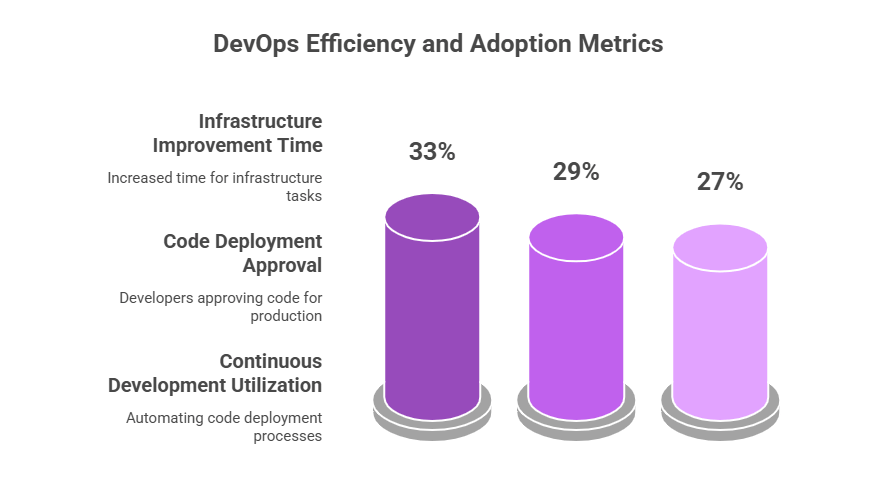
While ITSM focuses on structured processes and governance, DevOps prioritizes agility and automation, with 29% of developers approving code deployments to production and 27% leveraging continuous development for automated deployments. Organizations that have adopted DevOps also report a 33% increase in time available for infrastructure improvements, showing how automation can free teams from repetitive operational work.
Example Workflow
From Code Change to Service Desk Visibility
A practical ITSM and DevOps integration connects development activity with service management visibility.
Here is a simple example of how the workflow can look:
- A developer commits code to GitHub, GitLab, Bitbucket, or another repository.
- The CI/CD pipeline runs automated tests and security checks.
- A change record is created or updated in the ITSM platform.
- Low-risk changes are approved automatically based on predefined rules.
- Higher-risk changes are routed for review by the right owner.
- The deployment is completed through the DevOps pipeline.
- Monitoring tools track service performance after release.
- If an issue occurs, an incident is created and linked to the deployment.
- The team reviews the incident, identifies root causes, and updates knowledge articles.
This gives you the best of both approaches. DevOps teams keep moving quickly, while ITSM teams maintain service visibility, change traceability, and accountability.
This type of workflow is especially important when choosing ITSM software, because the right platform should support both structured IT processes and automation-friendly workflows.
Top ITSM Tools for DevOps Integration
Selecting the right ITSM tool is crucial if you want to streamline IT operations while integrating DevOps practices. The ideal platform should support automation, change enablement, incident management, monitoring visibility, integrations, and flexible workflows.
For a broader comparison of leading ITSM solutions, check out our Best ITSM Software guide.
Freshservice

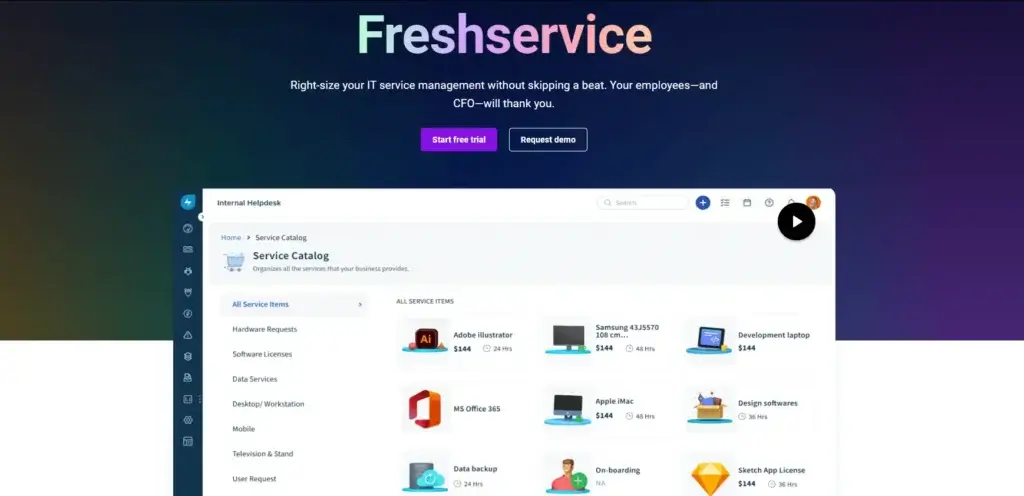
Freshservice is a strong option for teams that want ITSM workflows connected to DevOps activity. It is especially relevant when change records, incidents, approvals, and deployment workflows need to stay visible in one place.
- Best for: AI-driven ITSM, change workflows, and service automation
- DevOps fit: Useful for connecting service desk activity with development workflows
- Why it matters: Helps teams maintain visibility and auditability across changes
NinjaOne
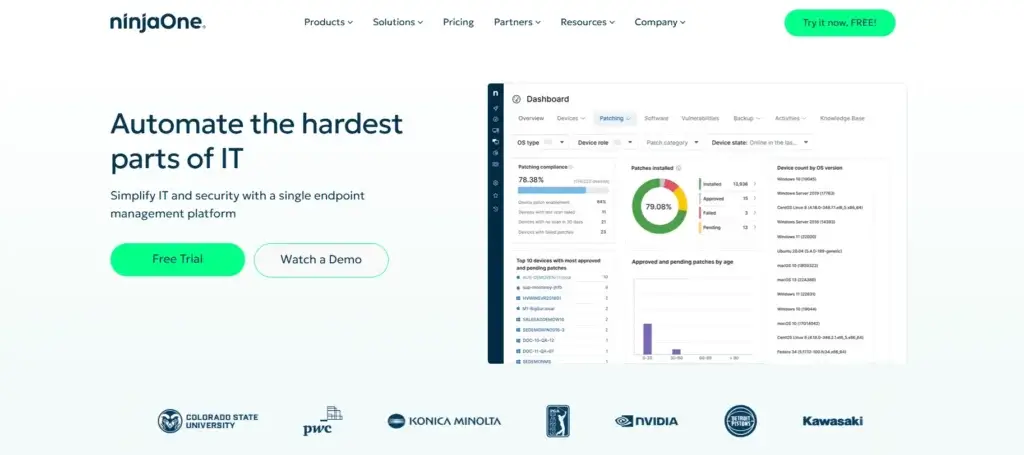
NinjaOne fits the operational side of the ITSM and DevOps conversation. It is especially useful for teams that need proactive monitoring, patch automation, endpoint visibility, and remediation workflows.
- Best for: Endpoint management, monitoring, patching, and automation
- DevOps fit: Helps operations teams identify and resolve infrastructure issues faster
- Why it matters: Supports proactive incident response before issues affect users
monday service

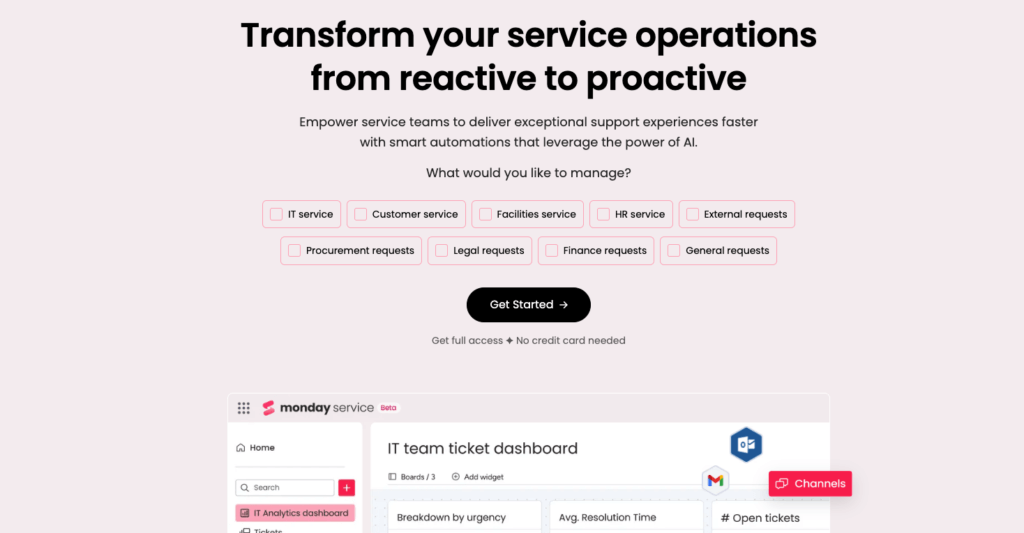
monday service is useful for teams that want customizable ITSM workflows and a visual way to coordinate service requests, approvals, and operational tasks across departments.
- Best for: Flexible no-code IT workflows and service request management
- DevOps fit: Helps teams build approval workflows and operational dashboards
- Why it matters: Works well for teams that want adaptability without heavy complexity
ManageEngine ServiceDesk Plus

ManageEngine ServiceDesk Plus can be positioned as a practical ITSM option for teams that want incident, change, asset, and service desk capabilities with room to coordinate IT operations and development workflows.
- Best for: Mid-market ITSM teams that need structured service workflows
- DevOps fit: Supports change tracking, issue resolution, and workflow coordination
- Why it matters: Gives IT teams operational structure without requiring an overly complex setup
Comparison Table: Best ITSM Tools for DevOps Integration
The best tool depends on your organization’s maturity, workflows, and technical environment. Some platforms are stronger for service desk automation, while others are better for endpoint visibility, flexible workflows, or DevOps-heavy change coordination.
| ITSM Tool | Best For | How It Supports ITSM and DevOps |
| Freshservice | AI-driven ITSM and change workflows | Connects service desk, change management, and DevOps integrations |
| NinjaOne | Monitoring, patching, and endpoint automation | Supports proactive incident response and automated remediation |
| monday service | Custom service workflows | Helps teams build flexible workflows for approvals and requests |
| ManageEngine ServiceDesk Plus | Mid-market ITSM teams | Combines incident, change, asset, and service desk workflows |

Common Mistakes When Integrating ITSM and DevOps
Many organizations struggle with ITSM and DevOps integration because they treat one approach as a replacement for the other.
This creates unnecessary friction. DevOps teams may see ITSM as slow and bureaucratic. ITSM teams may see DevOps as risky and uncontrolled. In reality, both perspectives usually come from poor implementation rather than the methods themselves.
Here are the most common mistakes to avoid:
- Using manual approvals for every change – Low-risk changes should often be automated
- Treating DevOps as only a toolchain – DevOps also requires culture and shared ownership
- Separating incidents from deployment history – Teams need visibility into what changed
- Tracking only service desk metrics – You also need deployment and reliability metrics
- Ignoring documentation – Speed should not eliminate knowledge sharing
- Choosing disconnected tools – Poor integrations create more manual work
The goal is not to force DevOps teams into slow service desk processes. It is also not to remove governance from ITSM. The goal is to create lightweight controls that support faster, safer delivery.
Best Practices for Integrating ITSM and DevOps
Successfully merging ITSM and DevOps requires a strategic approach. You need to preserve the strengths of both methods while removing the friction that slows teams down.
Use Risk-Based Change Models
Not every change needs the same approval process. A standard, low-risk change can often be automated. A high-risk production change may still require review.
This helps DevOps teams move quickly while allowing ITSM teams to maintain governance where it matters most.
Connect CI/CD Pipelines With ITSM Workflows
Your deployment activity should not live in isolation from your service management process.
When CI/CD pipelines connect with ITSM tools, changes can be documented automatically. Incidents can be linked to releases. Service owners can see which changes affected which systems.
Build Shared Incident Response Workflows
Incident response should not stop at the service desk.
When an incident is related to code, infrastructure, or deployment activity, development and operations teams need a shared workflow. This helps teams restore service faster and avoid repeated issues.
Use Automation Without Removing Accountability
Automation should reduce repetitive work, not remove ownership.
For example, automated approval rules can speed up low-risk changes, but teams should still track ownership, service impact, and rollback plans.
Create Feedback Loops Between Support and Development
Service desk teams often hear about user pain before development teams do.
When support tickets, incident trends, and problem records flow back into development planning, teams can prioritize fixes that improve real service quality.
Review Metrics Regularly
ITSM and DevOps teams should review shared metrics together. This prevents one team from optimizing speed while another absorbs the operational risk.
The best integration balances delivery performance with service reliability.
Key Metrics to Track When Combining ITSM and DevOps
The best way to align ITSM and DevOps is to measure both service quality and delivery performance.
ITSM teams often focus on operational metrics, while DevOps teams focus on software delivery metrics. When you combine both views, you get a clearer picture of whether your IT organization is moving faster without increasing service risk.
| Metric | Commonly Used In | What It Shows |
| Incident resolution time | ITSM | How quickly the team restores normal service |
| SLA compliance | ITSM | Whether the team meets expected service commitments |
| Change success rate | ITSM | How often changes are completed without disruption |
| Deployment frequency | DevOps | How often the team successfully releases changes to production |
| Lead time for changes | DevOps | How long it takes code to move from commit to production |
| Change failure rate | Both | How often deployments or changes cause incidents or failures |
| Failed deployment recovery time | Both | How quickly teams recover when a deployment creates a production issue |
These metrics help your team avoid a common problem: improving speed while silently increasing operational risk.
If deployment frequency increases but incidents also increase, your team may need stronger testing, better change classification, improved monitoring, or clearer rollback procedures.
Conclusion
ITSM and DevOps are not opposing strategies. They solve different problems, and they become more powerful when used together.
ITSM gives your organization structure, governance, service visibility, and accountability. DevOps gives your teams automation, faster delivery, stronger collaboration, and continuous feedback.
The real opportunity is to combine them in a practical way. Use ITSM to manage services, changes, incidents, and accountability. Use DevOps to automate delivery, improve feedback loops, and reduce manual operational work.
With tools like Freshservice, NinjaOne, monday service, and ManageEngine ServiceDesk Plus, organizations can streamline IT service management while supporting faster, more reliable software delivery.
To explore more tools and compare broader options, visit our in-depth guide on the Best ITSM Software.
FAQ
Is DevOps part of ITSM?
DevOps is not directly part of ITSM, but it works well alongside it. ITSM provides structure for managing services, incidents, requests, and changes, while DevOps improves software delivery through automation, collaboration, and continuous feedback.
What is the difference between DevOps and ITIL?
ITIL is a framework for IT service management, while DevOps is a methodology for improving collaboration between development and operations teams. ITIL focuses on service quality and governance, while DevOps focuses on automation, CI/CD, and faster delivery.
Are ITSM and DevOps complementary?
Yes. ITSM and DevOps are complementary when implemented correctly. ITSM helps maintain service stability, accountability, and governance, while DevOps helps teams automate releases, improve collaboration, and respond faster to operational issues.
Does DevOps replace ITIL?
No. DevOps does not replace ITIL. Modern organizations can use ITIL practices to manage services and governance while using DevOps practices to improve automation, release speed, and collaboration across technical teams.
Is Agile part of ITSM?
Agile is not a core ITSM process, but Agile principles can improve ITSM. Agile ITSM encourages iterative improvement, shorter feedback loops, flexible workflows, and closer collaboration between service teams and business users.
Is Azure DevOps an ITSM tool?
No. Azure DevOps is not an ITSM tool. It is a DevOps platform for planning, coding, building, testing, and deploying software. However, it can integrate with ITSM tools to connect development work with incidents, changes, and service workflows.
Is Jira an ITSM tool?
Jira itself is mainly used for software development and issue tracking. Jira Service Management is Atlassian’s ITSM product, supporting service requests, incidents, changes, assets, and DevOps-related workflows.
What is the biggest difference between ITSM and DevOps?
The biggest difference is the primary focus. ITSM focuses on managing IT services with structure, governance, and accountability. DevOps focuses on improving software delivery through collaboration, automation, CI/CD, and continuous improvement.
How does DevOps differ from managed services?
Managed services usually involve outsourcing IT operations or support to a provider. DevOps is an internal working model that helps development and operations teams collaborate, automate workflows, and improve software delivery.
How can organizations integrate ITIL with DevOps?
Organizations can integrate ITIL with DevOps by using risk-based change enablement, connecting CI/CD pipelines with ITSM workflows, automating low-risk approvals, linking incidents to deployments, and tracking both service and delivery metrics.