Introduction
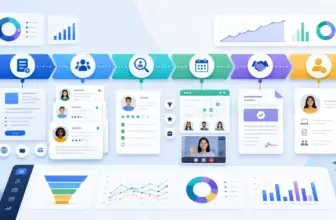
Choosing an HR platform at enterprise scale is not just about digitizing employee records. It shapes how efficiently you hire, onboard, manage payroll, support managers, plan headcount, track compliance, and connect workforce data to business decisions. In this Workday review, you will get a practical look at what Workday offers, where it stands out, where it falls short, and which kind of organization will get the most value from it.
Workday is not designed as a lightweight HR tool for small businesses. It is built for larger, more complex organizations that want an integrated Human Capital Management platform with payroll, workforce management, talent, analytics, planning, and increasingly AI-driven workflows. That enterprise focus is exactly why Workday remains one of the most important HR software platforms in 2026.
What Is Workday?
Workday is an enterprise cloud platform for managing people, payroll, time, talent, workforce planning, and finance in one connected system. On the HR side, its Human Capital Management suite covers Core HR, recruiting, onboarding, compensation, learning, talent management, absence, time tracking, scheduling, and employee experience tools.
Its biggest strength is platform breadth. Many HR products are good at one layer of the employee lifecycle, but Workday is built to unify HR operations, workforce planning, reporting, and payroll processes inside a single architecture. That makes it especially appealing if your business wants fewer silos and a stronger system of record.
Background and Positioning
Workday is positioned as an enterprise AI platform for managing people, money, and agents. In practice, that means the company is moving beyond traditional HCM messaging and putting much more emphasis on AI-powered workflows, analytics, automation, and cross-functional orchestration between HR and finance. Workday Illuminate and newer AI agent capabilities are now a central part of the platform story, especially for large organizations looking to automate routine HR and operational work.
Target Users and Use Cases
Workday is especially relevant for several buyer types:
- Large enterprises – You get the scale, governance, and process depth that complex organizations usually need.
- Global organizations – Workday is built for multinational operations, with broad payroll connectivity and workforce management support.
- HR teams that want one strategic platform – Core HR, payroll, time, talent, and analytics are more unified than in many fragmented stacks.
- Companies standardizing HR and finance systems – Workday’s broader platform approach is a major advantage when cross-functional data matters.
- Organizations with complex compliance and approval workflows – Workday is stronger when your processes are sophisticated, role-based, and audit-sensitive.
That said, Workday is usually not the best fit if you want simple self-serve pricing, a fast low-cost rollout, or a lightweight HR system for a small team. It makes the most sense when your company is large enough to benefit from its depth.
Core Features of Workday
How Does Workday Work?
Workday stands out because it combines Core HR, payroll, workforce management, talent, employee experience, planning, and analytics in one system. The value is not only that it stores employee data. It gives you a connected operating model for running people processes at scale.
Core HR and Employee Data Management
Workday Core HCM is the foundation of the platform. It centralizes worker records, job data, org structures, approvals, compensation frameworks, documents, and reporting. This is where Workday is especially strong for large organizations that need one source of truth across regions, entities, and business units.
Recruiting, Onboarding, and Talent Management
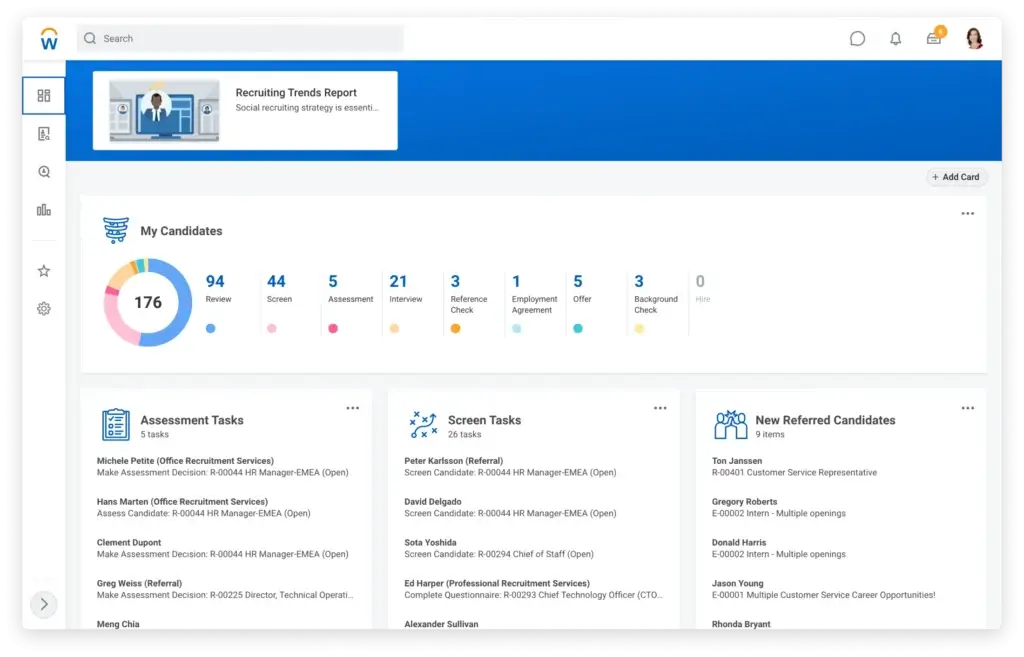
Workday supports recruiting, onboarding, learning, skills tracking, career development, performance, succession, and broader talent workflows inside the same platform. That is one of its biggest advantages over disconnected HR stacks. Instead of pushing employee data between multiple tools, you can manage much more of the talent lifecycle inside one environment.
Payroll and Global Payroll Connectivity
Workday offers native payroll capabilities and also supports global payroll management through certified partner integrations. This is a critical distinction. Workday is strong for payroll, but global payroll often relies on a combination of native coverage and partner ecosystem support. For enterprises operating in multiple countries, that flexibility is useful, but it also means you need to confirm the exact payroll model that applies to your markets.
Time Tracking, Scheduling, and Absence Management
Workday’s workforce management layer includes time tracking, scheduling, attendance controls, absence management, and labor cost visibility. This is a meaningful strength because many HR platforms handle employee records well but become much weaker when frontline operations, complex scheduling, or time compliance enter the picture.
People Analytics and Reporting
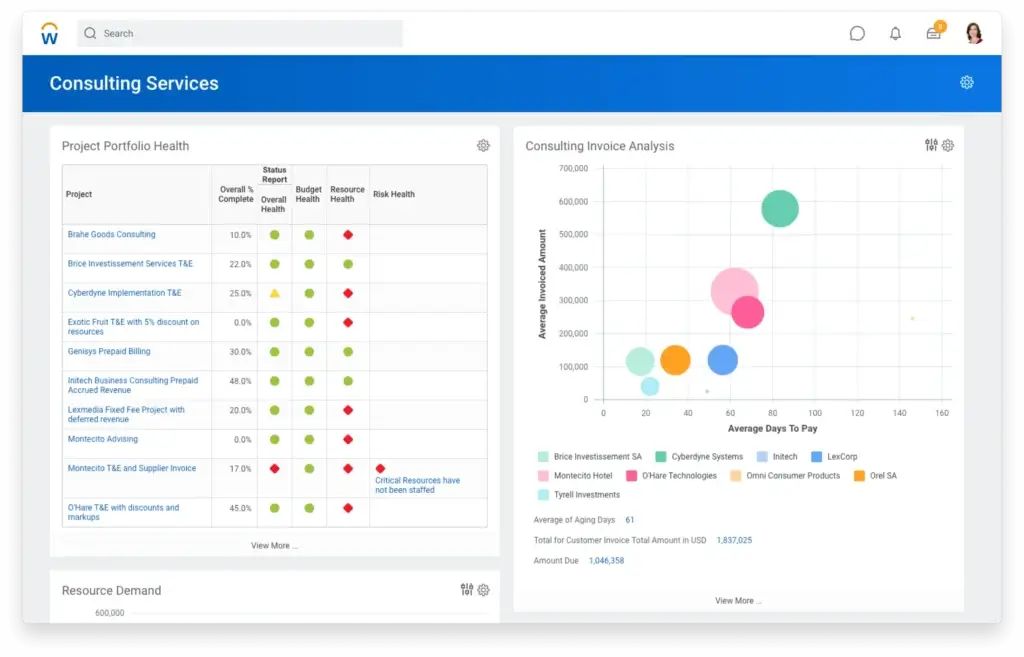
Workday has long been strong in reporting and analytics. HR leaders, finance teams, and business managers can use dashboards, workforce data, and planning views to make more informed decisions. For larger organizations, this matters because the platform is not only operational, it is also strategic.
Employee Experience and Feedback
Workday also supports the employee experience layer through tools like Workday Peakon Employee Voice. That adds continuous listening, sentiment analysis, and engagement insights to the broader platform. As a result, Workday is not only about administration; it can also support retention, manager effectiveness, and organizational health.
Business Operations Features
Workday AI, Payroll, and Integrations
One of the biggest shifts in Workday’s positioning is how central AI has become to the product story. The company now presents Workday as an AI platform for managing people, money, and agents, not just as an HCM suite.
Workday Illuminate and AI Agents
Workday Illuminate is the AI layer that powers intelligent assistance, automation, and agent-driven workflows across the platform. That includes AI support for HR processes, manager workflows, and broader enterprise tasks. This is important because Workday is no longer only selling system consolidation. It is selling automation on top of enterprise-grade workforce data.
Payroll Across Regions
For multinational companies, Workday’s payroll story is stronger than many people assume, but it is not completely simple. The platform supports global payroll integrations through a partner network covering more than 180 countries, which is excellent for enterprise flexibility. Still, buyers should always verify which parts are native, which are partner-driven, and what that means for implementation and ongoing support.
Planning and Cross-Functional Visibility
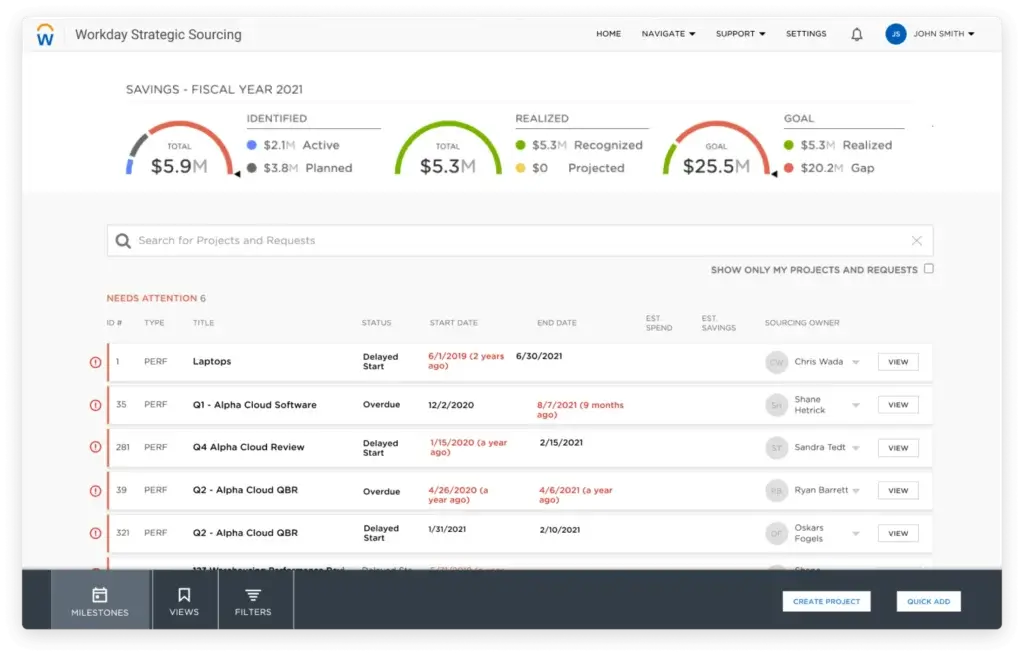
Workday becomes especially compelling when HR data needs to connect with planning and finance. If your company wants deeper visibility into labor costs, headcount trends, workforce scenarios, and organizational changes, Workday has a stronger story than HR tools that stop at administration.
Integration Ecosystem
Workday has a large partner and integration ecosystem, including certified integrations, Workday Marketplace, payroll partners, and service partners. That makes it easier to fit into a broader enterprise architecture than more closed systems. It is still a major platform project, but it is built with interoperability in mind.
Implementation Model
Implementation is one of the biggest practical considerations with Workday. This is not plug-and-play HR software. Workday offers its own deployment methodology and partner-led implementation options, with even accelerated programs still framed as structured enterprise deployments. That reality does not make Workday a weak product, but it does make it a serious commitment.
Pros and Cons
Benefits and Limitations of Using Workday
Positive
✅ Enterprise-scale architecture
✅ Unified platform value
✅ High-quality analytics and reporting
✅ Strategic AI direction
Negative
❌ Pricing transparency is limited
❌ Implementation is substantial
❌ Often too complex for smaller businesses
❌ Usability can vary by workflow
Strengths & Benefits
Workday gets a lot right if your organization needs a serious enterprise HR platform rather than a lightweight HRIS.
- Enterprise-scale architecture – Workday is designed for large organizations with complex structures, permissions, and workflows.
- Unified platform value – HR, payroll, time, analytics, and planning are more connected than in many multi-vendor stacks.
- High-quality analytics and reporting – Leaders can get better visibility into workforce trends, costs, and planning scenarios.
- Strategic AI direction – Workday is investing heavily in AI assistance, automation, and agent-based workflows.
Limitations & Drawbacks
Workday is powerful, but it is not automatically the best fit for every HR buyer.
- Pricing transparency is limited – You will need to speak with sales and usually go through a structured buying process.
- Implementation is substantial – Even well-run deployments require planning, change management, and internal resources.
- Often too complex for smaller businesses – Many businesses simply do not need this much platform depth.
- Usability can vary by workflow – Some users love the centralization, while others still find parts of the interface dense.
Operational Fit
Workday User Experience, Support, and Security
Software fit is not only about features. It also depends on how easy the platform is to adopt, how complex rollout will be, and whether your organization can trust the vendor with highly sensitive workforce data.
Ease of Use
Workday is generally more modern than many older enterprise HR systems, but ease of use is not equally strong in every area. Public reviews often praise its centralized data, self-service capabilities, and reporting, while also noting that some tasks can involve multiple clicks or a more layered navigation experience. In other words, Workday is usable, but it is not as lightweight as mid-market-first HR tools.
Implementation Experience
Implementation is one of the biggest factors in overall success. Workday provides a structured deployment methodology and works through both its own teams and certified partners. That is a strength at enterprise scale, but it also means rollout quality depends heavily on process design, data readiness, and change management.
Customer Support and Services
Support for Workday is not just about ticket handling. For many customers, the real support model includes implementation partners, post-launch optimization, community resources, and internal system ownership. Enterprises that invest in administration and governance tend to get more value from Workday than teams expecting a simple set-it-and-forget-it experience.
Security and Compliance
Workday makes a strong public case on trust and compliance. The company highlights SOC 2 reporting for enterprise products, plus certifications and privacy measures such as ISO 27001 and ISO 27018. For HR and payroll buyers evaluating enterprise risk, that matters because Workday is handling some of the most sensitive data in the business.
AI Trust Considerations
Because AI is now central to Workday’s roadmap, governance matters more than ever. Buyers should look closely not only at what AI features are available, but also at how those features are controlled, audited, and scoped inside an enterprise setting. Workday’s value here is that its AI story is tied to the same enterprise platform, data model, and governance posture rather than bolted onto a separate point solution.
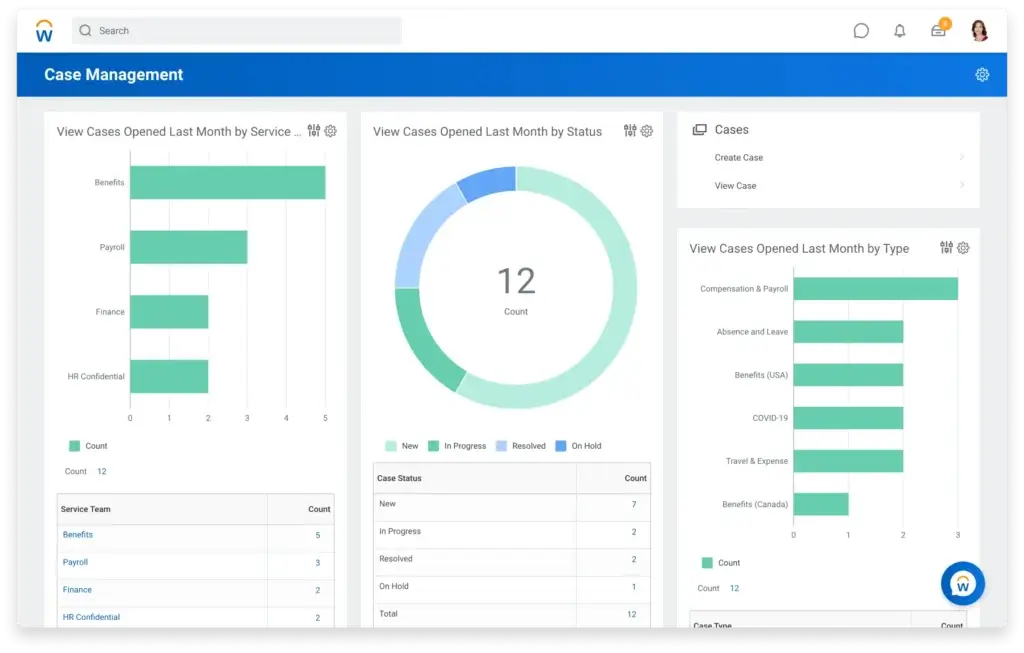
Pricing
Workday Pricing & Plans
Workday pricing is one of the least transparent parts of the buying process. The company does not publish standard public HCM pricing. Instead, pricing is quote-based and shaped by company size, selected products, deployment scope, regional requirements, and service needs.
What Workday Includes
Workday is not sold as a simple single-plan HR tool. Buyers typically evaluate a platform mix that may include Core HCM, payroll, workforce management, recruiting, talent, employee voice, planning, and other products, depending on scope. That approach makes sense for enterprise sales, but it also makes direct price comparison harder.
What Affects Total Cost
Your total cost will usually depend on headcount, product modules, implementation services, integrations, payroll requirements, geography, and the complexity of approvals and reporting. For that reason, two organizations can get very different Workday proposals even if they are both buying into the same broad category.
What to Ask Before You Buy
If you are evaluating Workday, ask about implementation costs, partner involvement, support scope, payroll coverage by country, module packaging, integration costs, reporting setup, and how pricing changes as your workforce grows. These details matter because Workday can be an excellent value for the right enterprise, but expensive if over-scoped.
Pricing Table
The table below gives a practical view of how Workday’s pricing approach works today.
| Feature Type | Workday | What it means for buyers |
| Pricing model | Custom pricing | You need to contact sales for a tailored quote |
| Core package | Varies by products purchased | Workday is sold as a configurable enterprise platform, not a fixed SMB-style plan |
| Advanced capabilities | Available through multiple modules and platform products | Payroll, workforce management, talent, employee voice, and planning may affect total cost |
| Payroll approach | Mix of native capabilities and global payroll partner integrations | You should confirm country-level payroll coverage early in the buying process |
| Best for | Enterprise and multinational organizations | Better fit for large businesses than for smaller teams wanting a simple HRIS |
For many buyers, the key question is not whether Workday is expensive. It is whether your organization is complex enough to justify the investment. If your HR environment is large, global, and process-heavy, Workday can make a great deal of sense. If not, it may feel heavier than necessary.
Use Cases
Who Should Use Workday?
Workday is not for every business, but it is an especially strong fit for several kinds of buyers.
Large Enterprises with Complex HR Operations
If your organization needs strong governance, structured approvals, multi-entity support, global people data, and advanced reporting, Workday is one of the strongest options in the market.
Global Companies Managing Payroll and Workforce Complexity
Workday makes sense for companies running across multiple regions, especially when payroll, time, labor visibility, and absence management need to connect to a single platform strategy.
Organizations Standardizing HR and Finance Together
If you want HR data to work more closely with planning and financial visibility, Workday has an advantage over many HR-first competitors. That broader platform story is one of its biggest differentiators.
When Workday Might Not Be Right
Workday may not be the best choice if you need a low-cost HR solution, if your organization is relatively simple, or if you want a fast self-serve rollout with minimal configuration. In those cases, a mid-market HR platform may fit better.
User Feedback
Workday Customer Reviews
Workday reviews are generally positive, especially among buyers who value centralized HR data, reporting, and enterprise control. Public review summaries on major software review sites consistently highlight its strong self-service, integrated HR capabilities, and analytics. At the same time, common complaints usually focus on complexity, navigation friction, and the effort required to fully optimize the platform.
What Users Like Most
The most common positives in public reviews include Workday’s centralized employee data, reporting depth, self-service tools, payroll visibility, and the convenience of handling multiple HR tasks in one environment. Many users also appreciate that the platform gives large organizations more consistency than fragmented HR stacks.
Common Complaints
The most common drawbacks are also fairly consistent. Some users say navigation can be more complex than expected, some mention a learning curve, and others point to implementation or admin burden as the biggest challenge. Those themes are not surprising given Workday’s enterprise positioning.
My Take on the Review Pattern
The review trend suggests that Workday’s main tradeoff is very clear. You get enterprise breadth, process control, and data unification, but you also take on more complexity than you would with a smaller HR platform. That is not a flaw so much as a product reality. Workday is strongest when the organization is large enough to actually need what it offers.
Competitors
Competitor Alternatives to Workday
Workday is most often compared with platforms like Oracle HCM Cloud, SAP SuccessFactors, and HiBob. The right alternative depends on whether you care most about enterprise depth, ERP alignment, employee experience, or mid-market usability.
| Feature Type | Workday | Oracle HCM Cloud | SAP SuccessFactors | HiBob |
| Core angle | Enterprise HCM, payroll, workforce management, planning, and AI platform | Enterprise HCM with strong Oracle ecosystem alignment | Global enterprise HR suite with broad SAP alignment | Modern HR platform for mid-market and multinational teams |
| Best for | Large and complex organizations | Enterprises invested in Oracle systems | Large global enterprises with SAP-oriented environments | Scaling businesses wanting a more approachable HR platform |
| User experience | Strong overall, but can be dense in some workflows | Powerful, often more enterprise-heavy | Broad and capable, but less modern-feeling for some buyers | More modern and employee-friendly for HR-first teams |
| Payroll approach | Native capabilities plus global payroll partner network | Strong enterprise payroll options depending on scope | Enterprise payroll options with regional complexity | Mix of payroll tools and integrations rather than full enterprise breadth |
| Planning depth | Very strong when connected with Workday planning products | Strong in enterprise ecosystems | Strong for large organizations | Lighter strategic depth than enterprise suites |
| Overall angle | Best for enterprises wanting unified HR, payroll, and planning | Best for Oracle-centric enterprises | Best for SAP-oriented global HR environments | Best for companies wanting modern HR without full enterprise heaviness |
Compared with Oracle HCM Cloud, Workday often feels more cohesive for organizations prioritizing people, finance, and planning together in one cloud-native platform. Compared with SAP SuccessFactors, Workday usually feels more unified in day-to-day platform strategy, though both are serious enterprise options. Compared with HiBob, Workday offers far more enterprise depth, while HiBob is usually easier to adopt for mid-sized businesses that want a modern HR platform without the same level of complexity.
If I had to summarize it simply, Workday is one of the best choices for large organizations that need enterprise-scale HR software with payroll, workforce management, analytics, and increasingly AI built into the same platform.
Best Practices
Getting Started with Workday
To get the most out of Workday, you should make a few important decisions early.
Define Scope Before You Buy
Be clear about whether you need only Core HCM, or whether payroll, workforce management, talent, planning, employee voice, and broader platform capabilities are part of the business case. Workday becomes more valuable when the scope is intentional.
Map Payroll and Regional Requirements Early
Do not assume payroll works the same way in every country. Confirm exactly where Workday is native, where partners are involved, and how that affects integrations, service ownership, and compliance.
Prioritize Change Management
Workday success is never just a software question. It depends on process standardization, internal ownership, manager training, and a realistic rollout plan. Enterprises that invest in adoption usually get better long-term value.
Build Governance into the Rollout
Because Workday is broad and highly strategic, governance matters from the start. Reporting, data quality, role permissions, process ownership, and configuration discipline all affect long-term usability.
Evaluate for the Next Growth Phase
Workday is most compelling when you evaluate it not only for current HR operations, but also for future scale, workforce complexity, and planning needs. It is a platform you buy for where the organization is going, not just where it is today.
Conclusion
Final Thoughts
⭐ Overall Rating: 7.8/10
Workday remains one of the strongest HR platforms in the enterprise market because it solves a very specific problem extremely well. Large organizations often need more than a basic HRIS, but they also need something more unified than a disconnected set of point solutions. Workday fits that gap exceptionally well.
Its biggest strengths are enterprise depth, payroll and workforce management breadth, reporting, planning alignment, and a much stronger AI direction than many traditional HR suites. Its biggest drawbacks are pricing opacity, implementation effort, and the fact that it can be more system than many businesses actually need.
Overall, Workday is a strong recommendation for enterprises and multinational organizations that want a strategic HCM platform with real scale, governance, and long-term value. If your business is complex enough to take advantage of the platform, Workday is absolutely worth serious consideration.
Have more questions?
Frequently Asked Questions
What is Workday best used for?
Workday is best used for enterprise HR management, payroll, workforce management, talent, analytics, and cross-functional workforce planning in one connected platform.
Is Workday good for small businesses?
Usually not. Workday is generally a much better fit for larger and more complex organizations than for small businesses looking for a simple HR tool.
Does Workday include payroll?
Yes. Workday supports payroll through native capabilities and a broad global payroll partner network, but you should confirm the exact model for your countries.
How much does Workday cost?
Workday uses custom pricing. The company does not publish public HCM pricing, so you need to request a quote.
Is Workday easy to use?
Workday is generally more modern than many legacy enterprise systems, but it still has a learning curve and can feel complex in some workflows.
Does Workday support multinational companies?
Yes. Workday is one of the strongest options for multinational organizations that need global workforce data, payroll support, and complex process control.
What are the main Workday alternatives?
The main alternatives usually include Oracle HCM Cloud, SAP SuccessFactors, and HiBob, depending on whether you prioritize enterprise ecosystem fit or a more approachable HR experience.
Does Workday offer talent management?
Yes. Workday supports recruiting, onboarding, learning, performance, succession, development, and broader talent processes inside the platform.
Does Workday integrate with other business tools?
Yes. Workday has a large partner ecosystem, certified integrations, marketplace solutions, and payroll connectivity for enterprise environments.
Is Workday worth it overall?
Yes, for the right buyer. If your organization is large, complex, and needs a strategic HCM platform rather than a lightweight HRIS, Workday is absolutely worth considering.