
Introduction
Hiring globally is no longer only a legal or payroll challenge. It affects how quickly you can access talent, how confidently you can expand into new markets, how accurately you can pay international workers, and how well your HR team can manage compliance across countries.
In this Remote.com review, you will get a practical look at what Remote offers, where it stands out, where it has limitations, and which type of company will get the most value from it in 2026.
Remote is best known as an employer of record platform, but that description is now too narrow. The platform has expanded into global payroll, contractor management, Contractor of Record, HR Core, time and attendance, people analytics, workflow automation, learning, integrations, and AI-supported HR guidance.
That makes Remote one of the stronger options for companies that want to build an international team without stitching together separate tools for employment, payroll, contractors, compliance, and employee administration.
What Is Remote.com?
Remote.com is a global HR platform that helps companies hire, pay, manage, and support employees and contractors across countries. Its main products include Employer of Record, Global Payroll, Contractor Management, Contractor of Record, and HR Core.
The platform is built for companies that want to expand internationally without opening a legal entity in every country where they hire. With Remote’s Employer of Record service, Remote becomes the legal employer for workers in supported countries, while your company manages the employee’s day-to-day work.
Remote also supports companies that already own legal entities in certain countries. In those cases, you can use Remote Global Payroll to run payroll across different markets from one connected system.
Background and Positioning
Remote positions itself as global employment infrastructure. That wording matters because the company is not only selling a software dashboard. It combines software, local legal infrastructure, payroll operations, compliance support, payments, benefits, and HR administration.
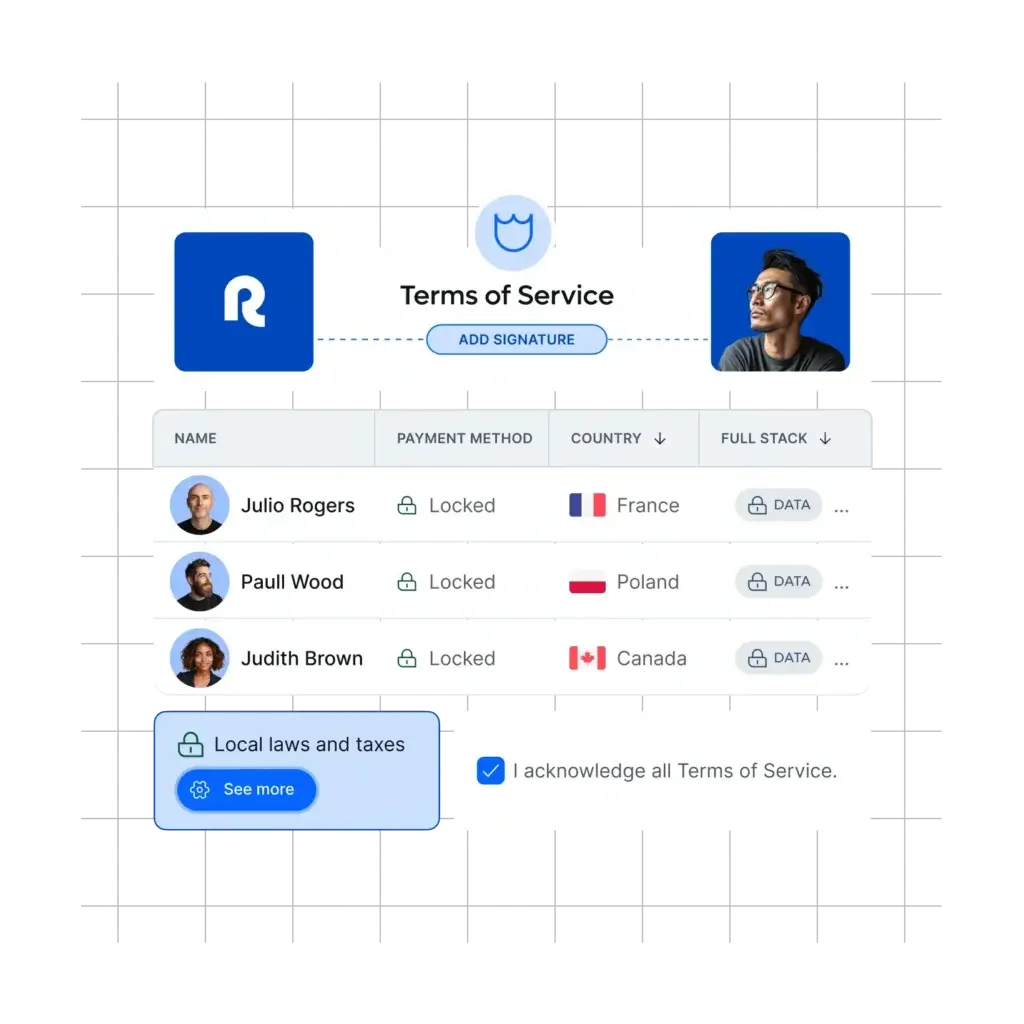
Its strongest positioning is around direct global employment. Remote emphasizes that it owns local entities in the countries where it offers EOR services, rather than relying entirely on third-party partner networks. For buyers, this is important because the quality of the local employment setup can affect employee experience, data control, compliance confidence, and support consistency.
Target Users and Use Cases
Remote is especially relevant for several types of buyers:
- Startups hiring internationally – You can hire talent abroad without building local entities first.
- Mid-market companies expanding globally – You get EOR, payroll, contractors, and HR visibility in one platform.
- Companies with mixed worker types – Remote supports employees, contractors, and Contractor of Record use cases.
- HR teams managing global compliance – The platform helps reduce the burden of local employment rules.
- Finance teams needing clearer global payroll operations – Payroll, invoices, payments, and worker records are managed centrally.
Remote is not the best fit if you only need a simple domestic HRIS, if you want the cheapest possible contractor payment tool, or if your company needs deep talent management features such as advanced performance reviews, succession planning, or compensation planning. Its main value is international employment operations.
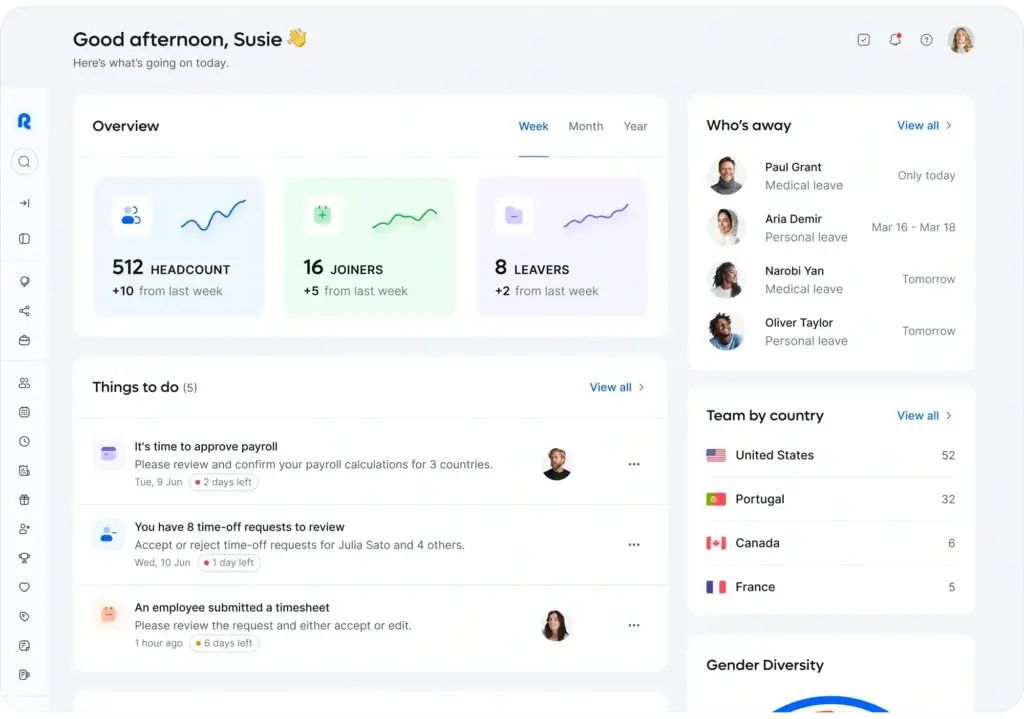
Core Features of Remote
How Does Remote.com Work?
Remote works by combining employment infrastructure, payroll operations, HR software, compliance support, and worker self-service in one platform. Instead of managing global hiring through disconnected local vendors, you can use Remote as a central system for international workforce operations.
The platform is especially useful when your team includes both employees and contractors across multiple countries.
Employer of Record
Remote’s Employer of Record service lets you hire employees in countries where you do not have your own legal entity. Remote acts as the legal employer, handles local employment contracts, payroll, taxes, benefits, statutory requirements, and compliance administration.
Your company still manages the employee’s daily responsibilities, goals, performance, and internal communication. This makes EOR useful when you want to hire quickly in a new country without waiting months to incorporate locally.
Remote’s EOR product is one of its strongest areas. The platform is built for country-specific employment complexity, including localized contracts, payroll, benefits, time off, and compliant onboarding.
Global Payroll
Remote Global Payroll is designed for companies that already have their own legal entities in certain countries. Instead of using separate local payroll vendors in every market, you can consolidate payroll operations through Remote.
This is different from EOR. With global payroll, your company remains the legal employer. Remote helps process payroll, manage local payroll requirements, and centralize payroll data across countries.
For multinational companies, this can reduce spreadsheet work, vendor fragmentation, and payroll visibility problems. It is especially useful if your finance and HR teams need one view of payroll activity across several countries.
Contractor Management
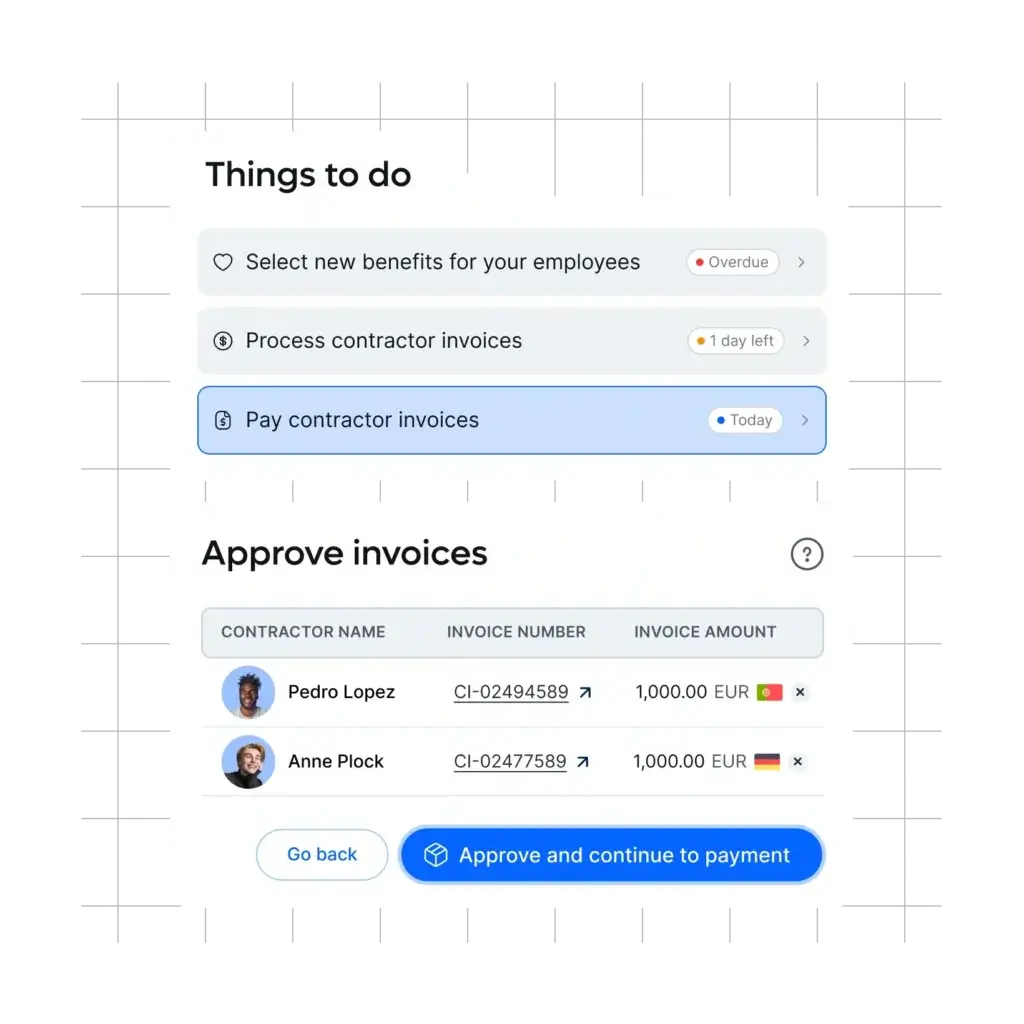
Remote Contractor Management helps you onboard, manage, and pay international contractors. You can create localized contracts, collect contractor information, approve invoices, and make payments from one system.
This product is valuable for companies that work with global freelancers, consultants, agencies, or distributed project teams. It gives you more structure than simple payment tools because it also supports documentation and compliance workflows.
Contractor of Record
Remote Contractor of Record is a more compliance-focused contractor solution. It is designed for companies that want extra help reducing contractor misclassification risk.
Instead of simply paying contractors, Remote helps manage contractor engagement more formally through localized agreements, risk review, and compliance support. This is important when you work with long-term contractors who could potentially be viewed as employees under local rules.
HR Core
Remote HR Core gives you essential HR functionality across Remote’s employment products. You can manage employee profiles, documents, time off, expenses, approvals, and employee self-service from one place.
This is not a full enterprise HR suite in the same way Workday or SAP SuccessFactors is. However, it is strong enough for companies that want a centralized HR foundation for international employees and contractors.
Time, Attendance, and Time Off
Remote includes time and attendance capabilities for employees and contractors. Workers can submit timesheets from a web-enabled device or the Remote mobile app, while admins and managers can review time off requests and view team availability.
This is useful for global teams because attendance rules, public holidays, leave balances, and working-time expectations vary by country. Having these workflows connected to payroll and HR records reduces manual follow-up.
People Analytics and Reporting
Remote includes reporting and analytics tools that help you understand global workforce data. You can use these insights to track headcount, payroll activity, worker status, and HR operations across countries.
This is not only useful for HR. Finance, operations, and leadership teams also need clearer visibility when headcount is spread across multiple employment models and currencies.
Workflow Automation
Remote supports HR workflow automation for approvals, updates, and requests. The value here is operational consistency. When your company is hiring across countries, small process gaps can quickly turn into payroll errors, missing documents, or delayed onboarding.
Automated workflows help reduce repetitive admin work and make it easier to manage global HR at scale.
Learning Management
Remote Learning connects employee development to HR workflows. You can create and assign courses, track completion, and manage learning processes in the same broader system used for global employment.
This is a useful addition, but it is not the main reason to buy Remote. If learning and development is your top priority, a specialized LMS may provide more depth. If you already use Remote for global employment, however, built-in learning can reduce the need for another lightweight tool.
Integrations and API
Remote integrates with HR, accounting, payroll, applicant tracking, and internal business tools. It also offers an API for companies that want to build custom workflows or connect Remote data to internal systems.
This matters because Remote is often part of a broader HR tech stack. You may still use systems like an ATS, accounting platform, HRIS, identity provider, or analytics tool. Remote’s integrations help reduce manual data entry and make the platform more practical for growing companies.
Global Employment Operations
Remote.com EOR, Payroll, and Contractor Tools
The biggest reason to choose Remote is not basic HR administration. It is the ability to manage international employment models through one platform.
Hiring Employees Without a Local Entity
If you find a strong candidate in a country where you do not have an entity, Remote’s EOR service can help you hire that person legally. This is the clearest use case for Remote.
Remote handles the employment contract, payroll, statutory benefits, taxes, and local compliance administration. That allows your team to move faster while reducing the legal and operational burden of international hiring.
Running Payroll Where You Own Entities
If your company already has entities in some countries, Global Payroll can help you manage payroll through Remote without switching those workers into an EOR arrangement.
This makes Remote more flexible than platforms that only focus on EOR. You can use EOR in countries where you do not have an entity and payroll in countries where you do.
Managing International Contractors
Remote’s contractor tools are strong for companies that regularly work with global contractors. You can manage onboarding, contracts, invoices, approvals, and payments without relying only on email and spreadsheets.
The key benefit is consistency. Contractor operations can become messy when each department handles agreements, payments, and documentation differently. Remote brings those workflows into a more controlled process.
Reducing Contractor Misclassification Risk
Worker classification is one of the biggest risks in global hiring. A contractor who works like an employee may create legal exposure, tax issues, and compliance problems depending on the country.
Remote’s Contractor Management Plus and Contractor of Record options are designed for companies that want additional protection and structure. This can be valuable when you engage contractors in unfamiliar markets or when contractor relationships are long term and operationally close to employee work.
Benefits Administration
Remote helps manage localized benefits for EOR employees. This is an important part of international hiring because benefits expectations and legal requirements vary widely by country.
For candidates, localized benefits can affect offer competitiveness. For employers, benefits administration can create compliance and cost complexity. Remote helps standardize this process without forcing your HR team to become a local benefits expert in every country.
Intellectual Property and Invention Rights
Remote places strong emphasis on intellectual property protection. This is especially relevant for software, product, creative, research, and technical teams hiring across borders.
When you hire internationally, IP ownership rules may vary by jurisdiction. A strong EOR or contractor framework should help clarify ownership and reduce the risk of disputes later.
Pros and Cons
Benefits and Limitations of Using Remote.com
Positive
✅ Strong global employment infrastructure
✅ Transparent EOR and contractor pricing
✅ Good fit for mixed employees and contractors
✅ Strong compliance and security positioning
Negative
❌ EOR can become expensive at scale
❌ Not a deep talent management suite
❌ Some country workflows can still feel complex
❌ Support quality may vary by issue complexity
Strengths & Benefits
Remote is strongest when you need more than a payment tool or lightweight HR system. It gives your company a practical way to hire and manage people across borders while keeping core employment, payroll, and compliance workflows connected.
- Strong global employment infrastructure – Remote is built around EOR, payroll, and international compliance.
- Transparent pricing – EOR and contractor pricing is clearer than many competitors in this category.
- Good mixed workforce support – You can manage employees, contractors, and EOR workers in one system.
- Useful HR Core layer – Documents, time off, expenses, and self-service reduce operational friction.
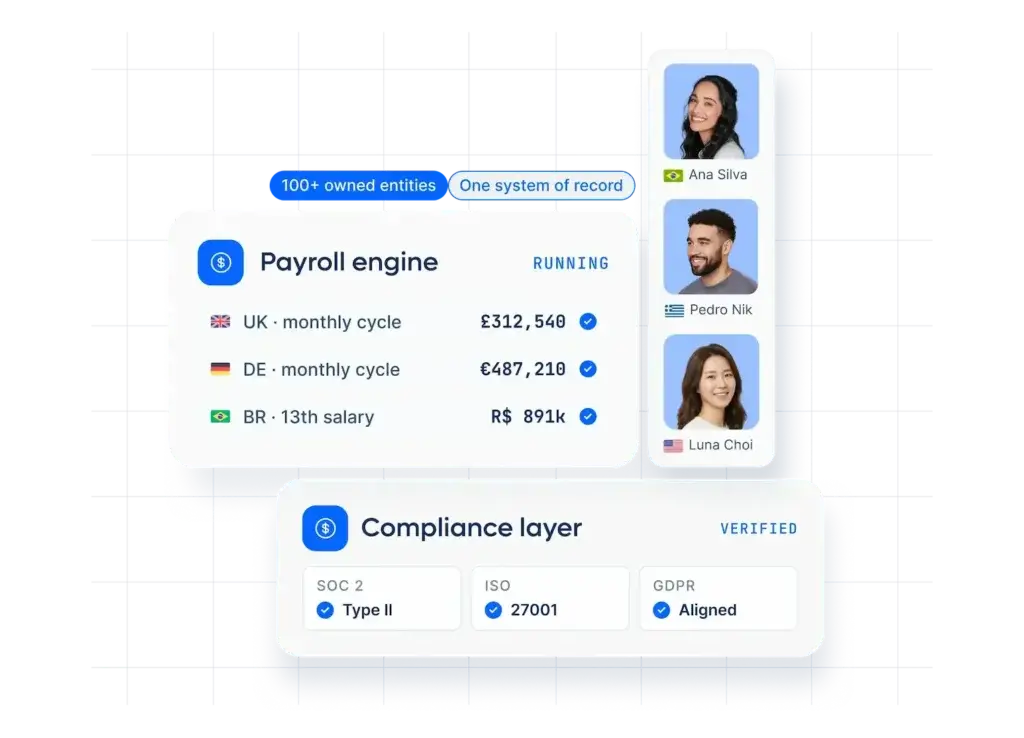
- Security and compliance credibility – Remote highlights SOC 2 Type 2, ISO 27001, GDPR, and CSA STAR Level 1.
Limitations & Drawbacks
Remote is a strong global HR platform, but it is not the perfect answer for every HR software buyer.
- EOR costs add up – $599 to $699 per employee/month can become significant as your global team grows.
- Not a full HCM replacement – It does not replace deep enterprise suites for advanced talent management.
- Country-specific complexity remains – Local rules can still create extra steps, delays, or manual review.
- Some features are better as add-ons – Contractor risk protection and Contractor of Record cost more than basic contractor management.
- Best value depends on global hiring needs – Domestic-only teams may not need Remote’s full scope.
Operational Fit
Remote.com User Experience, Support, and Security
Remote’s value depends heavily on execution. A global HR platform must be easy enough for HR admins, finance teams, managers, employees, and contractors to use regularly.
Ease of Use
Remote generally performs well on usability. The platform is clean, organized, and built around practical workflows like onboarding, document collection, payroll, invoices, expenses, time off, and payslip access.
Employees and contractors can use self-service tools to access documents, submit information, request time off, and manage payment details. That reduces back-and-forth communication for HR and finance teams.
The interface is not the deepest HRIS interface in the market, but that is part of the point. Remote prioritizes global employment workflows rather than trying to become a complex enterprise people management system.
Implementation Experience
Implementation is usually more straightforward than setting up local entities or managing multiple local vendors yourself. Still, Remote should not be treated as a one-click solution for every global hiring scenario.
You need to prepare worker details, compensation, country requirements, contracts, benefits expectations, payroll timelines, and internal approval flows. If you are switching from another EOR or payroll provider, the transition should be planned carefully around payroll cycles and employment documentation.
Customer Support
Public reviews often praise Remote for support quality, onboarding guidance, and responsiveness. This is important because global HR questions are rarely simple. They often involve local labor law, payroll timing, benefits, taxes, and employment documentation.
At the same time, support expectations should be realistic. Complex country-specific questions may require escalation or legal review. Remote is strongest when you use it as a structured global employment partner, not only as a ticketing channel for urgent last-minute payroll questions.
Security and Compliance
Remote has a strong trust profile for a global HR provider. The company highlights SOC 2 Type 2 compliance, ISO 27001 certification, GDPR, and CSA STAR Level 1. It also maintains a public trust center where customers can access or request security and compliance documentation.
This matters because Remote handles sensitive employee data, payroll information, identity documents, contracts, and financial records. For global teams, security is not optional. It is a core buying criterion.
AI and Automation
Remote has added AI-supported capabilities for global work, including support for HR and compliance questions, workflows, and employee experience processes. This direction makes sense because global HR involves repetitive questions and country-specific rules.
The important point is that AI should support decision-making rather than replace compliance review. For high-stakes employment decisions, you should still rely on documented guidance, local expertise, and your internal policies.
Pricing
Remote.com Pricing & Plans
Remote is more transparent than many global employment platforms because it publishes several starting prices publicly. That said, your final cost may still depend on country, headcount, worker type, benefits, add-ons, payroll complexity, and contract terms.
Employer of Record Pricing
Remote EOR pricing is listed at $699 per employee/month when billed monthly, or $599 per employee/month when paid annually. This includes hiring without opening a local entity, onboarding, local payroll, compliance protections, benefits, and HR Essentials.
This is not cheap, but it is competitive for the EOR category. The value is strongest when you need to hire in a country where opening your own entity would be slower, more expensive, or operationally unrealistic.
Global Payroll Pricing
Remote Global Payroll starts at $29 per employee/month. This is designed for workers employed through your own entities, not EOR employees.
For companies with multiple entities, this pricing can be attractive if it helps reduce local vendor fragmentation and creates a more unified payroll process.
Contractor Management Pricing
Remote Contractor Management costs $29 per active contractor/month. This includes contractor onboarding, contracts, invoices, approvals, and payments.
Remote also offers Contractor Management Plus at $99 per contractor/month for companies that want additional contractor compliance protection.
Contractor of Record Pricing
Remote Contractor of Record starts at $325 per contractor/month. This is a more advanced option for companies that want Remote to take on a more formal role in managing contractor engagement and reducing misclassification risk.
Pricing Table
The table below summarizes Remote’s main publicly listed pricing structure.
| Product | Remote.com Pricing | Best For |
| Employer of Record | $699 per employee/month, or $599 annually | Hiring employees without opening a local entity |
| Global Payroll | From $29 per employee/month | Running payroll where you already own entities |
| Contractor Management | $29 per active contractor/month | Managing contractor onboarding, invoices, and payments |
| Contractor Management Plus | $99 per contractor/month | Adding stronger contractor compliance protection |
| Contractor of Record | From $325 per contractor/month | Reducing misclassification risk for contractor engagement |
| HR Core | Included with Remote employment solutions | Managing documents, time off, expenses, and worker records |
Remote’s pricing makes the most sense when compared against the cost of local entity setup, local payroll vendors, legal review, benefits administration, compliance risk, and internal HR time. If you only look at the monthly EOR fee, it may look expensive. If you compare it with the total cost of international employment infrastructure, the value becomes easier to justify.
Use Cases
Who Should Use Remote.com?
Remote is not a generic HR tool. It is a global employment platform. That makes it excellent for certain buyers and less relevant for others.
Startups Hiring Their First International Employees
If you are hiring your first employees outside your home country, Remote is a strong option. You can move faster than opening a local entity and avoid building country-specific employment expertise internally.
This is especially useful for startups competing for talent globally. Remote helps you make international hiring operationally realistic earlier in your growth journey.
Growing Companies With Distributed Teams
Remote is a strong fit for companies that already have workers across multiple countries and need a more structured system for payroll, employment records, contractor payments, and compliance.
At this stage, spreadsheets and local vendors become difficult to manage. Remote gives HR and finance teams a more centralized way to operate.
Companies Managing Employees and Contractors Together
If your workforce includes full-time employees, EOR employees, and contractors, Remote is especially relevant. The platform supports multiple worker types without forcing you into separate systems for each group.
This is one of Remote’s most practical strengths because modern global teams often include a mix of employment relationships.
Companies Testing New Markets
Remote can be useful when you want to test hiring in a new country before committing to a local entity. You can hire through EOR first, learn the market, and later decide whether entity setup makes sense.
This gives companies more flexibility when entering new regions.
When Remote Might Not Be Right
Remote may not be the right choice if you only hire domestically, if you need a very low-cost HR system, or if your main priority is deep performance management, succession planning, or advanced compensation cycles.
It may also be too much platform if you only pay a small number of occasional freelancers and do not need compliance workflows or international hiring support.
User Feedback
Remote.com Customer Reviews
Remote’s public customer reviews are generally positive. Users often highlight ease of use, global hiring support, payroll reliability, onboarding, documentation, and customer service.
The strongest review pattern is that Remote makes international work feel more manageable. Employees appreciate access to payslips, documents, time off, expenses, and payment details. Admins appreciate having global workforce operations in one place.
What Users Like Most
Common positives include the clean interface, strong onboarding experience, useful self-service tools, international payroll support, clear documentation, and the ability to manage global workers without local entities.
Many users also mention support positively, especially when Remote helps resolve country-specific HR, payroll, or employment questions.
Common Complaints
The most common complaints are not usually about the core value proposition. They are more often about country-specific limitations, payroll timing, reporting customization, contractor feature depth, or support handoffs when questions become complex.
Some users also note that certain local leave rules or payroll details can be difficult to represent perfectly in a global platform. That is a realistic limitation for any provider operating across many jurisdictions.
My Take on the Review Pattern
The review pattern suggests that Remote delivers well on its main promise: simplifying global employment. It is not perfect, and global HR complexity does not disappear entirely, but the platform reduces enough friction to be valuable for distributed teams.
The strongest fit is a company that wants a reliable global employment partner with good software, not just a payroll vendor.
Competitors
Competitor Alternatives to Remote.com
Remote is usually compared with Deel, Papaya Global, Rippling, and Oyster HR. The right choice depends on whether you prioritize EOR coverage, payroll infrastructure, contractor management, HRIS depth, IT automation, or pricing transparency.
| Feature Type | Remote.com | Deel | Papaya Global | Rippling |
| Core angle | Global employment infrastructure | Global HR, payroll, EOR, and contractors | Global payroll and workforce payments | HR, IT, payroll, and workforce operations |
| Best for | Companies hiring globally with EOR and payroll needs | Fast-growing global teams wanting broad coverage | Companies focused on payroll complexity and payments | Companies wanting HR and IT in one operating system |
| EOR strength | Very strong | Very strong | Available, but payroll-first positioning is stronger | Available in selected markets, but not the main differentiator |
| Contractor management | Strong, with multiple contractor options | Very strong and broad | More payroll and workforce payments focused | Useful, but broader ops platform matters more |
| Payroll approach | EOR plus global payroll for owned entities | Global payroll, EOR, contractor payments, and HR tools | Strong global payroll orchestration | Strong payroll where supported, plus HR and IT automation |
| Best differentiator | Clear global employment focus and direct infrastructure | Broad product depth and fast global hiring workflows | Payroll visibility and workforce payments | HR, IT, apps, devices, and payroll in one platform |
Compared with Deel, Remote feels more focused on global employment infrastructure and direct EOR positioning, while Deel often feels broader in HR and global workforce workflows. Compared with Papaya Global, Remote is more attractive if you want EOR and contractor management alongside payroll, while Papaya is especially strong for payroll orchestration and workforce payments. Compared with Rippling, Remote is stronger for international employment infrastructure, while Rippling is stronger when HR and IT automation are equally important.
If your main goal is to hire and pay international workers compliantly, Remote should be high on your shortlist. If your priority is a complete HRIS, talent suite, or IT operations platform, you should compare it carefully against broader HCM and workforce management tools.
Best Practices
Getting Started with Remote.com
Remote can simplify global HR significantly, but you will get better results if you approach implementation strategically.
Map Worker Types Before You Buy
Start by separating your workforce into direct employees, EOR employees, contractors, and potential Contractor of Record cases. This will help you choose the right Remote products and avoid overpaying for features you do not need.
Confirm Country Coverage Early
Do not assume every country works the same way. Ask Remote about entity coverage, payroll timelines, benefits, local holidays, notice periods, probation rules, and country-specific onboarding steps before you make an offer.
Compare EOR Cost Against Entity Setup
EOR fees may look high when viewed monthly, but opening a local entity can be far more expensive and time-consuming. Compare Remote’s pricing against legal setup, payroll vendors, accounting, benefits, compliance, and internal HR time.
Use Contractor Risk Reviews Carefully
If you rely heavily on contractors, do not treat contractor management as only a payment workflow. Use Remote’s compliance tools to review whether certain contractors should remain contractors or move into an employment model.
Connect Remote With Your HR Stack
Remote is most useful when it fits into your broader HR system. Connect it with your ATS, HRIS, accounting software, identity tools, and internal reporting processes where possible.
Prepare Managers for Global Employment Differences
Managers need to understand that employment rules vary by country. Time off, public holidays, probation periods, working hours, termination rules, and benefits may not match the company’s home market.
Remote can support the compliance process, but manager awareness is still essential.
Conclusion
Final Thoughts
Remote.com is one of the strongest global HR platforms for companies that want to hire, pay, and manage international workers with more confidence. Its biggest strengths are EOR, global payroll, contractor management, transparent pricing, country-specific compliance support, and a clean employee experience.
The platform is especially valuable if your company is building a distributed workforce and does not want to manage local entities, local payroll vendors, and contractor documentation manually.
Remote is not the deepest HR suite for talent management, performance, compensation planning, or enterprise workforce strategy. It is also not the cheapest option if you are only hiring domestically or paying a few occasional freelancers.
Overall, Remote is a strong recommendation for startups, scaleups, and mid-market companies hiring internationally. If your main goal is to expand globally without creating unnecessary legal, payroll, and HR complexity, Remote deserves serious consideration.
Frequently Asked Questions
Have more questions?
What is Remote.com used for?
Remote.com is used to hire, pay, and manage international employees and contractors. Its main products include Employer of Record, global payroll, contractor management, Contractor of Record, and HR Core.
Is Remote.com an employer of record?
Yes. Remote.com offers Employer of Record services that let companies hire employees in supported countries without opening a local legal entity.
How much does Remote.com EOR cost?
Remote.com EOR pricing is listed at $699 per employee/month when billed monthly, or $599 per employee/month when paid annually.
Does Remote.com offer global payroll?
Yes. Remote.com offers global payroll for companies that already own local entities and want to run payroll across countries from one centralized platform.
How much does Remote.com payroll cost?
Remote.com Global Payroll starts at $29 per employee/month. Final costs may vary depending on country coverage, payroll complexity, and company requirements.
Does Remote.com support contractors?
Yes. Remote.com supports contractor onboarding, localized contracts, invoice approvals, and payments. Contractor Management costs $29 per active contractor/month.
What is Remote Contractor of Record?
Remote Contractor of Record is a more compliance-focused contractor solution designed to help companies reduce misclassification risk when engaging international contractors.
Is Remote.com good for small businesses?
Remote.com can work for small businesses that hire internationally, but it may be too advanced or expensive for companies that only need simple domestic HR software.
What are the best Remote.com alternatives?
The main Remote.com alternatives include Deel, Papaya Global, Oyster HR, and Rippling. The best option depends on whether you prioritize EOR, payroll, contractor management, HRIS depth, or IT automation.
Is Remote.com worth it?
Remote.com is worth it if your company hires internationally and needs reliable EOR, payroll, contractor management, and global compliance support. It is less suitable if you only need a basic domestic HR tool.