Introduction
Choosing HR software is not only about storing employee records. It affects how you hire, manage leave, review performance, motivate employee referrals, and connect people operations with the rest of your business systems. In this Odoo HR review, you will get a practical look at what Odoo offers, where it performs well, where it can feel limited, and which companies are most likely to benefit from it.
Odoo HR is part of the wider Odoo business management platform. That is the most important thing to understand from the start. Unlike standalone HR tools that focus only on employee records or payroll, Odoo works best when HR is connected to other business functions such as accounting, expenses, projects, planning, documents, approvals, maintenance, and fleet operations.
For companies already using Odoo, the HR suite can be a natural extension. For companies evaluating Odoo only for HR, the decision is more nuanced. You get broad functionality and strong integration potential, but you also need to consider setup, customization, implementation effort, and whether your HR team wants a modular ERP-style system or a dedicated HR platform.
What Is Odoo HR?
Odoo HR is a collection of human resources applications designed to help you manage the employee lifecycle. The main HR apps include Employees, Recruitment, Time Off, Appraisals, Referrals, and Fleet. These are the core capabilities shown in Odoo’s Human Resources category and they form the foundation of this review.
The Employees app acts as the central employee database. Recruitment helps you manage hiring pipelines and applications. Time Off supports leave requests and approvals. Appraisals helps you run performance reviews. Referrals encourages employees to recommend candidates. Fleet helps companies manage company vehicles assigned to employees.
Background and Positioning
Odoo positions its HR suite as part of a larger modular ERP ecosystem. That means you can start with one HR app and expand into additional Odoo apps as your company grows. This is different from many HR software vendors that sell a fixed HRIS, HCM, or payroll bundle.
The main advantage is flexibility. You can connect HR data to documents, signatures, timesheets, planning, payroll localization, maintenance, expenses, and accounting workflows. The main drawback is that implementation quality matters more than it does with a simpler plug-and-play HR tool.
Target Users and Use Cases
Odoo HR is especially relevant for several buyer types:
- Companies already using Odoo – HR data can connect naturally with finance, projects, expenses, and operations.
- Growing SMBs – You can start with essential HR workflows and add more apps over time.
- Operations-heavy businesses – Fleet, planning, timesheets, and attendance connections make Odoo useful beyond office HR.
- Teams that want customization – Odoo can be adapted to internal workflows when implemented properly.
- Businesses seeking an ERP-first HR system – Odoo fits companies that want HR inside one wider business platform.
That said, Odoo HR is not always the best fit if you want a very polished standalone HRIS with built-in payroll for every country, simple implementation, and deep out-of-the-box talent management. It is strongest when you want HR connected to broader business operations.
Core HR Features
How Does Odoo HR Work?
Odoo HR works through separate but connected apps. This modular structure is both its strength and its main consideration for buyers. You are not just buying one HR dashboard. You are building an HR workflow using several Odoo applications that share data across the same ecosystem.
The six HR apps shown in Odoo’s Human Resources category are Employees, Recruitment, Time Off, Appraisals, Referrals, and Fleet. Together, they cover employee records, hiring, leave management, performance reviews, referral hiring, and vehicle administration.
Employees: Centralized Employee Records
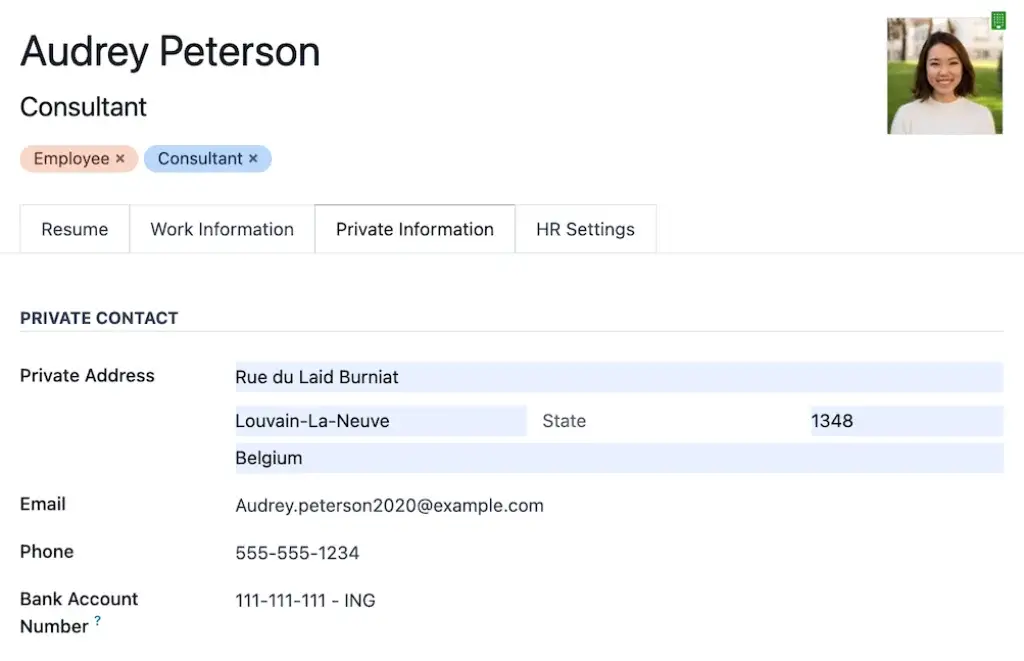
The Employees app is the foundation of Odoo HR. It centralizes employee profiles, job information, departments, managers, work locations, schedules, documents, contracts, and organizational structure. This gives HR teams and managers one place to view employee information instead of relying on spreadsheets, shared folders, and disconnected tools.
Each employee profile can also connect to other Odoo apps. For example, you can access time off, planning, timesheets, cars, equipment, contracts, documents, and assigned courses through smart buttons. This is where Odoo’s ERP foundation becomes valuable. Employee data does not sit alone. It can influence operational workflows across the business.
Recruitment: Applicant Tracking and Hiring Pipelines
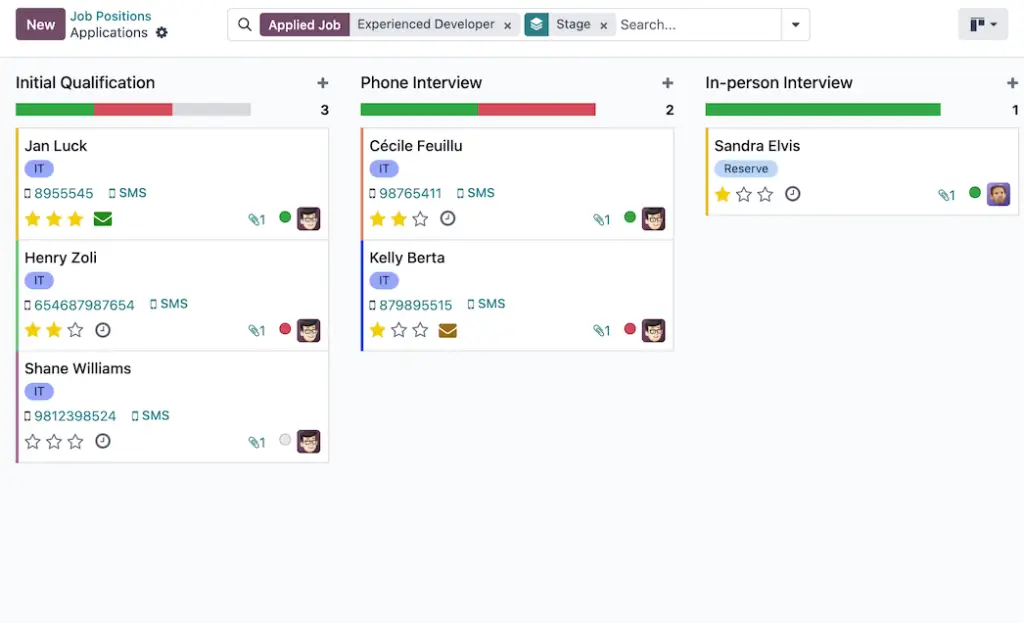
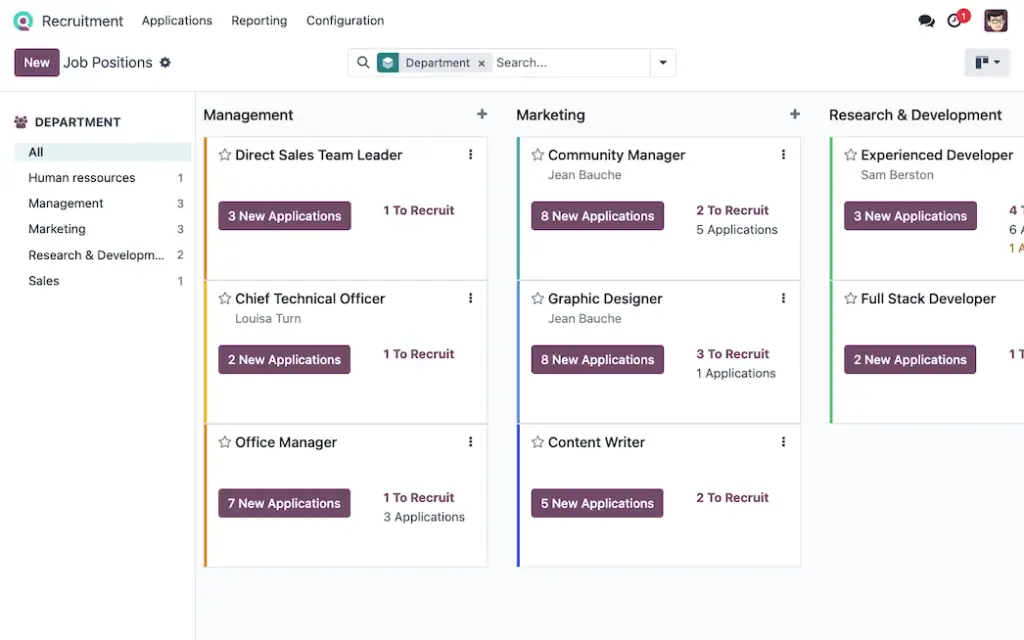
Odoo Recruitment helps you create job positions, publish openings, manage applications, track candidates, and coordinate interviews. For companies that need a lightweight applicant tracking system inside their business platform, this can be very useful.
The recruitment workflow is especially practical for teams that want hiring data connected to employees after a candidate is hired. Once the process moves from application to employment, the employee record can become part of the broader HR system instead of being recreated manually in another tool.
Time Off: Leave Requests and Approvals
Odoo Time Off gives employees a way to request leave while giving managers visibility into balances, allocations, approvals, and upcoming absences. You can manage different types of leave such as vacation, sick leave, unpaid time off, and other company-specific policies.
This is a core use case for almost every HR team. The benefit is not only that employees can submit requests digitally. It is that managers can approve leave in a more structured way, HR can track balances, and teams can plan around absences with better visibility.
Referrals: Employee Referral Management
Odoo Referrals is one of the more distinctive HR apps in the suite. It lets employees recommend candidates and track the progress of their referrals through the hiring process. The system can also use points and rewards to encourage participation.
This is valuable because referral hiring often becomes informal and hard to measure. With Odoo Referrals, you can make employee referrals more visible, more engaging, and easier to manage alongside the recruitment process.
Fleet: Company Vehicle Management
Odoo Fleet supports businesses that need to manage company cars and vehicle-related records. You can use it to track vehicles, drivers, contracts, services, costs, and assignments.
This feature will not matter to every HR team. However, it is highly relevant for companies where vehicles are part of employee operations, such as field service, logistics, sales teams, construction, maintenance, and distributed operations.
Appraisals: Performance Reviews and Feedback
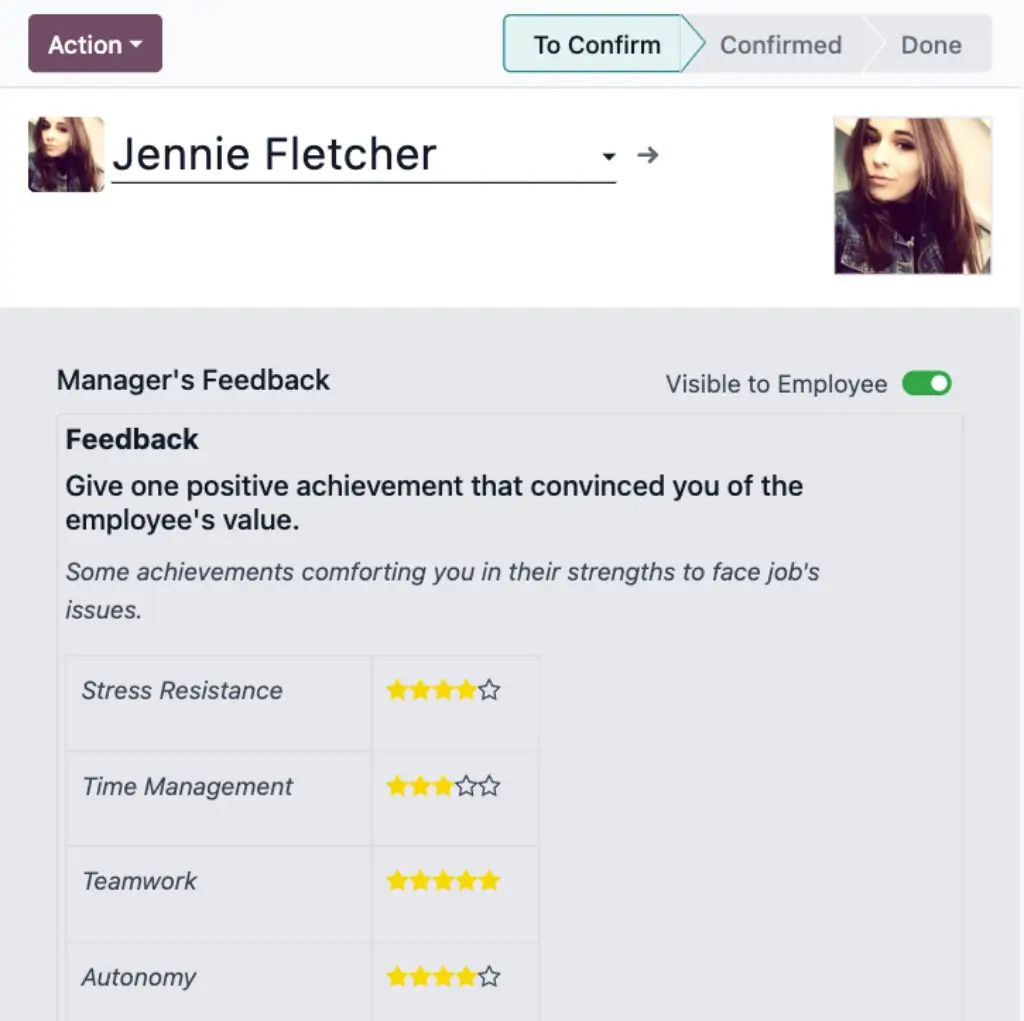
Odoo Appraisals helps companies schedule performance reviews, collect feedback, and support more structured evaluation cycles. It can be used for periodic reviews, manager feedback, employee self-assessments, and performance discussions.
This module is useful if your company wants to formalize performance management without adopting a separate talent management platform. However, companies with advanced performance needs, such as complex competency frameworks, succession planning, or deeply customized review programs, may find that a specialized performance platform offers more depth.
Odoo HR Feature Breakdown
Employees, Hiring, Leave, Reviews, Referrals, and Fleet
Odoo HR is best understood by looking at each app separately and then evaluating how they work together. The platform is not just an HR database. It is a set of connected workflows that can support HR, managers, finance, operations, and employees.
Employee Profiles and Organizational Structure
Employee records in Odoo can include work information, private information, department structure, managers, work locations, working schedules, and access rights. You can use org charts to understand reporting lines and departmental structure more clearly.
This matters because HR systems often fail when employee data is fragmented. In Odoo, the employee profile can act as a central point for contracts, documents, leave, planning, timesheets, company cars, equipment, and training records.
Onboarding and Offboarding Plans
Odoo supports onboarding and offboarding plans through the Employees app. You can create structured activity plans when a new employee joins or when someone leaves the organization. These plans can trigger tasks across different applications, making the process more consistent.
For example, onboarding may involve HR documents, manager introductions, equipment assignment, policy acknowledgment, and training activities. Offboarding may involve document collection, equipment return, system access changes, and administrative steps.
Recruitment Pipeline Management
Odoo Recruitment allows you to manage job openings and applications in a structured pipeline. This can help hiring teams move candidates through stages, organize interviews, and maintain visibility over open positions.
The main benefit is convenience. If your company already uses Odoo for other business functions, recruitment becomes part of the same operating environment instead of a disconnected ATS.
Time Off Balances and Approval Workflows
Odoo Time Off helps you track leave allocations, remaining balances, requests, and approvals. Managers can review time-off requests, while employees can see their balances and submit requests more easily.
This is especially useful for companies that need clear approval workflows and leave visibility. For more complex labor compliance, country-specific rules, or union-based leave policies, you may still need careful configuration or expert implementation support.
Performance Appraisals and Employee Development
Odoo Appraisals gives you a structured way to run review cycles and request feedback. It helps move performance conversations out of ad hoc documents and into a managed HR workflow.
This is suitable for companies that need standard performance reviews. If your performance process is highly advanced, Odoo may need customization or support from additional tools.
Employee Referral Campaigns
Odoo Referrals can help HR teams promote internal referral hiring. Employees can submit referrals and track progress, while HR can connect referral activity to recruitment outcomes.
This is a useful way to turn hiring into a more collaborative process. It can also help HR identify which employees are contributing to candidate sourcing and which roles benefit most from referral campaigns.
Fleet and Employee Vehicle Management
Odoo Fleet is a practical addition for companies that assign vehicles to employees. It can help track vehicle information, contracts, services, costs, and driver assignments.
This gives Odoo HR an operational edge over many HR-only platforms. If your workforce includes drivers, field teams, maintenance staff, inspectors, or sales reps with company vehicles, Fleet can become a meaningful part of your HR and operations workflow.
| Odoo HR App | Main Use Case | Best For |
| Employees | Central employee records and org structure | HR teams needing one source of truth |
| Recruitment | Job openings, applications, and hiring pipelines | Companies managing hiring inside Odoo |
| Time Off | Leave requests, balances, and approvals | Managers and HR teams handling absence planning |
| Appraisals | Performance reviews and feedback cycles | Companies formalizing employee reviews |
| Referrals | Employee referral tracking and rewards | Teams using internal networks for hiring |
| Fleet | Company vehicle tracking and assignments | Operations-heavy teams with employee vehicles |
Connected Business Operations
Odoo HR Integrations and ERP Advantages
The strongest reason to choose Odoo HR is not that each individual HR app is the deepest tool in its category. The strongest reason is that HR can connect to the wider Odoo ecosystem.
For example, employee data can connect with expenses, documents, signatures, contracts, timesheets, planning, payroll localization, projects, maintenance, and accounting. This is a major advantage if your company wants fewer disconnected systems.
HR and Documents
Odoo can connect employee records with documents and digital signatures. This is useful for employee handbooks, contracts, policy acknowledgments, offer letters, and other HR documents.
Instead of storing signed files in separate folders, HR teams can keep document workflows closer to employee records and related processes.
HR and Timesheets
For companies using Odoo Projects and Timesheets, employee records can connect to time tracking. This can be useful for service businesses, agencies, consultants, and internal project teams that need to understand employee time allocation.
This is not the same as full workforce management for every industry, but it does create a stronger connection between HR and operational capacity.
HR and Planning
Odoo Planning can connect schedules and roles to employee records. This is helpful for companies that need to assign employees to shifts, roles, or operational plans.
When connected with employee profiles, planning becomes more practical because managers can understand availability, roles, work locations, and related employee information.
HR and Payroll
Odoo’s HR documentation includes payroll-related flows and localizations. However, payroll availability and suitability depend heavily on country, configuration, and implementation approach. This is an area where buyers should be especially careful.
If payroll is a central requirement, confirm whether Odoo supports your country, your compliance requirements, your payroll reporting needs, and your preferred implementation model before committing.
HR and Fleet Operations
Fleet is a useful example of Odoo’s broader business logic. Many HR platforms stop at employee profiles and leave management. Odoo can also help manage assets assigned to employees, such as company vehicles.
This makes Odoo HR more relevant for companies where HR, finance, and operations overlap.
Pros and Cons
Benefits and Limitations of Using Odoo HR
Positive
✅ Strong ERP integration
✅ Modular HR apps
✅ Flexible customization
✅ Useful fleet support
Negative
❌ Setup can take planning
❌ HR depth varies by module
❌ Payroll needs verification
❌ Interface can feel ERP-like
Strengths & Benefits
Odoo HR has a clear advantage when you want HR to connect with broader business operations. It is especially compelling for companies that already use Odoo or plan to build more of their workflow inside one ERP platform.
- Strong ERP integration – HR data can connect with finance, projects, documents, planning, and operations.
- Modular HR apps – You can use Employees, Recruitment, Time Off, Appraisals, Referrals, and Fleet as needed.
- Flexible customization – Odoo can be configured around company-specific workflows and processes.
- Useful fleet support – Vehicle management makes Odoo stronger for operational teams.
Limitations & Drawbacks
Odoo HR is powerful, but it is not the simplest HR system for every buyer. The modular structure gives you flexibility, but it can also create more setup work than a dedicated HR platform with prebuilt workflows.
- Setup can take planning – Configuration and implementation quality strongly affect the final experience.
- HR depth varies by module – Some features are practical, but not always as deep as specialist HR tools.
- Payroll needs verification – Country-specific payroll support should be checked before purchase.
- Interface can feel ERP-like – Some HR users may prefer a more consumer-style HRIS experience.
Operational Fit
Odoo HR User Experience, Support, and Security
Odoo HR’s user experience depends heavily on your implementation. A well-configured Odoo environment can be efficient and connected. A poorly configured one can feel overwhelming, especially for HR teams that are used to simpler tools.
Ease of Use
Odoo’s interface is clean enough for everyday business users, but it still carries the logic of an ERP system. That means it may feel more structured and menu-driven than some modern HR platforms.
For HR admins, this can be a benefit because there is more control. For employees, the experience depends on how clearly workflows are configured. If you want employees to request time off, complete documents, review information, or participate in referrals, the setup should be kept simple and intuitive.
Implementation Experience
Implementation is one of the biggest factors in Odoo HR success. Because Odoo is modular and customizable, companies should spend time defining workflows before setup begins.
You should clarify how employee records are structured, who approves leave, how recruitment stages work, how appraisals are scheduled, how referrals are rewarded, and how fleet records are managed. The more operational your company is, the more important this planning becomes.
Customer Support and Partner Ecosystem
Odoo offers official support as part of its paid plans, and many companies also work with Odoo partners for implementation, customization, and training. This partner ecosystem can be a major advantage if you need industry-specific configuration.
However, it also means the quality of your experience can vary. A strong implementation partner can turn Odoo HR into a tailored system. A weak implementation process can lead to unnecessary complexity.
Security and Access Rights
HR data is sensitive, so access control matters. Odoo allows you to configure access rights for employees, managers, and administrators. This helps protect private employee information while still giving managers the visibility they need.
Companies using Odoo HR should carefully define permissions before rollout. This is especially important when employee profiles connect to contracts, documents, time off, timesheets, and other sensitive information.
Reporting and Workforce Visibility
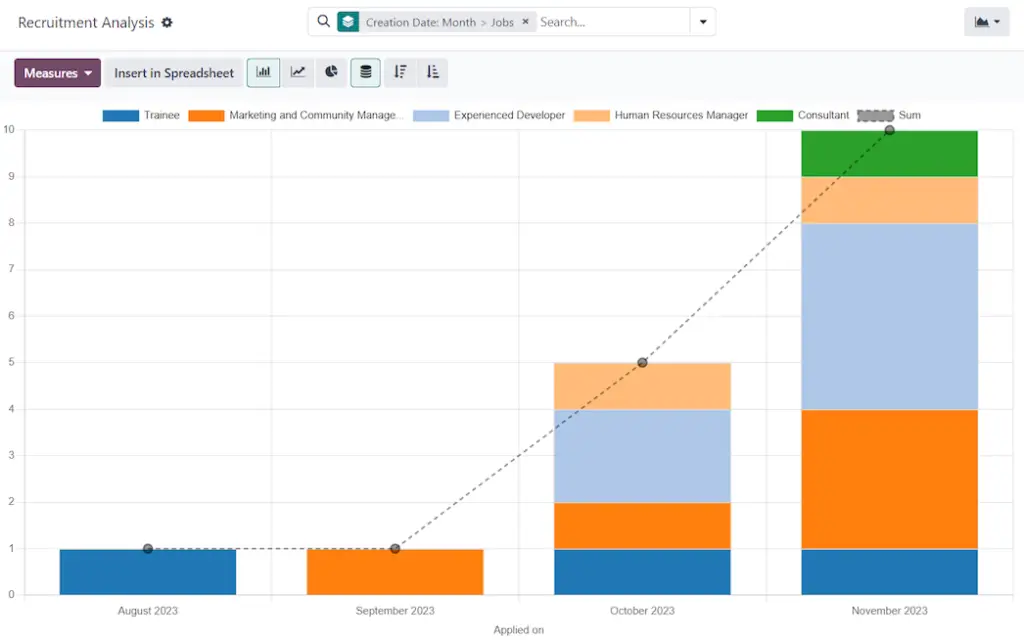
Odoo can support reporting across HR workflows, but the depth of reporting depends on which apps you use and how your data is configured. Basic workforce visibility is useful, especially when employee data is connected to time off, planning, contracts, fleet, and operational records.
For advanced HR analytics, you may need custom reports, additional Odoo configuration, or external BI tools. This is not necessarily a weakness, but it is important to understand before choosing Odoo as your primary HR reporting system.
Pricing
Odoo HR Pricing & Plans
Odoo pricing is one of the more attractive parts of the platform, but it should still be evaluated carefully. Odoo generally uses a modular pricing model with a free one-app option and paid plans for companies that need multiple apps, customization, or broader deployment.
The important point for HR buyers is that cost is not only about licensing. Your total cost may also include implementation, configuration, data migration, custom workflows, training, support, and potential partner services.
One App Free
Odoo has a One App Free option that allows you to use one app at no license cost. This can be appealing if you only need a single HR app, such as Employees or Recruitment.
However, most companies evaluating Odoo HR will likely need more than one app. If you want Employees, Recruitment, Time Off, Appraisals, Referrals, and Fleet together, you should expect to evaluate a paid plan rather than relying on a one-app setup.
Standard Plan
The Standard plan is usually the best fit for companies that want hosted Odoo Online without custom development. It allows access to all Odoo apps under a per-user pricing model, which can be cost-effective compared with buying many separate tools.
This plan can work well if your HR workflows are relatively standard and you do not need deep customization, custom modules, or advanced hosting options.
Custom Plan
The Custom plan is designed for companies that need more flexibility, including custom development, Odoo Studio, external API access, multi-company functionality, or more advanced deployment options such as Odoo.sh or on-premise hosting.
This is more relevant for companies that want to adapt Odoo HR heavily around internal processes or connect HR workflows with more complex operational systems.
Implementation Costs
Odoo can look inexpensive from a licensing perspective, but implementation can become a major part of the total investment. HR workflows are sensitive because they affect employees, managers, payroll, compliance, and internal policy.
Before buying, estimate the cost of setup, data import, workflow design, employee training, manager training, and ongoing administration. If you are using multiple Odoo apps beyond HR, project planning becomes even more important.
Pricing Table
The table below summarizes how Odoo HR pricing should be evaluated by HR software buyers.
| Pricing Area | Odoo HR | What it means for buyers |
| Free option | One App Free | Useful if you only need one HR app |
| Standard plan | Hosted Odoo Online with all apps | Best for companies with standard workflows |
| Custom plan | More flexibility and customization options | Better for complex HR and ERP needs |
| Implementation cost | Varies by scope and partner support | Should be included in total cost planning |
| Best value | Companies using multiple Odoo apps | Stronger ROI when HR connects to business operations |
My view is that Odoo HR offers strong value when you use it as part of a wider Odoo system. If you only need a simple HRIS, the total setup effort may be harder to justify. If you want HR connected to operations, finance, projects, and assets, the value becomes much clearer.
Use Cases
Who Should Use Odoo HR?
Odoo HR is a strong fit for companies that want HR to be part of a connected business operating system. It is less ideal for buyers who want a narrow, ready-made HR platform that requires minimal configuration.
Companies Already Using Odoo
If your company already uses Odoo for sales, accounting, inventory, projects, expenses, or operations, Odoo HR should be on your shortlist. The main benefit is data continuity. Employee information can connect with the systems your business already uses.
Small and Mid-Sized Businesses That Want to Scale
Odoo HR can work well for small and mid-sized businesses that want to move away from spreadsheets and disconnected tools. You can start with core HR workflows and add recruitment, time off, appraisals, referrals, and fleet as your needs grow.
Operational Teams With Field Employees or Vehicles
Odoo is particularly interesting for operational businesses. If your employees work in the field, use company vehicles, submit expenses, track time, or support projects, Odoo’s connected ecosystem can be more useful than a standalone HR tool.
Businesses That Need Custom HR Workflows
If your HR processes are not standard, Odoo’s flexibility can be a major advantage. You can configure workflows, approvals, employee data, and connected processes around how your company actually operates.
When Odoo HR Might Not Be Right
Odoo HR may not be the best choice if you want fast plug-and-play setup, highly polished employee experience, deep enterprise talent management, or native payroll depth in every country. In those cases, a dedicated HRIS or HCM platform may fit better.
User Feedback
Odoo HR Customer Reviews and Market Fit
Odoo generally receives attention because it combines broad business functionality with flexible pricing. For HR buyers, the feedback pattern is usually tied to the same tradeoff: flexibility and integration are strong, but setup and configuration require care.
What Users Typically Like
Users often value Odoo because it brings multiple business workflows into one platform. For HR teams, that means employee records, recruitment, time off, appraisals, referrals, fleet, documents, and operational workflows can live closer together.
This is useful for companies that dislike maintaining many disconnected SaaS tools. It can also reduce duplicate data entry when employee information affects multiple departments.
Common Complaints
The most common concerns around Odoo are usually related to implementation complexity, customization effort, learning curve, and the need for careful configuration. Odoo can do many things, but that does not mean every workflow is perfect immediately out of the box.
For HR teams, this means rollout planning is critical. You should not treat Odoo HR as a simple app installation. It should be treated as a process design project.
My Take on the Review Pattern
Odoo HR is strongest when judged as part of an ERP platform. If you compare each HR app against the deepest specialist in its category, Odoo may not always win. But if you compare the full connected value across HR, finance, projects, operations, documents, and assets, Odoo becomes much more compelling.
That is why Odoo HR is best for companies that value integration and adaptability more than immediate simplicity.
Competitor Comparison
Odoo HR Alternatives and Competitors
Odoo HR competes with a wide range of HR platforms, but its closest alternatives depend on what you are trying to solve. If you want simple HR administration, BambooHR may be easier. If you want deep HR, IT, and payroll operations, Rippling may be stronger. If you want mid-market employee experience, HiBob may feel more polished. If you need enterprise HCM, Workday is usually the heavier option.
| Feature Type | Odoo HR | BambooHR | Rippling | HiBob |
| Core angle | ERP-connected HR apps | Simple HRIS for SMBs | HR, IT, payroll, and operations | Modern HR platform for scaling teams |
| Best for | Companies using or adopting Odoo | Small businesses needing easy HR | Companies wanting deep automation | Mid-market and global teams |
| HR depth | Broad and modular | Strong for core HR | Strong for operational control | Strong for employee experience |
| Customization | High | Moderate | High | Moderate to high |
| Implementation effort | Moderate to high | Low to moderate | Moderate | Moderate |
| Overall fit | Best for connected ERP workflows | Best for simple HR administration | Best for HR and IT automation | Best for people-focused HR teams |
Compared with BambooHR, Odoo HR is more flexible and better connected to business operations, but BambooHR is usually easier for traditional HR administration. Compared with Rippling, Odoo is more ERP-oriented, while Rippling is stronger for HR, IT, device, and payroll operations. Compared with HiBob, Odoo is more configurable and operational, while HiBob usually offers a more modern HR-focused employee experience.
If your company wants one connected platform for HR and broader business management, Odoo is the more strategic option. If your company only wants a dedicated HR tool, one of the alternatives may be easier to roll out.
Best Practices
Getting Started with Odoo HR
Odoo HR can become a powerful system, but it works best when you implement it with clear goals. Before adding every HR app, define what your team actually needs to improve first.
Start With Employee Data Structure
Begin with clean employee records, departments, job positions, managers, work locations, schedules, and permissions. If your employee data is messy, every connected workflow will become harder to manage.
Define Approval Workflows Early
Time off, appraisals, expenses, documents, and fleet processes all depend on clear approval rules. Decide who approves what before you configure the system.
Roll Out Apps in Phases
Instead of launching Employees, Recruitment, Time Off, Appraisals, Referrals, and Fleet all at once, consider a phased rollout. Start with Employees and Time Off, then add Recruitment, Appraisals, Referrals, and Fleet as needed.
Train Managers, Not Just HR
Odoo HR is not only an HR admin tool. Managers need to understand employee records, leave approvals, appraisals, recruitment input, and relevant reporting. Manager adoption is one of the biggest factors in long-term success.
Plan for Integrations Beyond HR
The best reason to use Odoo HR is its connection to the rest of the Odoo ecosystem. Before implementation, map how HR should interact with documents, signatures, expenses, payroll, projects, fleet, planning, and finance.
Conclusion
Final Thoughts
Odoo HR is a strong option for companies that want human resources management inside a broader business operating system. Its main strength is not that every HR app is the most advanced tool in its category. Its strength is that employee data can connect with recruitment, time off, appraisals, referrals, fleet, documents, projects, finance, and operations.
The platform is especially valuable for companies already using Odoo or planning to adopt Odoo across multiple departments. In that context, HR becomes part of one connected system rather than another isolated software subscription.
Its biggest advantages are modularity, ERP integration, customization, cost flexibility, and support for operational HR use cases such as fleet and planning. Its biggest drawbacks are implementation effort, uneven depth across HR modules, payroll complexity by country, and the need for thoughtful configuration.
Overall, Odoo HR is a strong recommendation for businesses that want flexible, connected HR software and are willing to invest in proper setup. If you need a simple plug-and-play HRIS, another platform may be easier. If you want HR connected to the way your entire business runs, Odoo HR deserves serious consideration in 2026.
Frequently Asked Questions
Have more questions?
What is Odoo HR?
Odoo HR is a modular human resources suite within the Odoo ERP platform. It includes apps for employees, recruitment, time off, appraisals, referrals, and fleet management.
What HR apps are included in Odoo?
The main Odoo HR apps include Employees, Recruitment, Time Off, Appraisals, Referrals, and Fleet. Other Odoo apps such as Payroll, Planning, Timesheets, Documents, and Sign can also support HR workflows depending on your setup.
Is Odoo HR good for small businesses?
Yes, Odoo HR can work well for small businesses, especially those that want flexible HR tools connected to accounting, projects, expenses, and operations. Very small teams that only need basic HR may prefer a simpler HRIS.
Does Odoo HR include recruitment software?
Yes. Odoo Recruitment helps you create job openings, manage applications, organize hiring pipelines, and move candidates through the recruitment process.
Does Odoo HR manage time off?
Yes. Odoo Time Off supports leave requests, approvals, balances, allocations, and absence visibility so employees and managers can manage time off more efficiently.
Does Odoo HR support performance reviews?
Yes. Odoo Appraisals helps companies schedule reviews, request feedback, and structure performance conversations between employees and managers.
What is Odoo Referrals used for?
Odoo Referrals is used to manage employee referral hiring. Employees can refer candidates, track referral progress, and participate in reward-based referral programs.
Does Odoo HR include fleet management?
Yes. Odoo Fleet helps companies manage vehicles, drivers, contracts, service records, costs, and employee vehicle assignments.
How much does Odoo HR cost?
Odoo pricing depends on the plan, users, apps, hosting model, customization, and implementation scope. Odoo also offers a One App Free option, but companies using multiple HR apps usually need a paid plan.
Is Odoo HR worth it?
Odoo HR is worth considering if you want HR connected to a broader ERP system. It is strongest for companies that value flexibility, integrations, and operational workflows rather than a simple standalone HR tool.