
What Is Next Generation Antivirus (NGAV)?
Next-generation antivirus, often abbreviated as NGAV, is an advanced form of endpoint security that uses artificial intelligence, machine learning, and behavioral analysis to prevent cyberattacks before they execute.
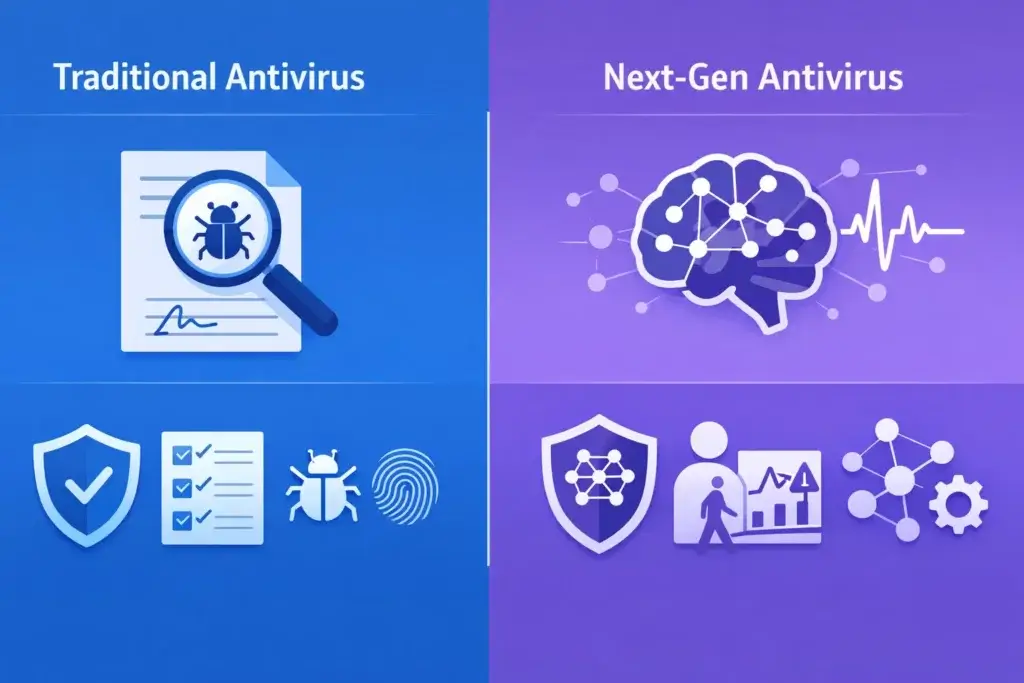
Unlike traditional antivirus software, NGAV does not rely primarily on signature databases. Instead, it analyzes patterns, behaviors, and anomalies in real time to detect both known and unknown threats.
This shift is critical because modern attacks rarely resemble previously identified malware.
For a broader comparison of top antivirus tools today, see our Best Antivirus Software for Personal & Business Use guide.
How NGAV Differs From Traditional Antivirus
Traditional antivirus tools rely on signature-based detection. They compare files against a database of known malware fingerprints. If the file matches a known signature, it gets blocked.
The problem is simple. New malware variants are created daily.
Recent vulnerability data shows more than 21,000 new CVEs disclosed in just the first half of 2025, with over a third rated high or critical severity. Signature-based tools cannot keep pace with that volume.
Next generation antivirus works differently. It evaluates:
- File behavior rather than static signatures
- Process activity across the endpoint
- Memory exploitation attempts
- Script-based and fileless attacks
- Suspicious privilege escalation
This allows NGAV to stop zero-day malware that has never been seen before.
Why Signature-Based Detection No Longer Works
Cybercriminals now automate malware creation. Ransomware toolkits and phishing-as-a-service platforms allow attackers to generate unique payloads instantly.
Identity-based attacks have surged dramatically, and valid credentials are now one of the most common entry points into corporate networks. Once attackers log in with legitimate credentials, signature scanning becomes irrelevant.
Traditional antivirus was built for a different era.
Next generation antivirus is designed for a world where:
- AI generates phishing campaigns
- Deepfake voice fraud is used in BEC attacks
- Zero-day exploits are weaponized within hours
- Fileless malware operates entirely in memory
Static detection simply cannot handle that environment.
The Shift Toward AI-Based Antivirus and Behavioral Detection
Modern NGAV platforms use machine learning models trained on millions of malicious and benign behaviors.
Instead of asking, “Have I seen this file before?” the system asks:
“Does this activity look malicious?”
Behavioral detection monitors:
- Process injection attempts
- Suspicious PowerShell or script execution
- Abnormal lateral movement
- Encryption patterns linked to ransomware
- Unauthorized credential access
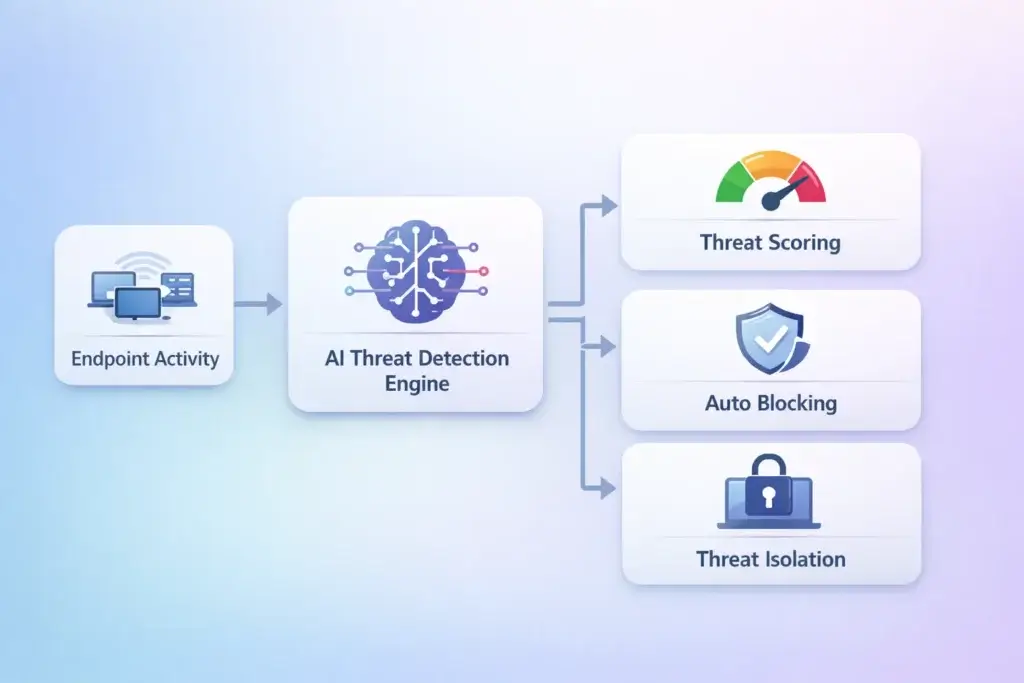
When behavior crosses a malicious threshold, the system automatically blocks or isolates the threat.
This predictive capability is why next generation antivirus is also referred to as AI-based antivirus or machine learning antivirus.
Why Next Generation Antivirus Is Critical in 2026
Cybersecurity has changed dramatically in the past two years. Attackers now operate faster, automate exploitation, and increasingly target identity systems rather than just endpoints.
If you still rely on legacy antivirus, you are defending against yesterday’s threats.
The Rise of Identity-Based Attacks
Recent threat intelligence shows that account compromise has become one of the dominant attack vectors.
Attackers increasingly bypass perimeter defenses by logging in with stolen credentials. Once inside, they escalate privileges and move laterally before triggering ransomware or data exfiltration.
This is why modern NGAV platforms are integrating:
- Identity Threat Detection and Response (ITDR)
- Behavioral authentication monitoring
- Real-time anomaly detection for login patterns
Traditional antivirus software does not monitor identity misuse. Next-generation antivirus does.
AI-Powered Phishing and Deepfake Threats
Generative AI has lowered the barrier to cybercrime.
Attackers now create highly personalized phishing emails, multilingual fraud campaigns, and realistic deepfake voice messages at scale.
Business email compromise attacks are becoming more convincing because AI improves tone, grammar, and context.
In this environment, endpoint security must assume compromise is possible and focus on rapid detection and containment.
NGAV helps by detecting:
- Malicious script execution from phishing payloads
- Credential harvesting behavior
- Suspicious outbound connections
- Anomalous encryption patterns
The Explosion of Zero-Day Vulnerabilities
Vulnerability disclosures are increasing year over year, with thousands of new high-severity flaws published annually.
Attackers no longer wait months to exploit them. Exploits are often weaponized within days.
Zero-day malware does not have signatures. It has behavior.
Next generation antivirus identifies malicious activity patterns even when no known signature exists. This significantly reduces dwell time and limits damage.
Ransomware and SMB Targeting Trends
Ransomware continues to dominate the threat landscape.
Small and medium businesses are particularly vulnerable due to limited security teams and slower patching cycles.
Modern NGAV platforms counter ransomware through:
- Behavioral ransomware detection
- Automatic process termination
- File encryption rollback capabilities
- Endpoint isolation
Instead of just alerting you, the system responds autonomously.
That shift from detection to prevention is what makes next generation antivirus critical in 2026.
How Next Generation Antivirus Works
Next generation antivirus focuses on prevention through behavior, not just detection through signatures.
Instead of asking whether a file is known malware, NGAV asks whether the behavior looks malicious.
Machine Learning Detection
NGAV uses AI and machine learning models trained on massive datasets of malicious and normal activity.
It evaluates:
- File behavior
- Execution patterns
- Memory activity
- Exploit techniques
- Process relationships
If the probability of malicious intent is high, the threat is blocked before execution.
This enables effective zero-day malware detection.
Behavioral Monitoring
Modern attacks often use legitimate tools such as PowerShell and run entirely in memory.
NGAV continuously monitors for:
- Suspicious script execution
- Credential dumping attempts
- Abnormal lateral movement
- Ransomware-style encryption behavior
When activity crosses a malicious threshold, the system automatically blocks the process.
This behavioral detection is what makes AI-based antivirus effective against modern threats.
Cloud Intelligence and Automated Response
Most NGAV platforms are cloud-connected.
Threat data from millions of endpoints strengthens detection models in real time.
If an attack occurs, NGAV can:
- Terminate malicious processes
- Isolate the device
- Quarantine files
- Roll back encrypted data
This prevention-first and automated response model significantly reduces damage and downtime.
Key Features of Modern NGAV Platforms
Not all antivirus tools labeled “next generation” deliver true behavioral protection.
A mature next generation antivirus platform typically includes:
- AI-powered malware prevention
- Behavioral anomaly detection
- Zero-day exploit blocking
- Ransomware rollback
- Fileless attack protection
- Identity threat detection integration
- Zero trust support
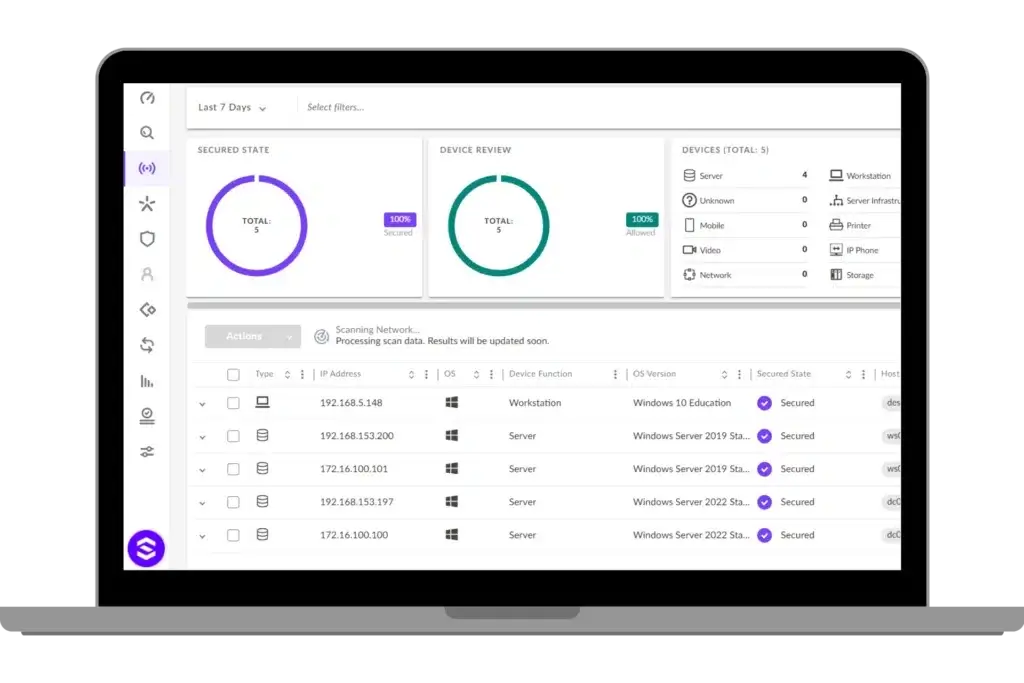
- Centralized cloud management
Identity and Extended Detection Integration
Identity-based attacks are rapidly increasing.
Modern NGAV solutions integrate with:
- Identity Threat Detection and Response (ITDR)
- Endpoint Detection and Response (EDR)
- Extended Detection and Response (XDR)
This allows correlation between login activity, endpoint behavior, and network telemetry.
If stolen credentials are used alongside suspicious endpoint activity, the system can escalate automatically.
Zero Trust Enforcement
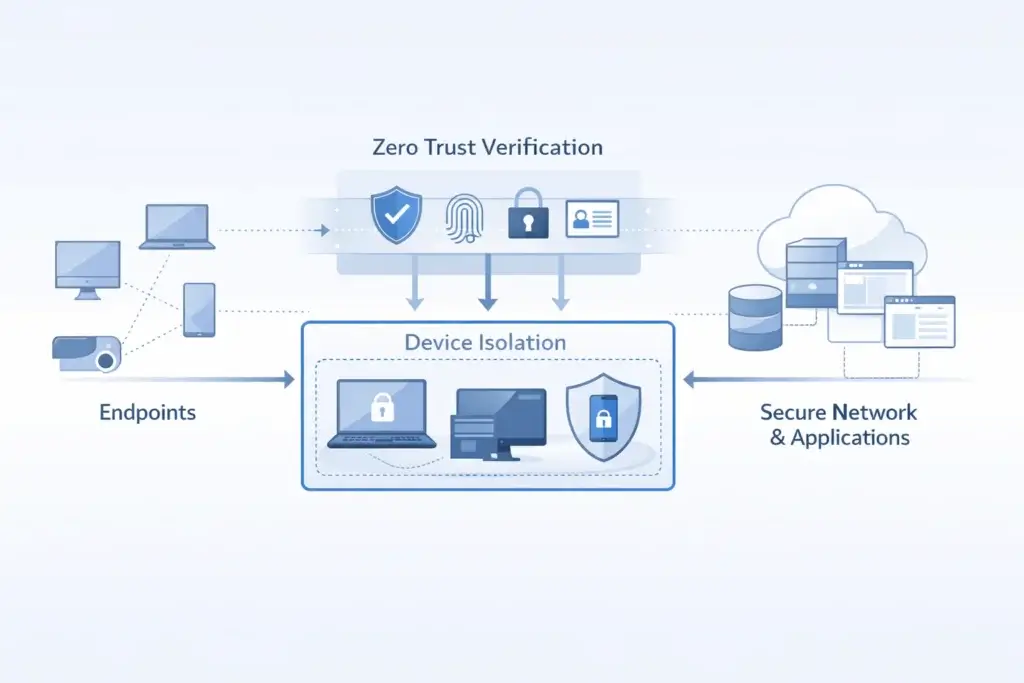
Zero trust follows a simple rule: verify everything.
NGAV supports zero trust by:
- Continuously validating device health
- Enforcing least-privilege access
- Isolating compromised endpoints
- Preventing lateral movement
This shifts security from passive scanning to active containment.
Next Generation Antivirus vs EDR vs XDR
Many organizations confuse next generation antivirus (NGAV) with EDR or XDR.
While they are related, they serve different purposes.
Understanding the difference helps you choose the right level of protection.
What Is EDR?
Endpoint Detection and Response (EDR) focuses on detecting and investigating threats that bypass prevention layers.
EDR provides:
- Continuous endpoint monitoring
- Detailed forensic logging
- Threat hunting capabilities
- Manual and automated response tools
Unlike NGAV, EDR assumes compromise may occur. It helps security teams investigate and contain attacks after detection.
NGAV prioritizes prevention.
EDR prioritizes visibility and investigation.
What Is XDR?
Extended Detection and Response (XDR) expands visibility beyond endpoints.
It correlates data across:
- Endpoints
- Network traffic
- Cloud workloads
- Email systems
- Identity platforms
XDR provides a broader security view and reduces alert fatigue by connecting related signals across systems.
Quick Comparison
| Feature | NGAV | EDR / XDR |
| Primary Goal | Prevent malware before execution | Detect and investigate active threats |
| Focus Area | Endpoint behavior & AI models | Endpoint, network, cloud & identity telemetry |
| Zero-Day Protection | Yes, behavior-based | Yes, through monitoring & response |
| Threat Hunting | Limited | Advanced capabilities |
| Best For | Prevention-first security | Advanced SOC environments |
When Is NGAV Enough?
NGAV may be sufficient if:
- You are a small or mid-sized business
- You prioritize automated prevention
- You do not have a dedicated SOC team
However, larger organizations often combine NGAV + EDR or adopt full XDR platforms for deeper visibility.
The strongest modern security stacks treat NGAV as the prevention layer and EDR or XDR as the visibility and investigation layer.
NGAV and Zero Trust Security
Zero trust has moved from theory to standard practice.
Modern cybersecurity assumes that no user, device, or connection should be automatically trusted, even inside the network.
Next-generation antivirus plays a key role in enabling this model.
Why Zero Trust Is Now Essential
Identity-based attacks are increasing. Attackers often log in with stolen credentials instead of exploiting vulnerabilities.
Once authenticated, traditional antivirus software may not flag suspicious activity.
Zero trust changes the approach:
- Every access request is verified
- Device health is continuously validated
- Privileges are limited to what is strictly necessary
- Suspicious endpoints are isolated immediately
NGAV supports this model by constantly assessing endpoint behavior and security posture.
If a device shows malicious patterns, access can be restricted automatically.
Identity Threat Detection and Response (ITDR)
Modern next generation antivirus platforms increasingly integrate with identity monitoring systems.
This helps detect:
- Unusual login locations
- Abnormal authentication timing
- Privilege escalation attempts
- Credential misuse
If identity anomalies are combined with suspicious endpoint behavior, the system can escalate the response instantly.
This integration is critical because many modern breaches start with valid credentials.
Micro-Segmentation and Device Isolation
Zero trust also limits lateral movement.
When NGAV detects malicious activity, it can:
- Isolate the endpoint from the network
- Block communication with critical systems
- Prevent access to sensitive workloads
This containment strategy significantly reduces breach impact.
Instead of allowing attackers to move freely inside the network, the threat is confined and neutralized quickly.
Benefits of Next Generation Antivirus for Businesses
Investing in next-generation antivirus is not just a technical upgrade. It directly impacts risk exposure, operational continuity, and financial resilience.
For Small and Medium Businesses
Small and medium businesses are frequent ransomware targets because they often lack dedicated security teams.
NGAV helps SMBs by:
- Automatically blocking zero-day malware
- Reducing ransomware risk through behavioral detection
- Minimizing downtime with rollback capabilities
- Lowering reliance on manual monitoring
Because most NGAV platforms are cloud-managed, they require minimal internal infrastructure.
For resource-constrained teams, prevention-first security is critical.
For Enterprises
Large organizations face more complex threats, including identity compromise and lateral movement across hybrid environments.
Next-generation antivirus provides:
- AI-driven endpoint protection at scale
- Integration with EDR, XDR, and SIEM systems
- Centralized visibility across thousands of devices
- Faster incident containment
In enterprise environments, NGAV becomes the foundational prevention layer within a broader security stack.
Learn more about top business protections in our Best Business Antivirus Software comparison.
For Remote and Hybrid Workforces
Remote work expands the attack surface.
Endpoints operate outside corporate firewalls, often on home networks or public Wi-Fi.
NGAV protects distributed teams by:
- Monitoring endpoint behavior regardless of location
- Blocking fileless attacks and phishing payload execution
- Enforcing device health checks before granting access
In a hybrid world, endpoint protection must function independently of network perimeter defenses.
Potential Limitations of Next Generation Antivirus
While next-generation antivirus offers strong behavioral prevention, it is not a complete security strategy on its own.
Understanding its limitations helps you design a balanced security stack.
False Positives and AI Tuning
AI-based detection models sometimes flag legitimate behavior as suspicious.
In highly customized enterprise environments, this may require policy tuning to reduce false positives.
Mature NGAV vendors provide granular controls, but some adjustment is often necessary.
Limited Threat Hunting Capabilities
NGAV focuses primarily on prevention.
If you require deep forensic investigation, advanced threat hunting, or long-term telemetry retention, you may need EDR or XDR alongside NGAV.
Prevention reduces risk, but visibility enhances response maturity.
Not a Replacement for Layered Security
Next-generation antivirus does not replace:
- Firewalls
- Secure email gateways
- Identity access management
- Backup and disaster recovery systems
Cybersecurity works best as a layered approach.
NGAV is the prevention layer, not the entire architecture.
How to Choose the Right Next Generation Antivirus Solution
Not all solutions labeled “next generation” deliver the same capabilities.
When evaluating vendors, focus on measurable functionality.
Must-Have Capabilities
A strong NGAV solution should include:
- Proven machine learning malware detection
- Behavioral ransomware protection
- Zero-day exploit prevention
- Automated response and rollback
- Identity integration
- Cloud-native management console
Avoid tools that rely primarily on signatures with minimal behavioral depth.
Questions to Ask Vendors
Before selecting a solution, ask:
- Does it stop fileless and memory-based attacks?
- How does it detect credential misuse?
- Is ransomware rollback built-in?
- Can it integrate with EDR or XDR platforms?
- What is the performance impact on endpoints?
Clear answers indicate maturity.
Migration From Legacy Antivirus
Transitioning from traditional antivirus software should be planned carefully.
Best practice includes:
- Running NGAV in detection mode first
- Validating policy configurations
- Gradually phasing out legacy AV
- Monitoring system performance
This minimizes operational disruption.
Best Next Generation Antivirus Software in 2026
If you are considering upgrading to next-generation antivirus, choosing a proven vendor matters.
Several leading cybersecurity companies offer mature NGAV platforms that combine AI-driven prevention, behavioral monitoring, and zero-trust integration.
Here are some widely recognized providers in the NGAV space:
SentinelOne

SentinelOne is known for strong behavioral detection and automated remediation.
Key strengths:
- AI-powered prevention engine
- Built-in ransomware rollback
- Strong EDR and XDR integration
- Automated endpoint isolation
It is often favored by mid-market and enterprise organizations.
CrowdStrike

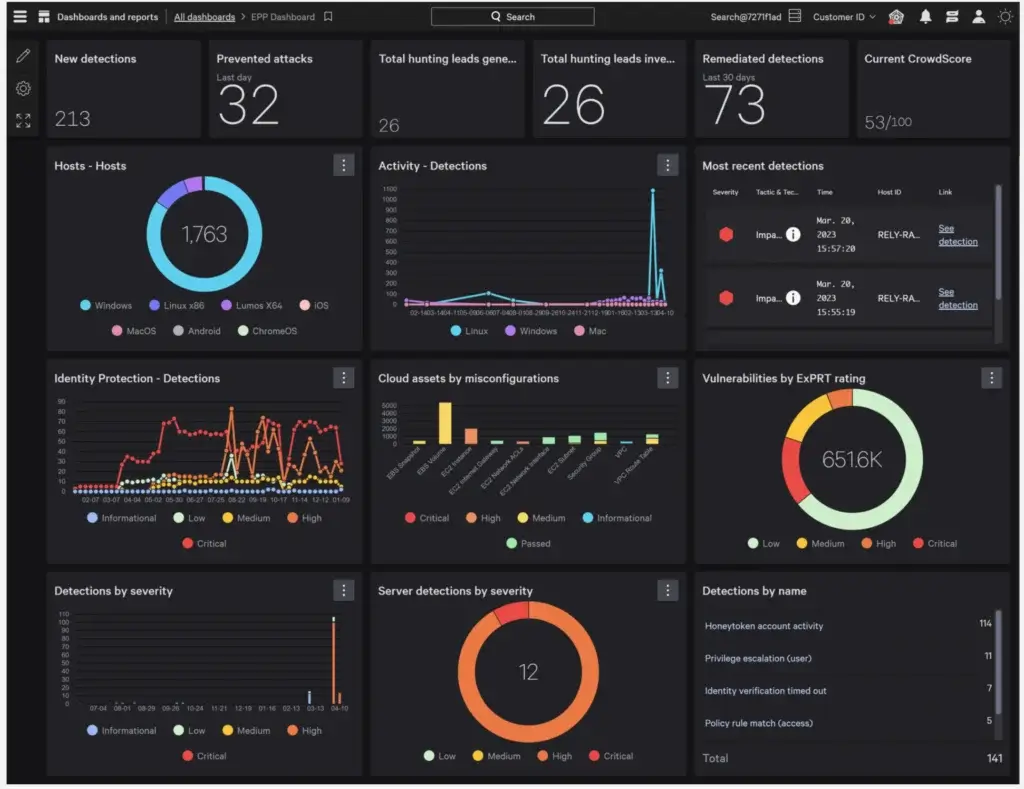
CrowdStrike’s Falcon platform combines NGAV with deep threat intelligence.
Key strengths:
- Cloud-native architecture
- Strong identity and cloud integration
- Threat hunting capabilities
- Advanced telemetry visibility
Well-suited for enterprise environments with mature SOC teams.
Microsoft Defender for Endpoint
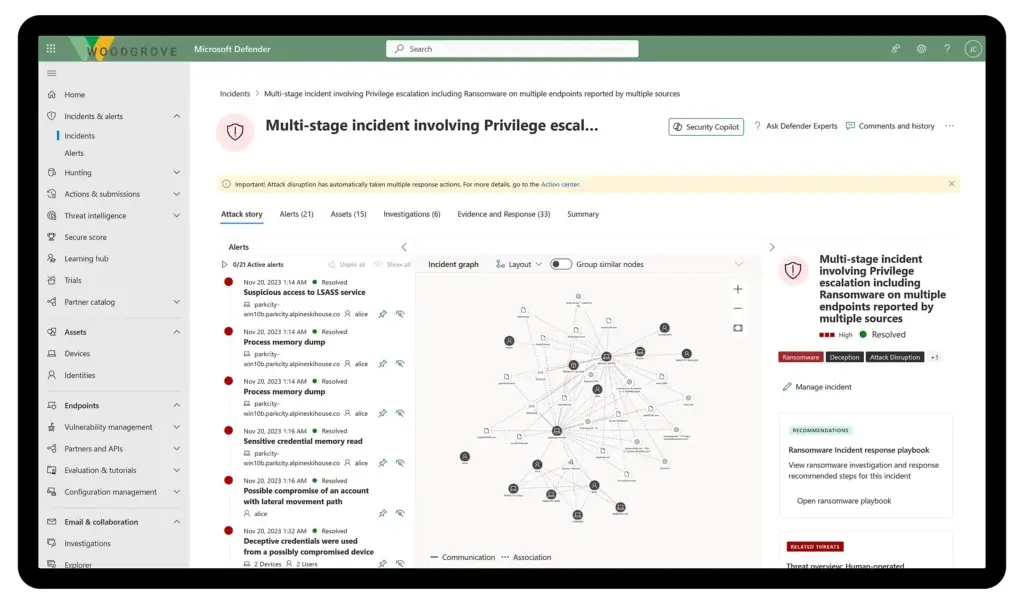
Microsoft Defender integrates NGAV into the broader Microsoft security ecosystem.
Key strengths:
- Native integration with Microsoft 365
- Identity monitoring through Azure AD
- Centralized security management
- Strong enterprise adoption
A practical choice for organizations heavily invested in Microsoft infrastructure.
Final Thoughts: Is Next Generation Antivirus Worth It in 2026?
Threats are evolving faster than ever.
AI-powered phishing, credential theft, zero-day exploitation, and ransomware automation have changed the attack landscape. Traditional antivirus tools built around signatures cannot reliably defend against these techniques.
Next-generation antivirus software provides:
- AI-driven prevention
- Behavioral zero-day detection
- Automated remediation
- Zero trust integration
- Identity-aware security controls
If you want to reduce breach risk, minimize downtime, and modernize your endpoint protection strategy, upgrading to next-generation antivirus is no longer optional.
It is foundational.
Before choosing a solution, compare feature depth, integration capabilities, and scalability.
A prevention-first architecture built around NGAV gives you the strongest starting point for defending your organization in 2026.
Frequently Asked Questions (FAQ)
What is next-generation antivirus?
Next-generation antivirus (NGAV) is endpoint security software that uses AI, machine learning, and behavioral analysis to detect and prevent malware, ransomware, and zero-day attacks. Unlike traditional antivirus, it does not rely mainly on signature databases.
Is the next-generation antivirus better than traditional antivirus?
Yes. Next-generation antivirus is more effective because it detects unknown and fileless threats using behavioral analysis. Traditional antivirus software mainly blocks known malware based on signatures, which is less effective against modern attacks.
Does the next-generation antivirus replace EDR?
No. Next-generation antivirus focuses on prevention, while EDR provides deeper visibility and investigation tools. Many organizations use NGAV together with EDR or XDR for stronger overall protection.
Can the next generation of antivirus software stop ransomware?
Yes. NGAV detects ransomware behavior, such as abnormal encryption activity, and can automatically terminate the process. Some solutions also include rollback features to restore affected files.
Does NGAV protect against zero-day attacks?
Yes. Next-generation antivirus uses behavioral detection and AI models to identify malicious activity, allowing it to block zero-day threats even when no signature exists.
What is behavioral detection in cybersecurity?
Behavioral detection analyzes how programs and users act on a system. If activity matches known malicious patterns such as credential dumping or unusual encryption, the system blocks it in real time.
Is the next-generation antivirus suitable for small businesses?
Yes. Cloud-based NGAV solutions are ideal for small businesses because they automate threat prevention, reduce manual workload, and provide strong protection without requiring a dedicated security team.
What is the difference between NGAV and XDR?
NGAV focuses on endpoint protection and prevention, while XDR collects and analyzes data across endpoints, network, cloud, and identity systems to provide broader visibility and response capabilities.
Do I still need a firewall with next-generation antivirus?
Yes. A firewall controls network traffic, while a next-generation antivirus protects endpoints. Both are essential parts of a layered cybersecurity strategy.
Is next-generation antivirus enough on its own?
For small environments, NGAV may be sufficient. However, larger organizations typically combine it with EDR, XDR, and identity security tools to achieve comprehensive protection.