Why Outbound Sales Still Matter for Startups
When you’re building a startup, waiting for leads to come in is rarely enough. SEO, paid ads, referrals, and partnerships can work well, but they often take time to produce consistent pipeline.
Outbound sales gives you more control. You define the right buyers, reach out directly, test your message, and learn from real conversations instead of waiting for demand to arrive on its own.
That is why outbound sales for startups remains one of the most practical ways to validate a market, book early sales calls, and build revenue momentum with a lean team.
In this guide, you’ll learn how to build an outbound sales strategy from the ground up. We’ll cover ICP definition, lead list building, cold email personalization, outbound tools, CRM tracking, deliverability, compliance, and practical templates you can adapt for your own sales process.
What Is Outbound Sales?
Outbound sales is a proactive sales process where you contact potential customers directly through cold email, phone calls, LinkedIn, or other outreach channels.
Instead of waiting for prospects to find your website or request a demo, you identify the right accounts and start the conversation yourself.
For startups, outbound sales is often useful because it helps you:
- Validate market demand before scaling marketing spend
- Reach high-value B2B buyers in a specific niche
- Test messaging, offers, and pain points quickly
- Build pipeline while inbound channels are still growing
- Learn from objections before hiring a larger sales team
If your product targets a defined B2B audience, solves a specific problem, or has a meaningful contract value, outbound can be one of the fastest ways to create qualified conversations.
However, good outbound is not about sending mass emails and hoping for replies. It is about building the right list, researching the account, writing relevant messages, sending thoughtful follow-ups, and tracking every interaction inside your CRM.
Three sales intelligence tools to support your outbound process
SmartReach AI can help during the research, list-building, enrichment, and personalization stages of outbound. It is especially useful when you want to build targeted lead lists, use buyer intent signals, and prepare personalized outreach before sending through platforms such as HubSpot, Reply.io, or Smartlead. Its guide on how to handle “I’m not interested” replies is also a useful resource for improving objection handling.
Apollo.io is useful for finding contacts, filtering prospects, and enriching lead data. It can help startups move faster when building early prospect lists and validating an ICP.
RocketReach is another option for contact discovery and prospect research. If you are comparing tools in this category, this guide to RocketReach alternatives can help you evaluate other options.
When you combine the right sales intelligence tools with a focused strategy, outbound becomes more targeted and easier to improve. You can also use resources like this guide on improving B2B email open rates to refine subject lines, sender setup, and campaign performance.
Who This Outbound Sales Guide Is For
This guide is built for founders, solo sales operators, and small startup teams that need to create pipeline before inbound demand becomes predictable.
It is especially useful if you sell a B2B SaaS product, target a specific customer segment, or need to reach decision-makers who are unlikely to discover your product through search alone.
If you are still learning your market, outbound can also act as customer discovery. Every reply, objection, and sales call helps you understand what buyers actually care about.
Outbound Sales vs. Inbound Sales for Startups
Outbound and inbound sales are both useful, but they serve different goals.
Inbound sales works best when prospects already know they have a problem and are actively looking for a solution. Outbound sales is more useful when you need to create demand, reach a specific buyer, or test a market before you have strong organic traffic.
| Category | Outbound Sales | Inbound Sales |
| Main approach | You contact prospects directly | Prospects come to you through content, SEO, ads, or referrals |
| Best for | Early traction, market validation, and targeted outreach | Long-term demand generation and warmer leads |
| Common channels | Cold email, calls, LinkedIn, direct messages | Blog content, landing pages, webinars, paid search, social media |
| Startup advantage | You control who you reach and what you test | You build compounding demand over time |
| Main challenge | Requires strong targeting, personalization, and follow-up | Can take longer to produce consistent pipeline |
For many startups, the strongest approach is to use both. Outbound helps you learn faster, and those insights can improve your inbound content, landing pages, sales messaging, and CRM workflows.
How to Build an Outbound Sales Strategy Step by Step
Launching your outbound engine does not need to be overwhelming. The goal is to build a simple, repeatable process that helps you find the right prospects, start relevant conversations, and learn from the data.
1. Define Your ICP
Before you send a single message, you need to know exactly who you are targeting. Your Ideal Customer Profile, or ICP, defines the type of company most likely to buy from you, stay with you, and get value from your product.
A strong ICP goes beyond company size or industry. It should include details such as buyer role, business model, team structure, pain points, tech stack, budget, and buying triggers.
For example, “B2B SaaS companies” is too broad. “VPs of Sales at B2B SaaS companies with 20 to 100 employees that recently hired SDRs” is much easier to target and personalize.
Pro tip: If you already have customers, look at the accounts that converted fastest, had the clearest pain, and required the least education. Those patterns can help you define your first outbound segment.
Bonus Tool: Use Apollo.io or Cognism to filter potential leads by firmographic and technographic data so you are not guessing blindly.
2. Build and Enrich a Clean Prospect List
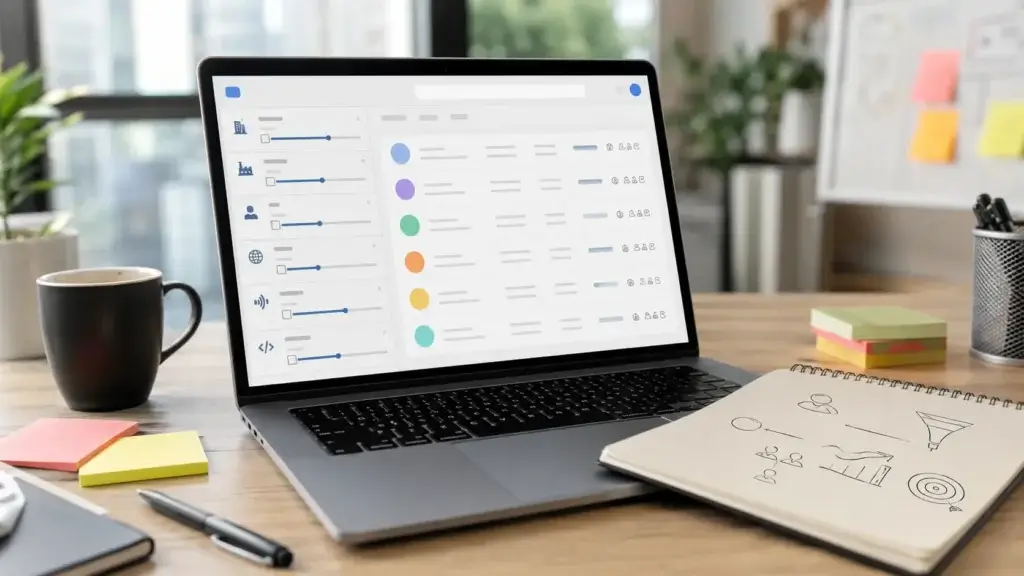
Once you know your ICP, build a targeted prospect list. This step matters because your list quality affects everything that comes after it, including open rates, reply rates, meetings, and deal quality.
You can build your list by combining:
- Sales intelligence tools like Apollo.io
- LinkedIn and Sales Navigator research
- Email enrichment tools like Hunter.io or Clearbit
- Company data, intent signals, and trigger events
Quick tip: Avoid buying large generic lead lists. They are often outdated, poorly targeted, and risky for deliverability. A smaller list of high-fit prospects will usually outperform a large list of weak-fit contacts.
This is also where SmartReach AI can support the workflow. It can help with AI-driven list building, lead enrichment, buyer intent signals, and personalization before you push the data into your outreach or CRM tools.
3. Research Prospects Before You Write
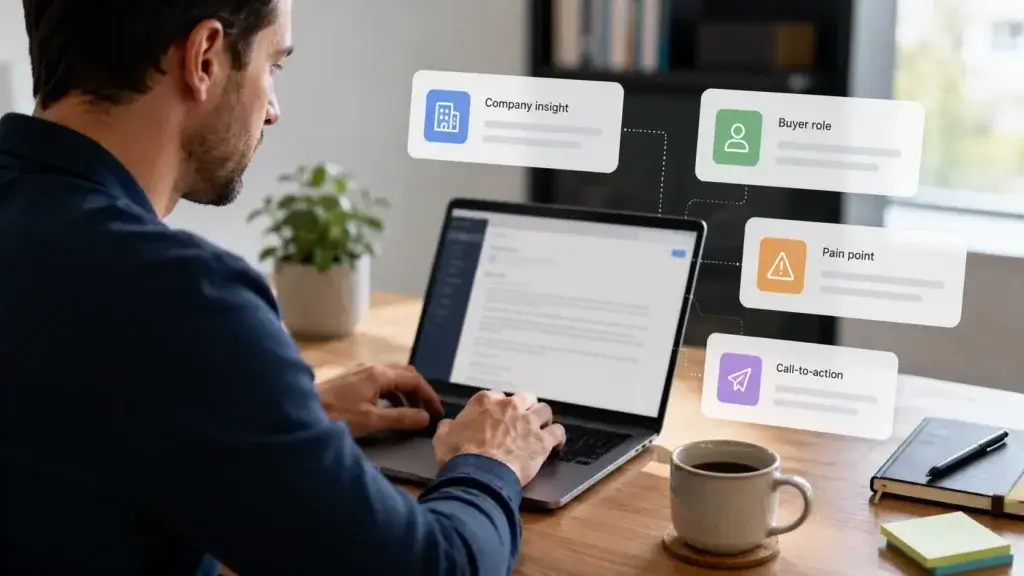
Good outbound starts before the first sentence of your email. You need enough context to understand why a prospect might care now.
Look for useful signals such as:
- Recent funding or company growth
- Hiring activity
- New product launches
- Technology changes
- Relevant content or announcements
- Competitor activity
- Role-specific challenges
You do not need to spend 20 minutes researching every contact. But you do need enough context to avoid sounding generic.
AI research tools can help summarize account context and suggest personalization angles. Still, always review the output. Poor personalization can make an email feel automated, even when the data is technically accurate.
4. Automate Outreach Without Sounding Robotic
Once you have a clean list and a strong message, you can start scaling. But scaling outbound does not mean sending the same email to everyone.
The best outbound workflows combine automation with relevance. Platforms like HubSpot, Smartlead, or Reply.io can help you manage outreach sequences that include:
- Personalized cold emails
- Follow-up reminders
- LinkedIn touchpoints
- Email tracking and performance metrics
Before sending, make sure your lead data and message context are strong. Tools like SmartReach AI can help with enrichment and personalization, while your delivery platform handles the actual sending.
Bottom line: The best tools help you send fewer emails to better prospects with messaging that feels more relevant.
5. Track, Learn, and Optimize
Outbound is never a set-it-and-forget-it strategy. You need to track what happens after every send.
Track metrics like:
- Open rate
- Reply rate
- Positive reply rate
- Meeting booked rate
- Opportunity rate
- Closed-won revenue from outbound
CRMs like HubSpot, monday CRM, and Pipedrive help you organize contacts, track follow-ups, manage pipeline stages, and understand which campaigns create real opportunities.
Your goal is not just to measure activity. It is to understand which outreach actions create pipeline.
6. Craft Personalized Outreach Messages
This is where many startups miss the mark.
No one wants to read a generic cold email that sounds like it was sent to thousands of people. Your message should be concise, relevant, and tied to a problem your prospect recognizes.
Use this simple cold email framework:
- Line 1: Mention a relevant trigger, role-specific insight, or company context
- Line 2: Connect that context to a likely business problem
- Line 3: Explain the outcome you help create
- Line 4: Use a low-friction CTA, such as “Worth a quick conversation?”
If you want more examples and frameworks, read our full guide on how to write cold emails.
Want to improve your message quality before sending? AI writing tools like Lavender can help review tone, length, clarity, and personalization.
Founder-Led Outbound for Early-Stage Startups
Before you hire your first SDR, founder-led outbound is one of the best ways to learn your market.
As a founder, you understand the product, problem, roadmap, and early customer feedback better than anyone. That makes your early outbound conversations valuable, even when they do not turn into immediate deals.
Start with one narrow audience
Choose one segment, one buyer role, and one pain point. Your goal is not to reach everyone. It is to find the first group of prospects that clearly understands the problem you solve.
Use outbound as customer discovery
Early conversations should help you validate your messaging, pricing assumptions, objections, and product direction.
Even a “not now” reply can be useful if it tells you why the buyer is hesitant, what they already use, or what would make the problem more urgent.
Document objections inside your CRM
Track objections, lost reasons, competitor mentions, and common buyer language. Over time, this data can improve your cold emails, landing pages, sales deck, and product positioning.
Tools You Need for Outbound Sales
You do not need a bloated tech stack to build a working outbound process. But the right tools can help you save time, improve targeting, personalize faster, and keep your pipeline organized.
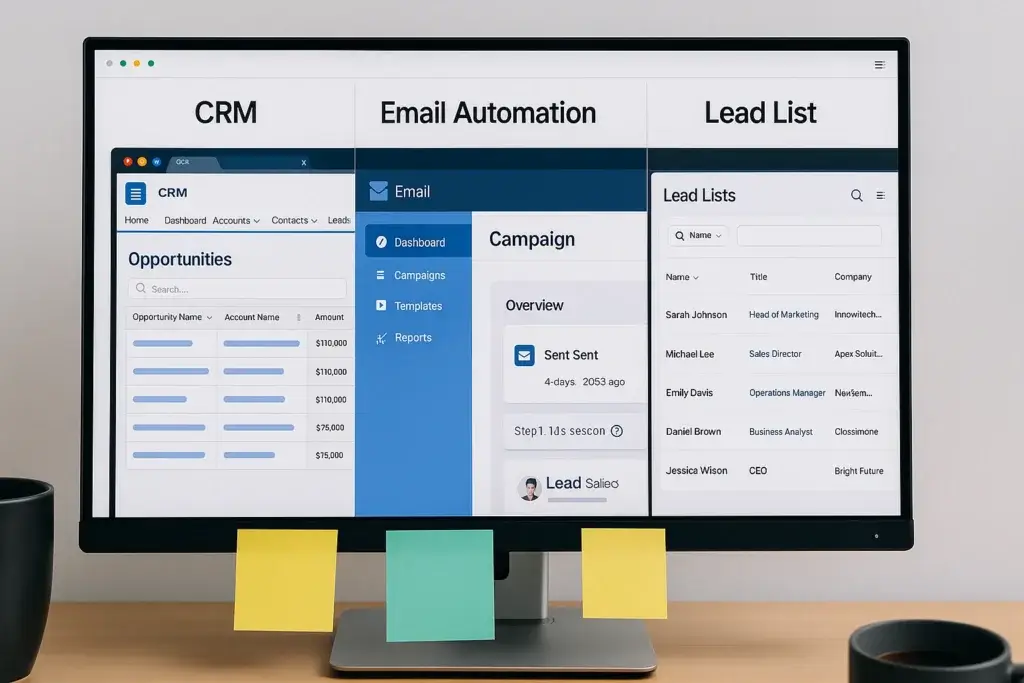
For most startup teams, your outbound stack should cover four areas: prospecting, enrichment, outreach delivery, and CRM tracking.
1. SmartReach AI – Best for List Building and Lead Enrichment
SmartReach AI is a useful addition to your outbound toolkit during the research, list-building, enrichment, and personalization stages.
Instead of manually pulling data from multiple sources, you can use it to help build targeted lead lists, enrich company and contact data, identify buyer intent signals, and prepare more personalized outreach.
It connects with tools like HubSpot, Smartlead, and Reply.io, so once your lists are enriched and personalized, you can move them into your outreach or CRM workflow.
Highlights:
- AI-driven lead list building and filtering
- Lead enrichment with company and contact data
- Buyer intent signals for better timing
- Access to data sources such as Crunchbase, SimilarWeb, and BuiltWith
- Personalized message lines for better relevance
- Works alongside email tools, it does not send emails directly
It is ideal for early-stage teams that want to reduce manual research and improve list relevance before launching outbound campaigns.
2. Apollo.io – Best for Prospecting and Contact Enrichment
Prospecting is a core part of outbound sales, and Apollo.io helps teams find contacts, filter accounts, and enrich lead records.
Key features include:
- Advanced filters to build ICP-targeted lists
- Verified email and phone data
- LinkedIn-supported prospecting workflows
- Contact enrichment for CRM records
It is a good fit if you want to combine lead discovery and outbound workflows in one platform, especially while your sales process is still developing.
3. HubSpot CRM – Best Free CRM to Start Tracking Deals
As outbound outreach turns into conversations, you need a CRM to manage your pipeline. HubSpot CRM is a strong starting point because it is easy to use and integrates with many sales tools.
Features that help startups include:
- Contact management and email logging
- Deal tracking with visual pipelines
- Sales activity timelines
- Reporting dashboards
HubSpot also gives you visibility into contact activity, so you can follow up with better timing and keep your pipeline organized.
4. Lavender – Best Tool to Write Better Cold Emails
Your messaging can make or break outbound performance. Lavender helps you improve cold emails by reviewing tone, clarity, length, and personalization.
Why startups use it:
- Real-time AI writing feedback
- Email scoring before sending
- Suggestions to improve clarity and relevance
- Support for reducing common cold email mistakes
It is useful for founders and sales reps who want help turning prospect research into concise, human-sounding outreach.
Each of these tools solves a different part of outbound sales: finding the right people, enriching the data, writing better messages, sending sequences, and tracking every touchpoint in your CRM.
Cold Email Deliverability Basics for Startup Teams
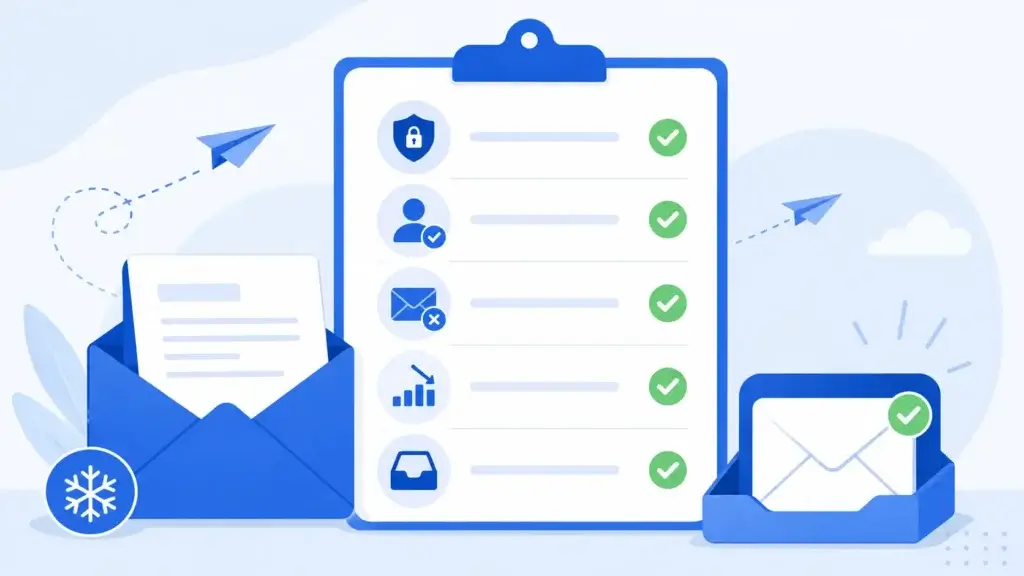
Outbound sales only works if your emails reach the inbox. Before you scale campaigns, make sure your sending setup is clean, properly authenticated, and monitored.
Set up your sending domain correctly
Configure SPF, DKIM, and DMARC for your sending domain. These records help mailbox providers verify that your emails are legitimate.
Start with controlled sending volume
A new domain or inbox should not send high volumes immediately. Start small, monitor engagement, and increase gradually as performance stabilizes.
Use clean, verified data
High bounce rates can hurt performance. Verify email addresses before sending and remove invalid contacts from your campaigns.
Make opting out simple
Give recipients a clear way to opt out. This protects your sender reputation and helps you keep your outbound process respectful.
Cold Email Compliance Basics Startups Should Know
Cold email can be legal, but you need to handle it responsibly. If you are emailing prospects in the United States, review CAN-SPAM requirements before launching campaigns.
At a basic level, your emails should use accurate sender information, avoid misleading subject lines, include a valid physical address, and provide a simple opt-out method.
If you sell internationally, review local rules for each market. Outreach to EU prospects, for example, may require a different privacy and compliance approach than outreach to US prospects.
This is not legal advice, but it is a reminder that compliance should be part of your outbound process from the start.
Outbound Sales Metrics Startups Should Track
Open rates are useful, but they do not tell the full story. For startups, the most important question is whether outbound creates qualified conversations and real pipeline.
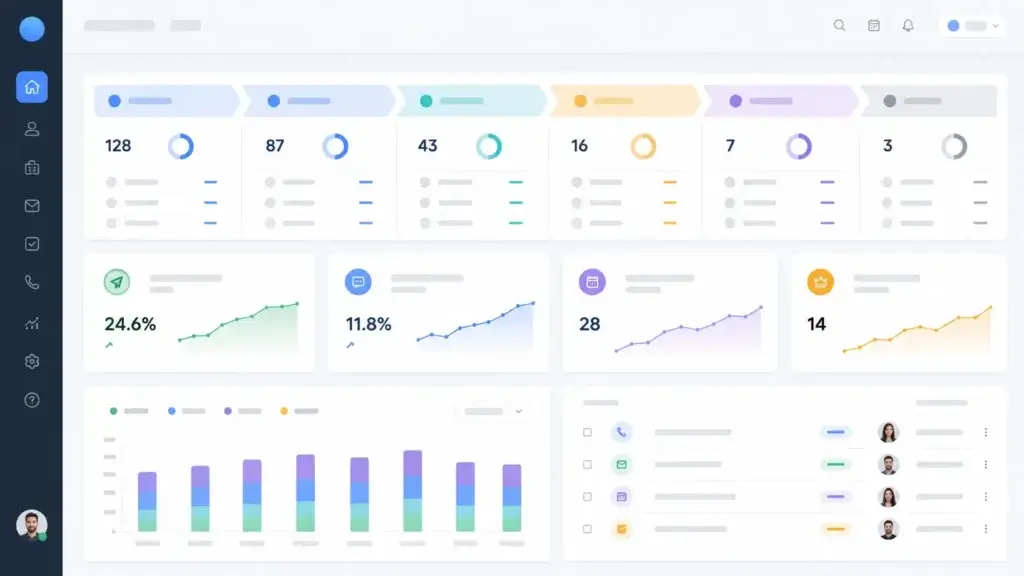
| Metric | What It Tells You | What to Improve |
| Open rate | Whether your subject line and sender setup are working | Deliverability, targeting, subject line |
| Reply rate | Whether your message is relevant | ICP, personalization, value proposition |
| Positive reply rate | Whether prospects are interested | Pain point, timing, CTA |
| Meeting booked rate | Whether replies turn into conversations | Follow-up speed, qualification, scheduling flow |
| Opportunity rate | Whether meetings create real pipeline | ICP fit, discovery process, sales qualification |
A CRM helps you connect these metrics to revenue. A campaign with fewer replies may still be better if those replies come from higher-fit accounts that turn into real opportunities.
Outbound Sales Templates
Templates are useful when you’re just starting with outbound sales. The key is to use them as a structure, then personalize each message based on the prospect’s company, role, pain point, or trigger.
Cold Email Template for B2B SaaS
Subject Line: Quick question about {{Company}}
Body:
Hi {{FirstName}},
I noticed {{Company}} is focused on {{relevant initiative, team goal, or trigger}}.
We help {{type of company}} solve {{specific pain point}} without {{common frustration or manual process}}.
Would it be worth a quick 15-minute conversation next week to see if this is relevant?
Best,
{{Your Name}}
✅ Use this template as your first-touch email. Keep it short, relevant, and low-pressure.
LinkedIn Connection Message
Message:
Hey {{FirstName}}, I saw your work around {{topic, role, or company initiative}} and thought it would be useful to connect.
Always interested in learning how {{role or team type}} teams are approaching {{relevant challenge}}.
✅ This works best as a soft connection before pitching. Avoid selling in the first message.
Follow-Up Email After No Response
Subject Line: Re: Quick question about {{Company}}
Body:
Hey {{FirstName}}, just floating this to the top of your inbox.
Totally understand if now is not the right time. I wanted to see if {{pain point or goal}} is a priority for your team this quarter.
If helpful, I can share a few ideas we have seen work for similar teams.
Best,
{{Your Name}}
✅ Use this follow-up to add context without sounding pushy.
Cold Call Script for Startup Founders
Opening Line:
“Hi {{FirstName}}, this is {{YourName}} from {{StartupName}}. I’ll keep it quick. Did I catch you at a bad time?”
Context:
“I noticed {{Company}} is likely dealing with {{specific challenge or trigger}}. We help {{buyer type}} improve {{specific outcome}} without {{common pain}}.”
Question:
“Is that something your team is currently trying to improve?”
Close:
“If it is relevant, would it make sense to schedule 15 minutes next week?”
✅ If you are the founder making early calls, lead with relevance and listen closely to objections.
Breakup Email Template
Subject Line: Should I close the loop?
Hi {{FirstName}},
I do not want to keep following up if this is not relevant.
Should I close the loop for now, or is improving {{specific outcome}} something worth revisiting later?
Best,
{{Your Name}}
✅ Use this at the end of a sequence to keep your pipeline clean and give the prospect an easy way to respond.
Common Outbound Sales Mistakes Startups Make
Outbound can work extremely well, but small mistakes compound quickly. If you target the wrong people with weak messaging, more volume will only create more noise.
Sending generic messages
If your email could be sent to anyone, it will likely be ignored by everyone.
Fix it by using details that matter to the prospect, such as their role, company context, recent activity, industry trend, or likely business challenge.
Targeting too broadly
Many startups go too broad because they do not want to miss opportunities. In practice, broad targeting makes messaging weaker and results harder to interpret.
Start narrow. Win one segment first, then expand.
Giving up after one touchpoint
Most prospects will not respond to the first email. A useful follow-up sequence gives them more context, not just reminders.
Instead of saying “just checking in,” add a new insight, use case, proof point, or question.
Ignoring deliverability
If your emails do not reach the inbox, your messaging does not matter. Verify emails, authenticate your domain, control sending volume, and monitor bounce rates.
Not using a CRM early enough
Spreadsheets may work for your first few prospects, but they become messy quickly. A CRM gives you one place to track contacts, calls, replies, deal stages, follow-ups, and performance.
How CRM Supercharges Your Outbound Strategy
Outbound sales for startups is not just about sending emails or making cold calls. The real power comes when you combine outreach with a well-structured CRM system.
Your CRM becomes the central place where prospect data, conversations, follow-ups, tasks, deals, and performance metrics come together.
Why CRM Is Essential for Outbound Sales
Without a CRM, your outreach can quickly turn into a guessing game. You may forget follow-ups, lose context, or struggle to understand which campaigns are creating real opportunities.
With a CRM, you can:
- Track every touchpoint from emails and calls to meetings and notes
- Organize your pipeline into clear deal stages
- Segment leads based on fit, engagement, or buying intent
- Automate tasks so follow-ups do not slip through the cracks
How CRM Works with Your Outbound Sales Tools
Your CRM is not just a database; it is the hub that connects your outbound sales workflow.
Here’s what the typical workflow looks like:
- You build and enrich your lead list using prospecting tools
- You personalize your outreach based on role, company context, and buyer signals
- You send outreach sequences through platforms like Smartlead, Reply.io, or HubSpot
- Your CRM tracks replies, calls, meetings, tasks, and deal movement
- Your team uses the data to improve targeting, messaging, and follow-up timing
With everything connected, your outbound process becomes repeatable, data-driven, and easier to scale, especially if you are a small team managing multiple responsibilities.
Modern CRMs like HubSpot, monday CRM, and Pipedrive integrate with many outbound sales tools, helping you manage the full sales cycle from one place.
Recommended CRM Tools for Startups
HubSpot CRM
- Free to start with core sales features
- Useful for contact management, activity tracking, and deal pipelines
- Strong option for startups that want sales and marketing data in one place
monday CRM
- Customizable workflows for growing startup teams
- Visual task boards and automation triggers
- Useful for founders managing sales, operations, and follow-ups together
Pipedrive
- Sales-focused design with visual pipeline management
- Useful for small teams that want a simple deal-tracking system
- Strong fit for teams that prioritize pipeline clarity and follow-up discipline
Each of these CRMs can support outbound sales, but the right choice depends on your workflow. HubSpot is a strong free starting point, monday CRM is useful for flexible workflows, and Pipedrive is best when you want a focused sales pipeline.
Final Thoughts
Build a Repeatable Outbound Sales Engine
Outbound sales for startups is not about brute force. It is about reaching the right people with the right message at the right time.
If you’ve made it this far, you now have a practical blueprint:
- Define a narrow ICP
- Build and enrich a clean prospect list
- Research prospects before writing
- Craft concise, relevant outreach
- Use tools like SmartReach AI, Apollo.io, and HubSpot CRM to support list building, prospecting, and CRM tracking
- Measure what creates replies, meetings, and real pipeline
Start small, measure everything, and let the data guide your next move.
Next step: Build a focused prospect list, send a small personalized sequence, and track every reply and meeting inside your CRM. That is how outbound becomes a repeatable growth engine instead of a guessing game.
FAQ
What is outbound sales for startups?
Outbound sales for startups is a proactive sales strategy where you contact potential customers directly through cold email, calls, LinkedIn, or other outreach channels. It helps startups create pipeline, validate demand, and learn from prospects before inbound channels become predictable.
Is outbound sales still effective in 2026?
Yes. Outbound sales is still effective in 2026 when it is targeted, personalized, and supported by clean data. Startups should avoid mass email blasts and focus on relevant prospects, strong messaging, and consistent CRM tracking.
What is the best outbound sales strategy for a startup?
The best outbound sales strategy for a startup is to start narrow. Define one ideal customer profile, build a clean prospect list, personalize your messaging, use a multi-touch sequence, and track every conversation inside your CRM.
How many touchpoints should an outbound sequence include?
A typical outbound sequence includes 5 to 7 touchpoints over 2 to 3 weeks. This may include cold emails, follow-ups, LinkedIn touches, and phone calls. The goal is to add value in each touchpoint, not repeat the same message.
What tools do startups need for outbound sales?
Startups usually need a prospecting tool, an enrichment or sales intelligence tool, an outreach platform, and a CRM. Examples include SmartReach AI for list building and personalization, Apollo.io for prospecting, HubSpot CRM for tracking, and Lavender for improving cold email copy.
Can I do outbound sales without a CRM?
You can start without a CRM, but it becomes difficult to scale. A CRM helps you track contacts, conversations, follow-ups, deal stages, and performance. Even early-stage startups should use a basic CRM once outreach volume starts growing.
What is founder-led outbound?
Founder-led outbound is when the founder personally contacts prospects to validate the market, test messaging, and book early sales conversations. It is especially useful before hiring sales reps because it helps founders understand buyer pain points and objections directly.
How do I improve cold email response rates?
To improve cold email response rates, target a narrow ICP, use clean data, personalize your first line, connect your message to a real pain point, and use a clear CTA. You should also test different subject lines, value propositions, and follow-up angles.
What is a good cold email length?
A good cold email is usually under 125 words. Keep it short, specific, and focused on one clear reason for reaching out. Avoid long product explanations and make the CTA easy to answer.
Should startups outsource outbound sales?
Most startups should build outbound internally first, especially during the early learning stage. Once you understand your ICP, messaging, objections, and conversion rates, you can consider outsourcing parts of the process or hiring SDRs to scale it.