
Managing supplier payments across entities, currencies, tax requirements, and approval workflows becomes far more difficult once your finance operation starts to scale. That is where Tipalti stands out. This Tipalti review covers everything you need to know about the platform, including its features, pricing structure, pros, cons, integrations, and alternatives. By the end, you should have a much clearer view of whether Tipalti is the right fit for your finance team.
Overview of Tipalti and Its Role in Finance Automation
What Tipalti Does for Businesses
Tipalti is a cloud-based finance automation platform built to help you manage accounts payable, supplier onboarding, procurement, global payments, and related financial controls from a single system. Rather than operating as a traditional bookkeeping tool, it works as a finance operations layer that connects to your ERP or accounting software. The platform is designed to reduce manual invoice handling, improve approval workflows, automate supplier data collection, and make domestic and international payments more reliable and scalable.
Why Businesses Choose Finance Automation
As your business grows, manual AP processes create bottlenecks. Invoices arrive in different formats, approvals slow down, tax forms go missing, and international payouts become harder to control. Finance automation solves these issues by standardizing the workflow from supplier onboarding through invoice capture, approvals, payment execution, and reconciliation. That matters even more if you manage multiple entities, operate across borders, or process high volumes of supplier and partner payments.
Software specification
Key Features of Tipalti
Accounts Payable Automation
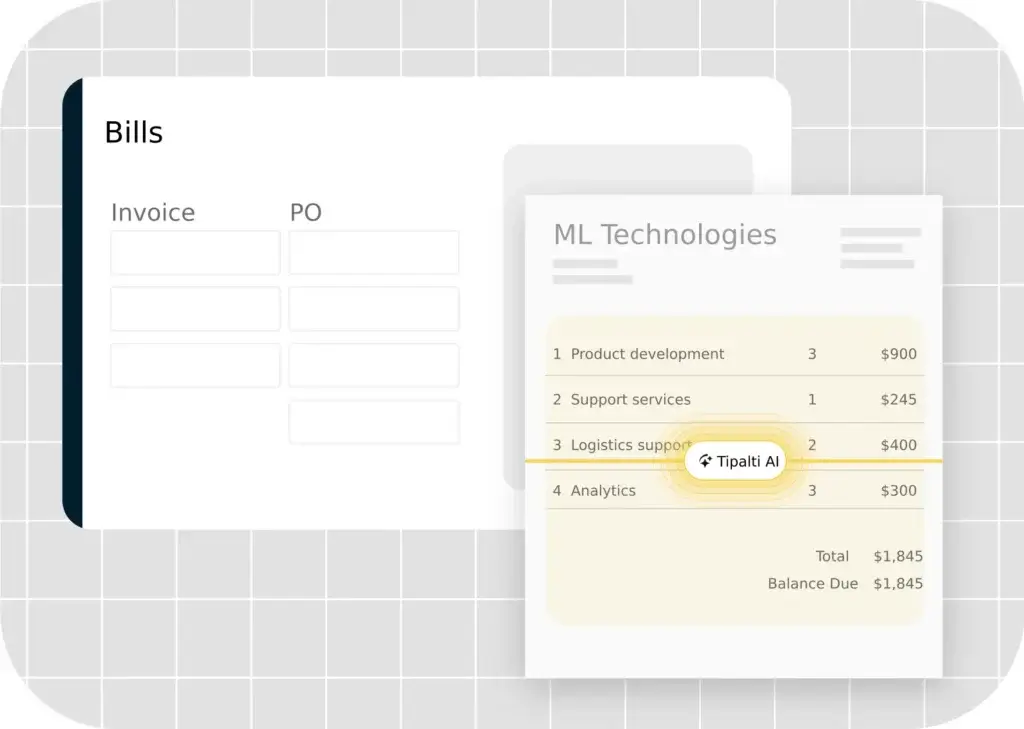
Tipalti’s AP automation capabilities are the core of the platform. You can centralize invoice intake, automate coding support, route approvals, schedule payments, and reconcile transactions back into your system of record. For finance teams that are overwhelmed by email invoices, spreadsheets, and disconnected payment tools, this is one of Tipalti’s biggest advantages.
Key highlights include:
- Automated invoice capture and routing to the right approvers
- Approval workflows with stronger controls and audit visibility
- Payment execution and reconciliation within the same AP process
Supplier Onboarding and Tax Compliance
One of Tipalti’s strongest differentiators is supplier onboarding. Instead of asking your AP team to manually collect banking details, tax forms, and compliance documents, suppliers can submit and maintain their own data through a self-service portal. This lowers administrative workload, improves payment accuracy, and helps reduce tax and regulatory risk.
The supplier experience is also more transparent than in many traditional AP tools. Suppliers can check invoice and payment status, review history, and receive proactive updates, which reduces payment-related emails and support requests.
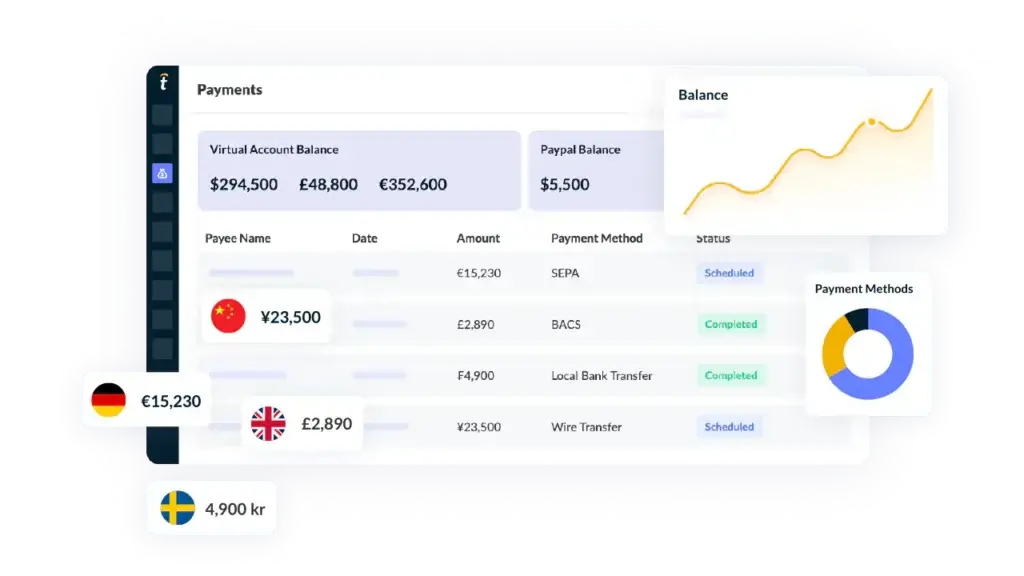
Global Payments and Mass Payouts
Tipalti is especially compelling if your business pays suppliers, contractors, affiliates, creators, freelancers, or global partners across multiple countries. The platform is built for high-volume domestic and international payments, with support for a wide range of currencies and payment methods. If your finance team regularly deals with cross-border payout complexity, Tipalti is stronger than many AP tools that focus mainly on domestic bill pay.
This is one of the main reasons Tipalti is often evaluated by marketplaces, ad tech companies, SaaS businesses, gaming companies, and globally distributed operations. It is not just about paying invoices. It is also about scaling payouts with compliance controls already built into the workflow.
Procurement, PO Matching, and Spend Control
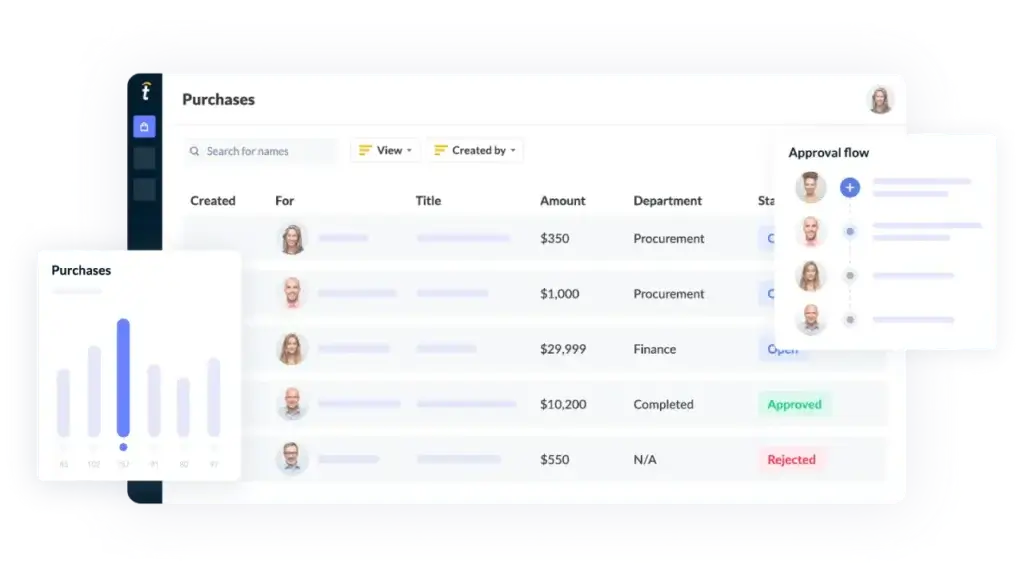
Tipalti has expanded beyond classic AP automation into broader procure-to-pay workflows. That means you can manage purchase requests, approvals, purchase orders, invoice verification, and 2-way or 3-way matching inside the same ecosystem. For businesses that want better control over spend before the invoice arrives, this matters a lot.
Compared with tools that specialize only in invoice automation, Tipalti offers a more connected finance operations approach. That makes it more suitable for companies that want to reduce fragmentation between procurement, AP, and payments.
Expense Management and Card Workflows
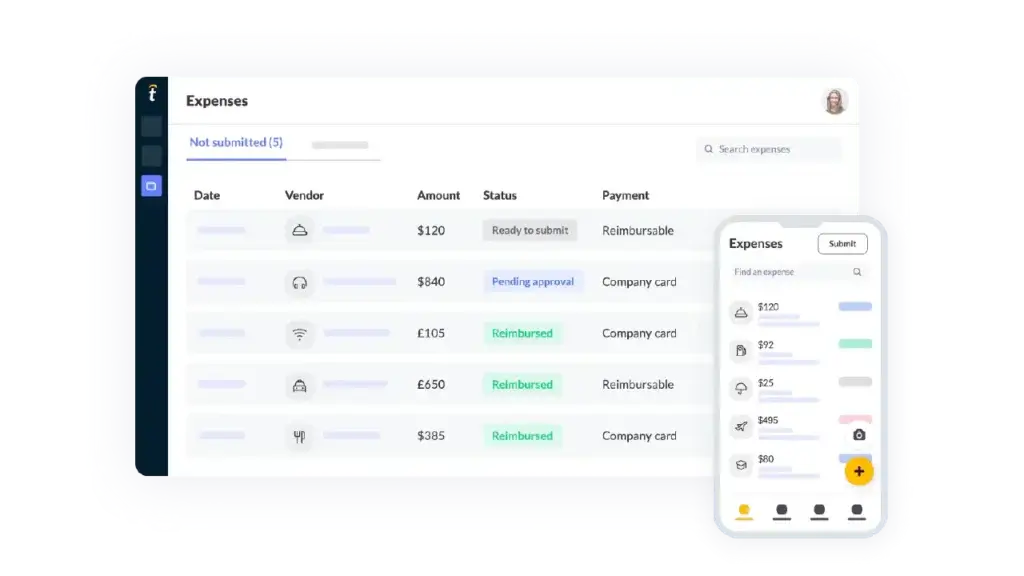
Tipalti also offers expense management capabilities, including expense submission, approval workflows, reimbursements, and card-linked spend controls. This broadens the platform from supplier payments into employee-initiated spend. If your team wants AP automation and expense management under one vendor, Tipalti becomes more attractive than narrower point solutions.
Integration with Accounting and ERP Platforms
Tipalti is built to work alongside accounting systems and ERPs rather than replace them. It offers prebuilt integrations with platforms such as NetSuite, Sage Intacct, Microsoft Dynamics 365, QuickBooks, Xero, Acumatica, and SAP environments. This is important because it allows Tipalti to automate payables, onboarding, procurement, and reconciliation without forcing you to replace the financial system you already use.
Security and Compliance Measures
Handling supplier banking data, tax documentation, and cross-border payments requires strong controls. Tipalti places a heavy emphasis on security, role-based permissions, audit logs, fraud prevention, sanction screening, and tax compliance. For businesses operating in regulated environments or dealing with international supplier risk, these controls are not just useful; they are central to the product’s value.
How Tipalti Works
Setup and Uses
Setup and Onboarding
Tipalti is not the kind of tool you fully configure in an afternoon, especially if you have multiple entities, approval layers, currencies, or ERP integrations. Implementation usually involves mapping your finance workflows, approval rules, supplier requirements, tax collection process, and payment preferences. That said, the payoff is a more scalable operating model once the system is fully in place.
From Invoice to Payment
In a typical AP workflow, invoices are captured, validated, coded, matched against purchase orders where relevant, routed for approval, and then paid through your selected payment methods. The final step is reconciliation back to your ERP or accounting software. Tipalti’s value comes from connecting all of those steps rather than forcing your team to manage them across separate systems.
Managing Global Suppliers and Payees
If your business pays recipients across multiple countries, Tipalti helps standardize onboarding and payout management at scale. Suppliers and payees can enter their own details, choose payment methods, submit tax information, and track payment status. This reduces manual intervention while giving your finance team more control over exceptions and compliance issues.
Using Expense and Spend Workflows
For businesses that also adopt Tipalti’s expense capabilities, employees can submit expenses, managers can approve them, and finance can reimburse or reconcile spend with more consistent policy enforcement. This is useful if your goal is not only to automate supplier payments, but to centralize finance operations more broadly.
Pros and Cons
A balanced view: what you’ll love and what to consider
Tipalti is a powerful finance automation platform, but it is not meant for every type of business. It is far more capable than lightweight bill pay tools, yet that additional power also brings more implementation effort, higher complexity, and potentially higher cost.
The right question is not whether Tipalti is a strong product. It clearly is. The real question is whether your business actually needs the depth it offers.
Positive
✅ Automating the Entire Payables Workflow
✅ Handling Global Payments Better Than Many Competitors
✅ Improving Controls, Visibility, and Close Efficiency
✅ Supporting Growth Without Constant Headcount Increases
Negative
❌ It Can Be More Than Small Businesses Need
❌ Pricing Requires More Careful Evaluation
❌ Implementation and Adoption Take Work
✅ Benefits of Tipalti
Automating the Entire Payables Workflow
Tipalti is strongest when you want more than invoice capture. It covers onboarding, tax data collection, approvals, payment execution, and reconciliation in one connected process. That reduces handoffs, lowers manual work, and makes your payables operation more scalable.
Handling Global Payments Better Than Many Competitors
This is one of Tipalti’s clearest strengths. If your business pays suppliers or partners internationally, Tipalti offers much deeper payout infrastructure than many AP automation tools. That makes it especially valuable for businesses with global vendors, marketplace sellers, affiliates, or contractor networks.
Improving Controls, Visibility, and Close Efficiency
Finance leaders care about more than speed. They care about visibility and control. Tipalti helps with approval enforcement, reconciliation, audit trails, role-based permissions, and standardized supplier data. In practice, that can lead to a cleaner month-end process and fewer payment errors.
Supporting Growth Without Constant Headcount Increases
One of the strongest business cases for Tipalti is scale. If invoice volume, supplier count, and international payment complexity are increasing faster than your finance headcount, automation becomes strategically important. Tipalti is built for that stage of growth better than entry-level AP tools.
❌ Potential Drawbacks and Limitations
It Can Be More Than Small Businesses Need
If your company only needs straightforward domestic bill pay, Tipalti may feel excessive. Simpler tools can be faster to launch and easier to manage when your requirements are limited. Tipalti becomes more compelling once complexity is already present or clearly coming.
Pricing Requires More Careful Evaluation
Tipalti is not priced like a lightweight SMB tool. Its pricing model is modular and transaction-driven, which means your actual cost depends on product mix, entities, payment volume, currencies, and implementation scope. That is not necessarily a weakness, but it does mean budgeting takes more effort.
Implementation and Adoption Take Work
Because Tipalti can touch supplier onboarding, tax compliance, procurement, approvals, and payment execution, implementation usually needs cross-functional attention. Finance teams that do not allocate time for process design and adoption may take longer to realize the platform’s full value.
Pricing and Plans
How much does Tipalti cost?
Tipalti’s pricing is best understood as enterprise-style SaaS pricing rather than a simple flat monthly subscription. The company frames pricing around a base subscription plus transaction-based pricing, with costs affected by modules, payment volume, entities, currencies, and enabled capabilities.
Public pricing references often cite entry-level pricing from around $99 per month, but you should treat that as an entry signal rather than a universal real-world quote. In practice, your cost can vary materially depending on how much of Tipalti’s connected suite you adopt.
How the Pricing Model Works
- Base platform fee – subscription pricing for the core platform
- Transaction-based charges – fees tied to payment volume and activity
- Module expansion – AP, procurement, mass payments, and expenses can affect total cost
- Operational complexity – entities, currencies, integrations, and approval depth influence pricing
Who Should Expect Higher Costs
Businesses with multi-entity operations, heavier international payouts, more advanced procurement requirements, or more sophisticated ERP integrations should expect higher overall cost. That does not make Tipalti overpriced. It simply reflects that the platform is designed for more complex finance operations than basic AP tools.
What to Clarify During Evaluation
When you speak with Tipalti, it is smart to clarify not only platform subscription cost, but also transaction fees, onboarding scope, implementation expectations, global payment costs, and how additional modules are packaged. That gives you a more realistic total cost picture before you commit.
Pricing Comparison Table
| Pricing Element | How Tipalti Prices It | What You Should Watch |
| Platform access | Subscription-based | Base fee may vary by product scope |
| Payments | Transaction-based pricing layered on top | Payment volume and method matter |
| Modules | Depends on AP, procurement, mass payments, expenses | Bundling can change total cost materially |
| Entities and currencies | Affects complexity and quote | Global multi-entity operations usually cost more |
| Public entry references | Often cited from about $99/month | Do not assume this reflects your final quote |
Business Fit
Who Should Use Tipalti?
Mid-Market and Scaling Finance Teams
Tipalti is a strong fit if your finance team is managing growing invoice volume, more suppliers, tighter approval requirements, or an increasingly global operation. If your current AP process relies on too many spreadsheets, inboxes, manual reconciliations, or one-off payment tools, Tipalti becomes much more relevant.
Multi-Entity and International Businesses
The platform is particularly valuable for businesses operating across subsidiaries, regions, and currencies. If you need consistent supplier onboarding, approval controls, payment execution, and reconciliation across entities, Tipalti fits far better than basic SMB bill pay software.
Common Industry Use Cases
- Marketplaces and platforms: strong fit for high-volume supplier and partner payouts
- SaaS and technology: useful for scaling AP without scaling headcount at the same pace
- Gaming, media, and creator ecosystems: valuable for cross-border mass payments
- Professional services and global operations: strong when tax, entity, and approval complexity is high
Alternatives
Tipalti Alternatives & Competitors
Tipalti is not the only finance automation platform in this category. The right alternative depends on whether you prioritize global payouts, AP workflow depth, spend management, or procurement-first controls.
Comparison Table: Tipalti vs Competitors
| Feature | Tipalti | BILL | Stampli | AvidXchange |
| Core focus | Finance automation, AP, procurement, global payments | AP and AR automation for SMB and mid-market | AP workflow and invoice approvals | AP automation and payments for mid-market |
| Global payment depth | Very strong | Moderate | More limited | More limited |
| Supplier onboarding and compliance | Major strength | Solid, but lighter | Not as central | Varies by use case |
| Procurement and PO controls | Broad connected suite | Lighter overall | Less comprehensive | Focused mainly on AP |
| Best fit | Complex multi-entity and international operations | SMB to lower mid-market finance teams | Teams focused heavily on AP collaboration | Mid-market organizations with strong AP needs |
Tipalti vs BILL: BILL is usually easier to understand for smaller businesses, but Tipalti is stronger when you need more sophisticated supplier onboarding, international payouts, procurement controls, and multi-entity finance automation.
Tipalti vs Stampli: Stampli is often praised for AP workflow usability and collaboration, but Tipalti offers a broader finance operations footprint, especially around supplier onboarding, tax compliance, and global payouts.
Tipalti vs AvidXchange: AvidXchange is a serious AP automation option for mid-market teams, but Tipalti tends to stand out more clearly when international payments and broader finance automation are central priorities.
Integrations and Ecosystem
Connect Tipalti to your favourite apps
Getting Started with Integrations
Tipalti is at its best when it is connected cleanly to your accounting or ERP system. Before implementation, define which entities, approval flows, supplier records, and payment processes need to sync. This will help you avoid a situation where the software is live, but the workflow is still fragmented.
ERP and Accounting Connectivity
Tipalti offers prebuilt integrations with major finance systems, which is one of the reasons it works well for growing businesses that do not want to replace their ERP. If your team already relies on NetSuite, Sage Intacct, Microsoft Dynamics, QuickBooks, Xero, Acumatica, or SAP, Tipalti can extend those systems with stronger AP and payment automation.
Best Practices for Adoption
- Map your workflow first: define who approves, who pays, and what exceptions should be flagged
- Standardize supplier onboarding: use the portal to reduce manual supplier data collection
- Start with the highest-friction process: AP, global payouts, or procurement, not everything at once
- Track measurable outcomes: time saved, approval speed, close efficiency, and payment accuracy
Security and Compliance
Security and Compliance in Tipalti
Security and compliance are not side benefits in Tipalti. They are central to the product strategy. If your business pays suppliers or partners across borders, handles tax forms, or wants stronger financial controls, this area is one of the strongest reasons to consider the platform.
Role-Based Controls and Audit Visibility 🔐
Tipalti supports role-based permissions, signatory controls, approval workflows, and audit logs that help enforce segregation of duties. This is important for reducing fraud risk and building cleaner internal controls across the payment process.
Tax Validation and Supplier Compliance
Tipalti places major emphasis on collecting and validating supplier tax information. That includes onboarding workflows that help centralize tax documents, payment details, and compliance data before payments are issued. This is a real strength if your team struggles with tax documentation and onboarding consistency.
Fraud Prevention and Sanction Screening
The platform includes risk controls such as OFAC and Do Not Pay screening, plus broader fraud-prevention workflows designed to catch suspicious activity before payments are processed. This is particularly valuable when you operate internationally or manage large payee populations.
Platform Security and Regulatory Readiness
Tipalti publicly emphasizes SOC-related controls, GDPR readiness, secure data transmission, multi-factor authentication, and strong financial controls. For businesses that need a platform that can support audits and enterprise-style finance governance, this is one of Tipalti’s more convincing strengths.
Conclusion
Final Thoughts
Tipalti is not simply an AP tool, and that is the most important thing to understand before evaluating it. It is a broader finance automation platform built for businesses that need stronger control over supplier onboarding, approvals, procurement, global payments, reconciliation, and compliance.
If your needs are simple, Tipalti may be more than you require. But if your finance operation is becoming harder to control because of international payments, multi-entity complexity, or increasing supplier volume, Tipalti is one of the more compelling platforms in the category. In my view, its strongest value is not basic automation. It is the way it connects control, scale, and compliance in one finance workflow.
For finance teams that have already outgrown lightweight AP tools, Tipalti is absolutely worth serious consideration.
Have more questions?
Frequently Asked Questions
What is Tipalti?
Tipalti is a finance automation platform focused on accounts payable, supplier onboarding, procurement, global payments, and related financial controls. It is more accurately described as finance operations software than as a basic accounting tool.
Is Tipalti accounting software?
Not in the traditional sense. Tipalti usually works alongside your ERP or accounting software rather than replacing your general ledger. It automates the workflows around payables, compliance, approvals, and payments.
What is Tipalti best known for?
Tipalti is best known for end-to-end AP automation, supplier onboarding, tax compliance, and global payouts. Those are the areas where it typically stands out most clearly from lighter AP tools.
Does Tipalti support international payments?
Yes. Global payouts are one of Tipalti’s strongest capabilities. It is designed to support multi-country, multi-currency, and multi-method payment workflows at scale.
How does Tipalti help with supplier onboarding?
It provides a self-service onboarding experience where suppliers can submit and maintain payment details, tax forms, and other required data. This reduces manual work for AP teams and improves payment accuracy.
Does Tipalti support procurement and PO matching?
Yes. Tipalti has expanded into broader procure-to-pay functionality, including purchase order workflows and 2-way or 3-way matching, which makes it more comprehensive than invoice-only AP tools.
Which accounting systems does Tipalti integrate with?
Tipalti offers integrations with major finance platforms including NetSuite, Sage Intacct, Microsoft Dynamics 365, QuickBooks, Xero, Acumatica, and SAP-related environments.
How much does Tipalti cost?
Tipalti uses a subscription-based pricing model with transaction-based fees layered on top. Public references often cite starting pricing from about $99 per month, but actual pricing depends heavily on your payment volume, enabled modules, entities, and overall implementation scope.
Who should use Tipalti?
Tipalti is best suited to mid-market and scaling businesses that need stronger control over supplier payments, approvals, tax compliance, and global finance workflows. It is especially attractive for multi-entity and internationally active organizations.
What are the main alternatives to Tipalti?
Common alternatives include BILL, Stampli, AvidXchange, Coupa, Paylocity for Finance, and other AP or spend management platforms. The right alternative depends on whether your priority is global payouts, AP usability, procurement depth, or spend control.