
Stampli is one of the stronger finance operations platforms for companies that want to automate accounts payable without replacing their ERP. What began as an AP automation tool has expanded into a broader procure-to-pay platform that covers invoice capture, approvals, purchase order workflows, vendor management, payments, and card-based spend controls in one connected system.
What makes Stampli stand out is its ERP-first design. Instead of forcing you to rebuild your finance stack, Stampli sits on top of systems like NetSuite, Sage Intacct, QuickBooks, Microsoft Dynamics, Oracle, SAP, and many others. That makes it especially attractive for finance teams that want faster invoice processing, better controls, and stronger visibility without a heavy ERP reimplementation project.
Another big part of Stampli’s appeal is Billy, the company’s AI copilot. Billy supports invoice capture, coding suggestions, approval routing, fraud detection, and PO matching, helping finance teams reduce repetitive work while keeping humans in control of approvals and payment decisions. If your team is buried in manual AP work, Stampli is one of the more compelling platforms to evaluate.
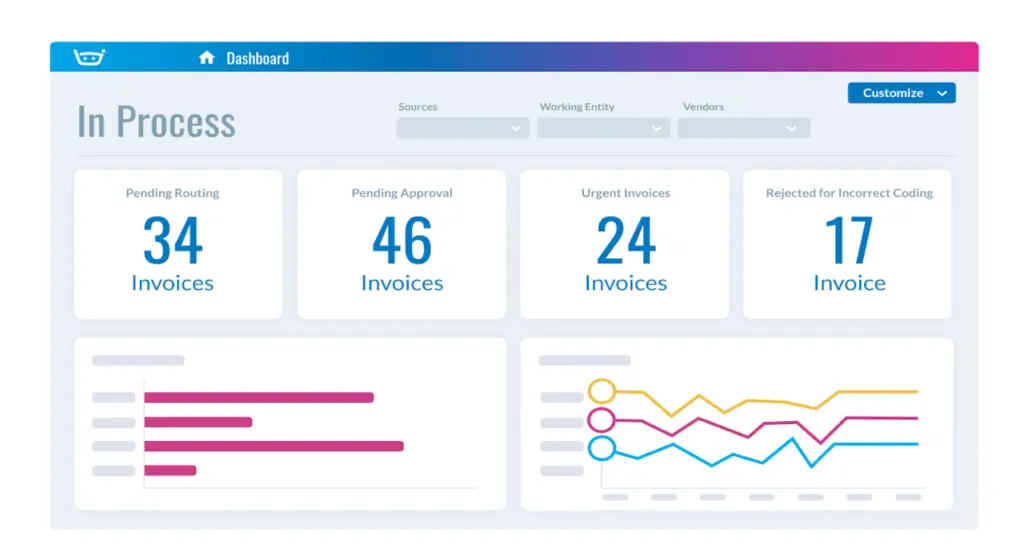
Software specification
Key Features of Stampli
Accounts Payable Automation
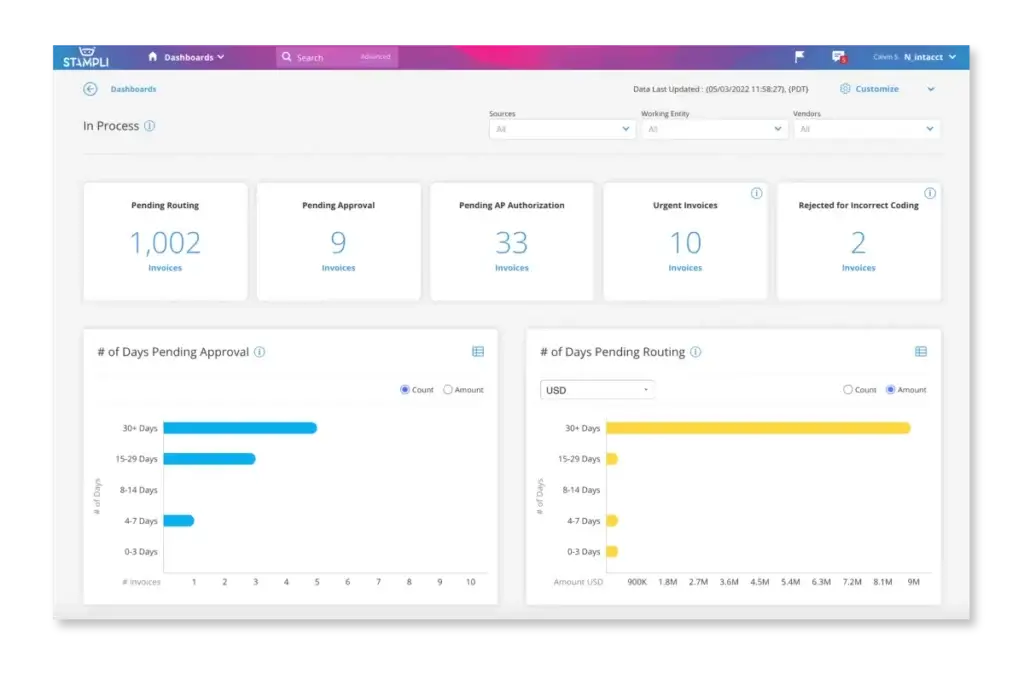
Stampli’s core strength is AP automation. The platform captures invoices from email, uploads, and other channels, then uses AI to extract data, suggest coding, route invoices to the right approvers, and keep all invoice-related communication in one place. Instead of chasing approvals through email threads, your team can manage the entire invoice lifecycle inside a central workspace.
Key highlights include:
- AI-assisted invoice capture, coding, and approval routing
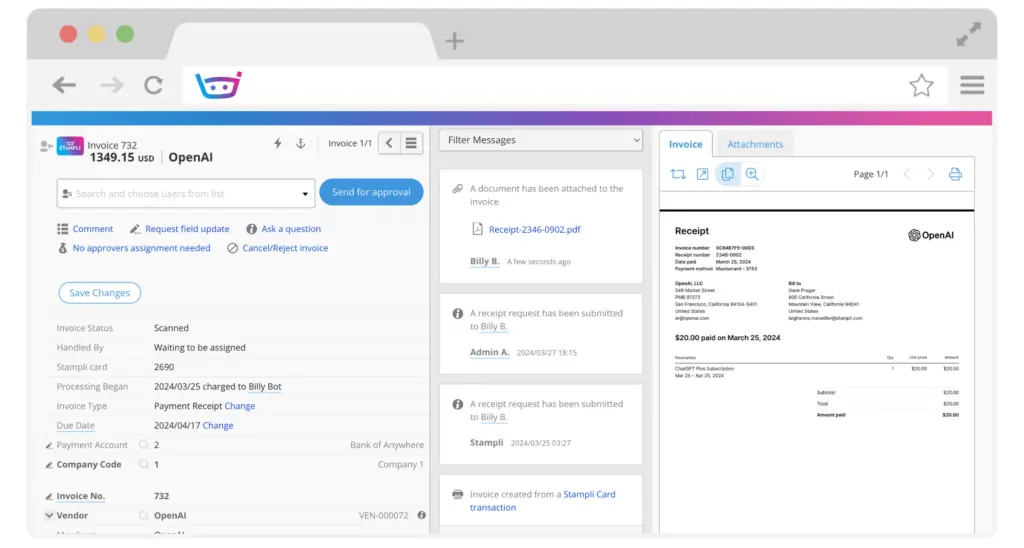
- Centralized invoice communication, comments, and audit history
- Support for centralized, decentralized, and hybrid AP teams
Procurement and Request-to-Purchase Controls
Stampli is no longer just an AP tool. It now offers procurement functionality that helps businesses control spend before it happens. Teams can submit requests, route them for approval, and enforce purchasing policies earlier in the process instead of waiting until the invoice arrives.
This makes Stampli more attractive for finance leaders who want a true procure-to-pay workflow rather than a narrower invoice automation layer.
Vendor Management
Vendor management is another area where Stampli has expanded meaningfully. The platform includes vendor onboarding, a vendor portal, messaging, and document compliance capabilities. This helps finance teams centralize supplier records, reduce back-and-forth, and enforce compliance before invoices or payments move forward.
For organizations with growing supplier bases, that is a real advantage over AP tools that focus only on invoice approval.
Payments and Direct Pay
Stampli also supports payment execution through its Direct Pay capabilities, allowing businesses to move from invoice approval to payment inside the same environment. Payment data syncs back to the ERP, which helps maintain visibility and simplifies reconciliation.
It also supports international payments, which broadens its usefulness for companies paying suppliers outside their home market.
Billy AI and PO Matching
Billy is one of Stampli’s headline differentiators. The AI copilot helps with invoice capture, coding suggestions, fraud detection, routing logic, and purchase order matching. For teams with a high volume of PO-backed invoices, this can be especially valuable because it reduces manual review while keeping finance in control of exceptions.
Stampli’s messaging around AI is stronger than many older AP tools because the company has embedded AI into the daily workflow rather than simply layering a chatbot on top of legacy processes.
ERP Integrations
Stampli is built to work with the ERP as the system of record, and that design philosophy is one of its biggest strengths. The platform supports more than 70 ERP integrations, including NetSuite, Sage Intacct, QuickBooks, Microsoft Dynamics, Oracle, SAP, Acumatica, and others.
That wide ERP coverage makes Stampli easier to recommend for businesses that are already committed to an accounting or ERP platform and want automation without changing systems.
Security, Controls, and Auditability
For finance teams, automation only matters if controls remain strong. Stampli emphasizes role-based visibility, audit trails, invoice-level accountability, and SOC 2 Type 2 compliance. Every action, comment, approval, and document related to an invoice is preserved in an auditable record.
This is particularly important for teams focused on fraud prevention, segregation of duties, and smoother audits.
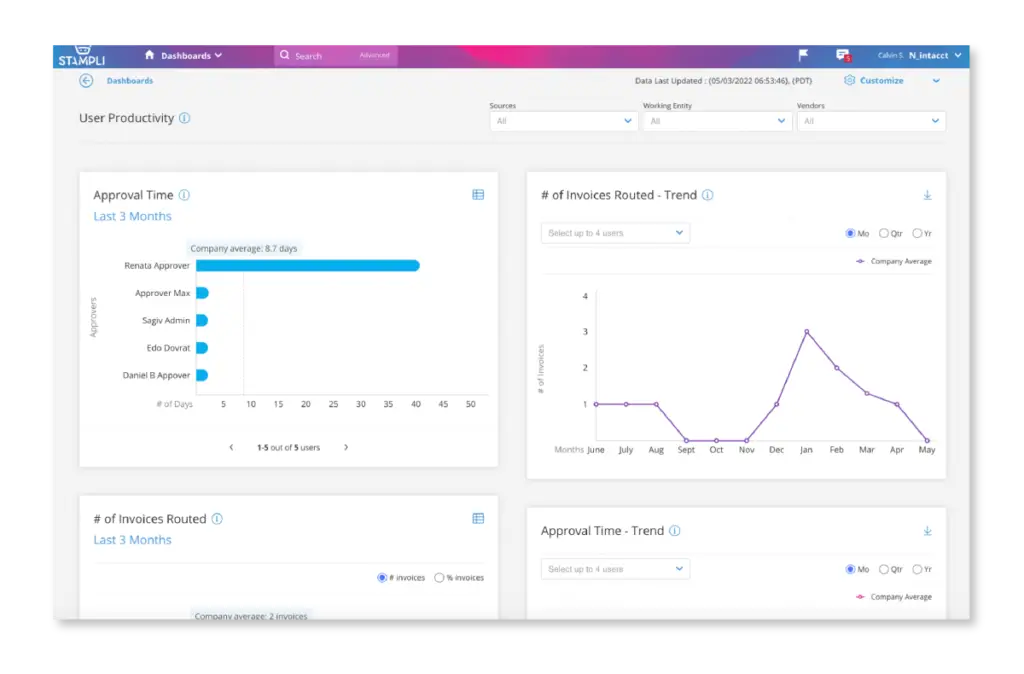
How Stampli Works
Setup and Everyday Use
Implementation and Onboarding
One of Stampli’s strongest selling points is that it is designed to work with your existing ERP instead of replacing it. That usually makes implementation less disruptive than a full finance platform migration. Finance teams can connect their ERP, sync core records, configure approval logic, and begin routing invoices without redesigning their entire accounting process.
This is one reason Stampli appeals to mid-market finance teams. It promises faster time to value than many larger procure-to-pay suites.
Invoice Processing and Approval Workflows
In day-to-day use, invoices flow into Stampli, where Billy helps capture details and prepare the invoice for coding and approval. Approvers can review the invoice, ask questions directly on the document, and approve or reject it without losing context. This collaboration model is one of Stampli’s most practical advantages because it reduces the messy communication that often slows down AP.
For teams that still rely on inboxes, spreadsheets, or disconnected approval chains, this can be a major operational upgrade.
Purchase Orders, Matching, and Exception Handling
If your business relies heavily on purchase orders, Stampli becomes more compelling. The platform supports PO matching and helps surface exceptions earlier, which can reduce the manual burden on AP staff. That said, like many AP platforms, real-world performance depends on the quality of your underlying purchasing data and the consistency of supplier invoicing.
Payments and Reconciliation
Once invoices are approved, finance teams can move into payment workflows and keep the ERP aligned as the system of record. This continuity is valuable because it connects capture, approval, payment, and reconciliation rather than splitting them across several tools.
Pros and Cons
A balanced view: what you’ll love and what to consider
Stampli gets a lot right, especially for finance teams that want stronger AP automation without giving up ERP alignment. Still, it is not the perfect fit for every company. Its strengths show up most clearly in AP-heavy, process-driven environments, while very small businesses or teams looking for a free spend card tool may find lighter alternatives more practical.
Here’s the clearest way to think about its advantages and trade-offs.
Positive
✅ Excellent ERP integration strategy
✅ Cleaner, Faster AP Workflows
✅ Broader Procure-to-Pay Coverage
✅ Useful AI support for coding, routing, and PO matching
Negative
❌ Pricing Requires a Sales Process
❌ Not the Best Fit for Every Small Business
❌ User Feedback Still Mentions Performance and Feature Gaps
❌ Advanced success depends on process quality in your ERP
✅ Benefits of Stampli
Excellent ERP integration strategy
One of Stampli’s biggest advantages is that it does not ask you to rip out your ERP. It is built to align with the ERP as the system of record, which makes it easier to adopt for businesses that already run on NetSuite, Sage Intacct, Dynamics, QuickBooks, Oracle, SAP, or similar platforms. That lowers risk and usually shortens the path to deployment.
Cleaner, Faster AP Workflows
Stampli is especially strong at centralizing invoice capture, communication, and approvals. Finance teams no longer need to chase comments across email threads or manually piece together approval history. That alone can speed up invoice cycles and reduce friction between AP staff and approvers.
Broader Procure-to-Pay Coverage
Compared with older AP-only products, Stampli now covers more of the spend lifecycle. Procurement, vendor management, payments, and cards make the platform more interesting for companies that want to standardize finance operations beyond invoice approval alone.
Useful AI support for coding, routing, and PO matching
Billy is not just a marketing add-on. The AI focus matters because it supports practical finance tasks such as capture, coding, routing, exception handling, and matching. In the best-case scenario, that translates into less manual work for AP and better consistency in day-to-day processing.
❌ Potential Drawbacks and Limitations
Pricing Requires a Sales Process
Stampli does not publish straightforward self-serve pricing in the way many SMB tools do. That is common in mid-market finance software, but it can be frustrating if you want a fast price comparison. Companies evaluating several tools will likely need demos and quotes before they can compare total cost meaningfully.
Not the Best Fit for Every Small Business
Very small businesses with low invoice volume may find Stampli more robust than they need. If your business only processes a limited number of bills each month, a simpler and cheaper payment or AP tool may be enough. Stampli’s value increases when workflows, controls, or invoice volume become more complex.
User Feedback Still Mentions Performance and Feature Gaps
Recent user feedback is generally positive, especially around ease of use and implementation, but some reviewers still mention occasional slowness or areas where feature depth could improve. That does not make Stampli a poor choice, but it is worth validating specific workflow requirements during a demo.
Advanced success depends on process quality in your ERP
Like most finance automation tools, Stampli works best when the underlying ERP setup, vendor data, approval logic, and purchasing process are reasonably disciplined. If your finance operations are inconsistent, the software can improve them, but it cannot solve every process issue on its own.
Pricing and Plans
How much does Stampli cost?
Stampli does not use a simple public pricing page with visible monthly plan tiers. Instead, the company uses quote-based pricing based on your business size, workflows, modules, ERP environment, and payment needs. That is typical for finance automation platforms serving mid-market and more complex organizations.
This pricing model makes sense for a platform that spans AP automation, procurement, payments, vendor management, and cards, but it also means you need to go through a demo or quote process to understand total cost.
Core Platform Pricing
Stampli’s pricing page highlights Accounts Payable as the base product and then presents additional modules and services such as Procurement, Payments, and Vendor Management. The company also includes onboarding, team training, support, insights, and customer success as part of the broader value discussion.
That suggests pricing will depend not just on invoice volume, but also on how much of the platform you plan to use.
What Affects Your Quote
- ERP and integration complexity
- Number of entities, locations, and vendors
- Need for procurement, payments, or vendor compliance features
- Reporting, support, onboarding, and training requirements
What to Ask During a Demo
When pricing is custom, the best buying approach is to ask more detailed questions. You should clarify implementation scope, payment fees, support levels, onboarding services, and whether advanced modules are priced separately. This is especially important if you are comparing Stampli against tools like BILL, Tipalti, Coupa, AvidXchange, or Ramp.
Pricing Comparison Table
| Pricing Area | What to expect with Stampli |
| Base pricing model | Custom quote rather than public self-serve tiers |
| AP automation | Included as core platform area |
| Procurement | May be included as an added platform module |
| Payments | Typically part of broader quote discussion |
| Support and onboarding | Usually included in implementation and success package discussions |
Business Fit
Who Should Use Stampli?
Mid-Market Finance Teams
Stampli is particularly well suited to mid-market businesses that have outgrown manual AP and want stronger controls without moving to a heavy enterprise procurement suite. If your team processes a meaningful invoice volume and struggles with slow approvals, incomplete audit trails, or poor visibility, Stampli is a strong fit.
ERP-Driven Organizations
Companies already invested in NetSuite, Sage Intacct, Dynamics, Oracle, SAP, or QuickBooks are good candidates because Stampli is built around ERP alignment. If keeping your ERP as the source of truth is a priority, Stampli deserves serious consideration.
Businesses Expanding Beyond Basic AP
If you want more than invoice routing, Stampli becomes more interesting. Procurement, vendor management, payments, and cards make it a better fit for teams trying to unify more of the spend lifecycle instead of buying separate tools for each finance workflow.
Industries With Strong Control Requirements
- Healthcare: Useful where auditability, visibility, and vendor controls matter
- Software and technology: A strong fit for ERP-centric finance teams that value automation
- Multi-entity businesses: Helpful when approval logic and payment visibility become more complex
Alternatives
Stampli Alternatives & Competitors
Stampli competes in a busy market, and the right alternative depends on what you need most. Some tools are stronger in global payments, some are better for lightweight SMB bill pay, and others are more focused on corporate cards and spend management than invoice-centric AP workflows.
Comparison Table: Stampli vs Competitors
| Feature | Stampli | Tipalti | BILL | Ramp |
| Primary focus | AP automation and procure-to-pay | Global payables and finance automation | SMB AP/AR and bill payments | Spend management and cards |
| ERP alignment | Very strong | Strong | Good for smaller finance stacks | More spend-focused than ERP-first |
| Procurement coverage | Yes | Partial to broader finance automation depending on setup | More limited | Focused on spend controls |
| Vendor management | Yes | Yes | More limited | Limited compared with AP suites |
| Public pricing | No | Usually quote-based | More transparent | Often free software model with card economics |
Tipalti: Often the better choice if global payables, tax forms, and mass payment complexity are your top priorities. It is usually a stronger fit for businesses with more international payout requirements.
BILL: A more familiar option for smaller businesses that want easier AP and AR automation with a more SMB-friendly buying motion. It is often simpler to understand quickly, but less compelling if you want deeper ERP alignment and broader P2P controls.
Ramp: Stronger for card-based spend management and expense control than for invoice-centric AP. It makes sense if your biggest pain point is employee spend rather than invoice approvals and procurement.
AvidXchange, Coupa, and Paylocity for Finance are also worth evaluating depending on invoice volume, procurement depth, and whether you want a broader enterprise suite or a more focused AP platform.
Integrations and Ecosystem
Connect Stampli to your finance stack
ERP Integrations
Stampli’s integration story is one of its biggest strengths. The company supports more than 70 ERP integrations and emphasizes native support for systems such as NetSuite, Sage Intacct, Microsoft Dynamics, Oracle, SAP, QuickBooks, and Acumatica. If compatibility is one of your biggest buying criteria, Stampli performs well here.
Why the Integration Model Matters
Many AP and spend platforms either require process compromises or work best inside a narrower accounting ecosystem. Stampli’s value is that it tries to preserve your ERP structure, fields, approval logic, and payment data rather than forcing finance teams into a disconnected side system.
Best Practices for Adoption
- Validate the ERP sync early: Confirm your chart structure, entities, and custom fields behave correctly
- Pilot with your real approval flows: Do not rely only on a generic demo scenario
- Test PO and non-PO invoices separately: These often expose the biggest workflow differences
- Map vendor and payment processes carefully: This is where operational gains often compound
Security and Compliance
Security and Compliance in Stampli
Finance automation tools carry a high trust burden, and Stampli clearly understands that. The platform puts strong emphasis on auditability, access controls, invoice accountability, and secure data handling, which makes sense given its role in approvals and payments.
SOC 2 Type 2 Compliance
Stampli emphasizes SOC 2 Type 2 compliance in its messaging around finance leadership, controls, and audits. For buyers evaluating risk, that is an important baseline signal that the company is taking operational and data controls seriously.
Audit Trails and Invoice Accountability
Every approval, change, comment, and supporting document is preserved alongside the invoice. That matters because AP teams often need to prove who approved what, when, and why. This is one of Stampli’s most practical compliance strengths.
Role-Based Visibility and Segregation of Duties
Stampli supports structured roles and visibility controls so finance teams can preserve separation of duties and limit inappropriate access. This is especially important in organizations where payment authority and invoice approval need to be tightly controlled.
Vendor Compliance Support
Vendor document compliance features help collect, track, and manage supplier documents such as W-9s, contracts, and other records. For growing finance teams, this is useful because it reduces the gap between AP processing and vendor governance.
ERP-Connected Control Environment
Because Stampli is designed to stay aligned with the ERP, businesses do not have to choose between automation and accounting control. That balance is one of the platform’s strongest selling points for controllers and CFOs.
Conclusion
Final Thoughts
Stampli is one of the more interesting finance platforms in this category because it is no longer just an AP automation tool. It has grown into a broader procure-to-pay platform that connects invoice processing, approvals, procurement, vendor management, payments, and AI support while staying aligned to the ERP.
That makes Stampli especially appealing for mid-market finance teams that want to modernize AP and spend workflows without taking on a full ERP replacement. Its best qualities are strong ERP alignment, a practical collaboration model, useful AI support, and broader platform coverage than many classic AP tools.
The main trade-off is the buying process. Pricing is quote-based, and its best use cases are usually more complex than what very small businesses need. But if your company is managing meaningful invoice volume, needs stronger controls, and wants a more modern finance operations layer, Stampli is absolutely a product worth shortlisting.
Have more questions?
Frequently Asked Questions
What is Stampli?
Stampli is a procure-to-pay and AP automation platform that helps finance teams manage invoices, approvals, procurement, vendor management, payments, and cards while staying connected to their ERP.
Is Stampli accounting software?
No. Stampli is not a full accounting system or ERP. It works alongside accounting software and ERP platforms to automate accounts payable and broader procure-to-pay workflows.
Who is Stampli best for?
Stampli is best for mid-sized and growing businesses that need stronger invoice controls, ERP-connected AP automation, approval workflows, and broader procure-to-pay visibility.
What ERP and accounting systems does Stampli integrate with?
Stampli supports more than 70 ERP integrations, including Sage Intacct, Oracle NetSuite, Microsoft Dynamics, SAP, QuickBooks, Acumatica, and many others.
Does Stampli support procurement as well as AP automation?
Yes. Stampli now supports broader procure-to-pay workflows, including purchase requests, approvals, vendor management, payments, and cards in addition to core AP automation.
How much does Stampli cost?
Stampli uses quote-based pricing. The company does not publish standard self-serve monthly plans, so pricing depends on your business size, ERP environment, and the modules you need.
Does Stampli support cards and spend controls?
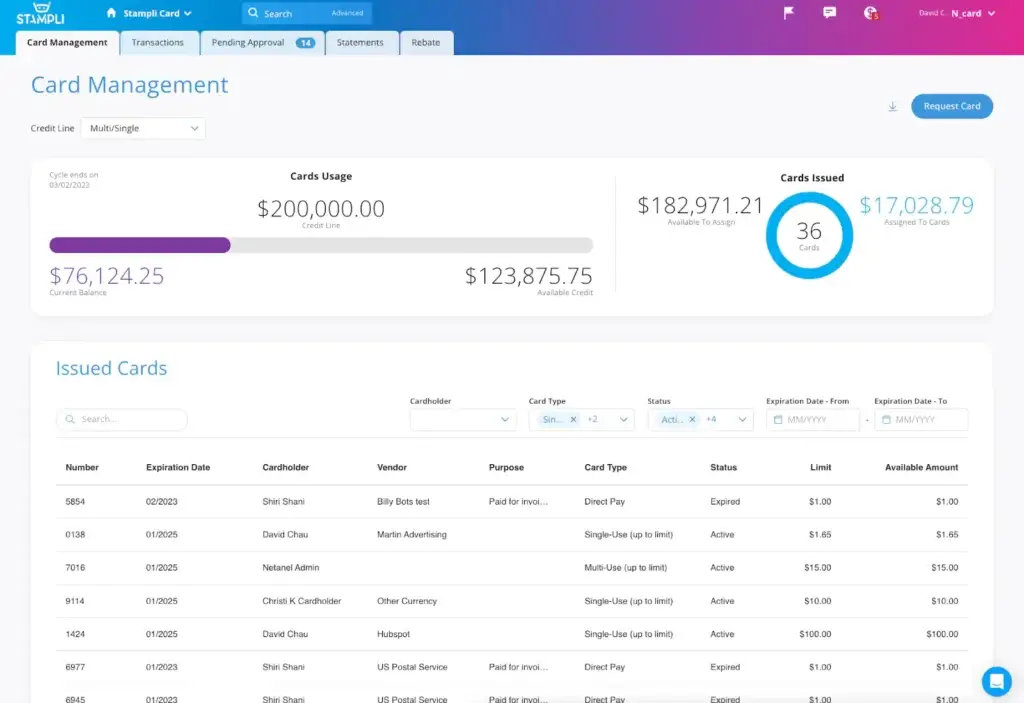
Yes. Stampli offers procurement cards and AP card capabilities that help finance teams route card transactions through controlled approval and AP workflows.
What are the biggest strengths of Stampli?
The biggest strengths are its ERP-first design, strong invoice collaboration features, broad procure-to-pay coverage, AI-powered automation through Billy, and support for cards, payments, and vendor workflows.
What are the biggest limitations of Stampli?
The biggest limitations are its lack of public pricing, a sales-led buying process, and the fact that it is usually a better fit for mid-market complexity than for very small businesses with simple bill pay needs.
What are the best Stampli alternatives?
The best alternatives depend on your priorities. Tipalti is strong for global payables, BILL is a common AP automation option for SMBs, Ramp is stronger for spend management, and Coupa is worth considering for broader enterprise procurement needs.