Introduction
Ecommerce fulfillment software helps online stores manage the operational process between receiving an order and delivering it to the customer. Depending on the platform, it can support inventory visibility, order routing, warehouse workflows, picking, packing, shipping, tracking, returns, and fulfillment analytics.
For growing ecommerce brands, fulfillment is no longer just a warehouse function. It affects profit margins, delivery speed, customer satisfaction, support workload, and your ability to scale without adding operational chaos.
The best ecommerce fulfillment software in 2026 should help you process orders faster, reduce shipping and fulfillment errors, improve inventory control, and support customers across multiple sales channels.
In this guide, we compare five strong ecommerce fulfillment software options: ShipBob, ShipMonk, Red Stag Fulfillment, ShipAccel, and ShipStation. Each platform fits a different type of business, from brands that want outsourced 3PL fulfillment to sellers that want shipping automation while keeping fulfillment in-house.
Why Ecommerce Fulfillment Software Matters
At the early stage, you may be able to fulfill orders manually. You can print labels, pack boxes, update tracking numbers, and manage stock with simple tools.
As order volume grows, that approach becomes harder to manage. Inventory errors increase, shipping decisions take more time, returns become harder to track, and customers expect faster delivery updates.
Ecommerce fulfillment software gives you more control because it connects the most important parts of the post-purchase workflow. Instead of treating inventory, warehouse activity, shipping, and returns as separate tasks, you can manage them through a more structured process.
When evaluating platforms, you should consider:
- Fulfillment model: Do you need a 3PL provider or shipping workflow software?
- Inventory visibility: Can you track stock across channels and locations?
- Order management: Can the platform sync orders from your stores and marketplaces?
- Shipping automation: Can it automate carrier selection, labels, tracking, and routing?
- Returns: Can it simplify post-purchase workflows and customer communication?
- Scalability: Will it support higher order volume as your business grows?
The right choice depends on your product type, order volume, sales channels, delivery promises, and whether you want to outsource fulfillment or manage it yourself.
Top 5 Ecommerce Fulfillment Software for 2026
| Software | Best For | Key Strength | Pricing Fit |
| ShipBob | Growing ecommerce brands that want outsourced fulfillment | 3PL fulfillment network, inventory visibility, 2-day shipping, and omnichannel fulfillment | Best for brands ready to outsource fulfillment |
| ShipMonk | DTC brands that want strong software visibility and fulfillment support | Order management, real-time inventory, analytics, and 100+ integrations | Best for DTC brands scaling fulfillment operations |
| Red Stag Fulfillment | Brands selling heavy, bulky, fragile, or high-value products | Specialized 3PL operations for difficult-to-handle ecommerce products | Best for products where damage and accuracy matter most |
| ShipAccel | Ecommerce teams that need shipping automation and fulfillment workflow control | Order management, rate shopping, branded tracking, returns, and shipping analytics | Best for growing brands that want smarter shipping operations |
| ShipStation | Small and mid-sized sellers managing shipping in-house | Multi-carrier shipping, labels, automation, order management, returns, and integrations | Best for sellers that want shipping software, not full 3PL outsourcing |
ShipBob

Overview:
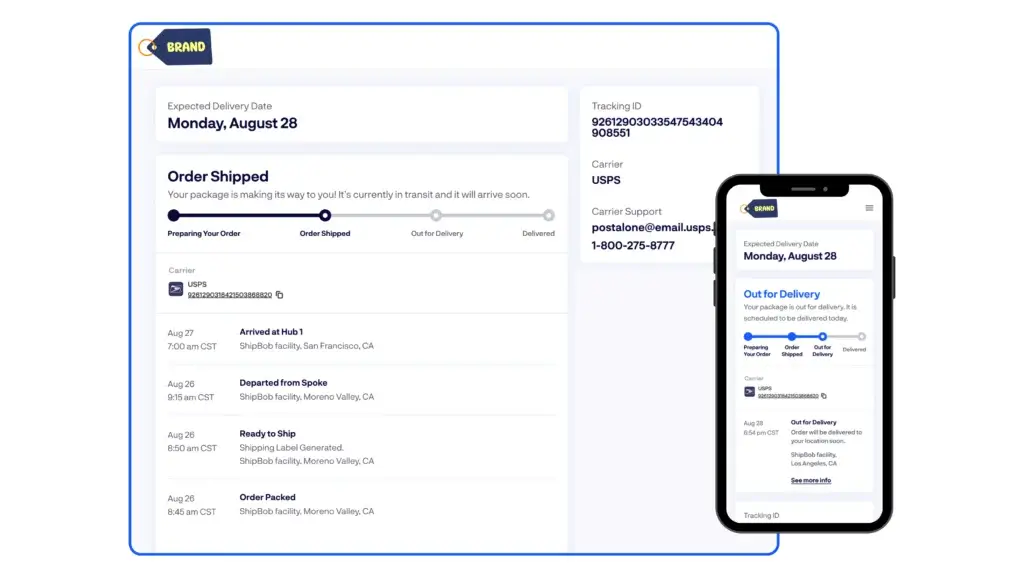
ShipBob is one of the strongest ecommerce fulfillment software options for growing brands that want to outsource fulfillment without losing operational visibility.
The platform combines 3PL fulfillment services with a software dashboard for inventory, orders, shipping, returns, analytics, and omnichannel fulfillment. That makes it a strong option when your business has moved beyond manual shipping and needs a more scalable fulfillment model.
ShipBob is especially relevant if you sell through ecommerce stores, marketplaces, retail channels, or multiple sales channels at once. Instead of managing warehouse space, staffing, picking, packing, and shipping internally, you can use ShipBob as both your fulfillment partner and software layer.
Top Features:
✅ Ecommerce fulfillment across multiple sales channels.
✅ Inventory management across fulfillment locations.
✅ Order fulfillment, picking, packing, shipping, and returns.
✅ 2-day shipping options across the continental US.
✅ Fulfillment analytics and operational reporting.
Top Benefits:
ShipBob’s main benefit is scalability. It helps you move fulfillment from a manual or local operation into a more structured 3PL model.
You can store inventory closer to customers, reduce internal warehouse workload, and give your team better visibility into order movement and inventory performance.
For many growing ecommerce brands, the biggest value is that ShipBob reduces the need to build logistics infrastructure internally. You can focus more on product, marketing, customer experience, and channel expansion while ShipBob handles the physical fulfillment work.
Why It’s Recommended:
ShipBob is recommended as the best overall ecommerce fulfillment software because it combines fulfillment infrastructure with software visibility.
Compared with ShipStation and ShipAccel, ShipBob is a better fit when you want to outsource storage, picking, packing, and shipping. Compared with Red Stag Fulfillment, it is more broadly suited to standard DTC and omnichannel ecommerce operations. Compared with ShipMonk, it is especially strong when distributed fulfillment and broad ecommerce infrastructure are priorities.
Pros and cons
Pros
✅ Best overall 3PL fulfillment platform
✅ Strong ecommerce and omnichannel support
✅ Good inventory and order visibility
✅ Useful for scaling beyond manual fulfillment
Cons
❌ Pricing requires a custom quote
❌ May be more than very small sellers need
❌ Less control than managing your own warehouse
❌ Final cost depends on product profile and fulfillment needs
ShipMonk

Overview:
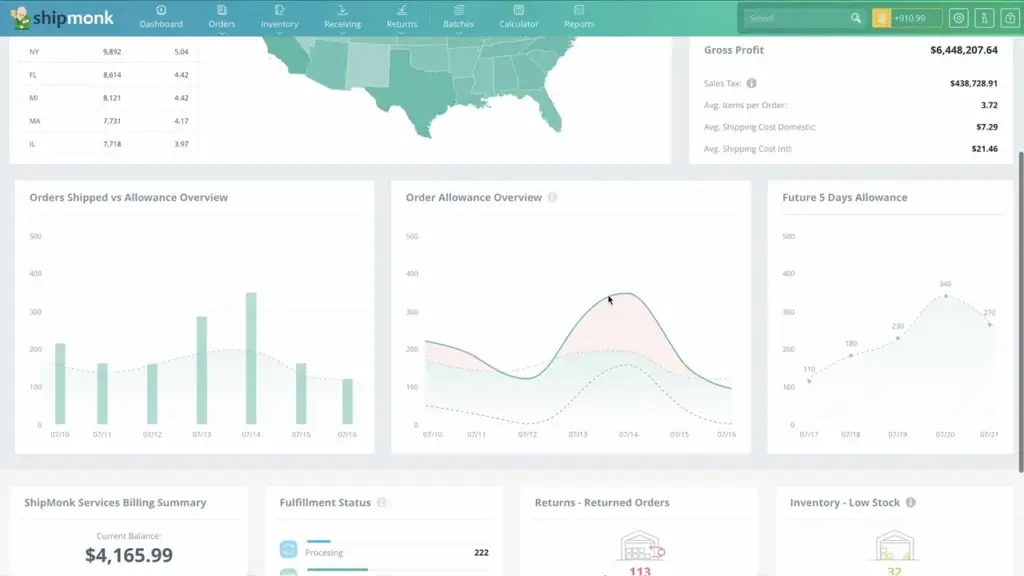
ShipMonk is a 3PL fulfillment platform built for ecommerce and DTC brands that want outsourced logistics with a strong software experience.
The platform helps merchants manage order processing, inventory, shipping, analytics, and integrations while ShipMonk handles storage, picking, packing, and shipping operations.
ShipMonk is especially useful when you want fulfillment to remain visible. Outsourcing fulfillment can create a blind spot if the software layer is weak. ShipMonk addresses this with a merchant-facing platform that gives you clearer access to operational data.
Top Features:
✅ Order management and automated order processing.
✅ Real-time inventory visibility across sales channels.
✅ 100+ ecommerce integrations.
✅ Shipping, analytics, and reporting tools.
✅ Returns and claims management workflows.
Top Benefits:
ShipMonk’s main benefit is software visibility. It helps DTC brands outsource fulfillment while still understanding what is happening across orders, inventory, shipping, and returns.
The platform can also reduce manual data entry through integrations with ecommerce platforms, marketplaces, and other business tools.
For growing ecommerce teams, this visibility is important because fulfillment performance affects customer experience, stock planning, and marketing decisions.
Why It’s Recommended:
ShipMonk is recommended for DTC brands that want a fulfillment partner with a strong technology layer.
Compared with ShipBob, ShipMonk is similarly relevant for outsourced fulfillment but may feel especially appealing to brands that prioritize merchant-facing software and operational visibility. Compared with ShipStation and ShipAccel, it is a better fit when you want the provider to store and fulfill products for you.
Pros and cons
Pros
✅ Strong software visibility for DTC brands
✅ Real-time inventory and order management
✅ Broad integration coverage
✅ Good fit for brands scaling fulfillment operations
Cons
❌ Pricing depends on fulfillment profile
❌ May not be the lowest-cost option for every product type
❌ Requires alignment with the 3PL workflow
❌ Not as specialized as Red Stag for bulky goods
Red Stag Fulfillment
Overview:
Red Stag Fulfillment is a specialized ecommerce fulfillment provider focused on products that are more difficult to store, pick, pack, and ship.
It is best known for supporting heavy, bulky, fragile, oversized, and high-value ecommerce products. That makes it different from more general fulfillment providers that are often better suited to lightweight, standard-sized products.
If your products are expensive to damage, hard to move, or costly to mis-ship, Red Stag Fulfillment should be high on your shortlist.
Top Features:
✅ Ecommerce, DTC, B2B, and retail fulfillment support.
✅ Specialization in big, heavy, bulky, and high-value products.
✅ Same-day shipping availability.
✅ Fulfillment accuracy and operational guarantees.
✅ Custom fulfillment quotes based on product profile and volume.
Top Benefits:
Red Stag Fulfillment’s main benefit is specialization. It is not trying to be the broadest generic 3PL for every ecommerce seller.
Instead, it focuses on fulfillment operations where mistakes are expensive. A damaged item, incorrect pick, late shipment, or poor packaging decision can have a major impact when the product is large, heavy, or high-value.
For brands in these categories, the right fulfillment partner can reduce damage, improve accuracy, and create a more reliable delivery experience.
Why It’s Recommended:
Red Stag Fulfillment is recommended for ecommerce brands that need more than standard pick and pack fulfillment.
Compared with ShipBob and ShipMonk, Red Stag is more specialized. Compared with ShipStation and ShipAccel, it is a better fit if you want to outsource fulfillment rather than simply improve your shipping workflow.
If you sell furniture, equipment, premium products, large home goods, or bulky ecommerce products, Red Stag Fulfillment is one of the most relevant options in this list.
Pros and cons
Pros
✅ Best for heavy and bulky ecommerce products
✅ Strong focus on accuracy and damage prevention
✅ Good fit for high-value products
✅ Supports ecommerce, DTC, B2B, and retail fulfillment
Cons
❌ Not ideal for every lightweight product category
❌ Pricing requires a custom quote
❌ Less software-first than some dashboard-focused tools
❌ May be less suitable for very small order volumes
ShipAccel

Overview:
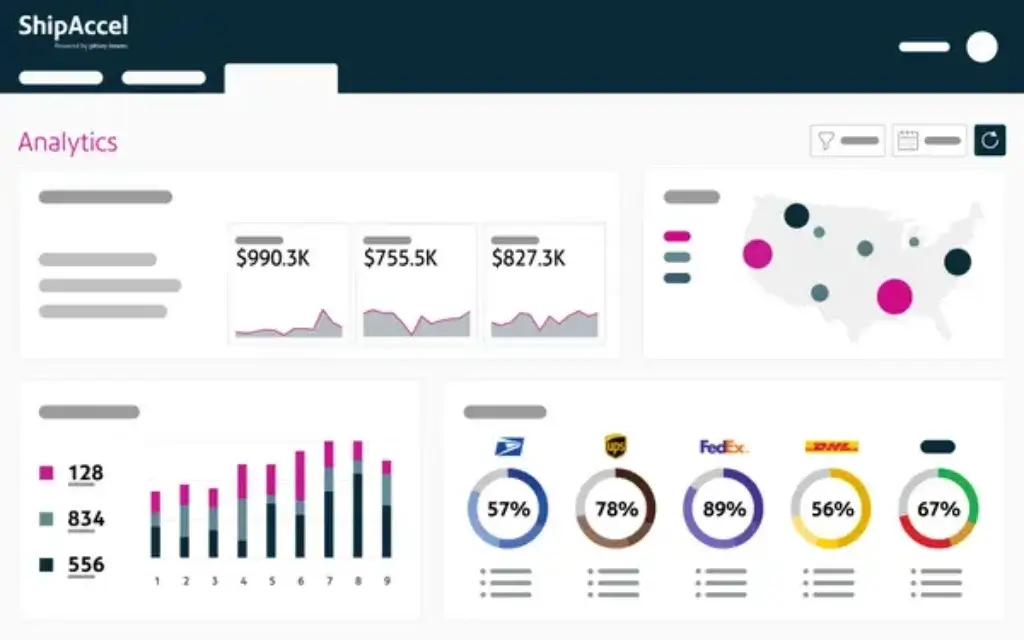
ShipAccel, powered by Pitney Bowes, is ecommerce fulfillment software focused on shipping automation and operational visibility.
Unlike ShipBob, ShipMonk, and Red Stag Fulfillment, ShipAccel is not primarily a full outsourced 3PL provider. It is better suited for brands that already manage fulfillment internally, work with warehouses, or use logistics partners but need a better software layer for shipping and fulfillment workflows.
The platform supports order management, multi-carrier rate shopping, branded tracking, returns, automation, analytics, and integrations with stores, marketplaces, carriers, 3PLs, WMS tools, and business systems.
Top Features:
✅ Multi-channel order management for ecommerce sellers.
✅ Live multi-carrier rate shopping.
✅ Fulfillment automation for repetitive shipping workflows.
✅ Branded tracking and returns management.
✅ Shipping and order analytics for operational visibility.
Top Benefits:
ShipAccel’s main benefit is workflow control. It helps ecommerce teams reduce manual shipping decisions, compare carrier rates, automate fulfillment steps, and improve customer communication after checkout.
This is especially valuable when order volume is growing but you are not ready to outsource fulfillment fully.
ShipAccel can also help teams understand shipping performance more clearly. Analytics around shipping costs, order movement, and carrier activity can make fulfillment more measurable and easier to optimize.
Why It’s Recommended:
ShipAccel is recommended for ecommerce brands that need stronger shipping automation and fulfillment visibility without moving to a full-service 3PL.
Compared with ShipStation, ShipAccel is especially relevant if you want a Pitney Bowes-backed solution with a clear focus on ecommerce shipping automation, branded tracking, returns, integrations, and analytics. Compared with ShipBob or ShipMonk, it is a better fit when you want to keep fulfillment operations in your own ecosystem.
Pros and cons
Pros
✅ Strong ecommerce fulfillment automation
✅ Useful branded tracking and returns
✅ Good shipping and order analytics
✅ Connects with stores, carriers, marketplaces, 3PLs, and WMS tools
Cons
❌ Not a full outsourced 3PL provider
❌ You still need storage and packing operations
❌ Setup may require workflow planning
❌ Best value depends on shipment volume and complexity
ShipStation

Overview:
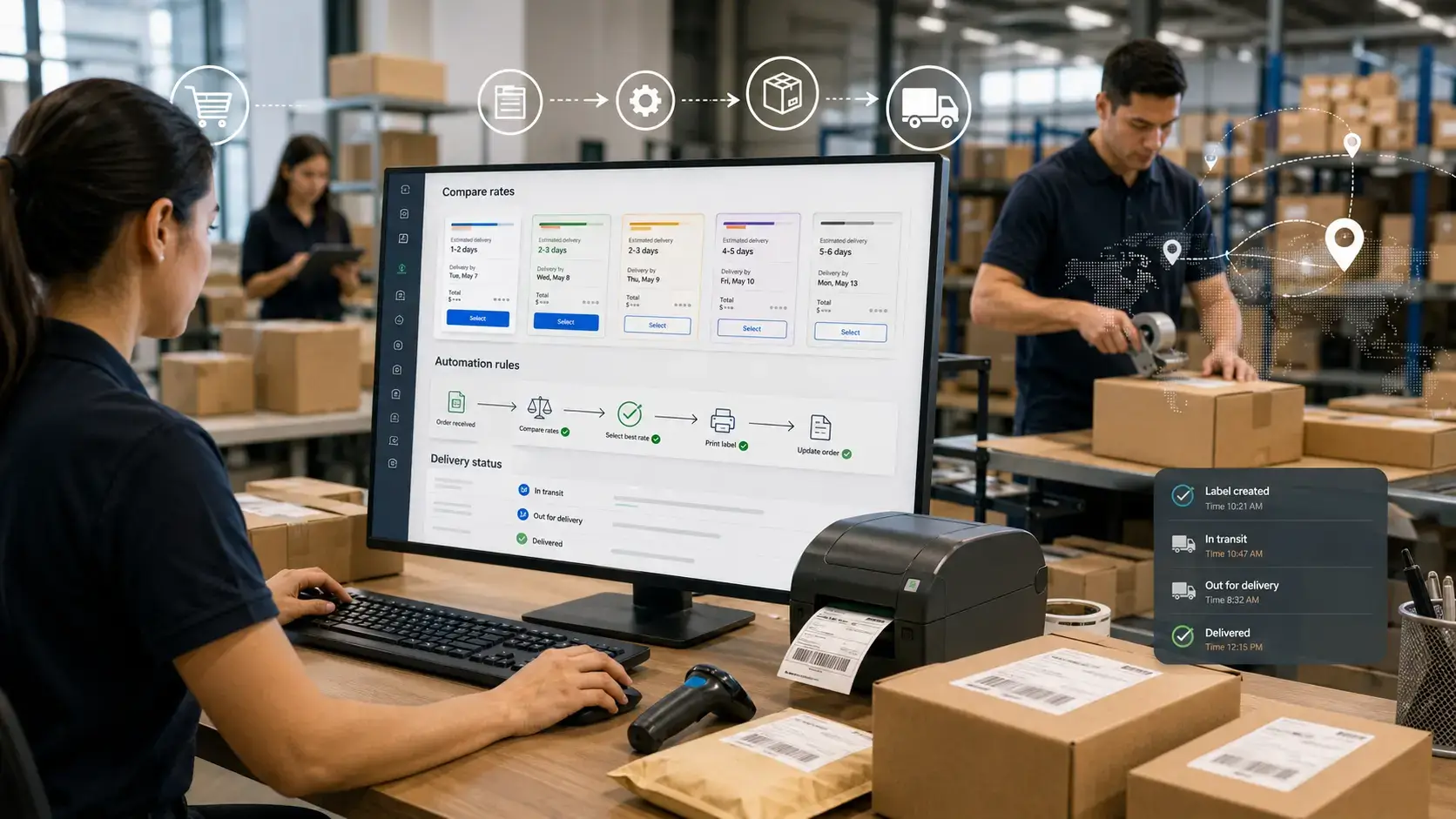
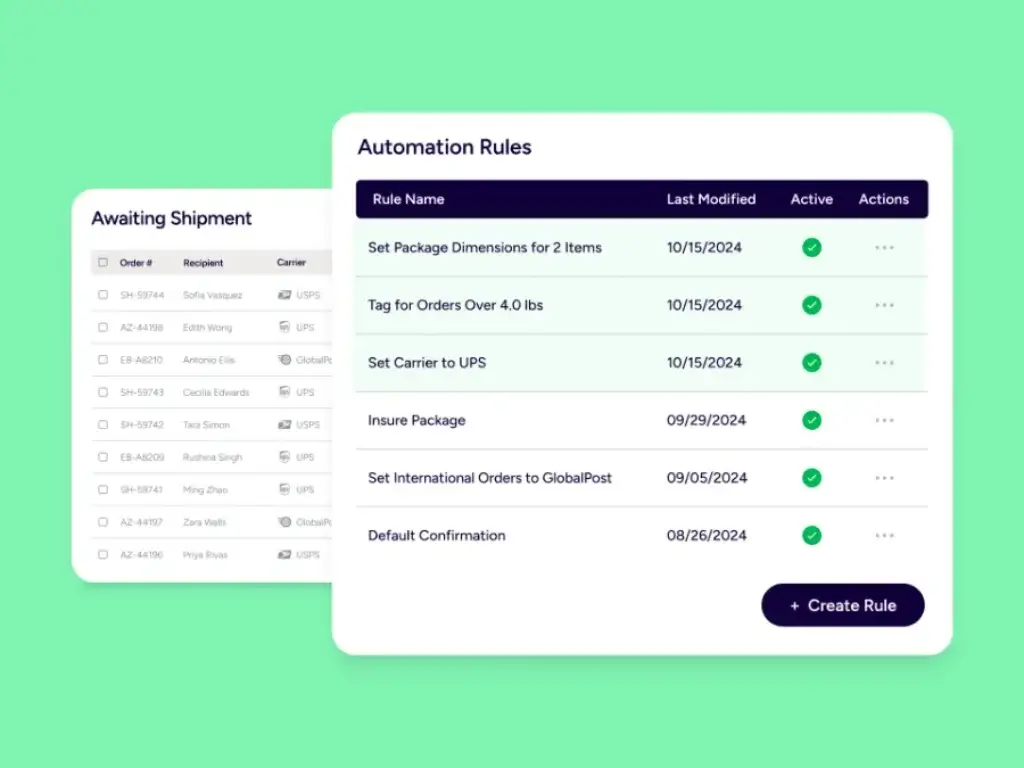
ShipStation is one of the most recognized ecommerce shipping software platforms. It helps sellers import orders, compare carrier rates, print labels, automate shipping rules, manage inventory workflows, handle returns, and track shipments.
ShipStation is not a full 3PL fulfillment provider. It does not store your inventory or pick and pack products for you. Instead, it gives you the software needed to manage shipping and fulfillment workflows more efficiently.
This makes it a strong fit for small and mid-sized ecommerce sellers that manage shipping in-house or through an existing warehouse setup.
Top Features:
✅ Multi-carrier rate comparison for shipping cost and speed decisions.
✅ Label buying and printing with discounted carrier rates.
✅ Fulfillment automation for batching, routing, and label workflows.
✅ Order management across stores and marketplaces.
✅ Returns, inventory, warehouse, API, and tracking capabilities.
Top Benefits:
ShipStation’s main benefit is operational efficiency. It helps ecommerce teams process orders faster, reduce repetitive shipping tasks, and manage multiple sales channels from one system.
Automation rules are especially useful as order volume grows. You can create workflows based on package weight, destination, carrier, service level, SKU, store, order value, or other shipping criteria.
For ecommerce sellers that want to keep fulfillment in-house, ShipStation can become the central shipping command center.
Why It’s Recommended:
ShipStation is recommended for sellers that want better ecommerce shipping software, not a full outsourced fulfillment provider.
Compared with ShipBob, ShipMonk, and Red Stag Fulfillment, ShipStation gives you more control because you keep the physical fulfillment process. Compared with ShipAccel, it has broader market recognition and a mature ecosystem for multi-channel ecommerce sellers.
Pros and cons
Pros
✅ Best for in-house ecommerce shipping
✅ Strong carrier rate comparison and label workflows
✅ Useful automation and batch shipping tools
✅ Broad ecommerce integration ecosystem
Cons
❌ Does not provide full 3PL warehousing
❌ You still manage storage, picking, and packing
❌ Advanced setup can take time
❌ Costs can rise with shipment volume and features
How to Choose the Best Ecommerce Fulfillment Software
The best ecommerce fulfillment software depends on your operational model. A brand that wants to outsource fulfillment has very different needs from a seller that wants to keep packing orders in-house.
Before comparing platforms, map your workflow from order placement to delivery. Look at where your team loses time, where errors happen, where inventory visibility breaks down, and where customers need better communication.
1. Decide Whether You Need a 3PL or Shipping Software
If you want a provider to store inventory, pick and pack orders, ship products, and manage returns, focus on ShipBob, ShipMonk, or Red Stag Fulfillment.
If you already manage fulfillment but need better order management, rate shopping, label printing, tracking, and returns, ShipAccel or ShipStation may be a better fit.
2. Match the Platform to Your Product Type
Your product profile should guide your decision. Lightweight apparel, supplements, cosmetics, electronics, furniture, fragile products, and oversized goods all create different fulfillment requirements.
For standard DTC and omnichannel ecommerce, ShipBob and ShipMonk are strong options. For heavy, bulky, fragile, or high-value products, Red Stag Fulfillment is more specialized.
3. Compare Inventory Visibility
Inventory visibility becomes more important as you add channels, warehouses, or fulfillment partners.
Look for tools that show stock levels, order status, fulfillment activity, shipping movement, and inventory exceptions. Poor inventory visibility can lead to overselling, delays, stockouts, and customer support issues.
4. Evaluate Shipping Automation
Manual shipping decisions may work at low volume, but they become inefficient as orders grow.
Look for automation rules that can select shipping methods, route orders, print labels, send tracking updates, manage returns, and reduce repetitive decisions.
ShipStation and ShipAccel are particularly relevant if shipping automation is your main priority.
5. Review Returns and Post-Purchase Experience
Fulfillment does not end when the package leaves the warehouse. Customers expect clear tracking, easy returns, and reliable delivery communication.
Strong ecommerce fulfillment software should help reduce “where is my order?” questions and make returns easier for both customers and support teams.
6. Compare Total Cost of Fulfillment
Do not compare platforms only by software subscription price or pick and pack fees.
Total cost can include storage, receiving, labor, packaging, shipping, returns, carrier surcharges, software fees, integrations, special projects, inventory removals, and customer support workload.
The best comparison is total fulfillment cost per delivered order.
Key Ecommerce Fulfillment Software Features to Look For
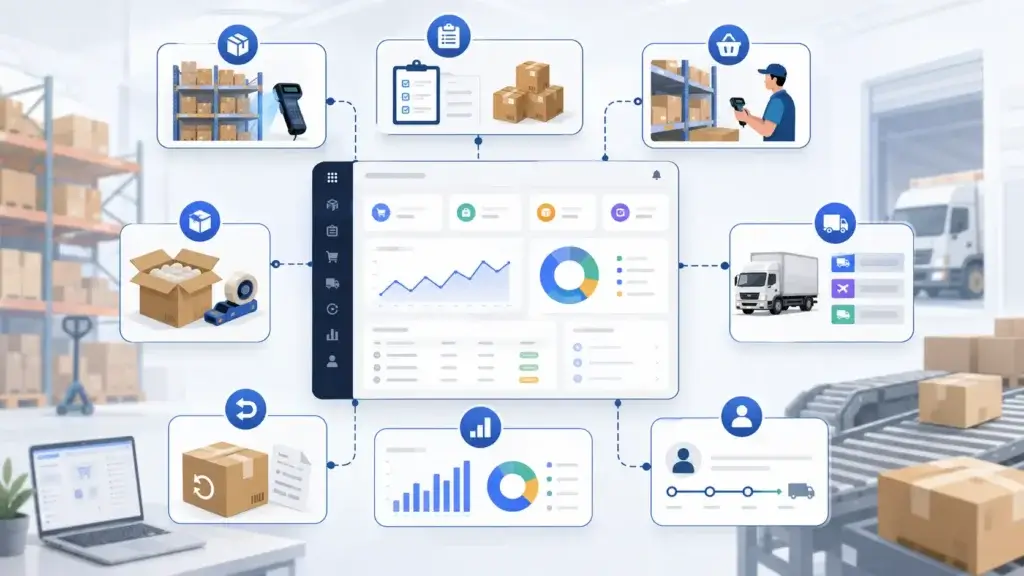
Most ecommerce businesses should look for a core set of features before choosing a fulfillment platform. The exact priority depends on whether you need outsourced fulfillment or shipping workflow software.
Order Management
Order management helps you sync orders from ecommerce platforms, marketplaces, retail channels, and other sales systems into one workflow.
Inventory Management
Inventory management helps you track stock levels, avoid overselling, plan replenishment, and understand where products are stored.
Warehouse and Fulfillment Workflows
Warehouse workflows include receiving, storage, picking, packing, packing slips, labeling, and order routing. These features are especially important for 3PL platforms and larger fulfillment operations.
Multi-Carrier Shipping
Multi-carrier shipping helps you compare carrier services, print labels, and select better options based on cost, speed, package size, and delivery destination.
Shipping Automation Rules
Automation rules reduce manual decision-making. They can apply shipping services, tags, insurance, routing logic, and tracking workflows based on order data.
Tracking Notifications
Tracking notifications keep customers informed after checkout. This can reduce support tickets and improve post-purchase trust.
Returns Management
Returns management helps customers request returns, create labels, track return status, and simplify reverse logistics.
Analytics and Reporting
Analytics help you understand fulfillment cost, carrier performance, inventory movement, shipping speed, returns, and operational bottlenecks.
Which Ecommerce Fulfillment Software Should You Choose?
If you want the best overall outsourced fulfillment platform, choose ShipBob. It gives growing ecommerce brands a strong balance of 3PL fulfillment, inventory visibility, shipping, returns, and scalability.
If you run a DTC brand and want a fulfillment partner with strong software visibility, choose ShipMonk. It is especially useful when you want real-time inventory, order management, analytics, and broad integrations.
If you sell heavy, bulky, fragile, oversized, or high-value products, choose Red Stag Fulfillment. It is the most specialized option in this list for difficult-to-handle ecommerce products.
If your ecommerce brand needs better shipping workflow automation while keeping fulfillment in-house or connected to existing partners, choose ShipAccel. It is strong for order management, live rate shopping, branded tracking, returns, and analytics.
If you want mature shipping software for in-house order fulfillment, choose ShipStation. It is especially practical for small and mid-sized ecommerce sellers that need carrier comparison, labels, automation, integrations, tracking, and returns.
Conclusion
The best ecommerce fulfillment software for 2026 depends on your fulfillment model, product type, order volume, and growth plans.
ShipBob is the best overall option for brands ready to outsource fulfillment. ShipMonk is a strong choice for DTC brands that want strong software visibility and fulfillment support. Red Stag Fulfillment is best for heavy, bulky, fragile, and high-value products. ShipAccel is best for shipping automation and fulfillment workflow control. ShipStation is best for sellers that want to manage shipping in-house with a mature multi-carrier shipping platform.
Before choosing, review your sales channels, order volume, inventory complexity, product dimensions, shipping needs, returns process, and customer experience goals. The right platform should help you reduce fulfillment friction, improve delivery visibility, and build an operation that can support your next stage of growth.
FAQ
What is ecommerce fulfillment software?
Ecommerce fulfillment software helps online stores manage orders, inventory, warehouse workflows, shipping, tracking, returns, and fulfillment analytics. Some platforms include outsourced 3PL fulfillment, while others focus on shipping automation and order management.
What is the best ecommerce fulfillment software?
ShipBob is the best overall ecommerce fulfillment software for growing brands that want outsourced fulfillment, inventory visibility, shipping, returns, and scalable logistics infrastructure. ShipMonk is also strong for DTC brands, while ShipStation is better for in-house shipping workflows.
Is ecommerce fulfillment software the same as a 3PL?
Not always. Some ecommerce fulfillment software is part of a 3PL service that stores, picks, packs, and ships products for you. Other platforms are shipping software tools that help you manage labels, carriers, tracking, and returns while you manage fulfillment yourself.
What is the difference between fulfillment software and shipping software?
Fulfillment software usually covers inventory, orders, warehouse workflows, shipping, and returns. Shipping software focuses more on carrier rates, label printing, shipping automation, tracking, and delivery workflows.
When should an ecommerce brand use a 3PL?
An ecommerce brand should consider a 3PL when internal fulfillment takes too much time, order volume is increasing, warehouse space is limited, delivery speed matters, or the business needs better scalability across regions.
What is the best ecommerce fulfillment software for heavy products?
Red Stag Fulfillment is a strong choice for heavy, bulky, fragile, oversized, or high-value products because it specializes in ecommerce fulfillment operations where accuracy, handling, and damage prevention are especially important.
Is ShipStation a fulfillment company?
ShipStation is not a full outsourced fulfillment company. It is ecommerce shipping software that helps sellers manage orders, compare carrier rates, print labels, automate shipping workflows, track shipments, and manage returns.
What is ShipAccel used for?
ShipAccel is used by ecommerce businesses to manage orders, automate fulfillment workflows, compare live carrier rates, provide branded tracking and returns, and analyze shipping costs and order performance.
How much does ecommerce fulfillment software cost?
Costs vary by platform type. 3PL fulfillment providers usually use custom pricing based on storage, order volume, picking, packing, shipping, returns, and product profile. Shipping software usually uses monthly plans based on shipment volume and features.
How do I choose ecommerce fulfillment software?
Choose ecommerce fulfillment software based on your fulfillment model, product type, order volume, sales channels, inventory needs, shipping automation requirements, returns process, integrations, and total cost per delivered order.