Introduction
Search is changing quickly. Buyers no longer rely only on Google results, comparison pages, and traditional keyword searches. Many now ask AI tools for direct recommendations, product shortlists, use-case advice, and buying guidance before they visit a website.
That creates a new visibility challenge for marketers. Your website may rank well in traditional search, but if AI answer engines do not mention your brand, cite your content, or include you in relevant category recommendations, you may still lose influence early in the buyer journey.
Otterly.AI is designed to help solve that problem. It gives marketing teams, SEO professionals, and agencies a way to monitor how their brand appears across AI search platforms such as ChatGPT, Google AI Overviews, Perplexity, Microsoft Copilot, Gemini, and Google AI Mode.
In this Otterly.AI review, you’ll get a practical look at its main features, pricing, user experience, strengths, limitations, best use cases, and alternatives. The goal is to help you decide whether Otterly.AI is the right AI search monitoring tool for your business in 2026.
What Is Otterly.AI?
Otterly.AI is an AI search monitoring and optimization platform built for tracking brand visibility in AI-generated answers. Instead of focusing only on classic search engine rankings, it helps you see whether your brand, competitors, and website citations appear inside AI search results.
The platform monitors prompts across AI search engines and shows which brands are mentioned, which domains are cited, and how visibility changes over time. This makes it useful for marketers who want to understand how answer engines interpret their category, brand, and content.
In simple terms, Otterly.AI helps you answer a critical question: when your buyers ask AI tools for recommendations in your market, does your brand show up?
Background and Market Context
Otterly.AI sits in the growing category of AI visibility, AEO, and GEO tools. These platforms are becoming more important because AI-generated answers are reshaping how people research software, services, products, and business decisions.
Traditional SEO still matters, but it does not fully explain how AI systems summarize your market. AI answer engines may cite third-party articles, mention competitors, summarize reviews, or recommend tools based on sources that do not always mirror traditional rankings.
That is why tools like Otterly.AI are becoming relevant for SEO and content teams. They help you move from guessing how AI sees your brand to tracking mentions, citations, and visibility patterns in a more structured way.
Target Users and Use Cases
Otterly.AI is best suited for teams that already care about search visibility, content strategy, brand authority, and competitive positioning. It is especially useful when buyers in your market are likely to ask AI tools for recommendations, comparisons, and practical advice.
- SEO teams – Track AI visibility alongside traditional organic rankings.
- Content teams – Find prompt gaps and citation opportunities.
- Marketing teams – Understand brand visibility across AI answer engines.
- Agencies – Build AI visibility reports for clients and prospects.
- Enterprise teams – Monitor multiple markets, brands, and competitors.
If your company publishes comparison pages, review content, product guides, educational resources, or category pages, Otterly.AI can help you understand whether that content is being picked up by AI search platforms.
Key Features
How Does It Work?
Otterly.AI is built around one main idea: AI search visibility should be measured, tracked, and improved in the same disciplined way marketers already approach SEO performance.
Instead of manually asking a few questions in ChatGPT or Perplexity and saving screenshots, you can create prompt libraries, monitor brand mentions, compare competitors, analyze citations, and review visibility trends over time.
AI Search Monitoring
AI search monitoring is the core feature of Otterly.AI. You define search prompts that reflect the questions your audience may ask, and the platform tracks how AI search engines respond to those prompts.
This is different from traditional keyword tracking. A buyer might not search only “best CRM software.” They may ask, “What is the best CRM for a small B2B sales team that needs email automation and reporting?” Otterly.AI helps you monitor those more conversational discovery moments.
This matters because AI tools often influence shortlists before the buyer reaches a vendor website. If your brand is missing from these answers, your content and positioning may need work.
Brand Mentions Tracking
Otterly.AI helps you track when your brand appears in AI-generated answers. This gives you visibility into whether AI platforms recognize your company as relevant for the prompts you care about.
The tool can also show how your brand appears across different AI search engines. That is important because ChatGPT, Perplexity, Google AI Overviews, Copilot, and Gemini may produce different results depending on the query, source selection, and answer format.
For marketers, this is useful because it turns AI visibility into something you can monitor over time. You can see whether content updates, PR mentions, comparison pages, or third-party citations improve your presence.
Website Citation Monitoring
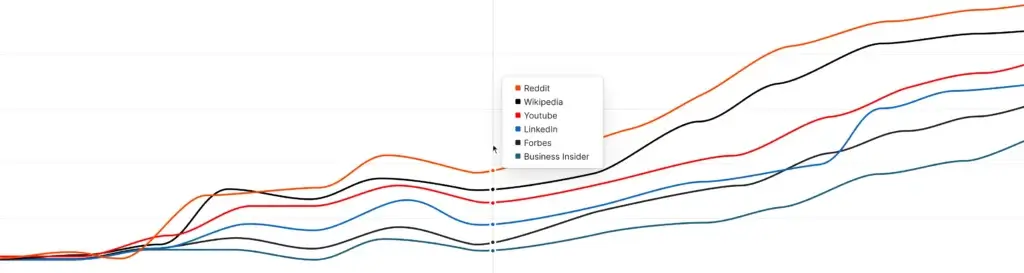
Brand mentions are only one part of AI visibility. Citations are just as important because AI search engines often reference websites, articles, product pages, guides, and third-party resources when generating answers.
Otterly.AI helps you understand whether your website is being cited and which competing domains are being referenced instead. This can reveal whether your content is trusted, structured, and relevant enough for AI engines to use.
If competitors are being cited while your site is ignored, that may indicate a content gap. You may need stronger comparison pages, more helpful guides, clearer product pages, updated statistics, better schema, or stronger topical authority.
Competitor Visibility Tracking
AI visibility is competitive. It is not enough to know whether your brand appears. You also need to know which competitors are mentioned, how often they appear, and which sources support their visibility.
Otterly.AI helps you compare your AI search presence against competing brands. This can support better decision-making for SEO, content marketing, digital PR, and product positioning.
For example, if a competitor appears repeatedly for high-intent prompts, you can analyze the pattern and decide whether you need new content, stronger external mentions, updated landing pages, or more focused comparison coverage.
AI Prompt Research
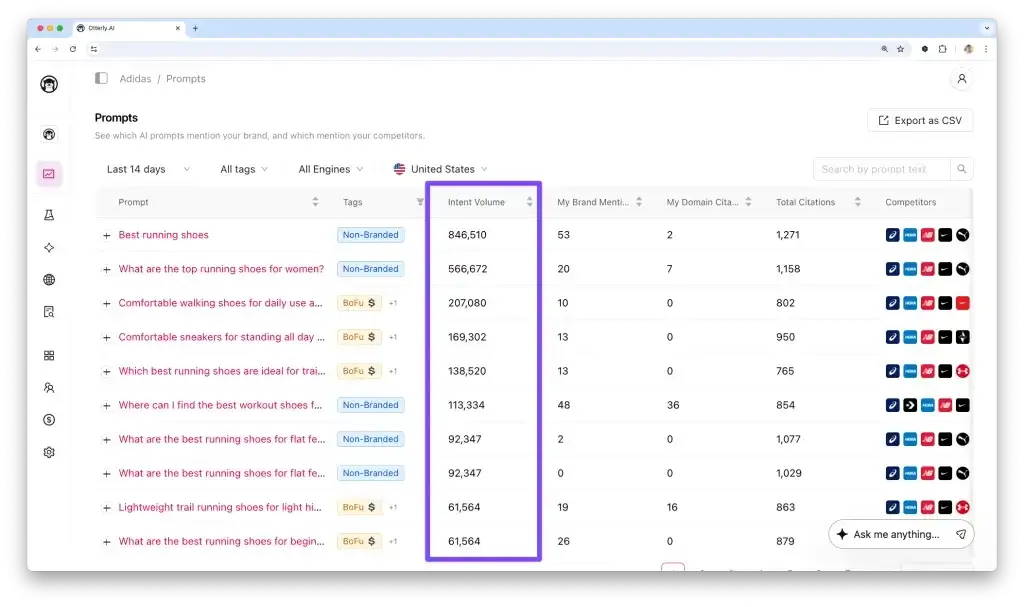
One of the most valuable parts of AI search strategy is choosing the right prompts. Otterly.AI includes prompt research functionality to help teams identify questions that are relevant to their market, category, and buyer journey.
This is important because poor prompt selection can weaken your analysis. If you track overly broad or irrelevant prompts, you may draw the wrong conclusions about your AI visibility.
The best prompts usually connect directly to buyer intent. They include phrases around best tools, alternatives, comparisons, industry use cases, budget considerations, team size, integrations, and practical outcomes.
GEO Audits and Recommendations
Otterly.AI also supports generative engine optimization workflows through GEO audits and recommendations. These features help you move from monitoring to improvement.
Instead of only seeing that your brand is missing from a prompt, you can start identifying what may need to change. This may include improving existing content, creating new answer-focused pages, strengthening citations, or clarifying brand positioning.
This makes Otterly.AI more useful than a simple mention tracker. It can help content teams connect visibility gaps with practical next steps.
Reports, Exports, and Looker Studio Connector
Otterly.AI includes reporting and export features, which are especially useful for agencies, SEO teams, and internal marketing stakeholders. You can export prompt and citation data for deeper analysis or reporting.
The Google Looker Studio connector is particularly useful for teams that want to combine AI search visibility data with other marketing dashboards. This can help you report AI visibility alongside organic traffic, keyword rankings, conversions, and campaign performance.
For agencies, this reporting layer can be valuable because clients increasingly ask how they appear in AI answers. Otterly.AI gives agencies a clearer way to show progress, gaps, and opportunities.
Multi-Country and Multi-Language Tracking
Otterly.AI supports multi-country monitoring across many markets and languages. This is important for international brands because AI answers may vary by region, language, and local source availability.
A software brand may appear strongly in the United States but weakly in Germany, France, Canada, or Australia. Multi-country tracking helps identify those differences before you assume one market reflects global visibility.
This feature is especially relevant for global SaaS companies, agencies with international clients, and enterprises managing multiple regional content strategies.
Pros and Cons
Benefits and Limitations of Otterly.AI
Positive
✅ Strong AI search monitoring across major platforms
✅ Helpful citation and brand mention tracking
✅ Useful for agencies, SEO teams, and content teams
✅ Entry plan is accessible for smaller teams
Negative
❌ Prompt limits can become restrictive as usage grows
❌ Gemini and Google AI Mode may require add-ons
❌ Not a replacement for full SEO platforms
❌ AI visibility data should be treated as directional
Strengths and Benefits
Otterly.AI’s biggest strength is that it focuses on a problem many marketers now feel but cannot easily measure: how their brand appears in AI-generated answers.
The platform gives teams a structured way to monitor prompts, mentions, citations, competitors, and visibility trends without relying on manual testing. That makes it practical for recurring SEO and content workflows.
- AI visibility tracking – Monitor whether your brand appears in relevant AI answers.
- Citation analysis – See which domains AI engines reference in your category.
- Competitor benchmarking – Compare your presence against competing brands.
- GEO support – Turn AI visibility gaps into optimization opportunities.
Another strong benefit is that Otterly.AI is useful for both in-house teams and agencies. In-house marketers can use it for content planning and reporting, while agencies can use workspaces and reporting features to manage multiple clients.
The tool also has a relatively approachable entry point. The Lite plan gives smaller teams a way to start monitoring AI search visibility before committing to a larger platform or enterprise contract.
Limitations and Drawbacks
Otterly.AI is useful, but it should be used with realistic expectations. AI search monitoring is still a new and developing category, and AI-generated answers can change based on platform updates, prompt wording, personalization, region, and available sources.
The first limitation is prompt capacity. The Lite plan includes a small number of prompts, which may be enough for testing but limited for serious tracking across several products, competitors, markets, and use cases.
- Prompt limits – Larger content teams may need Standard, Premium, or Enterprise.
- Add-on costs – Some AI engines may require additional paid packages.
- Not all-in-one SEO – You still need tools for keyword research and technical SEO.
- Market volatility – AI search results may shift more often than classic rankings.
Another limitation is that Otterly.AI does not replace traditional SEO software. You still need tools for backlinks, keyword difficulty, technical audits, organic ranking history, SERP analysis, and content optimization.
The right way to view Otterly.AI is as an AI visibility layer on top of your existing search and content stack.

Ease of Use and Workflow
Otterly.AI User Experience
Otterly.AI is designed for marketers rather than technical AI researchers. The workflow is built around prompts, brand reports, visibility metrics, citations, and recommendations.
Setup and Onboarding
The setup process begins with defining your brand, competitors, markets, and prompts. This step is important because the quality of your AI visibility data depends heavily on the prompts you choose to monitor.
For example, a marketing automation company should not only track a broad prompt like “marketing software.” It should track buyer-focused prompts such as “best marketing automation software for small businesses,” “best email automation tools for agencies,” and “HubSpot alternatives for B2B teams.”
The more closely your prompts reflect real buyer questions, the more useful Otterly.AI becomes.
Interface and Daily Workflow
The daily workflow is straightforward. You review brand reports, check visibility changes, analyze where competitors appear, inspect cited domains, and decide what content or authority-building work should happen next.
This makes the tool practical for recurring SEO meetings, content planning sessions, client reporting, and quarterly visibility reviews.
For smaller teams, the interface should feel approachable. For larger teams, the export options, workspace management, and Looker Studio connector can help turn Otterly.AI data into more advanced reporting workflows.
Learning Curve
The platform is not difficult to understand, but the strategy behind AI search monitoring requires thought. You need to understand your audience, define meaningful prompts, interpret citations, and connect visibility gaps to content actions.
Teams with SEO and content experience will likely adapt faster because they already understand search intent, competitive analysis, and content optimization. Teams new to SEO may need more time to interpret the data correctly.
Best Practice for Better Results
The best way to use Otterly.AI is to start with high-intent prompts. Focus on questions that suggest the user is comparing solutions, evaluating vendors, looking for recommendations, or trying to solve a specific business problem.
Then, review both mentions and citations. A brand mention tells you whether AI recognizes your company. A citation tells you which sources AI engines trust when building the answer.
That distinction is important. If your brand is mentioned but your site is not cited, you may need stronger owned content. If competitors are cited repeatedly, you may need to understand which pages, guides, or third-party sources are helping them win visibility.
Pricing and Plans
Cost, Prompt Limits, and Add-Ons
Otterly.AI offers several pricing tiers based mainly on search prompt volume, reporting needs, workspace requirements, and team size. The pricing model is relatively clear, but you should review current limits before buying because AI search monitoring costs can increase as your prompt library grows.
The Lite plan is best for testing and smaller teams. Standard is more practical for SMEs and small marketing teams. Premium is better suited for mid-sized businesses and agencies that need more prompt capacity.
Pricing Table
| Plan | Monthly Price | Best For | Included Search Prompts |
| Lite | $29/month | Solo marketers and small teams | 15 search prompts |
| Standard | $189/month | SMEs and small marketing teams | 100 search prompts |
| Premium | $489/month | Mid-sized businesses and agencies | 400 search prompts |
| Enterprise | Custom pricing | Larger organizations with advanced needs | Custom usage limits |
What Is Included?
Across the main plans, Otterly.AI includes access to core AI search monitoring features such as brand reports, AI prompt research, brand visibility metrics, domain ranking, link citation analysis, GEO audits, and detailed reports.
Higher plans generally provide more prompts, more GEO URL audits, broader workspace management, and reporting flexibility. Standard and Premium are better choices if you need to monitor multiple product lines, competitors, countries, or client accounts.
Add-Ons and Extra Costs
One important pricing detail is that some AI engines may be available as add-ons, including Google AI Mode and Gemini. This means the effective cost can increase if you want broader AI platform coverage.
Standard and Premium users can also add extra search prompts. This is useful if your monitoring program expands, but it also means you should estimate prompt needs before choosing a plan.
Free Testing and Enterprise Options
Otterly.AI offers ways to test the platform before subscribing, which is useful if you are new to AI search monitoring. Larger companies can also explore enterprise pricing for higher usage limits, SSO, team management, and dedicated support.
For most teams, the best approach is to start with a focused prompt set, validate the insights, and then scale into a larger plan only when AI visibility becomes part of your regular SEO and content reporting.
Best Use Cases
Who Should Use Otterly.AI?
Otterly.AI is not for every company. It is most valuable when AI search visibility is strategically important and when your team is ready to act on the data.
Best for SEO Teams
SEO teams can use Otterly.AI to add AI visibility tracking to their existing workflow. Traditional rankings still matter, but AI-generated answers now influence how people discover and evaluate brands.
Otterly.AI helps SEO teams understand whether their content appears in AI answers, whether competitors are being cited more often, and which pages may need optimization for better AI visibility.
Best for Content Marketing Teams
Content teams can use Otterly.AI to identify topics, prompts, and content gaps. If your brand is missing from important AI answers, that may suggest you need stronger educational content, better comparisons, more direct answers, or clearer positioning.
This is especially useful for B2B SaaS companies, agencies, service providers, and publishers that rely on content-led acquisition.
Best for Agencies
Agencies are one of the strongest use cases for Otterly.AI. Clients increasingly want to know whether they are visible in AI answers, and Otterly.AI gives agencies a structured way to provide reports, audits, and recommendations.
Workspace management, exports, and Looker Studio reporting can help agencies manage multiple clients without mixing data across accounts.
Best for International Brands
Companies that operate across multiple regions can benefit from Otterly.AI’s multi-country support. AI answers may vary significantly by market, so international brands need more than one generic visibility view.
This is useful for SaaS vendors, ecommerce brands, enterprise software companies, travel businesses, education providers, and service companies competing in several countries.
When Otterly.AI Might Not Be the Right Fit
Otterly.AI may not be the right fit if you only need basic keyword rankings, backlink analysis, technical audits, or content writing assistance. It is also not ideal if your website does not yet have a meaningful content foundation.
If your site lacks product pages, comparison content, educational resources, and clear category positioning, you may need to strengthen your SEO foundation before investing heavily in AI visibility tracking.
What It Replaces and What It Does Not
Otterly.AI vs Traditional SEO Tools
Otterly.AI should not be viewed as a full replacement for traditional SEO tools. It solves a newer and more specific problem.
Traditional SEO platforms help you understand search volume, keyword rankings, backlinks, technical issues, SERP competition, and organic traffic performance. Otterly.AI helps you understand how AI search engines mention, cite, and position your brand.
What Traditional SEO Tools Do Better
Traditional SEO tools are still stronger for keyword research, rank tracking, technical audits, backlink analysis, competitor domain research, and content optimization.
You still need these capabilities because AI visibility often depends on a strong search foundation. Clear content, authority, topical relevance, crawlability, and trusted external mentions can all influence whether AI engines reference your brand.
What Otterly.AI Does Better
Otterly.AI is stronger for prompt-level AI search visibility. It helps you see whether AI tools mention your brand, cite your content, and include competitors in answers that matter to your buyers.
This makes it especially valuable for content planning, competitive positioning, digital PR, and GEO strategy.
Best Approach: Use Both Together
The strongest workflow is to use Otterly.AI alongside traditional SEO tools. Use your SEO platform to build and maintain the foundation, then use Otterly.AI to understand how that foundation performs inside AI-generated answers.
For example, you can use keyword research tools to identify demand, create content around high-intent topics, and then use Otterly.AI to track whether AI search platforms cite that content or mention your brand.
For a broader view of your SEO stack, you can also review our guide to keyword research tools and our comparison of AI marketing tools.
Competitors and Comparisons
Otterly.AI Alternatives
Otterly.AI is one of the more focused tools in the AI search monitoring category, but it is not the only option. The right alternative depends on whether you need lightweight monitoring, enterprise AI visibility intelligence, content optimization, or a broader SEO platform.
| Tool | Best For | Main Advantage | When to Choose It |
| Otterly.AI | AI search monitoring and GEO reporting | Strong prompt, mention, citation, and competitor tracking | Choose it if you want a focused AI visibility platform |
| Profound | Enterprise AI visibility teams | Advanced AI search intelligence and reporting depth | Choose it if AI visibility is a major enterprise function |
| Peec AI | Standalone AI visibility tracking | Focused brand monitoring across AI platforms | Choose it if you want a dedicated AEO analytics workflow |
| HubSpot AEO | HubSpot users and B2B marketing teams | AEO workflow connected to HubSpot context | Choose it if your marketing operation already runs on HubSpot |
| Semrush AI Visibility Toolkit | SEO teams already using Semrush | AI visibility inside a broader SEO ecosystem | Choose it if Semrush is already your main SEO platform |
| Ahrefs Brand Radar | Brand and competitive intelligence teams | Brand mention and share-of-voice research | Choose it if brand intelligence matters more than GEO audits |
| Frase | Content optimization teams | Content creation and optimization workflow | Choose it if you need writing and optimization more than monitoring |
Otterly.AI vs Profound
Profound is generally better suited for larger companies that need deeper AI visibility intelligence, advanced reporting, and more enterprise-level workflows.
Otterly.AI is more approachable for smaller teams, agencies, and SEO teams that want focused AI search monitoring without committing to a heavier enterprise platform.
Otterly.AI vs HubSpot AEO
HubSpot AEO is a stronger fit for teams already using HubSpot as their marketing and CRM system. Its main advantage is workflow alignment with the HubSpot ecosystem.
Otterly.AI is better if you want a standalone AI search monitoring platform that is not tied to a specific CRM or marketing automation suite.
Otterly.AI vs Peec AI
Peec AI and Otterly.AI both focus on AI visibility monitoring. The better choice depends on interface preference, reporting needs, platform coverage, pricing, and how each tool handles prompts, citations, and competitor tracking.
Otterly.AI stands out for its agency use cases, workspaces, reporting exports, GEO audits, and multi-country capabilities.
Otterly.AI vs Semrush and Ahrefs
Semrush and Ahrefs remain stronger for traditional SEO, including keyword research, backlinks, technical auditing, and competitor organic analysis.
Otterly.AI is stronger for understanding AI answer visibility. For many teams, the best setup is to use Otterly.AI with Semrush, Ahrefs, or another SEO platform rather than choosing one or the other.
Best Practices
Getting Started With Otterly.AI
To get the most value from Otterly.AI, you should approach it with a clear prompt strategy. The platform can show you useful data, but the quality of your insights depends on what you track and how you interpret the results.
Start With Buyer-Intent Prompts
Begin with prompts that reflect real buying behavior. These may include questions around best tools, alternatives, comparisons, implementation, pricing, integrations, and industry-specific use cases.
For example, instead of only tracking “project management software,” track prompts like “best project management software for agencies,” “best workflow tools for remote teams,” or “which project management platform is easiest for client collaboration?”
Track Direct and Indirect Competitors
AI answers often include competitors you may not expect. Add both direct competitors and alternative solutions that buyers might compare against you.
This helps you understand the full competitive landscape inside AI search, not just the brands you already track in traditional SEO tools.
Analyze Citations, Not Only Mentions
Mentions show whether your brand appears. Citations show which sources influence the answer. You should review both.
If third-party websites are repeatedly cited, your strategy may need to include digital PR, affiliate partnerships, review management, and more authoritative external coverage.
Turn Gaps Into Content Actions
The most useful Otterly.AI workflow is not simply reporting. It is action.
When you find a prompt where competitors appear and your brand does not, turn that gap into a content brief. You may need a new comparison page, a use-case article, a stronger landing page, a refreshed FAQ section, or a more direct answer to buyer questions.
Measure Trends Over Time
AI search results can fluctuate. You should avoid overreacting to one response or one prompt result. Instead, look for repeated patterns across platforms, prompts, competitors, and cited domains.
This gives you a more reliable view of whether your visibility is improving and which actions are producing results.
Conclusion
Final Thoughts
⭐ Overall Rating: 8.4/10
Otterly.AI is a strong fit for marketers who want to understand and improve how their brand appears in AI search. It gives you a practical way to monitor prompts, brand mentions, website citations, competitors, and GEO performance across major AI answer engines.
The platform is especially useful for SEO teams, content teams, agencies, and B2B companies that rely on educational content, category visibility, and comparison-driven buyer journeys.
Its biggest strengths are focused AI search monitoring, citation analysis, competitor tracking, GEO recommendations, multi-country support, and reporting flexibility. It is also accessible enough for smaller teams to test, while still offering larger plans for agencies and enterprises.
At the same time, Otterly.AI should not replace your full SEO stack. You still need traditional SEO tools for keyword research, technical audits, backlinks, rankings, and traffic analysis. Otterly.AI is best used as an AI visibility layer that complements your existing SEO and content workflow.
Choose Otterly.AI If
Otterly.AI is worth considering if AI search visibility matters to your business and you want a structured way to monitor it. It is particularly valuable if your buyers ask AI tools for recommendations, comparisons, and category advice.
- You care about AI visibility – Track mentions, citations, and competitors across AI engines.
- You publish SEO content – Use prompt data to improve content planning.
- You manage clients – Build AI visibility reports for agency accounts.
- You compete in a crowded market – Identify where competitors dominate AI answers.
Consider Alternatives If
You may want to compare alternatives if you need enterprise-grade intelligence, built-in content creation, a CRM-connected workflow, or a broader SEO platform.
You may also want to start with traditional SEO improvements before investing in Otterly.AI if your site lacks strong product pages, comparison content, technical SEO foundations, or topical authority.
Overall, Otterly.AI is one of the most practical AI search monitoring tools for teams that want to move beyond guessing and start measuring their visibility in AI-generated answers.
Have more questions?
Frequently Asked Questions
What is Otterly.AI?
Otterly.AI is an AI search monitoring and optimization platform that helps marketers track brand mentions, website citations, competitors, and visibility across AI search engines.
How does Otterly.AI work?
Otterly.AI works by tracking prompts across AI search platforms, analyzing whether your brand appears, identifying cited websites, comparing competitor visibility, and reporting trends over time.
Which AI platforms does Otterly.AI track?
Otterly.AI tracks major AI search platforms such as ChatGPT, Google AI Overviews, Perplexity, Microsoft Copilot, Gemini, and Google AI Mode, depending on the plan and add-ons selected.
Is Otterly.AI good for SEO?
Yes. Otterly.AI can support SEO by showing how your content and brand appear in AI-generated answers. However, it should complement traditional SEO tools rather than replace them.
What is AI search monitoring?
AI search monitoring is the process of tracking how brands, websites, and competitors appear in answers generated by AI search engines and large language model-powered tools.
What is GEO in Otterly.AI?
GEO stands for generative engine optimization. In Otterly.AI, GEO features help you analyze and improve how your content is discovered, cited, and mentioned by AI answer engines.
How much does Otterly.AI cost?
Otterly.AI pricing starts at $29 per month for the Lite plan. Standard and Premium plans offer more prompts and broader usage, while Enterprise pricing is available for larger organizations.
Who should use Otterly.AI?
Otterly.AI is best for SEO teams, content marketers, agencies, B2B SaaS companies, and enterprises that want to monitor and improve brand visibility in AI-generated answers.
Does Otterly.AI replace Semrush or Ahrefs?
No. Otterly.AI does not replace Semrush or Ahrefs. It focuses on AI search visibility, while traditional SEO platforms are stronger for keyword research, backlinks, technical SEO, and ranking analysis.
Is Otterly.AI worth it?
Otterly.AI is worth considering if your buyers use AI tools for research and you need to track brand mentions, citations, and competitors across AI search platforms. It is especially useful for SEO, content, and agency teams.