Introduction
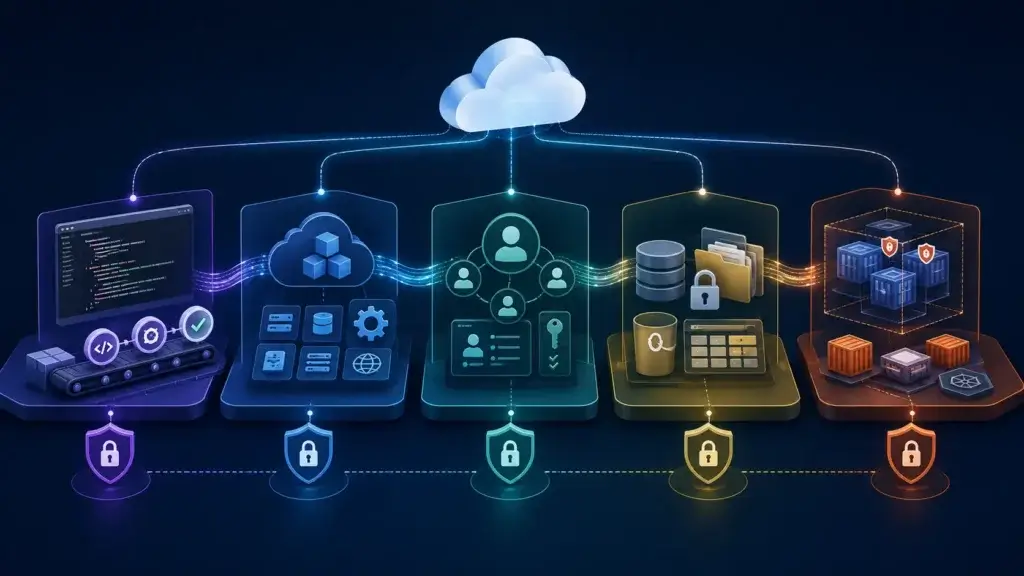
The best cloud-native application protection platforms help you secure more than cloud configuration. A true CNAPP connects what exists in your cloud, what developers are shipping, which identities can reach sensitive resources, what is exposed, and what is actually happening at runtime.
That distinction matters because cloud risk rarely comes from one finding. A vulnerable package becomes urgent when it runs in production, sits behind an exposed service, uses an overprivileged identity, and can reach sensitive data. A useful platform shows you that chain and gives the right owner enough context to fix it.
This guide compares eight leading CNAPP platforms in 2026. Upwind ranks first because its runtime-centric model combines cloud posture, application context, network behavior, API activity, and real-time protection. Wiz is the stronger alternative for broad agentless visibility and graph analysis, while Cortex Cloud is better suited to enterprises converging AppSec, CloudSec, and SecOps.
The ranking is based on product coverage, runtime depth, deployment model, attack-path analysis, developer workflows, Kubernetes security, multi-cloud support, and operational fit. It is not based on the number of features listed on a product page.
For adjacent categories, review our Cato Networks review for SASE and network security, the Grip Security review for SaaS identity risk, and the Cisco AI Defense review for AI application protection.
What Is a Cloud-Native Application Protection Platform?
A cloud-native application protection platform is an integrated security platform that protects cloud applications from development through production. It brings together capabilities that were previously purchased and operated as separate tools.
Most mature CNAPPs include cloud security posture management, workload protection, cloud infrastructure entitlement management, vulnerability management, infrastructure-as-code scanning, container and Kubernetes security, attack-path analysis, compliance reporting, and cloud detection and response.
The market is expanding further into data security posture management, API discovery, application security posture management, AI security posture management, software supply chain security, and automated remediation. The label alone is not enough. Some products remain posture tools with a wider menu, while others provide deep runtime detection and prevention.
Why CNAPP has become a strategic security category
Cloud-native systems change faster than traditional infrastructure. Resources appear and disappear, identities inherit permissions across services, containers are rebuilt continuously, and application teams deploy through several pipelines. Separate scanners create multiple versions of the same risk and force analysts to correlate findings manually.
The business impact is measurable. Red Hat’s State of Kubernetes Security report, based on 600 DevOps, engineering, and security professionals, found that 67% of respondents said security concerns delayed or slowed application development. A well-implemented CNAPP should reduce that friction by improving prioritization and moving remediation into developer workflows.
How We Evaluated the Best CNAPP Platforms
A CNAPP should be judged by how accurately it identifies material risk and how efficiently your teams can act. Broad coverage is useful, but the platform must also fit your architecture and operating model.
Runtime context and active protection
We favored platforms that can distinguish a dormant vulnerability from a package loaded in a public-facing production workload. Runtime telemetry should improve prioritization and investigation.
Agentless coverage and deployment speed
Agentless scanning speeds asset discovery across unmanaged and short-lived resources. It does not equal real-time prevention, so we favored platforms that combine agentless and sensor-based methods appropriately.
Code-to-cloud traceability
We looked for repository, pipeline, artifact, IaC, image, and runtime relationships that identify where risk originated, who owns it, and where the fix belongs.
Risk prioritization and attack paths
A useful CNAPP correlates vulnerabilities, exposure, identities, data, misconfigurations, and runtime activity. Graphs matter only when they improve decisions and remediation speed.
Kubernetes, multi-cloud, and AI coverage
We assessed AWS, Azure, Google Cloud, containers, Kubernetes, serverless, APIs, and AI services. Exact managed-service and Kubernetes support still needs testing.
Governance, integrations, and cost clarity
We also assessed access controls, compliance, SIEM and ticketing integrations, developer routing, retention, and pricing mechanics.
Best Cloud-Native Application Protection Platforms in 2026
The ranking below favors security outcomes rather than market size. Upwind is the top option for teams that want runtime intelligence to shape posture prioritization, detection, and response. The remaining platforms are stronger for specific deployment models, ecosystems, or operational priorities.
Upwind
Features & Benefits
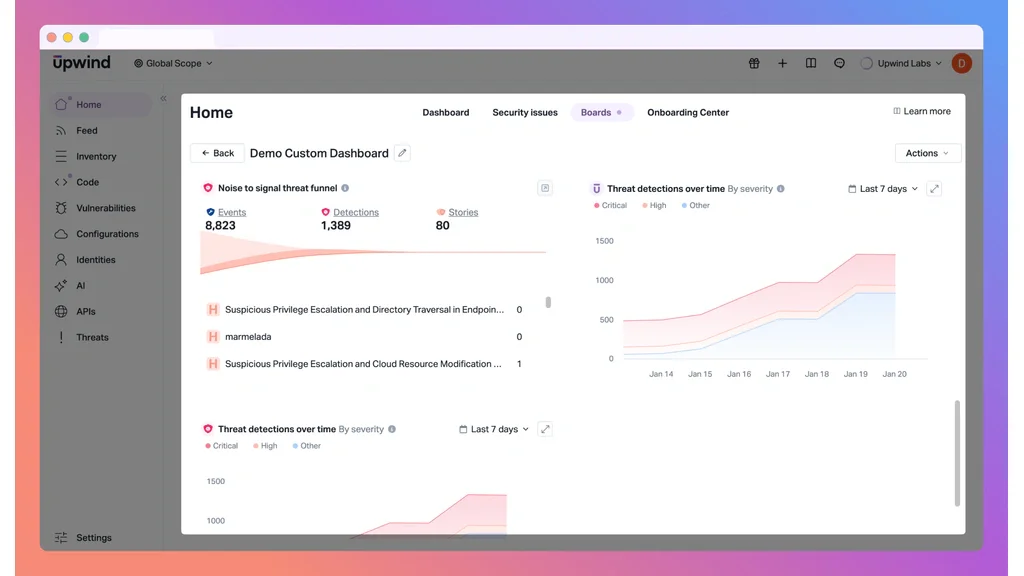
Upwind takes a runtime-first approach to CNAPP. It combines agentless discovery, real-time sensors, cloud logs, scanners, APIs, and network activity to show which risks are actually reachable, active, internet-facing, or connected to sensitive data.
It covers application security, CSPM, CIEM, vulnerability management, DSPM, Kubernetes, serverless, API security, cloud detection and response, and attack paths. It is best for production cloud environments where static posture creates too much noise. Smaller teams needing only configuration checks may find it excessive.
Pricing & Plans
Upwind uses quote-based pricing. Evaluate protected resources, runtime coverage, modules, support, and data volume. Ask the proof of value to measure alert reduction, detection quality, and investigation speed.
Pros & Cons
Pros
- Runtime context improves risk prioritization
- Combines posture, code, identity, data, and runtime signals
- Strong Kubernetes, API, and cloud detection coverage
- Useful for security and engineering collaboration
Cons
- Quote-based pricing limits easy comparison
- Best value requires meaningful production cloud scale
- Runtime rollout needs planning across workloads
- May exceed basic CSPM requirements
Wiz

Features & Benefits
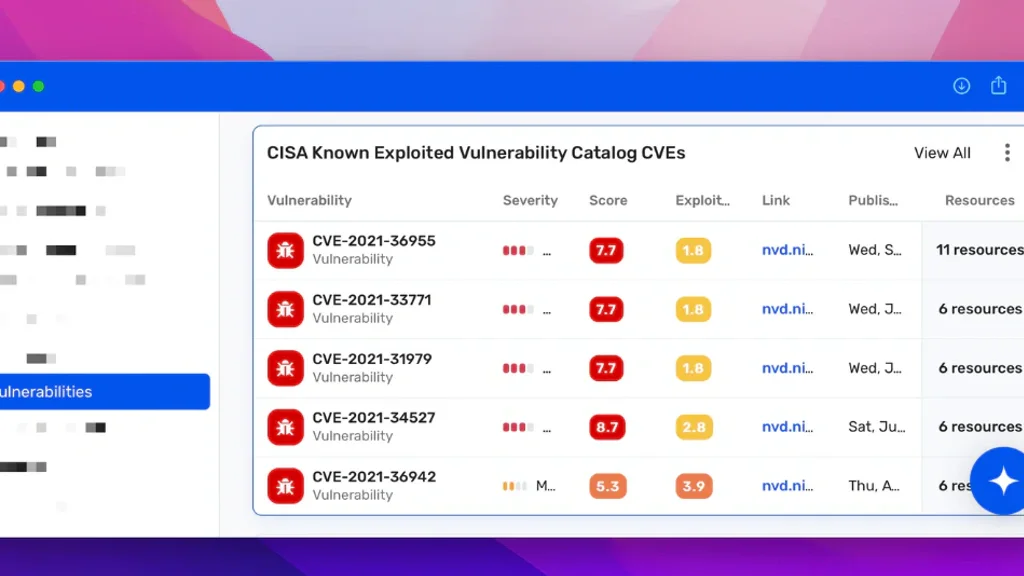
Wiz is a strong choice when rapid agentless visibility and attack-path analysis are priorities. Its security graph connects resources, identities, vulnerabilities, exposure, data, applications, code, and runtime findings so teams can see combinations of risk.
The platform also supports secure development and eBPF-based runtime protection. It fits large multi-cloud estates that need one accessible risk model. Buyers should verify which runtime, AppSec, data, and AI security capabilities are included because the broad platform can become a premium purchase.
Pricing & Plans
Wiz pricing is customized. Request separate costs for cloud coverage, code security, runtime, data security, support, and expected resource growth. Compare a three-year estimate, not only the first-year quote.
Pros & Cons
Pros
- Fast agentless cloud onboarding
- Clear graph-based attack-path analysis
- Broad multi-cloud and code-to-cloud coverage
- Accessible workflows for distributed teams
Cons
- Pricing is not publicly standardized
- Module scope requires careful contract review
- Runtime depth may depend on sensor deployment
- Large feature set can increase platform cost
Cortex Cloud

Features & Benefits
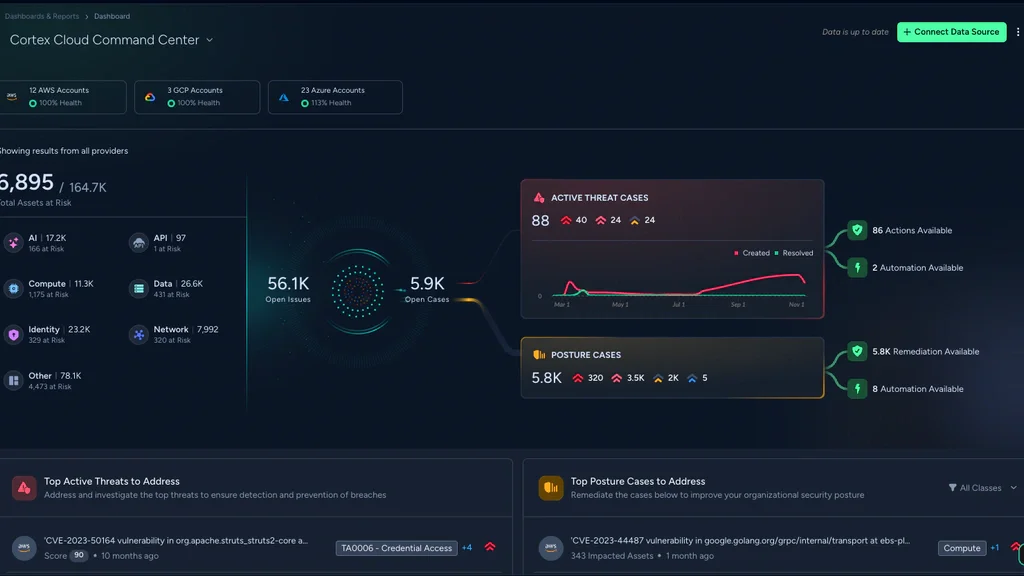
Cortex Cloud builds on Prisma Cloud capabilities and connects application security, cloud posture, workload protection, and security operations. Coverage includes code-to-cloud controls, CSPM, CIEM, DSPM, agentless scanning, Kubernetes, API security, cloud detection and response, and runtime defense.
Its advantage is convergence with SecOps, especially for organizations already using Cortex technologies. The tradeoff is complexity. Successful deployment requires clear ownership across AppSec, cloud security, platform engineering, and the SOC.
Pricing & Plans
Pricing is quote-based and modular. Request a complete bill of materials for cloud resources, runtime workloads, code security, data security, support, retention, and professional services.
Pros & Cons
Pros
- Very broad code-to-cloud security coverage
- Strong runtime and cloud detection capabilities
- Connects CloudSec, AppSec, and SecOps workflows
- Suitable for large regulated environments
Cons
- Steeper deployment and administration curve
- Modular licensing can be difficult to model
- Requires cross-team operating discipline
- Potentially excessive for smaller cloud programs
Orca Security
Features & Benefits
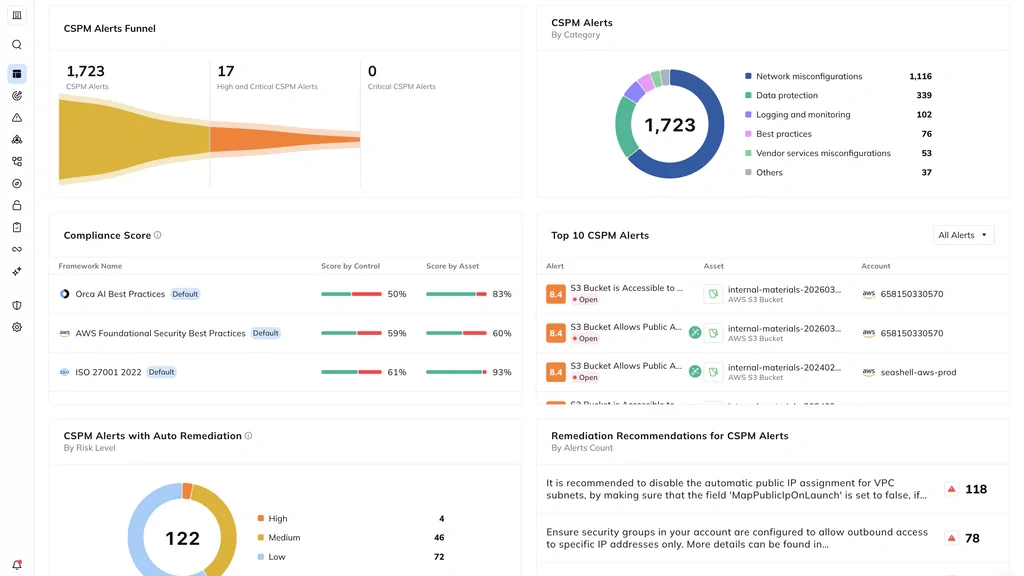
Orca Security is built around agentless-first coverage. Its SideScanning approach reads workload and cloud configuration data without installing a traditional agent on every asset, helping teams discover virtual machines, containers, storage, serverless functions, identities, and services quickly.
Orca combines CNAPP, AppSec, CSPM, workload risk, CIEM, data security, API security, and attack paths. A lightweight eBPF sensor adds real-time detection and prevention. Test its sensor on your highest-risk workloads and confirm support for your Kubernetes distributions and private cloud requirements.
Pricing & Plans
Orca promotes all-inclusive, workload-based pricing, but quotes are customized. Confirm workload definitions, ephemeral resource treatment, runtime sensor inclusion, support, and retention.
Pros & Cons
Pros
- Rapid agentless-first deployment
- Strong cloud asset and workload visibility
- Contextual attack-path prioritization
- Optional real-time runtime sensor
Cons
- Runtime depth should be validated in production
- Workload counting needs contract clarity
- Private cloud fit may require additional review
- Advanced use cases still require tuning
CrowdStrike Falcon Cloud Security
Features & Benefits
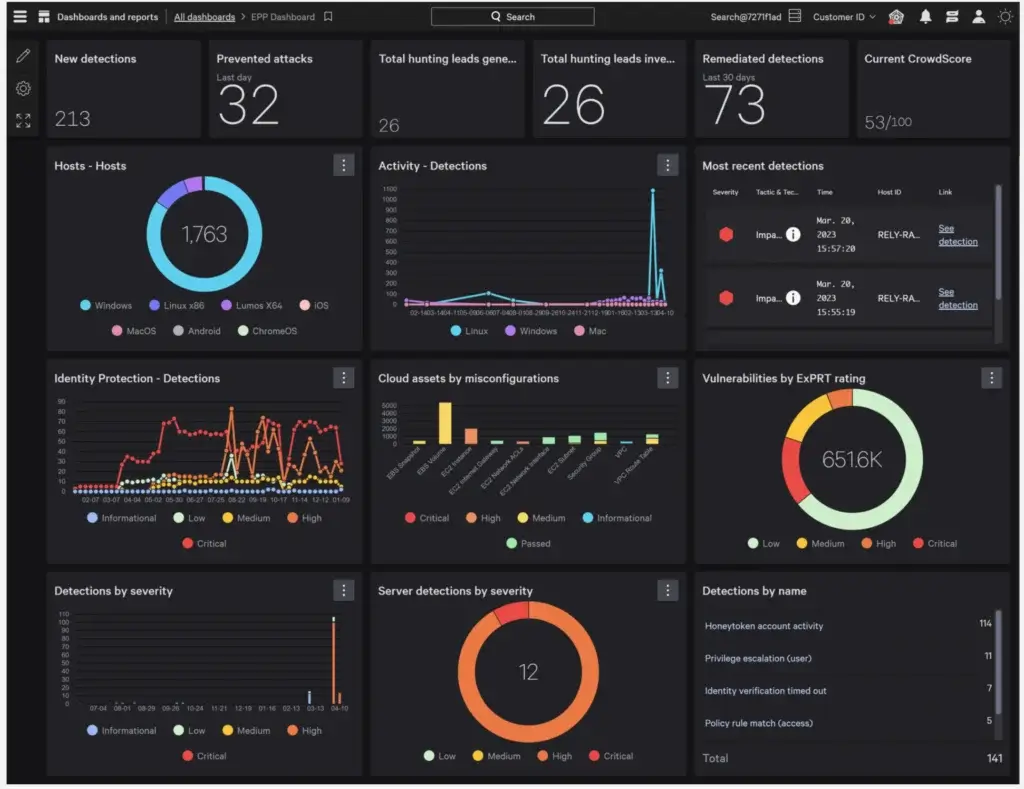
CrowdStrike Falcon Cloud Security combines agentless visibility with the Falcon sensor for real-time workload protection. It covers posture, vulnerabilities, identities, containers, Kubernetes, serverless environments, application context, and cloud detection and response.
Its main advantage is connection to the wider Falcon platform. Teams already using CrowdStrike for endpoint, identity, intelligence, or managed detection can extend familiar workflows into the cloud. A CNAPP-only buyer should confirm whether that ecosystem advantage justifies the module and sensor requirements.
Pricing & Plans
Enterprise pricing depends on modules and protected assets. Request separate estimates for posture, runtime, containers, identity, cloud detection and response, and managed services.
Pros & Cons
Pros
- Strong workload runtime protection
- Excellent fit with Falcon and XDR operations
- Adversary intelligence enriches cloud detections
- Good container lifecycle controls
Cons
- Best value is tied to the Falcon ecosystem
- Module selection can complicate budgeting
- Sensor coverage requires deployment planning
- May be broader than a CNAPP-only need
Sysdig Secure
Features & Benefits
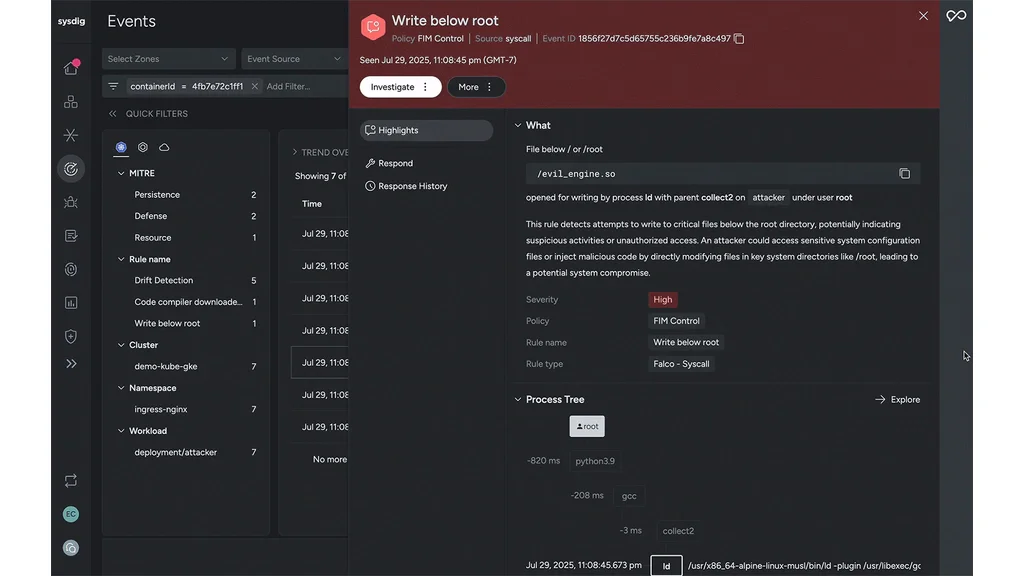
Sysdig Secure is especially strong in containers and Kubernetes. Runtime insights show which packages, vulnerabilities, identities, and services are active, helping teams focus on exploitable or in-use risk instead of treating every scanner result equally.
It combines CNAPP, CSPM, CIEM, vulnerability management, IaC security, DSPM, workload protection, and cloud detection and response. Falco provides an open foundation for runtime detection. The platform is less compelling for teams with mostly traditional infrastructure or basic posture needs.
Pricing & Plans
Sysdig uses customized pricing. Model workloads, hosts, containers, cloud accounts, retention, and modules. Test performance overhead, ephemeral workload coverage, and policy maintenance effort.
Pros & Cons
Pros
- Deep Kubernetes and container visibility
- Runtime-based vulnerability prioritization
- Falco ecosystem supports transparent detection logic
- Strong cloud detection and response
Cons
- Most valuable in container-heavy environments
- Runtime policies need skilled ownership
- Pricing requires a customized quote
- May be excessive for basic posture management
Aqua Security
Features & Benefits
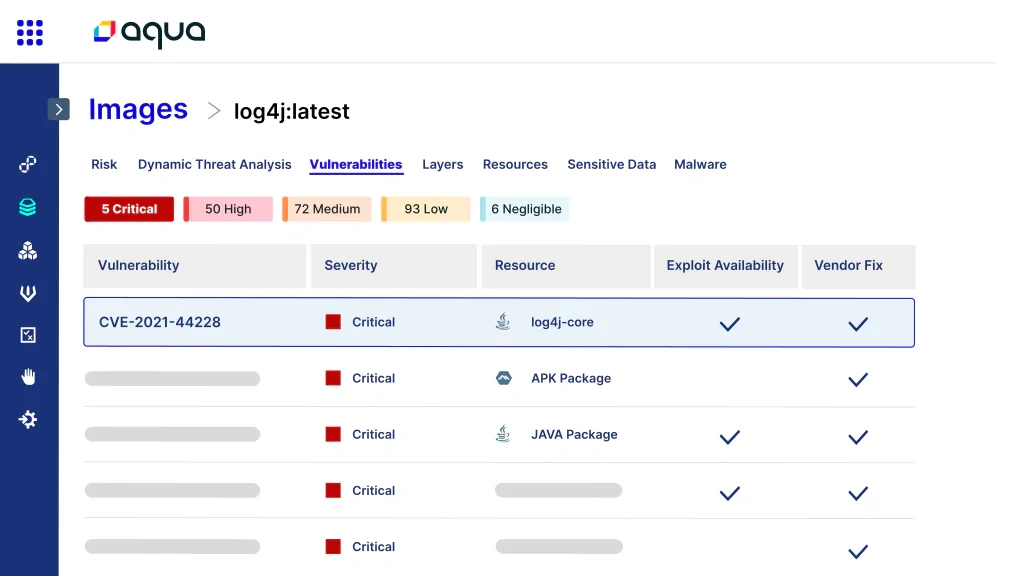
Aqua Security provides full-lifecycle protection across code, infrastructure, workloads, and runtime. It supports image scanning, software supply chain controls, IaC analysis, Kubernetes posture, CSPM, vulnerability management, workload protection, and runtime enforcement.
Aqua stands out when runtime prevention matters across containers, Kubernetes, serverless, virtual machines, and hybrid environments. That depth requires security engineering effort. Test policy design, exceptions, deployment overhead, and developer impact before enabling blocking controls broadly.
Pricing & Plans
Aqua pricing is customized by environment and modules. Separate code security, posture, workload protection, runtime enforcement, support, and professional services in the proposal.
Pros & Cons
Pros
- Strong runtime detection and prevention
- Deep container and Kubernetes heritage
- Covers code, supply chain, posture, and workloads
- Supports hybrid and multi-cloud environments
Cons
- Deployment can require significant expertise
- Blocking policies need careful tuning
- Quote-based pricing reduces transparency
- May be complex for posture-only teams
Microsoft Defender for Cloud
Features & Benefits
Microsoft Defender for Cloud combines CSPM, DevSecOps, and workload protection across Azure, AWS, Google Cloud, and hybrid resources. It covers virtual machines, containers, storage, databases, serverless services, APIs, and AI workloads through integrated plans.
It is most attractive for organizations already using Azure, Defender XDR, Sentinel, and Microsoft governance. Foundational CSPM is free, while paid plans add advanced posture, scanning, container runtime protection, and workload-specific defenses. Validate multicloud parity because the experience remains Microsoft-centered.
Pricing & Plans
Pricing is usage-based across separate plans. Model servers, containers, storage, databases, APIs, and CSPM with the official calculator, then monitor costs as coverage expands.
Pros & Cons
Pros
- Strong integration with Microsoft security tools
- Covers Azure, AWS, GCP, and hybrid resources
- Free foundational CSPM capabilities
- Broad workload-specific protection options
Cons
- Pricing spans many separate meters
- Best experience is Microsoft-centered
- Multicloud parity requires validation
- Configuration can become complex at scale
Best CNAPP Platforms Comparison
The table summarizes each platform’s strongest fit. Pricing is mostly quote-based, so a proof of value should compare operational outcomes, not only license cost.
| CNAPP Platform | Best For | Deployment Emphasis | Runtime Strength | Main Tradeoff |
| Upwind | Runtime-powered cloud security | Agentless plus real-time sensors | Very strong | Requires production-scale evaluation |
| Wiz | Agentless visibility and attack graphs | Agentless-first plus runtime sensor | Strong | Premium, broad platform scope |
| Cortex Cloud | AppSec, CloudSec, and SecOps convergence | Agentless and agent-based | Very strong | Complex deployment and licensing |
| Orca Security | Fast agentless cloud onboarding | Agentless-first plus eBPF sensor | Strong | Validate runtime depth by workload |
| CrowdStrike Falcon Cloud Security | XDR-connected workload defense | Falcon sensor plus agentless coverage | Very strong | Best value inside Falcon ecosystem |
| Sysdig Secure | Kubernetes and container runtime | Runtime sensor and cloud integrations | Very strong | Requires cloud-native security skills |
| Aqua Security | Runtime enforcement and hybrid cloud | Agent and agentless controls | Very strong | Policy tuning and deployment effort |
| Microsoft Defender for Cloud | Azure and Microsoft security teams | Native cloud plans plus agents | Strong | Multiple usage-based pricing meters |
Which CNAPP Platform Should You Choose?
Choose Upwind for runtime-driven prioritization
Upwind is the best overall option for dynamic Kubernetes, container, API, and multi-cloud environments where static posture produces too much noise.
Choose Wiz for fast visibility across a large cloud estate
Wiz is a strong choice for broad agentless onboarding and attack-path analysis across identities, vulnerabilities, data, exposure, and code ownership.
Choose Cortex Cloud for platform convergence
Cortex Cloud fits enterprises that want cloud security connected directly with application security, the SOC, and existing Palo Alto Networks investments.
Choose Orca for agentless-first time to value
Orca fits teams that need fast agentless visibility with an optional runtime sensor for selected workloads.
Choose CrowdStrike for XDR and threat-led cloud defense
CrowdStrike is the natural option when your SOC already uses Falcon for endpoint, identity, and threat-led investigations.
Choose Sysdig or Aqua for deep runtime control
Choose Sysdig for Falco-based Kubernetes detection, or Aqua for runtime prevention, supply chain controls, and hybrid environments.
Choose Microsoft Defender for Cloud for Azure-centered security
Microsoft Defender for Cloud fits Azure-centered teams using Defender XDR, Sentinel, and Microsoft governance. Test multicloud parity and usage-based cost.
How to Run a CNAPP Proof of Value
A demo shows a vendor’s strongest workflows. A proof of value should show how the platform performs in your environment, with your cloud services, ownership model, and incident processes.
Measure coverage before counting findings
Connect representative AWS, Azure, and Google Cloud accounts, production and non-production clusters, registries, repositories, and pipelines. Confirm that the platform discovers ephemeral resources, serverless services, managed Kubernetes, data stores, identities, and internet-facing assets.
Use known attack paths and misconfigurations
Create controlled test cases that combine public exposure, an excessive permission, a vulnerable workload, and access to sensitive data. Evaluate whether the platform correlates the chain, ranks it correctly, explains the path, and identifies the right owner.
Test runtime detections in a safe environment
Run approved simulations for suspicious process execution, container drift, credential access, unusual network connections, API abuse, and privilege escalation. Measure detection latency, context quality, response options, false positives, and sensor overhead.
Test developer remediation, not only security triage
Send findings into your ticketing and code workflows. Verify that developers receive a clear explanation, affected service, evidence, recommended change, and a way to validate the fix. The platform should reduce back-and-forth between security and engineering.
Model three-year cost and operational effort
Include cloud growth, new modules, data retention, support, professional services, sensor maintenance, policy tuning, and internal staffing. A less expensive license can become the higher-cost option when it requires more manual correlation or several companion tools.
- Track critical findings reduced after context is applied
- Measure mean time to assign and remediate
- Compare sensor overhead on representative workloads
- Count duplicated alerts removed across tools
- Verify coverage across every required cloud service

CNAPP vs CSPM, CWPP, and CIEM
These categories overlap, but they are not interchangeable. CSPM focuses on cloud configuration, governance, and compliance. CWPP protects workloads such as virtual machines, containers, Kubernetes, and serverless functions. CIEM analyzes identities, permissions, and least-privilege risk.
A CNAPP should integrate these capabilities and add context across the application lifecycle. It should explain how a code change created a cloud resource, which identity can reach it, whether it is exposed, what data it can access, and whether risky behavior is occurring at runtime.
You may not need a full CNAPP when your cloud estate is small, your workloads are mostly SaaS, or your primary requirement is one narrow control. For SaaS application posture, a dedicated platform such as the one covered in our AppOmni review may be more relevant. For runtime-heavy cloud-native systems, a complete CNAPP is usually the more sustainable architecture.
Common CNAPP Buying Mistakes
Treating every platform as equivalent
Vendors use the same category label while emphasizing different strengths. One may excel at agentless posture, another at runtime enforcement, and another at SOC convergence. Start with your architecture and operating model.
Confusing visibility with protection
Agentless scanning can deliver excellent coverage, but it does not automatically provide real-time process monitoring or blocking. Decide which workloads need continuous detection and prevention.
Buying breadth without ownership
A broad platform fails when no team owns policies, exceptions, runtime response, developer routing, and cloud onboarding. Define responsibility before deployment.
Prioritizing alert volume over risk reduction
More findings do not make a platform more effective. Measure how much noise is removed, how accurately risks are ranked, and how quickly the right team can remediate.
Ignoring pricing mechanics
Workload, host, resource, data, module, and retention-based pricing can produce very different totals. Use realistic growth assumptions and contract definitions.
Conclusion
The best cloud-native application protection platform is the one that connects cloud context with action. Upwind ranks first because it uses runtime intelligence to improve posture prioritization, investigation, and real-time protection across modern cloud applications.
Wiz is the strongest alternative for broad agentless visibility and graph-based risk analysis. Cortex Cloud is better for large enterprises converging application security, cloud security, and SecOps. Orca offers rapid agentless-first coverage, while CrowdStrike extends Falcon-led detection and response into cloud workloads.
Sysdig and Aqua provide particularly strong runtime depth for Kubernetes and containers. Microsoft Defender for Cloud is the practical choice for Azure-centered organizations that want CNAPP integrated with the wider Microsoft security ecosystem.
Do not select a CNAPP from a feature checklist alone. Test coverage, attack-path accuracy, runtime detections, developer remediation, operational effort, and three-year cost in your own environment. The best platform should help you reduce material risk without turning security into a bottleneck for cloud delivery.
Frequently Asked Questions
What are the best cloud-native application protection platforms?
The best CNAPP platforms include Upwind, Wiz, Cortex Cloud, Orca Security, CrowdStrike Falcon Cloud Security, Sysdig Secure, Aqua Security, and Microsoft Defender for Cloud. The right choice depends on runtime depth, deployment model, cloud ecosystem, and operating maturity.
What is a CNAPP?
A CNAPP is a cloud-native application protection platform that unifies posture management, workload protection, identity security, vulnerability management, code security, attack-path analysis, compliance, and runtime detection across the application lifecycle.
Which CNAPP is best for runtime security?
Upwind is the strongest overall choice for runtime-driven prioritization and real-time cloud protection. Sysdig and Aqua are also strong for Kubernetes and container runtime security, while CrowdStrike and Cortex Cloud connect runtime defense with broader SOC operations.
Is CNAPP the same as CSPM?
No. CSPM focuses mainly on cloud configuration, governance, and compliance. CNAPP includes CSPM and adds workload protection, identity analysis, code security, vulnerability management, attack paths, and runtime detection and response.
Do CNAPP platforms require agents?
Not always. Many CNAPP platforms use agentless cloud APIs and workload scanning for rapid visibility. Runtime detection and prevention often require a sensor, agent, eBPF component, admission controller, or cloud-native telemetry integration.
What should you test during a CNAPP proof of value?
Test cloud asset coverage, attack-path correlation, runtime detection latency, false positives, sensor overhead, developer remediation, ticket routing, compliance reporting, and total cost across representative production and non-production environments.
Which CNAPP is best for Kubernetes security?
Upwind, Sysdig, Aqua, CrowdStrike, and Cortex Cloud all provide strong Kubernetes capabilities. Sysdig is especially attractive for Falco-based runtime detection, while Aqua is strong for runtime enforcement and Upwind connects Kubernetes activity with broader cloud context.
Can a CNAPP replace multiple cloud security tools?
A mature CNAPP can consolidate CSPM, CWPP, CIEM, vulnerability management, container security, code scanning, attack-path analysis, and cloud detection. Some organizations still retain specialist tools for deep AppSec, SIEM, DSPM, or network controls.
How much does a CNAPP cost?
Most CNAPP vendors use custom pricing based on workloads, hosts, cloud resources, modules, data volume, or retention. Compare a three-year total that includes cloud growth, support, professional services, sensor operations, and companion tools.
Which CNAPP is best for Microsoft Azure?
Microsoft Defender for Cloud is the most natural fit for Azure-centered organizations because it integrates with Defender XDR, Sentinel, Azure Policy, and Microsoft workload protections. Upwind, Wiz, Orca, Cortex Cloud, and other leading CNAPPs also support Azure in multicloud environments.