Introduction
The way you approach SEO in 2026 needs to be broader than traditional keyword rankings. Search is now shaped by AI overviews, conversational answers, richer SERP features, and stronger competition across organic and paid channels. That means your toolkit needs to do more than show keyword volume. It should help you uncover competitor gaps, monitor backlinks, optimize content, understand traffic trends, and identify where your brand appears across modern search experiences.
In this guide, you’ll discover how Semrush, Ahrefs, SimilarWeb, SpyFu, and Surfer compare across features, pricing, and use cases. You’ll see which platform is best for all-in-one SEO management, backlink intelligence, market research, competitor PPC analysis, or content optimization, so you can choose the right SEO and competitive intelligence tool for your business.
What to look for in an SEO & competitive intelligence tool
Before diving into the platforms, consider the following factors:
- Keyword research and search intent – A strong tool should help you find high-value keywords, evaluate difficulty, group related terms, and understand whether users are searching with informational, commercial, or transactional intent.
- Competitor analysis – The best platforms show which keywords competitors rank for, where their traffic comes from, which ads they run, and where your gaps are.
- Backlink intelligence – Link data still matters. Look for tools that reveal referring domains, lost links, toxic links, and outreach opportunities.
- Content optimization and AI support – Many tools now include content editors, optimization scores, AI writing assistance, and visibility tracking for AI-generated search results.
- Traffic and market intelligence – Some platforms go beyond SEO and show broader website traffic trends, audience behavior, and industry benchmarks.
- Ease of use and workflow fit – A platform can be powerful but still slow your team down if the interface is hard to use or the data is difficult to interpret.
- Pricing and scalability – Review not only the entry price, but also project limits, keyword tracking caps, user seats, and the cost of add-ons.
With these criteria in mind, let’s look at the standout SEO and competitive intelligence tools in 2026.
Semrush
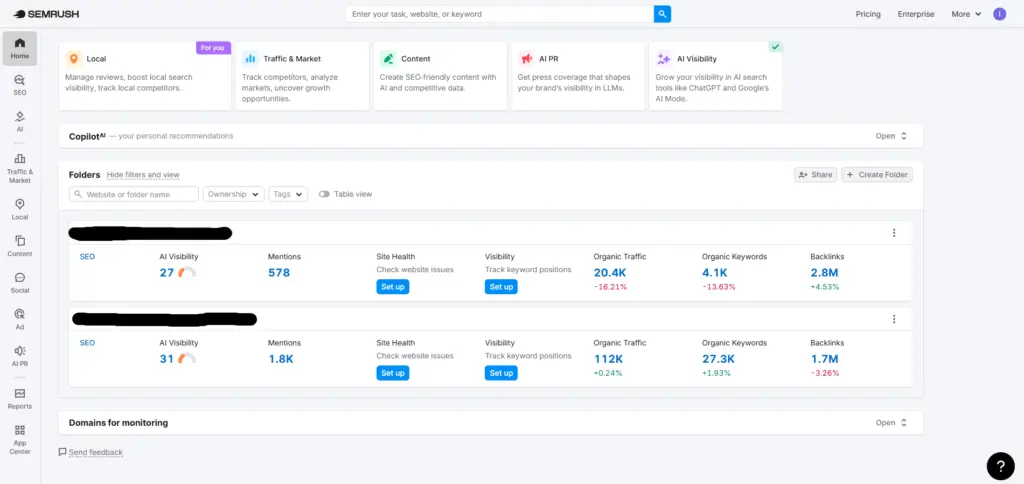
Semrush remains one of the most complete platforms in the SEO software market. It started as a keyword research tool, but today it covers technical SEO, content marketing, PPC research, local SEO, social media monitoring, and AI-driven search visibility. For many teams, that breadth is the main reason to choose it. Instead of stitching together several niche platforms, you can run most of your SEO and competitive research workflows from one dashboard.
Core features and capabilities
- Keyword research and keyword gap analysis – Semrush’s Keyword Magic Tool helps you discover large keyword sets from a seed term, while Keyword Gap shows where competitors rank and your site does not.
- Competitor analysis across SEO and PPC – You can view competitors’ top pages, organic rankings, paid keywords, ad copy history, and estimated traffic trends.
- Site Audit and On-Page SEO Checker – These tools help you identify crawl issues, broken links, Core Web Vitals problems, duplicate content, and on-page improvement opportunities.
- Content tools and writing support – The SEO Writing Assistant and related content tools help improve readability, keyword use, structure, and originality within Google Docs, WordPress, and other workflows.
- AI visibility features – Semrush has expanded into AI visibility tracking, helping brands monitor how they appear across AI-powered search experiences and answer engines.
- Reporting and integrations – It supports dashboards, scheduled reports, and integrations that make it suitable for in-house teams and agencies.
Ideal use cases
Semrush is ideal when you need a broad digital marketing platform rather than a narrow SEO-only tool. It suits:
- Marketing teams managing SEO, paid search, and content strategy together.
- Agencies that need competitor research, client reporting, and multiple campaign workflows in one place.
- Businesses investing in AI search readiness and wanting visibility beyond classic blue-link rankings.
Strengths and limitations
Strengths:
- One of the most complete all-in-one SEO platforms available.
- Strong balance between SEO, PPC, content, and competitor intelligence.
- Useful AI search visibility and content support features.
- Well-suited for agencies and growing teams.
Limitations:
- Can feel overwhelming for beginners because of the large number of tools.
- Advanced plans get expensive quickly.
- Extra users and add-ons can increase total cost significantly.
Pricing and plans
Semrush offers several pricing paths depending on whether you want the classic SEO suite or newer AI visibility bundles:
- Pro – around $139.95 per month: suitable for freelancers, startups, and small marketing teams.
- Guru – around $249.95 per month: adds more projects, historical data, and stronger content marketing features.
- Business – around $499.95 per month: built for agencies and larger businesses that need higher limits and API access.
- Semrush One plans – start around $199 per month and combine the SEO toolkit with AI visibility features.
Ahrefs
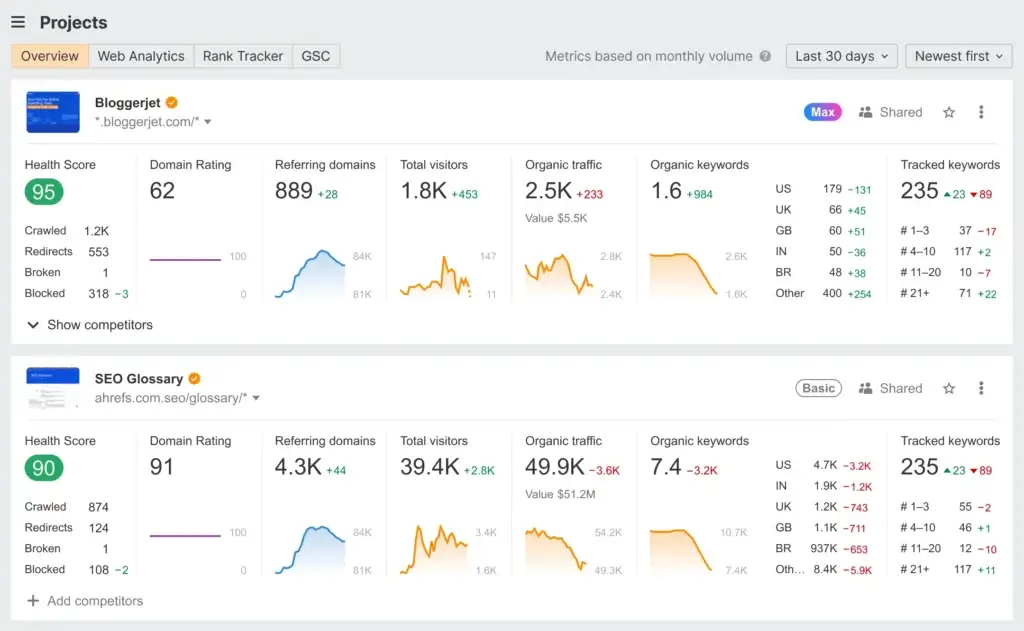
Ahrefs has long been one of the top choices for SEO professionals who care most about backlink data, keyword opportunities, and technical performance. While it has expanded well beyond its original link analysis focus, backlinks are still where it stands out. In 2026, Ahrefs is also leaning more into AI features, especially around content support and brand visibility across AI-driven search experiences.
Core features and capabilities
- Site Explorer – One of Ahrefs’ strongest tools, Site Explorer helps you analyze organic traffic, backlinks, top pages, paid search activity, and competitor growth.
- Keywords Explorer – Provides search volume, keyword difficulty, traffic potential, click metrics, SERP features, and related keyword ideas across multiple search engines.
- Content Gap and competitor comparison – Helps you find keywords competitors rank for that your site misses, which is useful for content planning and SEO expansion.
- Site Audit – Crawls your website to identify technical SEO issues and organize them by priority.
- Content Explorer – Useful for finding high-performing topics, content formats, and backlink-worthy pages across the web.
- AI enhancements – Ahrefs has introduced AI-focused features for content optimization and brand monitoring in AI search environments, though some of them come as paid add-ons.
Ideal use cases
Ahrefs is ideal when your SEO strategy depends heavily on backlink analysis, SERP intelligence, and competitor monitoring. It suits:
- SEO specialists who need deep backlink and keyword data.
- Content teams planning articles based on ranking gaps and traffic potential.
- Agencies and consultants handling technical SEO and link-building projects.
Strengths and limitations
Strengths:
- Excellent backlink database and link analysis tools.
- Very strong competitor SEO research features.
- Helpful keyword metrics like traffic potential and clicks.
- Strong fit for technical SEO professionals.
Limitations:
- Pricing can become expensive as usage grows.
- No broad all-in-one PPC and marketing suite like Semrush.
- Some AI tools require separate paid add-ons.
Pricing and plans
Ahrefs offers several plans depending on usage depth and team size:
- Starter – around $29 per month: very limited plan for basic use.
- Lite – around $129 per month: aimed at solo marketers and small businesses.
- Standard – around $249 per month: a popular plan for consultants and in-house SEO teams.
- Advanced – around $449 per month: better for agencies and larger teams.
- Enterprise – starts around $1,499 per month: built for large organizations needing scale and security.
SimilarWeb

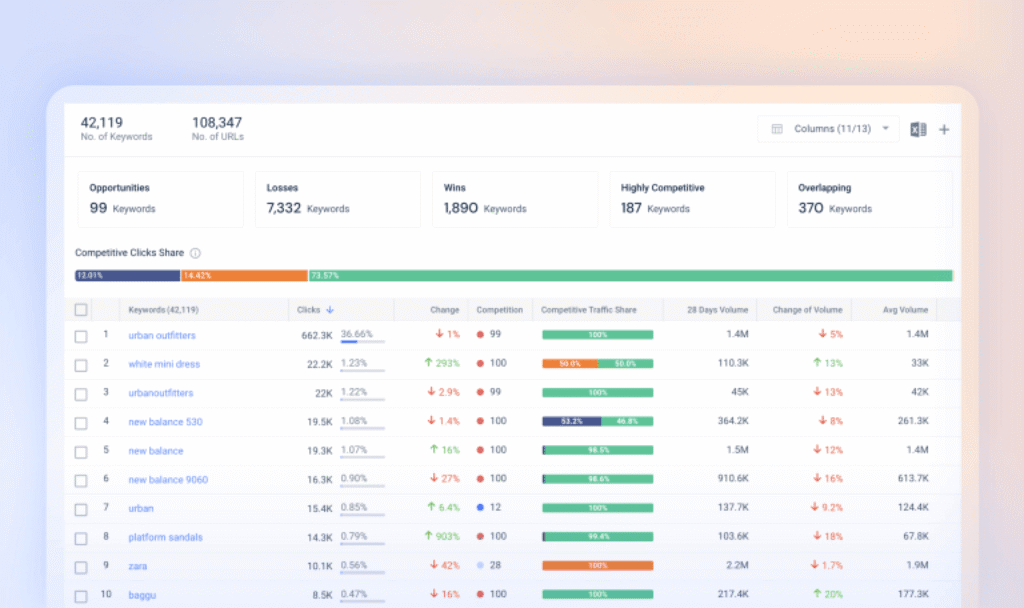
SimilarWeb is different from the more SEO-centric platforms on this list. It is best seen as a digital intelligence and market research platform that also includes useful SEO data. If you want to understand traffic flows, referral sources, audience behavior, app intelligence, and market share trends, SimilarWeb can provide insights that traditional SEO suites often do not cover as well.
Core features and capabilities
- Website traffic analysis – Shows estimated visits, engagement metrics, traffic sources, geography, and device breakdowns.
- Audience and market intelligence – Helps you understand audience overlap, behavior patterns, and competitive market positioning.
- Competitor benchmarking – Lets you compare multiple domains across traffic, growth trends, channels, and engagement.
- Keyword and search insights – Includes keyword opportunities, ranking insights, and search trend data, though not as deeply as dedicated SEO platforms.
- App and digital research data – Useful if your business also cares about app traffic, broader digital ecosystems, or channel diversification.
- Alerts and dashboard workflows – Supports ongoing monitoring for traffic shifts, market changes, and digital trends.
Ideal use cases
SimilarWeb is ideal when broader competitive intelligence matters as much as SEO. It suits:
- Marketing strategists comparing traffic trends and digital channel performance.
- Growth teams evaluating markets, industries, and audience behavior.
- Agencies and analysts that need benchmarking beyond organic rankings alone.
Strengths and limitations
Strengths:
- Strong website traffic and audience intelligence.
- Useful for market research and business benchmarking.
- Covers more than pure SEO workflows.
- Helpful for understanding multi-channel digital performance.
Limitations:
- Not as deep as Semrush or Ahrefs for technical SEO and backlink work.
- Can be expensive for smaller businesses.
- Best value often appears at higher tiers.
Pricing and plans
SimilarWeb pricing is built more around intelligence depth and user needs:
- Essentials – around $199 per month: entry-level access for smaller teams.
- Advanced – around $499 per month: more users, dashboards, and broader analysis tools.
- Enterprise – custom pricing: built for large organizations that need API access and deeper intelligence workflows.
SpyFu
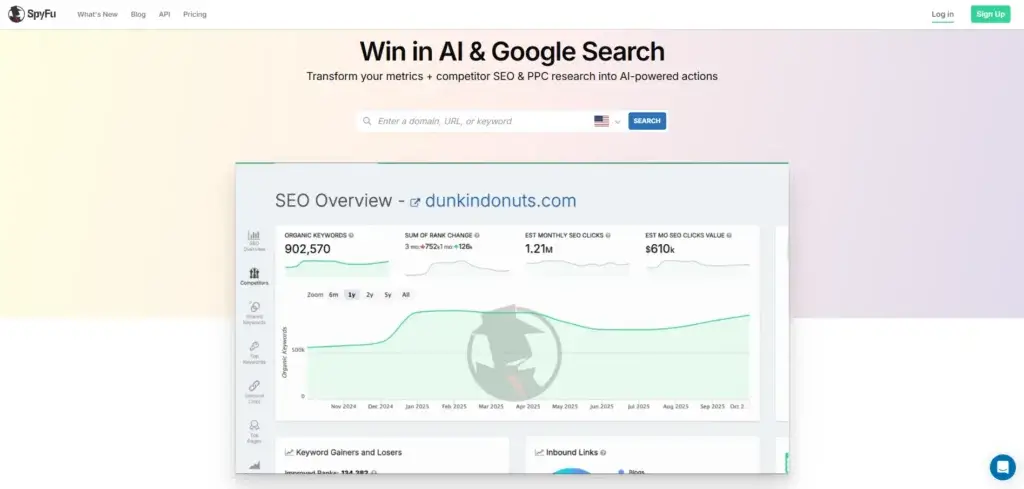
SpyFu is often the value pick in this category. It focuses heavily on competitor analysis, especially keyword overlap, PPC history, and domain-level search strategy. It may not have the polish or breadth of a top-tier enterprise suite, but for marketers who want fast insights into what competitors rank for or advertise on, SpyFu still offers a lot for the price.
Core features and capabilities
- Competitor keyword research – Shows organic keywords competitors rank for, paid keywords they buy, and terms where you can challenge them.
- PPC ad history – Useful for understanding competitor ad strategy, messaging, and historical paid search behavior.
- Keyword tracking and ranking insights – Helps you monitor ranking movement and spot opportunity areas.
- RivalFlow AI – SpyFu has introduced AI-assisted content optimization features aimed at improving pages against stronger competitors.
- SpyGPT and AI brand monitoring – Newer AI features extend the platform into AI-driven competitive workflows and monitoring.
- Exports and reporting – Supports reporting workflows that are especially useful for consultants and smaller agencies.
Ideal use cases
SpyFu is ideal when you want strong competitive intelligence without enterprise-level pricing. It suits:
- Small businesses researching competitors’ search strategy.
- PPC marketers who want to study ad history and keyword bidding behavior.
- Freelancers and lean agencies that need affordable SEO and PPC research.
Strengths and limitations
Strengths:
- Strong value for price.
- Very useful for competitor keyword and ad research.
- Historical data is helpful for trend analysis.
- Good option for smaller teams with limited budgets.
Limitations:
- Interface feels less modern than bigger competitors.
- Broader SEO depth is weaker than Semrush and Ahrefs.
- International coverage is not as strong as some alternatives.
Pricing and plans
SpyFu remains relatively affordable compared with the largest SEO suites:
- Basic – around $39 per month, or about $29 per month annually.
- Pro + AI – around $119 per month, or about $89 per month annually.
- Team/Agency – around $249 per month, or about $187 per month annually.
Surfer

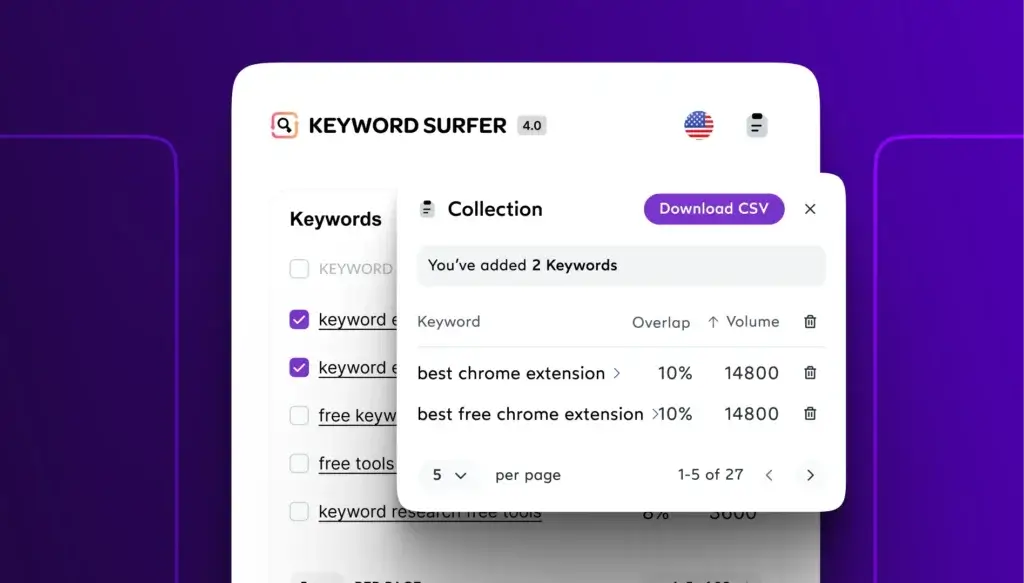
Surfer is more specialized than the other platforms in this list. It is not trying to be your full SEO command center. Instead, it focuses on helping you produce content that aligns closely with what currently ranks. That makes it especially appealing to content marketers, agencies, and editorial teams that already have separate tools for broader keyword research or link analysis but need stronger on-page execution.
Core features and capabilities
- Content Editor – Surfer’s flagship feature scores content in real time and recommends terms, headings, word count, and structure based on top-ranking pages.
- Keyword Research – Includes search volume, clustering, and related topic support, though not at the same breadth as the biggest SEO suites.
- Topical Map – Helps build topic clusters and content hubs for stronger topical authority.
- Content Audit – Reviews older pages and identifies where updates may improve rankings.
- Surfer AI – Adds AI-assisted content drafting, though article limits depend on your plan.
- AI Tracker – Supports visibility monitoring in AI-driven search contexts as an add-on.
Ideal use cases
Surfer is ideal when content production and on-page optimization are at the center of your SEO strategy. It suits:
- Content teams producing blog posts and landing pages at scale.
- Agencies optimizing client content based on SERP-driven recommendations.
- Solo marketers and editors who want clear guidance while writing.
Strengths and limitations
Strengths:
- Excellent real-time on-page optimization workflow.
- Useful for scaling content operations.
- Strong fit for editorial teams and SEO writers.
- Topical planning tools are helpful for content clustering.
Limitations:
- Not a full competitor intelligence suite.
- Keyword research is more limited than larger SEO platforms.
- Costs can rise with add-ons and higher content volume.
Pricing and plans
Surfer’s pricing is built around content workflows and article limits:
- Essential – around $99 per month, or about $79 per month annually.
- Scale – around $219 per month, or about $175 per month annually.
- Enterprise – custom pricing for larger teams with broader needs.
Moz
Moz remains one of the most recognizable names in SEO software. While it may not dominate conversations the way Semrush or Ahrefs do, it still offers a reliable and well-rounded toolkit for keyword research, rank tracking, site audits, and link analysis. Its biggest advantage is usability. If you want a platform that gives you solid SEO data without overwhelming your team with too many layers of complexity, Moz is still a strong option in 2026.
Core features and capabilities
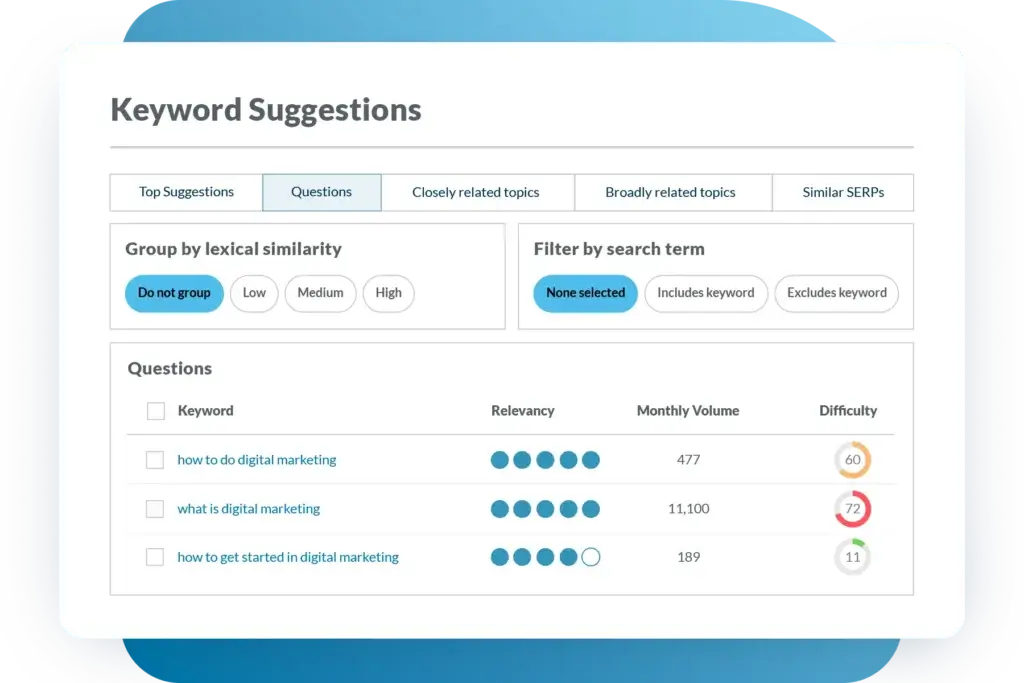
- Keyword research and suggestions – Moz helps you discover keyword opportunities, understand search demand, evaluate ranking difficulty, and prioritize terms based on opportunity and relevance.
- Rank tracking – Tracks your keyword performance over time so you can see progress, spot declines, and evaluate which pages or campaigns are improving visibility.
- Site Crawl and technical SEO monitoring – Moz scans your website for technical issues such as crawl problems, broken pages, redirect issues, and on-page weaknesses that may affect performance.
- Link Explorer – Provides backlink insights, referring domains, anchor text analysis, and competitive link research to support outreach and authority building.
- Trusted SEO metrics – Moz is especially known for metrics like Domain Authority, which many marketers still use as a simple benchmark for comparing website strength.
- AI-assisted recommendations – Moz has been adding AI-enhanced suggestions for keyword prioritization, rankings, and content opportunities, helping users move faster from analysis to action.
Ideal use cases
Moz is ideal when you want dependable SEO workflows with a cleaner learning curve. It suits:
- Small to mid-sized businesses that want a structured SEO platform without the complexity of larger suites.
- Marketing teams that need keyword tracking, technical audits, and backlink research in one place.
- Users who value simplicity and want clearer workflows for ongoing SEO management.
Strengths and limitations
Strengths:
- More approachable interface than some larger SEO platforms.
- Reliable all-around SEO toolkit covering the main essentials.
- Strong educational reputation and familiar SEO metrics.
- Good option for teams that want solid functionality without too much complexity.
Limitations:
- Less advanced than Semrush for broader marketing workflows.
- Backlink and competitor depth may feel lighter than Ahrefs for power users.
- Dashboard and support experience are not always as polished as top-tier competitors.
Pricing and plans
Moz Pro offers several pricing tiers depending on your scale and tracking needs:
- Starter – about $49 per month, or about $39 per month annually: suitable for solopreneurs and very small websites.
- Standard – about $99 per month, or about $79 per month annually: a practical entry point for ongoing SEO work.
- Medium – about $179 per month, or about $143 per month annually: better for growing teams with broader tracking needs.
- Large – about $299 per month, or about $239 per month annually: designed for larger campaigns with more keyword and crawl capacity.
- Enterprise – custom pricing: built for large organizations with more complex SEO requirements.
How to choose
What is the right SEO & competitive intelligence tool for your business
Selecting the right platform depends on what matters most to your workflow and goals. Consider these factors when evaluating your options:
Key criteria
- Scope of need – If you want a broad platform covering SEO, PPC, content, and AI visibility, Semrush is the most complete choice. If you mainly care about backlinks and organic SEO depth, Ahrefs may fit better.
- Content-first vs research-first workflow – Surfer is ideal if your biggest need is content optimization. SimilarWeb is better if broader market and traffic intelligence matter more.
- Budget – SpyFu offers the most affordable route into serious competitor analysis. Higher-end platforms usually justify their pricing with deeper datasets and broader workflows.
- Team type – Agencies may prefer Semrush or Ahrefs for reporting and research depth. Lean teams may get strong value from SpyFu or Surfer depending on priorities.
- AI readiness – If you want features around AI visibility and modern search adaptation, Semrush and Ahrefs currently show the strongest momentum.
Decision matrix
Below is a simplified comparison of the five tools. Use it as a quick reference before testing free plans or demos.
| Feature | Semrush | Ahrefs | SimilarWeb | SpyFu | Surfer |
| Primary Use | All-in-one SEO and marketing | Backlinks and SEO depth | Traffic and market intelligence | Competitor keywords and PPC | Content optimization |
| Key Strength | Broadest feature set | Backlink and SEO analysis | Digital benchmarking | Affordable competitor research | Real-time content scoring |
| Main Limitation | Can get expensive | Add-ons raise cost | Less technical SEO depth | Narrower overall scope | Not a full SEO suite |
| Best For | Agencies and marketing teams | SEO specialists | Analysts and strategists | Small businesses and freelancers | Content teams and editors |
| Entry-Level Price | About $139.95/month | About $29/month | About $199/month | About $39/month | About $99/month |
| Free Trial | Limited trial options | Limited free tools | Usually demo-led | Money-back guarantee | No real free tier |
Conclusion
The best SEO and competitive intelligence tool for your business depends on how wide or narrow your needs are. Semrush is the strongest choice if you want one platform for SEO, PPC, content, and AI visibility. Ahrefs is the better fit if you care most about backlinks, competitor SEO intelligence, and technical insight. SimilarWeb stands out when traffic intelligence and market benchmarking are core priorities. SpyFu is the value option for affordable competitor and PPC research. Surfer is the most specialized pick for teams focused on content quality and on-page SEO performance.
Your next step should be to define your top priority clearly. Is it backlink analysis, competitor keyword research, digital market intelligence, or content optimization? Once you know that, the right platform becomes much easier to choose. Free trials, demos, and pilot workflows can help you validate the fit before making a long-term commitment.
FAQs
What is an SEO & competitive intelligence tool?
An SEO and competitive intelligence tool helps you research keywords, analyze competitors, monitor rankings, study backlinks, optimize content, and identify traffic opportunities. Some platforms also include PPC insights and AI visibility tracking.
Which tool is best for all-in-one SEO management?
Semrush is generally the strongest all-in-one choice because it combines keyword research, competitor analysis, technical SEO, content tools, PPC data, and AI visibility features in one platform.
Which tool is best for backlinks?
Ahrefs is widely regarded as one of the best platforms for backlink analysis thanks to its strong link index, Site Explorer workflows, and competitor link intelligence.
Which tool is best for content optimization?
Surfer is one of the best choices for content optimization because its Content Editor gives live recommendations based on what is already ranking in search results.
Is SimilarWeb an SEO tool?
SimilarWeb includes useful SEO and keyword data, but it is better described as a digital intelligence and market research platform. It is strongest for traffic benchmarking, audience analysis, and broader competitor insights.
Is SpyFu good for small businesses?
Yes, SpyFu is a strong option for small businesses and freelancers because it offers valuable competitor keyword and PPC research at a lower price than many larger SEO platforms.
Do these tools include AI features?
Yes, most of them now include AI-related capabilities, especially Semrush, Ahrefs, SpyFu, and Surfer. These can include content support, AI search visibility tracking, and AI-assisted optimization workflows.
Can I use more than one SEO tool together?
Yes, many teams combine tools. For example, you might use Ahrefs for backlinks, Surfer for content optimization, and SimilarWeb for market intelligence. The best stack depends on your workflow and budget.
Which tool is best for agencies?
Semrush and Ahrefs are both strong for agencies. Semrush is better for broader digital marketing workflows, while Ahrefs is stronger for SEO depth and link-focused analysis.
How should I choose the right plan?
Start by estimating how many projects, keywords, users, and reports you actually need. Then compare those limits across plans, while also considering whether advanced AI features or API access are important for your workflow.