
Introduction
Choosing the best spend management software is no longer just about issuing corporate cards or collecting receipts. The strongest platforms now help you control employee purchases, automate approvals, manage vendor payments, enforce policies, track budgets, reconcile transactions, and give finance teams real-time visibility into where money is going.
For growing companies, this matters because spend can easily become fragmented. One team uses cards, another sends invoices to AP, employees submit reimbursements manually, travel is booked outside policy, and finance only sees the full picture after month-end. That delay creates risk, weakens budget control, and makes forecasting harder than it should be.
In this guide, you’ll find the best spend management software to consider in 2026: BILL, Ramp, Brex, Paylocity for Finance, Spendesk, Coupa, Slash, SAP Concur, Navan, and Mesh Payments. Each platform fits a different type of business, from startups that want fast card controls to enterprises that need procurement, supplier management, travel, compliance, and global spend visibility.
If you want one quick takeaway before diving in, here it is: BILL is the strongest overall choice for small and mid-sized businesses that want spend management connected to AP, AR, corporate cards, expense controls, reimbursements, and accounting workflows. BILL positions itself as a financial operations platform for creating and paying bills, sending invoices, managing expenses, controlling budgets, and accessing credit in one place. Ramp is one of the best all-around options for modern finance teams that want corporate cards, AP, expense automation, travel, procurement, and clean controls in one platform. Brex is excellent for startups, global companies, and finance teams that need scalable card programs, expense management, policy compliance, and multi-entity visibility. Paylocity for Finance is best for mid-market companies that want spend management connected to expense management, AP automation, corporate cards, guided procurement, and workforce planning. Coupa is the strongest enterprise choice for total spend management. Spendesk is a strong fit for European SMBs and mid-market teams. Slash is a strong option for high-spend online businesses that want business banking, corporate cards, unlimited virtual cards, cashback, and spend controls in one platform. SAP Concur is best for mature travel, expense, invoice, and compliance workflows. Navan is ideal for companies where travel and expense are closely connected. Mesh Payments is a strong option for global and SaaS-heavy teams that want real-time controls, virtual cards, and spend insights.
What to look for in spend management software
The right platform depends on how your company spends money. A card-first startup does not need the same system as a global enterprise with procurement, travel, suppliers, invoices, and multi-entity approvals.
- Corporate cards: Look for virtual cards, physical cards, limits, merchant locks, and card-level controls.
- Expense automation: Prioritize receipt capture, auto-matching, policy checks, and mobile submissions.
- Approval workflows: Make sure approvals can route by amount, department, vendor, budget, entity, or category.
- Accounts payable: Review bill pay, invoice capture, PO matching, vendor payments, and payment methods.
- Travel controls: If employees travel often, evaluate booking, policy enforcement, duty of care, and travel support.
- Procurement: Larger teams should look for purchase requests, intake workflows, vendor controls, and contracts.
- Accounting sync: Strong integrations with QuickBooks, Xero, NetSuite, Sage Intacct, Microsoft Dynamics, or SAP matter.
- Reporting: Real-time spend visibility, budgets, custom fields, and analytics help finance teams act before month-end.
Best Spend Management Software in 2026
BILL
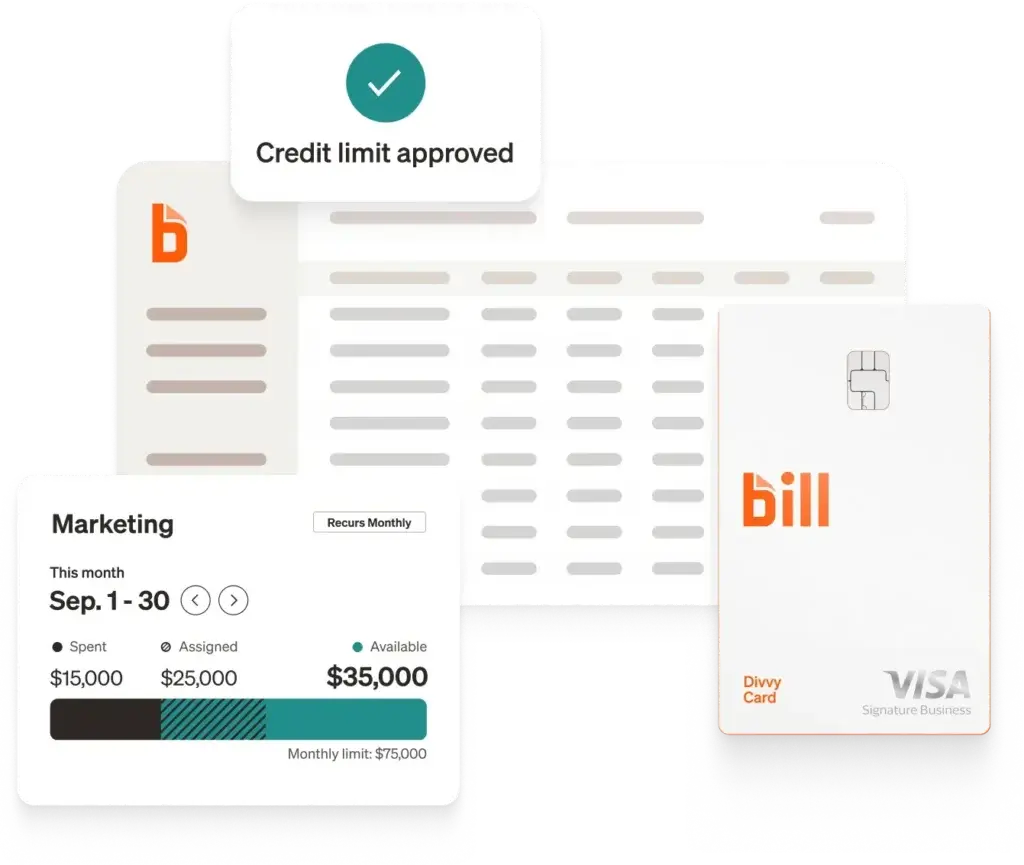
BILL is one of the strongest spend management software options for small and mid-sized businesses that want to control employee spend, automate expenses, manage AP, and improve real-time finance visibility from one connected platform.
The platform is especially compelling because BILL Spend & Expense brings together company cards, expense tracking, budgets, approvals, and spend controls. BILL also has native accounts payable and accounts receivable products, which gives finance teams a broader operating system for paying vendors, getting paid, and managing employee spend. BILL describes Spend & Expense as a solution that combines company cards, expense tracking, and controls in one platform.
BILL is also a natural fit if your business already uses BILL for AP or AR. Instead of managing corporate cards in one tool, bill payments in another, and reimbursements in spreadsheets, you can centralize more of your finance workflow under one vendor. That makes it useful for accounting teams that want cleaner month-end close, fewer manual entries, and stronger budget discipline.
For this article, BILL deserves the top position because it covers more than card-based spend. Ramp and Brex are excellent modern finance platforms, but BILL has a particularly strong advantage for SMBs that want spend management tied closely to AP, AR, accountant workflows, vendor payments, and back-office finance operations.
Key features
- Corporate cards through BILL Spend & Expense
- Physical and virtual cards for employees and vendors
- Real-time transaction tracking and budget visibility
- Expense approvals, receipt capture, and policy controls
- Employee reimbursements and mobile expense workflows
- Accounts payable automation for vendor bills and payments
- Accounts receivable tools for invoicing and collections
- Accounting integrations and transaction coding automation
Pros and cons
Pros
✅ Strong all-in-one finance platform for SMBs
✅ Combines spend, expense, AP, and AR workflows
✅ Free-to-use Spend & Expense software with corporate cards
✅ Good fit for accounting firms and businesses already using BILL
✅ Real-time controls help reduce overspending and manual expense work
Cons
❌ AP and AR products use separate paid pricing plans
❌ Corporate card eligibility and credit terms may vary by business
❌ Larger enterprises may need deeper procurement functionality
❌ Best value is strongest when you use multiple BILL finance products
Pricing
BILL Spend & Expense is available at no extra software cost, with no subscription or per-user software fees for the spend and expense product. BILL’s pricing page states that businesses can add BILL Spend & Expense without changing their AP and AR software bill, although standard card and payment fees may apply where relevant.
BILL Accounts Payable and BILL Accounts Receivable are priced separately through user-based plans. This is important when comparing BILL to tools like Ramp, Brex, or Mesh Payments. If you only need spend and expense management, BILL can be very cost-effective. If you also need AP and AR automation, you should evaluate the full BILL package based on users, payment volume, workflow complexity, and accounting requirements.
Who should use BILL?
BILL is best for small and mid-sized businesses that want spend management connected to the broader finance workflow. It is a particularly strong choice if you need corporate cards, expense automation, reimbursements, AP automation, vendor payments, invoicing, and AR visibility in one ecosystem.
It is also a strong option for accounting firms and businesses that rely heavily on bookkeepers, controllers, or outsourced finance teams. BILL’s accountant-focused model and finance workflow depth make it more than a simple card platform.
Ramp

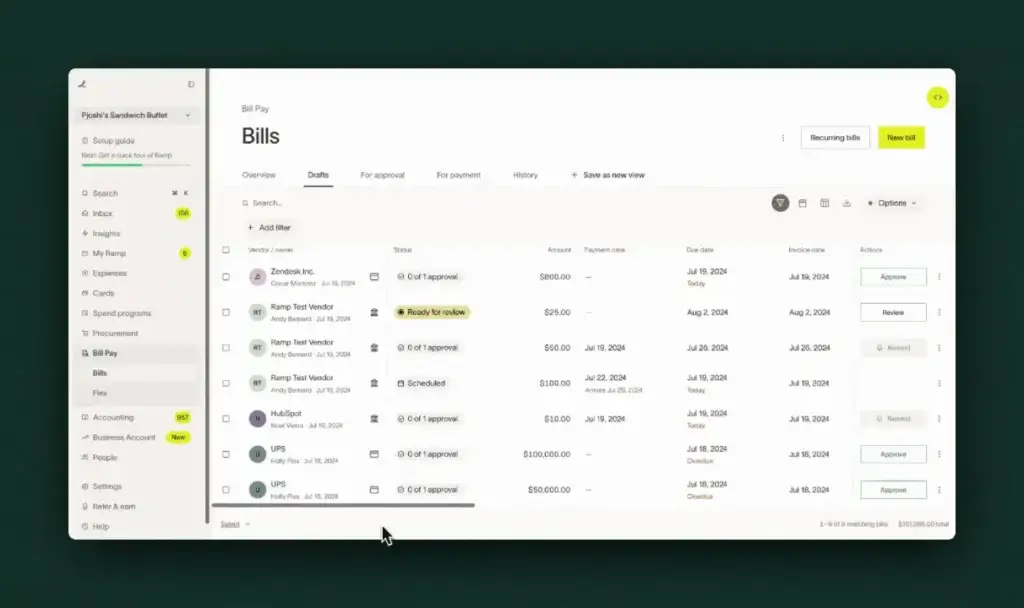
Ramp is one of the best spend management software platforms for companies that want a clean, finance-first system for controlling company spend. It combines corporate cards, expense management, bill pay, travel, procurement, reimbursements, vendor management, approvals, and reporting in one platform.
What makes Ramp especially strong is its balance between ease of use and finance control. Employees get a simpler way to spend, upload receipts, and complete expense tasks, while finance teams get approval workflows, card controls, automated receipt matching, vendor visibility, and accounting automation.
Ramp is particularly attractive for startups, small businesses, and mid-market companies that want to move away from spreadsheets, manual card tracking, and delayed expense reporting. It is also a strong fit when you want a platform that encourages spend reduction rather than just spend tracking.
Key features
- Corporate cards with spend limits and card controls
- Virtual cards for vendors, subscriptions, and employee spend
- Expense automation with receipt capture and matching
- Bill pay with approval workflows and invoice extraction
- Travel booking, travel policies, and expense workflows
- Procurement workflows for purchase requests and approvals
- Accounting integrations and automated reconciliation
Pros and cons
Pros
✅ Excellent all-around spend management platform
✅ Strong user experience for employees and finance teams
✅ Useful AP, travel, procurement, and card functionality
✅ Good fit for companies that want real-time spend control
Cons
❌ Some advanced features may require paid plans
❌ Not as procurement-heavy as Coupa for large enterprises
❌ International requirements should be reviewed carefully
❌ Best value appears when spend runs through Ramp workflows
Pricing
Ramp offers a free plan that includes core spend management capabilities, with paid plans available for companies that need more advanced features, controls, and scale. This makes Ramp easy to shortlist for smaller teams, but larger companies should evaluate which advanced modules and support levels they need.
Who should use Ramp?
Ramp is best for startups, small businesses, and mid-market companies that want one modern platform for corporate cards, expenses, bill pay, travel, approvals, and spend visibility. It is one of the strongest choices if your finance team wants fast adoption without giving up control.
Brex

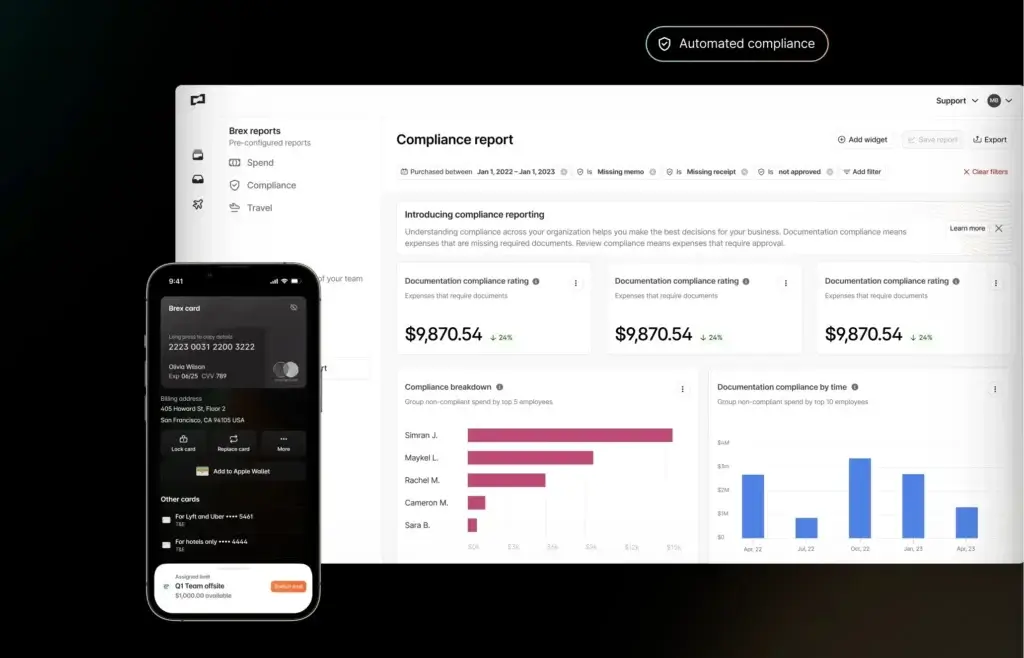
Brex is a strong spend management platform for companies that want corporate cards, expense management, travel, bill pay, budgets, and global finance controls in one system. It is especially popular with startups, technology companies, venture-backed businesses, and growing teams that need more flexible financial infrastructure than traditional bank cards.
Brex stands out for its policy depth. Finance teams can create rules for categories, roles, approvals, exceptions, and budgets. This matters when a company grows quickly and basic card limits are no longer enough to prevent out-of-policy spend.
Brex is also a good fit for businesses that need travel and expense workflows alongside card controls. Its Premium and Enterprise tiers are particularly relevant when you need multi-entity support, advanced approvals, AI-powered compliance insights, HRIS integrations, ERP integrations, and global operations.
Key features
- Corporate cards with spend limits and real-time controls
- Expense policies by category, role, user, and department
- Dynamic approval chains and spend limit approvals
- AI-powered compliance detection and audit insights
- Travel booking, travel rules, and expense automation
- Bill pay, vendor payments, and budget visibility
- ERP and HRIS integrations for growing companies
Pros and cons
Pros
✅ Strong fit for startups and scaling companies
✅ Advanced policy and approval controls
✅ Useful global and multi-entity capabilities
✅ Combines cards, expenses, travel, and bill pay
Cons
❌ Advanced controls require paid plans
❌ Eligibility and underwriting may not suit every business
❌ Less procurement-focused than Coupa
❌ Some smaller teams may not need the full platform depth
Pricing
Brex offers plans starting at $0 per user per month, with Premium listed at $12 per user per month for more advanced controls. Enterprise pricing is custom for larger and more complex organizations.
Who should use Brex?
Brex is best for startups, global businesses, and scaling companies that want corporate cards, expense automation, budgets, travel, bill pay, and advanced spend controls. It is especially useful when finance needs policy automation and multi-entity visibility without moving into a full enterprise procurement suite.
Paylocity for Finance (Formerly Airbase)
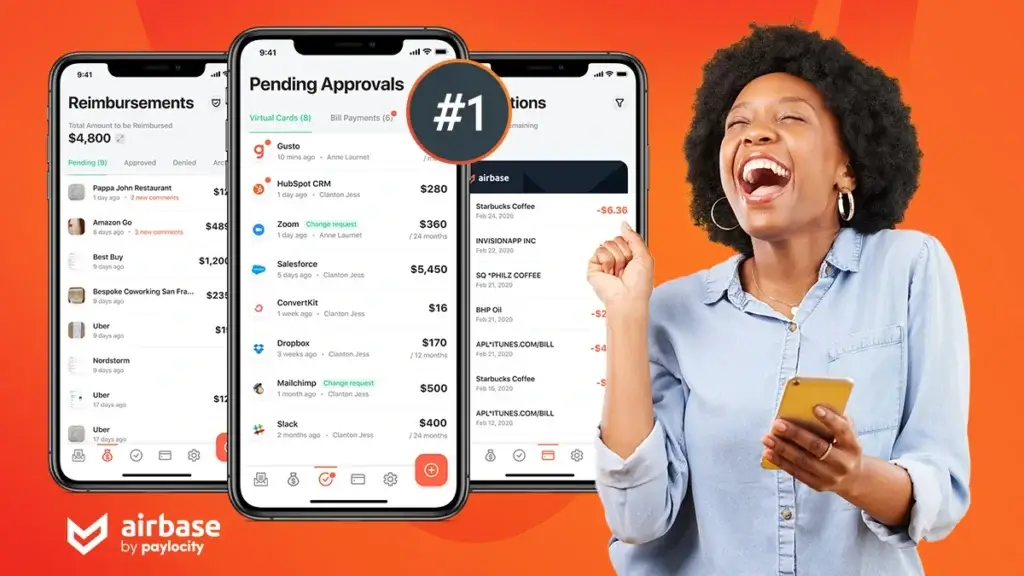
Paylocity for Finance is a spend management platform designed for companies that need stronger control across non-payroll spend. It brings together corporate cards, employee reimbursements, accounts payable, procurement workflows, approvals, and accounting automation.
The important update is that Airbase is now part of Paylocity. The current positioning connects Paylocity for Finance’s spend management capabilities with Paylocity’s broader finance and HCM platform. That makes it especially relevant for companies that want to connect employee data, finance workflows, payroll, and non-payroll spend more closely.
Paylocity for Finance is usually a better fit for mid-market companies than very small businesses. Its value is strongest when finance teams need to control purchases before they happen, route approvals properly, manage bill payments, and maintain cleaner audit trails across departments.
Key features
- Corporate cards with spend controls
- Expense reimbursements and approval workflows
- Accounts payable automation and bill payments
- Procurement intake and purchase approval workflows
- Budget controls and department-level visibility
- Accounting automation and ERP integrations
- Connection to Paylocity finance and HCM positioning
Pros and cons
Pros
✅ Strong fit for mid-market finance teams
✅ Combines AP, cards, procurement, and reimbursements
✅ Useful for controlling spend before purchase
✅ Relevant for companies using or evaluating Paylocity
Cons
❌ Pricing is typically custom
❌ Product positioning has changed under Paylocity
❌ More platform than small teams usually need
❌ Buyers should confirm current modules and implementation scope
Pricing
Paylocity for Finance pricing is generally quote-based and depends on company size, modules, users, entities, integrations, and workflow complexity. Because of the Paylocity connection, buyers should confirm the current package structure during evaluation.
Who should use Paylocity for Finance?
Paylocity for Finance is best for mid-market companies that want to manage corporate cards, AP automation, purchase requests, reimbursements, and spend approvals in one controlled finance workflow. It is a strong fit when your main challenge is not just tracking expenses, but preventing unmanaged spend before it reaches accounting.
Spendesk

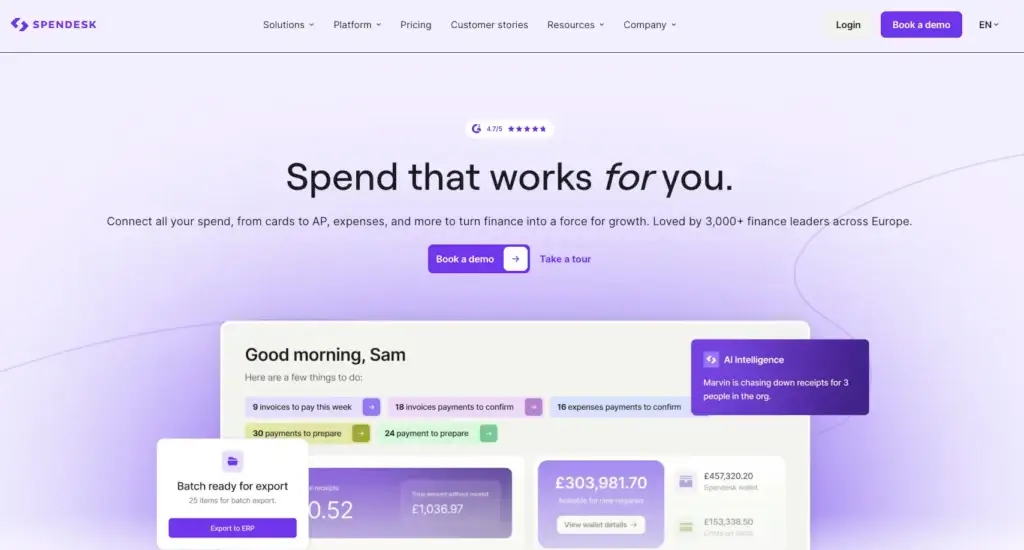
Spendesk is a spend management platform built for finance teams at companies with 50 to 1,000 employees — and the first European platform to combine corporate cards, procurement approvals, supplier invoice management, employee reimbursements, and spend analytics in a single procure-to-pay workflow. Purchase requests route through configurable multi-step approval chains before any transaction is authorised. “No PO, No Pay” blocks invoice payments without a matched purchase order. “Play by the Rules” automatically suspends card access when receipts are overdue, driving a 97–98% on-time receipt rate without manual chasing.
Spendesk is a strong choice for European finance teams that want more than a corporate card platform. It gives finance teams a way to control spend before, during, and after a purchase through approval workflows, card issuing controls, receipt enforcement, invoice matching, supplier payments, and accounting sync — all in one connected system. For companies operating across UK, German, or EEA entities, HMRC archiving, DATEV integration, and GoBD compliance are built into the standard work
Key features
- Physical and virtual prepaid Mastercards with per-transaction and per-employee limits
- Multi-step purchase approval workflows before spend is committed
- “No PO, No Pay” enforcement blocks invoice payments without a matched purchase order
- AI-powered invoice processing via OCR with three-way matching
- “Play by the Rules” automatic card suspension for overdue receipts
- Employee reimbursements submitted, approved, and paid via bank transfer in-app
- Supplier payments via SEPA and Faster Payments; 30+ currencies via Wise Platform
- HMRC-compliant archiving for UK entities; GoBD-compliant archiving for German companies
Pros and cons
Pros
✅ Spend controlled before it occurs — not reconciled after
✅ Full procure-to-pay workflow: cards, AP, procurement, and reimbursements in one platform
✅ European compliance built in: SEPA, HMRC, DATEV, GoBD
✅ No per-seat or per-card charges on any paid plan
Cons
❌ Subscription-based pricing — no free plan
❌ Purpose-built for 50–1,000 employee companies; may not suit very small teams
❌ European-market focus — limited compliance benefit for US-only companies
❌ No travel booking engine
Pricing
Spendesk offers plan-based pricing with no per-seat or per-card charges. Contact Spendesk for a quote tailored to your company’s size and entity structure.
Who should use Spendesk?
Spendesk is best for European mid-market finance teams at companies with 50 to 1,000 employees that want one connected platform for corporate cards, AP automation, procurement approvals, and accounting compliance. It is particularly strong for companies with entities in the EEA, UK, or Germany.
Coupa

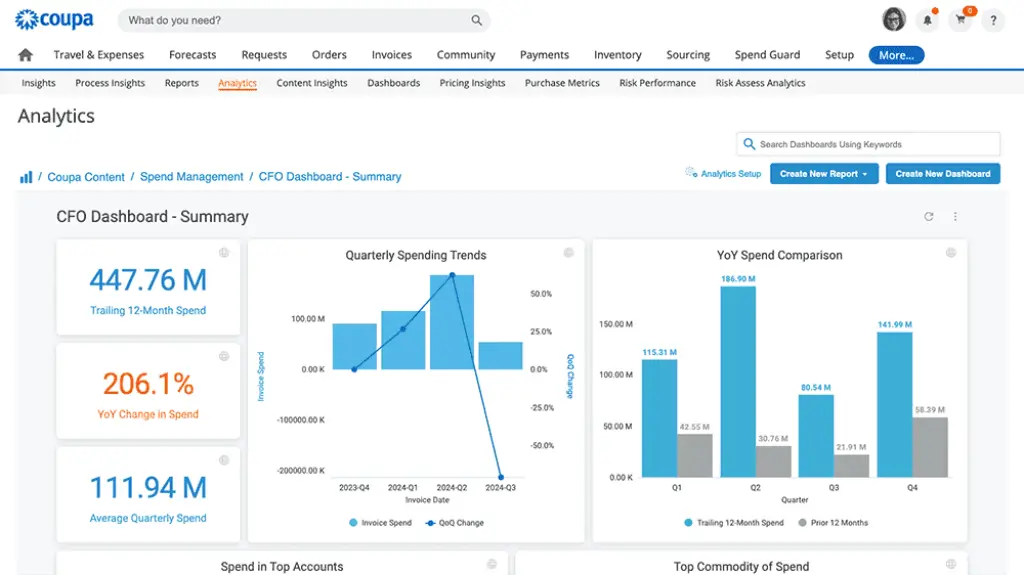
Coupa is the most enterprise-focused platform on this list. It is not just expense management software or a corporate card product. It is a total spend management platform built for procurement, sourcing, supplier management, invoicing, payments, contracts, risk, and spend analytics.
That makes Coupa best for large companies that need to manage spending across the full source-to-pay lifecycle. If your biggest issues involve decentralized purchasing, supplier risk, contract leakage, invoice exceptions, and lack of visibility across business units, Coupa is built for that level of complexity.
Coupa is also a strong option when finance and procurement teams need one shared system of control. Rather than focusing only on what employees spend after the fact, Coupa helps organizations guide buying decisions, enforce purchasing policies, automate workflows, and analyze spend patterns across suppliers and categories.
Key features
- Procure-to-pay workflows and guided buying
- Supplier management and supplier collaboration
- Invoice automation and AP controls
- Sourcing, contracts, and procurement analytics
- Payment management and cash visibility
- Risk, compliance, and policy enforcement
- AI-driven spend insights and enterprise reporting
Pros and cons
Pros
✅ Strongest enterprise spend management depth
✅ Excellent for procurement and supplier-heavy operations
✅ Broad source-to-pay and procure-to-pay coverage
✅ Strong visibility across enterprise spend categories
Cons
❌ Too complex for most small businesses
❌ Pricing is custom and enterprise-oriented
❌ Implementation requires planning and change management
❌ Not ideal if you only need simple card and expense tracking
Pricing
Coupa uses custom enterprise pricing. Cost depends on the modules, company size, procurement complexity, integrations, user needs, and implementation requirements. It should be evaluated as a strategic finance and procurement platform rather than a lightweight expense tool.
Who should use Coupa?
Coupa is best for enterprises and large mid-market companies that need total spend management across procurement, sourcing, suppliers, AP, payments, contracts, and analytics. It is the strongest option on this list when procurement governance and enterprise-wide spend visibility are the main priorities.
Slash

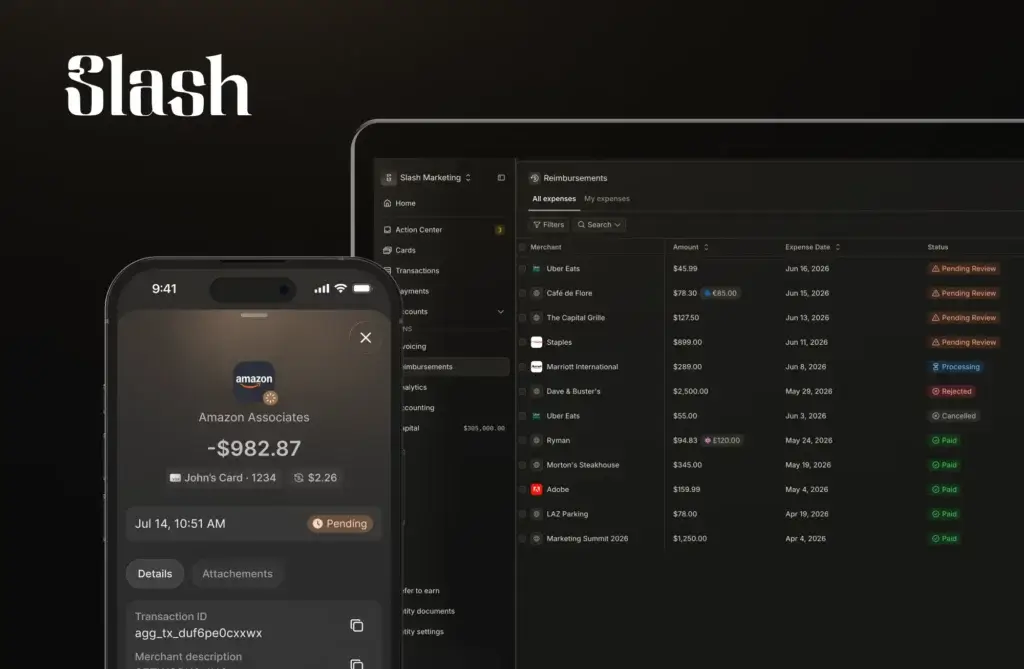
Slash is a modern fintech platform designed to help businesses manage banking, corporate cards, virtual cards, payments, treasury, and spend controls from one place. It’s built for companies that want deeper visibility into how their team spends money and how recurring payments affect their cash flow.
This is possible thanks to Slash’s all-in-one financial dashboard, which brings banking features together that would normally be found on separate pieces of software. Users can monitor the account to see how money moves across their accounts, cards, vendors, subscriptions, and treasury in real time.
Slash is especially useful for teams that rely heavily on card spend, vendor payments, subscriptions, contractor payments, or any other type of recurring money movement. Businesses can manage all this spending with the Slash Visa® Platinum Card, which comes with granular spend controls and up to 2% cashback rewards. Finance teams can issue physical or virtual Slash cards, each with their own spend limits, merchant transactions, and subaccounts. This level of oversight can help companies keep their financial activity more organized across different departments and entities.
Overall, the platform focuses on giving operators a greater level of control over their cash flow and finances. With business banking, treasury tools, global payment capabilities, cashback cards, expense management, and accounting integrations, Slash allows finance teams to manage their money with more structure and less manual effort.
Key features
- Business banking with checking and treasury features
- Corporate cards with up to 2% cashback
- Unlimited virtual cards for employee spend
- Spend controls and fraud detection tools
- Expense management and real-time cash flow visibility
- Accounting integrations with QuickBooks, Xero, NetSuite, and Sage
- ACH, wire, FedNow/RTP, and international payment options
- Working capital and business financing options through partners
- Stablecoin payments and built-in on/off ramps
Pros and cons
Pros
✅ Strong combination of business banking and corporate cards
✅ Unlimited virtual cards included in Free and Pro plans
✅ Up to 2% cashback can be attractive for high-spend companies
✅ Useful for ecommerce, agencies, startups, and online businesses
✅ Pro plan reduces transfer fees for companies moving money often
Cons
❌ Not a full procurement or enterprise-level spend management suite
❌ Less AP-focused than BILL, Ramp, Airbase, or Coupa
❌ Banking services are provided by partner banks, not Slash directly
❌ Buyers may want to review eligibility, cashback terms, and account requirements
Pricing
Slash offers a Free plan at $0 per month and a Pro plan at $25 per month. Both plans include unlimited virtual cards, while the Pro plan includes lower or waived fees for certain payment types, including same-day ACH, domestic wire transfers, and outgoing FedNow/RTP payments.
Who should use Slash?
Slash is best for startups, ecommerce brands, agencies, online businesses, and high-spend teams that want business banking, corporate cards, cashback, treasury tools, payments, accounting automation, and spend controls in one platform. It’s especially useful if your business needs to issue a high number of employee cards while keeping all transactions visible, controlled, and organized from a single dashboard.
SAP Concur


SAP Concur is one of the most established names in travel and expense management. It is a strong spend management option for companies that need structured expense reporting, managed travel, invoice automation, purchase requests, payment workflows, analytics, and compliance support.
SAP Concur is especially relevant for organizations where employee travel is a major spend category. It can connect travel booking, expense submission, approvals, reimbursements, invoice automation, and analytics in a more mature control environment.
The platform is not as simple as newer card-first tools like Ramp or Brex. However, that is also part of its value. SAP Concur is built for organizations with formal policies, distributed workforces, travel requirements, approval chains, and compliance expectations.
Key features
- Expense management and employee reimbursements
- Travel booking with policy controls
- Receipt capture and expense matching
- Invoice automation and AP visibility
- Purchase requests and spend approvals
- Analytics and spend intelligence products
- Payment solutions and ERP integrations
Pros and cons
Pros
✅ Excellent for travel and expense management
✅ Strong fit for mature compliance workflows
✅ Broad SAP ecosystem and integration options
✅ Useful invoice, request, analytics, and payment products
Cons
❌ Can feel complex for small businesses
❌ Pricing is usually sales-led and package-based
❌ User experience may feel heavier than newer platforms
❌ Best fit is structured T&E and enterprise spend control
Pricing
SAP Concur pricing is typically customized based on products, company size, configuration, modules, and implementation needs. Buyers should evaluate Concur Expense, Concur Travel, Concur Invoice, Concur Request, analytics, and support options based on the workflows they need to automate.
Who should use SAP Concur?
SAP Concur is best for mid-sized and enterprise companies that need travel, expense, invoice, request, analytics, and compliance workflows in a mature spend management environment. It is especially useful for companies with significant travel spend, formal policies, and distributed approvers.
Navan

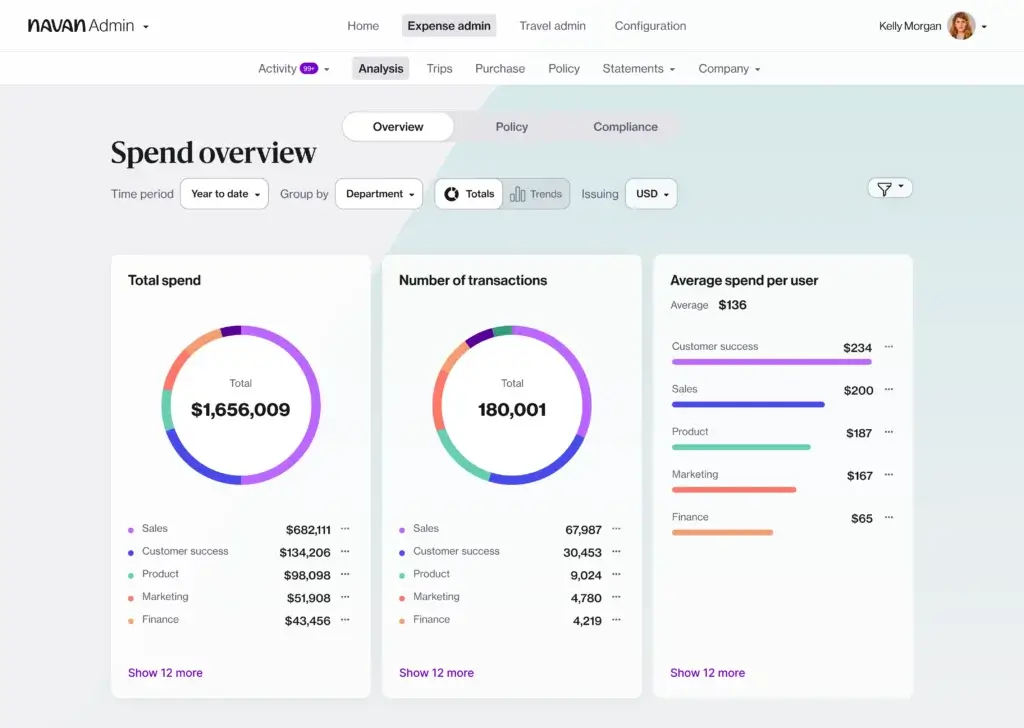
Navan is a strong choice for companies where business travel and expense management are tightly connected. It combines corporate travel booking, expense management, policy controls, reimbursements, cards, analytics, and mobile workflows in one platform.
Where Navan stands out is the travel experience. Employees can book flights, hotels, cars, and trains while finance teams maintain policy control. This reduces the common problem of unmanaged travel bookings, missing receipts, and delayed expense submissions.
Navan is less of a procurement suite than Coupa and less AP-focused than Paylocity for Finance. Its strongest value is for companies that want to make travel easier for employees while giving finance better visibility into travel and expense spend.
Key features
- Corporate travel booking for flights, hotels, cars, and trains
- Expense management and reimbursement workflows
- Policy controls for travel and expense compliance
- Corporate cards and bring-your-own-card options
- Mobile app for travelers and expense users
- Travel analytics and spend visibility
- Support for companies with growing travel programs
Pros and cons
Pros
✅ Excellent travel and expense combination
✅ Strong mobile experience for employees
✅ Useful for companies with frequent business travel
✅ Transparent entry pricing for smaller companies
Cons
❌ Less procurement-focused than Coupa
❌ Not primarily an AP automation platform
❌ Enterprise pricing requires a sales conversation
❌ Best value depends on travel volume and adoption
Pricing
Navan states that companies with 300 or fewer employees can use Navan Travel without a trip limit. Navan Expense is free for the first 5 monthly expensing users, then $15 per user per month. Companies with more than 300 employees should request a demo for enterprise pricing.
Who should use Navan?
Navan is best for companies that want travel booking and expense management in one platform. It is especially useful when business travel is frequent, employees need a better booking experience, and finance needs real-time visibility into travel-related spend.
Mesh Payments

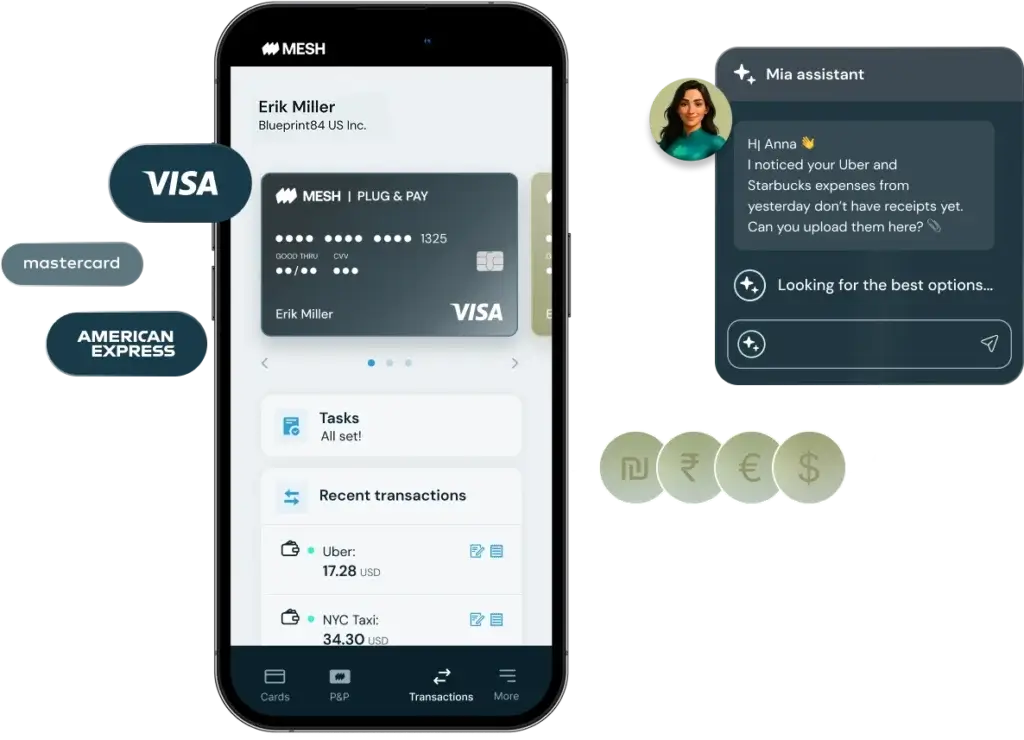
Mesh Payments is a spend management platform built around real-time visibility, flexible controls, virtual cards, travel and expense management, reimbursements, SaaS spend, and accounting automation. It is a strong option for companies that want more control over vendor payments, subscriptions, travel spend, and decentralized employee purchases.
Mesh is especially relevant for companies with SaaS-heavy spend. Finance teams can use virtual cards, vendor locks, spend limits, real-time alerts, and insights to better understand recurring subscriptions, duplicate tools, and department-level spending.
Another strength is global spend management. Mesh offers capabilities around global spend, multi-currency needs, local cards, travel, reimbursements, and ERP sync, making it a good option for companies with international operations or distributed teams.
Key features
- Virtual corporate cards and physical card options
- Spend limits, vendor locks, and real-time alerts
- Travel and expense management workflows
- SaaS spend management and optimization insights
- Receipt collection, matching, and reconciliation
- Role-based permissions and real-time reporting
- Global spend capabilities and ERP synchronization
Pros and cons
Pros
✅ Strong virtual card and spend control features
✅ Useful for SaaS subscriptions and vendor spend
✅ Good real-time visibility for finance teams
✅ Attractive option for global and distributed companies
Cons
❌ Cashback eligibility depends on spend requirements
❌ May not replace a full enterprise procurement suite
❌ Buyers should confirm country and card availability
❌ Best fit is companies with meaningful card or SaaS spend
Pricing
Mesh states that its platform is free, with unlimited cards and unlimited users. Cashback eligibility applies to eligible payments, with a minimum $50K monthly spend requirement. Companies should confirm the latest terms, payment eligibility, and geographic availability during evaluation.
Who should use Mesh Payments?
Mesh Payments is best for companies that want spend controls, virtual cards, SaaS spend visibility, travel and expense workflows, reimbursements, and real-time reporting. It is especially strong for SaaS-heavy and global teams that want better visibility into every payment before month-end.
Feature comparison table
| Software | Best For | Biggest Strength | Main Tradeoff |
| BILL | SMBs and accounting teams that need connected AP, AR, spend, and expense workflows | Corporate cards, expense controls, AP, AR, reimbursements, budgets, and accounting automation in one platform | AP and AR use separate paid plans, and the best value comes when you use multiple BILL products |
| Ramp | Startups, SMBs, and mid-market finance teams | Cards, expenses, AP, travel, procurement, and controls in one clean platform | Some advanced features may require paid plans |
| Brex | Startups, global companies, and scaling teams | Advanced card controls, policies, budgets, travel, and multi-entity support | Eligibility and advanced features should be reviewed carefully |
| Paylocity for Finance | Mid-market companies with structured finance workflows | AP, procurement, cards, reimbursements, and approvals in one system | Pricing is custom and current Paylocity packaging should be confirmed |
| Spendesk | European SMBs and mid-market teams that need pre-spend controls | Corporate cards, virtual cards, procure-to-pay, invoice management, and budgets in one platform | Less ideal for companies outside supported markets or teams that only need basic expense tracking |
| Coupa | Enterprise procurement and finance teams | Total spend management across procurement, suppliers, invoicing, payments, and analytics | Too complex for basic expense or card management |
| Slash | High-spend startups, ecommerce brands, agencies, and online businesses | Business banking, corporate cards, cashback, treasury, and spend controls in one platform | Less suited for deep AP automation, procurement, and enterprise supplier management |
| SAP Concur | Mature travel, expense, and compliance workflows | Travel, expense, invoice, request, analytics, and payment products | Can feel heavier than newer card-first platforms |
| Navan | Companies with frequent business travel | Unified travel booking and expense management | Less focused on procurement and AP automation |
| Mesh Payments | Global and SaaS-heavy companies | Virtual cards, spend controls, SaaS insights, travel, and real-time reporting | Cashback and availability depend on eligibility and geography |
How to choose the best spend management software
The best spend management software depends on your company’s spending pattern. Before comparing demos, define which spend categories create the most friction for your finance team.
If card spend is your main issue, prioritize BILL, Ramp, Brex, or Mesh Payments. These platforms are strong for real-time controls, employee cards, virtual cards, receipt matching, and accounting automation.
If travel is your biggest spend category, Navan and SAP Concur should be high on your shortlist. Navan is better for a modern travel and expense experience, while SAP Concur is stronger for mature organizations with formal policies, invoice workflows, and enterprise compliance needs.
If procurement and supplier management are central to your workflow, Coupa is the strongest enterprise platform. Paylocity for Finance is also a strong option for mid-market companies that need purchase intake, AP automation, card spend, and reimbursements without moving into a full enterprise procurement suite.
Best overall choice
BILL is the best overall choice for most modern finance teams because it combines a clean user experience with strong spend controls, corporate cards, AP, travel, procurement, and reporting. It is broad enough for growing companies, but easier to adopt than enterprise procurement platforms.
Best for startups and global growth
Brex is a strong choice if you run a startup, venture-backed company, or global team that needs scalable card programs, advanced policies, travel controls, budgets, and multi-entity visibility.
Best for enterprise procurement
Coupa is the strongest choice for enterprises that need deep procurement, supplier management, sourcing, invoicing, payments, risk, and analytics in one total spend management platform.
Best for European spend control
Spendesk is a strong fit for European SMBs and mid-market companies that want to control spend before it happens. It combines cards, expense claims, invoice management, procurement workflows, approval rules, budgets, and accounting integrations in one spend management platform.
Best for travel and expense
Navan is best for companies that want travel booking and expense management in one modern workflow. SAP Concur is better when your organization needs more mature travel, expense, invoice, request, and compliance infrastructure.
Final thoughts
Spend management software has become a core finance system for companies that want better control over how money leaves the business. The right platform can reduce manual expense work, prevent out-of-policy purchases, speed up reconciliation, improve budget visibility, and help finance teams close the books with fewer surprises.
For most startups and growing companies, BILL, Ramp, Spendesk and Brex will be the most natural starting points. They offer modern corporate cards, strong controls, expense automation, and practical finance workflows.
For mid-market companies that need stronger AP, procurement, and reimbursement controls, Paylocity for Finance is a strong option to evaluate, especially in the context of Paylocity’s broader finance and HCM direction.
For enterprises, Coupa and SAP Concur are the more mature choices. Coupa is stronger for total spend management and procurement. SAP Concur is stronger for established travel, expense, invoice, and compliance workflows.
For travel-heavy companies, Navan deserves serious consideration. For global or SaaS-heavy companies that want flexible card controls and spend insights, Mesh Payments is also a compelling choice.
The best approach is to shortlist based on your dominant spend workflow: cards, travel, AP, procurement, SaaS, reimbursements, or global operations. Once you know where your finance team loses the most time and control, the right platform becomes much easier to identify.
FAQs
What is spend management software?
Spend management software helps companies control, track, approve, and analyze business spending. It can include corporate cards, expense management, bill pay, procurement, travel, reimbursements, vendor payments, budgets, and accounting automation.
What is the best spend management software in 2026?
BILL is the best overall choice for many modern finance teams because it combines corporate cards, expenses, AP, travel, procurement, approvals, and real-time spend visibility. Brex, Coupa, SAP Concur, Navan, Paylocity for Finance, and Mesh Payments are stronger for specific needs.
Is spend management software the same as expense management software?
No. Expense management usually focuses on employee expenses, receipts, reimbursements, and approvals. Spend management is broader and can include corporate cards, AP automation, procurement, vendor payments, travel, budgets, and spend analytics.
Which spend management software is best for startups?
BILL and Brex are two of the best options for startups. BILL is strong for ease of use, cards, AP, and controls, while Brex is strong for venture-backed companies, scalable card programs, multi-entity needs, and global spend workflows.
Which spend management software is best for enterprise companies?
Coupa is best for enterprise total spend management, especially when procurement, suppliers, sourcing, invoicing, payments, and analytics are central. SAP Concur is best for enterprises with mature travel, expense, invoice, and compliance workflows.
Which spend management platform is best for travel?
Navan is one of the best options for companies that want travel booking and expense management in one modern platform. SAP Concur is better for larger organizations with formal travel policies, compliance workflows, and SAP ecosystem needs.
Does spend management software replace accounting software?
No. Spend management software usually works alongside accounting or ERP systems. It controls spend before and during the transaction, then syncs approved transactions, bills, receipts, reimbursements, and payment data into the accounting system.
What features should I look for in spend management software?
Look for corporate cards, virtual cards, approval workflows, expense automation, receipt matching, AP automation, procurement controls, travel management, budget tracking, accounting integrations, real-time reporting, and policy enforcement.
Is BILL better than Brex?
BILL is often better for companies that want a simple, finance-friendly platform with strong controls, AP, travel, procurement, and automation. Brex is often better for startups and global companies that need advanced policies, budgets, travel rules, and multi-entity support.
How much does spend management software cost?
Pricing varies widely. Some platforms offer free plans or free core card programs, while advanced features may be priced per user or by quote. Enterprise platforms like Coupa and SAP Concur usually use custom pricing based on modules, users, integrations, and implementation scope.