
Navan is a modern travel and expense management platform built for companies that want to control business travel, employee expenses, corporate cards, and reimbursement workflows from one place. It is not traditional accounting software like QuickBooks, Xero, Sage Intacct, or NetSuite. Instead, Navan helps you manage the travel and spend activity that happens before transactions reach your accounting system.
That distinction matters. If you need a general ledger, payroll system, tax engine, or full ERP, Navan will not replace your accounting software. But if your finance team is struggling with scattered travel bookings, manual expense reports, missing receipts, disconnected corporate cards, delayed reimbursements, and weak policy enforcement, Navan can become a valuable operating layer between employees, travel vendors, corporate cards, and your accounting platform.
In this Navan review, you will learn where Navan fits in your finance stack, what it does well, what limitations to consider, how pricing works, and how it compares with alternatives like SAP Concur, Ramp, Brex, TravelPerk, Expensify, and BILL Spend & Expense.
Navan Overview and Where It Fits in Your Finance Stack
What Navan Does for Businesses
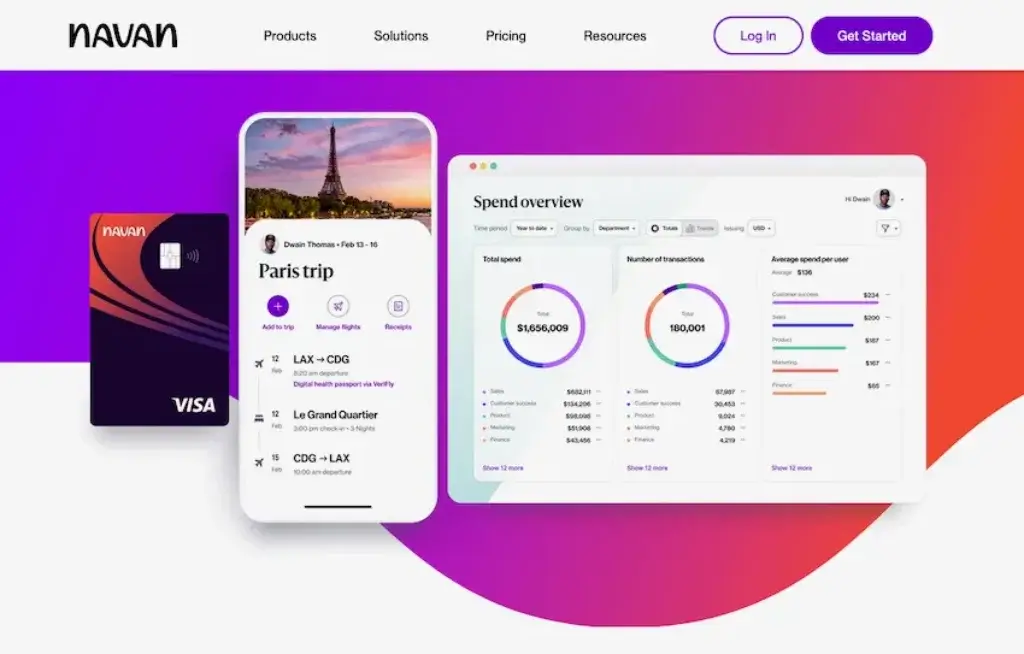
Navan is best described as an all-in-one travel, expense, corporate card, and payments platform. It brings together business travel booking, travel policy controls, expense automation, corporate card management, receipt capture, approvals, reimbursements, accounting sync, reporting, and duty-of-care visibility.
For many companies, Navan acts as the operational layer for travel and employee spend. Employees use it to book trips, submit expenses, capture receipts, manage card transactions, and request reimbursement. Finance and travel managers use it to enforce policies, monitor budgets, review exceptions, reconcile transactions, and export clean data into accounting systems.
This makes Navan especially relevant for companies that want more control over travel and expense activity before it becomes a finance cleanup problem. Instead of discovering policy violations after a trip is complete, Navan helps you apply rules during booking, payment, and expense submission.
Navan vs Traditional Accounting Software
Navan is not a replacement for accounting software. It does not manage your full chart of accounts, tax filing, financial statements, payroll, or statutory reporting. You will still need software such as QuickBooks, Xero, Sage Intacct, NetSuite, Microsoft Dynamics 365, or another accounting platform to manage your official books.
Where Navan adds value is in the workflows that feed accounting. It helps you capture travel bookings, automate receipt collection, match transactions, enforce expense policies, approve reimbursements, manage corporate card spend, and sync expense data into the general ledger.
That makes Navan a strong choice if your current travel and expense workflow is slowed down by manual reports, missing documentation, delayed approvals, unclear policy enforcement, and disconnected card transactions.
Software specification
Key Features of Navan
Corporate Travel Booking and Policy Controls
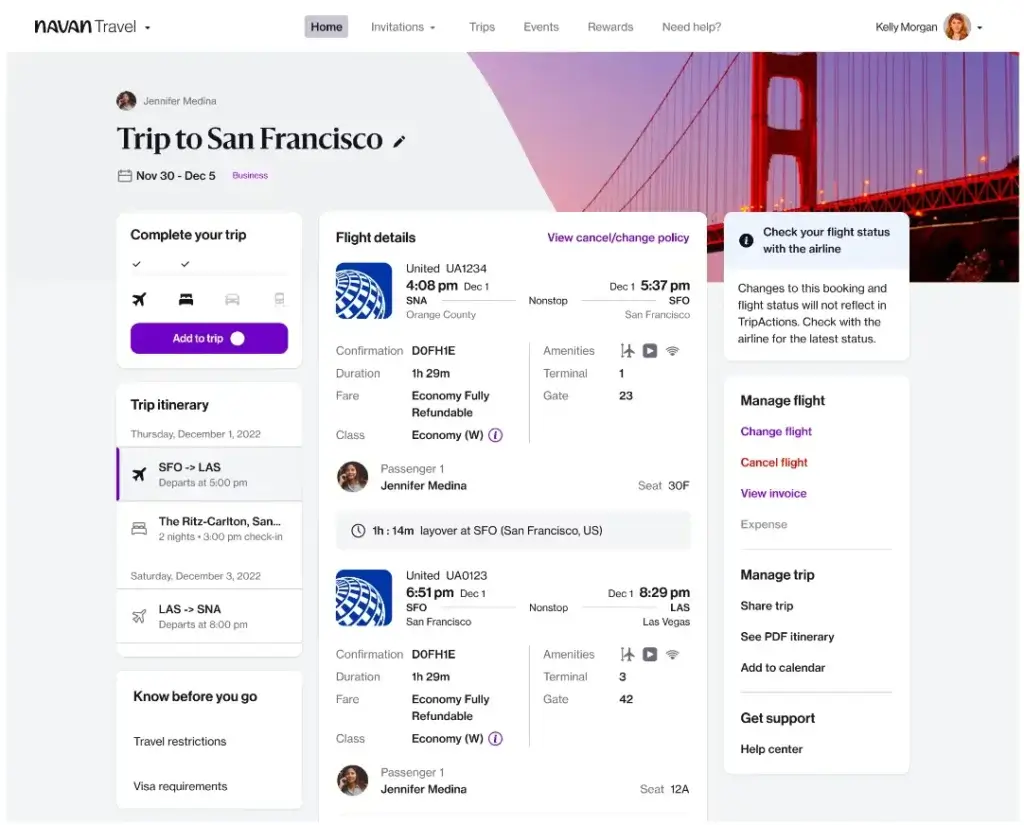
Navan’s strongest area is business travel management. The platform helps employees book flights, hotels, cars, and rail while giving travel managers control over policies, approval rules, preferred suppliers, negotiated rates, and traveler visibility.
This is useful if your company wants employees to book travel independently without losing control over cost, compliance, and duty-of-care requirements. Employees get a consumer-style booking experience, while admins can apply company rules in the background.
Key strengths in this area include:
- Centralized booking for flights, hotels, cars, and rail
- Built-in travel policies and approval workflows
- Traveler visibility, reporting, and duty-of-care support
Expense Management and Receipt Automation
Navan Expense helps reduce the friction of traditional expense reporting. Employees can submit expenses, capture receipts, and manage transactions through web and mobile workflows. Finance teams can use policies, approvals, audit rules, and accounting integrations to reduce manual review.
The main advantage is that Navan connects travel, payments, and expenses together. When a trip is booked through Navan and paid with a Navan card or connected corporate card, the platform can create a cleaner expense trail with fewer manual steps.
This is especially helpful for companies where travel expenses are a major source of month-end delays. Instead of waiting for employees to rebuild trip details after the fact, Navan gives finance teams more structured transaction data from the start.
Corporate Cards and Payments
Navan offers corporate card and payment capabilities that help companies connect travel bookings, card transactions, and expense workflows. Businesses can use Navan cards or connect eligible existing corporate cards through Navan Connect, depending on their setup.
This matters because travel and expense management becomes more efficient when the payment method is part of the workflow. Finance teams can track spending in real time, apply policies, reduce reimbursement delays, and match transactions with receipts more easily.
Navan’s card and payments layer is particularly useful for companies that want to reduce out-of-pocket employee spending. When employees can pay with controlled corporate cards, finance teams get better visibility and employees avoid waiting for reimbursement.
Travel Policy Enforcement and Approval Workflows
Navan helps companies enforce travel and expense policies before and after spending occurs. Travel policies can guide booking choices, while expense policies can flag missing receipts, out-of-policy purchases, or transactions requiring additional review.
This gives finance and travel teams a more proactive control model. Instead of reviewing every issue manually at the end of the month, your team can create rules that steer employees toward compliant decisions earlier in the process.
Approval workflows can also help managers review exceptions, budget-sensitive trips, high-cost purchases, or reimbursement requests before finance needs to intervene.
Reporting, Analytics, and Spend Visibility
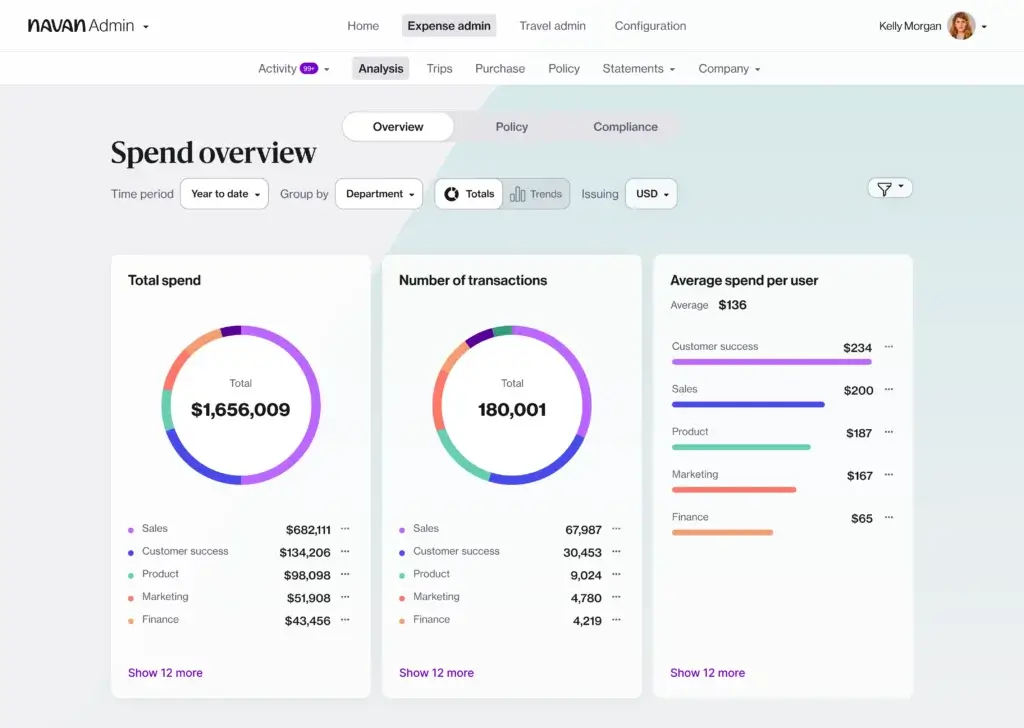
Navan gives finance and travel leaders reporting tools for travel spend, employee expenses, card activity, vendor usage, policy compliance, and booking behavior. This helps companies understand where money is going and where policy adjustments may be needed.
For finance teams, the value is not only visibility. Better reporting can support budgeting, forecasting, vendor negotiations, department-level cost control, and month-end reconciliation.
For travel managers, analytics can also reveal booking trends, traveler behavior, missed savings opportunities, and policy exceptions that may need additional communication.
Accounting Automation and ERP Integrations
Navan integrates with accounting and ERP systems to help automate expense coding, data exports, reconciliation, and financial reporting. Its integration ecosystem includes tools such as NetSuite, Sage Intacct, Xero, QuickBooks, Workday, and other finance systems.
This is one of the most important benefits for accounting teams. Navan is not trying to replace your accounting system. It is trying to reduce the manual work required before expense and travel data reaches that system.
If your team spends too much time chasing receipts, correcting expense categories, matching card transactions, or exporting CSV files, Navan’s accounting integrations can help speed up close and improve data quality.
Setup and Uses
Setup and Onboarding
Navan setup typically involves configuring company travel policies, connecting payment methods, defining expense rules, inviting employees, connecting HRIS data, setting approval workflows, and integrating accounting software.
The onboarding experience will depend on company size and complexity. Smaller companies may be able to adopt Navan quickly, especially if they need travel booking and basic expense workflows. Larger companies with global entities, advanced approval chains, security requirements, and ERP integrations should expect more configuration.
Managing Business Travel Day to Day
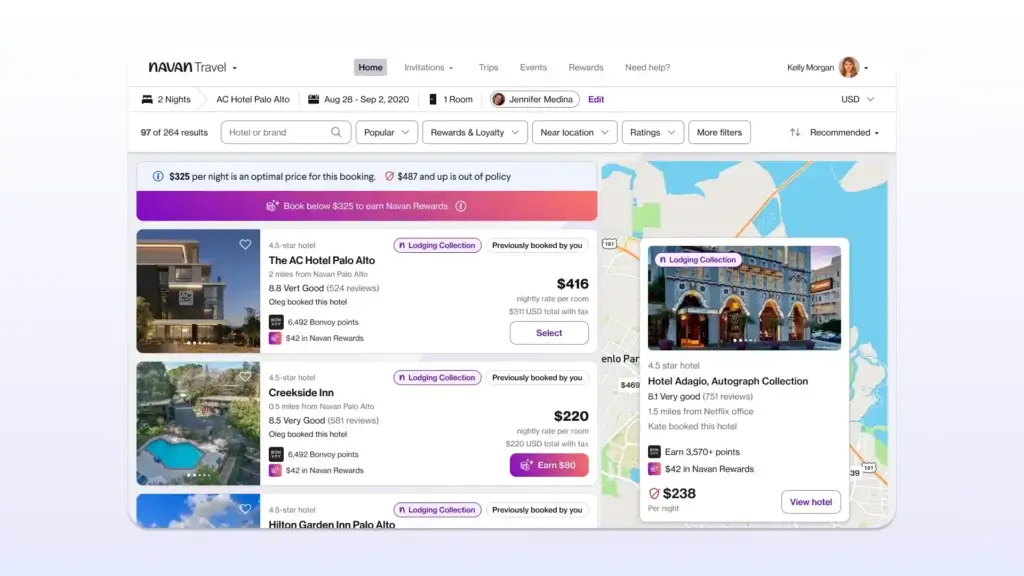
For daily travel management, Navan works best when employees use it as the main place to search, book, modify, and manage business trips. This gives the company better visibility into booked travel and helps reduce bookings made outside policy.
Employees benefit from a more guided travel experience, while finance and travel teams get clearer data on spend, approvals, traveler location, and policy compliance.
Navan is particularly useful for companies with frequent sales travel, customer success travel, field operations, recruiting travel, conferences, executive travel, and distributed teams.
Managing Expenses and Reimbursements
Navan helps employees manage expenses through receipt capture, card transaction matching, mobile submissions, and approval workflows. Finance teams can review exceptions, export approved expenses, and reduce manual follow-ups.
For reimbursements, Navan gives companies a more structured way to approve and process out-of-pocket expenses. This is useful when employees still need to pay personally for certain purchases, local transportation, meals, or other business costs.
The more your company standardizes travel booking and card usage inside Navan, the more value you should get from the expense automation layer.
Using Navan Across Global and Distributed Teams
Navan is especially relevant for companies with employees across multiple locations. Travel, expense, and policy workflows can quickly become inconsistent when teams operate across offices, regions, and currencies.
With Navan, companies can centralize travel and expense rules while still supporting different teams, departments, cost centers, and approval paths. This can create a more consistent process for employees and a more reliable data flow for finance.
If you operate across multiple countries, you should evaluate local card availability, reimbursement workflows, currency handling, tax documentation, and accounting export requirements during the demo process.
Pros and Cons
A balanced view: what you’ll love and what to consider
Navan is a strong platform for companies that want to modernize travel and expense management, but it is not the right fit for every business. Its biggest strengths are travel booking, expense automation, policy controls, corporate card workflows, employee experience, and accounting integrations. Its main limitations are that it is not a full accounting platform, and companies with very complex procurement or AP workflows may need additional tools.
That makes Navan a very good choice for travel-heavy companies that want better control and automation, but less ideal for businesses that only need basic bookkeeping, full AP automation, or a card-first spend platform without a major travel component.
✅ Benefits of Navan
Strong Control Over Travel Before Spend Happens
Navan helps companies manage travel decisions before they turn into expenses. You can set travel policies, approval rules, preferred booking options, card controls, and expense rules that guide employees as they book and spend.
This is a major advantage over traditional expense reporting, where finance teams often discover travel policy issues only after the employee has already completed the trip.
Modern Employee Experience
Navan is designed to reduce friction for employees. Travelers can search and book trips, manage changes, capture receipts, and submit expenses through a more modern interface than many legacy travel and expense systems.
That matters because travel and expense tools only work when employees actually use them. If the platform is too slow or confusing, employees may book outside the system, delay expense submissions, or create more work for finance.
Useful Combination of Travel, Expenses, Cards, and Payments
One of Navan’s strongest qualities is that it combines several workflows that are often handled by separate systems. Instead of using one tool for travel booking, another for expense reports, another for cards, and another for reimbursement, Navan can centralize more of that work.
This can reduce tool sprawl, improve data consistency, and give finance leaders a clearer view of travel and employee spend across departments, locations, and payment types.
Good Fit for Travel-Heavy and Scaling Companies
Navan is especially relevant for companies where travel is frequent enough to require structured management. Sales teams, consulting teams, field teams, recruiting teams, executive teams, and customer-facing organizations can benefit from a more controlled travel and expense process.
For scaling companies, Navan can help formalize travel and expense operations without forcing employees into a slow legacy process.
❌ Potential Drawbacks and Limitations
Not a full accounting platform
The biggest limitation is that Navan does not replace your accounting platform. You still need a general ledger, financial reporting system, and accounting process outside Navan.
That is not necessarily a weakness if you understand where Navan fits. It is a travel and expense operating layer, not your official financial system of record.
Best Value Depends on Travel and Expense Volume
Navan is most compelling when your company has enough travel and employee expense activity to justify a dedicated platform. If your team rarely travels and only submits a small number of expenses each month, a simpler expense app or card platform may be enough.
Before adopting Navan, map your current travel volume, reimbursement volume, card usage, policy exceptions, and accounting cleanup time. The stronger these pain points are, the stronger Navan’s value case becomes.
Not as Specialized as Dedicated AP or Procurement Platforms
Navan can support employee spend and payment workflows, but it is not primarily a deep AP automation or procurement platform. If your main challenge is supplier onboarding, purchase orders, invoice approvals, tax documentation, or global vendor payments, you may need a more AP-focused tool.
For example, Tipalti is usually stronger for global payables and supplier tax workflows, while Coupa is stronger for enterprise procurement depth. Ramp may be stronger if your core priority is broad spend management, AP automation, procurement, and card controls rather than travel-first workflows.
Enterprise Setup Can Require Careful Configuration
Companies with global entities, advanced HRIS structures, complex approval chains, and strict accounting requirements should evaluate Navan carefully during implementation planning.
The platform can support sophisticated workflows, but the value depends on correct setup. Travel policies, card rules, employee data, accounting dimensions, cost centers, and approval logic all need to be mapped properly.
Pricing and Plans
How much does Navan cost?
Navan pricing is relatively transparent for smaller companies, but larger organizations need custom pricing. The true cost depends on company size, travel program complexity, expense usage, payment setup, and required integrations.
Navan Travel
Navan Travel is available at no cost for companies with 300 or fewer employees. These companies can use Navan for business travel booking without paying a platform subscription for travel booking itself.
This makes Navan attractive for small and mid-sized companies that want to centralize travel management without immediately committing to a large travel management contract.
Navan Expense
Navan Expense is free for the first 5 monthly expensing users. After that, Navan lists the price at $15 per active expense user per month for companies with 300 or fewer employees.
This model is useful because companies are charged based on users who submit transactions into Navan Expense, rather than simply every employee in the organization.
Companies With More Than 300 Employees
Companies with more than 300 employees are directed to request a demo for custom pricing. This is common in the travel and expense category because larger companies often need custom policy design, integrations, support, international workflows, security review, and implementation services.
If your company is above this threshold, pricing should be evaluated based on total travel volume, expense volume, entities, countries, support requirements, and integration complexity.
Pricing Takeaway
Navan can be cost-effective for smaller companies that want centralized travel booking and only need expense management for a limited number of users. The pricing becomes more strategic for larger organizations because the business case depends on travel savings, reduced manual expense work, faster reconciliation, and better policy compliance.
If your team only needs a basic expense tracker, Navan may be more platform than you need. If travel and expense management are major operational workflows, Navan’s pricing can be easier to justify.
Pricing Comparison Table
| Plan or Product | Pricing | Best For |
| Navan Travel | Free for companies with 300 or fewer employees | Small and mid-sized companies that want centralized business travel booking |
| Navan Expense | Free for first 5 monthly expensing users, then $15/user/month | Teams that need expense reporting, receipt capture, approvals, and accounting sync |
| Companies over 300 employees | Custom pricing | Larger companies with more complex travel, expense, integrations, and support needs |
| Navan payments and cards | Depends on setup and eligibility | Companies that want card transactions connected to travel and expense workflows |
Business Fit
Who Should Use Navan?
Companies With Frequent Business Travel
Navan is best suited for companies where travel is frequent enough to require real structure. If employees often book flights, hotels, cars, rail, conferences, and customer visits, Navan can help centralize the process and reduce unmanaged travel spend.
This is where Navan is strongest. It gives employees a booking experience that is easier to use than many legacy systems while giving travel and finance teams more control.
Finance Teams Managing Travel and Expense Together
Navan is also a strong fit for finance teams that want travel booking and expense reporting to work together. When bookings, payments, receipts, approvals, and accounting exports live in one workflow, month-end reconciliation can become cleaner.
This is especially useful if your current process depends on employees booking travel outside the system, submitting expenses late, and manually attaching receipts after the trip.
Scaling Companies That Need Better Policy Compliance
As companies grow, informal travel and expense policies often stop working. Employees may use different booking sites, managers may approve inconsistently, and finance teams may spend too much time cleaning up avoidable issues.
Navan helps scaling companies move from informal expense control to structured policy automation. This can improve visibility without making the process feel overly bureaucratic.
Who Might Need Something Else
If you primarily need bookkeeping, payroll, tax filing, full financial reporting, or inventory accounting, Navan is not the right standalone solution. You should choose accounting software first and then evaluate Navan as a travel and expense management layer.
If your biggest challenge is complex supplier payments, invoice automation, purchase orders, or procurement approvals, tools like Tipalti, Coupa, Airbase, Ramp, or BILL may be more relevant. If your company mainly needs a traditional enterprise travel platform, SAP Concur or Amex GBT Egencia may also be worth comparing.
Alternatives
Navan Alternatives & Competitors
Navan competes across several related categories, including business travel management, expense management, corporate cards, payments, and spend control. The best alternative depends on whether your company cares most about travel booking, expense automation, corporate cards, AP automation, or enterprise travel service.
Comparison Table: Navan vs Competitors
| Feature | Navan | SAP Concur | Ramp | TravelPerk |
| Primary focus | Travel, expense, corporate cards, and payments | Enterprise travel, expense, and invoice workflows | Spend management, cards, AP, procurement, and travel | Business travel management and travel services |
| Travel booking | Very strong | Very strong for enterprise programs | Available, but finance-platform focused | Very strong travel-first platform |
| Expense management | Strong when tied to travel and cards | Strong, mature enterprise expense workflows | Strong card, expense, and AP automation | Available, but travel is the core focus |
| Corporate cards | Navan cards and connected card workflows | Not the main focus | Very strong corporate card program | Less card-centered than Navan or Ramp |
| Best fit | Travel-heavy companies wanting unified T&E | Large enterprises with mature travel programs | Finance teams wanting broad spend automation | Companies prioritizing flexible travel management |
SAP Concur: SAP Concur is one of the most established travel and expense platforms. It is often a strong fit for large enterprises with mature travel programs, complex approval structures, and SAP ecosystem needs. Navan may feel more modern and easier for employees, while Concur may appeal more to companies that prioritize enterprise familiarity and deep administrative structure.
You can read our SAP Concur Invoice review for more context.
Ramp: Ramp is a strong alternative if your priority is broader spend management, corporate cards, AP automation, procurement, reimbursements, and finance operations. Navan is stronger when travel booking is central to your workflow, while Ramp may be better if your company wants a finance-first spend platform.
You can compare it further in our Ramp review.
Brex: Brex is another close competitor in corporate cards, expenses, travel, bill pay, and business accounts. It is especially relevant for startups, scaling companies, and global businesses that want spend management and finance automation. Navan is usually more travel-first, while Brex is broader across cards, accounts, and operational finance.
You can read our Brex review for a deeper comparison.
TravelPerk: TravelPerk is a strong travel management alternative for companies that want a flexible business travel booking platform. It may be appealing if your company’s main need is travel booking, traveler support, and travel policy management rather than a combined travel, card, and expense system.
Expensify: Expensify is a simpler expense management option for companies that need receipt capture, reimbursements, card transactions, and expense reports without a full travel management platform. It may be easier for small teams, but Navan is stronger when travel booking and duty-of-care visibility matter.
BILL Spend & Expense: BILL Spend & Expense can be a logical alternative for SMBs that already use BILL for AP or want card-based expense controls connected to a familiar payments ecosystem. Navan is the better fit when travel booking and travel policy management are core requirements.
You can also read our BILL review.
Integrations and Ecosystem
Connect Navan to your favourite apps
Accounting and ERP Integrations
Navan integrates with accounting and ERP systems to help finance teams export expense data, automate coding, and reduce reconciliation work. Common integrations include NetSuite, Sage Intacct, Xero, QuickBooks, and other finance systems.
This is important because Navan is most valuable when it connects cleanly with your system of record. If your accounting team has to re-enter or heavily clean Navan data manually, you lose much of the efficiency advantage.
HRIS and User Management Integrations
Navan can connect with HRIS and identity systems to help automate user provisioning, employee updates, departments, cost centers, roles, and access controls. Examples include tools such as Workday, Rippling, BambooHR, HiBob, Gusto, Microsoft Entra ID, Okta, and Google Workspace.
This is useful for growing teams where employee changes happen often. When new employees join, move departments, or leave the company, connected systems can help keep travel access, policy assignment, and expense permissions more accurate.
Card, Payment, and Expense Ecosystem
Navan supports payment-related integrations with card networks and corporate card programs, including Visa, Mastercard, American Express, Brex, and other connected card workflows.
This gives companies more flexibility. You may be able to use Navan cards, connect existing cards, or use integrations to improve transaction imports, matching, and reconciliation.
Duty-of-Care and Traveler Safety Integrations
Navan also supports integrations for duty-of-care and traveler safety workflows. These can help companies monitor travel risk, keep employees informed, and support emergency response planning.
This is especially relevant for companies with international travel, executive travel, field teams, or employees who travel to higher-risk locations.
Security and Compliance
Security and Compliance in Navan
Security is a critical part of evaluating Navan because the platform touches sensitive employee data, travel itineraries, corporate card activity, payment workflows, reimbursement data, vendor information, and accounting integrations.
Compliance Certifications
Navan states that it maintains a formal security program and references major compliance frameworks and certifications, including SOC 1, SOC 2, ISO 27001, and PCI DSS.
These are important signals for finance and IT teams because they relate to financial controls, security processes, information security management, and payment card data handling.
Authentication, Permissions, and Access Control
Navan supports enterprise security workflows such as single sign-on and identity integrations. This helps IT teams manage secure access and reduce the risk of unmanaged user accounts.
From a finance perspective, permissions matter because travel and expense systems include sensitive financial data. You need clear controls over who can book travel, approve expenses, manage policies, issue cards, export accounting data, and view reports.
Auditability and Financial Controls
Navan can help create a more auditable travel and expense process. You can track bookings, approvals, receipts, policy exceptions, card activity, reimbursement activity, and accounting exports.
For accounting teams, this matters because expense automation is not only about speed. It is also about having a reliable record of who spent money, why it was approved, what documentation was attached, and how the transaction was coded.
Vendor Review Considerations
Before adopting Navan, larger companies should still complete their normal vendor review process. This may include reviewing security documentation, data processing terms, privacy policies, card program terms, integration permissions, support commitments, and regional compliance needs.
This is especially important if your company operates globally, handles regulated data, or requires formal IT, finance, and legal approval before adding financial systems.
Conclusion
Final Thoughts
Navan is one of the strongest modern platforms for companies that want to manage business travel and expenses in one connected workflow. It is especially compelling for travel-heavy teams that need better visibility, stronger policy enforcement, cleaner expense data, and a smoother employee experience.
Its biggest strength is the way it connects travel booking, payments, expenses, card activity, and accounting sync. Employees can book and spend within policy, finance teams can reduce manual reviews, and accounting teams can receive cleaner transaction data for reconciliation.
The main limitation is that Navan is not a full accounting or AP automation platform. You still need a general ledger or ERP, and you may still need a dedicated AP or procurement tool if supplier payments, purchase orders, and invoice automation are your main pain points.
Overall, Navan is a strong choice if your business travel and expense process has become too fragmented. It is less ideal if you only need basic expense tracking or if travel is a minor part of your spend profile. For companies with frequent travel, distributed teams, and growing finance operations, Navan can be a practical way to improve control without making the employee experience unnecessarily difficult.
Have more questions?