
Introduction
Choosing the best travel expense management software is no longer just about collecting receipts after a business trip. The strongest platforms now help you book travel, enforce travel policies, manage approvals, issue corporate cards, capture receipts, reimburse employees, reconcile expenses, and give finance teams clearer visibility into travel spend before month-end.
For businesses with frequent employee travel, this matters because travel and expense workflows can become fragmented very quickly. Employees may book flights outside policy, managers may approve expenses too late, receipts may go missing, and finance teams may only discover budget issues after the trip is complete.
Travel expense management software solves this by connecting business travel, expense reporting, policy control, and accounting workflows in one place. The right platform helps employees book trips faster while giving finance leaders stronger control over budgets, compliance, and reimbursement cycles.
In this guide, you’ll find the best travel expense management software to consider in 2026: Navan, SAP Concur, Perk, Ramp, Brex, Spendesk, Expensify, and Zoho Expense. Each platform fits a different type of business, from startups that want simple travel and expense automation to enterprises that need global policy enforcement, duty of care, compliance, and ERP integrations.
If you want one quick takeaway before diving in, here it is: Navan is one of the strongest all-around choices for businesses that want travel booking and expense management in one modern platform. SAP Concur is best for large organizations with mature travel, expense, invoice, and compliance workflows. Perk, formerly TravelPerk, is a strong fit for companies that want flexible travel management with growing spend capabilities. Ramp is excellent for finance teams that want travel and expense connected to corporate cards, AP, procurement, and accounting automation. Spendesk is a strong option for European and mid-market teams that want travel expenses connected with cards, approvals, reimbursements, and spend control. Brex is best for scaling companies that need global card controls, travel, events, and expense policies. Expensify is ideal for receipt-heavy teams that want fast expense reporting and simpler travel workflows. Zoho Expense is the best value option for companies that want affordable travel and expense automation with strong policy controls.
What to look for in travel expense management software
The right platform depends on how your company travels. A 30-person startup booking a few trips each month does not need the same system as a global company managing multiple entities, country-specific policies, VAT, per diem rules, and duty-of-care requirements.
- Travel booking: Look for flights, hotels, cars, trains, approvals, and in-policy booking controls.
- Expense reporting: Prioritize receipt capture, mobile submissions, mileage, per diems, and reimbursements.
- Policy enforcement: Make sure rules can apply by user, department, role, location, budget, or trip type.
- Approval workflows: Review whether approvals can route by amount, manager, cost center, entity, or project.
- Corporate cards: Consider virtual cards, physical cards, merchant locks, limits, and card reconciliation.
- Accounting sync: Check integrations with QuickBooks, Xero, NetSuite, Sage Intacct, Microsoft Dynamics, or SAP.
- Global support: Evaluate multi-currency, VAT, local tax rules, traveler support, and international availability.
- Reporting: Choose software that gives finance real-time visibility into travel spend, policy exceptions, and budgets.
Best Travel Expense Management Software in 2026
Navan

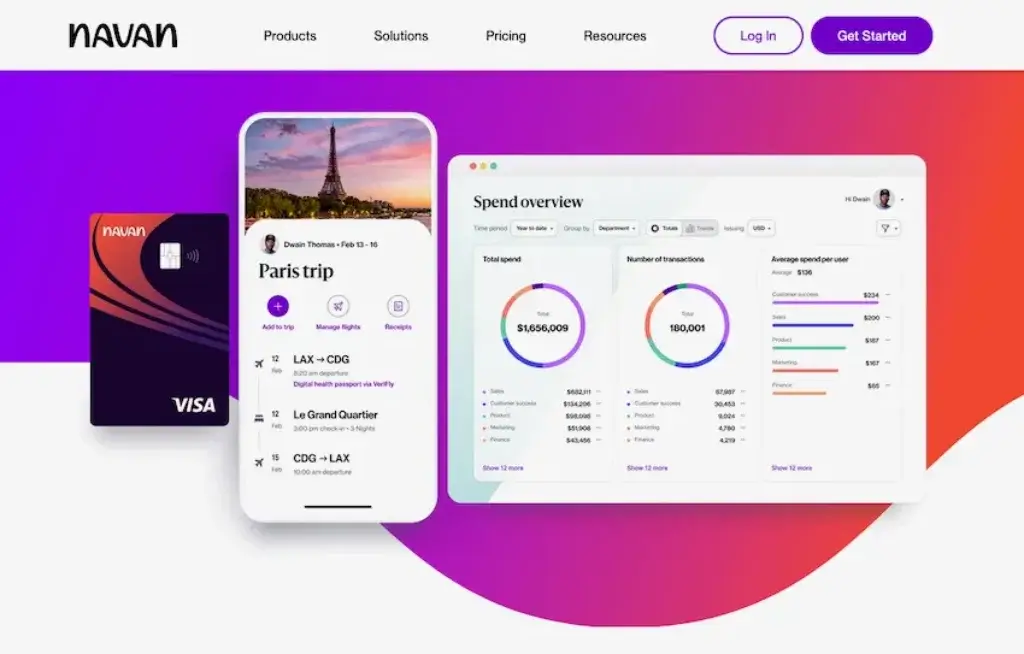
Navan is one of the best travel expense management platforms for businesses that want to connect employee travel and expense workflows in one system. It combines corporate travel booking, expense management, corporate cards, policy controls, reimbursements, analytics, and mobile workflows.
What makes Navan stand out is its travel-first experience. Employees can book flights, hotels, rental cars, and trains while finance teams maintain control over budgets and policies. This reduces the common issue of employees booking outside approved tools and submitting expenses later with missing context.
Navan is especially strong for companies where business travel is frequent and expense management needs to happen close to the transaction. Instead of asking employees to book in one system, pay in another, and submit expenses in a third, Navan brings the process together.
Key features
- Corporate travel booking for flights, hotels, cars, and trains
- Expense management with receipt capture and reimbursement workflows
- Corporate cards and bring-your-own-card options
- Travel policy enforcement and approval workflows
- Mobile app for travelers, managers, and finance teams
- Real-time travel and expense analytics
- Integrations with finance, HR, and accounting systems
Pros and cons
Pros
✅ Excellent combination of travel booking and expense management
✅ Strong user experience for employees and finance teams
✅ Good fit for companies with frequent business travel
✅ Transparent entry pricing for smaller companies
Cons
❌ Less focused on procurement than Coupa-style platforms
❌ Not primarily an accounts payable automation tool
❌ Enterprise pricing requires a sales conversation
❌ Best value depends on travel adoption across the company
Pricing
Navan states that companies with 300 or fewer employees can book unlimited trips with Navan Travel. Navan Expense is free for the first 5 monthly expensing users, then $15 per user per month. Companies with more than 300 employees need to request enterprise pricing.
Who should use Navan?
Navan is best for businesses that want to manage travel booking and expenses on a single modern platform. It is especially useful for companies with frequent travel, distributed employees, and finance teams that want stronger visibility into travel-related spend.
SAP Concur


SAP Concur is one of the most established travel and expense management platforms in the market. It is a strong fit for mid-sized and enterprise organizations that need structured workflows for travel booking, expense reporting, invoice processing, policy compliance, approvals, and reporting.
Unlike newer card-first platforms, SAP Concur is built for organizations with formal policies, global teams, multiple departments, complex approvals, and higher compliance requirements. It can support employee-initiated travel and expense activity in one connected system while giving finance teams better visibility into spend.
SAP Concur is especially useful when travel, expense, and invoice workflows need to connect with broader finance systems. It is often shortlisted by businesses that need mature controls, mobile access, reporting, ERP integrations, and scalable processes for a large workforce.
Key features
- Travel booking and travel policy management
- Expense reporting with receipt capture and approvals
- Invoice automation and AP-related workflows
- Mobile access for employees and approvers
- AI-supported expense reporting and auditing
- Spend reporting and near real-time visibility
- Integrations with SAP and other ERP systems
Pros and cons
Pros
✅ Strong enterprise travel and expense functionality
✅ Excellent for mature compliance and audit workflows
✅ Broad ecosystem for travel, invoice, mobile, and reporting
✅ Scales well for large and distributed organizations
Cons
❌ Can feel heavy for small businesses
❌ Pricing is quote-based rather than fully transparent
❌ Implementation may require planning and training
❌ User experience can feel less modern than newer platforms
Pricing
SAP Concur uses quote-based pricing. Buyers typically need to request pricing based on the products they need, such as Travel & Expense, Expense, or Invoice, as well as company size and monthly expense volume.
Who should use SAP Concur?
SAP Concur is best for mid-sized and enterprise businesses that need controlled travel and expense workflows, compliance support, ERP integrations, and scalable reporting. It is especially relevant for organizations with formal travel policies and high expense volume.
Perk
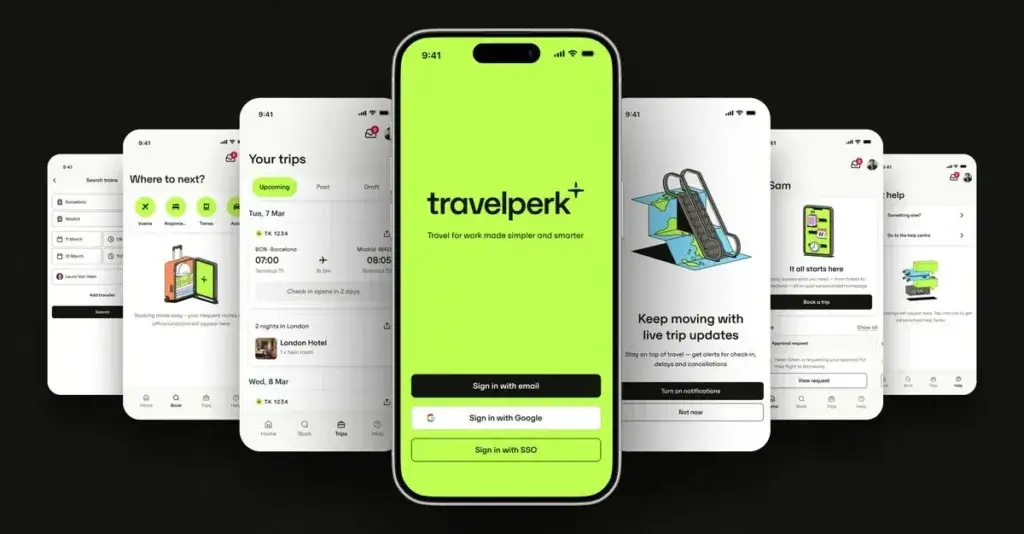
Perk, formerly TravelPerk, is a business travel and spend platform built for companies that want employees to book travel easily while finance maintains policy control. It is especially strong for teams that care about traveler experience, trip flexibility, and support.
Perk’s roots are in corporate travel management, but its positioning has expanded toward a broader travel and spend platform. That makes it relevant for companies that want to reduce the admin work around booking trips, managing changes, supporting travelers, and connecting travel activity with expense workflows.
One of Perk’s strongest differentiators is travel flexibility. The platform highlights flexible travel protection that can help businesses recover a significant portion of trip spend when plans change. For companies where travel schedules change often, that can be a meaningful operational advantage.
Key features
- Business travel booking for flights, hotels, trains, and cars
- Travel policy controls and approval workflows
- Flexible trip protection for changed or canceled travel
- 24/7 traveler support and local-language assistance
- Live travel updates and disruption alerts
- Spend management and expense-related workflows
- Reporting for travel activity and business travel programs
Pros and cons
Pros
✅ Strong travel booking and traveler experience
✅ Useful flexible travel protection for changing plans
✅ Good fit for growing travel programs
✅ 24/7 traveler support is a major advantage
Cons
❌ Expense capabilities should be evaluated by workflow depth
❌ Less finance-suite-focused than Ramp or Brex
❌ Some pricing and package details may require sales confirmation
❌ Best fit is companies with meaningful travel volume
Pricing
Perk pricing can vary by plan, region, travel volume, and required services. Businesses should confirm current packages directly with Perk, especially if they need spend management, expense automation, approval workflows, or advanced reporting alongside travel booking.
Who should use Perk?
Perk is best for companies that want a strong travel management platform with flexible booking, traveler support, policy control, and expanding spend capabilities. It is a particularly good option for teams that prioritize traveler experience and trip flexibility.
Ramp

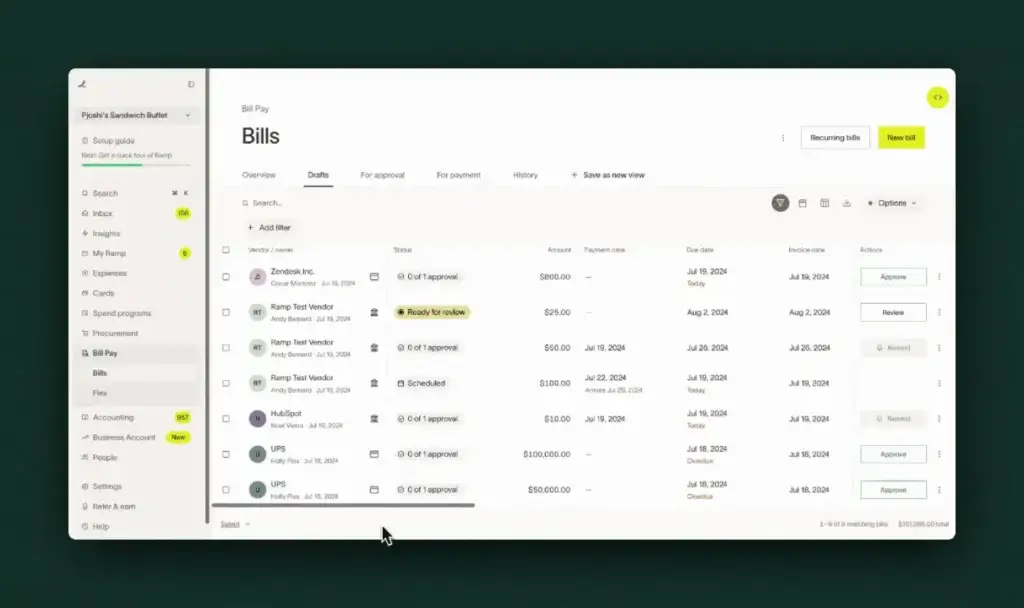
Ramp is a strong travel expense management choice for companies that want travel and expenses to sit inside a broader spend management platform. It combines corporate cards, travel and expense management, bill pay, reimbursements, procurement, vendor management, approvals, and accounting automation.
Ramp is especially useful when your finance team wants more than a travel booking tool. It gives you a way to control spend before, during, and after a trip through custom travel policies, card issuing controls, receipt workflows, approvals, and accounting sync.
For startups, small businesses, and mid-market companies, Ramp’s value is its ability to simplify multiple finance workflows in one platform. Instead of managing travel expenses separately from card spend and bill pay, Ramp gives finance teams a more unified view of company spend.
Key features
- Travel and expense management workflows
- Corporate cards with issuing controls
- Custom travel policies and approval rules
- Receipt capture and expense automation
- Bill pay, reimbursements, and procurement workflows
- Accounting integrations and reconciliation tools
- Real-time spend visibility and finance reporting
Pros and cons
Pros
✅ Strong all-around finance and spend management platform
✅ Free plan includes travel and expense capabilities
✅ Good fit for modern finance teams that want automation
✅ Useful when travel spend connects with cards and AP
Cons
❌ Travel booking depth should be compared against travel-first platforms
❌ Some advanced controls may require paid plans
❌ Not as enterprise travel-heavy as SAP Concur
❌ Best value appears when broader spend runs through Ramp
Pricing
Ramp offers a free plan listed at $0 per user per month. The free plan includes corporate card functionality and travel and expense features such as completing expenses via SMS or Slack and creating a custom travel policy. Larger companies can evaluate paid plans for more advanced controls and scale.
Who should use Ramp?
Ramp is best for startups, small businesses, and mid-market companies that want travel and expense management as part of a broader finance automation stack. It is especially strong when you also need corporate cards, AP automation, procurement, and accounting sync.
Brex

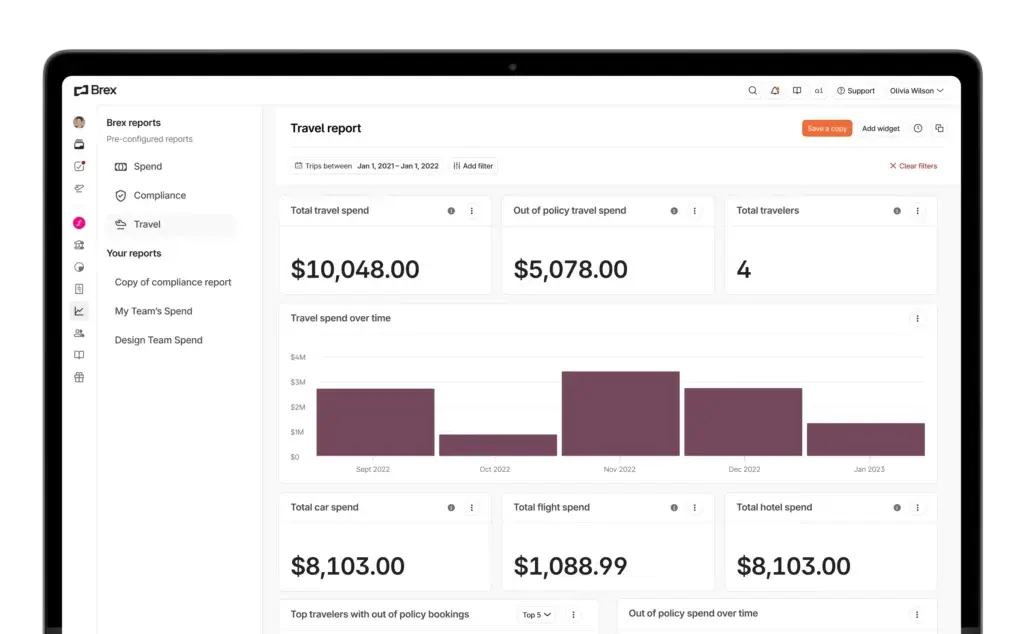
Brex is a strong travel and expense management platform for startups, technology companies, global teams, and growing businesses that want corporate cards, expense policies, travel booking, reimbursements, event management, bill pay, and finance controls.
Brex is especially strong when company travel is tied closely to card spend and policy compliance. Finance teams can use customizable policies, dynamic approval chains, AI-powered compliance detection, and multi-entity support to manage spend across locations and teams.
Brex is also a good fit for companies that need travel and expense controls without immediately moving into a heavy enterprise travel system. It is more finance-platform-focused than a traditional travel management company, making it attractive to companies that want cards, expenses, and travel in a single workflow.
Key features
- Corporate cards with spend controls and limits
- Travel booking and travel expense management
- Event management, reimbursements, and bill pay
- Customizable expense policies and auto-approval rules
- Dynamic review chains and advanced approvals
- AI-powered compliance audit detection
- Multi-entity, ERP, HRIS, and VAT documentation support
Pros and cons
Pros
✅ Strong fit for startups and scaling companies
✅ Advanced policy, approval, and compliance controls
✅ Good support for global and multi-entity organizations
✅ Connects travel, cards, reimbursements, and expenses
Cons
❌ Some advanced features require Premium or Enterprise
❌ Eligibility and underwriting may not suit every business
❌ Less travel-agency-focused than Navan or Perk
❌ Smaller teams may not need the full policy depth
Pricing
Brex offers an Essentials plan and a Premium plan listed at $12 per user per month. Premium includes multiple customizable expense policies, dynamic review chains, AI-powered compliance audit detection, advanced approvals, multi-entity support, ERP and HRIS integrations, and VAT documentation.
Who should use Brex?
Brex is best for startups, global companies, and scaling teams that want travel, cards, reimbursements, expense policies, and compliance automation in one finance platform. It is particularly useful when finance needs stronger controls across multiple teams or entities.
Spendesk

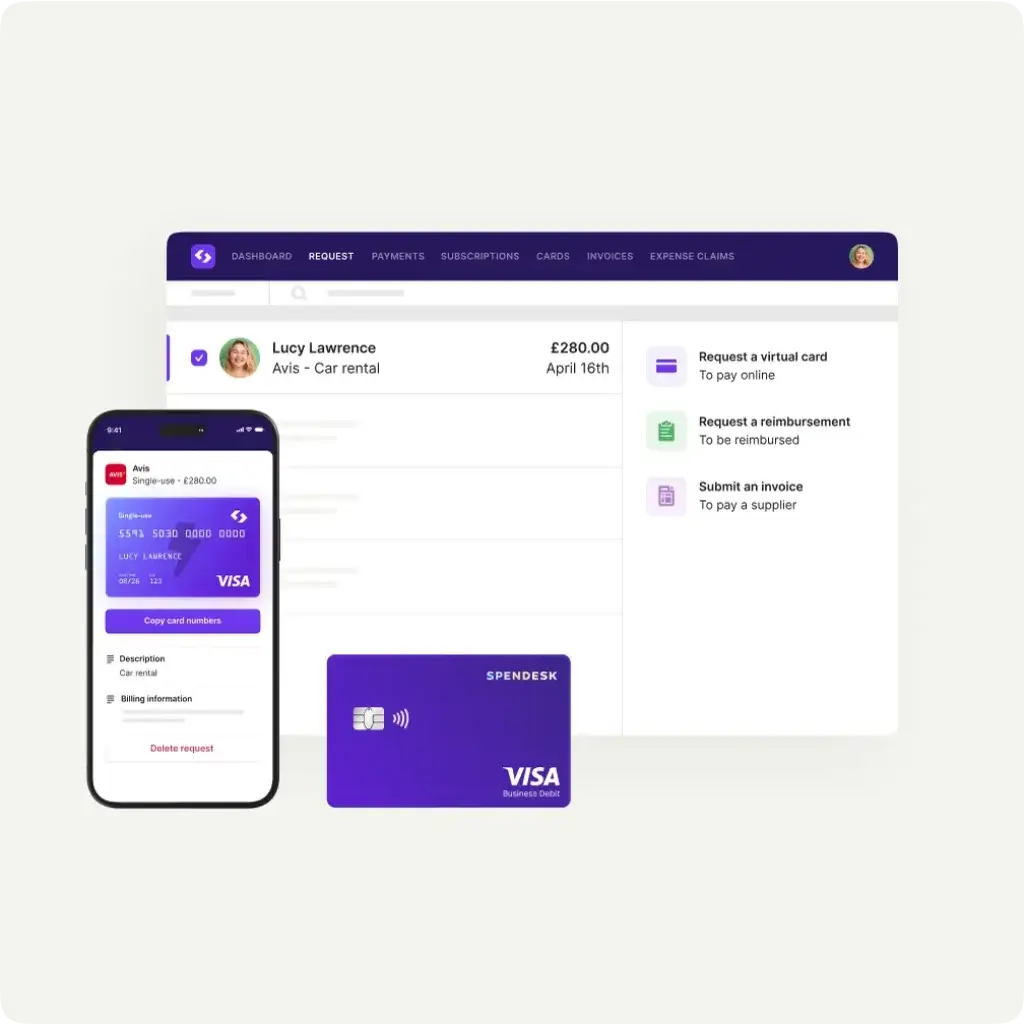
Spendesk is a spend management platform built for finance teams at companies with 50 to 1,000 employees that handles the expense and payment layer of business travel within a connected spend management workflow. Rather than a travel booking tool, Spendesk focuses on what comes after the trip: corporate card spend, receipt enforcement, employee reimbursements, and supplier invoice processing — all connected to procurement approvals and accounting integration in one platform.
What makes Spendesk distinct is the combination of pre-spend control and European compliance infrastructure. Physical and virtual prepaid Mastercards carry per-trip and per-category limits set before spend occurs. “Play by the Rules” automatically suspends card access when receipts are overdue, driving a 97–98% on-time receipt rate. Spendesk is especially strong for companies operating across multiple European entities where HMRC, GoBD, and SEPA compliance need to be part of the standard workflow.
Key features
- Physical and virtual prepaid Mastercards with per-transaction and per-employee limits
- Multi-step purchase approval workflows before spend is committed
- “Play by the Rules” automatic card suspension for overdue receipts
- Employee reimbursements submitted, approved, and paid via bank transfer in-app
- AI-powered invoice processing via OCR with three-way matching
- “No PO, No Pay” enforcement for supplier invoices
- Supplier payments via SEPA and Faster Payments; 30+ currencies via Wise Platform
Pros and cons
Pros
✅ Spend controlled before it occurs — not reconciled after
✅ Full procure-to-pay workflow: cards, AP, procurement, and reimbursements in one platform
✅ European compliance built in: SEPA, HMRC, DATEV, GoBD
✅ No per-seat or per-card charges on any paid plan
✅ Onboarding averages six weeks; some companies live in two
Cons
❌ No travel booking — not a TMC or booking engine
❌ Subscription-based pricing — no free plan
❌ Purpose-built for 50–1,000 employee companies
❌ European-market focus — US-only companies see limited compliance benefit
Pricing
Spendesk offers plan-based pricing with no per-seat or per-card charges. Contact Spendesk for a quote tailored to your company’s size and entity structure.
Who should use Spendesk?
Spendesk is best for European mid-market finance teams at companies with 50 to 1,000 employees that need travel expenses connected to a broader spend management workflow — particularly companies with entities in the EEA, UK, or Germany.
Expensify

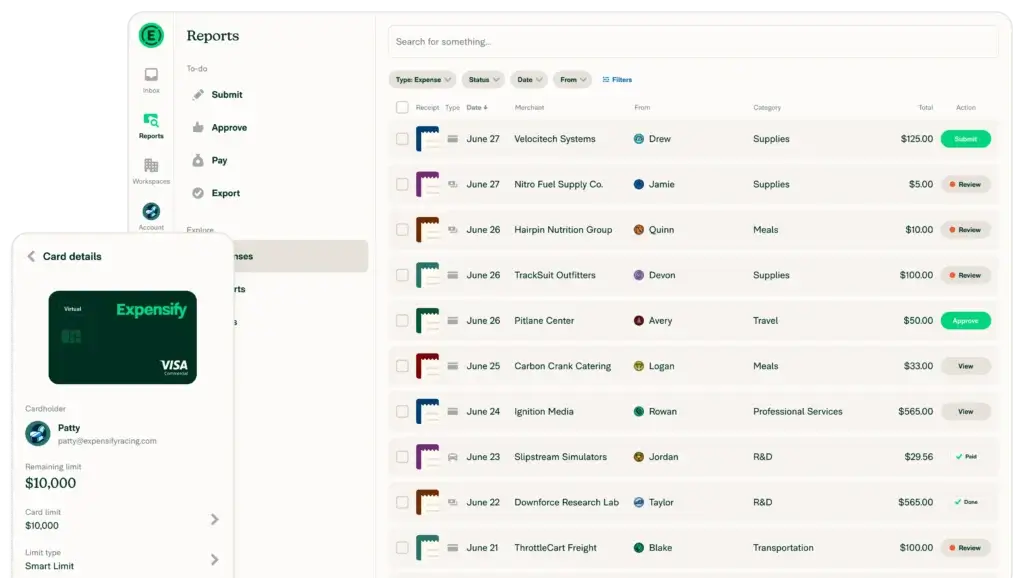
Expensify is one of the most recognizable expense management tools and a strong choice for businesses that want to simplify receipt capture, expense reports, approvals, reimbursements, corporate card management, and travel workflows.
Expensify is especially useful for companies where the main pain point is expense reporting after employees travel or spend on behalf of the business. Employees can capture receipts, submit expenses, and manage reports from an easy mobile experience, while managers and finance teams can review and approve expenses faster.
Expensify Travel adds business travel booking into the same environment, allowing companies to handle flights, hotels, cars, and related travel expenses from inside Expensify. This makes it a practical option for smaller and mid-sized teams that want travel and expense workflows without a heavy implementation.
Key features
- Receipt scanning and expense report automation
- Business travel booking inside Expensify
- Corporate card and company card workflows
- Reimbursements and approval workflows
- Expense categories and policy controls
- Bill pay, invoicing, and payroll-related features
- Integrations with accounting and business tools
Pros and cons
Pros
✅ Very easy for employees to capture receipts
✅ Good fit for receipt-heavy travel and reimbursement workflows
✅ Travel is included with any plan
✅ Individual use is free, and company plans start affordably
Cons
❌ Not as enterprise travel-focused as SAP Concur
❌ Less procurement-oriented than full spend suites
❌ Policy complexity may require careful setup
❌ Larger companies should evaluate admin and reporting depth
Pricing
Expensify states that individuals can use the platform for free, while company plans start at $5 per member. Expensify Travel is included with any plan and allows users to book flights, hotels, cars, and more inside Expensify.
Who should use Expensify?
Expensify is best for small businesses, growing teams, and mid-market companies that want simple expense reporting, receipt scanning, reimbursements, and business travel workflows. It is especially strong when ease of use is more important than enterprise travel complexity.
Zoho Expense

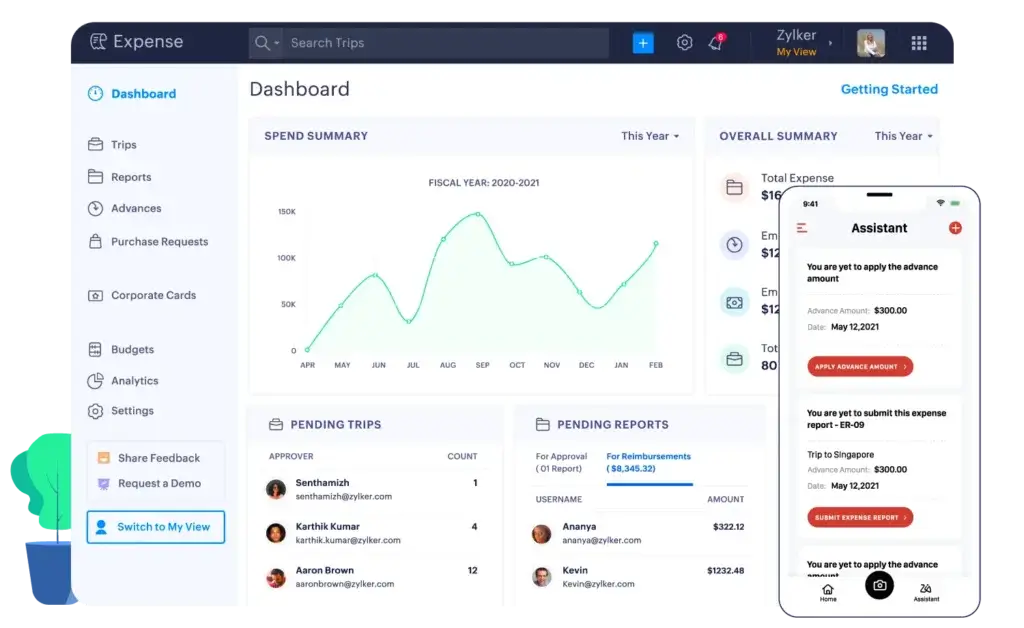
Zoho Expense is a strong travel and expense management platform for businesses that want affordability, automation, and flexibility. It supports travel booking, expense reporting, corporate card reconciliation, mileage tracking, per diem calculations, reimbursements, approvals, analytics, and integrations.
Zoho Expense is especially attractive for companies already using Zoho Books, Zoho CRM, Zoho People, or other Zoho applications. It can also work well as a standalone travel and expense system for small and mid-sized businesses that need better controls without enterprise-level pricing.
The platform gives finance teams a practical way to manage business travel, track receipts, apply policies, automate reimbursements, and monitor spending across departments. For companies that want value and customization, Zoho Expense deserves a close look.
Key features
- Corporate travel booking and travel request workflows
- Expense reporting automation and receipt capture
- Corporate card feeds and real-time reconciliation
- Mileage tracking and per diem calculations
- Approvals, policy controls, and validations
- Reimbursements and spend analytics
- Integrations with accounting, ERP, HRMS, and travel tools
Pros and cons
Pros
✅ Very strong value for small and mid-sized businesses
✅ Good travel and expense functionality for the price
✅ Excellent fit for companies using Zoho products
✅ Supports policies, cards, mileage, VAT, and reporting
Cons
❌ Travel booking may not feel as specialized as Navan or Perk
❌ Enterprise buyers should validate implementation depth
❌ Best experience often comes inside the Zoho ecosystem
❌ Regional pricing and features may vary
Pricing
Zoho Expense offers a free plan and paid plans for businesses that need more advanced features. The platform is positioned as flexible for startups, mid-sized companies, and enterprises, with travel-related add-ons such as self-booking available in some regions.
Who should use Zoho Expense?
Zoho Expense is best for cost-conscious businesses that want travel and expense automation without overpaying for enterprise software. It is especially strong for companies already using Zoho Books or other Zoho apps, as well as teams that need policies, approvals, mileage, cards, and reimbursements in one system.
Feature comparison table
| Software | Best For | Biggest Strength | Main Tradeoff |
| Navan | Businesses that want travel and expense in one platform | Modern travel booking, expense management, cards, and reporting | Enterprise pricing requires a demo |
| SAP Concur | Mid-sized and enterprise organizations | Mature travel, expense, invoice, compliance, and ERP workflows | Can feel complex for smaller teams |
| Perk | Companies that prioritize traveler experience and flexibility | Flexible travel protection, booking, support, and travel controls | Expense depth should be validated by use case |
| Ramp | Finance teams that want travel inside spend management | Cards, travel, expenses, AP, procurement, and accounting automation | Not as travel-agency-focused as Navan or Perk |
| Brex | Startups, global companies, and scaling teams | Travel, cards, events, reimbursements, policies, and multi-entity controls | Advanced capabilities may require paid plans |
| Spendesk | European and mid-market businesses that want travel expenses connected with spend control | Expense management, virtual cards, approvals, invoice workflows, and budget visibility | Less travel-booking-focused than Navan, Perk, or SAP Concur |
| Expensify | Receipt-heavy teams and SMBs | Simple receipt capture, reports, reimbursements, cards, and travel | Less enterprise travel depth than SAP Concur |
| Zoho Expense | Cost-conscious SMBs and Zoho users | Affordable travel and expense automation with strong policy controls | Best fit often comes with the Zoho ecosystem |
How to choose the best software
The best travel expense management software depends on your company’s size, travel volume, finance stack, and policy complexity. A tool that is perfect for a 50-person startup may not be the right fit for a multinational business with global compliance needs.
Choose Navan if travel and expenses need to work together
Navan is the strongest overall choice if you want business travel booking and expense management in one modern platform. It is particularly useful when employees travel often and finance needs real-time visibility into travel spend.
Choose SAP Concur if compliance and scale matter most
SAP Concur is the better choice for enterprise teams that need mature workflows, auditability, invoice support, mobile access, and ERP-connected controls. It is usually more than a small business needs, but it is built for complexity.
Choose Perk if traveler experience is a priority
Perk is a strong choice for companies that want flexible travel booking, support, trip protection, and a more employee-friendly business travel experience. It is a good fit when travel changes are common and support quality matters.
Choose Ramp if travel is part of a larger finance workflow
Ramp is ideal when your travel expense management should connect with corporate cards, bill pay, procurement, reimbursements, and accounting automation. It is one of the strongest choices for modern finance teams that want fewer disconnected tools.
Choose Brex if you need scalable policy controls
Brex is a strong fit for startups and global companies that want travel, expense policies, approvals, cards, reimbursements, and multi-entity support. It is especially useful when policy automation and card controls are central to finance operations.
Choose Spendesk if you need stronger spend control before and during travel
Spendesk is a strong choice for European and mid-market companies that want travel expenses connected with broader spend management. It works well when your finance team needs virtual cards, physical cards, approval workflows, reimbursements, invoice management, budget visibility, and accounting sync in one platform.
Choose Expensify if receipt capture is the main pain point
Expensify is a practical option for businesses that want quick receipt scanning, simple expense reports, approvals, and reimbursements. It works well for teams that want an easier employee experience without a heavy enterprise rollout.
Choose Zoho Expense if value matters most
Zoho Expense is one of the best choices for companies that want affordable travel and expense automation. It is especially attractive if you already use Zoho Books or other Zoho tools and want a connected finance workflow.
Conclusion
The best travel expense management software should help you control travel spend before it becomes a finance problem. That means your platform should not only collect receipts. It should help employees book travel within policy, submit expenses quickly, automate approvals, reconcile card transactions, reimburse employees, and give finance teams reliable reporting.
For most businesses, Navan is the best overall option because it connects business travel and expense management in one modern platform. SAP Concur is the best choice for enterprises that need mature travel, expense, invoice, and compliance workflows. Perk is best for flexible travel management and traveler support. Ramp is the best option when travel expense management needs to sit inside a broader finance automation platform. Brex is excellent for startups and global companies that need scalable card and policy controls. Spendesk is a strong choice for European and mid-market companies. Expensify is ideal for receipt-heavy teams that want simplicity. Zoho Expense is the best value option for businesses that want affordable travel and expense automation.
Before choosing, map your travel workflow from request to booking, payment, receipt capture, approval, reimbursement, accounting sync, and reporting. The right software should reduce manual work for employees while giving finance better control over every business trip.
FAQs
What is travel expense management software?
Travel expense management software helps businesses manage employee travel bookings, expense claims, receipts, approvals, reimbursements, corporate cards, and reporting in one system.
What is the best travel expense management software?
Navan is one of the best overall choices for businesses that want travel booking and expense management in one platform. SAP Concur is stronger for enterprises, while Ramp and Brex are better for finance-led spend control.
Is SAP Concur better than Navan?
SAP Concur is usually better for enterprises with complex compliance, invoice, ERP, and global travel workflows. Navan is often better for companies that want a more modern travel and expense experience with faster employee adoption.
Is Ramp good for travel expense management?
Yes. Ramp is a strong option if you want travel and expense management connected to corporate cards, bill pay, procurement, reimbursements, and accounting automation.
What is the best travel expense software for small businesses?
Zoho Expense, Expensify, Ramp, and Navan are strong options for small businesses. Zoho Expense is best for affordability, Expensify is best for receipt capture, Ramp is best for finance automation, and Navan is best for travel booking plus expenses.
What features should travel expense software include?
The most important features include travel booking, receipt capture, approval workflows, policy enforcement, mileage tracking, reimbursements, corporate cards, accounting integrations, and spend reporting.
Can travel expense software integrate with accounting software?
Yes. Many travel expense management tools integrate with accounting and ERP systems such as QuickBooks, Xero, NetSuite, Sage Intacct, Microsoft Dynamics, and SAP.
Is Expensify good for business travel?
Expensify is good for businesses that want simple travel expense workflows, receipt scanning, expense reports, approvals, reimbursements, and business travel booking inside the same app.
What is the difference between travel management and expense management?
Travel management focuses on booking and managing trips, while expense management focuses on receipts, approvals, reimbursements, and accounting. The best platforms connect both workflows so finance can control the full travel spend lifecycle.
Do businesses need corporate cards with travel expense software?
Not always, but corporate cards can improve control by applying limits, merchant rules, receipt matching, and real-time transaction visibility. Platforms like Ramp, Brex, Navan, and Expensify connect cards with travel and expense workflows.