Introduction
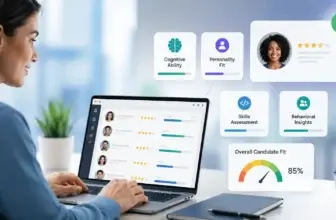
Choosing the best recruitment software is one of the most important decisions your hiring team can make. The right platform helps you attract better candidates, organize applications, automate repetitive recruiting work, improve collaboration with hiring managers, and create a smoother candidate experience from first contact to final offer.
Recruitment software has also changed significantly. Modern platforms are no longer just digital filing cabinets for resumes. Many now include applicant tracking, candidate relationship management, AI-assisted screening, interview scheduling, hiring analytics, offer management, onboarding, career pages, job board distribution, and integrations with broader HR software.
In this guide, I compare ten leading recruitment software platforms: Greenhouse, Lever, BambooHR, Workable, SmartRecruiters, iCIMS, Recruitee, Breezy HR, JazzHR, and Zoho Recruit. Some are enterprise-grade talent acquisition suites, while others are better suited for small businesses, lean HR teams, staffing agencies, or companies that want recruiting inside a broader HR platform.
If you want a quick recommendation, Greenhouse is one of the strongest overall choices for structured hiring, Lever is excellent for combining ATS and CRM workflows, Workable is a strong all-around platform for growing companies, SmartRecruiters and iCIMS are better suited to enterprise talent acquisition, and JazzHR or Breezy HR are practical options for smaller teams that want a more affordable ATS.
How to Evaluate Recruitment Software
Before comparing specific tools, it helps to understand what separates basic applicant tracking from a recruitment platform that can actually improve hiring quality. The best recruitment software should support your process, not force your team into an awkward workflow.
Applicant tracking and pipeline management
At minimum, recruitment software should help you manage candidates across every stage of the hiring funnel. That includes job applications, resume review, screening, interviews, feedback, offers, and rejections.
A strong ATS makes it easy to see where each candidate stands, who owns the next step, and which roles need attention. This is especially important when you have multiple hiring managers, several open jobs, or high application volume.
Sourcing and candidate relationship management
Hiring is not only about managing inbound applications. Many teams also need tools to source passive candidates, build talent pools, nurture relationships, and keep promising people warm for future roles.
If you hire for competitive positions, look for recruitment software with CRM functionality, email campaigns, candidate tagging, talent pools, referrals, and sourcing integrations.
Collaboration with hiring managers
Recruiting slows down when hiring managers give feedback late, interview notes are scattered, or decisions happen outside the system. Good recruitment software should make collaboration simple.
Look for interview scorecards, role-based permissions, automated reminders, shared candidate profiles, approval workflows, and structured feedback forms. These features help reduce bias, improve consistency, and keep the hiring process moving.
Candidate experience
Candidate experience affects your employer brand. A slow, confusing, or impersonal process can cause strong candidates to drop out, especially in competitive roles.
The best recruiting platforms help you create branded career pages, automate communication, simplify interview scheduling, send timely updates, and make the application process easier from a candidate’s perspective.
Automation and AI recruiting features
Automation can save recruiters a significant amount of time, but it should be used carefully. Useful AI and automation features include resume parsing, candidate matching, job description support, screening questions, interview scheduling, automated email workflows, and hiring analytics.
However, AI should not replace human judgment. When using AI recruiting tools, evaluate transparency, auditability, fairness controls, and whether your team can explain how candidates are assessed.
Reporting, compliance, and scalability
Recruitment software should give you visibility into hiring performance. Important reports include time to hire, source of hire, candidate conversion rates, interview pass-through rates, offer acceptance rate, and recruiter workload.
If you operate in a regulated environment or hire at scale, also pay attention to recordkeeping, permission controls, data retention, EEO reporting, GDPR tools, audit trails, and integration with your HRIS or payroll platform.
Greenhouse
Features & Benefits
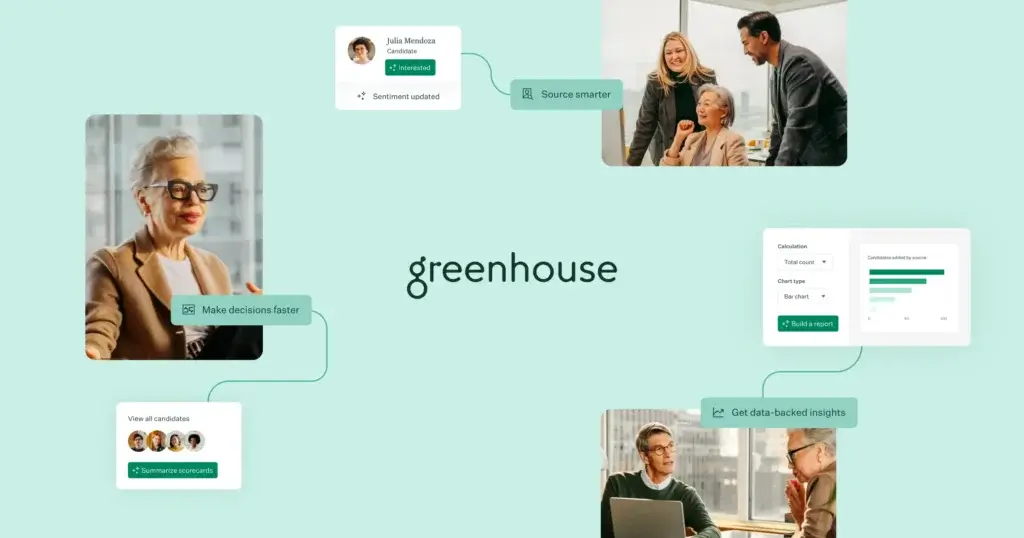
Greenhouse is one of the strongest recruitment software platforms for companies that want a structured, repeatable hiring process. It is particularly effective for teams that care about interview quality, hiring manager alignment, scorecards, candidate evaluation, and reducing inconsistent decision-making across departments.
The platform is built around structured hiring. That means you can define interview plans, create evaluation criteria, collect standardized feedback, and keep hiring teams aligned around the same process. For organizations that are scaling quickly, this level of structure can make a major difference.
Greenhouse also supports job posting, candidate tracking, interview scheduling, reporting, integrations, candidate communication, and built-in AI recruiting tools. It is not the cheapest platform, and it may feel too advanced for very small teams, but it is one of the most reliable options for mid-market and enterprise hiring teams.
Pricing & Plans
Greenhouse uses custom pricing. The company offers Core, Plus, and Pro plans, with pricing based on your company’s hiring needs, process complexity, and required level of automation or governance.
Pros & Cons
Pros
- Excellent structured hiring workflows
- Strong scorecards and interview planning
- Good fit for scaling hiring teams
- Large integration ecosystem
Cons
- Pricing is not publicly transparent
- Can be too advanced for small teams
- Best value comes with process maturity
Lever

Features & Benefits
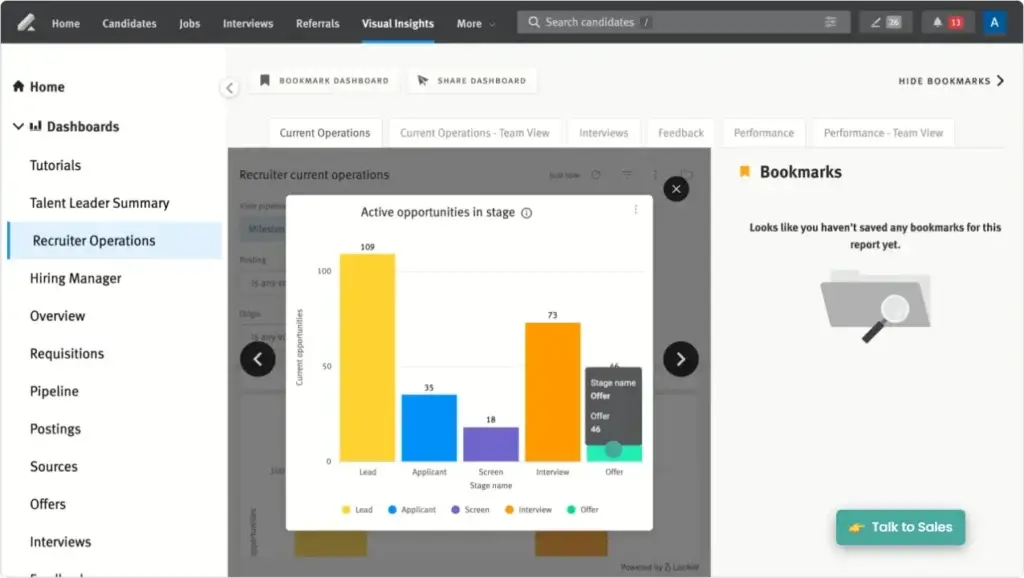
Lever is a strong choice for teams that want recruitment software to support both active applicants and long-term candidate relationships. Its biggest advantage is the combination of applicant tracking and candidate relationship management in one platform.
This makes Lever especially useful for scaling companies that do not want recruiting to be limited to open roles. You can manage applicants, build talent pipelines, nurture passive candidates, collaborate with hiring teams, and use analytics to understand how your hiring funnel is performing.
Lever is also known for a modern interface and collaborative workflows. It is a good fit for companies that recruit continuously, compete for specialized talent, or want better visibility into candidate engagement. Compared with simpler ATS tools, Lever is more strategic. Compared with enterprise suites, it can feel more approachable.
Pricing & Plans
Lever uses custom pricing. The platform is priced based on company size, hiring needs, selected functionality, and scale. You need to contact the company for a tailored quote.
Pros & Cons
Pros
- Strong ATS and CRM combination
- Good for passive candidate nurturing
- Modern collaborative hiring experience
- Useful recruiting analytics
Cons
- No public pricing table
- May be more than basic hiring teams need
- Reporting can require setup discipline
BambooHR

Features & Benefits
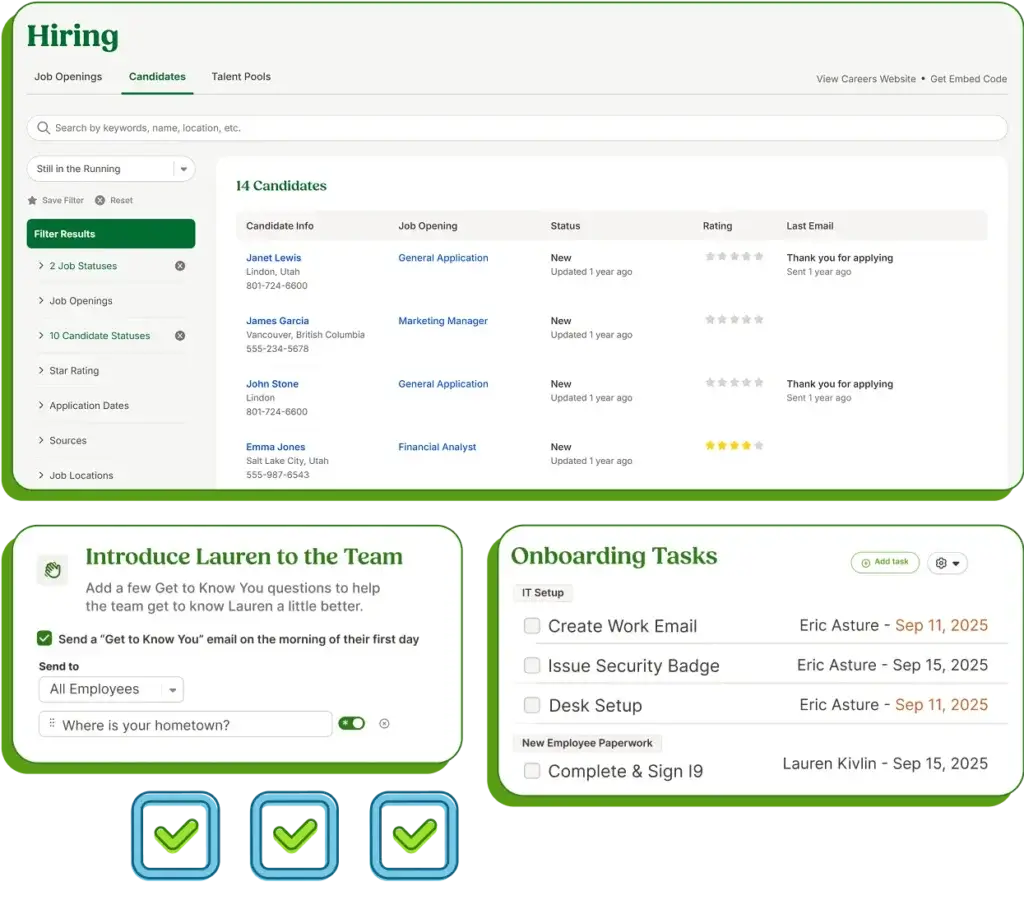
BambooHR is not a dedicated recruiting suite in the same way as Greenhouse or Lever, but it is one of the best options if you want applicant tracking connected to a broader HR system. For many small businesses, that is exactly what makes it valuable.
The BambooHR ATS helps teams post jobs, track candidates, manage communications, collaborate on hiring, and move new hires into onboarding. Because it connects with employee records and HR workflows, it can reduce the gap between recruiting and the rest of the employee lifecycle.
This makes BambooHR a strong choice for companies that want recruiting, onboarding, employee data, time off, and basic HR operations in one place. If recruiting is your main strategic function, a dedicated ATS may be stronger. If you want hiring as part of a simple HR platform, BambooHR is a very practical option.
Pricing & Plans
BambooHR offers plan-based pricing tied to HR functionality and employee count. Public pricing pages show HR data, reporting, hiring, onboarding, time off, and benefits tracking as core areas, with quote-based final pricing depending on your needs.
Pros & Cons
Pros
- Recruiting connects with HR records
- Very approachable for small businesses
- Good onboarding handoff
- Clean and simple interface
Cons
- Less specialized than dedicated ATS tools
- Not ideal for complex recruiting teams
- Advanced hiring features may be limited
Workable

Features & Benefits
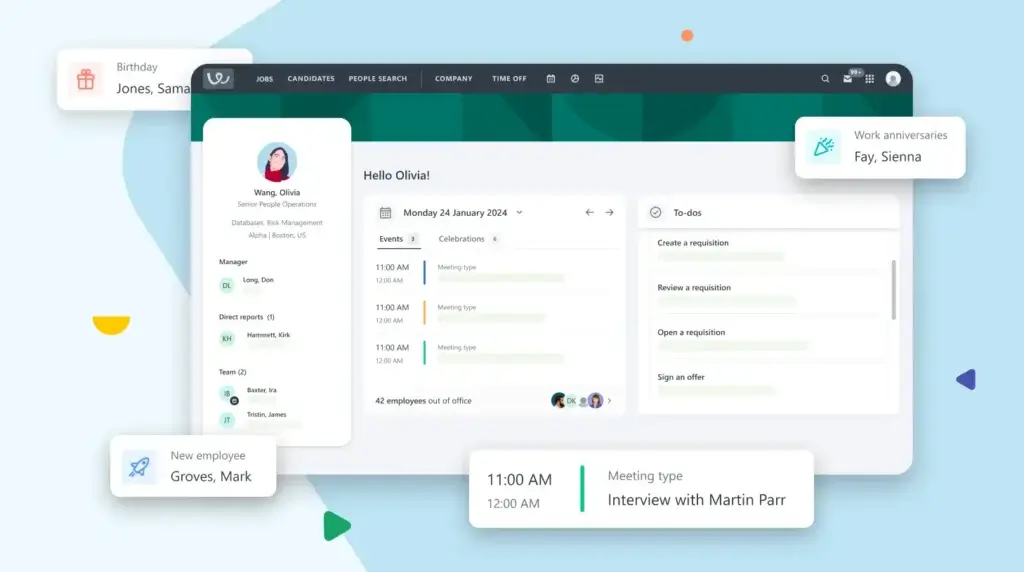
Workable is one of the most practical recruitment software options for growing companies. It combines applicant tracking, job posting, candidate sourcing, interview scheduling, assessments, reporting, and HR features in one platform.
One of Workable’s main advantages is accessibility. It is easier to understand than many enterprise ATS platforms, but still powerful enough for companies with regular hiring needs. You can post jobs, manage pipelines, communicate with candidates, collaborate with hiring managers, and automate many repetitive recruiting tasks.
Workable is especially useful for businesses that want recruitment software without a heavy implementation process. It also works well for teams that may eventually want to connect recruiting with broader employee management workflows.
Pricing & Plans
Workable provides public pricing information and offers a free trial. Pricing depends on company size and selected packages, with monthly and annual options available.
Pros & Cons
Pros
- Strong all-around recruiting functionality
- Clearer pricing than many ATS vendors
- Good usability for growing companies
- Includes sourcing and automation tools
Cons
- Costs can rise with company size
- Some advanced features may require higher tiers
- Less enterprise-specific than iCIMS or SmartRecruiters
SmartRecruiters

Features & Benefits
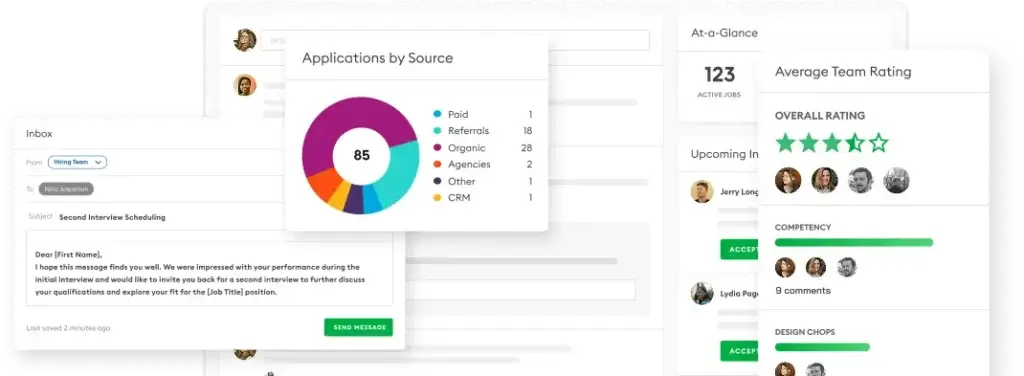
SmartRecruiters is built for organizations that need a more complete talent acquisition suite. It combines applicant tracking, candidate relationship management, job distribution, onboarding, scheduling, hiring collaboration, analytics, and AI-assisted recruiting features.
The platform is especially relevant for larger companies that manage hiring across multiple locations, departments, or regions. It gives recruiting teams more control over workflows while still keeping the experience accessible for hiring managers.
SmartRecruiters is also a strong option if AI is becoming part of your talent acquisition strategy. Its current positioning emphasizes AI-powered hiring, candidate matching, and tools that help teams move faster while keeping recruitment data centralized.
Pricing & Plans
SmartRecruiters offers tiered talent acquisition suite pricing. Its Essential plan starts at a published annual price, while more advanced plans require custom pricing based on features and scale.
Pros & Cons
Pros
- Strong enterprise talent acquisition suite
- Includes ATS, CRM, onboarding, and scheduling
- Good AI-assisted hiring capabilities
- Useful for multi-location hiring teams
Cons
- Entry pricing may be high for SMBs
- Advanced plans require sales quotes
- More platform than small teams need
iCIMS

Features & Benefits
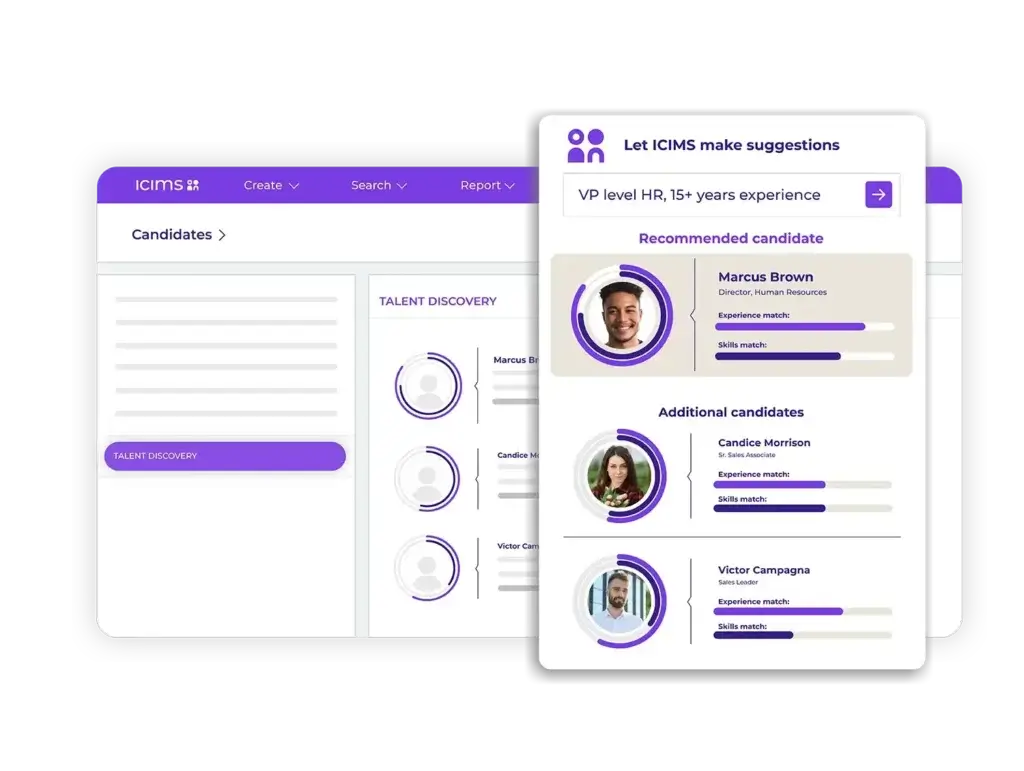
iCIMS is one of the most established enterprise recruitment software platforms. It is designed for companies that need deep talent acquisition functionality, complex workflows, candidate engagement, onboarding, career sites, offer management, text recruiting, and integrations with larger HR ecosystems.
The platform is particularly strong for high-volume hiring, enterprise recruiting teams, and organizations with complex compliance or workflow requirements. It is not the simplest tool in this list, but that depth is exactly why larger organizations consider it.
iCIMS is best for companies that treat talent acquisition as a major operational function. If you only hire occasionally, it will likely be too much. If you manage large applicant pools, multiple recruiters, many hiring managers, or strict process requirements, it becomes much more relevant.
Pricing & Plans
iCIMS uses custom pricing. The final cost depends on company size, selected products, implementation needs, and recruiting complexity.
Pros & Cons
Pros
- Excellent for enterprise recruiting
- Strong high-volume hiring capabilities
- Broad talent acquisition feature set
- Good fit for complex workflows
Cons
- Not ideal for small teams
- Pricing requires a sales process
- Implementation can be more involved
Recruitee (by Tellent)
Features & Benefits
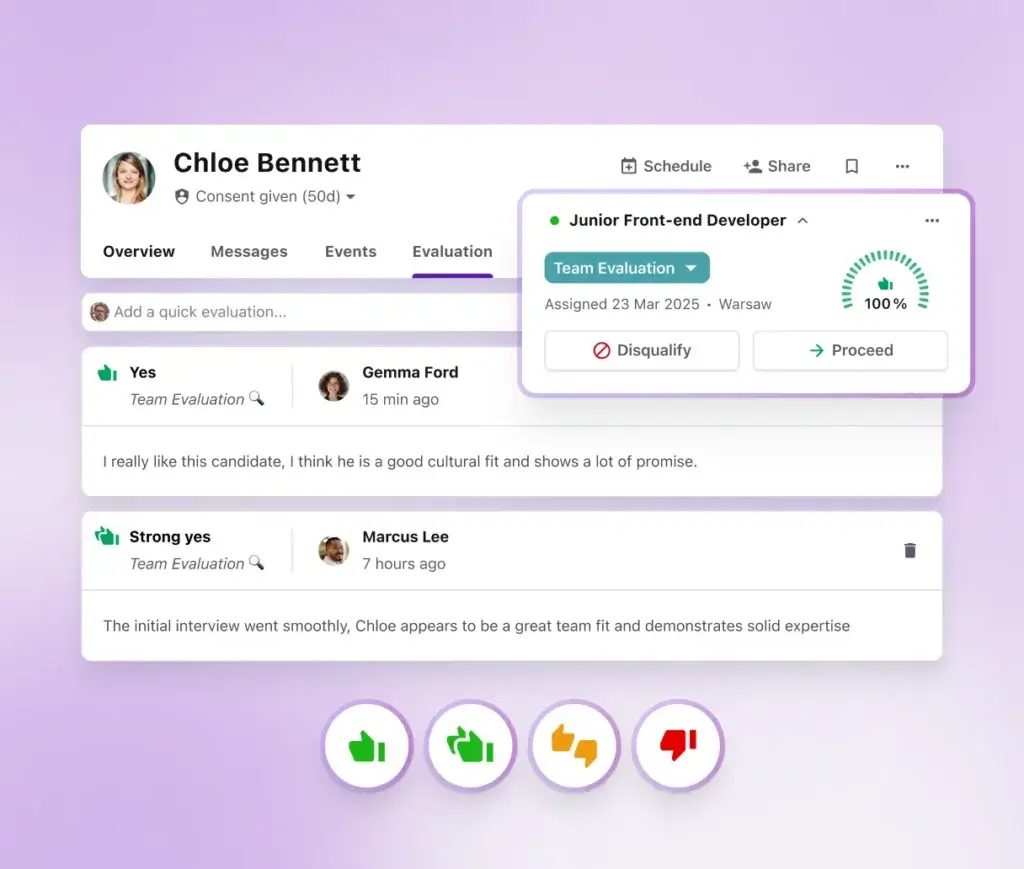
Recruitee is a strong option for companies that want recruitment software focused on team collaboration and employer branding. It helps hiring teams manage job openings, candidate pipelines, career pages, referrals, interview feedback, and automation from one clean interface.
The platform is especially useful when hiring managers are actively involved in the process. Instead of keeping recruiting work isolated inside the HR team, Recruitee makes it easier for departments to collaborate on candidate evaluation and hiring decisions.
Recruitee also stands out for customizable workflows and branded recruitment experiences. It is a good middle-ground option for businesses that need more structure than a basic ATS but do not want the complexity of enterprise talent acquisition software.
Pricing & Plans
Recruitee offers flexible plans with pricing based on selected functionality and hiring needs. Optional add-ons are available for capabilities such as SSO, texting, onboarding journeys, and agency workflows.
Pros & Cons
Pros
- Strong collaborative hiring experience
- Good career site and employer branding tools
- Flexible workflows for growing teams
- Useful candidate automation features
Cons
- Add-ons can increase total cost
- Less enterprise-heavy than iCIMS
- Not a complete HR suite
Breezy HR

Features & Benefits
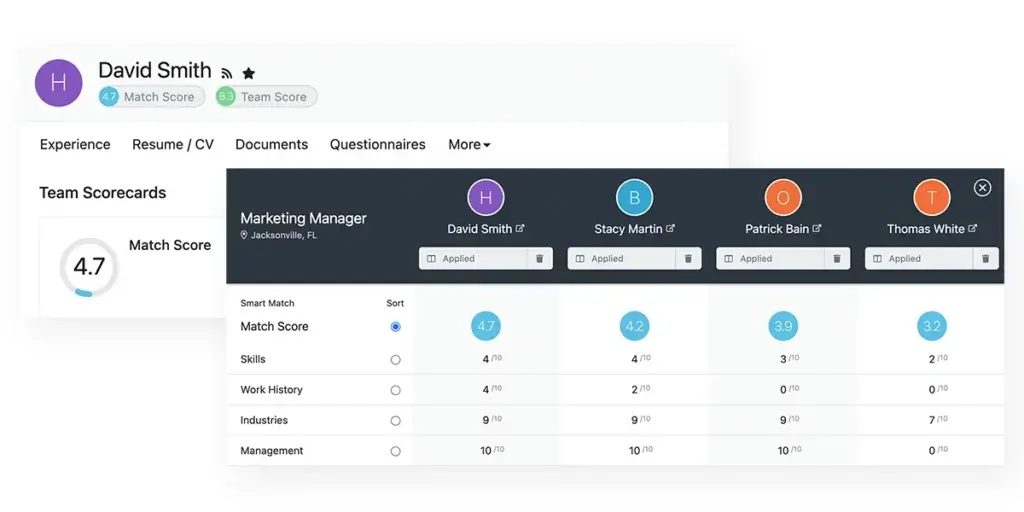
Breezy HR is a practical and user-friendly recruitment software platform for small and mid-sized businesses. It focuses on visual pipelines, job advertising, candidate communication, interview scheduling, collaboration, offer management, and hiring automation.
The platform is especially appealing if your team wants an ATS that is easy to adopt. The visual pipeline makes candidate movement simple, and unlimited users on paid plans can help more people participate in hiring without creating extra seat-based friction.
Breezy HR is not as deep as enterprise tools like iCIMS or SmartRecruiters, but that is not the point. It is better suited to teams that want to move away from spreadsheets, inbox-based recruiting, or disconnected hiring tools without adding unnecessary complexity.
Pricing & Plans
Breezy HR offers a free plan and paid plans with unlimited users, candidates, and support. Paid plan pricing depends on billing cycle and feature level, with annual billing typically offering savings.
Pros & Cons
Pros
- Easy visual hiring pipelines
- Free plan available
- Unlimited users on paid plans
- Good fit for SMB hiring teams
Cons
- Advanced features may require upgrades
- Less suitable for enterprise complexity
- Some add-ons can raise total cost
JazzHR
Features & Benefits
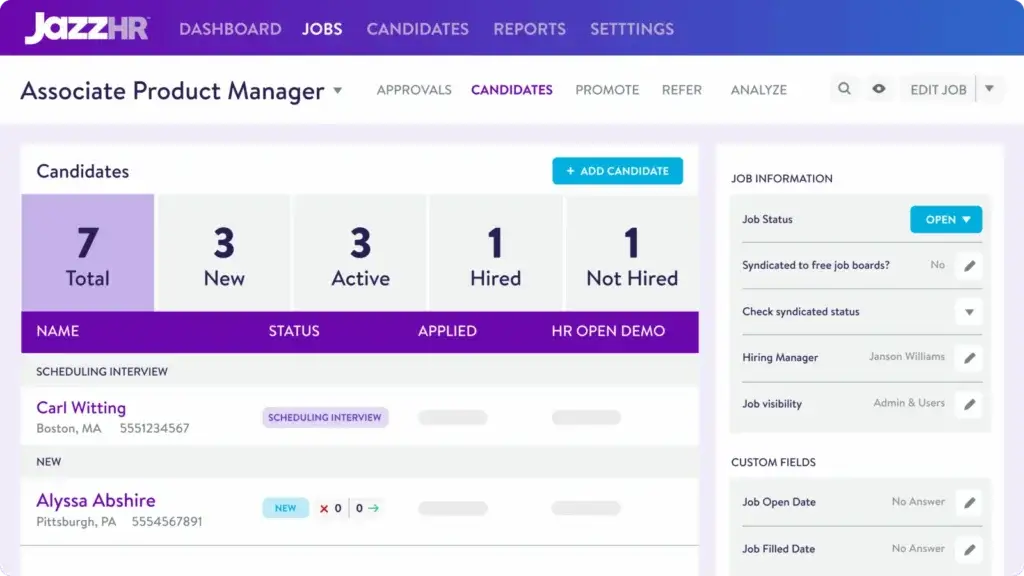
JazzHR is one of the best recruitment software choices for small businesses that want an affordable, straightforward ATS. It gives lean hiring teams the tools to post jobs, manage applicants, collaborate with hiring managers, automate repetitive steps, and move candidates through a structured pipeline.
The platform is particularly attractive because it offers more transparent pricing than many recruiting tools. For small organizations that do not want a long sales process, that clarity can make vendor evaluation much easier.
JazzHR is not the deepest platform in this guide, but it is a strong fit when your needs are practical. If you want to organize hiring, reduce manual tracking, and give your team a more professional process without enterprise-level cost, JazzHR is worth considering.
Pricing & Plans
JazzHR offers transparent pricing across Hero, Plus, and Pro plans. The Hero and Plus plans are self-serve options, while Pro is designed for teams that need more advanced capabilities and custom support.
Pros & Cons
Pros
- Affordable for small businesses
- Transparent plan structure
- Simple applicant tracking workflows
- Good for lean HR teams
Cons
- Not ideal for enterprise hiring
- Lower tiers have limitations
- Less advanced CRM functionality
Zoho Recruit
Features & Benefits
Zoho Recruit is one of the strongest value-focused recruitment software platforms, especially for staffing agencies and teams that already use Zoho products. It includes applicant tracking, candidate management, interview scheduling, automation, career sites, resume parsing, and client-focused workflows for agencies.
The platform is flexible because it serves both in-house HR teams and staffing agencies. That matters because agency recruiting often requires different workflows, such as client submissions, candidate databases, job orders, and pipeline management across multiple external clients.
Zoho Recruit is also appealing because it offers a free plan and transparent paid tiers. It may not feel as polished as some premium enterprise recruiting platforms, but it offers strong functionality for the cost.
Pricing & Plans
Zoho Recruit offers a free plan and paid editions with monthly or annual billing. Pricing varies depending on whether you use it for corporate HR recruiting or staffing agency workflows.
Pros & Cons
Pros
- Strong value for the price
- Free plan available
- Good for staffing agencies
- Integrates well with Zoho apps
Cons
- Interface can feel less premium
- Advanced features require higher tiers
- Setup may take more configuration
Comparing the Best Recruitment Software
Not every recruitment software platform is designed for the same type of buyer. Some platforms are built for structured enterprise hiring. Others focus on small business simplicity, staffing agency workflows, or recruitment inside a broader HR suite.
The table below gives you a quick way to compare the tools based on best use case, strongest advantage, pricing style, and the main limitation to consider before buying.
| Tool | Best For | Top Strength | Main Trade-Off | Pricing Model |
| Greenhouse | Structured hiring | Interview consistency and process control | Custom pricing | Quote-based |
| Lever | ATS plus CRM | Candidate nurturing and talent pools | No public pricing | Quote-based |
| BambooHR | HR-first recruiting | ATS connected to HR and onboarding | Not a dedicated recruiting suite | Quote-based |
| Workable | Growing companies | All-around recruiting usability | Costs scale with size | Public and quote-based |
| SmartRecruiters | Enterprise hiring | AI-assisted talent acquisition suite | High entry cost | Tiered and custom |
| iCIMS | High-volume enterprise recruiting | Deep talent acquisition functionality | Complex implementation | Quote-based |
| Recruitee | Collaborative hiring | Team workflows and employer branding | Add-ons can raise cost | Flexible plans |
| Breezy HR | Small and mid-sized teams | Simple visual hiring pipelines | Less enterprise depth | Free and paid plans |
| JazzHR | Small business hiring | Affordable ATS workflows | Lower tiers are limited | Transparent plans |
| Zoho Recruit | Staffing agencies and value buyers | Flexible pricing and agency features | Interface may need configuration | Free and paid plans |
How These Recruitment Tools Differ
The best recruitment software for your business depends on hiring volume, team structure, budget, and whether recruiting is handled by HR, talent acquisition, department managers, or an agency-style team.
Greenhouse – Best for structured hiring
Greenhouse is the best fit when consistency matters. If your company wants clear interview plans, structured feedback, scorecards, and repeatable hiring workflows, Greenhouse is one of the strongest choices. It is especially useful for companies that want to improve hiring quality rather than simply process more applications.
Lever – Best for candidate relationships
Lever is ideal when your hiring strategy depends on nurturing talent before roles are open. Its ATS and CRM combination makes it easier to build candidate pipelines, manage passive talent, and maintain stronger relationships with future hires.
BambooHR – Best for HR-first recruiting
BambooHR is not the most advanced recruiting platform, but it makes sense when you want hiring connected to HR records and onboarding. For small businesses, that connection can be more useful than a standalone enterprise ATS.
Workable – Best for practical all-around recruiting
Workable is a strong fit for growing companies that want a capable but approachable platform. It balances job posting, applicant tracking, sourcing, automation, and HR functionality without feeling as heavy as enterprise systems.
SmartRecruiters – Best for enterprise AI-assisted hiring
SmartRecruiters is better suited for larger organizations that need a full talent acquisition suite. It combines ATS, CRM, onboarding, scheduling, and AI-assisted hiring capabilities in a platform designed for corporate recruiting teams.
iCIMS – Best for complex enterprise recruiting
iCIMS is the strongest option when hiring complexity is high. It fits companies with large recruiting teams, high applicant volume, detailed workflows, compliance needs, and multiple talent acquisition products working together.
Recruitee – Best for collaborative hiring
Recruitee works well when hiring is a team effort. Its workflows, hiring manager collaboration, employer branding tools, and automation features make it practical for companies that want recruiting to feel less isolated from the rest of the organization.
Breezy HR – Best for simple visual pipelines
Breezy HR is a strong choice for small and mid-sized teams that want a clean ATS with visual pipelines and a manageable learning curve. It is especially useful when you want to replace spreadsheets and inbox-based hiring.
JazzHR – Best for affordable small business ATS
JazzHR is best for small businesses that want transparent pricing and basic applicant tracking without unnecessary complexity. It gives lean teams a more organized hiring process at a relatively accessible cost.
Zoho Recruit – Best for staffing agencies and budget-conscious teams
Zoho Recruit is one of the most flexible options because it supports both internal HR recruiting and staffing agency workflows. It is also one of the better choices if you want a lower-cost platform with a free plan and scalable paid editions.
How to Choose the Right Recruitment Software
The best way to choose recruitment software is to start with your hiring reality, not the longest feature list. A company hiring five roles per year does not need the same platform as a company hiring hundreds of employees across several locations.
If you want the strongest overall ATS
Start with Greenhouse, Lever, and Workable. Greenhouse is best for structured hiring, Lever is best for ATS plus CRM, and Workable is best for a practical all-around recruiting workflow.
If you are hiring at enterprise scale
Compare SmartRecruiters and iCIMS. Both are stronger fits for larger organizations with more complex recruiting operations, multiple stakeholders, and greater reporting or compliance needs.
If you run a small business
Look at JazzHR, Breezy HR, BambooHR, and Zoho Recruit. JazzHR is affordable and simple, Breezy HR offers visual pipelines, BambooHR connects hiring to HR records, and Zoho Recruit gives you strong value with flexible pricing.
If candidate sourcing is a priority
Lever, Workable, Greenhouse, SmartRecruiters, and Zoho Recruit are worth reviewing. Look closely at CRM functionality, talent pools, email campaigns, sourcing integrations, and candidate rediscovery.
If candidate experience matters most
Look for branded career pages, fast communication, automated updates, self-scheduling, mobile-friendly applications, and clean offer workflows. Greenhouse, Recruitee, Workable, and SmartRecruiters are particularly strong in this area.
Key Features to Look For in Recruitment Software
Recruitment software should make hiring faster, but speed alone is not enough. The right tool should also help you make better hiring decisions, keep candidates engaged, and give managers enough structure to participate effectively.
Core ATS functionality
Your ATS should centralize job openings, applications, candidate profiles, resumes, interview notes, pipeline stages, and decisions. Without a strong ATS foundation, your recruiting data will become fragmented quickly.
Interview scheduling and scorecards
Interview scheduling removes back-and-forth communication, while scorecards improve consistency. Together, these features help recruiters reduce delays and hiring managers compare candidates more fairly.
Job board distribution
Many recruiting platforms let you post jobs across multiple job boards from one place. This helps increase reach without manually updating every job listing.
Career pages and employer branding
A branded career page helps candidates understand your company, open roles, hiring process, and culture. This is especially useful if you want recruitment software to support employer branding, not only applicant tracking.
Automation and templates
Email templates, rejection workflows, approval automations, interview reminders, and offer letter templates can save recruiters hours every week. The key is to automate repetitive tasks without making communication feel robotic.
Recruiting analytics
Reporting helps you understand where candidates come from, where they drop off, how long roles stay open, and which hiring stages create delays. Good analytics turn recruiting from a reactive process into a measurable business function.
Recruitment Software vs Applicant Tracking System
The terms recruitment software and applicant tracking system are often used interchangeably, but they are not always the same thing.
An applicant tracking system focuses mainly on managing applicants and hiring pipelines. Recruitment software is usually broader. It may include sourcing, CRM, recruitment marketing, candidate engagement, analytics, onboarding, internal mobility, and integrations with HR systems.
If your hiring process is simple, a basic ATS may be enough. If your company competes for talent, hires continuously, or needs stronger recruiter productivity, broader recruitment software is usually the better investment.
Conclusion
The best recruitment software depends on how your team hires. Greenhouse is one of the strongest overall options for structured hiring and process consistency. Lever is an excellent choice if candidate relationship management is important. Workable offers one of the best balances of usability, automation, and recruiting functionality for growing companies.
For larger organizations, SmartRecruiters and iCIMS are stronger enterprise-level choices. Recruitee is ideal for collaborative hiring, Breezy HR and JazzHR are practical for smaller teams, BambooHR is a strong HR-first option, and Zoho Recruit is one of the best value picks for staffing agencies and cost-conscious teams.
The smartest approach is to define your hiring model first. Are you hiring occasionally, scaling quickly, sourcing passive candidates, managing high-volume recruiting, or connecting recruitment to HR operations? Once you answer that, your shortlist becomes much easier to build.
Frequently Asked Questions (FAQs)
What is the best recruitment software overall?
Greenhouse is one of the best overall recruitment software platforms for structured hiring, interview consistency, candidate evaluation, and scalable recruiting workflows. Workable and Lever are also strong choices depending on your company size and hiring strategy.
What is recruitment software?
Recruitment software helps companies manage hiring workflows. It usually includes applicant tracking, job posting, candidate communication, interview scheduling, hiring team collaboration, reporting, and sometimes sourcing or CRM tools.
What is the difference between recruitment software and an ATS?
An ATS focuses mainly on tracking applicants through the hiring pipeline. Recruitment software is broader and may include sourcing, candidate relationship management, recruitment marketing, onboarding, analytics, and HR integrations.
Which recruitment software is best for small businesses?
JazzHR, Breezy HR, BambooHR, and Zoho Recruit are strong options for small businesses. JazzHR is affordable, Breezy HR is easy to use, BambooHR connects recruiting with HR records, and Zoho Recruit offers flexible pricing.
Which recruitment software is best for enterprise companies?
iCIMS, SmartRecruiters, and Greenhouse are strong choices for enterprise companies. They support more complex hiring workflows, larger recruiting teams, reporting needs, integrations, and structured talent acquisition processes.
Which recruitment software is best for staffing agencies?
Zoho Recruit is one of the best options for staffing agencies because it supports agency workflows, candidate databases, client submissions, job orders, automation, and flexible pricing.
Does recruitment software use AI?
Yes. Many recruitment software platforms now include AI features such as resume parsing, candidate matching, job description support, automated screening, interview scheduling, and recruiting analytics. These tools should support, not replace, human hiring decisions.
How much does recruitment software cost?
Recruitment software pricing varies widely. Some tools offer free or low-cost plans, while enterprise platforms use custom pricing. Costs usually depend on company size, number of users, active jobs, features, integrations, and support needs.
What features should I look for in recruitment software?
Look for applicant tracking, job posting, candidate communication, interview scheduling, scorecards, hiring manager collaboration, automation, reporting, career pages, compliance tools, and integrations with HR software.
Is recruitment software worth it?
Recruitment software is worth it if your team manages multiple candidates, open roles, hiring managers, or job boards. It saves time, improves visibility, creates a better candidate experience, and helps you make more consistent hiring decisions.