
Introduction
Choosing an ecommerce platform affects much more than your storefront design. It shapes how you manage products, process payments, handle orders, optimize for search, sell across channels, support B2B buyers, and scale your business over time.
In this BigCommerce review, you will get a practical look at what BigCommerce offers in 2026, where it performs best, where it may feel less flexible, and which businesses should choose it over alternatives like Shopify, WooCommerce, Wix, and Squarespace.
BigCommerce is one of the strongest hosted ecommerce platforms for growing businesses that need serious selling tools without managing hosting, security, checkout infrastructure, or plugin-heavy ecommerce stacks themselves.
What Is BigCommerce?
BigCommerce is a hosted ecommerce platform that helps you build an online store, manage products, accept payments, process orders, sell across multiple channels, optimize for SEO, and support complex commerce operations from one control panel.
Unlike a general website builder, BigCommerce is built around ecommerce first. Its core experience focuses on products, checkout, customer management, promotions, inventory, shipping, analytics, storefront customization, and integrations.
Background and Evolution
BigCommerce started as an ecommerce platform for online retailers, but it has evolved into a more flexible commerce system for B2C, B2B, multi-storefront, omnichannel, and headless commerce use cases.
That evolution matters because BigCommerce is no longer just a tool for small online shops. It is now a scalable platform for brands that need strong built-in commerce functionality, open APIs, flexible payment options, and advanced catalog management.
Target Users and Use Cases
BigCommerce fits several ecommerce profiles very well:
- Growing ecommerce stores – You get strong built-in selling tools without relying heavily on apps.
- Product-heavy catalogs – BigCommerce works well for stores with many products, variants, categories, and filters.
- B2B and wholesale sellers – Higher-tier setups support customer-specific pricing, quotes, invoices, and buyer workflows.
- Multi-brand businesses – Multi-storefront helps manage different storefronts from one backend.
- Headless commerce teams – Developers can use BigCommerce as the commerce engine behind custom frontends.
BigCommerce is less ideal if you want the simplest possible website builder, a very visual drag-and-drop design experience, or a small content-first website with only light ecommerce needs. In those cases, Wix, Squarespace, or WordPress may feel easier.
Key Features of BigCommerce
How Does BigCommerce Work?
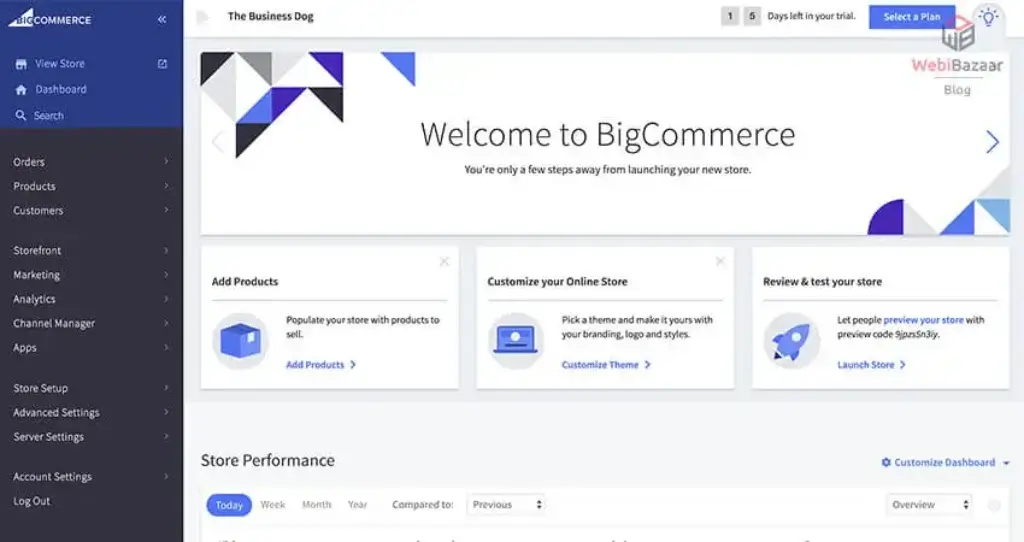
BigCommerce works as a managed ecommerce platform. You choose a theme, add products, configure payments, set shipping and tax rules, connect sales channels, and manage your store from the BigCommerce control panel.
The platform’s main advantage is that it combines hosted infrastructure with strong native ecommerce features. You do not need to build your stack from separate hosting, checkout, security, payment, inventory, and SEO plugins.
Storefront Builder and Themes
BigCommerce gives you a hosted online storefront with responsive themes, page-building tools, product pages, category pages, checkout, navigation, promotions, and content pages.
The visual editing experience is useful, but BigCommerce is not the most beginner-focused design tool. Wix and Squarespace feel easier for simple site building, while BigCommerce is more focused on ecommerce structure, catalog depth, and operational control.
Product and Catalog Management
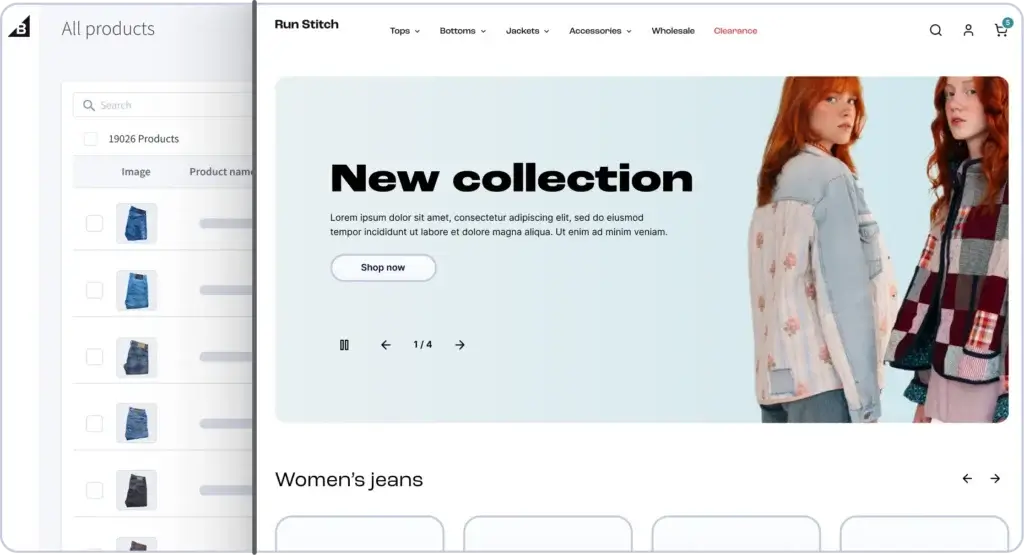
BigCommerce is particularly strong for managing products, variants, custom fields, categories, pricing, promotions, product options, and larger catalogs.
This is one of the platform’s biggest advantages over lighter website builders. Product management is not an add-on. It is central to how BigCommerce works.
Checkout and Payments
BigCommerce includes a single-page checkout and supports a wide range of payment options, including digital wallets and buy now, pay later providers.
One important difference from Shopify is that BigCommerce gives merchants more flexibility around payment providers. However, you should still review the latest plan rules carefully, because payment-provider fees can vary depending on whether you use embedded or open payment providers.
Shipping, Taxes, and Fulfillment
BigCommerce includes tools for shipping setup, tax configuration, coupons, discounts, gift cards, order workflows, and fulfillment integrations.
For more advanced operations, you can connect BigCommerce with shipping software, third-party logistics providers, warehouse systems, ERP tools, accounting platforms, and marketplace management solutions.
Sales Channels and Omnichannel Commerce
BigCommerce supports multichannel selling across online stores, marketplaces, social platforms, and advertising channels. This is useful when your ecommerce strategy extends beyond your website.
If you sell through Amazon, Walmart, Google, Meta, TikTok, retail channels, or separate brand sites, BigCommerce can help centralize important parts of the operation.
AI and Automation
BigCommerce AI, Automation, and Modern Commerce Tools
BigCommerce has been moving toward more AI-ready commerce, especially around product discoverability, catalog data, AI shopping experiences, storefront flexibility, and operational assistance.
For most merchants, the practical value is not that AI replaces your ecommerce strategy. It is that BigCommerce is positioning its platform to make products easier to discover, manage, personalize, and sell across modern buying journeys.
AI Shopping Readiness
BigCommerce emphasizes product catalog structure, metadata, SEO-friendly URLs, and channel syndication. These elements matter because AI shopping assistants and search engines need clean product data to understand what you sell.
If you want your products to appear in traditional search, shopping feeds, marketplaces, and AI-influenced product discovery, your catalog data quality becomes a strategic asset.
Companion and Operational Assistance
BigCommerce has positioned its AI assistant experience around helping teams surface insights, answer questions, and support daily ecommerce operations.
This can be useful for store managers, marketers, and ecommerce operators who want faster access to platform guidance and performance context.
Automation Through Apps and Integrations
BigCommerce supports automation through its app marketplace, APIs, integrations, and external tools. You can automate parts of email marketing, customer segmentation, product feeds, fulfillment, inventory syncing, tax workflows, and reporting.
This makes the platform especially relevant for businesses that want a structured commerce backend but also need room to connect specialized systems.
AI Limitations
BigCommerce’s AI direction is promising, but it does not remove the need for strong merchandising, keyword research, customer research, product photography, copywriting, conversion optimization, or pricing strategy.
Use AI and automation as execution support. Your strongest results will still come from clear positioning, clean product data, useful content, strong offers, and a frictionless checkout experience.
Pros and Cons
Benefits and Limitations of Using BigCommerce
Pros
✅ Strong built-in ecommerce features
✅ Excellent for larger product catalogs
✅ Good B2B and wholesale capabilities
✅ Flexible APIs and headless options
Cons
❌ Less beginner-friendly than Wix
❌ Pricing thresholds need attention
❌ Theme customization may need developers
❌ Smaller app ecosystem than Shopify
Strengths and Benefits
BigCommerce’s biggest advantage is that it gives you more native ecommerce depth than many hosted platforms. You can run serious store operations without relying on a long list of paid apps from the beginning.
- Commerce-first structure – BigCommerce is built around catalogs, checkout, payments, promotions, orders, and growth.
- Strong SEO controls – You can manage SEO-friendly URLs, metadata, redirects, product pages, and technical settings.
- B2B and wholesale depth – BigCommerce is a strong option for merchants that sell to consumers and business buyers.
- Open architecture – APIs and headless options make it attractive for more technical ecommerce teams.
Limitations and Drawbacks
BigCommerce is powerful, but it is not the easiest ecommerce platform for every user. Its strongest value appears when your store has real complexity.
- Learning curve – BigCommerce can feel more technical than beginner-first website builders.
- Plan thresholds – GMV-based limits and payment-provider rules should be reviewed before choosing a plan.
- Design flexibility – Advanced storefront customization may require developers or agency support.
- App marketplace size – BigCommerce has many integrations, but Shopify has the larger app ecosystem.
Growth Features
BigCommerce SEO, Marketing, and Conversion Tools
BigCommerce is one of the stronger hosted ecommerce platforms for SEO because it gives store owners control over important technical and on-page elements.
It is especially useful when your SEO strategy depends on category pages, product pages, filtered navigation, product data, structured catalogs, and commercial search intent.
Ecommerce SEO Features
BigCommerce lets you optimize page titles, meta descriptions, URLs, product pages, category pages, image alt text, redirects, and robots.txt settings.
This gives it an advantage over simpler ecommerce builders. You still need a strong SEO strategy, but the platform gives you a solid technical foundation for product-led organic growth.
Product and Category SEO
BigCommerce works well when your organic strategy is built around transactional and commercial intent. This includes product categories, comparison pages, buying guides, brand pages, collection pages, and optimized product pages.
For stores with many SKUs, category structure becomes especially important. You should build clear navigation, optimize category descriptions, improve internal linking, and avoid thin product content.
Promotions and Discounts
BigCommerce includes native tools for coupons, discounts, gift cards, promotions, and campaign-based offers.
This matters because conversion rate optimization is not only about design. Your store also needs compelling offers, clear pricing logic, and promotions that can be managed without excessive custom development.
Analytics and Reporting
BigCommerce provides reporting and analytics tools that help you monitor orders, customers, conversion activity, products, marketing performance, and store operations.
For growing stores, this is useful for day-to-day decision-making. For larger brands, BigCommerce can also connect to BI tools, analytics platforms, attribution software, and ERP systems.
Online Selling
BigCommerce Ecommerce Capabilities
BigCommerce is strongest when ecommerce is central to your business. It is built for merchants that need more than a basic product page and checkout.
Product Catalogs and Variants
BigCommerce supports large product catalogs, product options, variants, categories, custom fields, pricing rules, product images, and inventory workflows.
This makes it practical for retailers selling apparel, home goods, automotive parts, industrial products, health products, electronics, wholesale products, and other catalog-heavy categories.
Faceted Search and Filtering
BigCommerce includes faceted search capabilities that help customers narrow products by attributes, categories, and custom fields.
This is important for stores with complex catalogs. If shoppers cannot find the right product quickly, your conversion rate will suffer even if your product range is strong.
Multi-Storefront
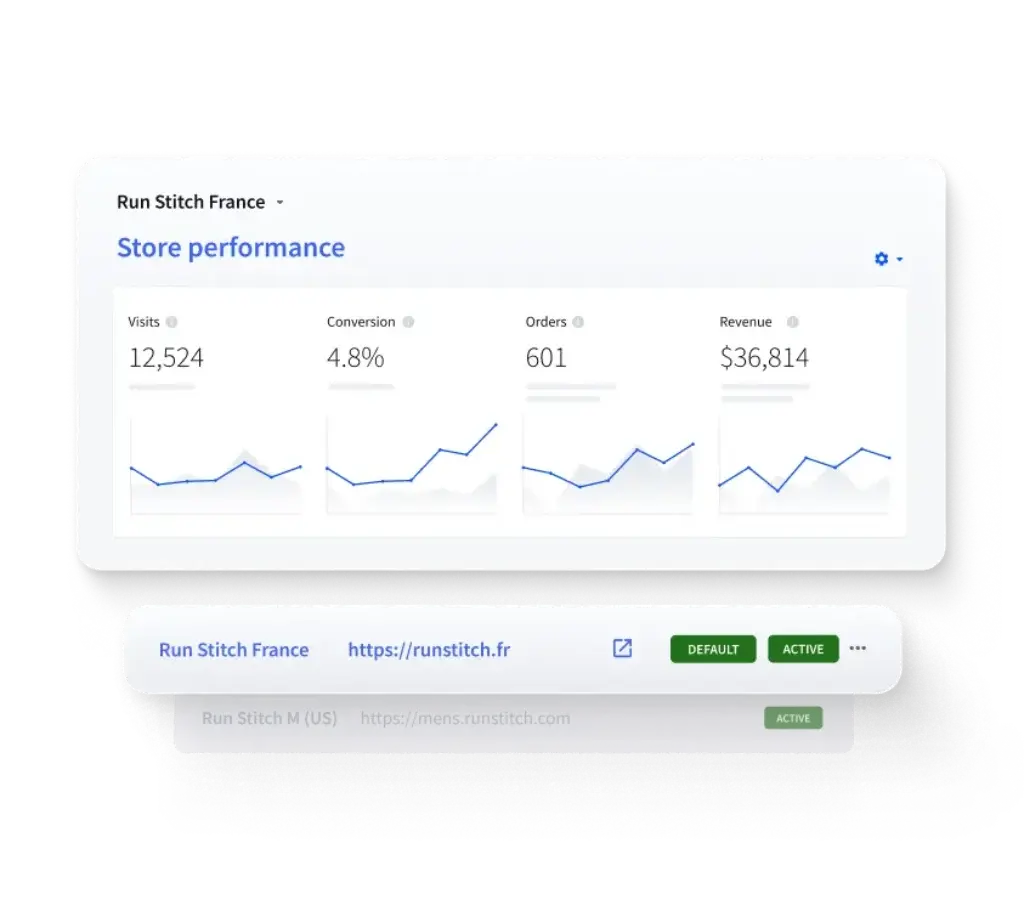
Multi-storefront is one of BigCommerce’s most important advantages. It lets you manage multiple storefronts from one backend while serving different brands, regions, customer types, or business models.
This is useful if you operate separate B2C and B2B stores, sell internationally, manage multiple brands, or want different front-end experiences under one commerce system.
B2B and Wholesale
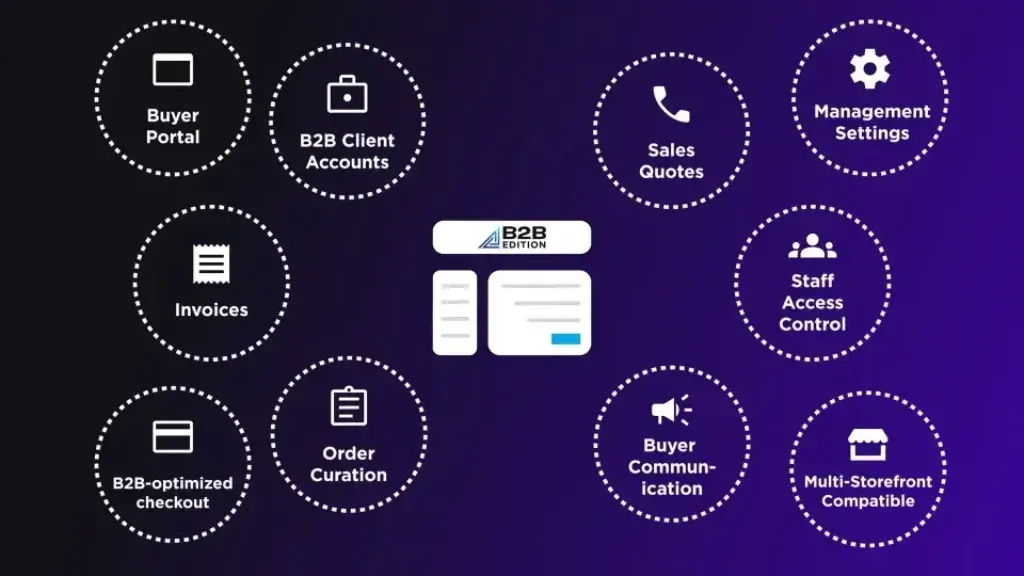
BigCommerce is especially relevant for B2B sellers, wholesalers, distributors, and manufacturers that need more complex buying workflows.
Depending on setup and plan, BigCommerce can support account-specific pricing, company accounts, quotes, invoices, payment terms, buyer roles, approval workflows, reorders, and self-service purchasing.
Headless Commerce
BigCommerce is a strong option for headless commerce because it can act as the backend commerce engine while developers build custom frontends with frameworks such as Next.js or React.
This is useful for businesses that want more control over front-end performance, content experiences, design systems, or omnichannel commerce while keeping BigCommerce for catalog, checkout, and ecommerce operations.
Pricing
BigCommerce Pricing and Plans
BigCommerce pricing depends on your plan, billing cycle, GMV level, payment provider setup, apps, integrations, custom development, and whether you need advanced B2B, headless, or enterprise features.
The monthly subscription is only one part of the cost. You should also consider payment processing, premium themes, apps, agency work, integrations, data migration, and ongoing optimization.
Core
Core is the entry-level BigCommerce plan for businesses that need a real online store with essential ecommerce functionality.
It is best for smaller stores that want hosted ecommerce, unlimited products, mobile-responsive design, checkout, payment options, coupons, discounts, and core selling features.
Growth
Growth is designed for established businesses scaling toward higher online sales volume.
This plan is usually more practical when your store has a larger customer base, stronger order volume, and a need for additional operational features. For many growing stores, Growth is the plan where BigCommerce starts to feel more commercially useful.
Scale
Scale is built for fast-growing businesses with higher GMV and more serious ecommerce operations.
It is better suited for merchants that need stronger catalog tools, better scalability, more advanced selling functionality, and room to grow without moving to a fully custom enterprise contract immediately.
Performance
Performance is BigCommerce’s high-volume and enterprise-oriented plan. Pricing is custom and starts at a higher monthly level than the self-service plans.
This plan is relevant for businesses with advanced operational needs, larger sales volume, dedicated account support, B2B complexity, custom payment terms, and enterprise-level requirements.
Pricing Table
The table below gives a practical view of the current BigCommerce plan structure. Always confirm live pricing before publishing because BigCommerce pricing, plan names, payment-provider rules, and GMV thresholds can change.
| Plan | Best For | Typical Starting Price | Key Notes |
| Core | Smaller online stores | About $39/month or lower with annual billing | Entry-level hosted ecommerce plan |
| Growth | Growing ecommerce businesses | About $105/month or lower with annual billing | Built for stores scaling toward higher annual GMV |
| Scale | Fast-growing stores | About $399/month or lower with annual billing | Designed for larger GMV and more advanced store needs |
| Performance | High-volume and enterprise commerce | Custom pricing, starting at a higher monthly level | Best for complex B2B, support, and enterprise requirements |
My recommendation is simple: start with Core only if your store is still small, move to Growth when sales and operations justify it, and consider Scale when catalog complexity, GMV, and performance needs become more serious.
For larger B2B, multi-storefront, or headless commerce projects, Performance or a custom BigCommerce setup is usually the more realistic path.
Use Cases
Who Should Use BigCommerce?
BigCommerce is not the simplest ecommerce platform, but it is one of the better choices for businesses that need depth, scalability, and operational flexibility.
Best for Growing Ecommerce Businesses
BigCommerce is best when your online store is growing and your needs go beyond basic product listings.
If you are managing a real catalog, multiple channels, promotions, SEO, and operational workflows, BigCommerce gives you a stronger ecommerce foundation than lighter website builders.
Best for Product-Heavy Catalogs
BigCommerce is a strong fit for stores with many SKUs, variations, categories, filters, and customer buying paths.
This makes it valuable for industries where shoppers need to compare specifications, narrow by attributes, or find specific products quickly.
Best for B2B and Hybrid B2C/B2B Selling
BigCommerce is especially useful if you sell to both consumers and business buyers.
You can support separate customer experiences, account-based pricing, payment terms, quotes, invoices, buyer workflows, and wholesale commerce depending on your setup.
Best for Multi-Storefront Brands
If you operate multiple brands, regions, customer segments, or storefront experiences, BigCommerce’s multi-storefront approach can reduce backend complexity.
Instead of managing each store as a disconnected system, you can centralize product and operational management while customizing each storefront.
Best for Headless Commerce Projects
BigCommerce is a good option if your team wants a flexible frontend with a reliable ecommerce backend.
This can work well for brands that care deeply about performance, custom design, complex content experiences, or advanced digital experience architecture.
When BigCommerce Might Not Be Right
BigCommerce may not be the best fit if you need the easiest possible site builder, want maximum theme simplicity, or only sell a few products as a side feature on a content website.
For a small service website with basic ecommerce, Wix or Squarespace may be easier. For a content-heavy publishing strategy, WordPress with WooCommerce may offer more control. For the largest app ecosystem and the most popular merchant experience, Shopify may be more familiar.
Competitors
Competitor Alternatives to BigCommerce
BigCommerce competes most directly with Shopify, WooCommerce, Wix, Squarespace, Adobe Commerce, and other ecommerce platforms.
The right choice depends on whether you prioritize ecommerce depth, ease of use, content flexibility, design freedom, app ecosystem, B2B functionality, or headless architecture.
| Feature Type | BigCommerce | Shopify | WooCommerce | Wix |
| Core focus | Hosted ecommerce platform | Hosted ecommerce platform | WordPress ecommerce plugin | All-in-one website builder |
| Best for | Growing stores and complex catalogs | Ecommerce-first brands and app-driven growth | Content and commerce together | Simple stores and SMB websites |
| Ease of use | Moderate | High | Moderate | High |
| Catalog depth | Very strong | Strong | Flexible with plugins | Good for simple catalogs |
| SEO flexibility | Strong ecommerce SEO | Strong ecommerce SEO | Excellent content SEO | Good basics |
| B2B capabilities | Strong | Strong on higher tiers | Plugin-dependent | Limited for complex B2B |
| Best overall angle | Best for built-in ecommerce depth | Best app ecosystem | Best ownership and content control | Best for simplicity |
BigCommerce vs Shopify
BigCommerce and Shopify are close competitors, but they have different strengths.
Shopify is usually easier for beginners and has the larger app ecosystem. BigCommerce is often better if you want more native ecommerce functionality, stronger catalog flexibility, broader payment-provider choice, and serious B2B or multi-storefront options.
Choose Shopify if you want the most popular hosted ecommerce experience with a massive app marketplace. Choose BigCommerce if you want a more open SaaS commerce platform with strong built-in features and more room for complex selling models.
BigCommerce vs WooCommerce
WooCommerce gives you more ownership and flexibility because it runs on WordPress. It is excellent for content-first sites, SEO-heavy publishing, and businesses that want control over hosting, plugins, data, and site structure.
BigCommerce is easier to operate from an infrastructure perspective because hosting, security, checkout, and ecommerce backend management are handled by the platform.
Choose WooCommerce if content and ownership matter most. Choose BigCommerce if you want a managed SaaS ecommerce platform with strong catalog, B2B, and multi-channel selling tools.
BigCommerce vs Wix
Wix is easier for small business websites and beginner-friendly design. It is a strong option for simple stores, local businesses, service providers, and creators.
BigCommerce is better for serious ecommerce operations, especially when product management, catalog depth, SEO, B2B, and multi-channel selling become important.
BigCommerce vs Squarespace
Squarespace is excellent for polished, design-led websites with lighter ecommerce needs. It works well for portfolios, creators, service businesses, and simple product stores.
BigCommerce is stronger when ecommerce operations are the center of the business. If your store needs advanced catalog management, customer segmentation, integrations, or B2B workflows, BigCommerce is the more capable platform.
BigCommerce vs Adobe Commerce
Adobe Commerce is highly customizable and powerful, but it usually requires more development resources, implementation planning, and technical maintenance.
BigCommerce can be a better option if you want enterprise-level ecommerce capabilities without the same level of infrastructure and maintenance burden.
Best Practices
Getting Started with BigCommerce
BigCommerce gives you a strong platform, but successful implementation still depends on careful planning.
Start with Your Catalog Structure
Before designing pages, define your categories, product attributes, variants, filters, custom fields, and internal linking structure.
This is especially important for BigCommerce because the platform is strong at catalog management. The better your product data, the better your SEO, filtering, merchandising, and customer experience will be.
Choose the Right Theme
Your theme affects mobile usability, product discovery, navigation, page speed, conversion, and brand perception.
Choose a theme that supports your catalog size and buying journey. Do not choose a theme only because the demo looks attractive.
Review Payments and Plan Rules
Before launching, confirm which payment providers you plan to use and how your BigCommerce plan handles payment-provider fees, GMV thresholds, and support options.
This step is important because payment setup affects both customer experience and profitability.
Plan SEO Before Launch
Set clean URLs, optimize category pages, write unique product descriptions, add alt text, configure redirects, and build helpful buying content around commercial keywords.
BigCommerce gives you strong SEO controls, but the platform will not create a complete SEO strategy for you.
Use Apps Selectively
BigCommerce includes many native ecommerce features, but you may still need apps for reviews, subscriptions, loyalty, advanced search, fulfillment, accounting, email marketing, analytics, and ERP integrations.
Add apps only when they solve a clear business need. Too many tools can increase cost and operational complexity.
Conclusion
Final Thoughts
BigCommerce is one of the strongest ecommerce platforms in 2026 for growing online stores, complex catalogs, B2B selling, multi-storefront management, and headless commerce.
Its biggest strengths are built-in ecommerce depth, SEO control, flexible payment options, product catalog management, multi-storefront capabilities, B2B features, and open APIs.
Its main weaknesses are a steeper learning curve than beginner-first website builders, plan rules that require careful review, a smaller app ecosystem than Shopify, and the need for technical help when customization becomes advanced.
Overall, BigCommerce is a strong recommendation if you are building a serious ecommerce business and want a platform that can support growth without forcing you into a heavily plugin-dependent setup.
If you want the easiest beginner experience and the largest app marketplace, Shopify may be better. If you want the most content flexibility, WooCommerce is still a strong option. But if you need scalable ecommerce functionality, catalog depth, B2B tools, and an open SaaS commerce platform, BigCommerce deserves serious consideration.
Frequently Asked Questions
Have more questions?
What is BigCommerce?
BigCommerce is a hosted ecommerce platform that helps businesses build online stores, manage products, accept payments, process orders, sell across channels, and support scalable commerce operations.
Is BigCommerce good for beginners?
BigCommerce can work for beginners, but it is not the simplest ecommerce builder. It is better for users who want stronger ecommerce features, larger catalog support, and room to scale.
Is BigCommerce worth it in 2026?
Yes, BigCommerce is worth it if you need a hosted ecommerce platform with strong catalog management, SEO controls, B2B options, multi-storefront support, and headless commerce flexibility.
How much does BigCommerce cost?
BigCommerce pricing depends on your plan, billing cycle, GMV level, payment provider setup, apps, and custom requirements. Common plans include Core, Growth, Scale, and Performance.
Does BigCommerce charge transaction fees?
BigCommerce plan rules can vary by payment provider setup. Merchants should review the latest pricing page because embedded and open payment providers may be treated differently under current plan rules.
Is BigCommerce good for SEO?
Yes. BigCommerce is good for ecommerce SEO because it supports customizable URLs, metadata, redirects, robots.txt editing, product optimization, category pages, and search-friendly catalog structures.
Is BigCommerce better than Shopify?
BigCommerce may be better for complex catalogs, B2B selling, payment flexibility, multi-storefront setups, and headless commerce. Shopify is usually better for beginners and has a larger app ecosystem.
Can BigCommerce support B2B ecommerce?
Yes. BigCommerce supports B2B and wholesale use cases, including customer-specific pricing, company accounts, quotes, invoices, buyer roles, approval workflows, and self-service purchasing depending on setup.
Can you use BigCommerce for headless commerce?
Yes. BigCommerce is a strong option for headless commerce because developers can use its APIs and backend commerce features while building custom storefronts with modern frontend frameworks.
Who should use BigCommerce?
BigCommerce is best for growing ecommerce businesses, product-heavy catalogs, B2B and wholesale sellers, multi-brand companies, and teams that need a scalable hosted commerce platform.